Places to go and things to see by Gypsy Bev

The sign out front says "Unofficial Lego Museum".

The sign out front says “Unofficial Lego Museum”.

Building blocks have been a favorite gift for many years. That tradition continues today with evolvement of blocks from wooden to plastic, including animation possibilities.

An active imagination can create almost anything from Lego plastic bricks. Dan Brown, museum curator at the Toy and Plastic Brick Museum, displays proof of that.  He has collected enough Lego blocks to earn the museum the title of “Largest Personal Collection of Lego Blocks in the World”. There’s no doubt about that fact as Dan has over four million Lego blocks…a number  that increases almost daily.

This Toy Museum is for all those who enjoy the world of Lego art- young and old alike. The name Lego actually comes from a contraction of two Danish words: leg godl, translated “play well.”  Lego began as a builder of wooden toys. Then in 1937 Ole Kirk Christiansen began making plastic blocks.
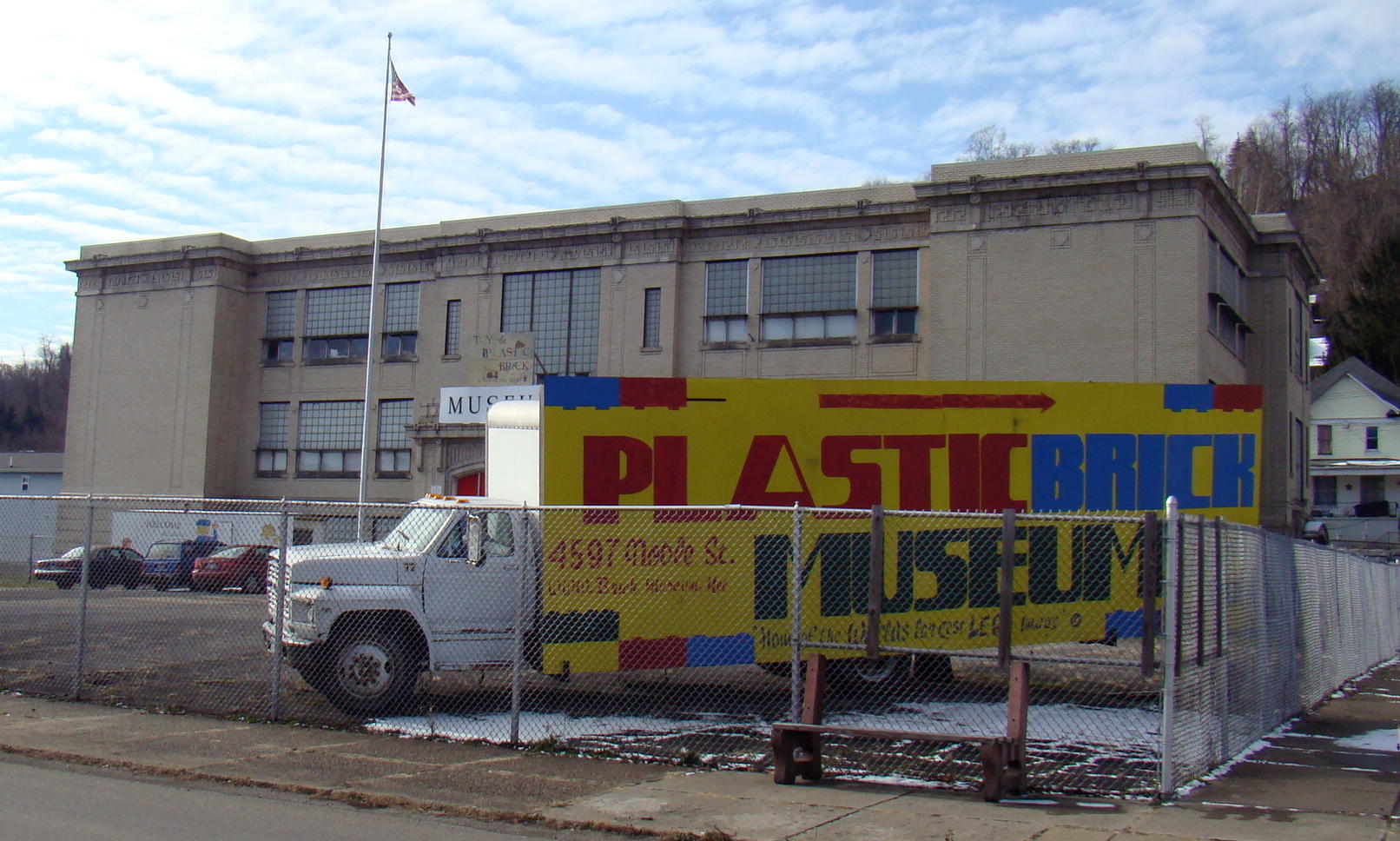
Plastic Brick Museum Sign in front of building.

Plastic Brick Museum Sign in front of old school building.

You can’t judge a book, or a building, by its cover, as surprise after surprise waits inside this old school. The former Gravel Hill Middle School in Bellaire, Ohio has three floors of amazing suprises, which all involve Lego blocks!  Since there wasn’t enough room here for Dan, he bought another local school to store his spare parts. Dan has a great sense of humor as he hoards Legos for future use. While shaking his head, Dan describes himself as “a crazy guy who wanted to retire and open a Lego Museum in Bellaire, Ohio!”

"The Vault" contains original Monopoly set in gold.

“The Vault” contains original Monopoly set in gold.

When entering the main lobby on the second floor, amid all the Lego creations, a large display case called “The Vault” catches the eye. This was purchased from Disneyland and features a real gold 2 x 4 brick and an original gold Monopoly set. Throughout the museum, items from all over the world appear…most of them being Legos!

Lego Mona Lisa with Lego artist giving a final touch.

Lego Mona Lisa with Lego artist giving a final touch.

Lego creations of Mt Rushmore and Mona Lisa also add interest. Mona Lisa has a small Lego figure painting the finishing touches on that portrait. Major creations, like these murals, have been glued together to save future repair work, while many of the Legos are assembled just as youngsters would at home. Another fun fact on the walls of the museum estimates there are 52 Lego blocks for every person on the planet.  Do you have your share?

World's Largest Lego Mural on gym floor.

World’s Largest Lego Mural on gym floor with animated band on stage.

After walking down a carpet made in the pattern of Lego blocks, you arrive in the old gymnasium. Before your eyes is the largest Lego image in the world – a mosaic of an 18-wheeler tractor trailer. Designed by Brian Korte, this giant image was created by over 250 local school children with the help of AFOLs (Adult Friends of Legos). It contains over 1.2 million Lego blocks and measures 44 feet by 21 feet.

Some of those same Lego enthusiasts, the builders of tomorrow, are now attempting to construct the tallest Lego tower in the world. It begins in the basement, going up through an air shaft. They have even cut a hole in the roof so it can reach the sky. Plans at this point are for the tower to reach forty feet above the building.
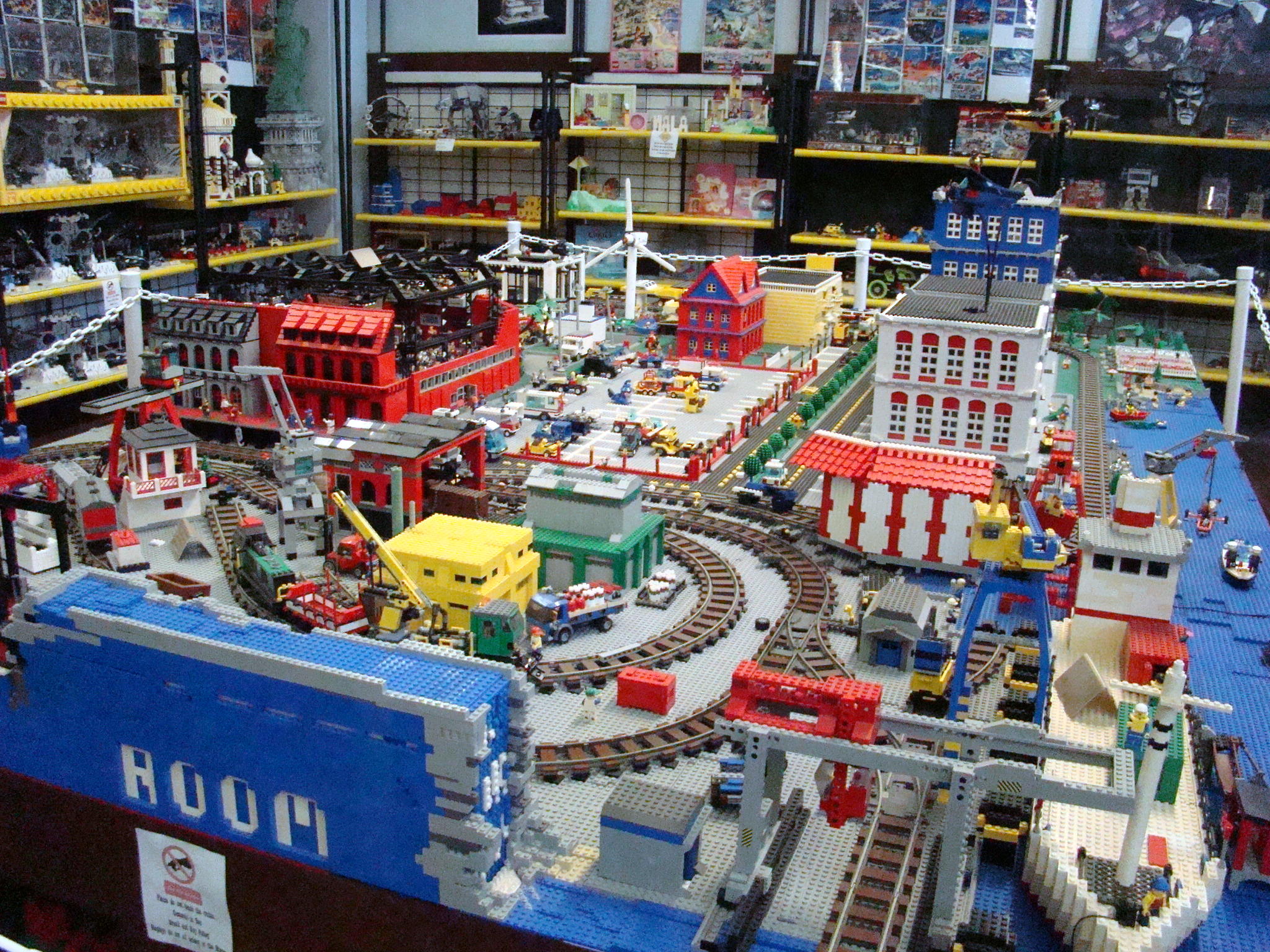
Lego Train Room is animated at the push of a button.

Lego Train Room is animated at the push of a button.

Each of the classrooms throughout the building overflows with themed room Lego designs from Knights Room to Mission to Mars.  The Toy Museum also has Guiness World Records for the largest Lego castle, and longest Lego castle wall. As you can imagine, the sign “Do Not Touch” appears frequently throughout the museum but some find it hard to resist. Therefore, they have a special area where you can sit and build your own creations.

Designs from this favorite plastic brick come to life with many examples of animation…a favorite being a lively band called Plastica, which appears on the stage in the old gymnasium. The musical figures were purchased from a department store in New York City, the place Dan called home for most of his life while he worked in the world of computers. The band is powered pneumatically, showing that the world of Legos is more complicated than just building with blocks. It’s a world of engineering as well.
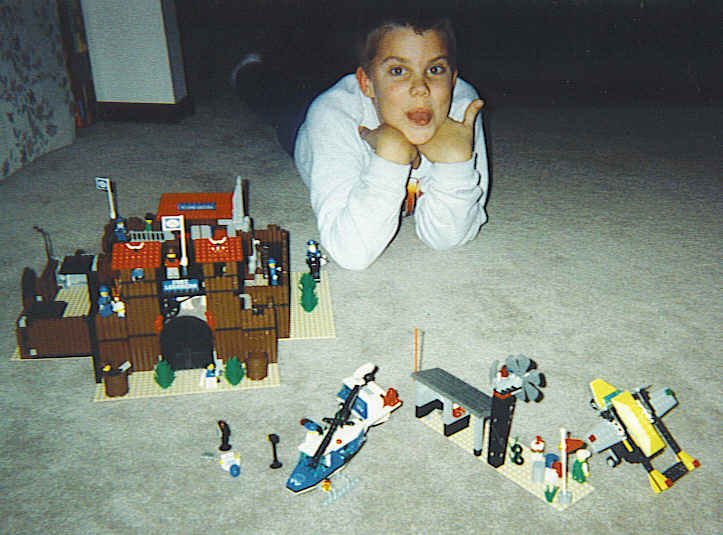
Youngsters always have fun with Lego projects.

Youngsters always have fun with Lego projects.

If you or someone in your family enjoys creating with Lego blocks, this is the perfect place to explore.  Buiding with blocks is a real brain stimulator. Did you know that possible combinations of six Lego eight-plugged blocks can create 209,000,000 seemingly endless combinations? You might get some new ideas while you explore! What will you build next with your Legos?

Bellaire Toy and Plastic Block Museum can be reached off I-70 at the Bridgeport exit. Take Route 7 south to the 48th Street Drive. Turn west two blocks until you reach a dead end. Turn left and within two blocks you will be at the museum on the right hand side at 4597 Noble Street. Hours during the winter months are 12-5 on weekends, while during the summer season, the museum is open Wed. – Sun. 12-5. For more information, call 740-671-8890.


Best Beard Contest

Merry Christmas!

Merry Christmas!

At the end of every summer, Nick began growing a beard to keep his face warm when working outside in the winter. At least that was the man’s excuse. His wife thought this good natured fellow just didn’t want to fuss with shaving.

But this year, Nick had a second reason. There was an article in the paper about a Dickens Whiskers Wars Beard and Mustache Competition. Like the men of Charles Dickens time, Nick thought it was very manly to have facial hair. With a long, full beard perhaps there was a chance to win the “Best Beard” category.

The contest would be in November so getting an early start was important. How could he speed up the process of developing a long, bushy beard? Nick read that facial hair would grow more quickly if a man is well rested and free from stress. So when his wife wanted the lawn mowed or leaves raked, Nick would give a nod of the head and say, “My beard doesn’t need that kind of stress.” Smoking a pipe with feet on a stool created more relaxation.

Nick's beard was snowy white.

Nick’s beard was snowy white.

Nick made a trip to the local drug store to pick up some biotin and B vitamins, which increase growth of hair and nails. A circular massage of his face while relaxing on the couch in the evening would also stimulate hair growth. Certainly these healthy additions, as routine parts of the day, would assist in creating the best beard possible.

Actually, all of these steps were making Nick’s beard look fantastic. His full beard was nearly a foot long with a snow-white glow. As the contest rapidly approached, Nick headed to a favorite restaurant for a couple of hamburgers, because protein also is important for beard growth.

With all Nick’s resting and eating, quite a few extra pounds had been added. No longer could a belt meet after traveling through the belt loops, so suspenders became the best way to support the larger jeans.

A little girl ran to the restaurant.

A little girl ran to the restaurant.

As Nick sat at the table wearing suspenders over a red plaid shirt with a red cap on his head, a little girl ran over and jumped up in his lap.

Her mother hurried over immediately, very upset by her daughter’s behavior. “Cathy, you know you aren’t allowed to talk to strangers.”

“But Mom, it’s just Santa Claus without his uniform.” Cathy’s blue eyes sparkled as she laid her curly blond head against the jolly man she thought was Santa.

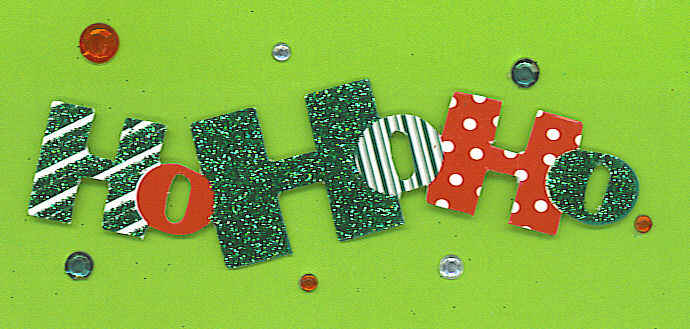
“Ho, Ho, Ho,” burst forth from Nick’s lips. Maybe he could win the “Best Beard” contest. As Nick left the restaurant, you could hear him exclaim with his beard snowy white, “Merry Christmas to all and to all a good night.”

Best Wishes for a wonderful Christmas holiday and a New Year filled with peace and happiness.

My wish for you is a wonderful Christmas holiday with family and friends, and a New Year filled with peace and happiness.

Dr. Balthasar, Medicine Man

Dr. Balthasar, Medicine Man

“Try a bottle of Elexir!”

Dr. Balthasar, Medicine Man, campaigned for everyone’s good health as he presented his wares from town to town. The sign he displayed proclaimed: Miracle Medicine for Man or Beast formulated from an ancient Tibetan recipe. Quite frequently he was referred to as  “a snake-oil salesman”, proclaiming this miracle tonic would cure a great variety of ailments.

The character of Dr. Thelonious Balthasar was created by Mike Follin, an education interpreter with the Ohio Historical Society. He thought this would be a good way to educate folks about life and medical treatment during the 19th century. Before each performance, Mike tells the audience a little about life on the frontier, where the visit of a traveling salesman was great entertainment. Then he transforms into frontier Dr. Balthasar, Medicine Man.

Most people appeared at his shows for two reasons: medication and entertainment. Word would spread from house to house when the doctor’s wagon was seen.This slippery snake oil salesman provided gossip and national news, as well as entertainment that cheered the crowd. As he traveled the countryside selling his famous Elexir, one of Dr. Balthasar’s favorite places to stop and tell his tales was in Michigan. There he said the folks were the most gullible and sales were high.

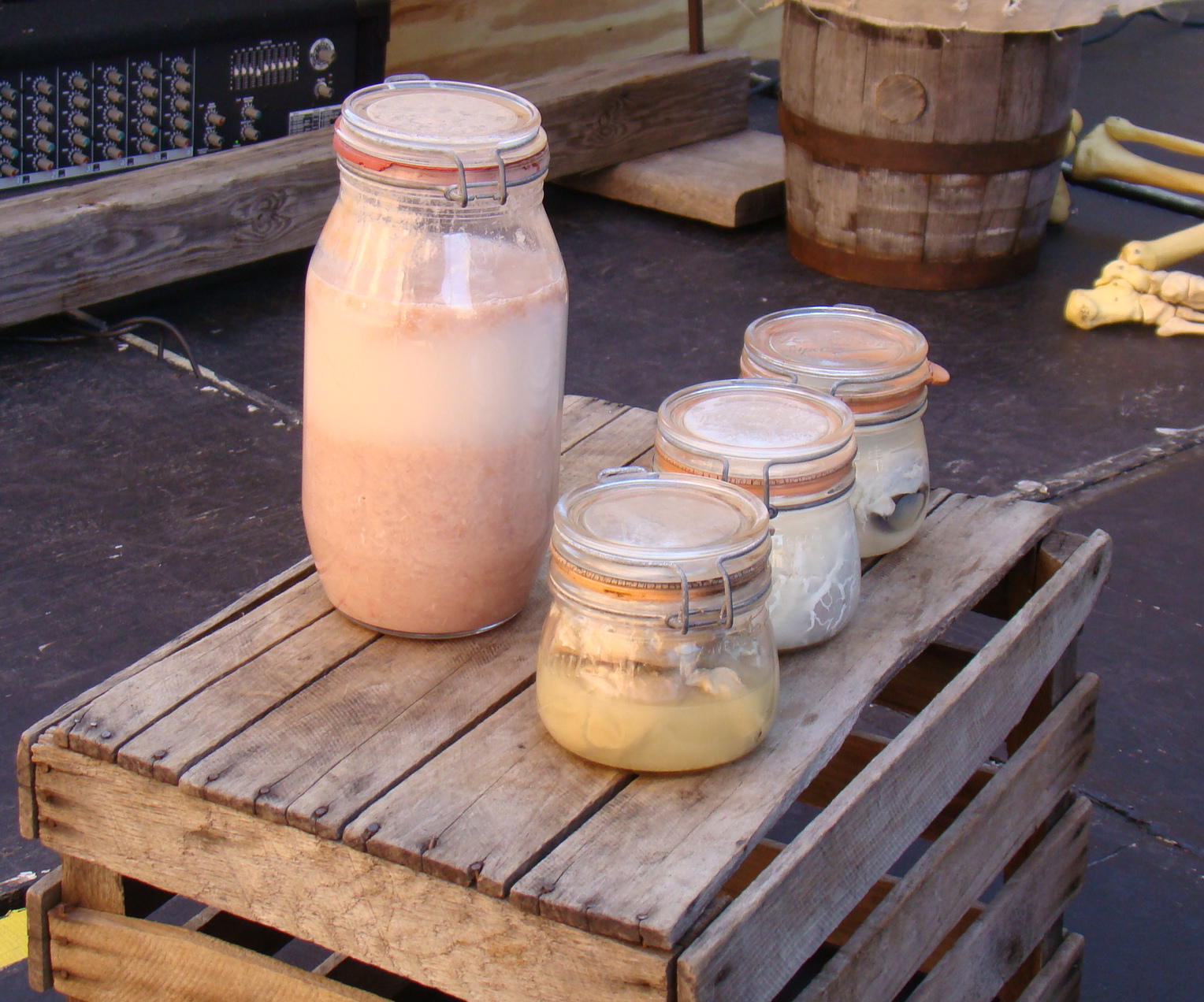
Remains of victim who exploded after refusing treatment

Remains of victim who exploded after refusing treatment

The good doctor, in his rapid fire patter, demonstrated what happened to those who refused his services. A young man who was very ill  boldly told the doctor, “I don’t need your medicine.”  Six months later that same man came back to another Medicine Show and said that perhaps he should have taken the tonic as the pain became worse and worse. Before the doctor could give him the Elexir, the man exploded. Parts of his body went everywhere and had to be scraped up so the Medicine Man could save them in jars, thus demonstrating the importance of taking his tonic. Perhaps it would keep someone else from having the same fate. You can even see an eyeball peeking through one of the jars.

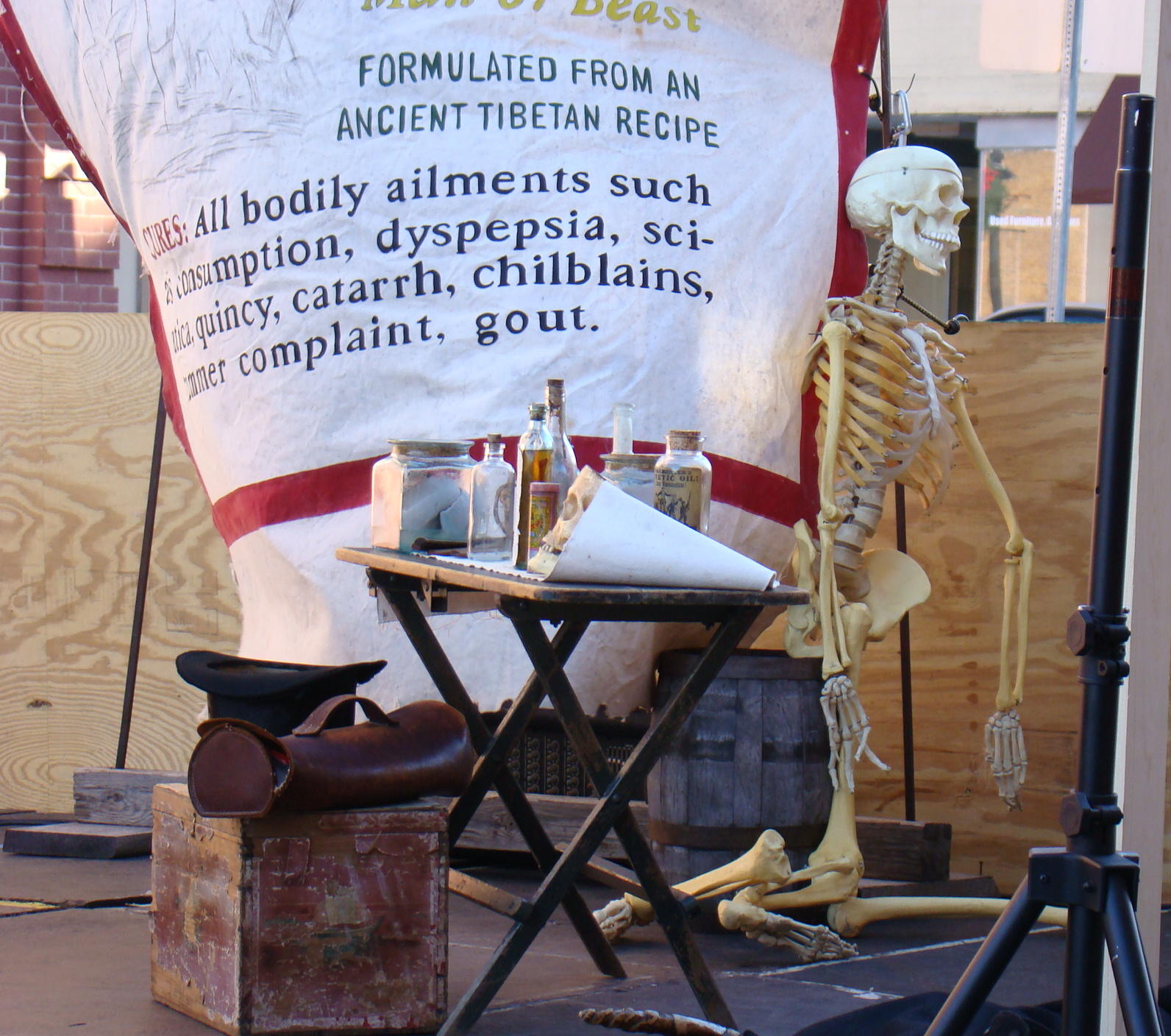
Skeleton, who did not heed the doctor's warning

Skeleton, who did not heed the doctor’s warning

This skeleton was all that was left of another of his patients who had faded away to nothing because they refused to take his medical advice. “If he had purchased this Elixir for only $2, that man might have been cured of his consumption and still be here today.”

” Some of you see men who have had their hair fall out, just like the stars fall from the sky. Why does a man’s hair on the top of his head fall out? Why doesn’t he lose his whiskers? I tell you, he outgrows his hair because he has too much knowledge.”

Dr. Balthasar’s Miracle Medicine was the answer to all health problems.  A free gift was usually promised – free advice. “I stand behind every bottle that I sell of this latest in medical potions,”  were his words of assurance. However, the Medicine Man would usually leave town before customers had a chance to demand a refund. His treatment was very effective, unlike the practicing physician, who told patients to come back in two weeks.  “When you buy my medicine,” explained Dr. Balthasar, “you will never see me again.”

When the government decided they needed to regulate the sale of medications, the Medicine Man was basically put out of business. Patenting medicine made it necessary to list all the ingredients on the bottle. Thus began the time of medicine sales to further pharmaceutical agencies; unfortunately, home remedies were no longer acceptable.

What were the contents of Dr. Balthasar’s famous Elixir? 150-200 proof alcohol, otherwise known as “white lightning”. It certainly made people feel better for a while and forget their problems.

As he closed the show, Dr. Balthasar held up a bottle of his Miracle Medicine proclaiming, “This is the answer to a long and healthy life. I’ll also give you a bit of free advice. Stay away from two types of people: politicians and traveling medicine men.”

Dr. Balthasar, Medicine Man, recently appeared in Cambridge, Ohio as part of their Dickens Victorian Village presentation. Where will he stop next?

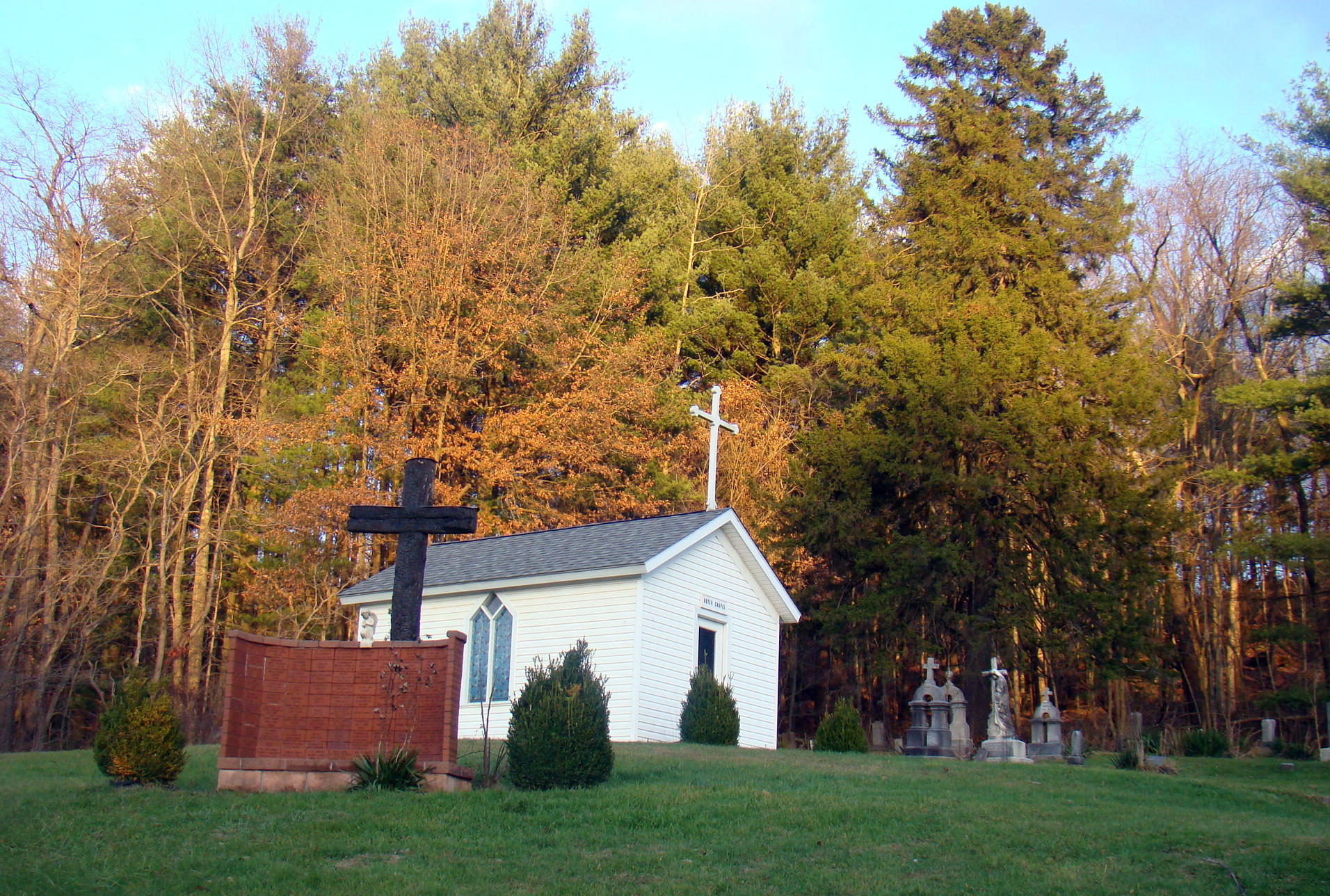
Royer Chapel with Memorial Wall

Royer Chapel with Memorial Wall

Pleasant surprises often appear when least expected. Such was the case with little Royer Chapel, which sets back off winding Route 83 on Franklin Township Road 280, very near Wills Creek Dam in Coshocton County. Many claim that Royer Chapel is the smallest chapel in Ohio.

Originally built in 1897 through the efforts of Anne Royer, the chapel served as a memorial to her husband, Martin. Wood from an abandoned St. Nicholas Church and a stained glass window from old St. George Church were used in the construction.

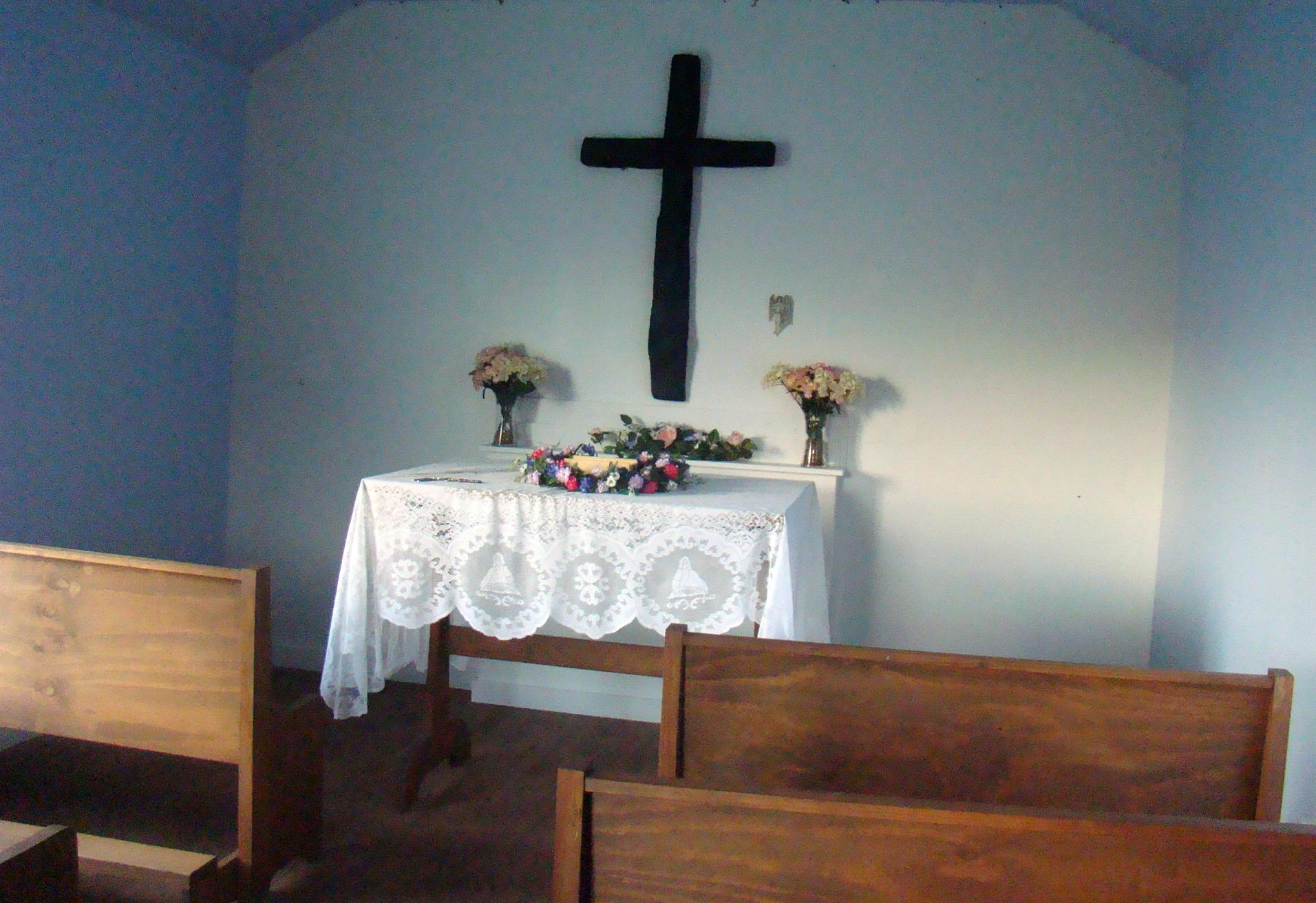
Cross of Burned Timbers at the altar of Royer Chapel

Cross of Burnt Timbers above the altar of tiny Royer Chapel

When arriving at the chapel, a cross made of burnt wood stands out behind the Memorial Wall. Later information discloses that the original church was destroyed by arson on December 8, 2002 and rebuilt by men of the community a few years later. Two crosses were made from the burnt wood – one outside and another inside above the altar. Funds for constructing the new chapel were raised in part from memorial bricks engraved with the names of loved ones or contributors. The Memorial Wall standing out front was built with these same bricks.

Martin's marker and Clara's memorial, a likeness of her imported from France

Martin’s marker and Clara’s memorial, a likeness of her imported from France

Tiny Royer Family Chapel measures about ten feet wide by eighteen feet long, and is located near a cemetery where Martin and his daughter, Clara, were buried in 1888 and 1896 respectively. Clara’s monument, which was imported from France, displays a statue in her actual likeness. The chapel and cemetery were located across the road from the old family farm to accommodate Anne’s frequent visits.

Don and Esther Royer initiated the reconstruction process to keep alive family tradition started by Don’s great-great-aunt Anne. In ten days, four hundred friends and neighbors signed their petition for assistance, so they knew the community supported their plans to rebuild the chapel “just like it used to be”. Since Don and Esther’s wedding had taken place there years before, they had pictures showing exactly what it looked like inside. Those pictures made it easier for Don, in his own shop,  to build new pews and windows to closely match the originals.The reconstructed chapel was built on a new foundation but maintained its original size.

In a recent phone conversation, Anne recalled her wedding day. The seven pews of Royer Chapel were crowded with twenty-one family members. When they turned to walk down the aisle, through the door she could see the yard outside the building filled with her fellow workers from the Coshocton Tribune.

Prayer Box

Prayer Box

Inside, a peaceful chapel scene appears when you gently open the door, which is never locked. At the front of the chapel, a table contains a prayer box surrounded by a wreath of flowers. The inscription on the side of the box reads: Where dreams come true. Inside the box are numerous requests written on slips of paper available on the table.

Here’s a great place to sit down and enjoy the silence of peace while reflecting on life and its many twists and turns – rather like the road leading to the chapel.

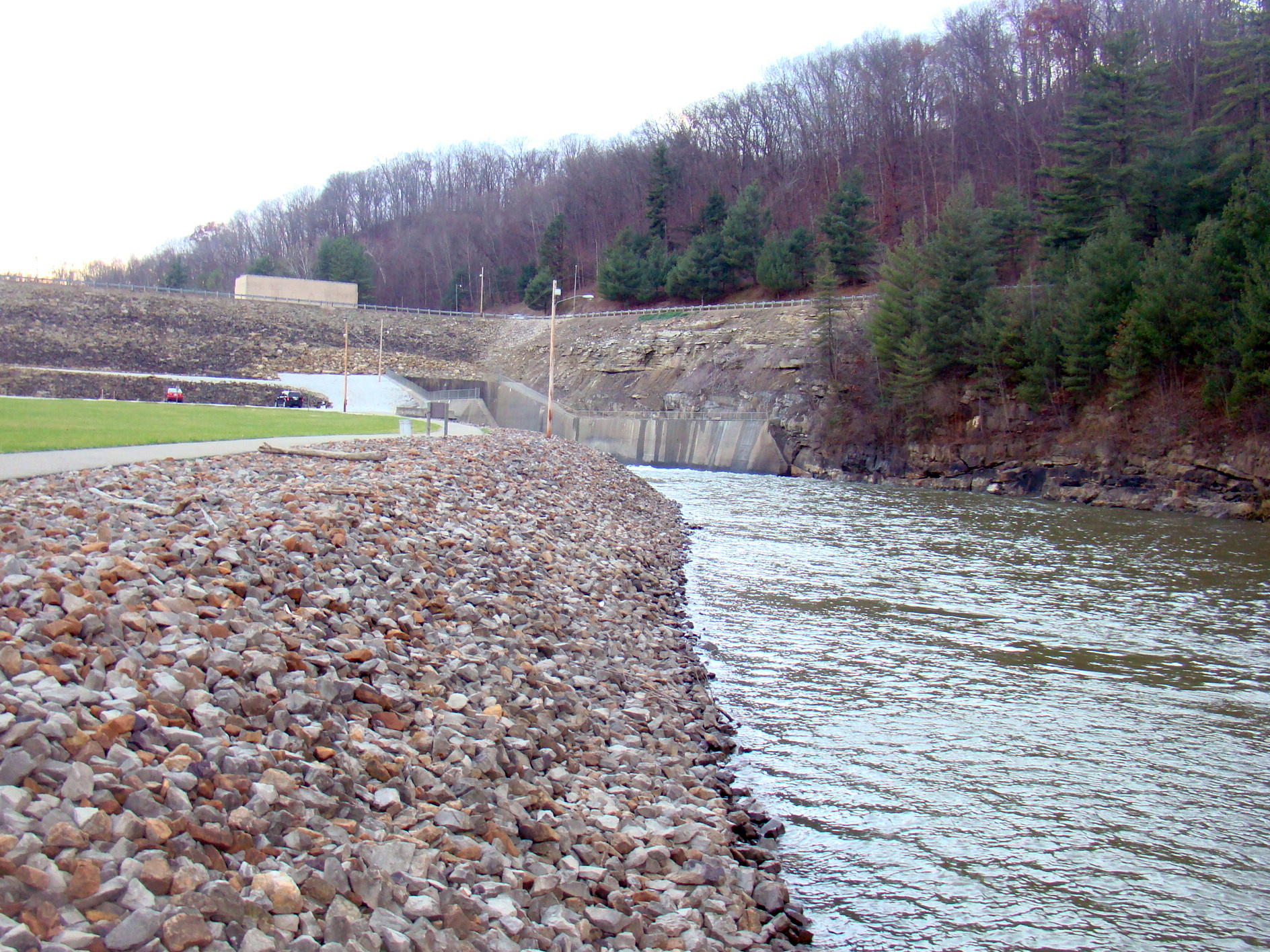
Wills Creek Dam

Wills Creek Dam

While electricity, water, and heat do not exist at Royer Chapel, services were held every Sunday until recently when they were changed to approximately once a year. Maybe you will want to take a half hour leisurely drive northwest of Cambridge and explore a hidden treasure nearby. You might even want to take a short drive to Wills Creek Dam. Waters flow north on Wills Creek from its beginning near Pleasant City to where it flows into the Muskingum River near Coshocton.

This little chapel on the hill serves as a reminder to be thankful for the small things in life – a smile, a card or email, the joy of each new day.

Royer Chapel can be reached traveling State Route 83.  If traveling north from New Concord, Ohio you will pass through Bloomfield and head down the hill toward Wills Creek Dam. It is approximately 15 miles from New Concord to the dam. The church is difficult to spot unless you are watching. It sets on the east side of the road and can be clearly seen as soon as you turn onto Franklin Township Road 280, while Wills Creek Dam is on the west side about a mile down the road. Approaching from Coshocton on 83, directions are reversed.

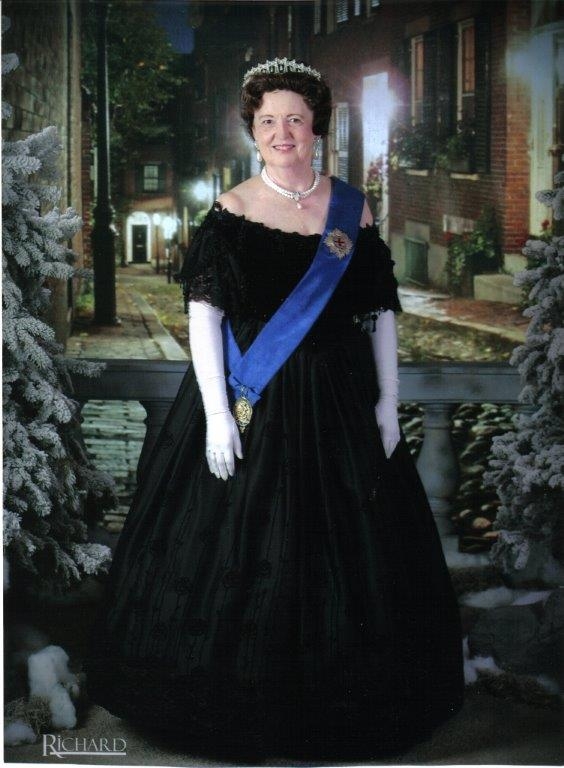
Queen Victoria visits Cambridge, Ohio.

Queen Victoria, portrayed by Anne Boyd, visits Cambridge, Ohio.

Imagine, if you will, stepping back to the time when Queen Victoria ruled Great Britain from 1837-1901. She had the longest reign of any British monarch in history – 64 years! During that time author, Charles Dickens, wrote his famous “A Christmas Carol”. Thus, Cambridge, Ohio, the home of Dickens Victorian Village, was the perfect place for their paths to cross again in modern times.

Queen Victoria, portrayed by Anne Boyd, visited Dickens Victorian Village in Cambridge for a weekend of fun. Anne Boyd enjoys playing the role of Queen in various places – from Victoria, British Columbia to Dickens on the Strand in Galveston, Texas. Her visit in Cambridge began on Friday morning when the Queen, riding in a horse-drawn carriage, visited the local schools. Children gathered along the walks, bowing and curtsying to Her Majesty.

Queen presents students dressed as her five daughters.

At Central School, Queen Victoria presents students dressed as her five daughters.

Since the royal couple had nine children – five girls and four boys – five young ladies were chosen to portray her daughters. Each of the girls looked lovely in the cape and tiara she was given to wear. They all seemed quite pleased to be part of the festivities.

Queen Victoria told the students how she and her husband, Albert, started the Christmas tree tradition throughout Great Britain. The Queen’s Christmas tree in Windsor Palace was featured in The Illustrated London News in 1848. Candles lit the tree while a bucket of sand and another of water were always placed close by…just in case of fire. They hand-made all of the ornaments: cornucopias filled with candy or nuts, and beautiful glass balls studded with jewels.

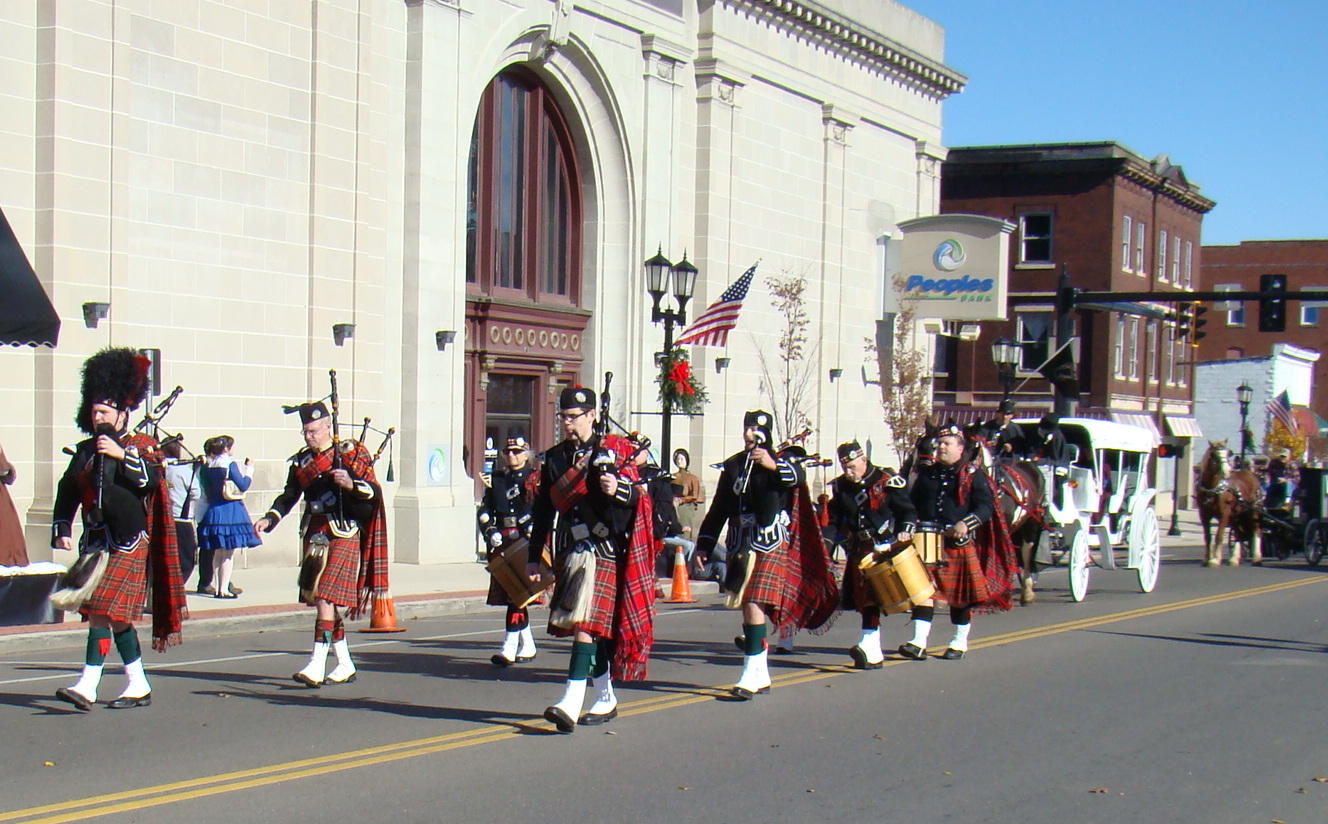
A Bagpipe Band announces the Queen.

A Bagpipe Band announces the Queen.

Cambridge Social Dance Club

Cambridge Social Dance Club presented Victorian dances in beautiful Victorian dress.

One of the highlights of the weekend was the Queen’s Parade. There were no motorized vehicles permitted so it was a quiet time, except for the wonderful bagpippers. Men on stilts and large wheeled bicycles added to the fun of the day. The Cambridge Social Dance Club performed traditional Victorian dances.

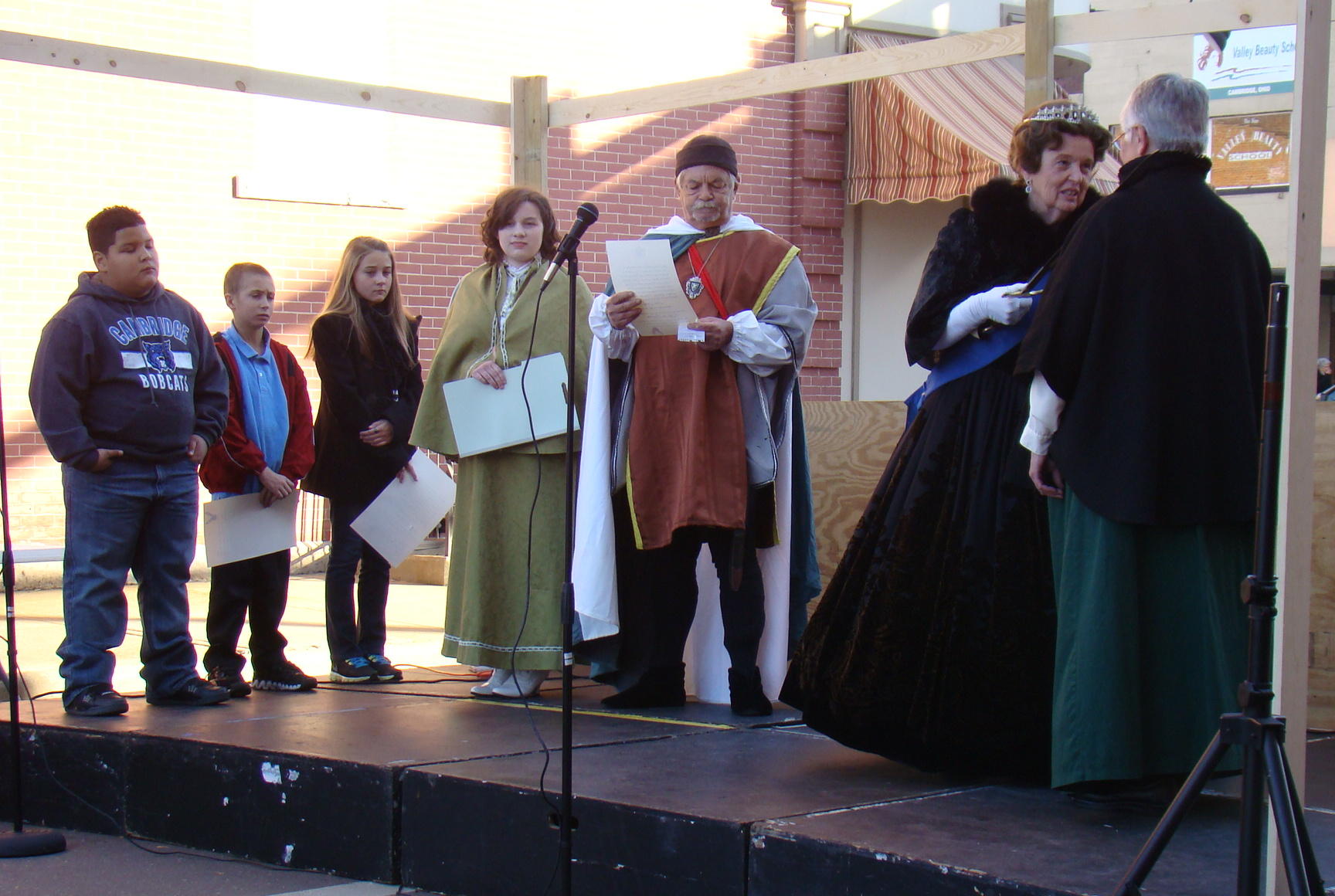
Knighting Ceremony

Knighting Ceremony with Katy Billings, lady-in-waiting; Eugene Kyle, town crier; Queen Victoria; and volunteer of the year, Lindy Thaxton, who was knighted.

A knighting ceremony by the Queen involved several local students as well as Lindy Thaxton, the Dickens volunteer-of-the-year. Eugene Kyle, dressed in the proper flowing robe of the town crier, read the proclamations with flourish. When the Queen was handed the sword for knighting, she also whispered some words of encouragement to the individual.

Her lady-in-waiting portrayed by Katy Billings was always at her side tending to her every wish. She helped the Queen by handing her capes, tiaras and swords, attended every event with the Queen, and learned patience while having lots of fun.

The Queen enjoyed the many activities of the weekend, which included: a High Tea with the Queen, GeoCaching with Dickens, Tavern Tasting, Mingle with the Monarch at the Cambridge Glass Museum, and a “Gone But Not Forgotten” Victorian Funeral Program.

Queen Victoria enjoyed the small town atmosphere and hopes to return another year. She was a very pleasant lady, who accepted every person as if they were an important part of her kingdom. When at home with her family, Anne has a reputation for making the world’s best chocolate chip cookies. Anyway you look at it, she was a very sweet lady.

The Queen’s Weekend was one of several special weekends at Dickens Victorian Village in 2013. The Village is open through out November and December in downtown Cambridge, Ohio with many activities for the entire family. Cambridge, Ohio is at the crossroads of I-70 and I-77 so can easily be located.

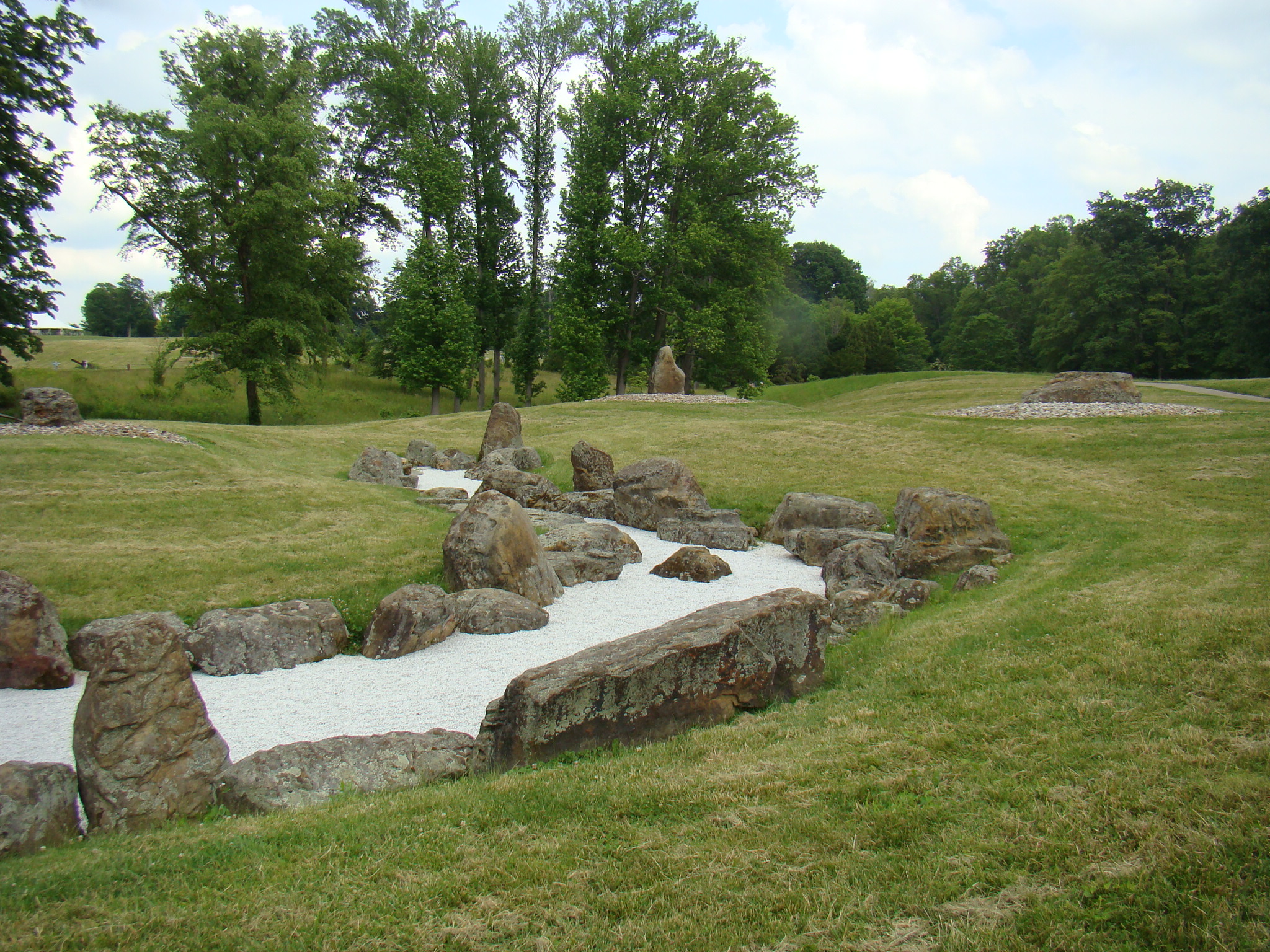
Dry Lake in Japanese Garden

Stone River in Japanese Garden at Dawes Arboretum

Peace! Sweet Peace! As soon as the climb to the Japanese Gardens at Dawes Arboretum began, a feeling a serenity surrounded. Back in 1963, Dr. Makoto Nakamura from the University of Kyoto, Japan designed this beautiful setting near Newark, Ohio.

Upon entering the gardens, you first approached a large area of white sand with boulders around its side. It appeared very similar to a sandtrap on a golf course.   Upon closer observation, it was a mixture of sand and small white stones, which filled the area. This is called a stone river, Karesansui, “dry landscape”, or more frequently known as a zen garden. White stone and sand in the zen garden represent water and purity.

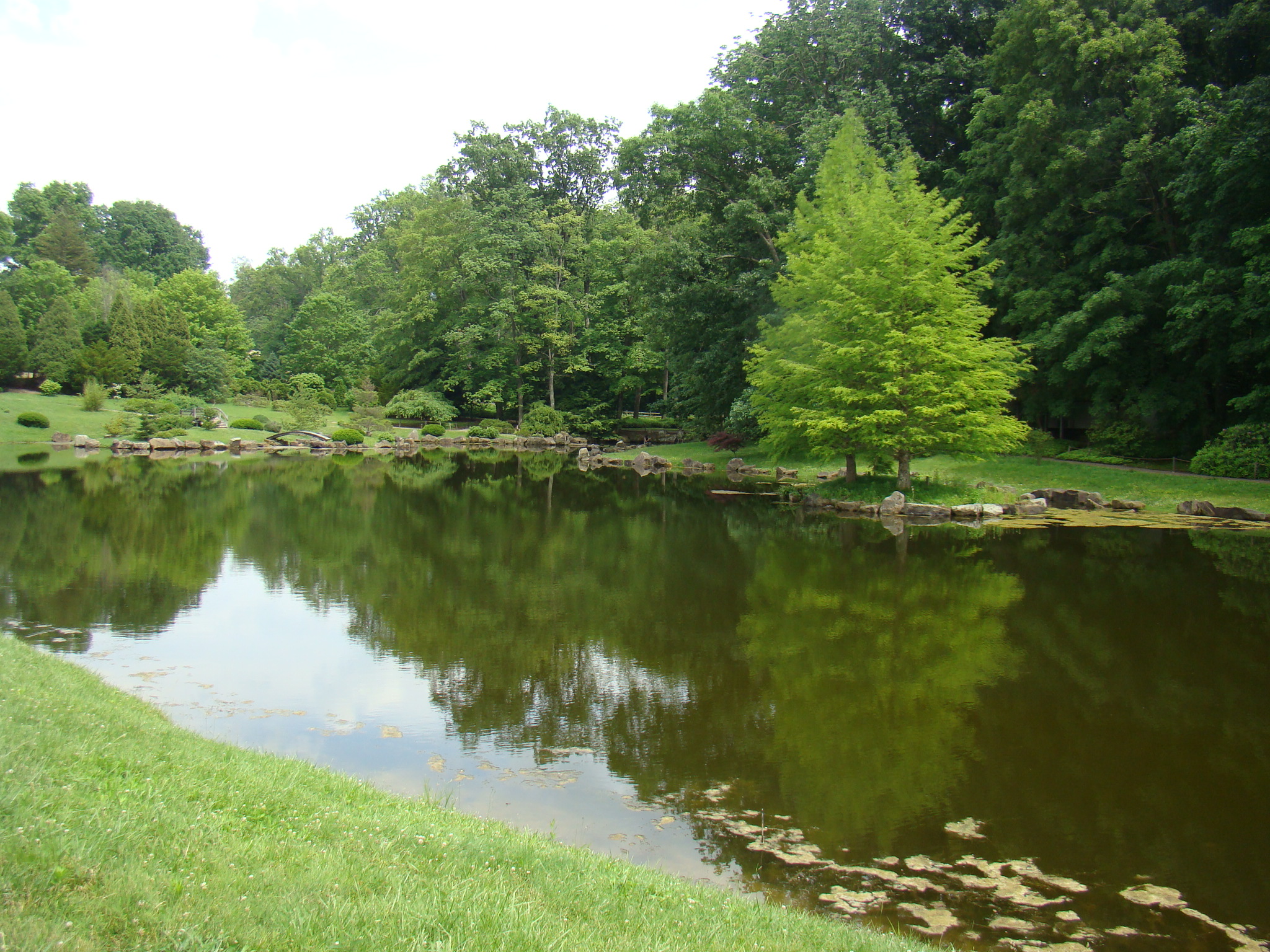
Tranquil Lake

Tranquil Lake

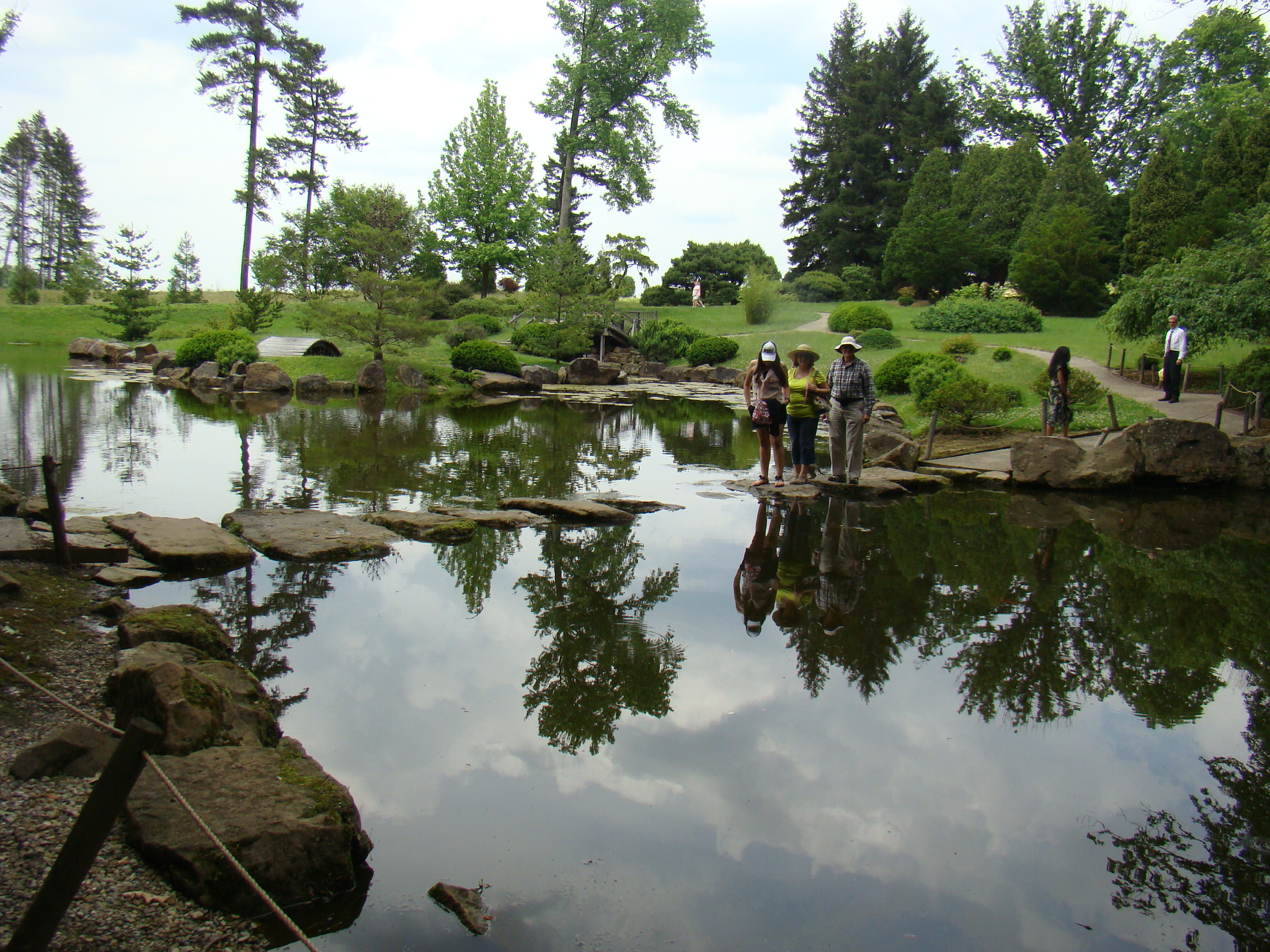
A tranquil pond  was the centerpiece for this magnificent garden, which has many large rocks. Gumdrop and cherry trees added to the landscape. This peaceful path lead up the hill to a reflecting pool surrounded by plants from across the ocean. There truly is peace in beauty.

To step or not to step, that is the question.

To step or not to step, that is the question.

The bridge lead to a path of stepping stones crossing the remainder of the pond. Guests that day seemed to be testing the water just a bit before taking a frightening step for some. All around the stepping stones and under the bridge, bright colored koi put on a show for visitors.

Japanese Pagoda

Japanese Pagoda

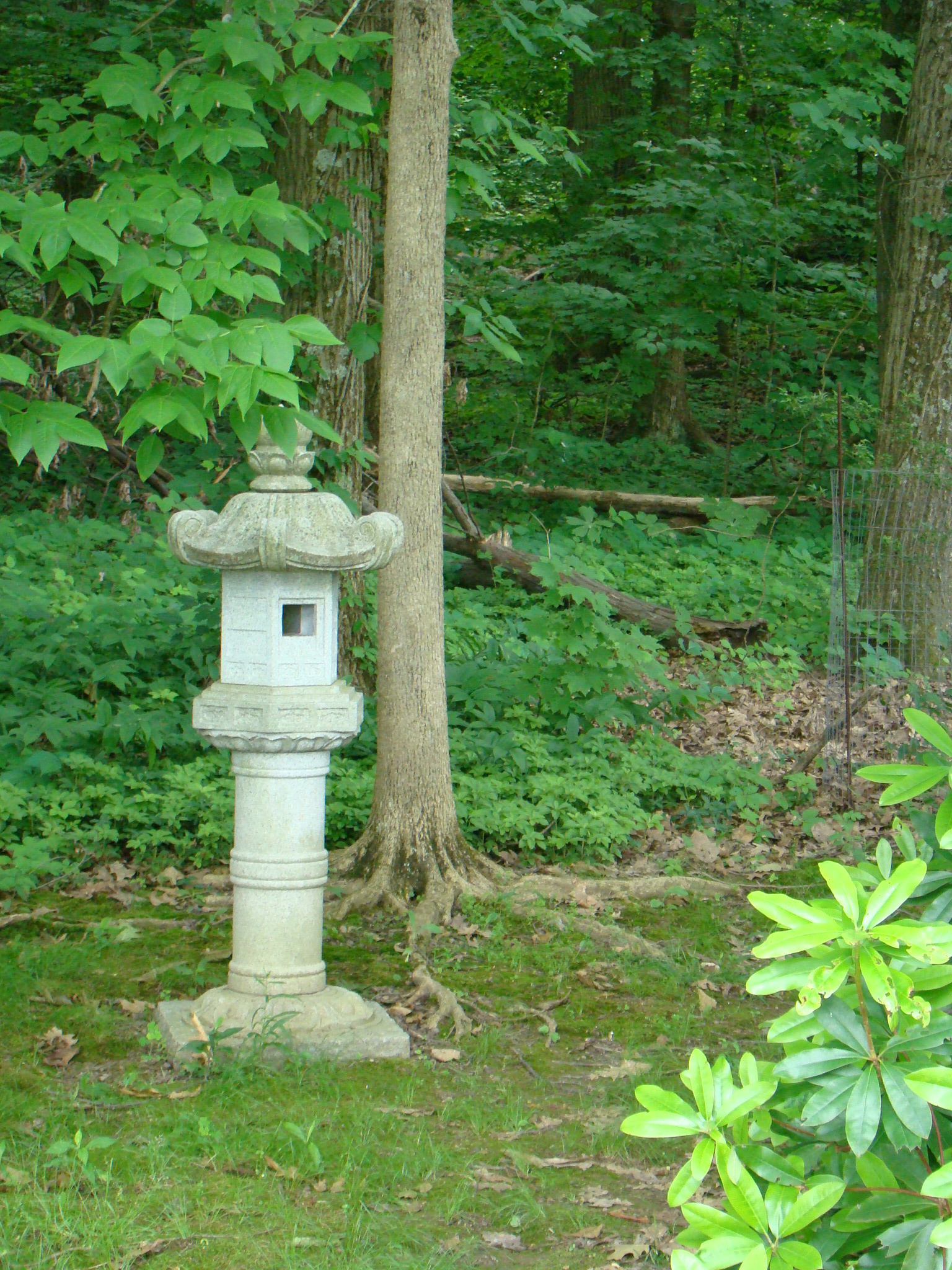
Along the paved pathway, there were various statues and pieces of artwork. A small pagoda appeared at the edge of the woods – a place to stop and worship in the Buddhist tradition. This tall pagoda lantern added a touch of tranquility along the walk.

Tea house or meditation house

Tea house or meditation house

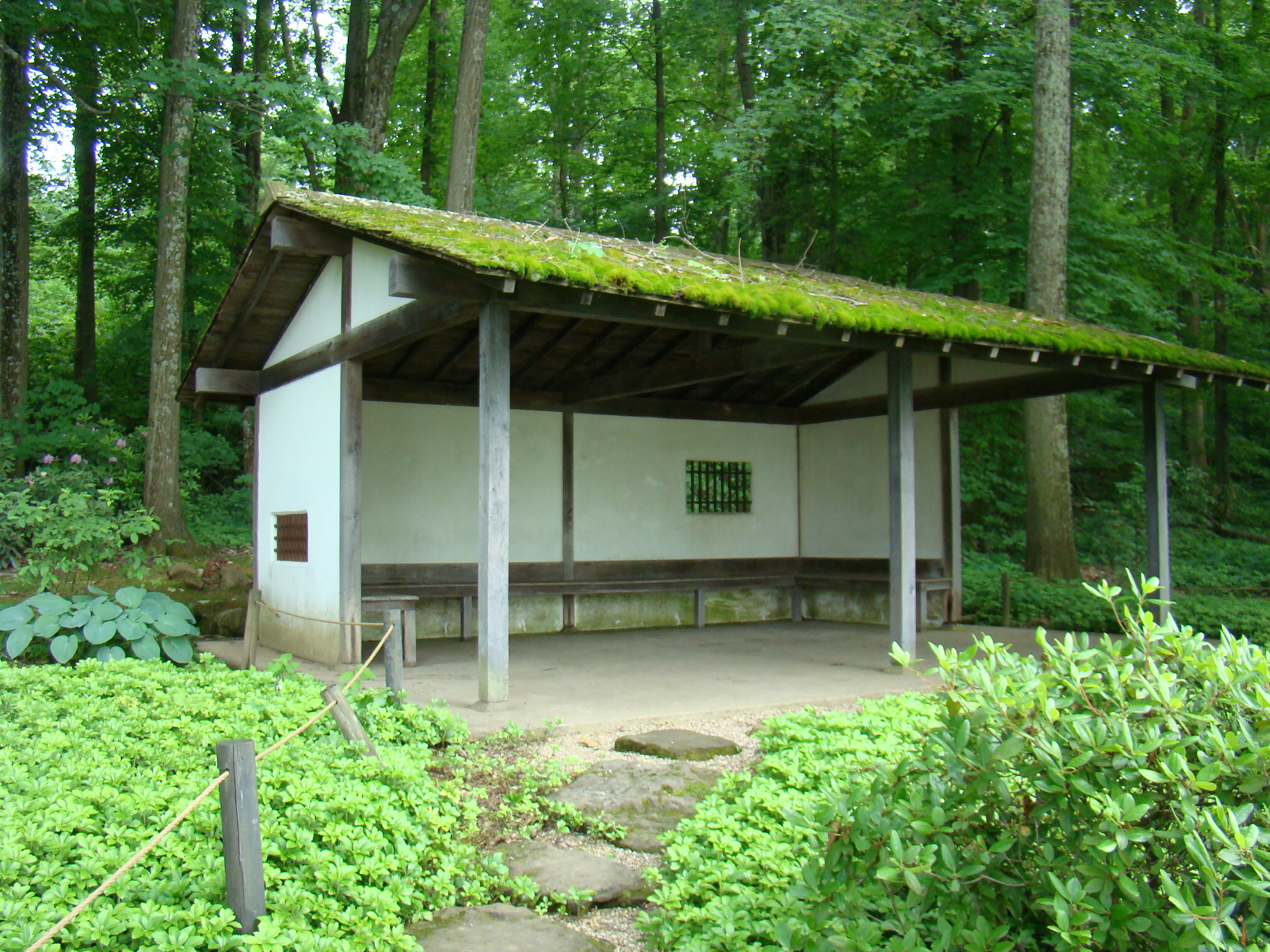
The meditation room made a relaxing place to sit and enjoy the silence, especially in the early morning or bundled up on a cold winter day. This rustic, roofed shelter protects from the elements and provides a place to sit and reflect.  This serene corner of the garden casts its spell as you drift off to dreams and peaceful thoughts.

Stops at this soothing and peaceful place are pleasant anytime of the year. The next time you pass the sign that says Dawes Arboretum, consider stopping by for a spell.

Dawes Arboretum is located near Newark, Ohio just off I-70.  Take Exit 132 , Route 13 , and proceed North on Route 13 for about three miles.  The entrance is located on the left hand side of the road at 7770 Jacksontown Road. Follow the signs inside to the Japanese Garden. It’s a relaxing experience.
Marietta Mound Cemetery in Marietta, Ohio

Marietta Mound Cemetery in Marietta, Ohio

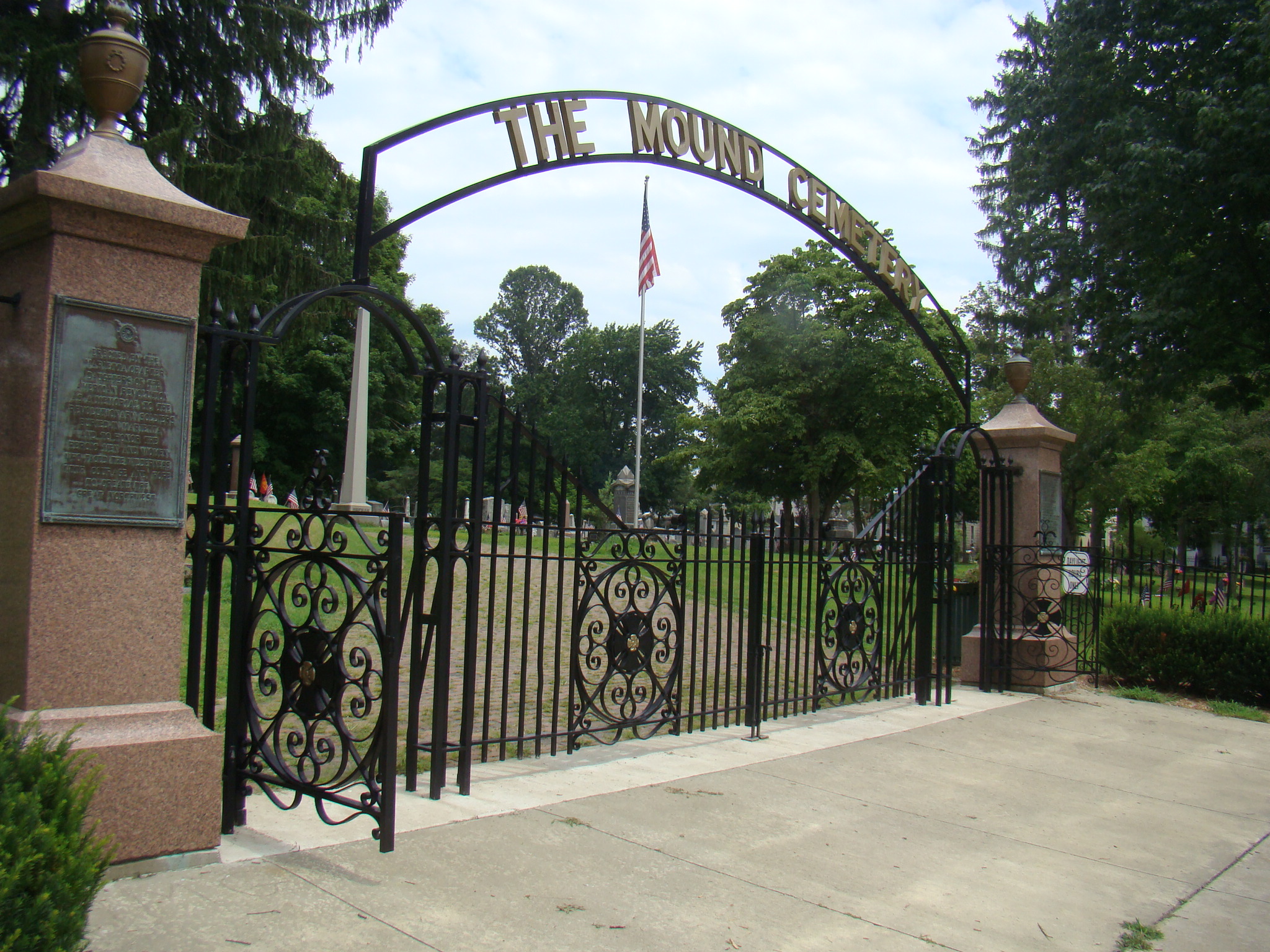
Since the prehistoric Moundbuilders came to the Ohio Valley and Marietta, sometime between 800 BC and 700 AD, those early ancients remain quite mysterious. It is thought the Adena culture built The Great Mound, where Marietta Mound Cemetery is today located. The Hopewell, descendents of the Adena culture, are responsible for a portion of the mounds in the Marietta complex.

Sacra Via, The Sacred Way

Sacra Via – The Sacred Way

From the Muskingum River to what is now 2nd Street, a roadway called Sacra Via, meaning Sacred Way, was constructed of white crushed mussel shells, which made a solid pavement. The reflective light from the moon on the mussel shells almost made it seem like a lighted path when the ships would dock on the Ohio and Muskingum RIvers. Today that Sacred Way is maintained as a public park where the Ohio Land Company members are honored.

Large Pyramid Mound in Marietta Mound Complex

Large Pyramid Mound in Marietta Mound Complex

Sacra Via continued to what is now called the Marietta Earthworks. This archeological complex included a large square enclosure surrounding four flat-topped pyramidal mounds, another smaller square and the conical shaped mound in the cemetery. Brick walls enclosed the Sacred Way from the Muskingum River to the Quadranaou, the largest flat topped earthen pyramid. The walls of the enclosure were aligned with the winter solstice since astrology played a major role in celebrations and rituals of those early cultures. The bricks were removed in 1843 to use as home foundations.

Great Mound, Conus

Great Mound – Conus

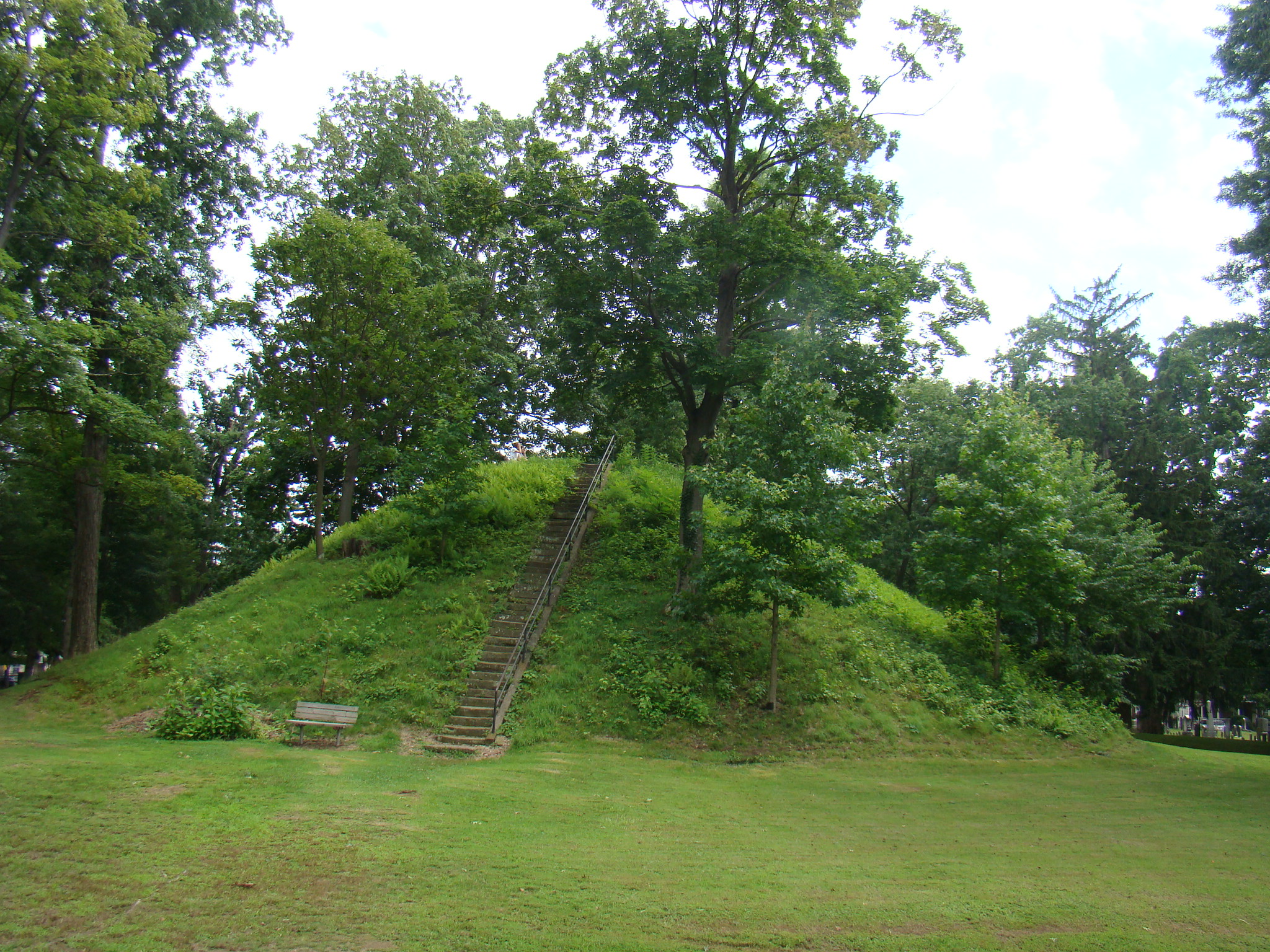
The roadway ended at the largest mound, called Great Mound or Conus, where city developers created a cemetery, Marietta Mound Cemetery, in 1801.  More Revolutionary War officers are buried in this county than at any other place in the United States. General Rufus Putnam and General Benjamin Tupper, both founders of the Ohio Land Company, are buried here. Serving originally as the burial place for chieftains, 30′ tall Conus is the Adena culture’s largest conical, ringed mound still visible today.

Rock covering capsule at top of the Great Mound

Rock covering capsule at top of the Great Mound

To keep the mound from being destroyed, original pioneers in Marietta had the cemetery fenced in back in 1837. When a slight excavation of the site occurred, bones of an adult Adena Indian and some of his possessions were discovered buried in a horizontal position and covered with a large stone. Once it was discovered this was a burial site, further excavation was halted. The mound was sowed with grass, and stone steps were built to the top. Those same steps can be climbed today with the addition of a handrail for easier climbing.

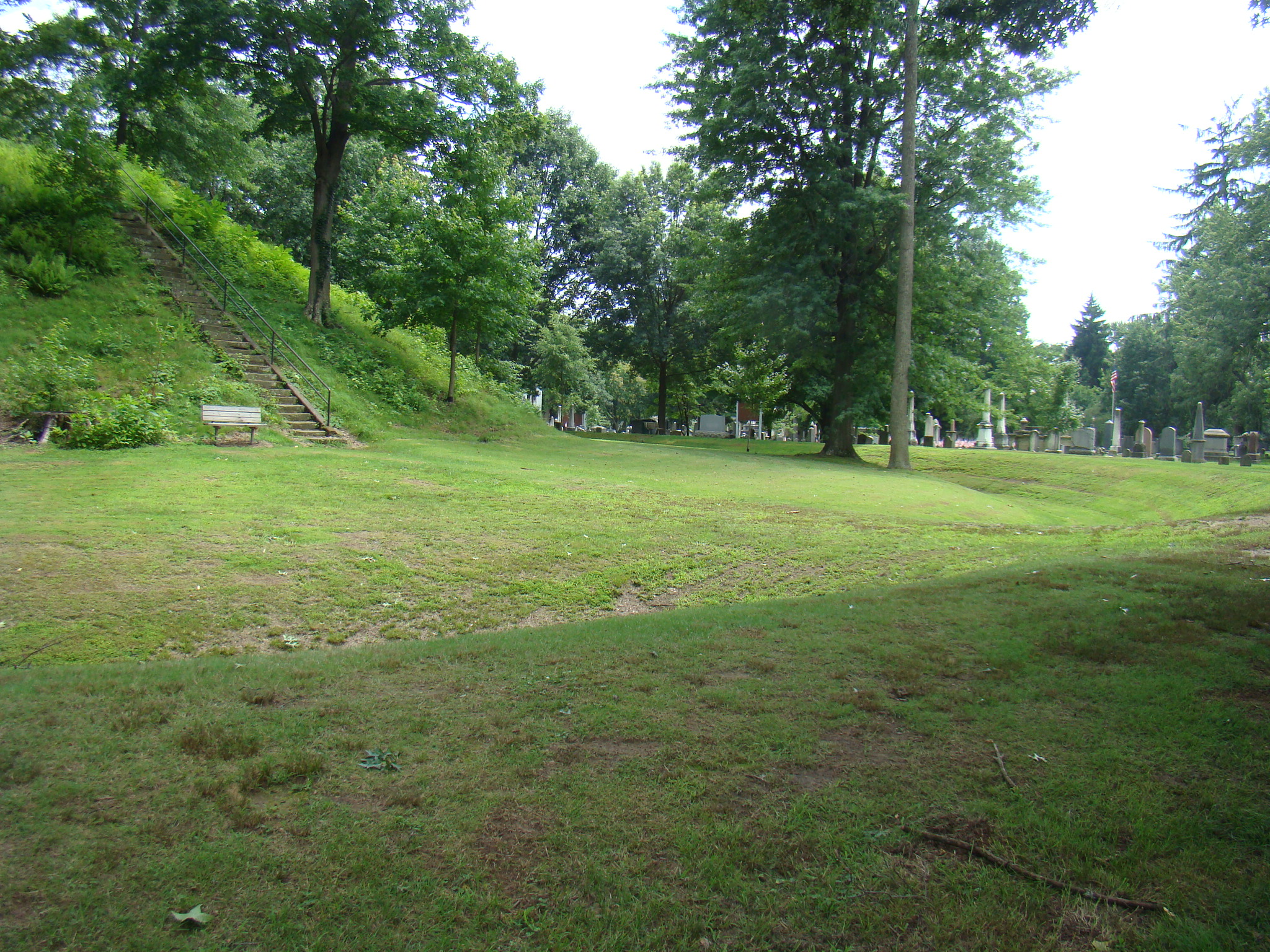
Ditch and embankment surrounding The Great Mound

Ditch and embankment surrounding Conus

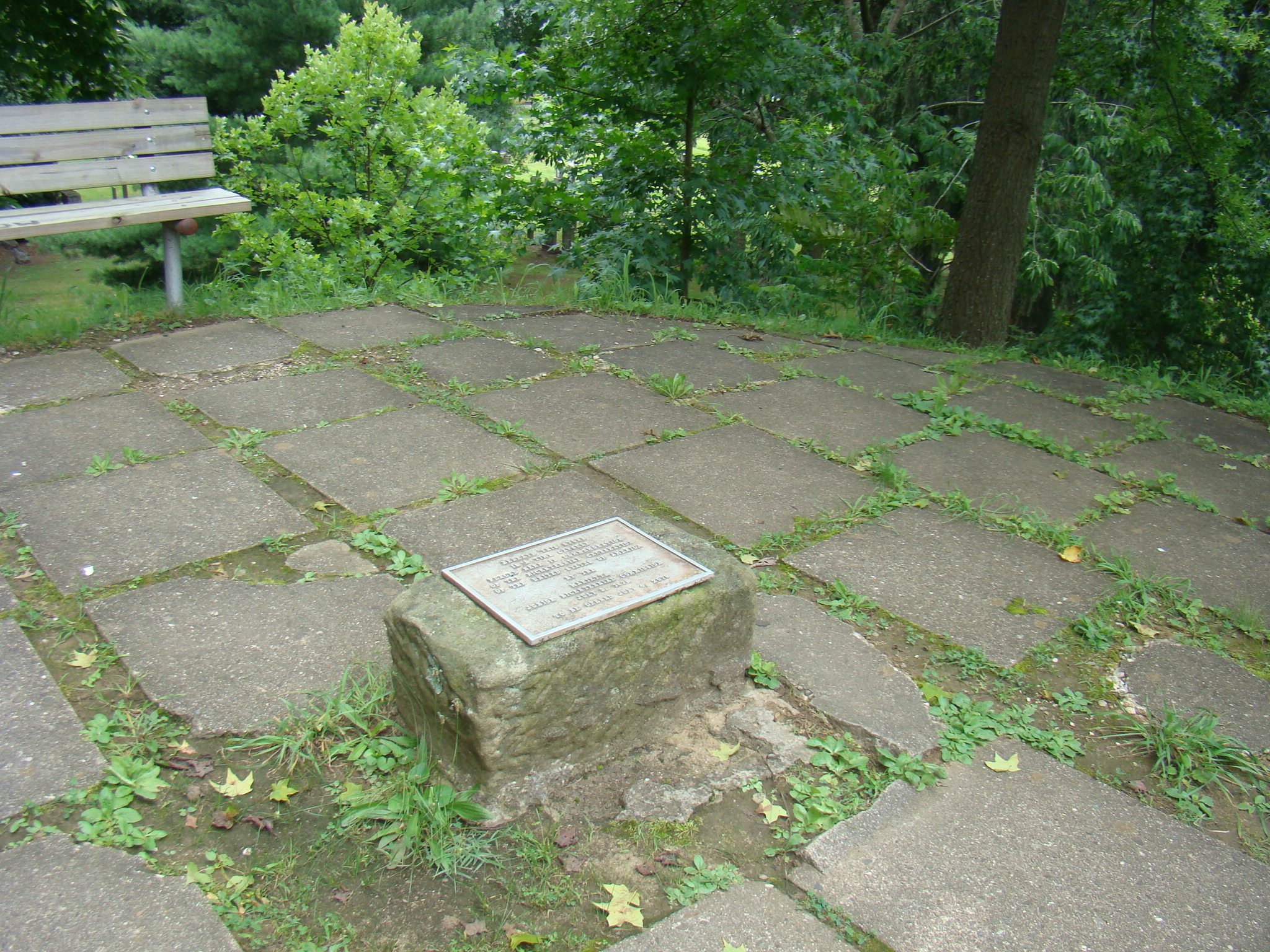
After climbing 45 steps, the top of the tree covered mound has benches for resting and viewing the city of Marietta,   A cool breeze was welcome after the strenuous climb but it lasted only a minute.  From the top you can see the 15′ wide ditch and  4′ deep embankment that surround Conus.  An interesting stone at the top of Conus states: Beneath this stone is a time capsule placed here in commemoration of the bicentennial celebration of the United States of America. Junior Bicentennial Commission, July 3, 1976 to be opened July 4, 2076.

Here in this cemetery, seen from high on the mound, are buried a Moundbuilder chief, veterans of the French and Indian War, the Revolutionary War, the War of 1812, the Mexican, Civil and Spanish American Wars plus many heroes of peace. The spirits of those who helped build this nation live on.

Marietta Mound Cemetery is located in Marietta, Ohio off I-77. Take Exit 1 along the beautiful Ohio River following Route 7 West. The cemetery is located at the intersection of 5th Street and Scammel Street. From Route 7, turn right on Greene Street / 7th Street, then right onto 4th Street and another right onto Scammel Street. The Cemetery will be directly in front of you. You can’t miss it!

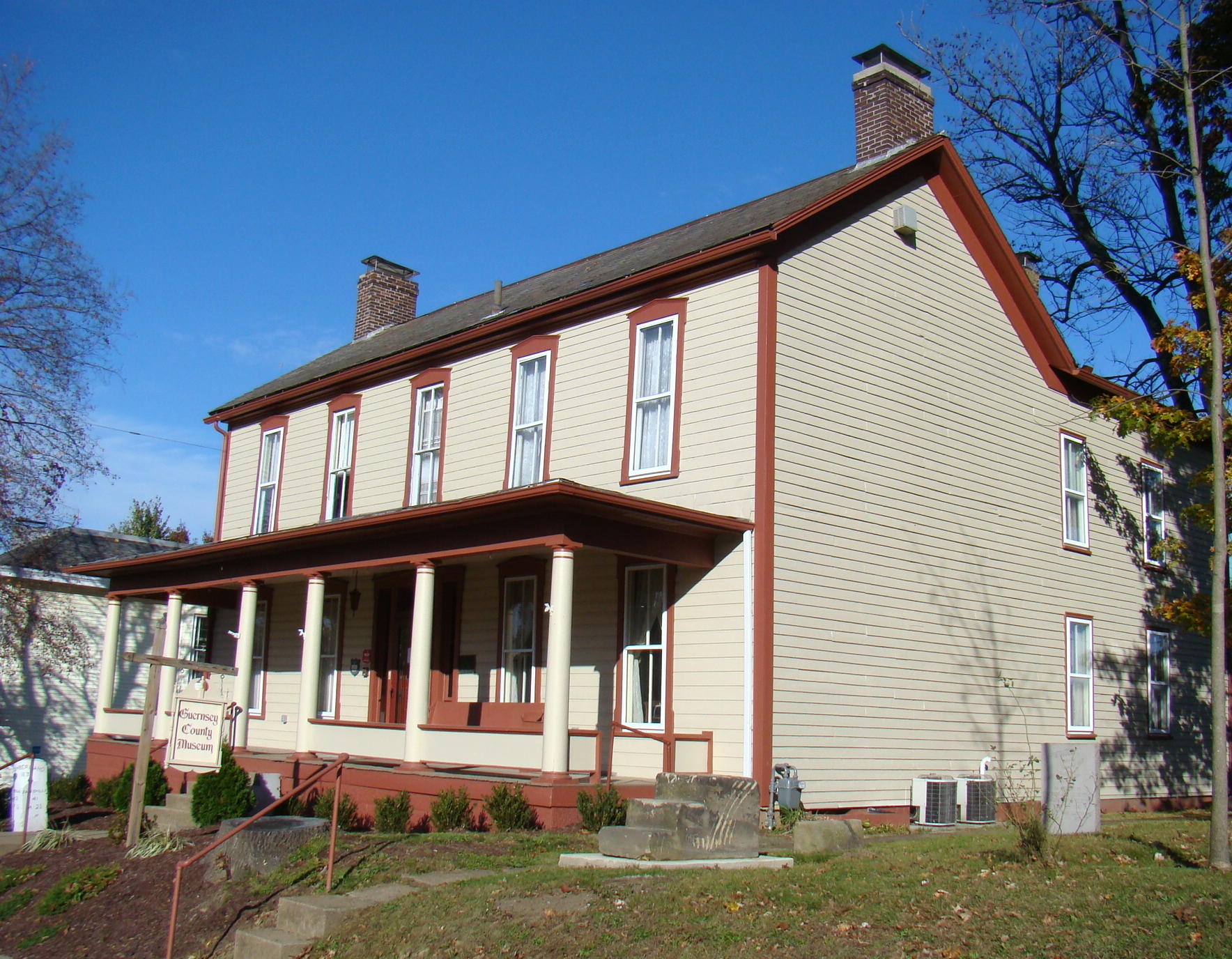
Guernsey County Historical Museum

Guernsey County Historical Museum

Located in the oldest frame house in Cambridge, the Guernsey County Historical Museum, expanding since 1963, presents a vast array of memorabilia from by-gone years. The new curator, Judy Clay, gave a very knowledgeable tour of the museum from top to bottom, and is constantly reorganizing displays.

Built in 1823, what is known as the McCracken – McFarland House sat on the corner of Steubenville Avenue and 8th Street.  Then in 1915, the house was moved down the block and turned on its foundation. The red stained glass in the front door is original, having been moved without damage.  Outside the house the yard has some interesting features. There is a 4′ tall National Trail mileage marker, and the original steps from the 1823 house. Since the house is so old, you might think there would be spirits wandering its halls, but not so say those who work there. It is the quietest old house imaginable and nothing unusual happens there…at least not yet!

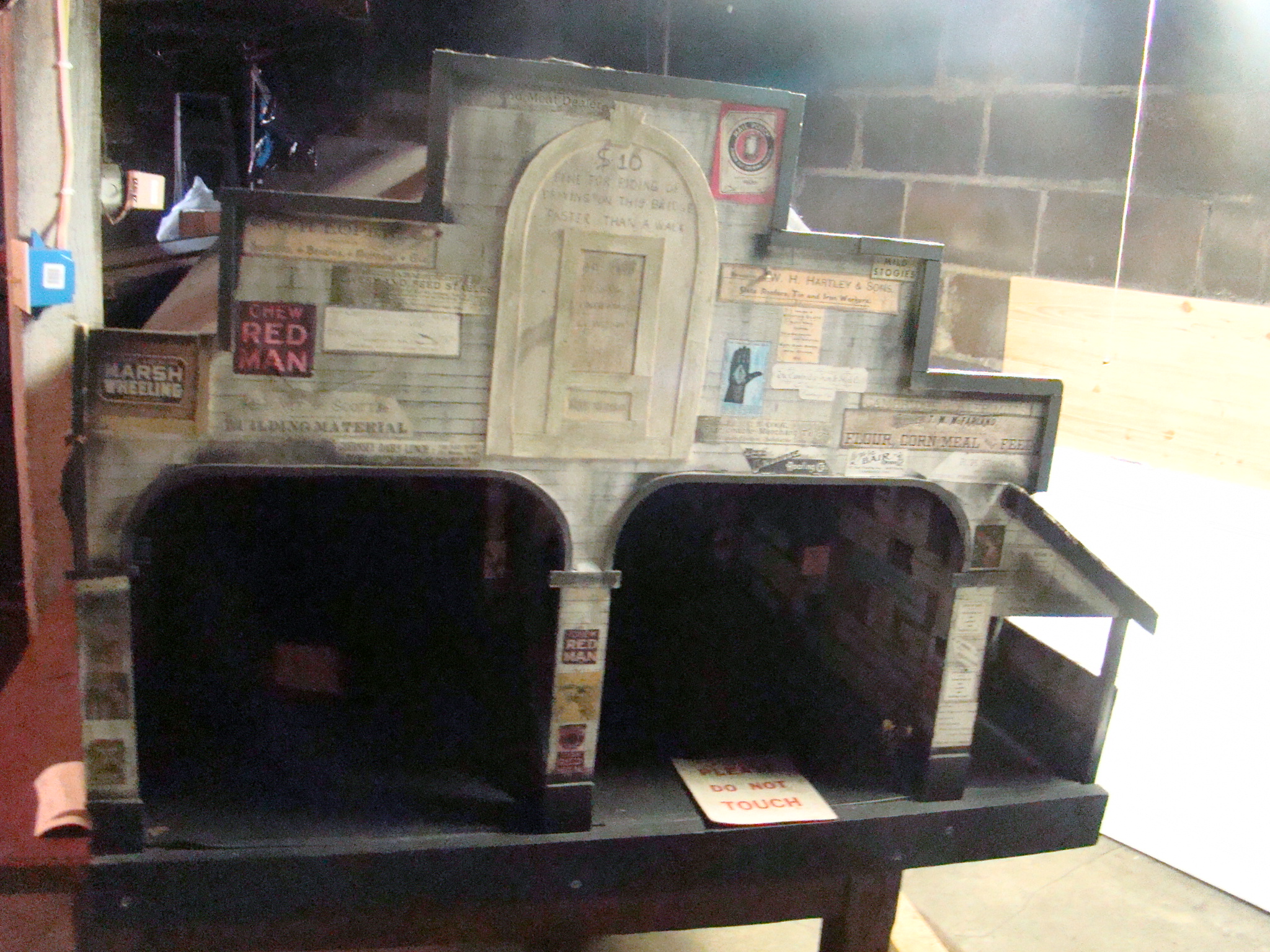
Bridge crossing Wills Creek

Bridge crossing Wills Creek – today replaced by the viaduct.

An interesting sidenote is that this house was actually part of the Underground Railroad and the McCracken family was active in helping the slaves move to safety. Today you will find a replica of the wooden, covered, two-lane bridge that crossed Wills Creek stored in the basement, where most likely slaves were hidden years ago.

At that time, homes had two sitting rooms.  One was for family use, while the other was a formal parlor used only when special guests arrived. A beautiful marbletop table that had belonged to the McFarland family has a place of honor in the formal parlor. Pieces of Cambridge Glass and Universal Pottery are scattered throughout the house, as these were two important means of earning a living during those early years in Guernsey County..

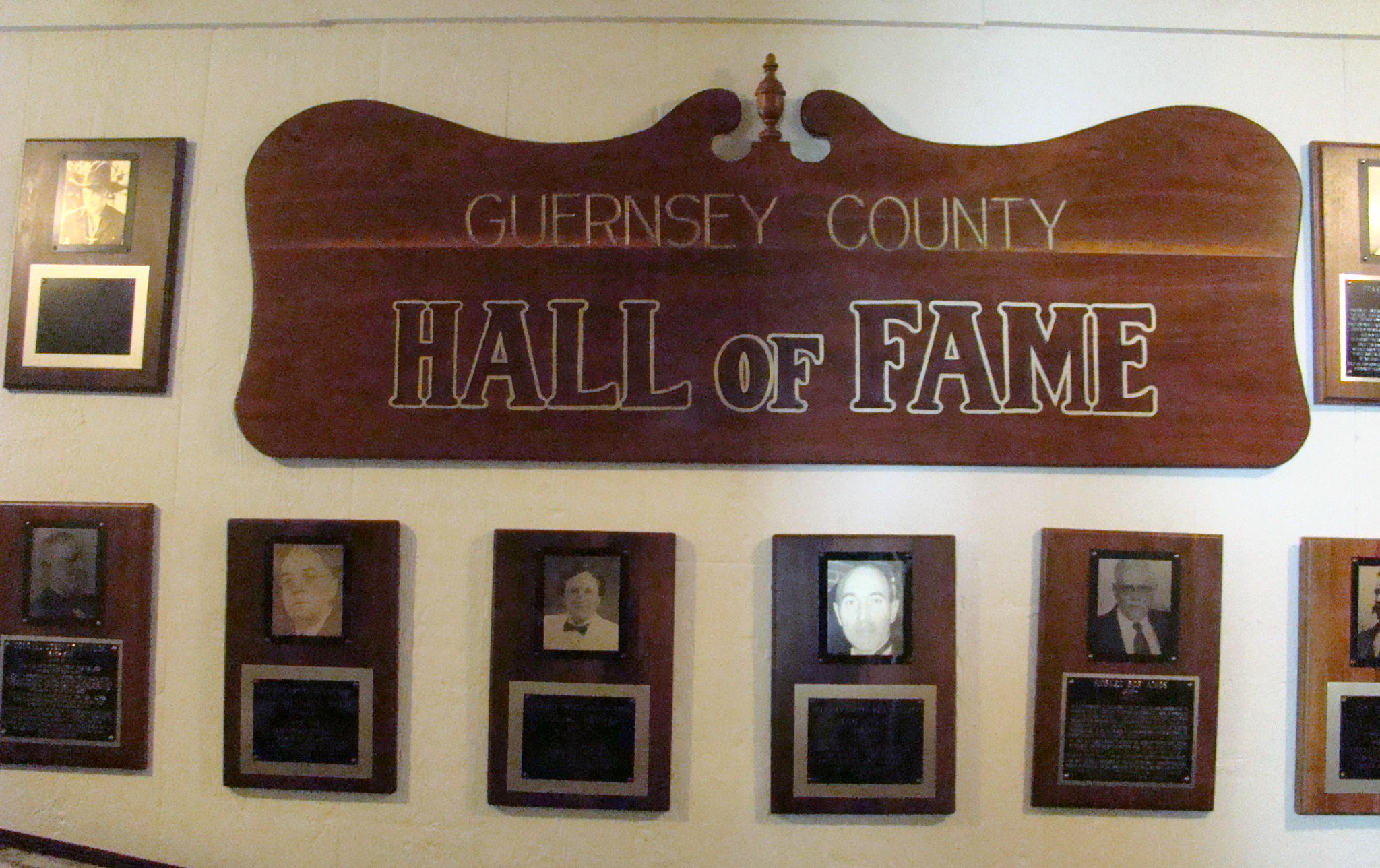
Guernsey County Hall of Fame Wall

Guernsey County Hall of Fame.

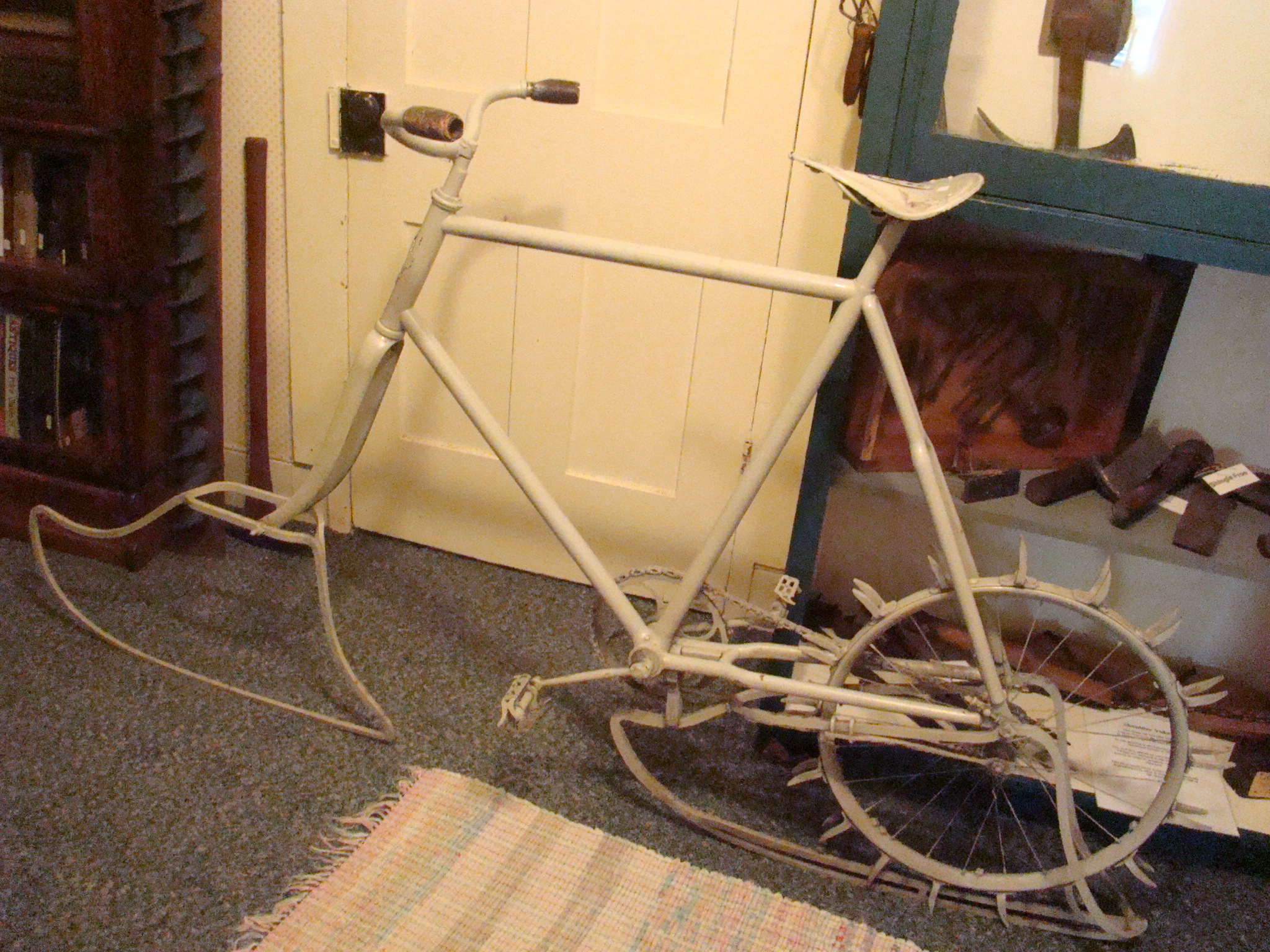
Ice Bicycle

Ice Bicycle

The beautiful family sitting room felt cozy in its time, as this was the first house in Cambridge to be heated with gas; however, candle light was still used for reading. The walls in the hallway are covered with pictures of people who have made a difference in the area…the Guernsey County Hall of Fame.

The Tool Room contained an old mail cart and an ice bike. The mail cart was actually used by the Cambridge Post Office to pick up mail from the Cambridge Train Station. Among other items was a cigar press from the Quaker City Company that made cigars.

Every room upstairs had a special theme. The Military Room contained items from Civil War days to WWII. A small sewing room held a spinning wheel and a weasel, which when it got filled with thread – went pop! That was the basis of the song, “Pop Goes the Weasel”. A dentist’s office, Dickens’ room, and rooms packed with antique ladies clothes finished off the top floor.

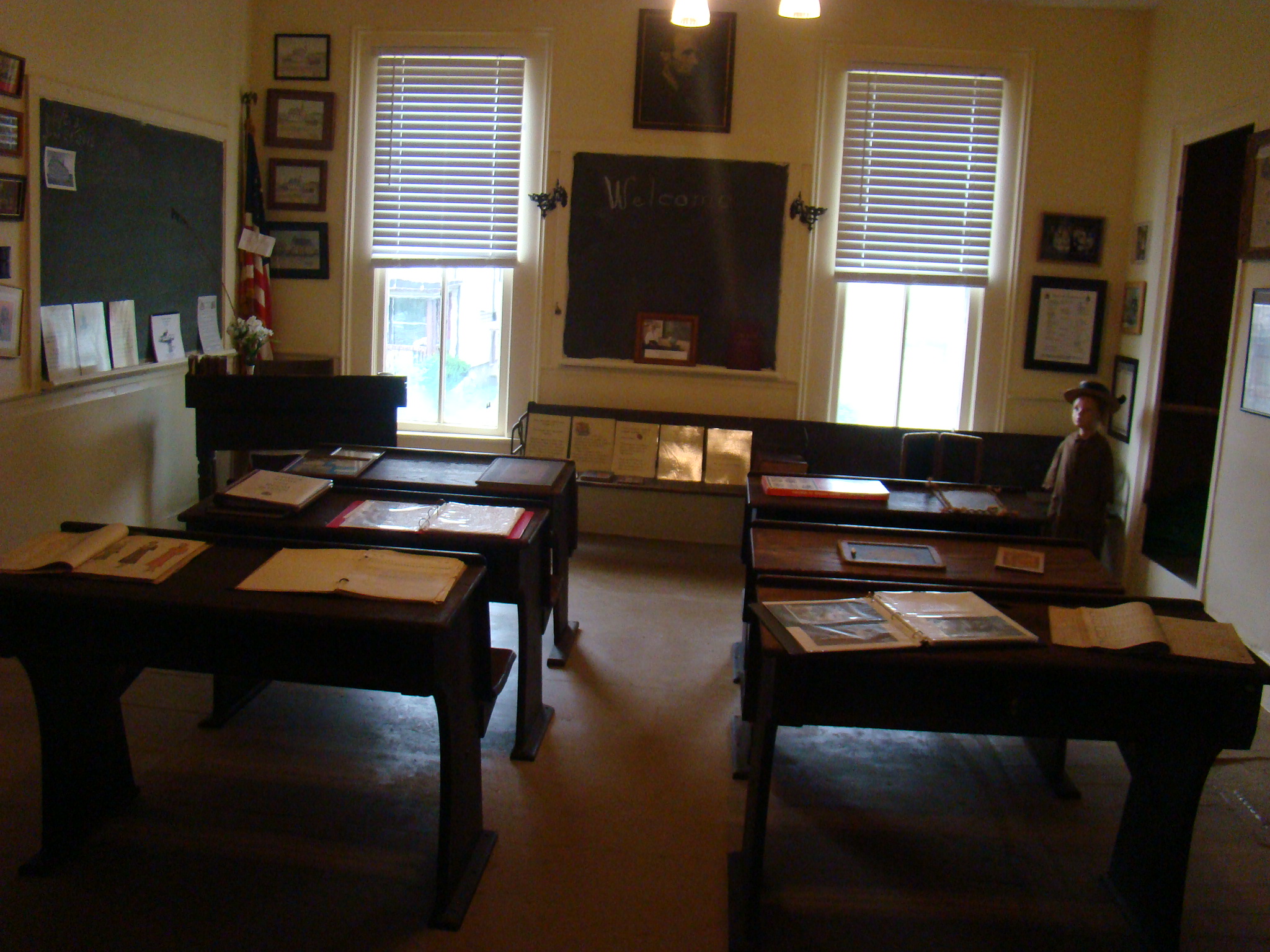
Old One-room school

Old One-room school

The One-Room School display contained traditional desks, teacher’s desk, blackboard, and some of those old books that were used long ago. On special occassions, retired teachers will describe basic lessons and activities in a one room school.

Bountiful treasures reside inside this old frame house. Perhaps you would like to roam the halls and revive some old memories. If you have any pieces of history you would care to share, please contact the museum. Every small town should take pride in having a special place to keep the history of their area alive for future generations.

Guernsey County Museum is located in Cambridge, Ohio near the crossroads of I-70 and I-77. The easiest route is from I-70, Exit 178, which is State Route 209 West. Follow 209 straight to the Court House. Make a left hand turn and a quick right turn on 8th Street right beside the Court House. After one block, make a right hand turn and a quick left turn on 8th Street again. The Museum is located just a few doors down on the right hand side at 218 N. 8th Street. 

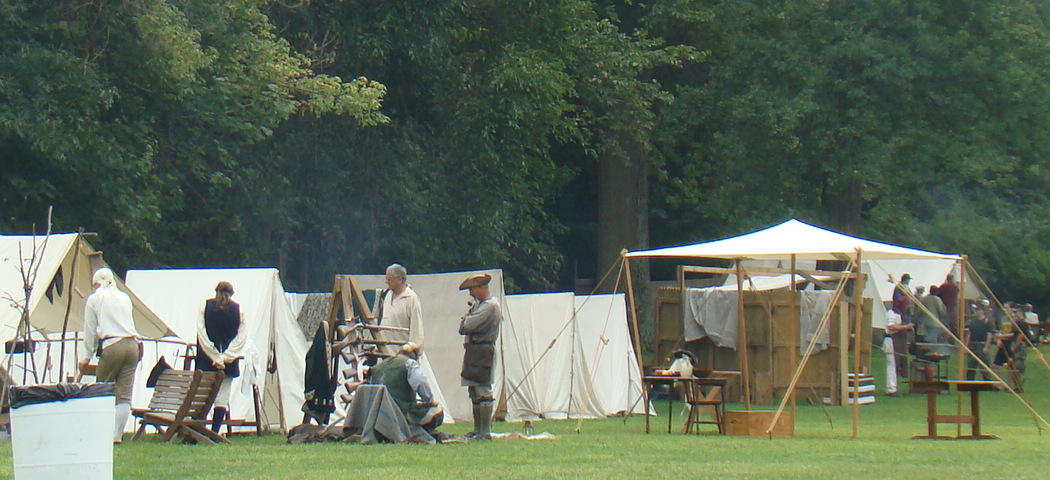
For Henry Days Encampment at Oglebay Park

Fort Henry Days Encampment at Oglebay Park

After driving the scenic, winding, mountain roads of Oglebay Park, the scene changed to one resembling a Revolutionary War Camp. We had arrived at Fort Henry Days celebrating life as it was on the frontier in the late 1700’s. Fort Henry was built as protection from the Indians during Dunmore’s War and also used during the Revolutionary War. Originally it was called Fort Fincastle in honor of Viscount Fincastle, Lord Dunmore, Royal Governor of Virginia. Later the name was changed to Fort Henry, to honor Patrick Henry, the Revolutionary Governor of Virginia.

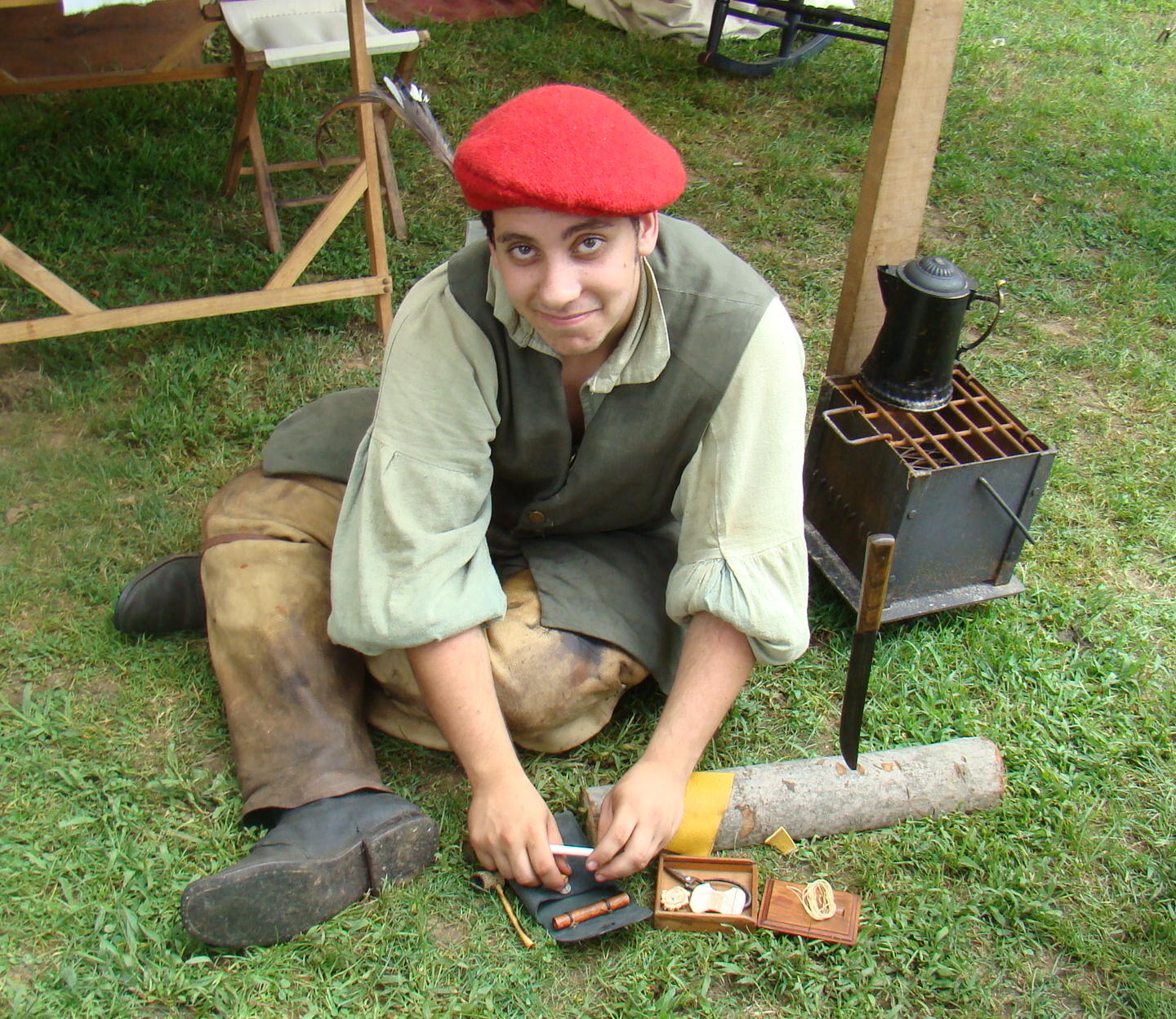
Young settler makes a stem for his pipe.

Young settler makes a stem for his pipe.

A stroll through the grounds indicated there would be a variety of ideas to explore with people who were very knowledgeable regarding the war as well as life during that time. Everyone was camped in tents using only supplies and equpment that would have been available during the late 1700’s.  One family told of seeing deer grazing nearby and even having a red fox and her cub come into their tent.

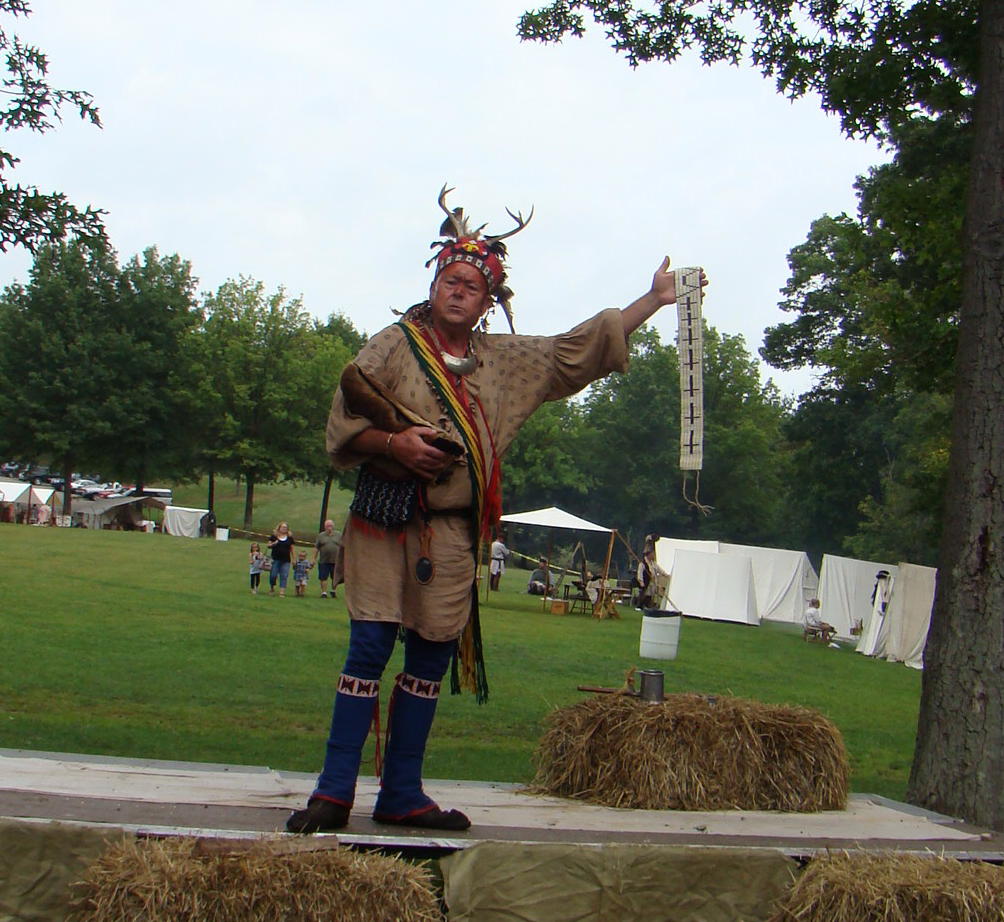
Near the center of the encampment, benches had been placed to face a platform made of bales of straw covered with sheets of plywood. This was the spot for today’s presentations. Dan Cutler, dressed in Indian garb with a headdress made of antlers, portrayed Chief John Logan. This mild-mannered chief extended a wampum belt of friendship to the white man. His kindness shone through when he made a pair of beaded deerskin moccasins for a barefoot, little girl of the settlers.

Chief Logan displays a Christian peace offering.

Chief Logan displays a Christian peace offering.

Chief Logan told of the Indians’ struggles with the settlers at Yellow Creek after they had killed his brother and other female relatives.  Chief Logan, who by Indian custom had the right to retaliate for their murders, then raised a hatchet that had long been buried. His hatchet handle contained fourscore notches – one for each scalp taken in their subsequent attacks on settlers.

Later in the afternoon, Dan Cutler also portrayed Chief Cornstalk and told tales of the chief’s adventures at Fort Randolph on the Scioto River, where they floated quietly on rafts of driftwood to surprise the settlers. Having the standing of warrior was very important, but some felt it important for the young men to get an education. When the educated returned to their tribe, they were considered “good for nothing” …no longer warriors.

Chief Cornstalk told of the Ohio Company promising the land to the Indians, but then supporting the British and pushing the Indians off their promised land. He vividly remembered the first surveyor of the Ohio Company, George Washington, who didn’t even know how to read and write…according to Chief Cornstalk..

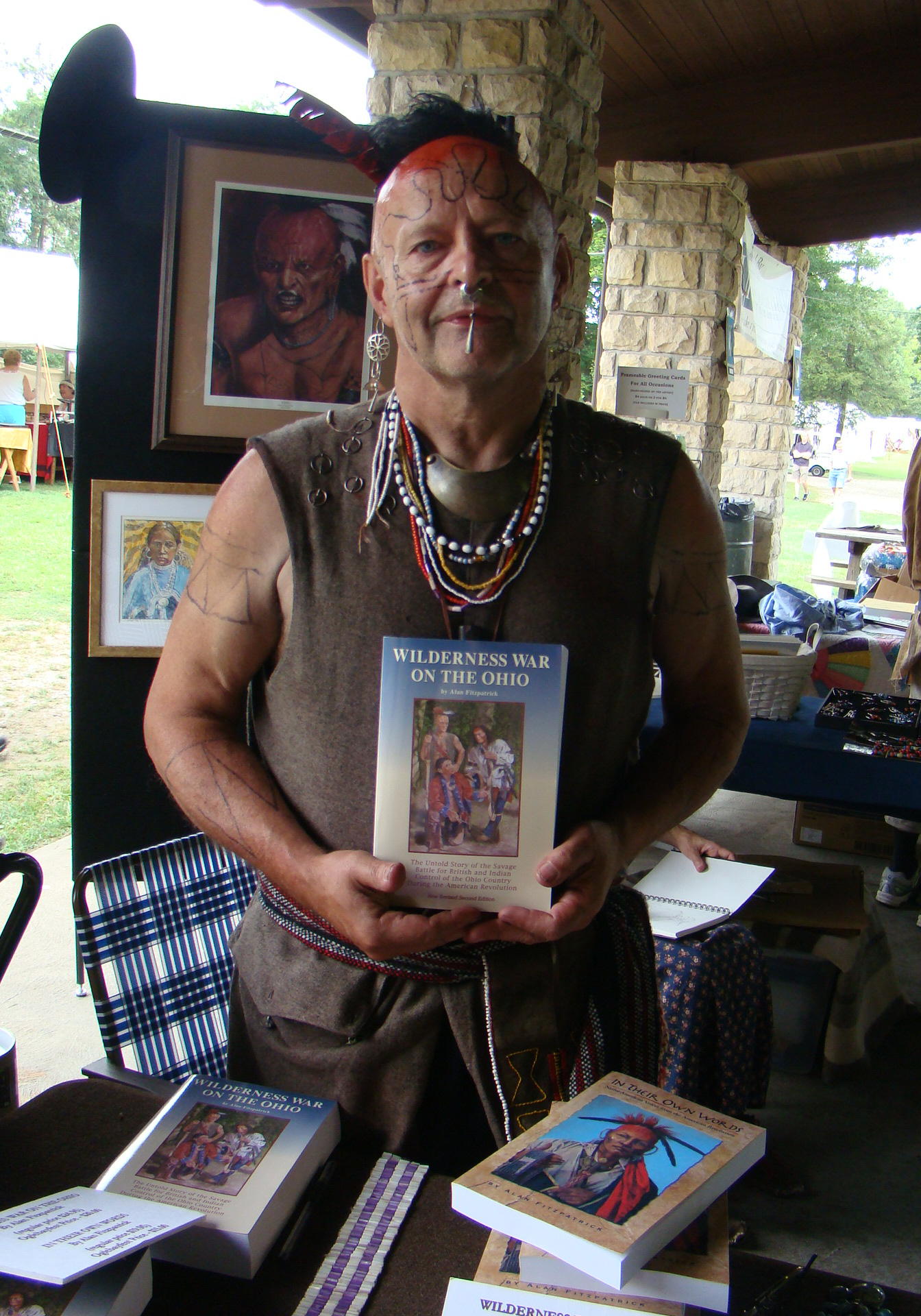
Alan Fitzpatrick, author of Indian legends

Alan Fitzpatrick, author of Indian legends

The grounds at Oglebay Park were filled with battle re-enactors, people depicting life of the times, and vendors selling wares. Under the pavilion were located Sons of the American Revolution, Daughters of the American Revolution, Wheeling Area Historical Society, and authors selling their books. One of these authors was Alan Fitzpatrick, author of Wilderness War on the Ohio and In Their Own Words. His tales of life at that time are based on written records he has found. Anyone in that era who could read and write was very highly sought after with quill, ink, and tablet. There was also beautiful handmade Native American jewelry for sale…my Fort Henry Days’ remembrance – a thunderbird necklace!

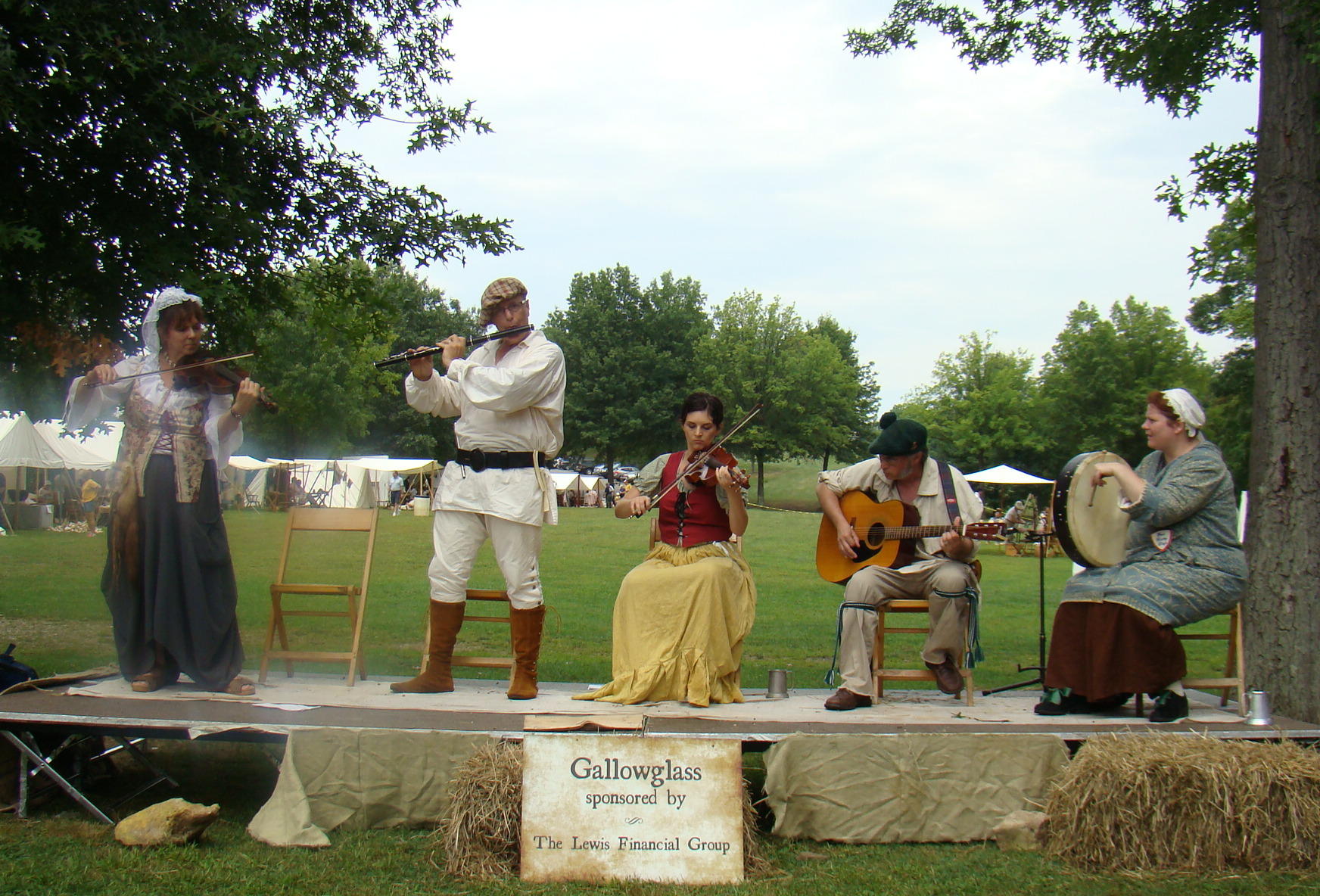
Gallowglass musical entertainment

Gallowglass provides musical entertainment.

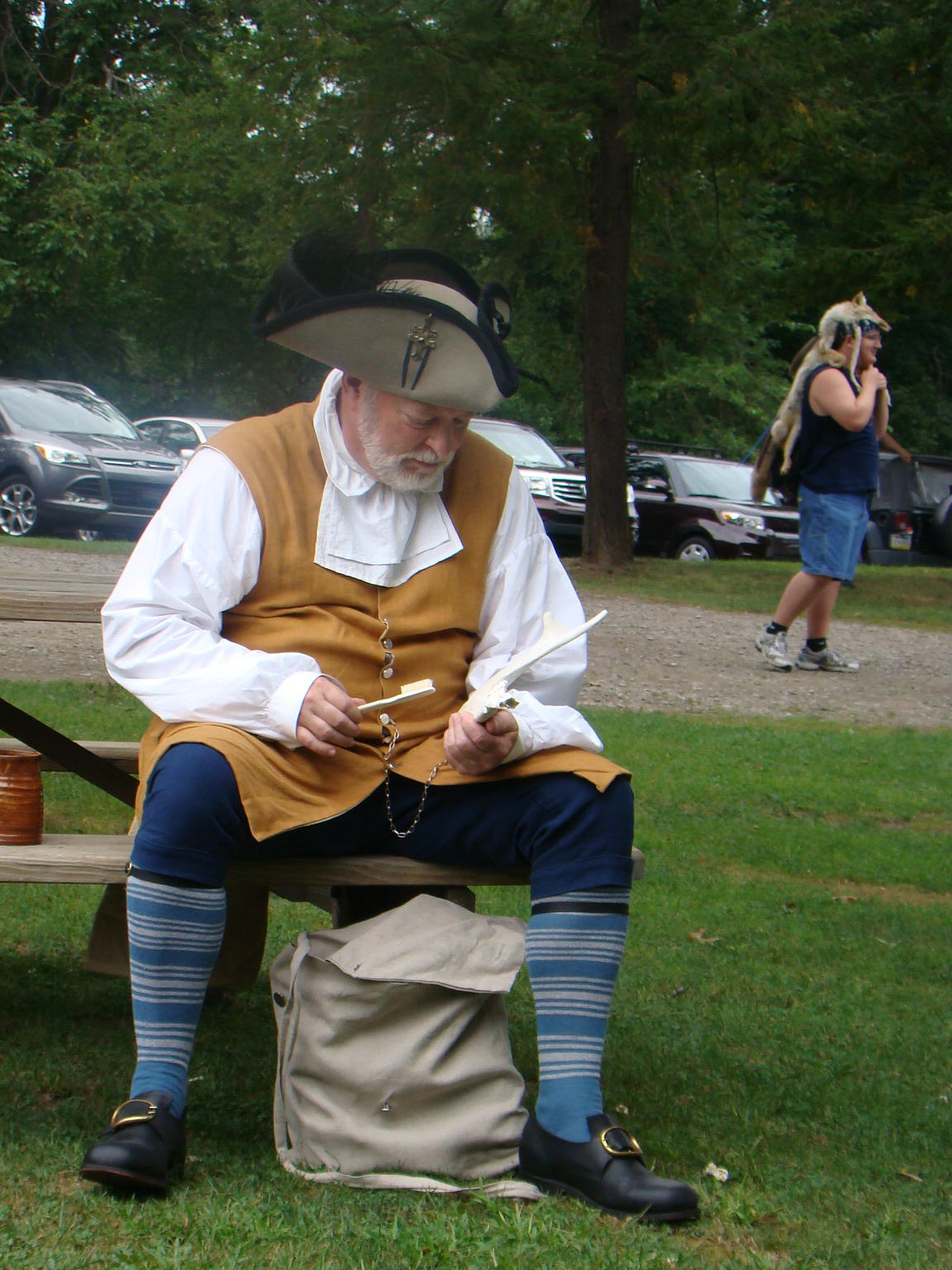
Member of the Wayward Companions plays a jawbone.

Member of the Wayward Companions plays a jawbon

Musical entertainment was provided by Gallowglass, a lively group playing and singing period music as well as old Irish tunes. There seemed to be a lot of drinking ballads in the mix.This group has been performing at Fort Henry Days for several years and their performance contained not only songs but humorous stories as well. Included in their performance were: Welcome Home, Nancy Whiskey, and several reels. A member of the Wayward Companions joined in on many of their songs by playing a bovine jawbone with a period bone toothbrush that he had brought from Gettysburg.

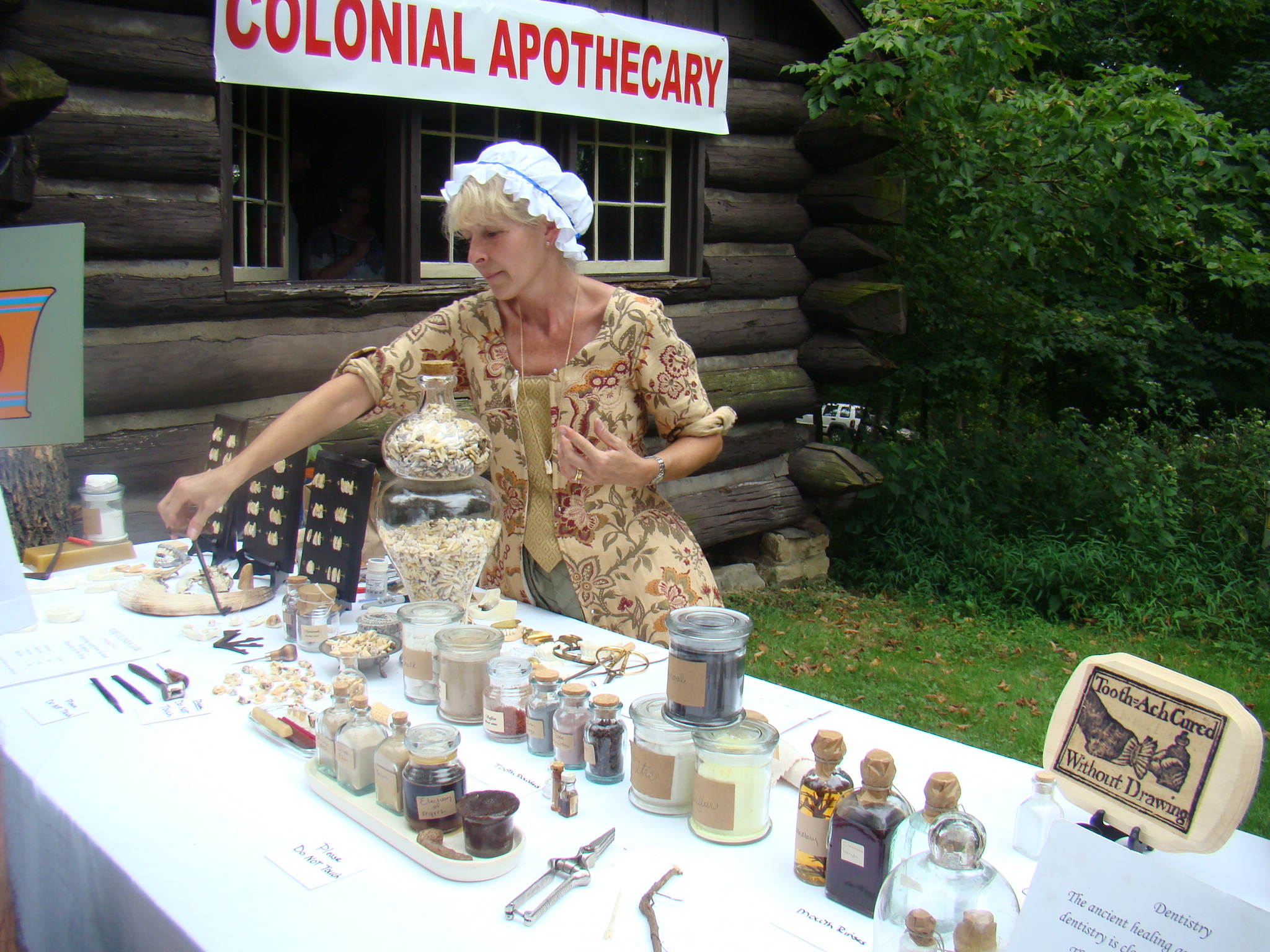
Dr. Jessica Fisher, dentist

Dr. Jessica Fisher, dentist

An interesting frontier dentist informed those gathered at her office about dental practices of that time.  Arsenic was one favorite remedy for a toothache. Their favorite mouthwash was a combination of mint or rosemary in orange water or rose water mixed with alcohol, of course. When someone died or was killed, their teeth were removed to replace those lost by the living. ..an early concept of “tooth implants”?

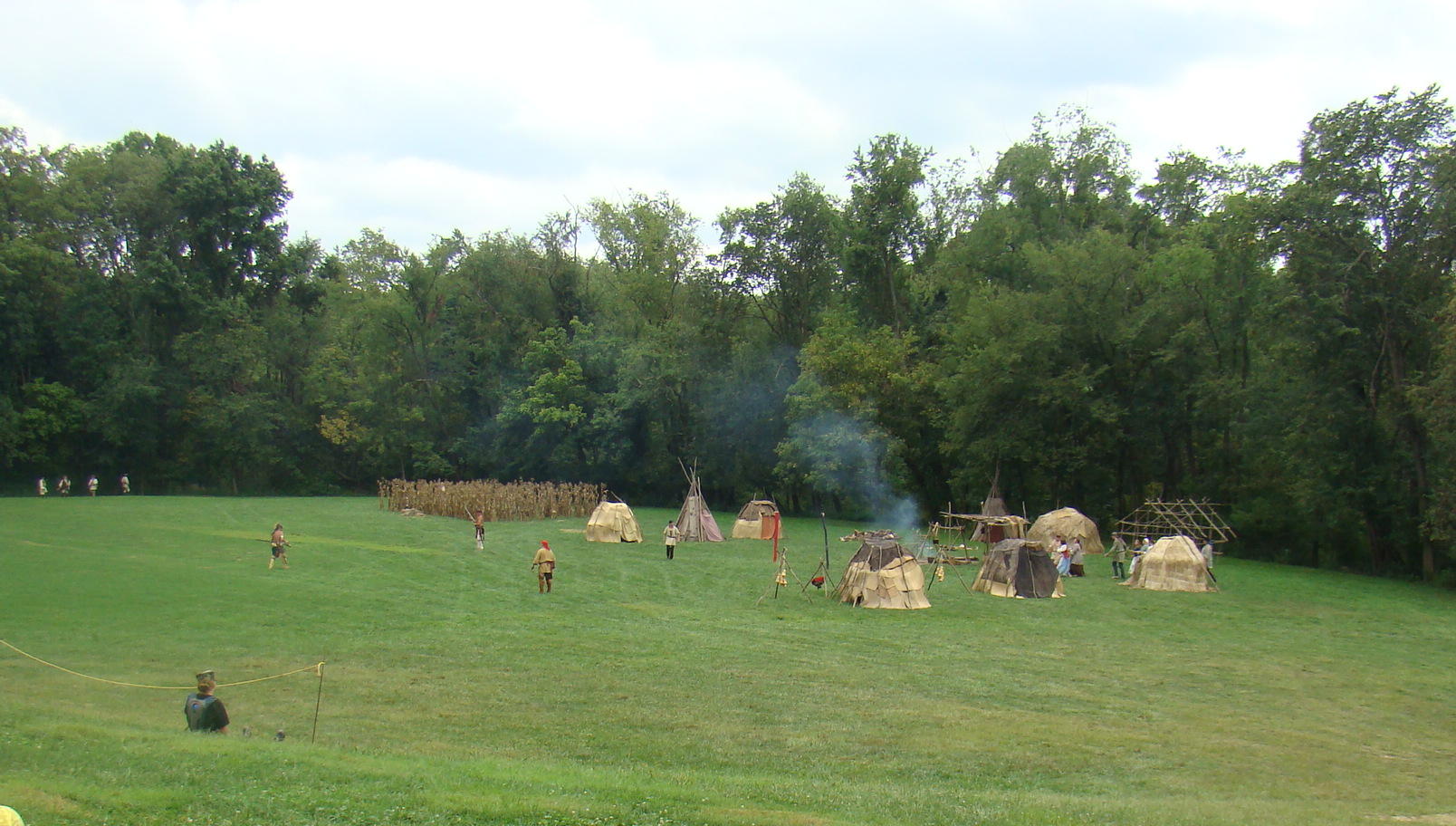
Indian Village for Reenactment

Indian Village for Reenactment

The culmination of the day was a Battle Re-enactment, unlike any I had ever seen before. This recreation told a true story, which was narrated over a loudspeaker. This event occurred back in 1782 at Sandusky, Ohio where the frontiersmen were attacking an Indian village. The natives were doing their normal chores with children playing in the cornfields. An Indian warning call was the sign for everyone to run for cover. They even set the cornfield on fire! Many were captured but some fled to freedom.

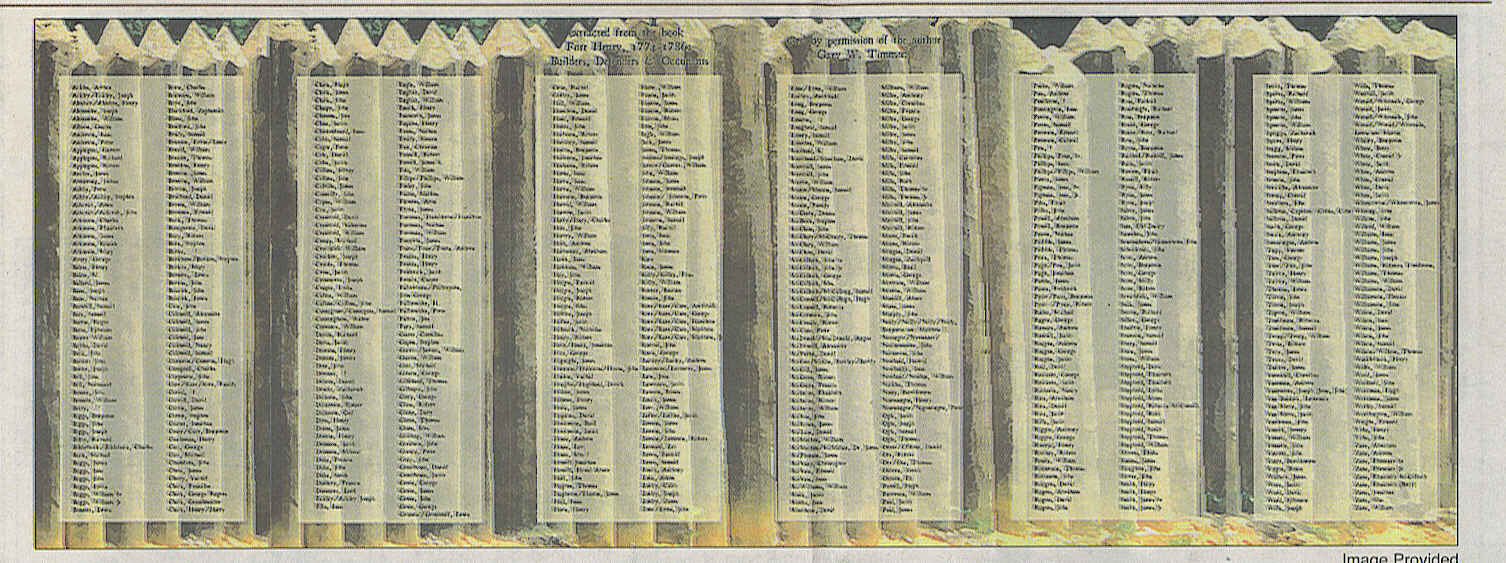
Fort Henry Memorial Wall

Fort Henry Memorial Wall

Not much is left of the old Fort Henry, but locals are trying to keep alive the memories. There is a granite Fort Henry marker in the parking lot on the right hand side just past Capitol Theater. A list has been started, but not complete by any means, of those who were in Wheeling at the time of the American Revolution. All these names have been placed on a wall, which is being displayed throughout the Ohio Valley. Should your family name be there?

Fort Henry Days are held the first weekend of September annually. Celebration is held in Oglebay Park at Wheeling, WV. Once you get to the park, signs will direct you to the activities. If you know of any names that need to be added to the wall or wish to display the Fort Henry Wall, contact the Fort Henry Living History board by email at don@feenerty.com.

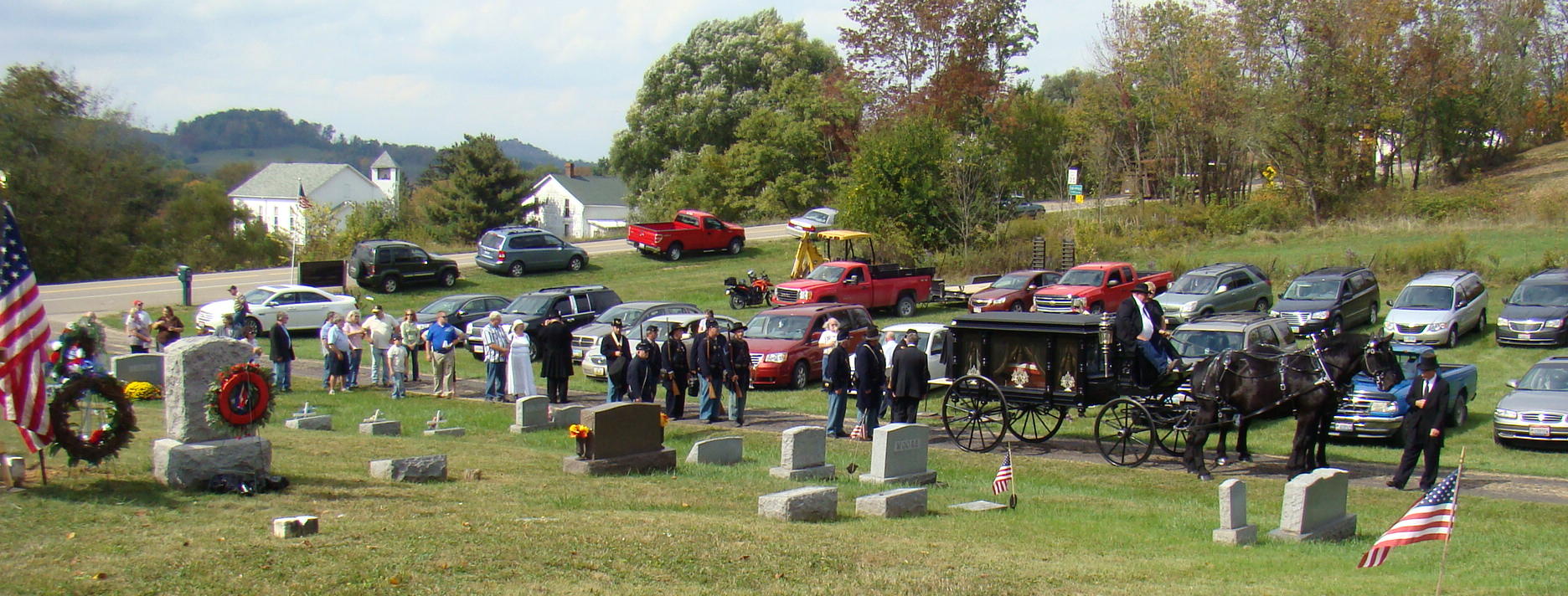
Funeral Procession arrives at Village View Cemetery.

Funeral Procession arrives at Village View Cemetery.

Village View Cemetery in Sarahsville, Ohio was the scene of the rededication of the remains of Pvt. Absalom (Abner) Robinson, Civil War veteran.  2013 was the 120th anniversary of Abner’s death and the 150th anniversary of President Lincoln’s well-known Gettysburg Address.

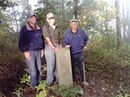
Robinson brothers arrived ready to help at original burial site.

Robinson brothers arrived ready to help at original burial site.

Actual preparation for the ceremony began earlier in the week when three great-great-grandsons of Pvt. Abner Robinson met on top a hill in East Union with township trustees and the local funeral home. They knew exactly where Abner Robinson had been buried as the tombstone was still on the hill. Seems that in 1893, Abner died after being struck in the eye by a rusty nail while helping with work on a barn. At that time they were not certain of the actual cause of death or what illness might be involved, so decided to bury Abner on top of a far away hill so he wouldn’t spread his possible disease, most likely tetanus, to anyone else.

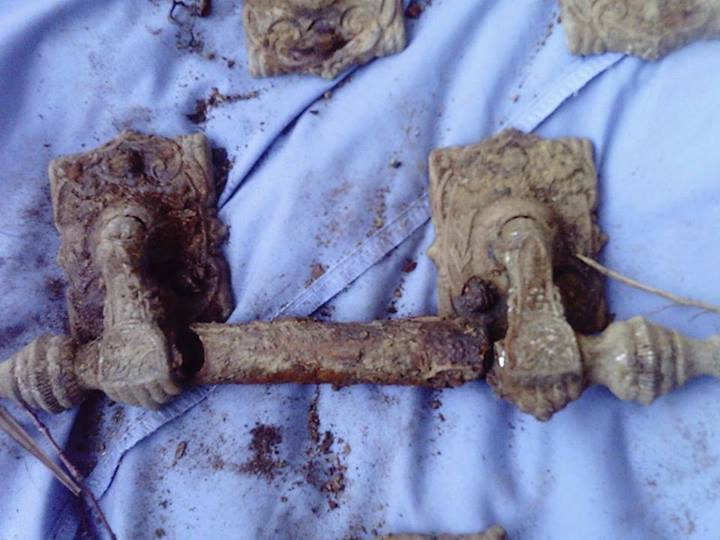
Hardware from 1893 casket

Hardware from 1893 casket

Knowing the story, the family decided they would like Abner Robinson’s remains to be moved to their family plot. After digging by the tombstone, they found no sign of any remains. But when one of the relatives suggesting digging closer to the cedar tree, they made some exciting discoveries.   Not only did they find the original cedar casket, which was squashed to about eight inches, but inside they found several bones, part of the skull, and teeth. There were also hinges that still worked on the lid as well as other pieces of rusted metal.

The local funeral home, McVay-Perkins of Caldwell, took those body parts found in the 1893 casket, and put them in a pouch to be placed inside the new casket, which was made of cherry wood.

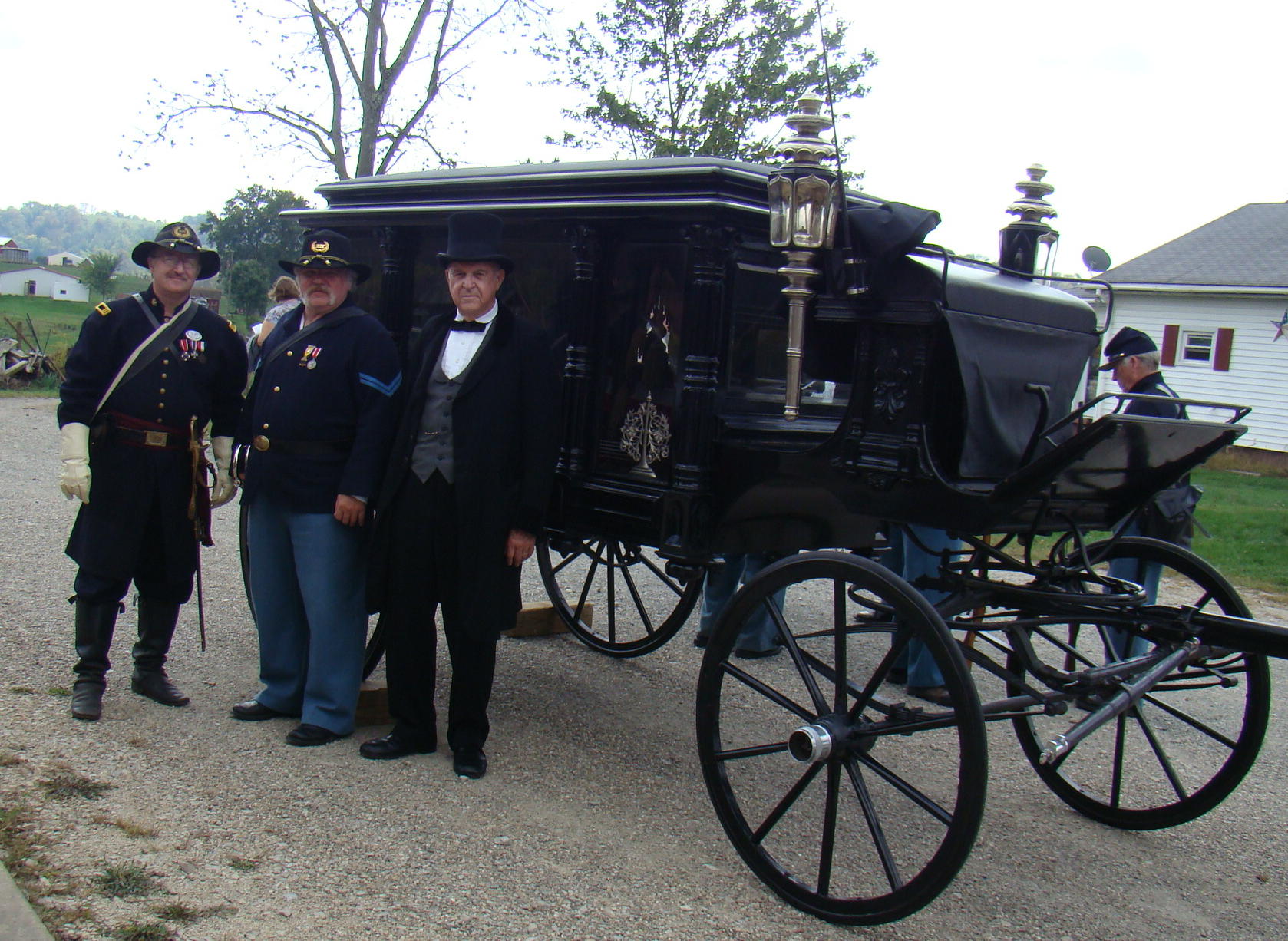
Hearse with Sons of Union Civil War Veterans and Governor Dollison

Hearse with Sons of Union Civil War Veterans and Governor Dollison

When approaching a distinguished gentleman in a top hat before the ceremony, I asked him if he would be so kind as to let me take his picture with the Sons of Union Veterans that were present. His answer surprised me, “You are speaking to Governor Dennison, the 23rd Governor of Ohio. Next thing you know women like you will be asking for the right to vote.” When asked about the Civil War, he freely expressed his opinion, “That was a war of southern rebellion, there was nothing civil about it.”

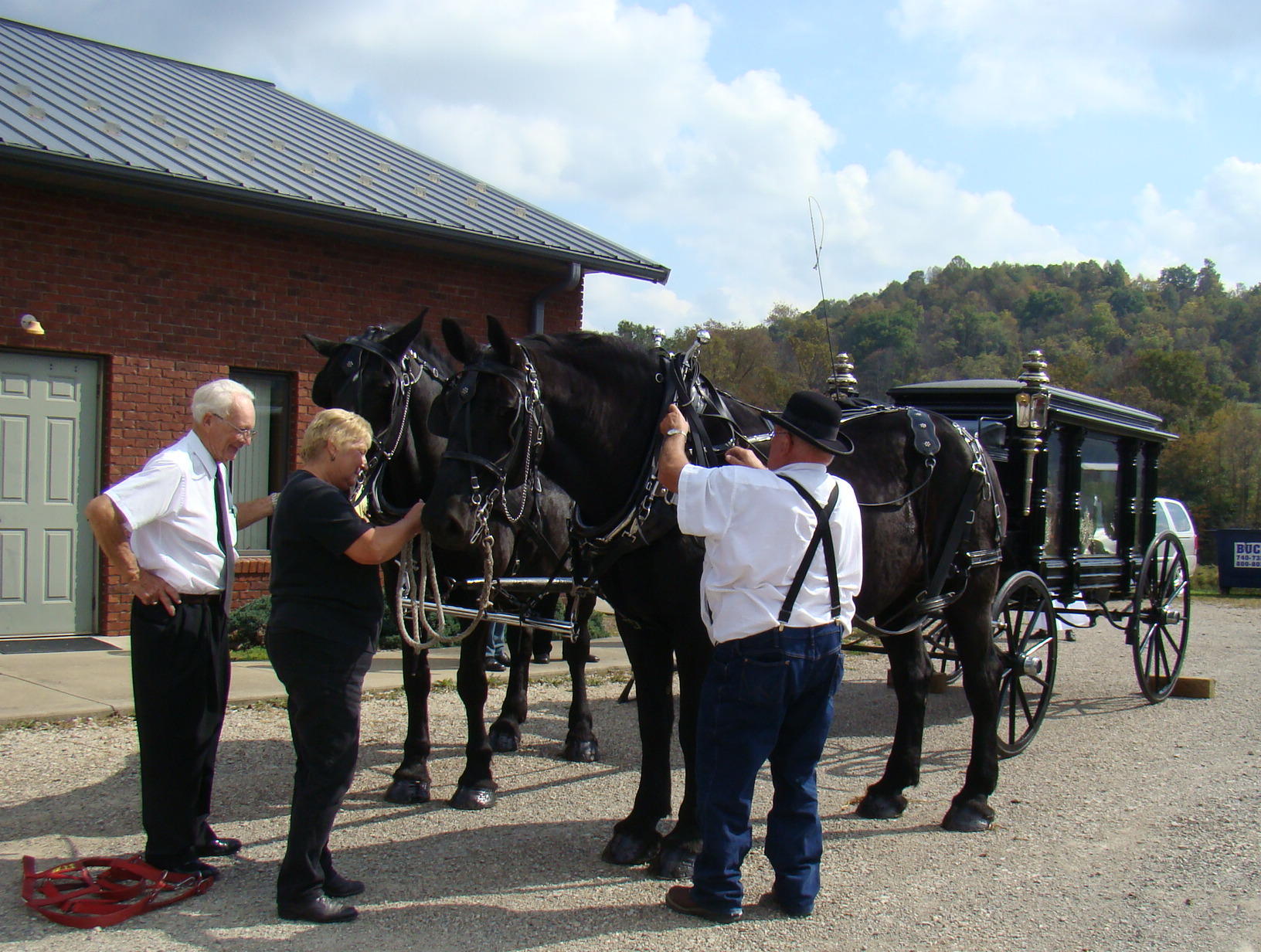
Two black Perchenon horses prepare for the procession.

Two black Percheron horses prepare for the procession.

The funeral hearse drawn by twin black Percheron horses and provided by Robert Baird of Troy, Ohio, started their route at the Sarahsville Center Free Methodist Church.  What a procession it was! Following the horse-drawn funeral carriage bearing Pvt. Robinson’s cherry casket, members of Sons of Union Veterans of the Civil War marched to the cadance of the fife and drum corps. Many descendents of Abner also walked the half mile road to Village View Cemetery in Sarahsville.

Abner Robinson (1836-1893) served as a Private in Company G, 62nd Ohio Volunteer Infantry during the Civil war. Three of his brother, William, George, and John, were also members of the Union forces.  Abner’s unit saw active service in places such as Shenandoah Valley, Peninsula Campaign, Beaufort, Morris Island and Fair Oaks.

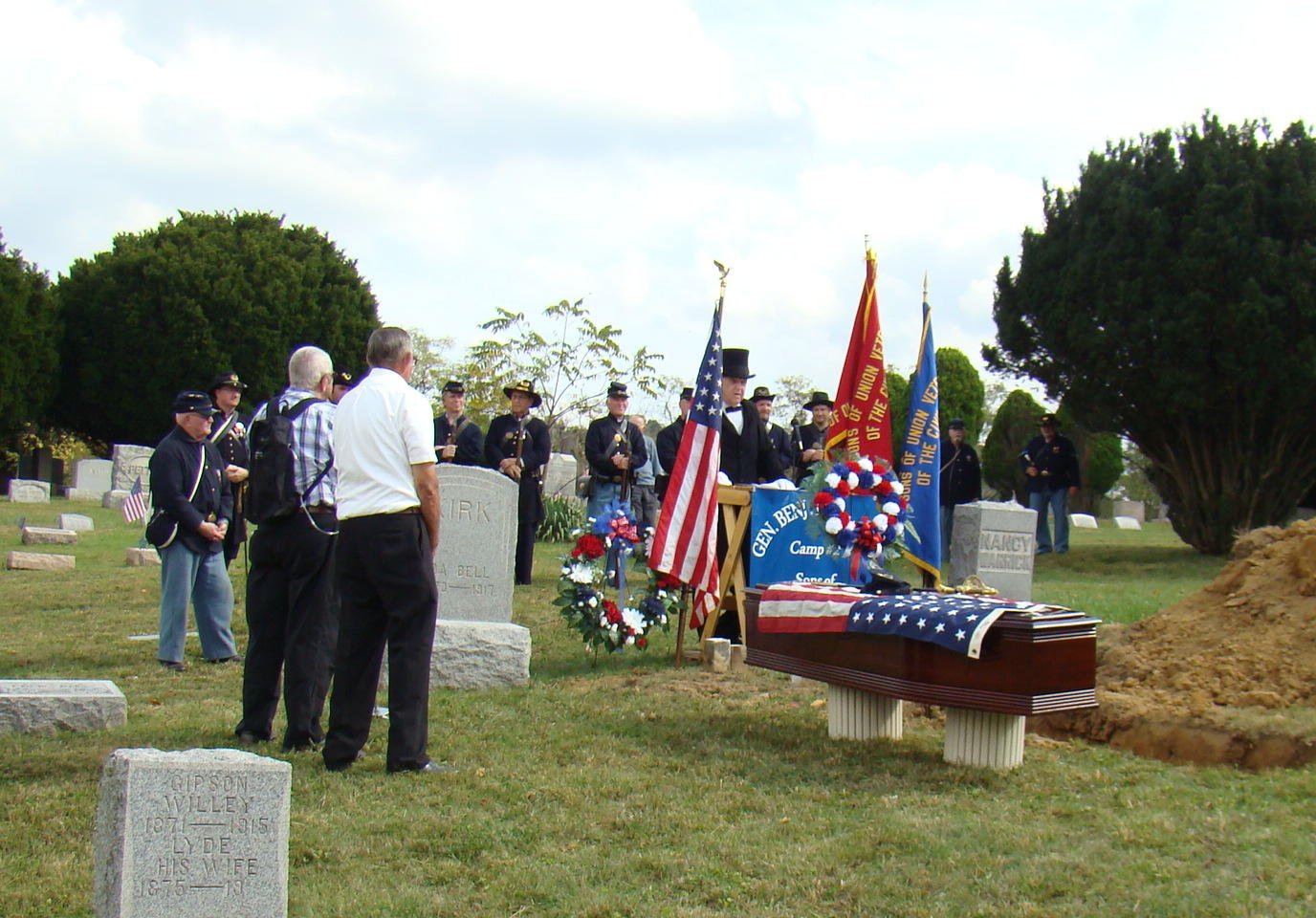
Many speakers participated in the graveside service, which lasted about an hour, before the casket covered with a 34 star flag, which was later given to the family. Family members presented a wreath in honor of all Union soldiers in the Civil War conflict

Governor Dennison rededicated Pvt. Robinson's remains.

Governor Dennison rededicated Pvt. Robinson’s remains.

One of the highlights was the speech by Robert W. Davis, portraying Governor William F Dennison. His main purpose was to rededicate the remains of Abner Robinson to their new resting place. However, Gov. Dennison also portrayed his role during the  Civil War by saying, “I will defend any slaves that come to Ohio with a bayonet.” His boldness was clearly expressed when he exclaimed, “All rebels should be hung.” When President Lincoln told the governor he needed 10,000 men, Gov. Dennison replied that he only had 18,000 men total, but within the week he had over 13,000 men marching into Columbus headquarters ready to fight.  He proclaimed, “We will keep this United States together until our last breath.”

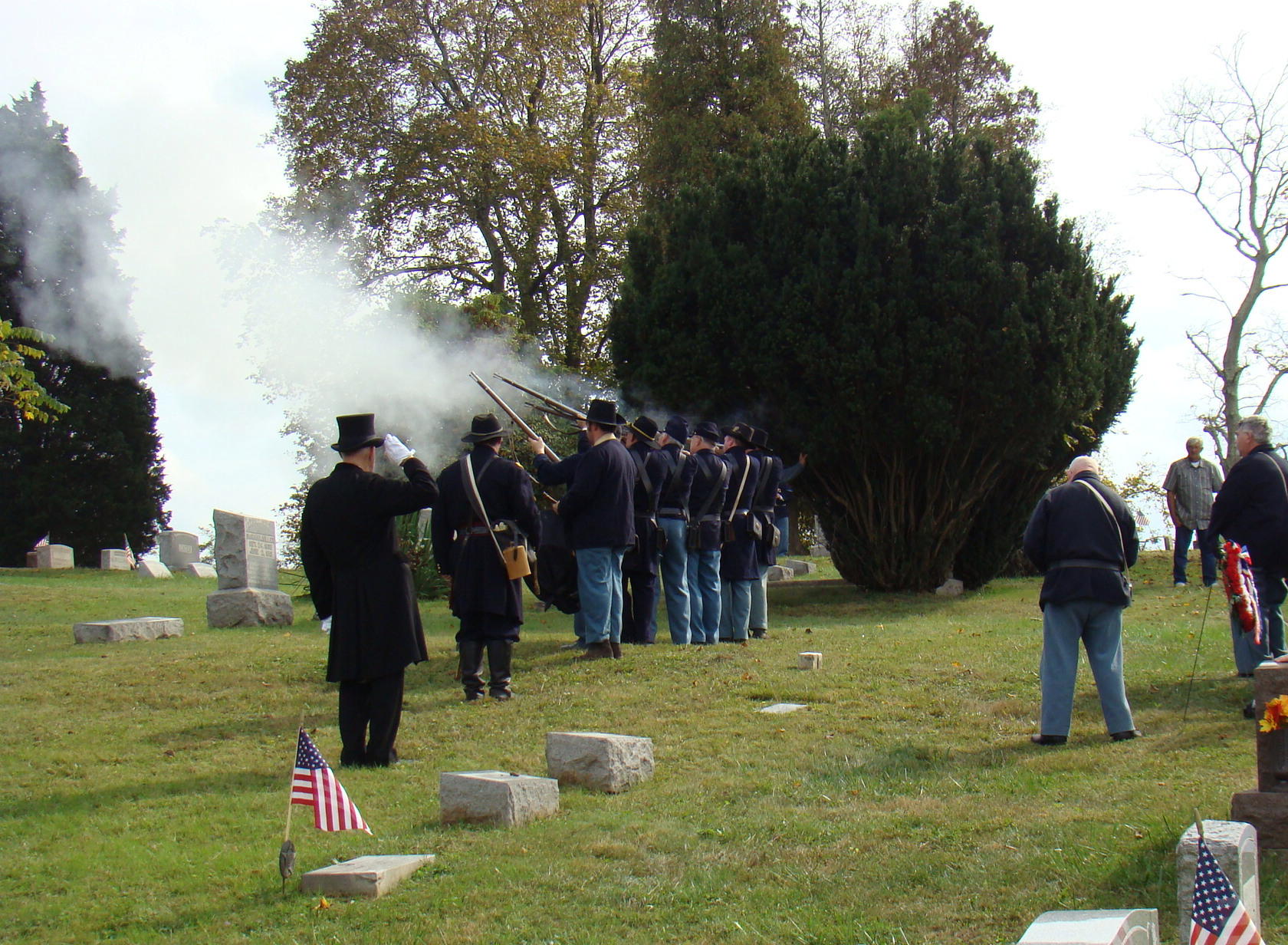
21 gun salute ends the ceremony.

A three round rifle salute ends the ceremony.

The ceremony was brought to an end with a three round rifle salute by the color guard. A traditional fife rendition of Taps and a prayer concluded the events.

Abner’s life must have been a difficult one from his Civil War battles to the farm in McCleary, Ohio (now East Union). When he died, the copy of Probate Court papers declared that his amount of personal property would be about $2.00 and his real estate about $15.00. Have to imagine that the rededication of his remains was more expensive than anything he could possibly have imagined.

This ceremony held extra interest for this Gypsy since Pvt. Abner Robinson was the great-great-grandfather of my cousin’s husband, Jerry Robinson. Jerry is one of those pictured at the original grave site and helped with discovering the remains.