Places to go and things to see by Gypsy Bev

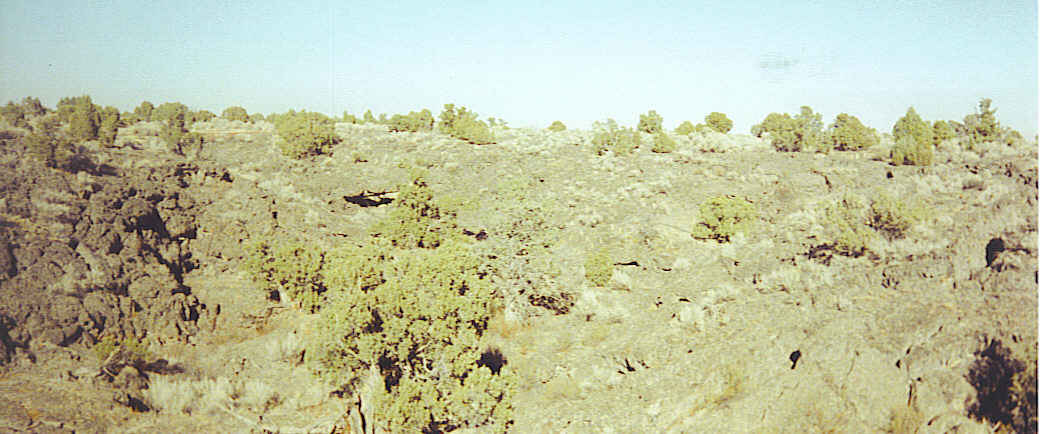
Nothing here but rocks! Hell’s Half Acre is a lava field several thousand years old where lava just oozed out of the ground over two hundred plus acres.  Early in the 1800’s on the Snake River Plain in southeastern Idaho, fur traders looking for passage through the Rocky Mountains stumbled upon this rugged land and named it Hell’s Half Acre.  That term was commonly used at that time to describe rough land.

There was some plant growth in this desolate region, and it was pretty amazing to walk over an old lava field. Caution had to be used as there were deep fissures to avoid, as well as frequent rattlesnakes. This uninhabited plain looks barren except for a few wild horses, and is the perfect place for the Idaho National Engineering Laboratory. Since 1949, more nuclear reactors, over fifty of them, have been built on this plain than anywhere else in the world. The first nuclear power plant was located here just south of Arco, Idaho.

Arco was the first city in the world to be lit by atomic energy way back in 1955. The power was generated by the Experimental Breeder Reactor No. 1 to a reactor close by, known as the Borax III, located on the Idaho National Engineering Laboratory. This was only a temporary solution to their power situation, however, as the reactor suffered a partial meltdown – another world’s first!
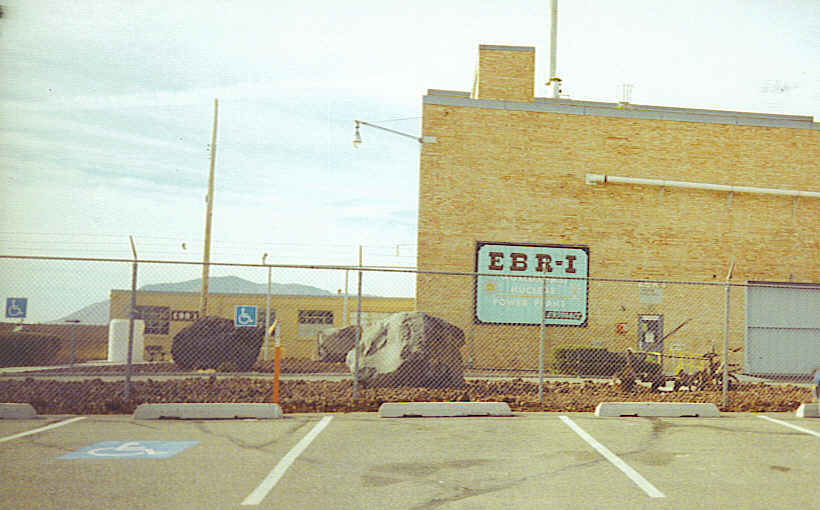
Be sure to visit the Experimental Breeder Reactor No. 1 – Atomic Museum on US 20/26. Here in this block building, EBR-1 became the first power plant to generate electricity from atomic energy. They actually made plutonium-239 in the block building where the museum is now located. Inside you could see four nuclear reactors, remote handling devices for radioactive material, and lots more.
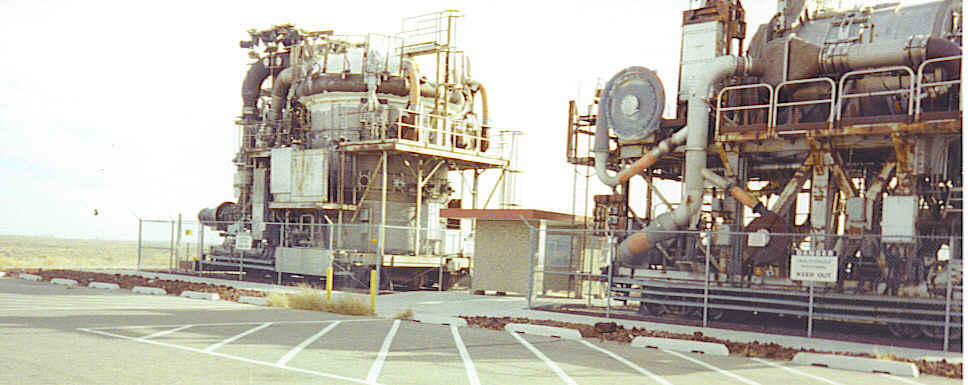
Outside you could view the Heat Transfer Reactor Equipment, which was the engine used to transfer nuclear power to a conventional program. Plans were being considered in 1947 for nuclear power to be used as fuel for planes. Since the runway for take-off needed to be about 15,000 feet, the empty plains nearby seemed the perfect place to locate this facility.  But due to advances in conventional aircraft engine design plus public concerns about nuclear reactors flying over their homeland, this project was shelved in 1960.

If interested in the history of nuclear energy, this is an educational stop. The museum is open each Summer and you can either take a self-guided tour or have one of the tour guides fill you in on the importance of EBR-1.   Experiments here paved the path for nuclear energy for the entire world and consequently, it is now a National Historic Landmark. See how it all began!

To reach Hell’s Half Acre in Idaho take I-15 to the Blackfoot Rest Area exit 93, which is southwest of Idaho Falls and just five miles east of Blackfoot.  Here there is a parking area on both sides of the interstate where you have easy access to two walking trails. You can choose a 1 1/2 mile loop or a longer 4 1/2 mile loop. Both are a little on the rough side though partially paved. The Atomic Museum is located west of here on the south side of U S Highway 26. Arco is just a few miles northwest on U S 20/26. Have an explosive experience!
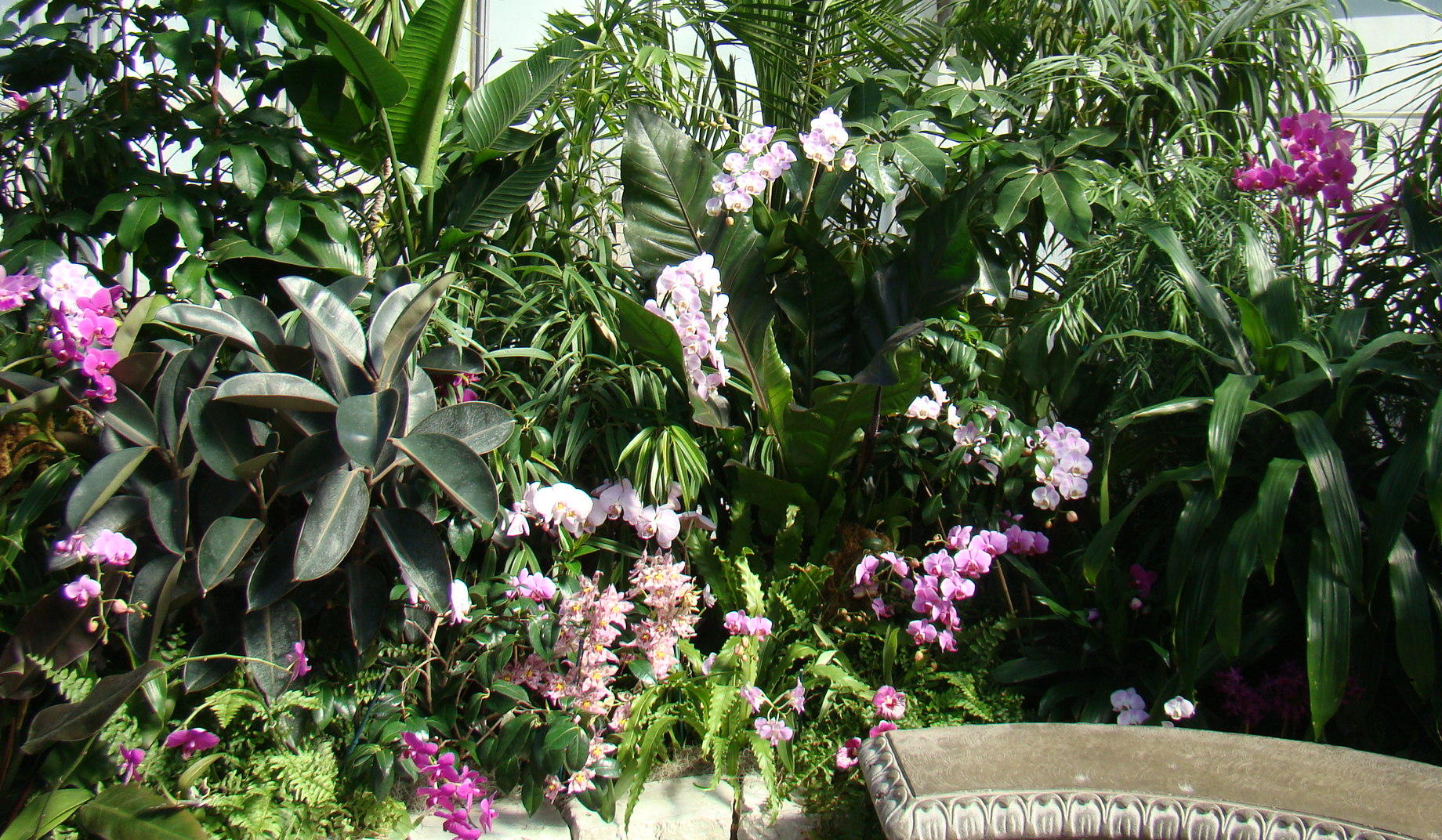
Step back into the Victorian era when orchids were a symbol of luxury, and walk leisurely through the Orchid Forest at the Franklin County Conservatory and Botanical Gardens in Columbus, Ohio.  These beautiful orchids, entitled Orchids! Vibrant Victoriana, are displayed in the Dorothy M Davis  Show House, which was built in 1895.  The exotic orchid speaks of refinement and innocence and the elegant Victorian garden is filled with hundreds of incredible orchids in all sizes, shapes and scents.

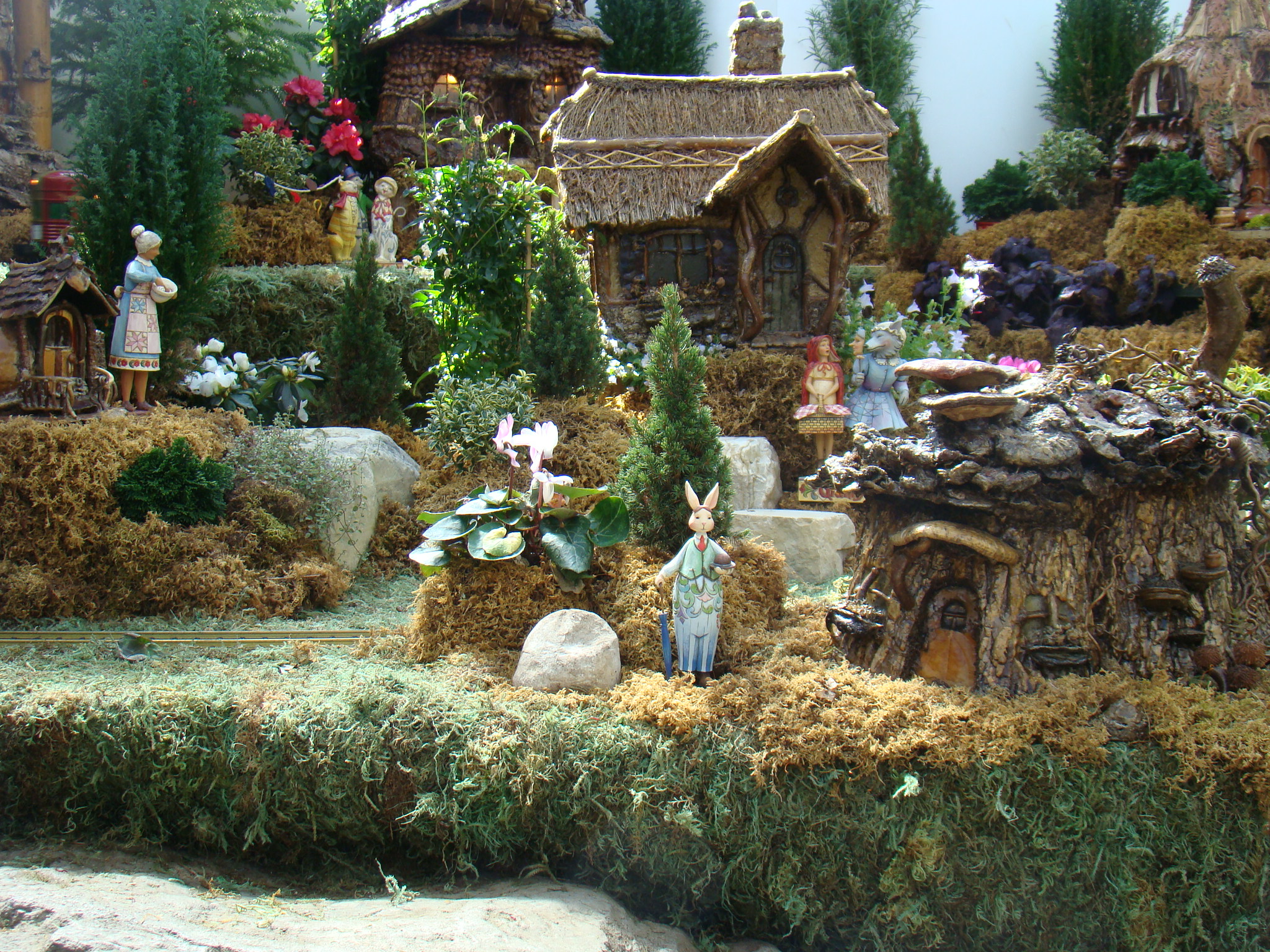
Paul Busse’s Garden Railroad featuring children’s fairy tales is a popular place to stop and take a break.  In this magical world amongst the foliage in the Himalayan Mountain Biome, three dimensional structures are all made from natural materials.  You might see roof shingles made from fungus, a chimney cap from an acorn, or a door hinge from a tiny leaf.  Moss, twigs, leaves and seeds combine to form houses, bridges, and castles. Children will definitely enjoy the fairy tale settings, while adults will marvel at the construction of the scenery.

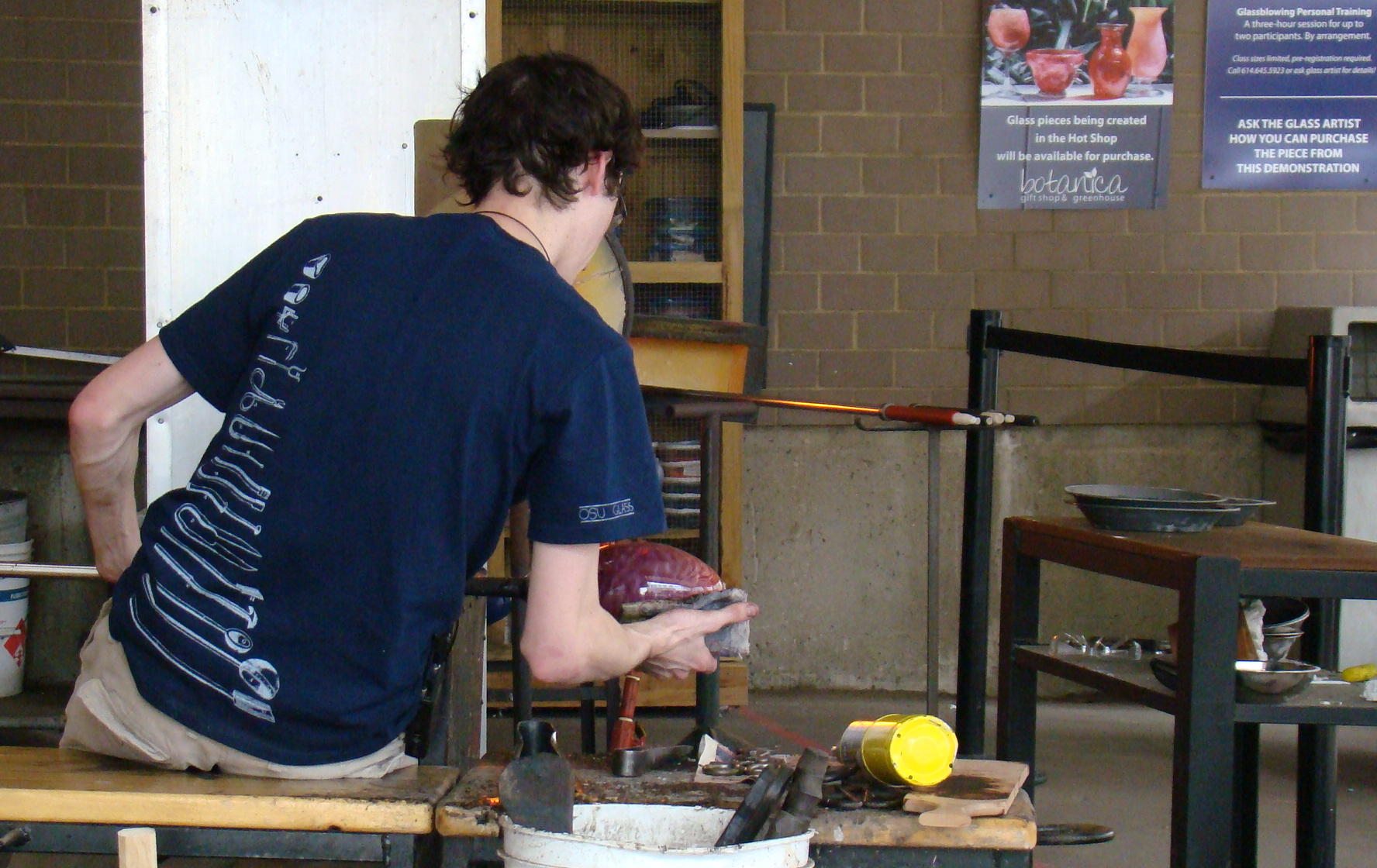
In an outdoor garden area, discovered the Hot Shop where a young man, who had been blowing glass for two and a half years, showed the curious visitors how to create a vase. From gathering the hot, hot glass to dipping it in either powdered colored glass or pellets, the glassmaking process produced many questions from those watching. Especially found fascinating the use of thick layers of wet newspaper being used to shape the glass, as seen in the picture above. The young man told the attentive audience, “We are still finding out new things about glass every day.  It is an ongoing learning experience.” His finished vase, which started out with a red glow, turned out to be a beautiful violet shade.

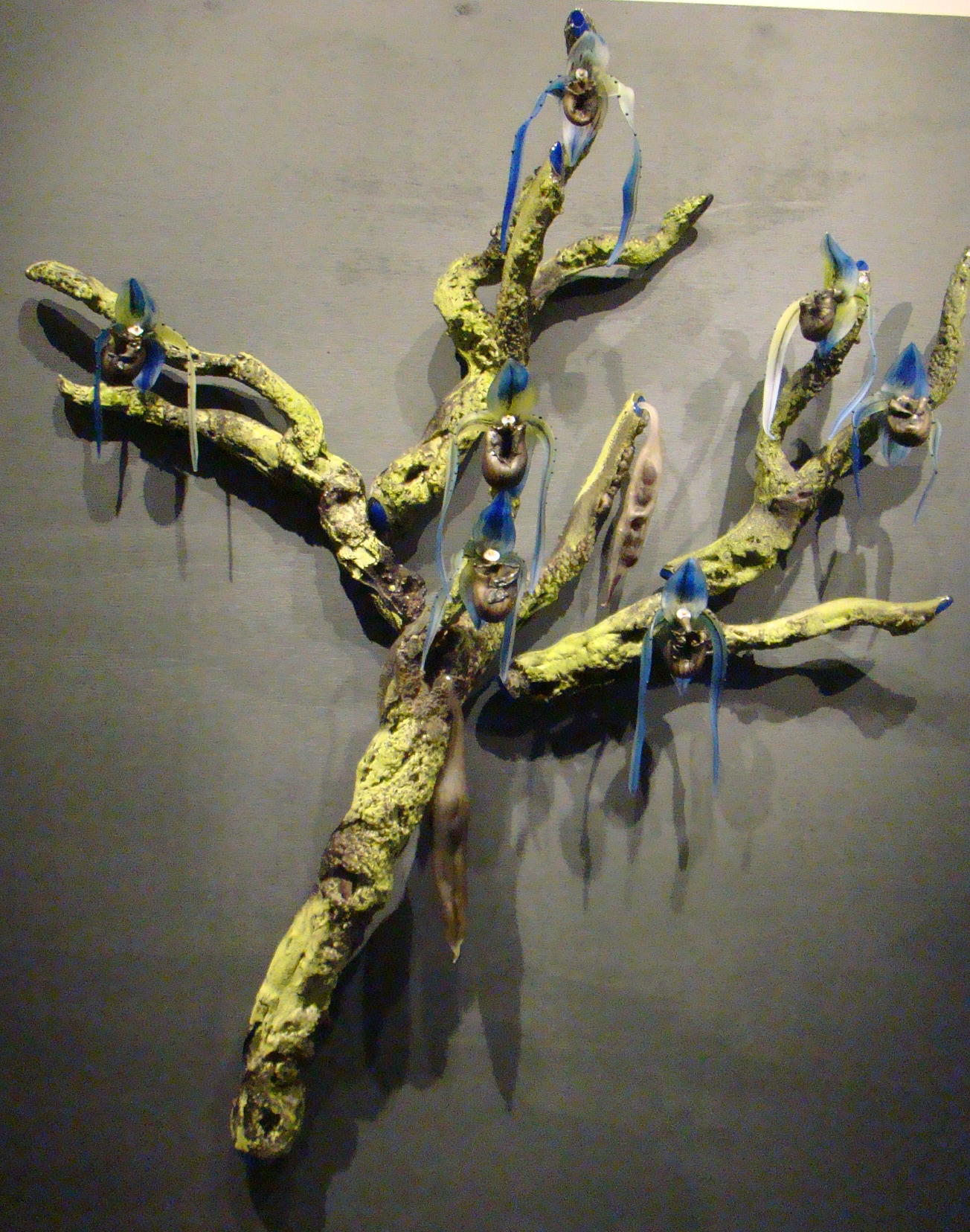
An added attraction was the beautiful blown glass art work by Debora Moore, Collectanea Botanica – Orchidaceae, showing her interpretations of orchids in blown glass sculptures. The Blue Orchid Tree, a beautiful Moore creation, is featured just inside the Cardinal Health Gallery. Debora feels that her work is a figment of her imagination combining the real qualities of the orchid with what she sees in her mind. This glass artist was a student and later an instructor at the Pitchuck Glass School, which was founded by Dale Chihuly whose work is also featured throughout the conservatory on a permanent basis.

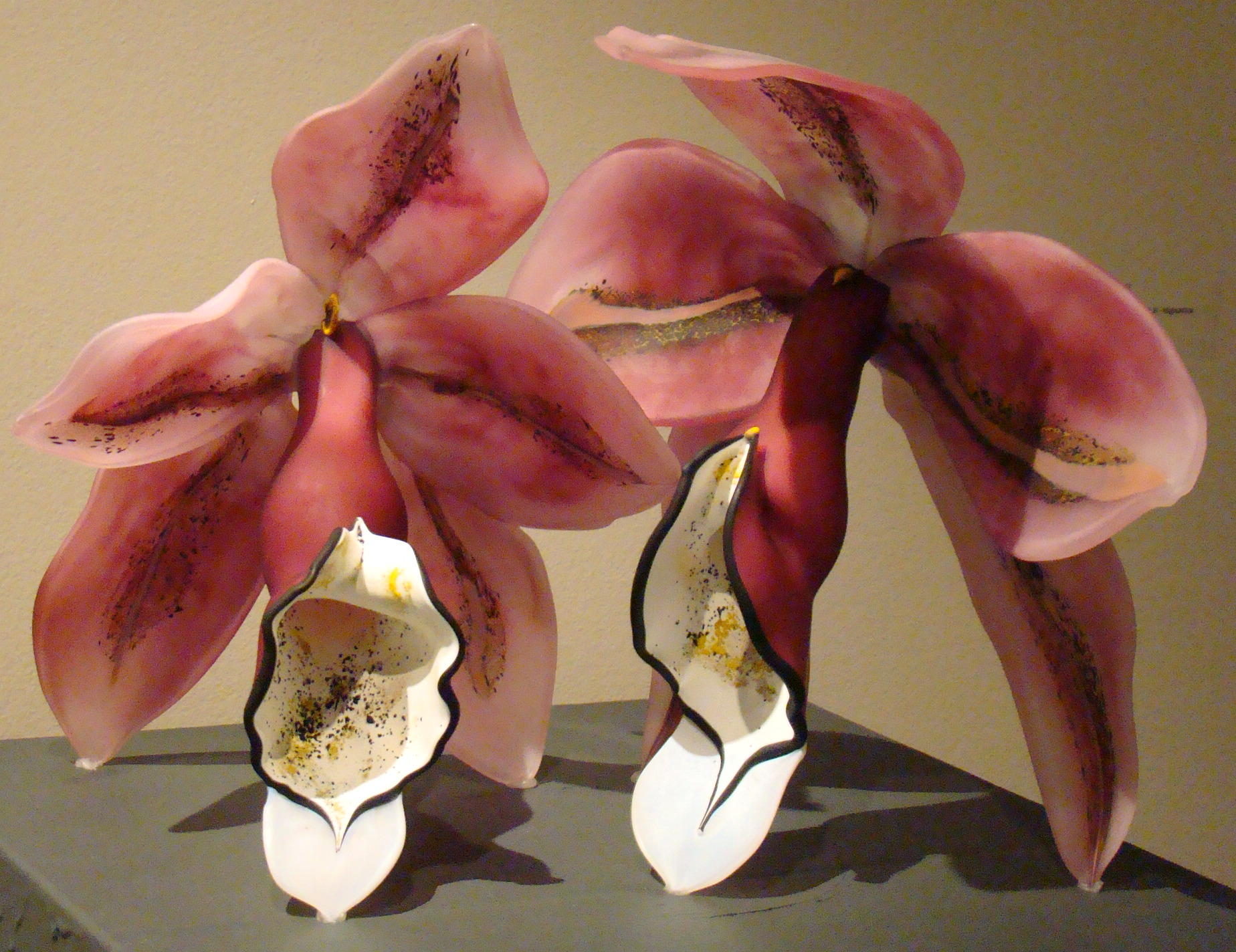
My favorite artistic display was the large Pink Glass Orchid. Nature has always been Debora’s inspiration as she uses the medium of glass to express the grandeur and fragility of the natural world. She constantly learns and combines new methods with traditional glassblowing techniques to create her masterpieces.

Today, orchids are the top house plant with 25,000 varieties available. Symbolizing rare and delicate beauty, the orchid is an alluring and captivating plant to enjoy in your home. Franklin Conservatory is one of those places you can visit again and again, as they have featured shows throughout the year as well as an outdoor garden that blooms seasonally.

Walt Whitman wrote,”Give me a garden of flowers where I can walk undisturbed.” This is one of those special places that answers that request.

Franklin Park Conservatory can easily be reached off I-70 as it passes through Columbus, Ohio. Exit on 315 North and quickly you will make another exit onto Route 40 where you will turn right.  You are almost there as just a few blocks through the city, you will find Franklin Park on the right hand side.

In a gold mine, what is the difference between genius and talent?

“Genius is the gold and the miner is the talent that brings it out of the ground.” ~Marguerite Blessington 

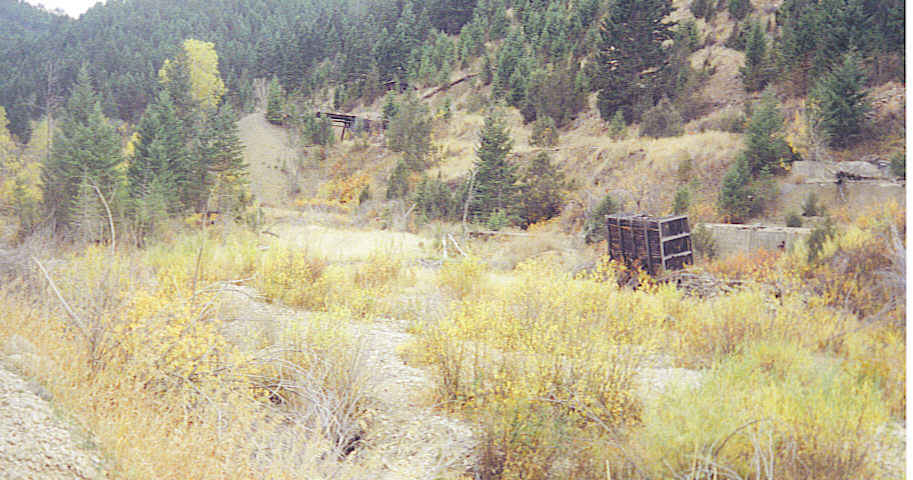
This quote came to mind while traveling through Montana and spotting an abandoned gold mine at the edge of the road. Heading toward Old Virginia City, a well preserved 1960’s mining community, this old mine at Alder Gulch deserved a closer look to discover more about the gold and the miners. The gulch was aptly named due to the large number of alder trees that grew along the creek there.

Fourteen-Mile City was the name given to the numerous settlements that built up along Alder Gulch after gold was discovered there in 1863 by Bill Fairweather and his party.  This gold strike was an accident, which occurred when Fairweather’s Yellowstone bound party got distracted by a band of Crow Indians. After escaping the Indians, gold beyond belief was discovered very near their camping ground. This was said to be the richest placer gold strike in world history with $30 million worth of gold being taken from the mine during the first three years.  Now that’s a lot of value even today, but imagine how special that would have been back in the 1860’s. Everyone wanted to strike it rich in the gold field as 10,000 people flooded the area. Most of Montana’s population was right there along the gulch.

As miners staked their claims, the first rough buildings of Virginia City were hurriedly built with approximately 5,000 people settling there the first year.  People lived in tents and shacks, and it is often said that every third building was a saloon. This was the first social center and early Capitol of the Territory.  Virginia City was a booming gold mining town. These settlers were really “sitting on a gold mine”.

In the early days, there was no rail service to Virginia City, but it did reach as close as Alder just ten miles away. That made it much easier to receive needed parts for the gold mines’ dredges. In 1964, history buffs Charlie and Sue Bovey decided to establish the Alder Gulch Short Line using an old Baldwin 1910 locomotive, which looks and sounds authentic. This is indeed a Short Line as it only runs the one and a half  mile track between Virginia City and Nevada City.

The Virginia City Depot today is actually the original depot used by the Northern Pacific in Harrison, Montana around 1895. Enjoyed the tale told at the depot of the arrival of the actual depot building by train in 1964. One elder resident of Virginia City said, “I have often gone down to depots to watch the train pull in, but this is the first time I ever went down to the train to watch the depot pull in.”

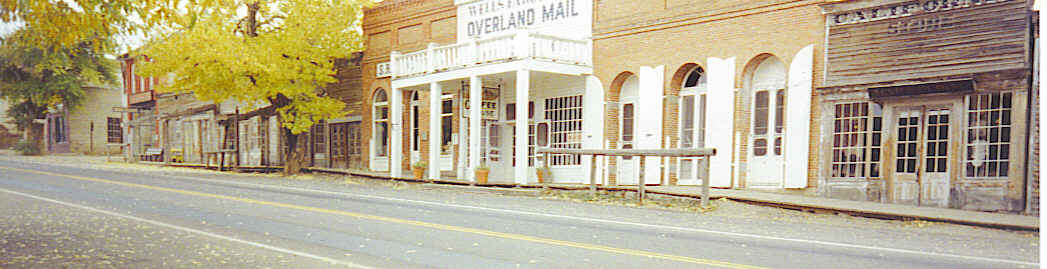
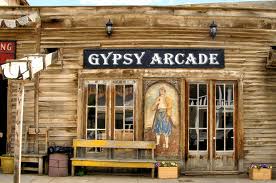
Today Old Virginia City has approximately 150 residents year round. Over one hundred historic buildings complete with artifacts and furnishings are on display – a priceless collection of Western American history. Being a bit of a gypsy myself, had to stop in at the Gypsy Arcade, home of the classic fortuneteller booth – only a couple left in the world! Here the Mills’ Verbal Machine speaks your fortune from one of two wax cylinder recordings on an Edison gramophone…one for women, and one for men. By the way, my fortune said I was going to travel!

During your visit, you might even get a chance to ride in a stagecoach or on the Alder Gulch Short Line.  There are still a few placer mines and hard rock operations today getting a little gold out of them thar hills, but little compared to that original find. You can even pan for gold yourself at Alder Gulch Gold and keep any you happen to find.

Some folks made a fortune here, but what they left behind was priceless.

Old Virginia City is located in the southwestern corner of Montana. I-90 and I-15 intersect close by and State Route 287 leads you through Alder Gulch and Old Virginia City. This is a great spot to include on a trip to Yellowstone National Park as it is only about 90 miles away. Enjoy the scenery!

Go To Hells Canyon

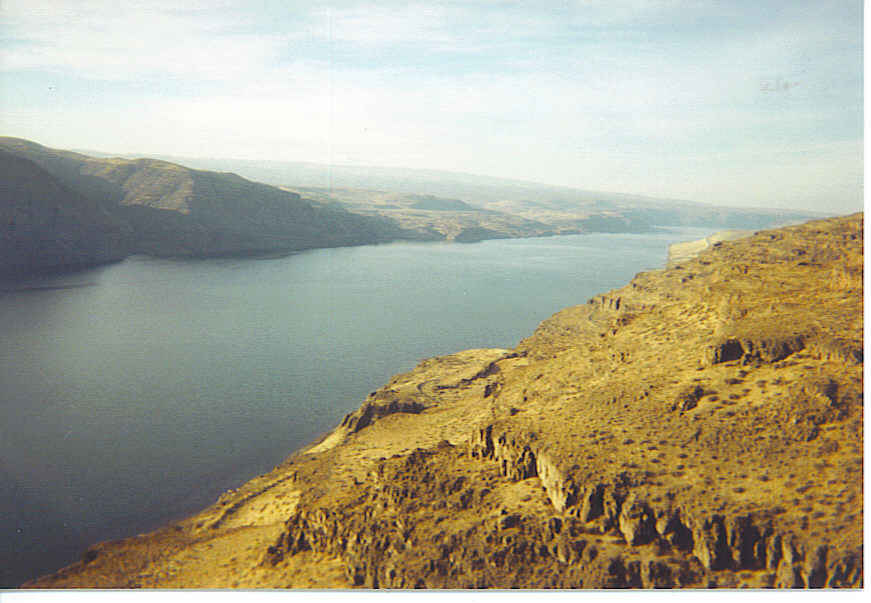
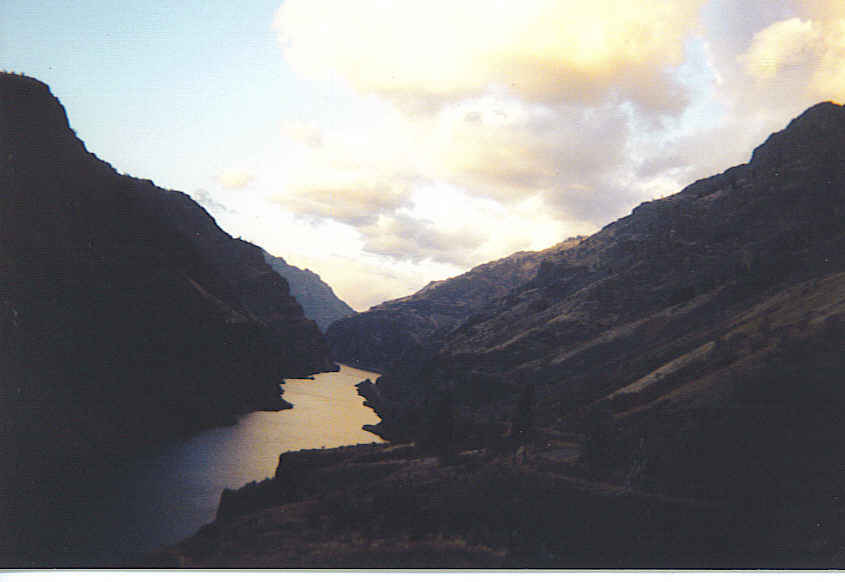
Come discover a place where time stands still as you descend into Hells Canyon carved by the great Snake River. As you drive down into the canyon, quiet and beauty surround you. Here is the deepest river gorge in North America with heights of up to 9000 feet surrounding you. It can be approached from either the Idaho or Oregon side, but this day the approach was from Idaho Highway 86.  You will eventually find yourself driving on the famous Canyon Scenic Byway, “Devil’s Tail”, also known as National Forest Road #454, leading to Hells Canyon Dam at the end of the road.

Scenery was awesome and it seemed impossible to capture the towering feeling that surrounded you as you drove along the Snake River in the bottom of the canyon. This canyon separates Idaho from Oregon in a most spectacular way.

The forest road along the top of Hells Canyon was a one-lane dirt road, which was rugged and steep and took several hours to ascend.  Towards the top, the road was covered with a light coat of snow. The last 350 yards had to be traveled on foot in order to arrive at Heavens Gate where the altitude was 8,690 feet and the scent of pine hung thick in the mountain air. The foot path was rough, but the view from the top was breathtaking, my favorite view of the canyon.

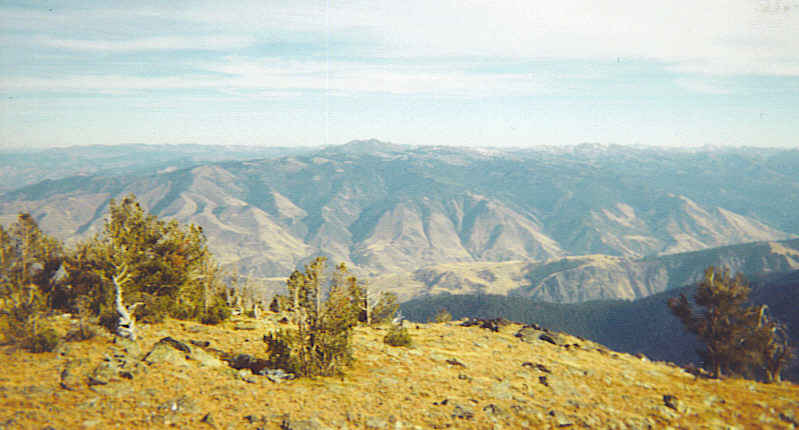
From this point, you could see the snow covered Seven Devils Range and the Snake River. There are actually twenty peaks in this range with He Devil and She Devil being the highest, both at about 9400′. At one angle you could see four states: Idaho, Oregon, Montana, and Wyoming.

Back in 1955. Idaho Power Company began construction of a three dam project in Hells Canyon. First a road had to be constructed and even then couldn’t bring in all the needed supplies. Helicopters were used to bring in tools and equipment as well as help with erecting the transmission towers that carry the power out of the canyon to the Oregon side. Finally, we reach the end of the 22 mile road and cross over the dam to the Oregon side where the Visitors Center is located.

On close observation, the rugged rock walls of the canyon are like a museum with pictographs and petroglyphs left over from the time when Chief Joseph’s band of Nez Perce Indians lived there.  Some say part of the petroglyphs date back possibly 15,000 years. Nez Perce Indians  enjoyed the mild winters here as well as the lush foliage and plentiful wildlife. The Snake River provided abundant fish as well as goods they would be able to trade.

Later, in 1895,a cargo ship captain, named Haller, met with rapids more dangerous than expected. Either because of people discussing his adventure in Haller’s Canyon, or perhaps what the captain said when he got in this dangerous situation, the name Hells Canyon stuck. The precipitous mountain sides and the wild rapids seem to reinforce the idea that the name chosen was very fitting.

There is only one way back out of the canyon from the dam, and that is back the same 22 mile road that was originally used to enter. But now it is dusk and the drive out will be a careful one, driving slowly because of the sharp curves and always being aware of dodging fallen rocks either in the air or on the rugged highway. Be sure to keep your eyes on the road and stop when you want to really enjoy the scenery.

Today this magical place is great for whitewater rafting, jet boating as well as fishing excursions. Just being here makes you look at the world with a different perspective. Great spot to relax and leave your worries behind. See you in Hell’s Canyon!

Hells Canyon can be reached from I 84 in Idaho at Exit 304 Hells Canyon/Weiser Road. Follow the signs for the Canyon Scenic Byway and enjoy the adventure.

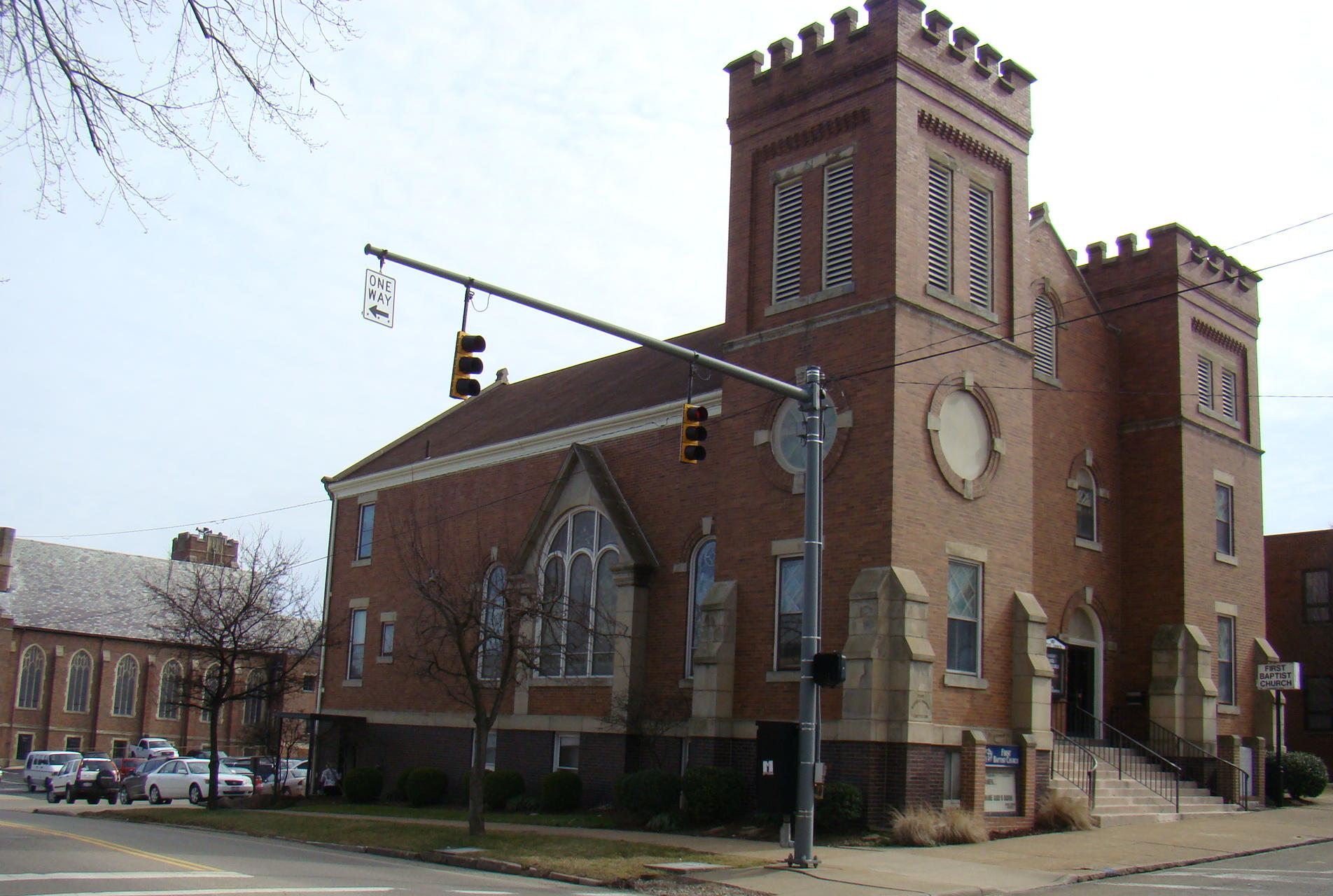
“Don’t You Hear Those Lions Roar?” as you pass the First Baptist Church in Cambridge, Ohio on a Sunday afternoon January through March. The parking lot is not filled with people attending a church event, but those practicing for the 39th Annual Cambridge Lions Club Music & Comedy  Show.

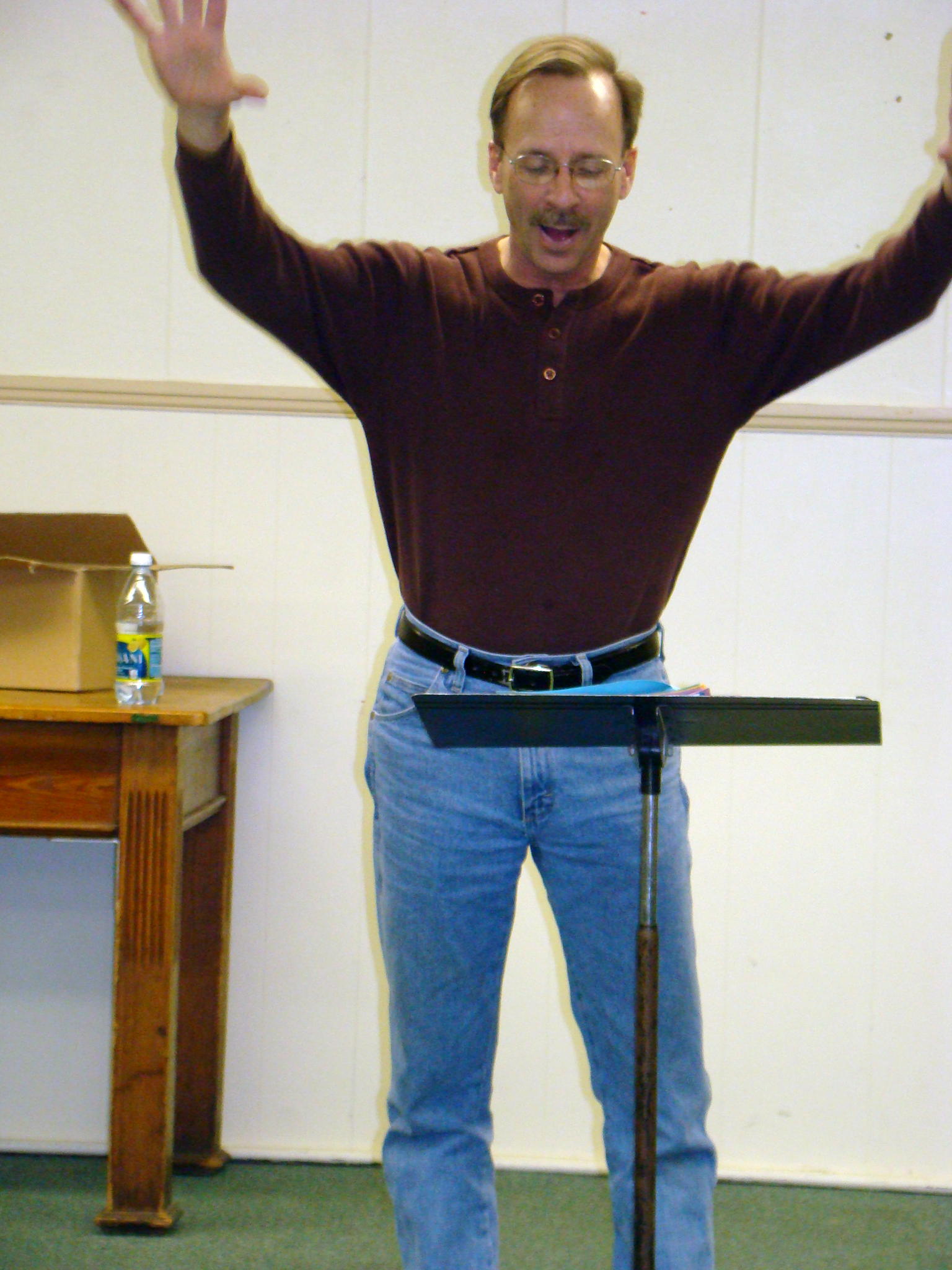
This year’s theme of “Cambridge Lions Go Hollywood” offers a wide selection of favorite songs ranging from the slow and mellow to those with vim and vigor.  While the songs are familiar, the arrangements may not be, as they were specially designed for this show by local well known musician and director of the show, Paul Hudson.

Paul has recently retired as Band Director from John Glenn High School and is active down many musical avenues including being percussionist in the Southeastern Ohio Symphony Orchestra.  “You Can’t Stop the Beat” when Paul is able to get everyone on the same musical wave. Frequently he tells the chorus members things like : “You have to know the words,” or “Listen to Tom play the melody.” Know he is hoping that after ten weeks of practice, the words will all be memorized and the rhythms will be somewhat correct.

Once the chorus has practiced for a few weeks, Lion Troy Simmons arrives to record the practice session using microphones over each vocal area to pick up the parts clearly. Then he makes a CD for each member so they can practice along with it during the week. So if you see someone singing while driving down the road and tapping out rhythms on their steering wheel, it very likely could be a Lions Club chorus member trying to learn all the words and parts correctly.

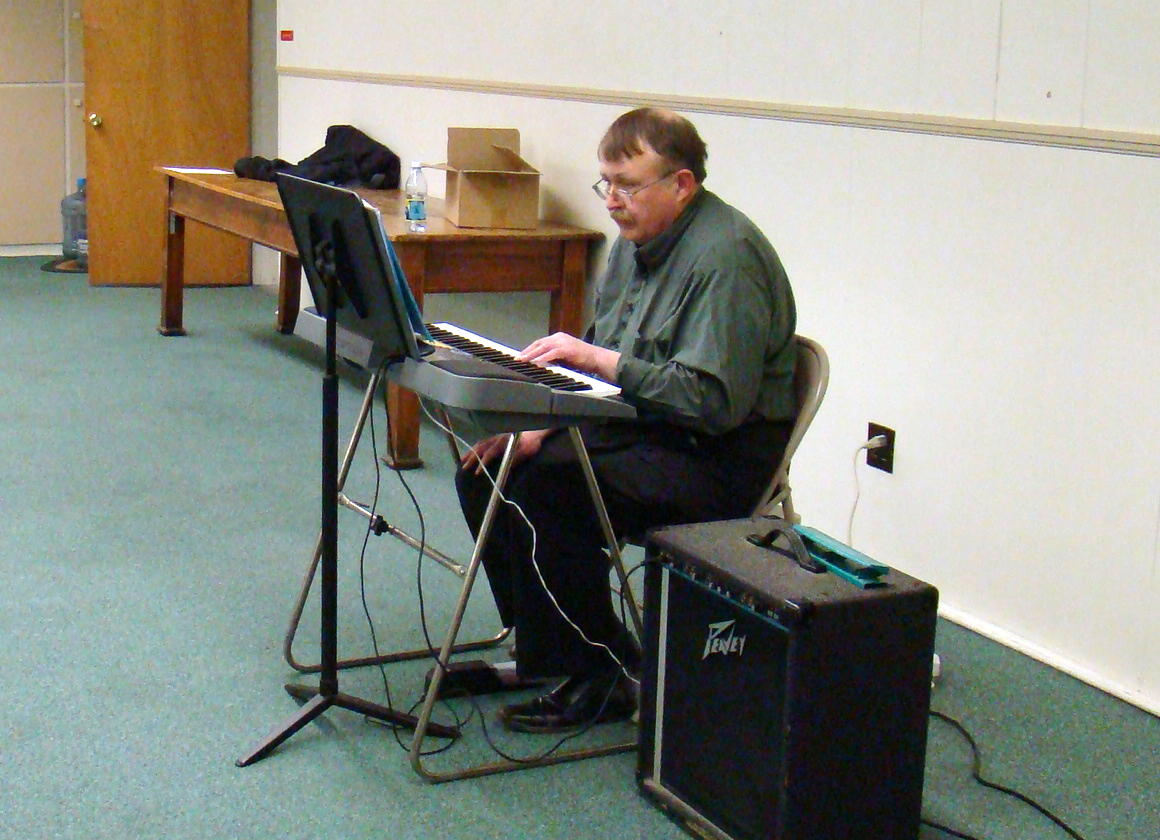
A big part of the success of the show also goes to accompanist Tom Apel, who appears in the local area at the piano wherever and whenever needed . Tom attends every practice and patiently plays the parts over and over again. Sometimes it seems he could use four hands! As it gets closer to show time, Tom will be joined by some other local musicians, who are part of the Lions’ Music & Comedy Show Band.

Being associated with the Lions Club, you can be certain that after practice, chorus members will say, “I’ve Had the Time of My Life.”  Lions Club members seem to have an extra dose of humor in everything they do.  Of course, this show is more than fun as the main purpose of these Knights for Sight is to raise money to help those in the area who need some assistance in paying for eyeglasses and eye care.

Make plans to attend “Cambridge Lions Go Hollywood” on March 29, 30, or 31 at the Scottish Rite Auditorium in downtown Cambridge, Ohio for an evening of fun entertainment as well as contributing to a great cause. Tickets may be purchased online at www.cambridgelions.com or at Country Bits & Pieces. Tickets are $8 on Thursday evening or $10 on Friday or Saturday. All shows begin at 7:30.

Members will definitely tell you “There’s No Business Like Show Business” as they prepare for the 2012 “Cambridge Lions Go Hollywood.”  Let’s go on with the show!

Coming to the show from out of town? From I-70 take Exit 178 at SR 209. Proceed west on 209 /Southgate Road until you arrive downtown at the Courthouse. Make a right hand turn and two traffic lights later you are in front of the Scottish Rite Auditorium at the corner of Wheeling Avenue and 10th Street.  It is across from the Cambridge Post Office. Coming from I-77, take Exit 180B, which is US 40 West. After approximately one mile, you will arrive in downtown Cambridge. At the corner of Wheeling Avenue and 10th Street, you will find the Scottish Rite Auditorium. Hope to see you there!
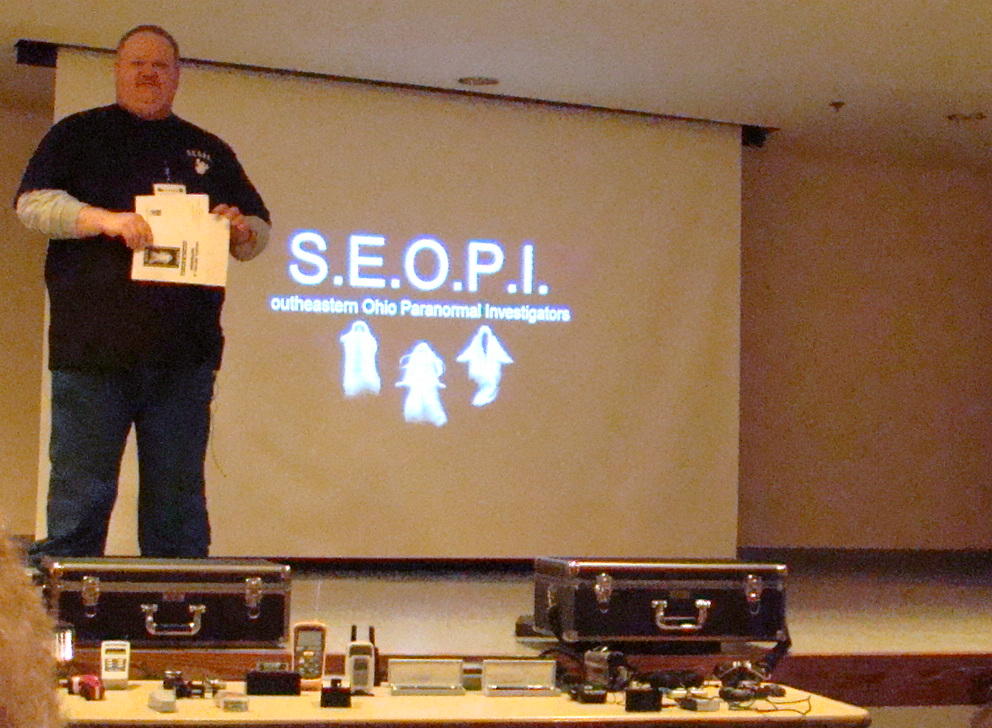
Caution Ghost Crossing! could easily be a sign encountered quite often by members of the Southeastern Ohio Paranormal Investigators.   And on a Saturday in February, ghost hunting appeared to be a very popular subject as the auditorium at the John McIntire Library in Zanesville, Ohio was packed with adults seeking to learn more about ghosts. While the curious were gathering, videos of ghost hunts were being shown to whet the appetite. Members of the S.E.O.P.I. were on hand to give information about the technical aspect of ghost hunting, historic research involved, as well as psychic and metaphysical connections.
Started four years ago, the S.E.O.P.I. has become a popular source for people who feel they have a ghost on  their property, and even for those wanting help getting their ghosts to move on. Tom Robson, lead investigator, said that while they continue to explore all possibilities, “There can’t be an expert in a field with no scientific evidence.” As a youngster, Tom had an experience with the paranormal as well as a deep interest in history. Now he has discovered how  the two seem to be closely connected. What started out to be just a part time hobby for him has nearly turned into a full time job.

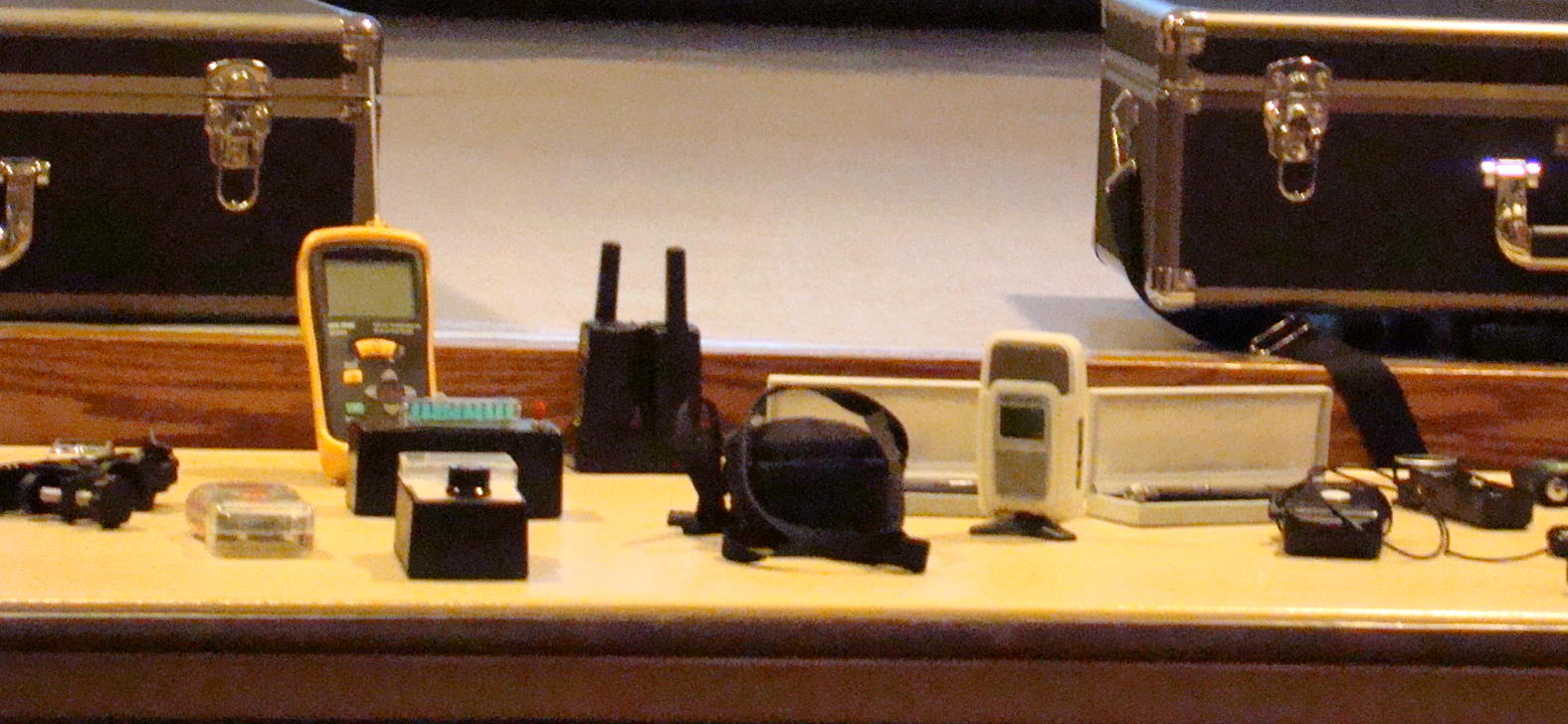
The evidence that has been captured is 90% on audio and only 10% on video. There was a nice display of the instruments used to capture the sounds and pictures at the various haunted establishments. Some of their favorite instruments included: the Olympus digital audio recorder, Zoom H1 microphone, and Zoom H2, which was so powerful they said you could hear raindrops three rooms away.

For example, during an Electronic Voice Phenomena (EVP) session on the Triangular Field in Gettysburg, questions were asked of a spirit and there were many responses recorded that were easily understood.  Responses were short such as : “Right”, “OK”, or  “I know”. When leaving the field, the team said, “Blessings to all,” to which a voice answered, “Thank you.” The recording equipment produces some very interesting results.

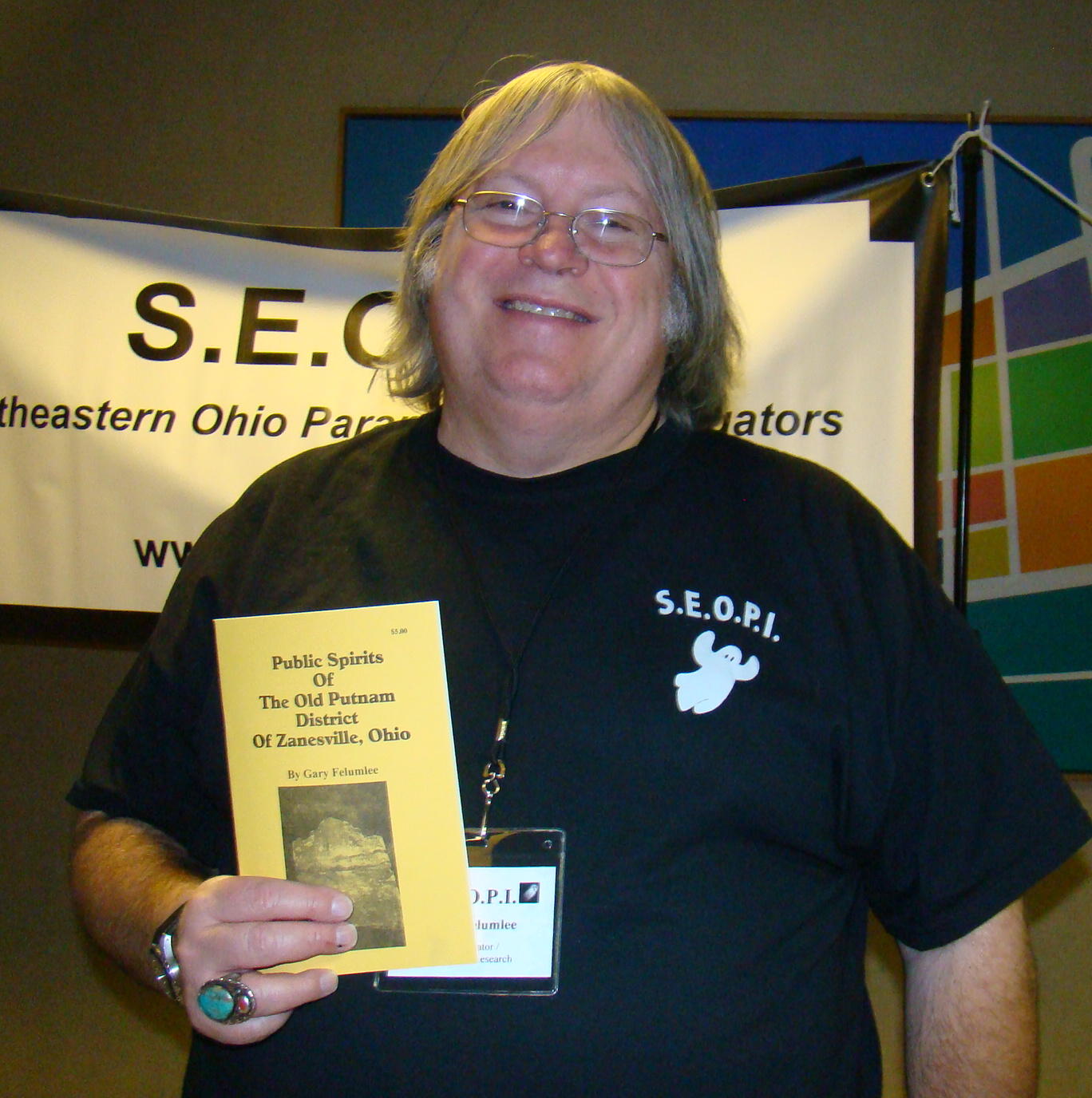
Historian, Gary Felumlee, presented paranormal research tips, because knowing the time period you are dealing with could be vital for a successful communication. His goal is eventually to show by scientific means that the unusual activity is from the spirit world. Gary recently wrote about one of these historic paranormal experiences in a book entitled Public Spirits Of The Old Putnam District Of Zanesville Ohio.

An interesting observation that Gary pointed out was the fact that you need to introduce yourself to the ghost. That will make them more comfortable and more likely to stay in the vicinity and if you are lucky even answer your questions. So he suggested that you say something like, “My name is ***** and I’m here to learn about you.”

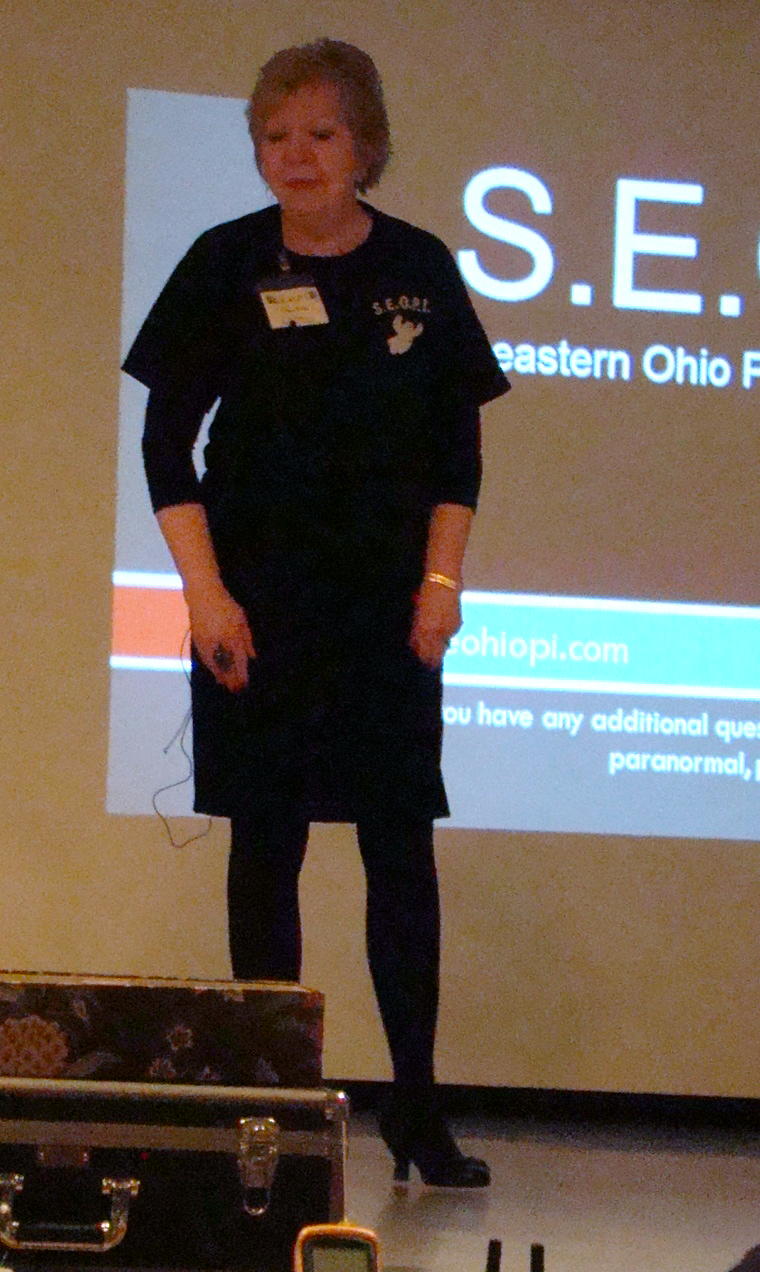
The metaphysical side of investigations was also covered with April Lovejoy explaining the world of crystals and meditation. Often team members wear particular crystals as protective devices from the spirits.  She actually had the entire audience practice five minutes of meditation to learn to focus their mind in one place.  This helps, too, when on a paranormal investigation as it permits the team a close connection to the place they are visiting.

Well know psychic, Ellen Bone, described an actual investigation where through psychic connection they were able to find the location of the spirit and release it from the residence. Ellen’s natural intuitive qualities were always encouraged by her family where psychic activities were accepted as part of the norm. She believes we are all connected, and does her work with honesty and kindness.

Evidence was shared through recordings, photos, and videos. It was surprising how many establishments in the area have had some paranormal activity. They presented information on several places where the S.E.O.P.I. team had been welcomed to investigate. These included many places right here in Ohio: Penny Court, Col. Taylor Bed & Breakfast, and Cambridge Performing Arts Centre in Cambridge; Zak’s Restaurant, Papa Chuck’s Pizza, Zanesville Community Theater, Stone Academy, and Schultz Mansion in Zanesville; Licking County Jail in Newark; and The Captain’s House in Dresden, just to name a few.

Door prizes, including gift certificates, tee shirts, books, and pictures were given out throughout the program. To make the prizes extra special, all were donated by businesses where paranormal activity has been a frequent occurrence.

What do you think? Have you encountered any ghostly experiences in your world? Time to decide: Believer or Skeptic!

Southeastern Ohio Paranormal Investigators are a select group of researchers from many walks of life. The group is based in Zanesville, Ohio and assists residents and businesses that encounter suspected paranormal activities.

Yabba Dabba Doo!

Flintstones… Meet the Flintstones,
They’re a modern stoneage family.
From the town of Bedrock,
They’re a page right out of history.

Let’s ride with the family down the street.
Through the courtesy of Fred’s two feet.

When you’re with the Flintstones,
have a yabba dabba doo time,
a dabba doo time,
we’ll have a gay old time

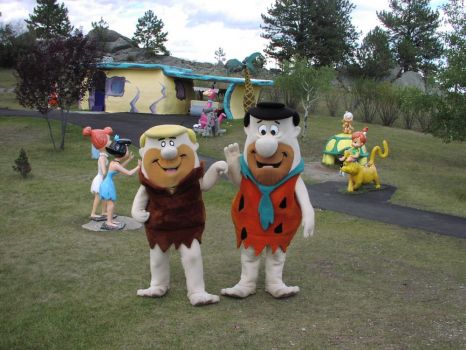
Couldn’t resist stopping for a visit with Fred and Barney at Flintstones’ Bedrock City Theme Park near Custer, South Dakota. The Flintstones was the first animated comedy show on primetime TV, starting in  1960.  For those of you not familiar with the show, Fred and Wilma Flintstone and their neighbors, Barney and Betty Rubble, lived in the prehistoric town of Bedrock.  Here they faced all those age old problems with work, family and leisure that we still experience today.

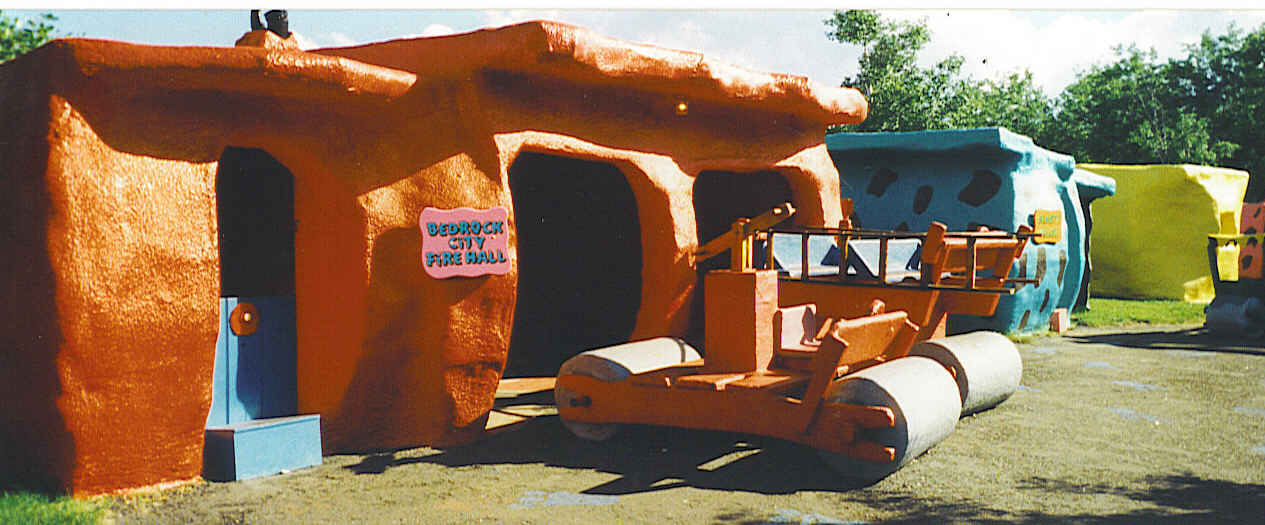
At Bedrock, you have a chance to actually drive and propel one of those famous Flintmobiles.  This pre-historic car was owned by Fred Flintstone when he worked at the stone quarry. It was made of a tree trunk and rolled along on rock wheels…no engine, just foot power!  They have several of these at Bedrock today so many can get a chance for a ride, or at least sit in one of the cars and get the feel of Stone Age living.

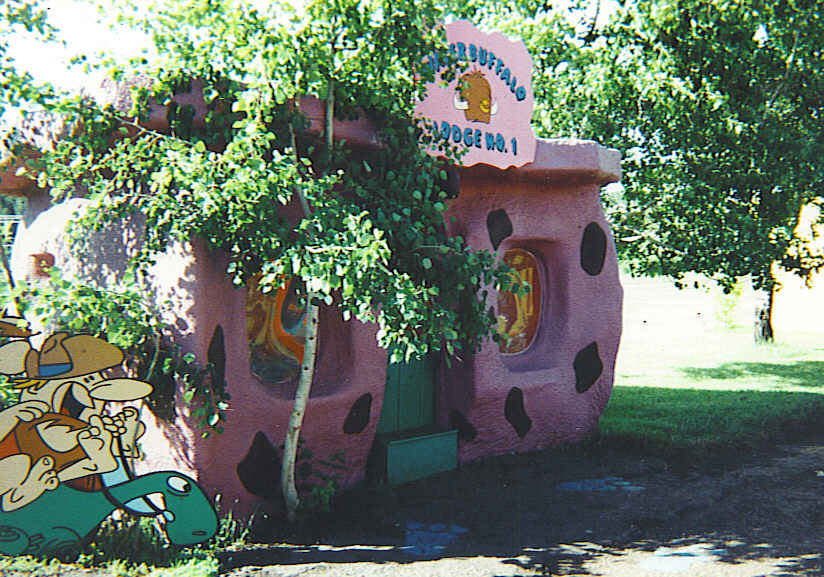
Stroll through the streets and reminisce as you walk past Fred and Barney’s houses just across the field from each other. Peek inside the Stone Age setting of Bedrock City Fire Hall,  Rocko Gas Station and Water Buffalo Lodge, where Fred and Barney liked to have a guys night out. All the buildings are painted with bright cartoon colors, and there are statues everywhere.

Since Bedrock is only thirty minutes from Mount Rushmore, it isn’t really surprising that they have their own mountain sculpture, Mount Rockmore. There are four faces here too: Fred Flintstone, friend Barney Rubble, the Flintstone’s pet Dino, and the founder of Bedrock, Mr Granitebilt.

Remember those days when Barney and Fred would stop at the Drive In on the way home from work?  When they put the loaded down tray of ribs on the side of the Flintmobile, it fell over on its side.  Now that’s a heavy meal! Stop by the Drive In Restaurant yourself  for a tasty treat of Brontoburgers, Dino Dogs, Chickasaurus sandwiches, or Rockbusters.

During the summer months, you will find a live Fred and Barney walking around Bedrock ready to shake your hand or have their picture taken with you.  Being part of a cartoon setting is great fun.

Bedrock City is a priceless piece of America along the route to the Grand Canyon. This is a great place for a family vacation as there are many places to explore in the area. Close by are the 1880 Train, Bear Country USA, and Rushmore Waterslide Park. You can stay at the Flintstone Campground in a cabin, tent, or your RV. For forty five years, Bedrock City has been giving enjoyment to old and young alike.

Spend your vacation in a cartoon and enjoy the wonderful world of Bedrock. Yabba Dabba Doo!

Bedrock City, South Dakota is located just off US Highway 16 west of Custer on Mt. Rushmore Road. Just watch for the Flintstones sign.

Everyone has their dreams, and the only thing that can keep you from fulfilling your dreams is you. David Turrill, faculty member at Muskingum University, found one special dream fulfilled on a recent trip abroad.

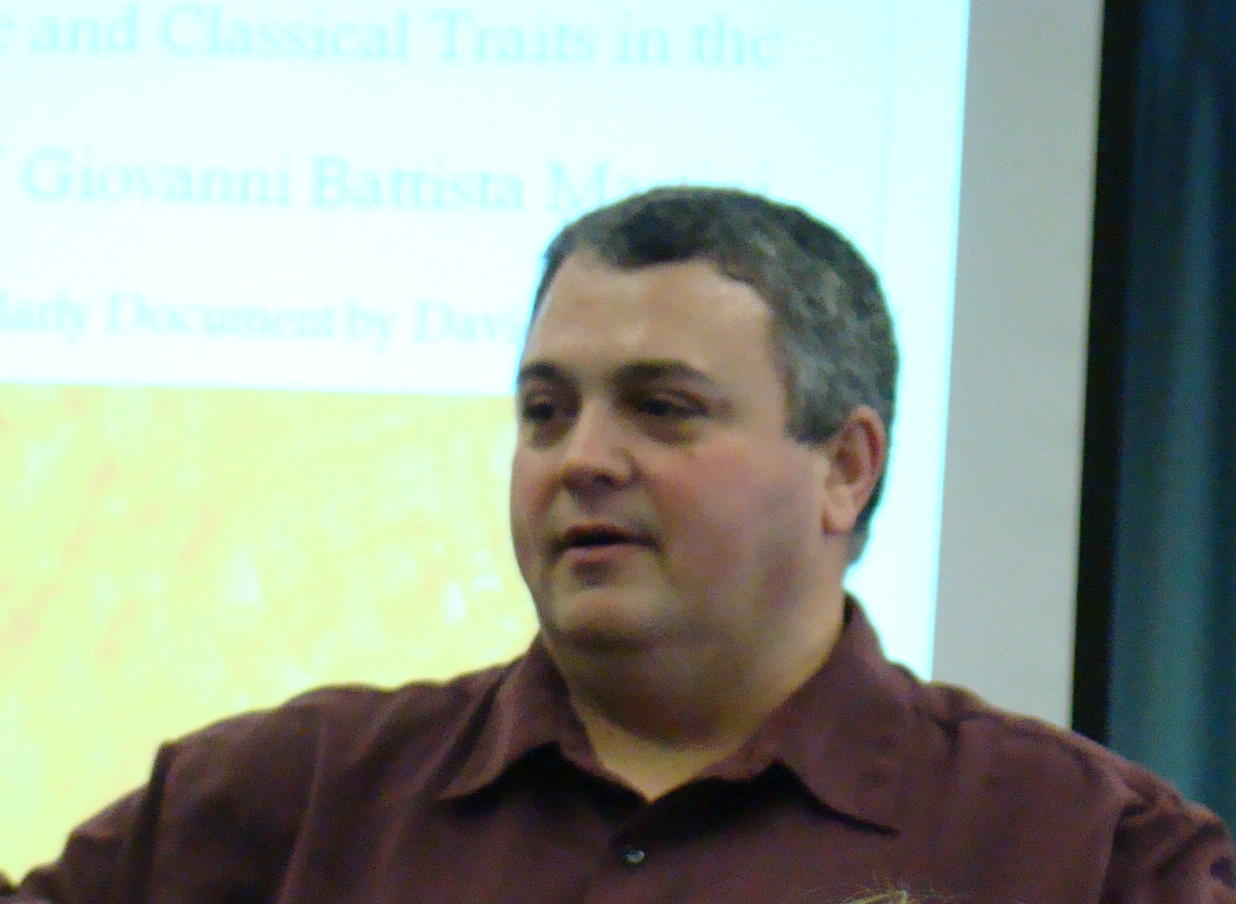
Quite often you don’t have to go as far from home as David did to find interesting and unusual activities. At the Muskingum University Library, each month they present Author Talks with campus and local authors describing their writing experiences. David’s talk centered around musical research in the archives of Bologna, Italy.

As conductor of the Muskingum University Wind Ensemble, Muskingum University Band, and Muskingum Valley Symphonic Winds plus teacher of trumpet and music education, David Turrill breathes music most of his waking hours.  His special interest exists in the Baroque period from 1600-1750.  So when it came time to select a topic for his doctoral presentation, David decided to study Giovanni Battista Martini and his passion for the Baroque trumpet.

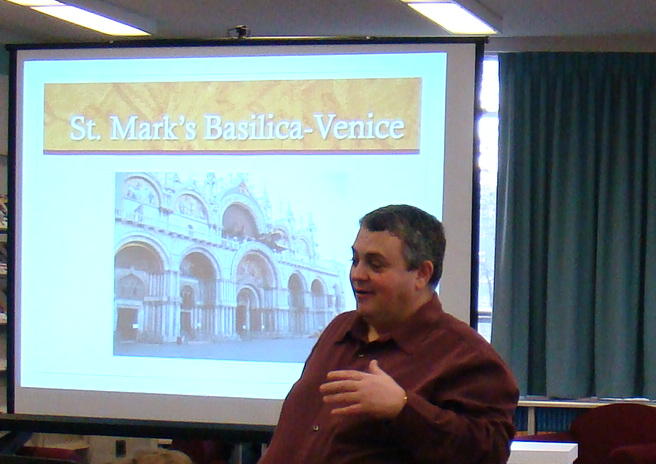
Starting at the Natural Trumpet Making Workshop in Indiana, David and other participants assembled, pounded, and polished their original Baroque Trumpet, synonymous with Natural Trumpet. David said this was not an easy task for him as he wasn’t really very good at working with his hands. By using a slide presentation at the library, he was able to explain the day to day process. When completed, those trumpets each had a slightly different sound depending on how they were pounded out, and also on who was playing them.

His relaxed manner had the audience laughing at his musical jokes and asking questions throughout.  He did play a selection on the Baroque Trumpet, which is very specialized and can only play in certain compositions. One of his students played a traditional trumpet to display differences. Since there are no valves on the Baroque trumpet, the mouthpiece is very special and there are bits to change keys.  David smilingly said, “Wrong notes are easier to come by!”

Many of the participants spent hours creating a glossy shine on their instruments, but David said he wanted his to look like it was played in the 1700’s so he didn’t spend time shining. Or maybe he wanted to explore other things?

Next stop, Germany, where he visited the Baroque Trumpet Shop featuring Egger trumpets, which David said were the Rolls-Royce of Trumpets.  This was just a short stop on his way to Bologna, Italy where he did his research on Martini, who was a composer of over 1500 works as well as a teacher and historian. The Martini Library at the Conservatory of Bologna was where David spent two to three hours a day looking at 280 year old manuscripts, and trying to figure out that age old question – What was the intent of the composer?

All through his research he was hoping to strike gold and find an undiscovered composition or interesting life story. But this was not to be.  However, David did feel that he struck gold when he arrived in Venice, which had been a dream spot to visit for several years. St Mark’s Basilica seemed to be one of his favorite stops. Sometimes when we dream of something, it never quite lives up to the dream. This time however, David said Venice was “beyond my wildest dreams.”

He does hope to write dissertations and journal articles in the future regarding his travel experience, as well as sharing his knowledge of the Baroque music period. This accomplished musician needs to keep on dreaming.

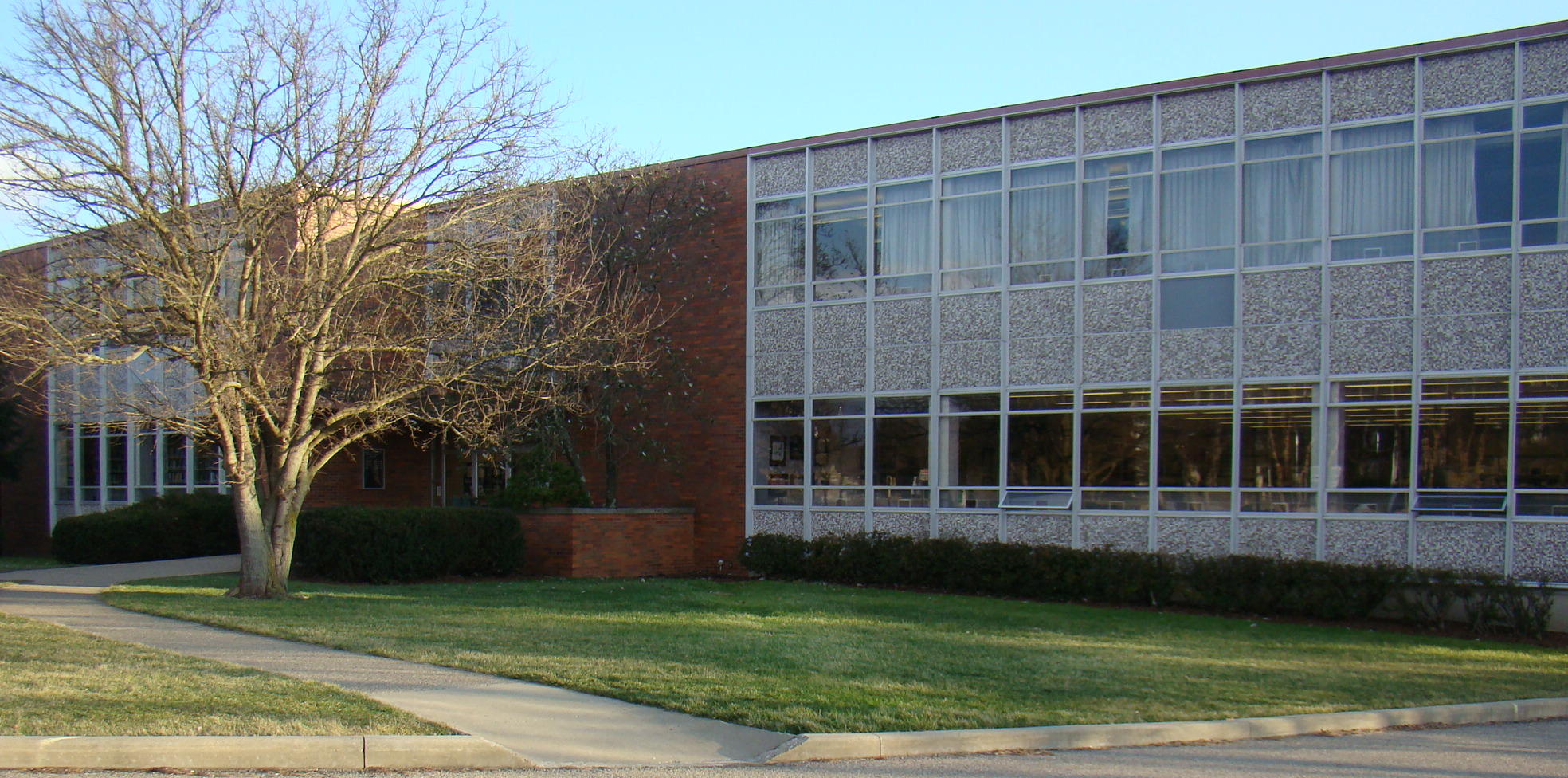
Muskingum Library is quite easy to access on the Muskingum University campus. From I-70 take Exit 169 OH 83 towards New Concord. At the traffic light turn right onto Main Street/ US 40. Turn left at the entrance gates to Muskingum University and follow the road to the top of the hill.  Turn left again and at the left end of the short street, you will find the library.  Parking is available for visitors either before you reach the library or at the side.

Six Grandfathers Mountain, now known as Mount Rushmore, was spiritual home to the Lakota Sioux Indians. Many of the Sioux were insulted by the building of the Memorial on their sacred land. Add to that the fact that the monument celebrates the Europeans, who killed so many of their tribesmen as well as appropriating their land, and it is no wonder there is still controversy between the Sioux and the US government today.

As far back at 1923, the people of the Black Hills region of South Dakota were searching for an idea to bring tourists to their part of the country. After seeing samples of carvings done by Gutzon Borglum, he was invited by historian Doane Robinson, The Father of Mount Rushmore, to the Black Hills so they could find an acceptable place for a large carving.  After dismissing the idea of using the Needles range, they settled on the granite faced Mount Rushmore near Keystone, South Dakota. The granite was relatively free of fractures, and it also faced southeast for more sun exposure. When the selection was made, sixty year old Borglum remarked, “American history shall march along that skyline.”

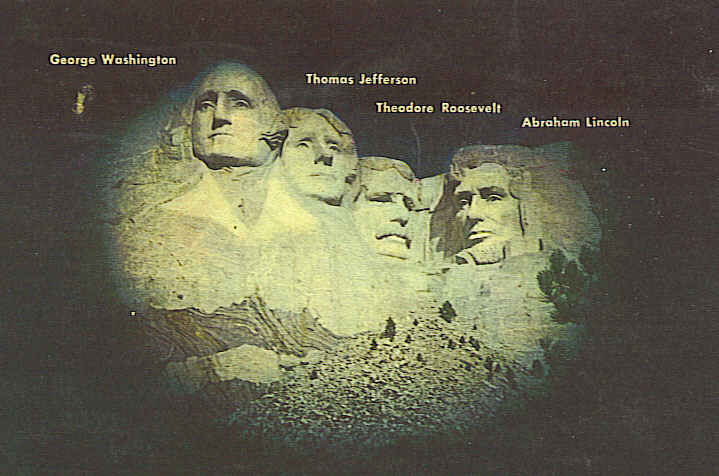
For one hour each evening, Mount Rushmore, The Presidents’ Mountain, is illuminated with steadily increasing lights that make this carving glow in brilliant splendor. The four presidential faces shown on this 1989 postcard are from left to right: George Washington, the father of our country; Thomas Jefferson, principal author of the Constitution, and instrumental in the Louisiana Purchase; Theodore Roosevelt, champion of conservation; and Abraham Lincoln, leader during the Civil War.

Today we can see the results of Gutzon Borglum’s  guidance of approximately four hundred workers, including his son,  from 1927-1941.  The four sixty foot likenesses of the faces rest on 1,278 acres. Original plans were to sculpt them down to the waists, but that idea was cancelled due to insufficient funds. Upon his death, Gutzon’s son, Lincoln Borglum, was in charge of completing the project, but he basically left it as the monument appeared upon his father’s death.

Today you can visit the Lincoln Borglum Museum where a film provides an introduction to the memorial site plus historic exhibits.  Take a lunch break at Carvers’  Cafe where you might find on the menu tasty dishes such as Jeffersonian Gourmet Salad or Teddy’s Bison Chili. If you are lucky, you can sit at a table by the large wall of windows, which provides a great view of Mount Rushmore. The Sculptor’s Studio displays the unique plaster models used prior to sculpting on the mountain side, as well as the tools used while carving. A recent addition is the Native American Heritage Village devoted to Indian culture and the Indians’ place in local history.

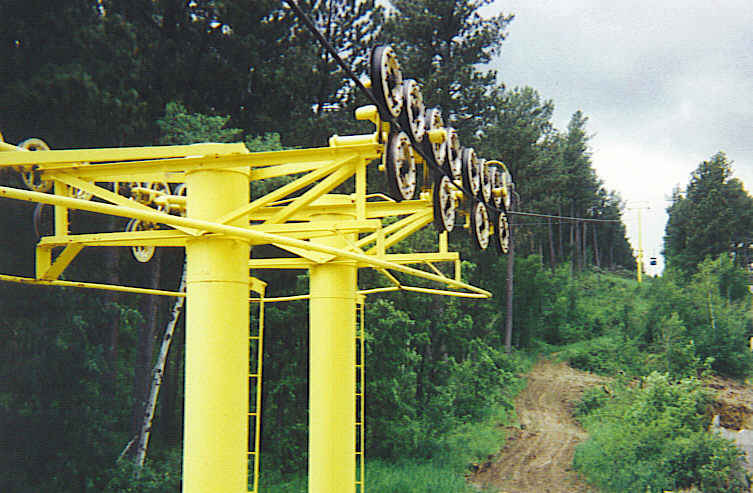
For another close-up view of the mountain, take the scenic chairlift ride through the Ponderosa pines. Views are spectacular and there is a park at the summit as well as a small outdoor grille.  You must be careful getting on and off as the chairlift stops for no one.  You do get a unique view of the presidential faces as well as enjoying the feeling of flying up the mountainside on the chairlift. Coming down you can either return on the chairlift or descend on the Alpine Slide.  This new slide is 2000 feet long and you are able to control the speed downhill on a wheeled sled with brakes. So it is up to you!  Either take a slow and leisurely ride down, or get a rush of excitement.

On the side of the mountain behind the faces is an interesting tunnel called the Hall of Records. In 1998, they began construction of a vault there that would hold sixteen porcelain enamel panels.  On these panels are: text of The Declaration of Independence, Constitution, biographies of the four presidents, and a short history of the United States.  All this is being done to preserve our present history for future generations. At this time, the Hall of Records is not accessible to the public.

Here at Mount Rushmore, you and your family can have a great educational experience by learning about the Indian heritage as well as the significance of the four faces carved there. Leaving the park, there was an interesting view from the back road where it appeared that George Washington was keeping watch on everything with eyes eleven feet across. The pupils of each eye are made of granite so they appear to twinkle when the sun hits them.  Maybe that is the reason the eyes seem to follow you!  Join the nearly three million people who visit here each year to see the faces march along the skyline.

Mount Rushmore Memorial in western South Dakota can easily be reached off I-90 off Exit 57 to Highway 16, which goes to Keystone. At Keystone take Highway 244 to the Mount Rushmore entrance. 

White Waves of Desert Sand

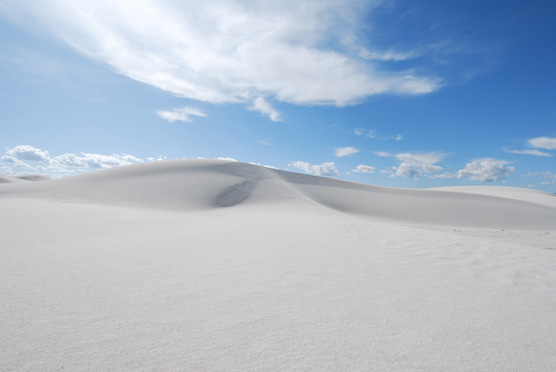
White Sand as far as the eye can see!  Beautiful waves and dunes of sand cover 275 square miles of land near Alamogordo, New Mexico. Approaching from Cloudcroft, a mountain village with an altitude of about 10,000 feet, the view of White Sands in the distance with a mountain background was spectacular.

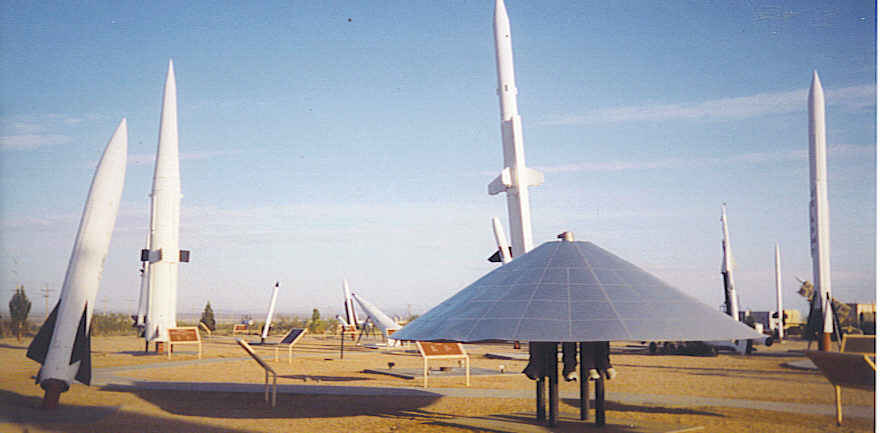
Surrounded by military installations, White Sands National Monument, the largest gypsum sand dune field in the world, was an unusual environment to explore. White Sands Missile Range surrounds the place and was where the first atomic bomb was detonated. Holloman Air Force Base was just east of here and a few miles farther on you will find a landing site for space shuttles.A couple times a week, traffic will be stopped for a few hours as test missiles are being shot overhead. This is truly an interesting place for those interested in space travel, as in nearby Alamogordo you can find the International Space Hall of Fame.

Reaching White Sands National Monument, first stop is the Visitors Center, which was a 1938 WPA project constructed of adobe in Spanish pueblo style. Adobe bricks are usually sixteen inches long, ten inches wide, and four inches thick so this is a solid building which has stood the test of time. Two men would work all day to form about a hundred bricks. Set in a landscape of native plants, this is truly a Welcome Center to the area.

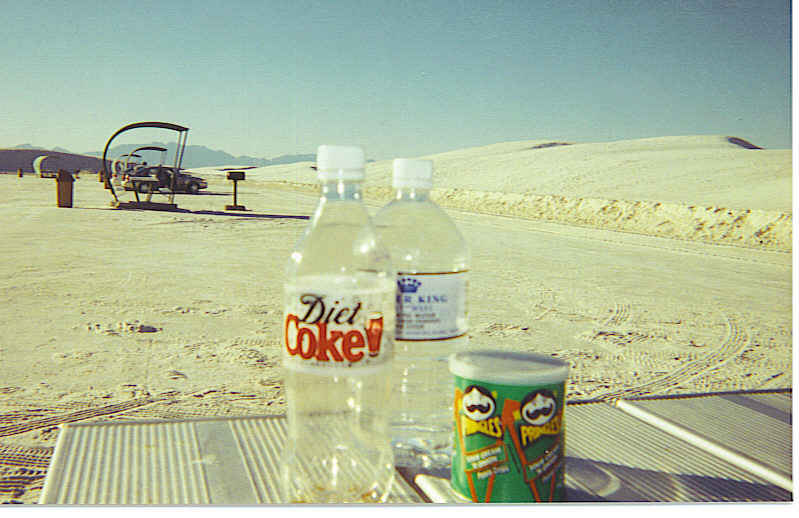
Outside it is time to explore. Don’t forget your water bottle because if the sun shines, this can be a very hot desert scene.  This is an especially unusual scene as gypsum is seldom found in the form of sand. But located here in a basin, the white gypsum  is captured, because there is no outlet to the sea. The dunes are constantly changing shapes as tiny grains of sand are blown into ripples across the vast white desert. This area, with shelters inspired by Frank Lloyd Wright, makes a great place for a rest, or to watch the antics of others on the dunes.

You will probably want to take a leisurely drive through the White Sands area, just to get the feel of things. There was a paved road for a couple of miles, and then you were on your own, to decide if you wanted to venture off driving on the gypsum highway through the hills of sand.

There were also a couple of walking trails – one mile-long path through the sand and another an actual boardwalk. Climbing to the top of one of these large dunes is a challenge and fun.  But this is one place where coming down is the hard part! Children have the right idea here as they use saucers or cardboard and slide down the dunes, resembling what a youngster would do with a sled in the snow.

Animals lived in this ocean of white sand in an evolved state as they became part of their environment and were thus camouflaged against the white desert scene. Salamanders, spiders and the Bleached Earless Lizard were white…just like the sand.

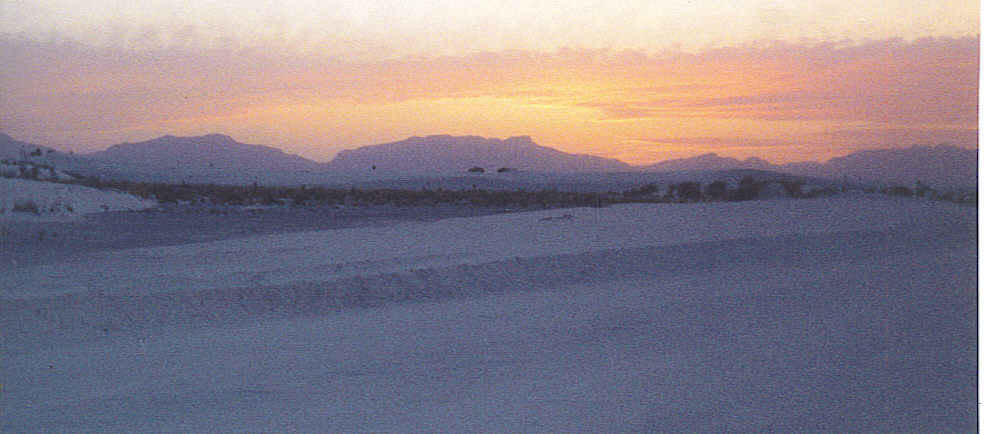
Drive, hike, walk the boardwalk, or go sledding!  So many options! But definitely an unusual place to enjoy the beauty that nature provides, including beautiful sunsets.

White Sands National Monument is in southern New Mexico along U.S. Highway 70, which can be reached off I-25 from Las Cruces or off U.S. Highway 54 from Alamogordo. Personally think the approach over the Sacramento Mountains on U.S. Highway 82 gives a great overview. Remember the roads may be closed at times for missile testing with a possible wait of several hours.