Places to go and things to see by Gypsy Bev

Posts tagged ‘Ohio River’

The Marietta Mound Cemetery Burial Ground for Heroes of War and Peace
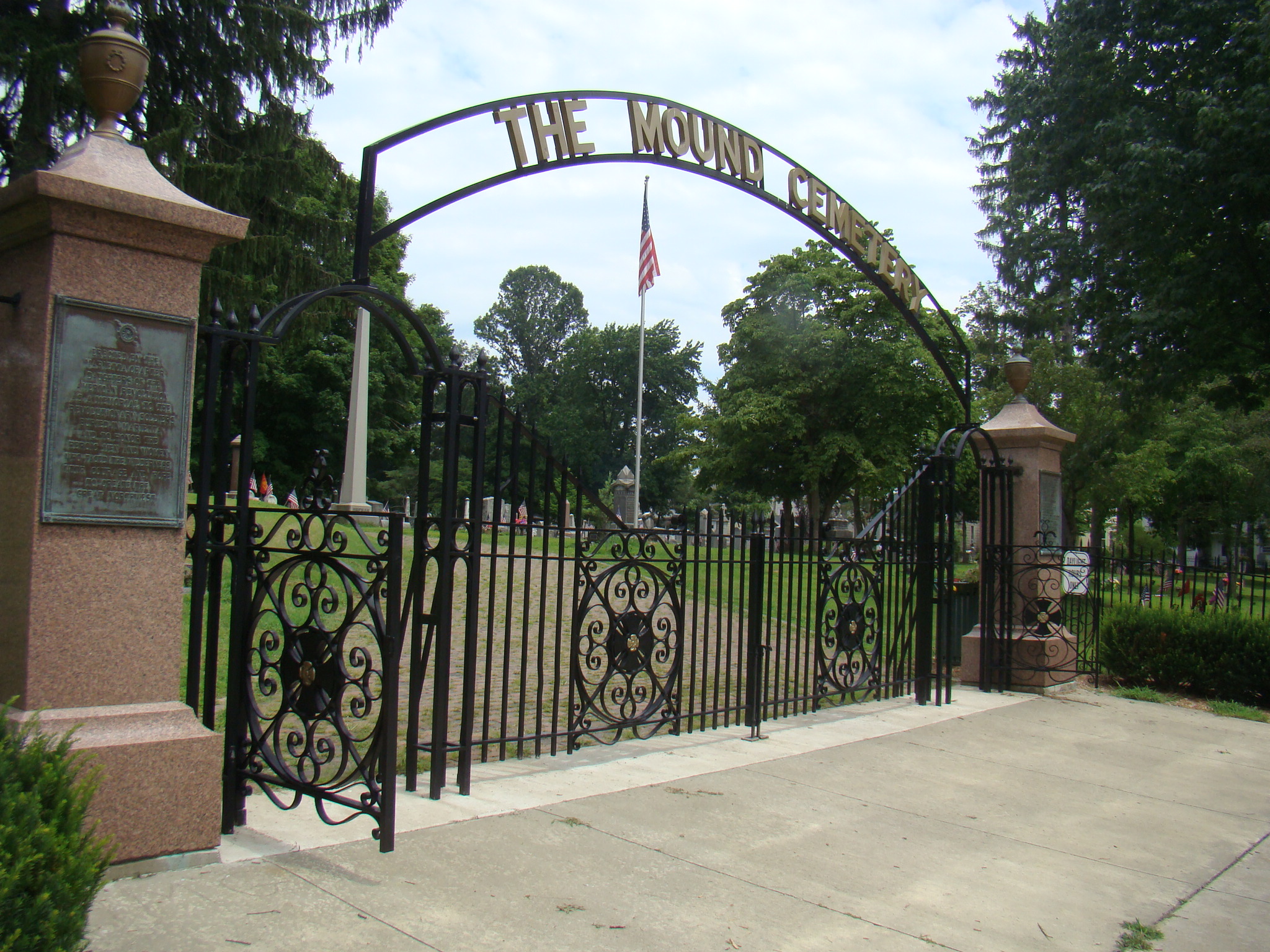
Marietta Mound Cemetery in Marietta, Ohio

Marietta Mound Cemetery in Marietta, Ohio

Since the prehistoric Moundbuilders came to the Ohio Valley and Marietta, sometime between 800 BC and 700 AD, those early ancients remain quite mysterious. It is thought the Adena culture built The Great Mound, where Marietta Mound Cemetery is today located. The Hopewell, descendents of the Adena culture, are responsible for a portion of the mounds in the Marietta complex.
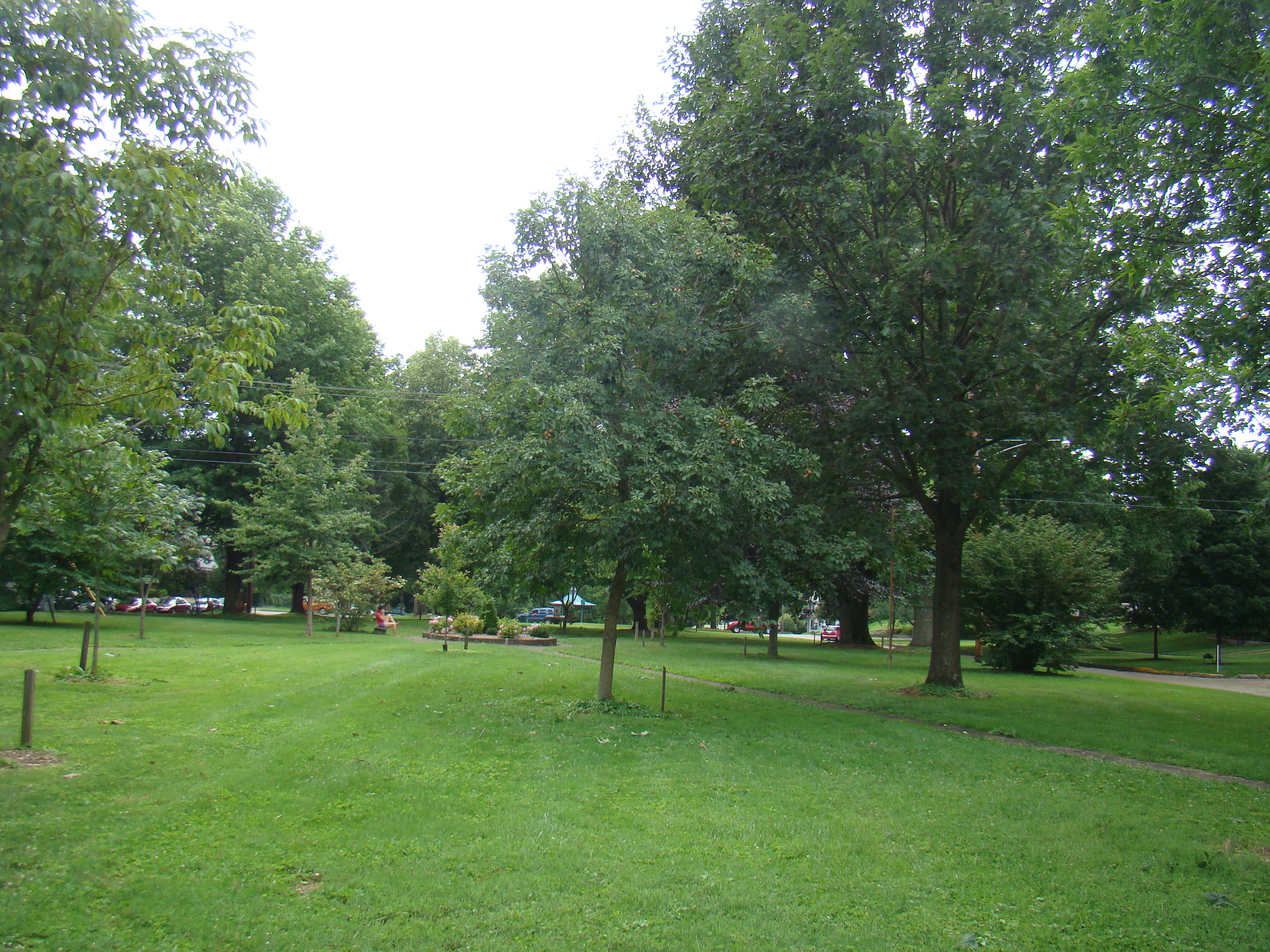
Sacra Via, The Sacred Way

Sacra Via – The Sacred Way

From the Muskingum River to what is now 2nd Street, a roadway called Sacra Via, meaning Sacred Way, was constructed of white crushed mussel shells, which made a solid pavement. The reflective light from the moon on the mussel shells almost made it seem like a lighted path when the ships would dock on the Ohio and Muskingum RIvers. Today that Sacred Way is maintained as a public park where the Ohio Land Company members are honored.
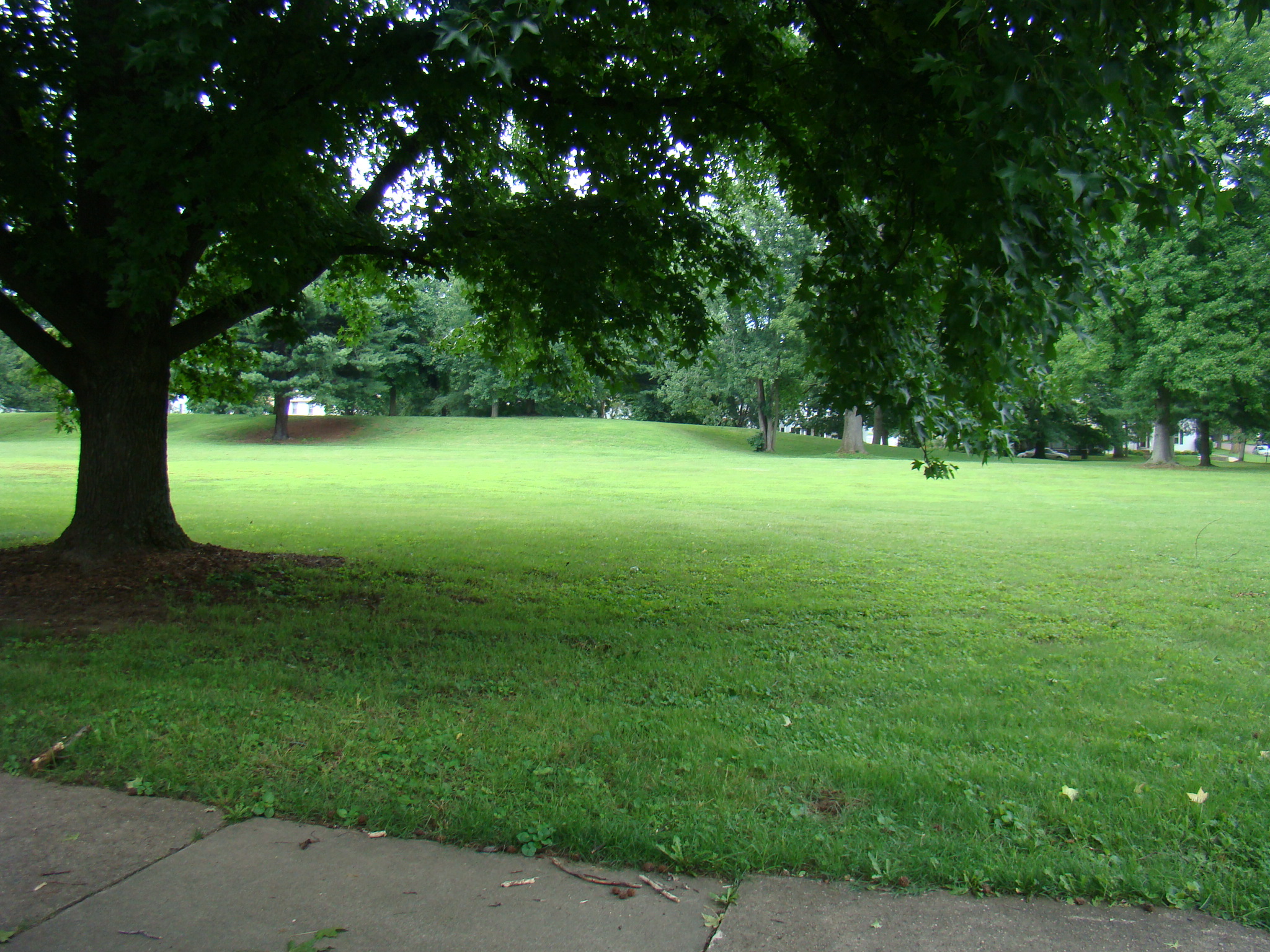
Large Pyramid Mound in Marietta Mound Complex

Large Pyramid Mound in Marietta Mound Complex

Sacra Via continued to what is now called the Marietta Earthworks. This archeological complex included a large square enclosure surrounding four flat-topped pyramidal mounds, another smaller square and the conical shaped mound in the cemetery. Brick walls enclosed the Sacred Way from the Muskingum River to the Quadranaou, the largest flat topped earthen pyramid. The walls of the enclosure were aligned with the winter solstice since astrology played a major role in celebrations and rituals of those early cultures. The bricks were removed in 1843 to use as home foundations.
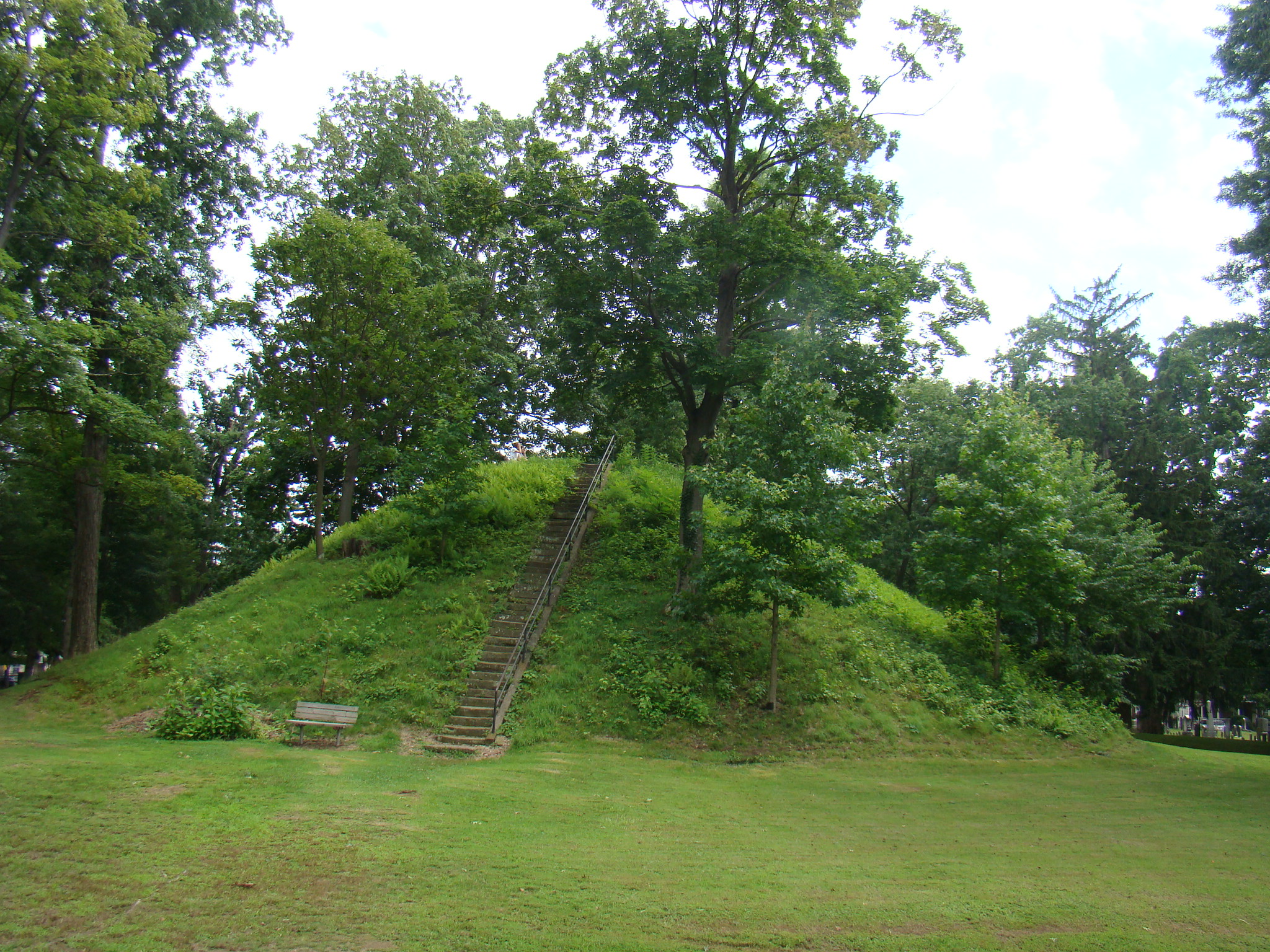
Great Mound, Conus

Great Mound – Conus

The roadway ended at the largest mound, called Great Mound or Conus, where city developers created a cemetery, Marietta Mound Cemetery, in 1801.  More Revolutionary War officers are buried in this county than at any other place in the United States. General Rufus Putnam and General Benjamin Tupper, both founders of the Ohio Land Company, are buried here. Serving originally as the burial place for chieftains, 30′ tall Conus is the Adena culture’s largest conical, ringed mound still visible today.
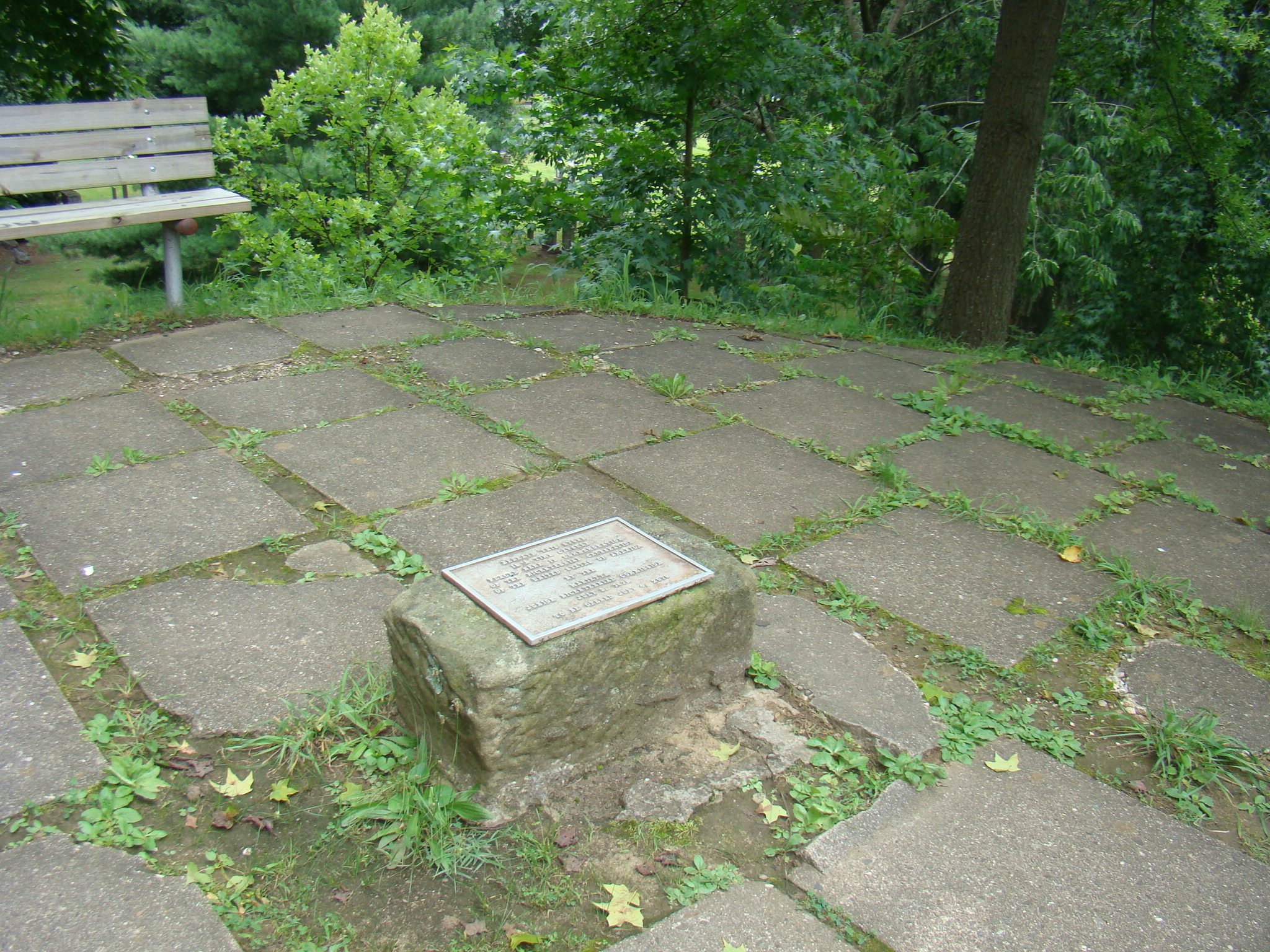
Rock covering capsule at top of the Great Mound

Rock covering capsule at top of the Great Mound

To keep the mound from being destroyed, original pioneers in Marietta had the cemetery fenced in back in 1837. When a slight excavation of the site occurred, bones of an adult Adena Indian and some of his possessions were discovered buried in a horizontal position and covered with a large stone. Once it was discovered this was a burial site, further excavation was halted. The mound was sowed with grass, and stone steps were built to the top. Those same steps can be climbed today with the addition of a handrail for easier climbing.
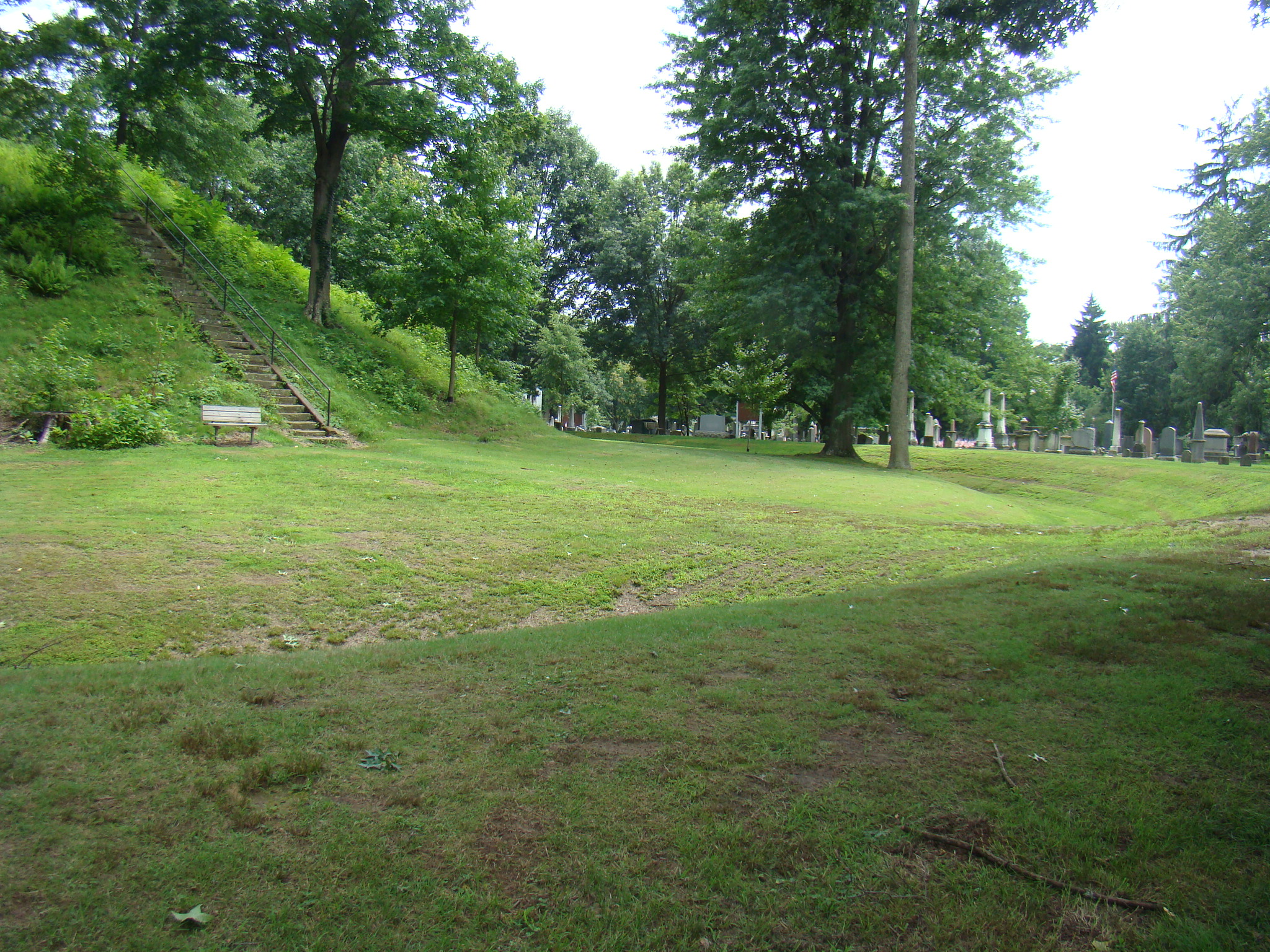
Ditch and embankment surrounding The Great Mound

Ditch and embankment surrounding Conus

After climbing 45 steps, the top of the tree covered mound has benches for resting and viewing the city of Marietta,   A cool breeze was welcome after the strenuous climb but it lasted only a minute.  From the top you can see the 15′ wide ditch and  4′ deep embankment that surround Conus.  An interesting stone at the top of Conus states: Beneath this stone is a time capsule placed here in commemoration of the bicentennial celebration of the United States of America. Junior Bicentennial Commission, July 3, 1976 to be opened July 4, 2076.

Here in this cemetery, seen from high on the mound, are buried a Moundbuilder chief, veterans of the French and Indian War, the Revolutionary War, the War of 1812, the Mexican, Civil and Spanish American Wars plus many heroes of peace. The spirits of those who helped build this nation live on.

Marietta Mound Cemetery is located in Marietta, Ohio off I-77. Take Exit 1 along the beautiful Ohio River following Route 7 West. The cemetery is located at the intersection of 5th Street and Scammel Street. From Route 7, turn right on Greene Street / 7th Street, then right onto 4th Street and another right onto Scammel Street. The Cemetery will be directly in front of you. You can’t miss it!

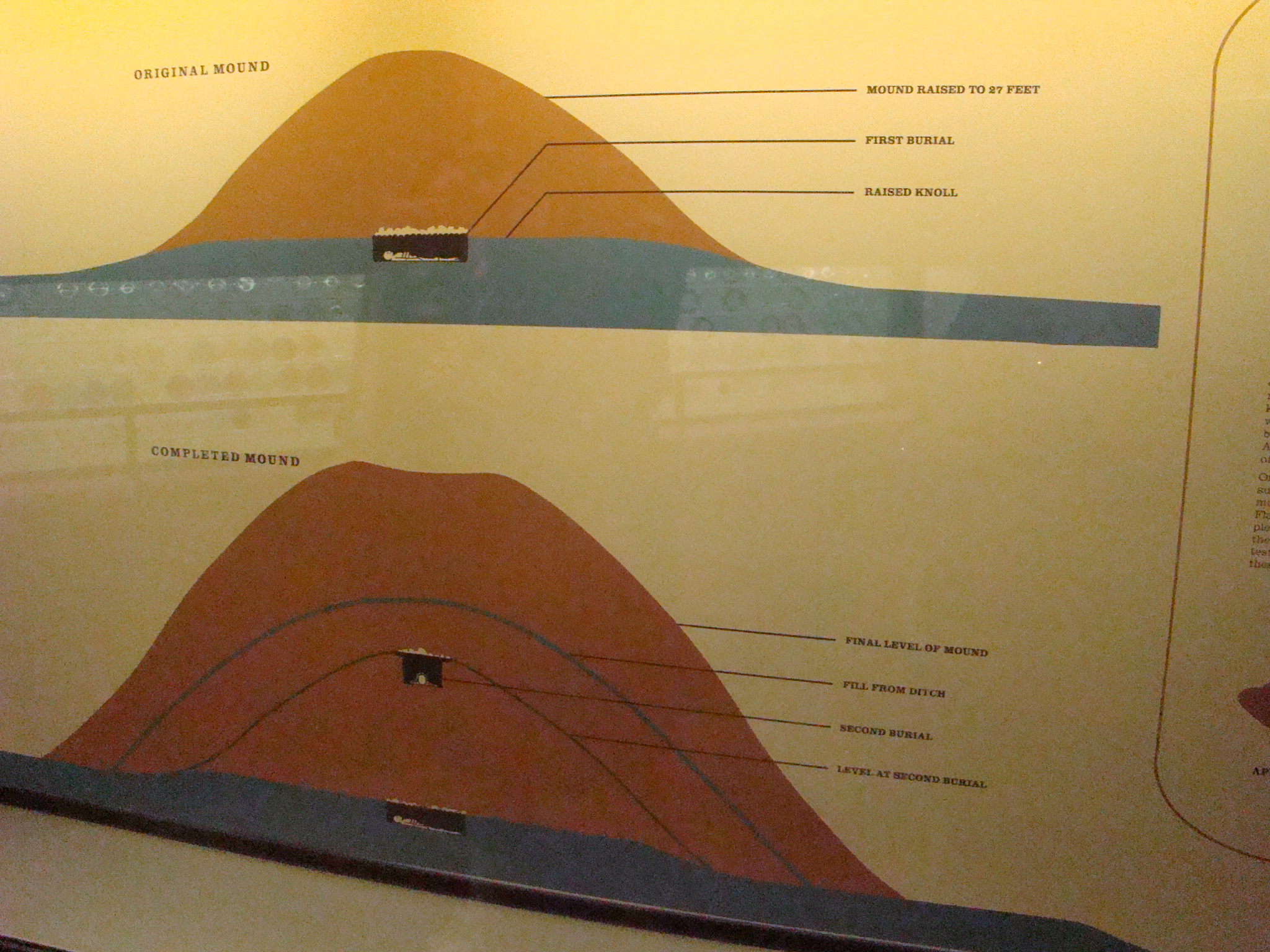
Mammoth Mound Mysteries Grave Creek Mound Complex

Mammoth Grave Creek Mound in Moundsville, WV

Mammoth Grave Creek Mound in Moundsville, WV

Step back in time, way back in time, to 200 BC.  Buried beneath the surface of this gigantic mound in Moundsville, West Virginia are ancient treasures from two thousand years ago.

Driving past this 62′ high mound, many people possibly see it merely as a big pile of dirt. But when you explore inside the Grave Creek Mound Archeological Complex located beside it, you discover surprises regarding this unusual structure in Moundsville near the Ohio River. For many it will get their mental wheels turning as they want to search for more information.

To get a better picture of the area in your mind, Grave Creek Mound, the largest conical mound in the United States, is 62′ high with a base of 240′ and was surrounded with a moat, which has since been filled in. There was only one way across the moat – an earthen path. This was part of a much larger ceremonial area, which seemed to begin at the Ohio River.

The mound was built over a period of 200 years with burial vaults at different layers.

The mound was built over a period of 200 years with burial vaults at different layers.

This Adena burial mound required a lot of work to move 60,000 Tons of earth to form this mound over a period of years.  Included are multiple burials at different levels from 250 – 150 BC. It appears to have been build in stages with most of the burials being by cremation.

Since it seems that people arrived on the Ohio River, there was what many called a Sacred Way leading from the river to The Mound. But the Way didn’t stop there, as it turned at right angles to an octagon shape, which is no longer in existence. This Sacred Way was actually paved back 2000 years ago…with mussel shells. How do we know this? When ground was moved for building the homes and stores in Moundsville, layers of mussel shells several inches thick were found along The Sacred Way. Hopefully, you are beginning to form a picture of what could have been.

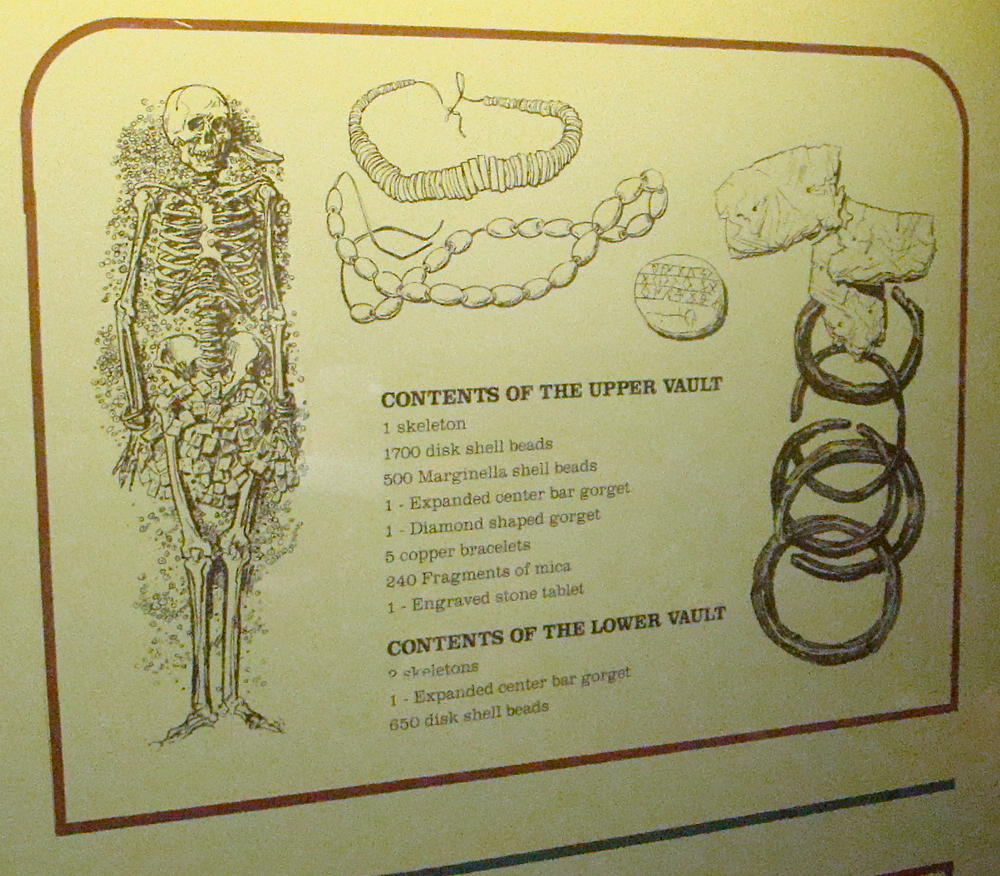
Display at Grave Creek Mound of objects found during an early dig at the mound.

Display at Grave Creek Mound of objects found during an early dig at the mound.

Back in 1838, some curious amateurs decided to do a little exploring of their own and began digging into The Mound with gusto through two shafts, one horizontal and one vertical. Their discoveries were surprising, but they had little idea of how much historic information they had really pulled from the ground. A burial vault made of logs and smooth stones from the river was found in the center near ground level. It contained two skeletons with tools, beads, pipes and ornaments indicating these were important people in their culture.

A most amazing skeleton, which they named Tasach for reasons to be given later, appeared at the bottom layer of the earthen mound.  The items found either on his body or with his body were quite astonishing. Around its 7’2″ frame were pieces of sea shells- some scattered and others formed into beads. On the wrist were seven copper bracelets and around the waist was a band of small mica squares. What do all of these pieces mean?

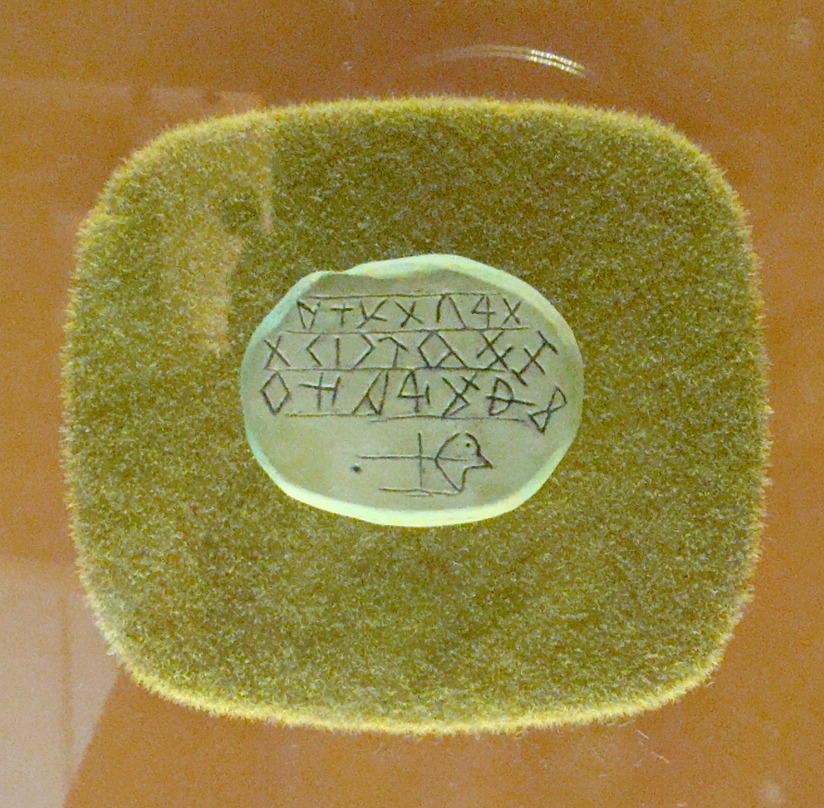
Replica of Grave Creek Tablet

Replica of Grave Creek Tablet

To add to the mystery, near the second, smaller skeleton was a small, flat sandstone tablet with three lines of symbols indicating a form of communication during that long ago time. This has become known as the Grave Creek Tablet and one of many interpretations, but the one that seems likely in my mind reads:

“The mound raised on high for Tasach. This tile his queen caused to be made.”

My first thought was that perhaps Tasach was a leader of an ancient tribe.  Since copper and mica both resonate with healing qualities, perhaps he was considered a shaman. He may have appeared at the octagon shaped structure and greeted visitors, who came by boat on the Ohio River then walked the Sacred Way through the Mound and to the octagon.  It would seem this was perhaps a spiritual ceremony of some nature by people over 2000 years ago.  Remarkable! But that was just my interpretation. Wonder what ideas you might have?
Shortly after that early  excavation, in 1843 local enthusiasts decided to use the two excavation shafts into The Mound as a museum. In the horizontal bricked shaft was an underground exhibit of the skeleton discovered with his buried treasures as well as an early gift shop. Inside the vertical shaft, a spiral staircase was built to allow visitors a way to the top of the mound where a three-story observatory was constructed. The museum was short-lived as the walls came tumbling inward, but a second stone museum was built on the south side of the mound in 1941 with many of the items available for sale having been made by the prisoners at the penitentiary across the street.

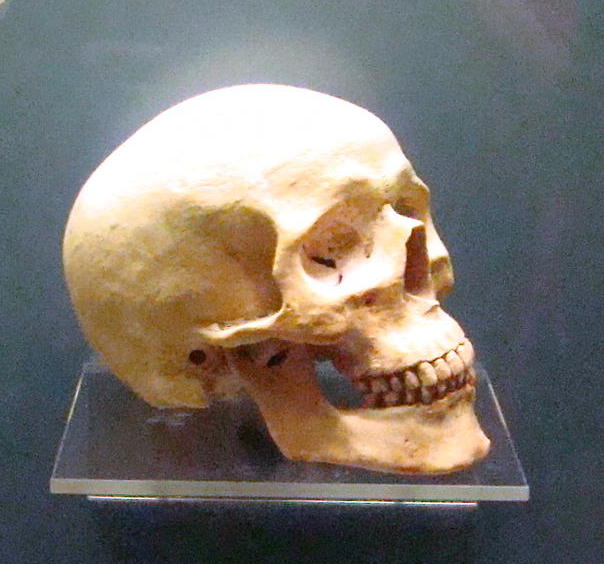
Replica of Pre-Indian skull found in 1838 excavation

Replica of Pre-Indian skull found in 1838 excavation

Today’s modern museum is housed in the Grave Creek Mound Archeological Complex, which shares many of the mysteries of The Mound with visitors through exhibits and video presentations. It opens the mind to exploring the wonders of time before the Native American Indians. These early visitors on our lands had far reaching commerce as items were from all over the country and the world. Their architectural skills were amazing and nearly all of their structures were perfectly aligned mathematically with the sun , the moon, and the stars.

Where did these people come from?  Where did they go? The mysteries continue.

The Mound is located in Moundsville, West Virginia. Just ten miles south of Wheeling along the east bank of the beautiful Ohio River. From Wheeling, follow Route 2 into Moundsville. Turn left on 8th Street and after two blocks turn right onto Jefferson Ave. The mound is too large to miss!

“The Point Between Two Waters” Tu-Endie-Wei State Park

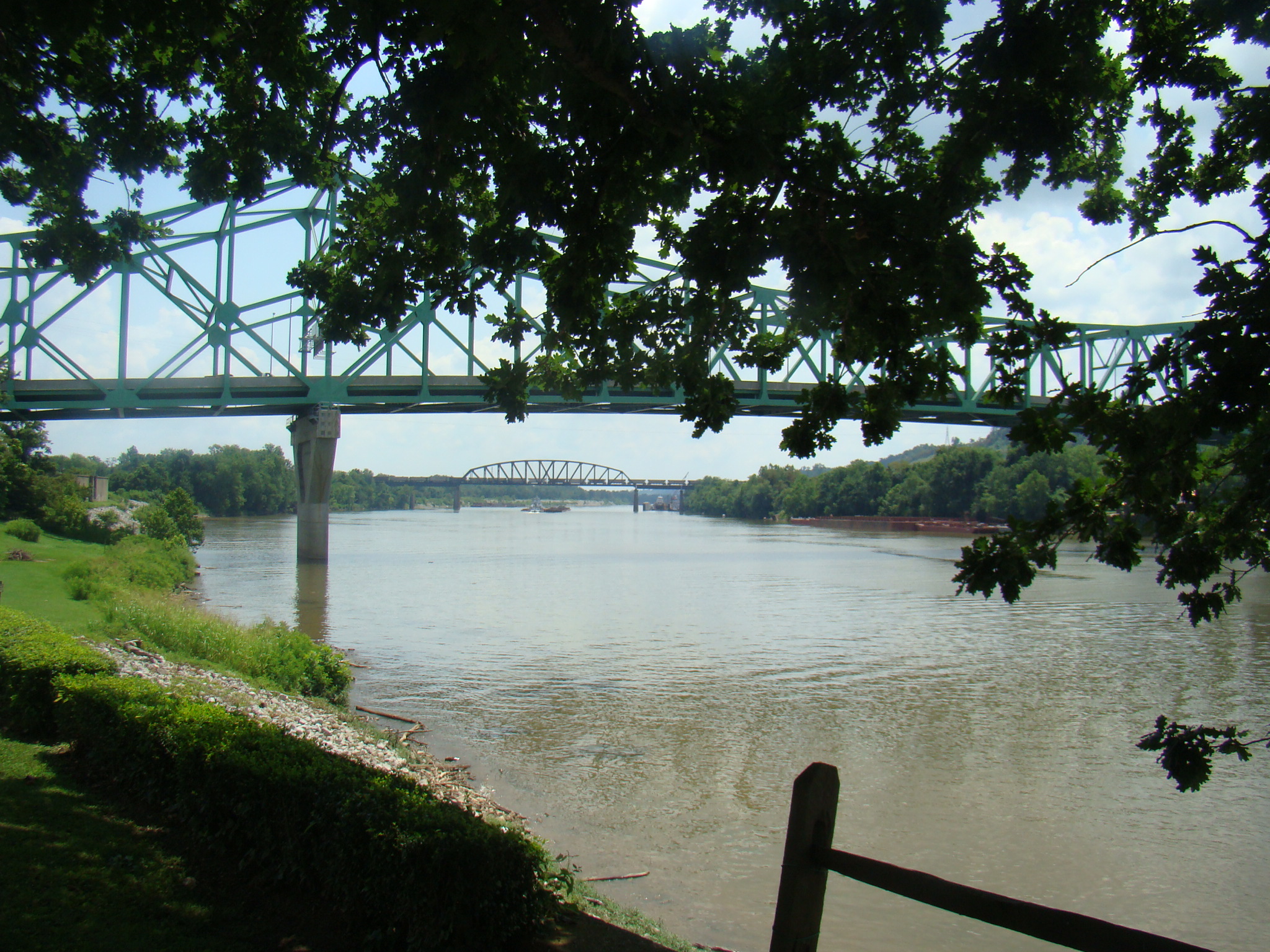
Bridge over Kanawha River where it joins the Ohio River.

View of bridge over Kanawha River while relaxing on the banks of the Ohio RIver.

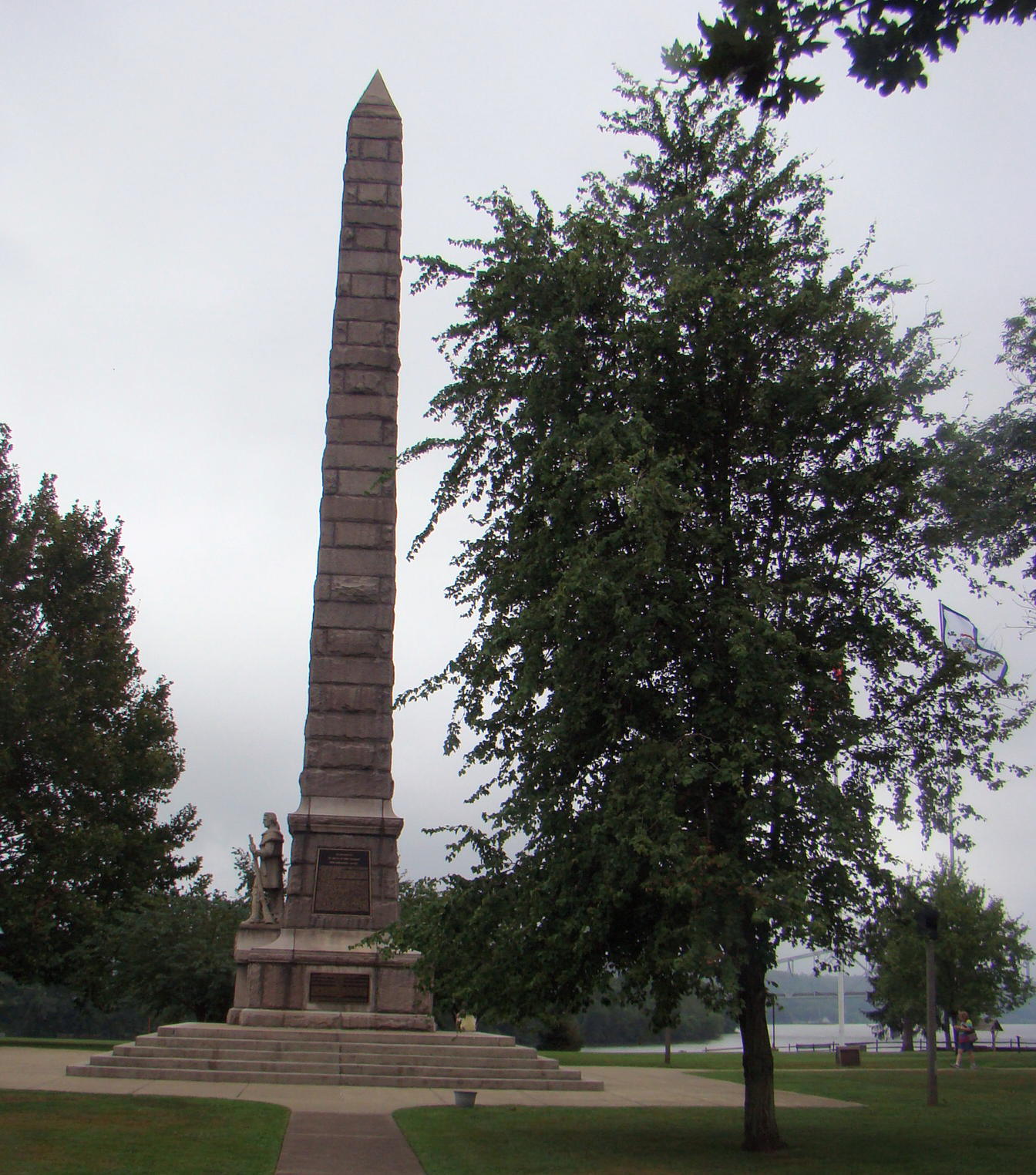
Located at the junction of the Ohio River and Kanawha River, Tu-Endie-Wei State Park in Mount Pleasant, West Virginia  marks the spot where the Battle of Point Pleasant was fought during the Revolutionary War. Here in 1774 the Virginia militia, led by General Andrew Lewis, fought hand-to-hand with warriors from the Northwestern Confederated Tribes under the leadership of renowned Indian Shawnee chief, Cornstalk.

The Congressional Declaration states:  “This plan, however, as the world now knows, was thwarted as to the place of conflict, when the traitorous Dunmore failed to join Lewis at the mouth of the Kanawha River and they to march together into the enemy’s country.” The original plan called for Governor Dunmore and General Lewis to have the two wings of their Virginia militia meet at the mouth of the Kanawha and pursue the Indians back into their own country, north of the Ohio River. Some feel perhaps Dunmore purposely didn’t arrive in hopes that the Shawnee would defeat the militia, since Dunmore soon became a prominent leader of the British War effort during the Revolutionary War.

This 84' granite oblisk commemorates the Birginia militiamen who gave their lives during the battle.

This 84′ granite obelisk commemorates the Virginia militiamen who gave their lives during the battle.

An 84-foot tall granite obelisk stands in the center of the park in remembrance of the Virginia militiamen, who lost their lives during the battle. At the base of this statue is a figure of a frontiersman. The importance of this battle stretches far beyond that one day encounter as it put to rest Indian wars on the frontier and prevented an Indian alliance with the British.

Throughout the park, several smaller memorials have been placed dedicated to some of the main heroes in this battle that many claim was the first battle of the Revolutionary War.

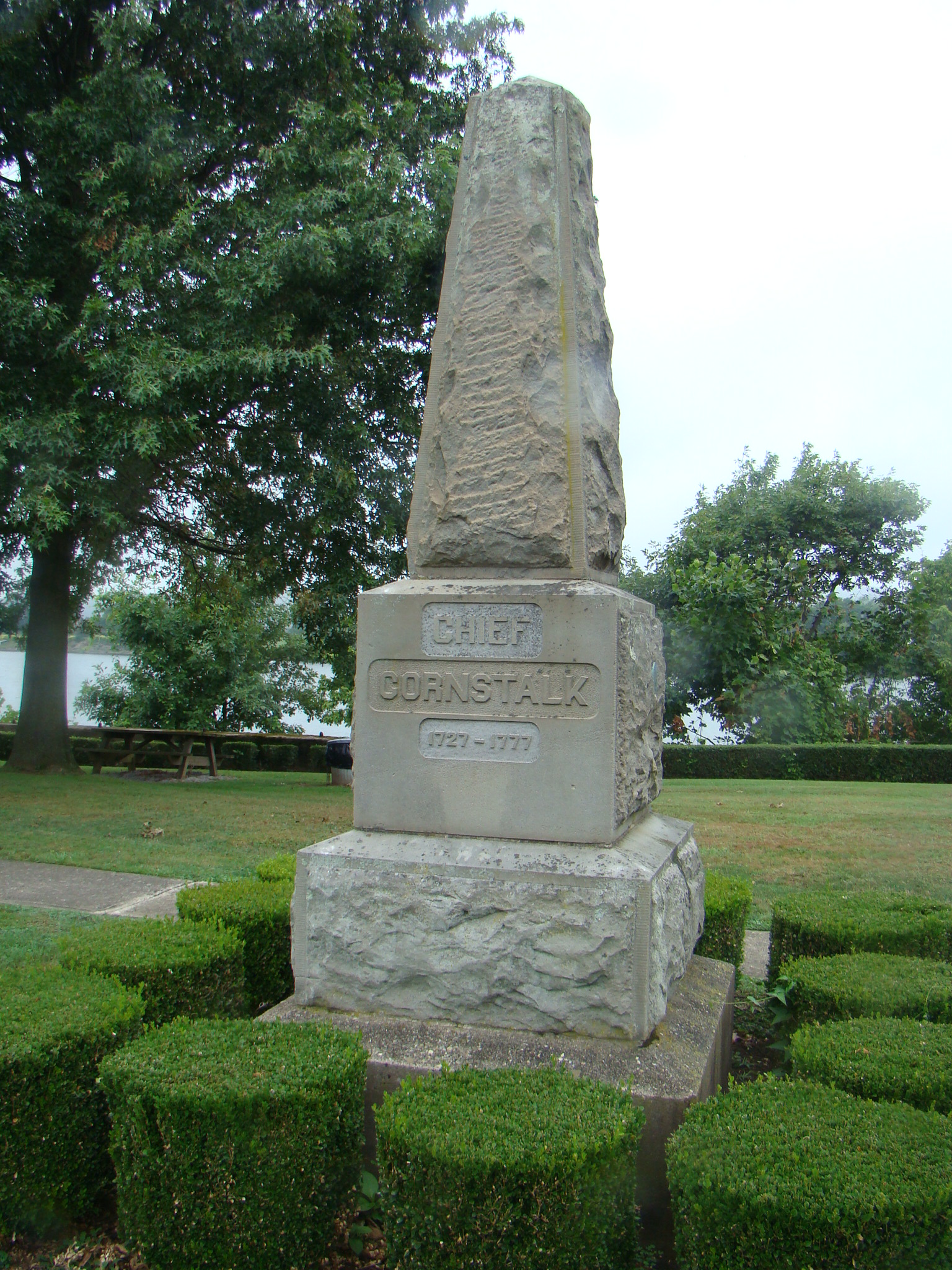
Chief Cornstalk Monument

Chief Cornstalk Monument

Keigh-tugh-qua, better known as Chief Cornstalk, was a well respected leader in the Ohio Valley. Both Indians and white men knew Chief Cornstalk as a man who wanted peace with the white men.  But he felt forced to defend his people on this spot at Point Pleasant, against who he called “Long Knives”, the colonists of Virginia. At that point he wanted to turn the frontier red with the Long Knives’ blood.  Although the Indians were defeated, Chief Cornstalk did survive this battle.

In 1777, Cornstalk returned to Point Pleasant to warn the settlers that the British were trying to incite his tribesmen to attack.  Fearing an unpleasant encounter, Cornstalk and companions were imprisoned at Fort Randolph, where he was killed by a dozen rifle shots while standing at the doorway of his room. After moving his burial place several times, his remains were brought back here for their final resting place near the field of his most famous battle.

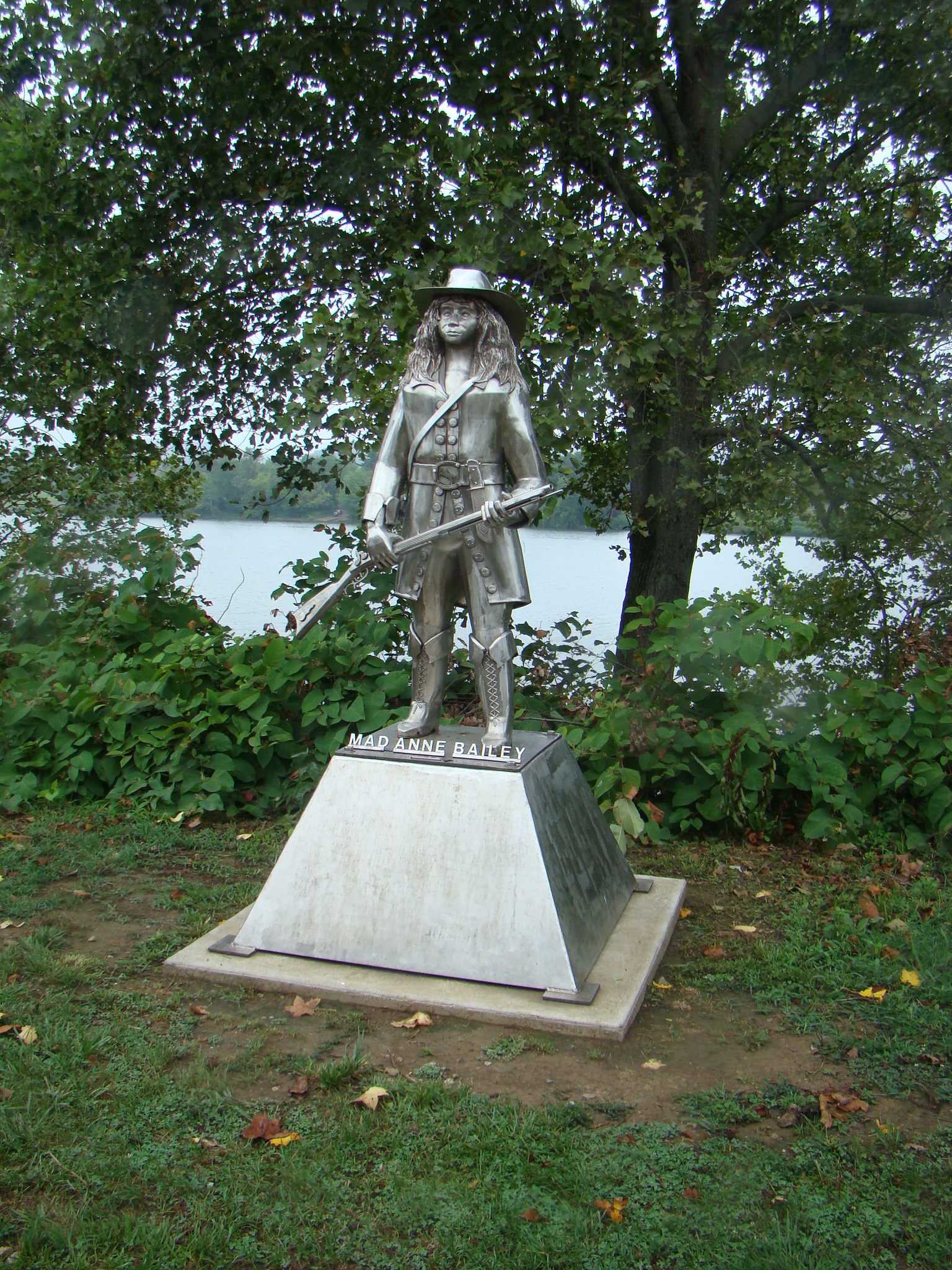
Statue of Mad Anne Bailey along the Ohio River

Statue of Mad Anne Bailey along the Ohio River

One interesting monument marks the burial spot of Mad Anne Bailey, whose husband, Richard Trotter, was killed at the Battle of Point Pleasant. This statue along the Ohio River shows frontier scout Mad Anne dressed in buckskins as she delivered messages to remote places throughout the Virginia area to avenge her husband’s death. “Mad” escapades in fighting the red savages on the frontier earned her the nickname of “Mad Anne”. Later she married John Bailey, who was stationed at Fort Lee (Charleston). Mad Anne has been given credit for saving Fort Lee from destruction as she rode alone at nearly fifty years of age for gunpower to Fort Savannah (Lewisburg), which was a two hundred mile trip. Her reward ? The black horse she rode. At the age of seventy, Mad Anne lived in a cave until her son William, who she left with friends at the age of seven, found her and took her to Gallipolis to live in a tiny cabin near his family.

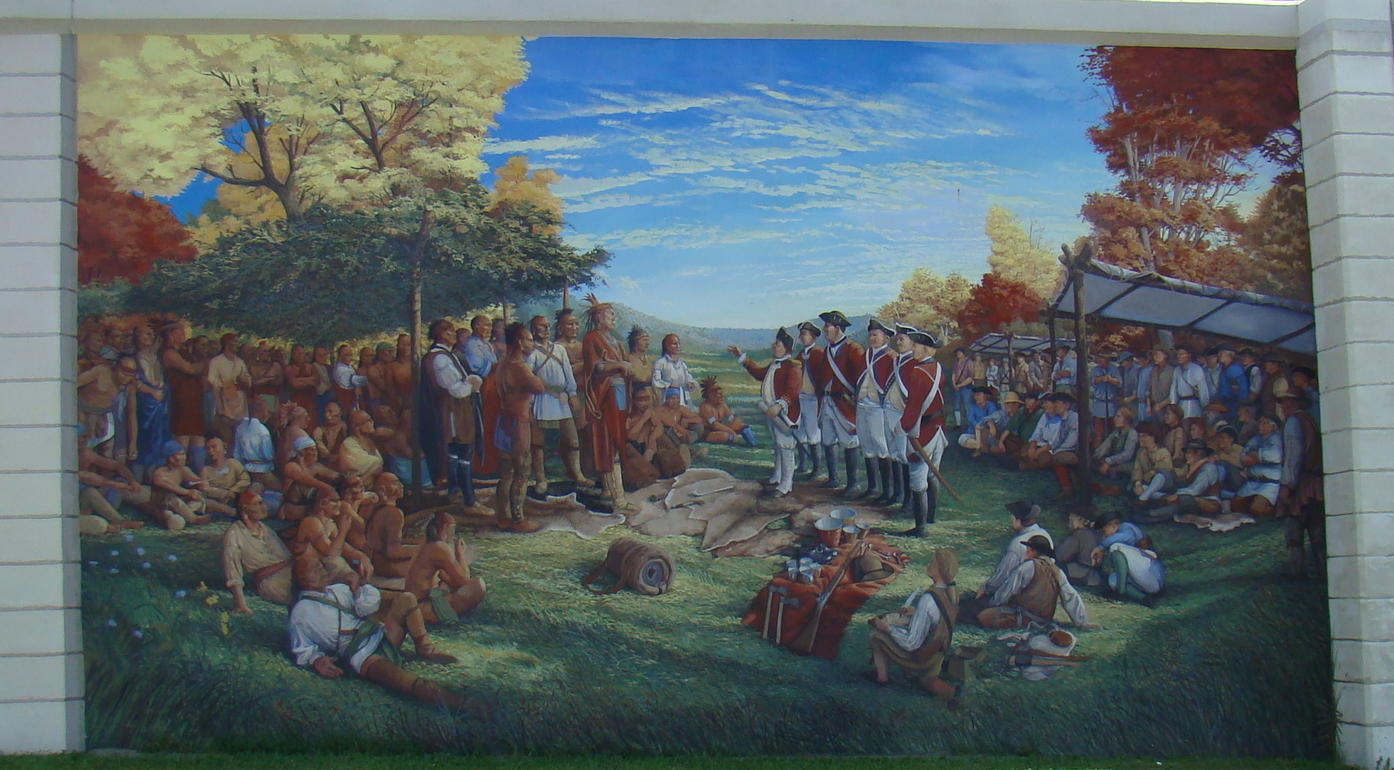
Mural on floodwall along the Ohio River

Mural on floodwall along the Ohio River

Murals depicting the meeting of the tribes and various battlefield scenes line the floodwalls of the Riverwalk along the Ohio River. Painted by artist, Robert Dafford, these scenes bring to life the memory of that one-day battle so long ago that changed the course of history. The inscription above one of those murals explains: Each was fighting for his own way of life.

Today, like in times throughout history, we each continue to fight for what we believe. May your battles be a little less severe.

Tu-Endie-Wei State Park is located at Point Pleasant, West Virginia  at the end of Main Street where the Ohio and Kanawha Rivers meet. Take a stroll down the Riverwalk to enjoy the beautiful Ohio River, the floodwall murals, and many statues along the way. Frequent festivals throughout the year are held here and it is often a stopping point for riverboats. 

Following Morgan’s Raiders Trail 150 Years Later

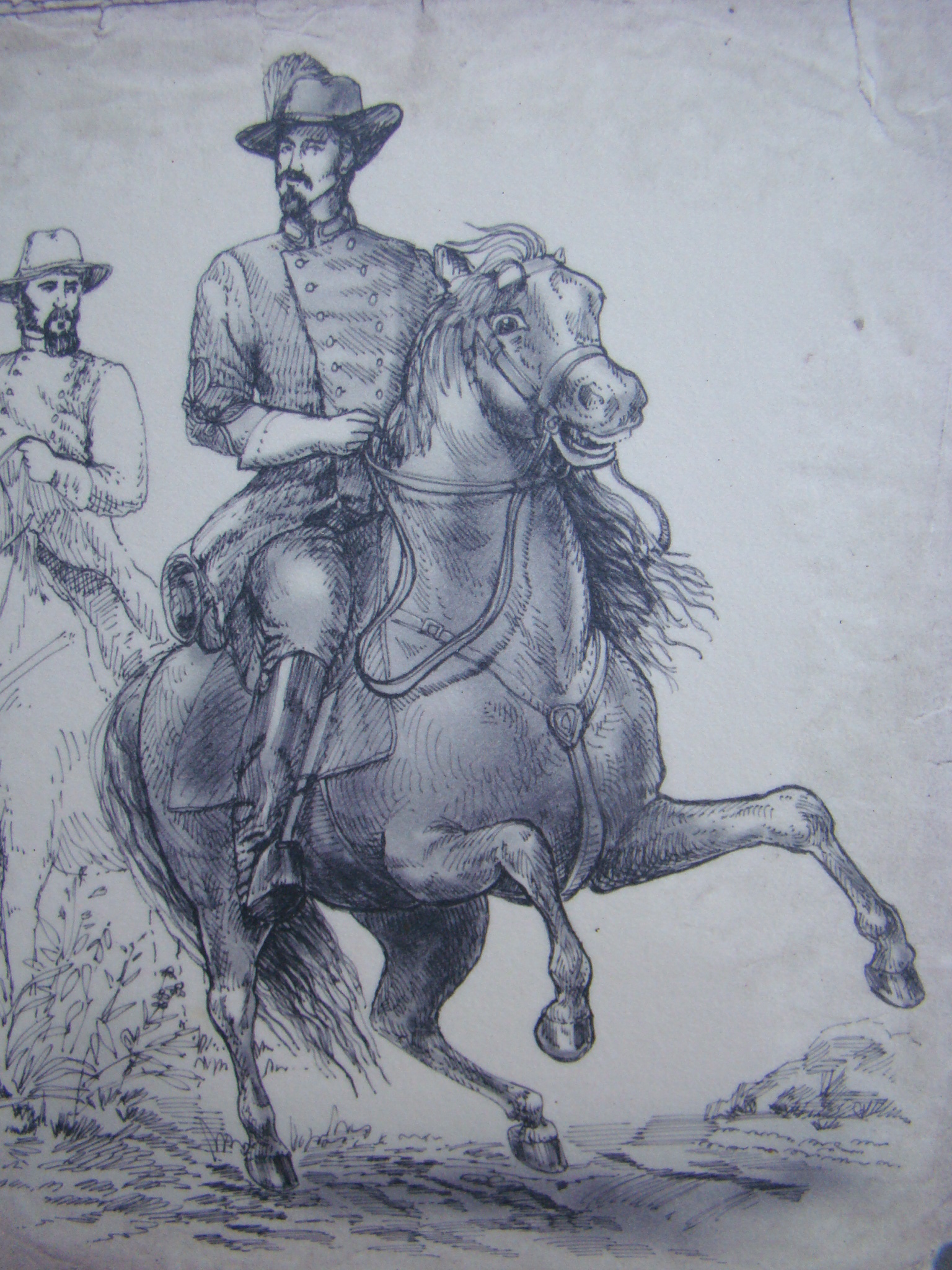
Sketch of Brig Gen John Hunt Morgan

Sketch of Brig Gen John Hunt Morgan

During the Civil War, 150 years ago in July of 1863, Brigadier General John Hunt Morgan led a band of scoundrels, known as Morgan’s Raiders, through Ohio on a two week expedition consisting of many raids and robberies. Their purpose was to create terror and deviate the attention of the Union troops from Confederate forces.

The Ohio Historical Society has commemorated that John Hunt Morgan Heritage Trail with 56 interpretive signs from Cincinnati to West Point in northeastern Ohio. Official dedication took place at the entry point into Ohio at Harrison in July of 2013, although planning has taken several years.

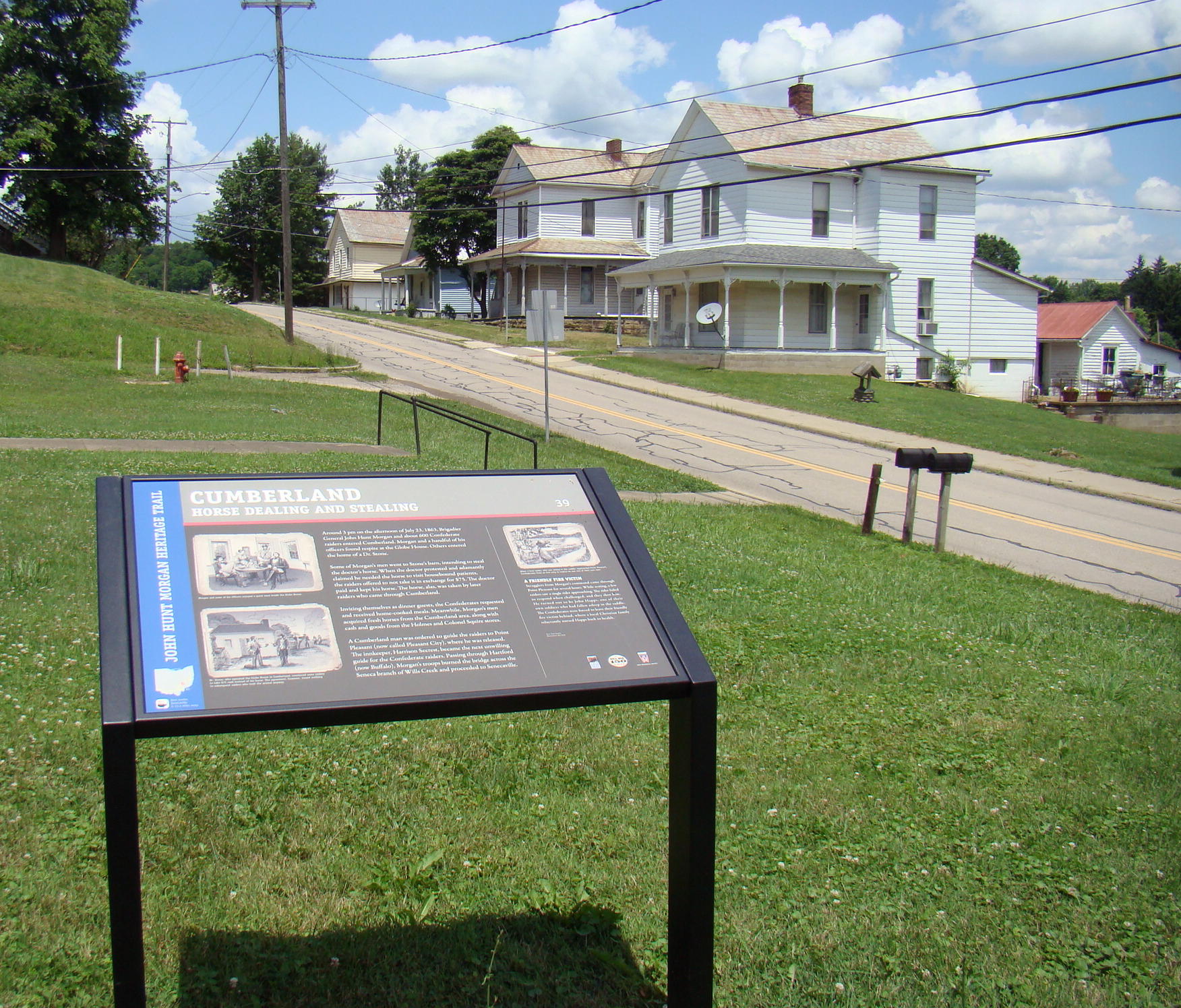
First Morgan's Trail sign in Guernsey County at Cumberland, Ohio

First Morgan’s Trail sign in Guernsey County at Cumberland, Ohio

Wanting to explore the local side of this route, my drive began in Cumberland, Ohio, which is the first place in Guernsey County, my home county, that Morgan’s Raiders appeared. Here in front of the old Cumberland High School is plaque #39, which begins the local trail of clever escapes by Morgan. Having invited themselves as dinner guests, Morgan’s men stole horses, cash, and even a guide before heading on to Point Pleasant (today’s Pleasant City).

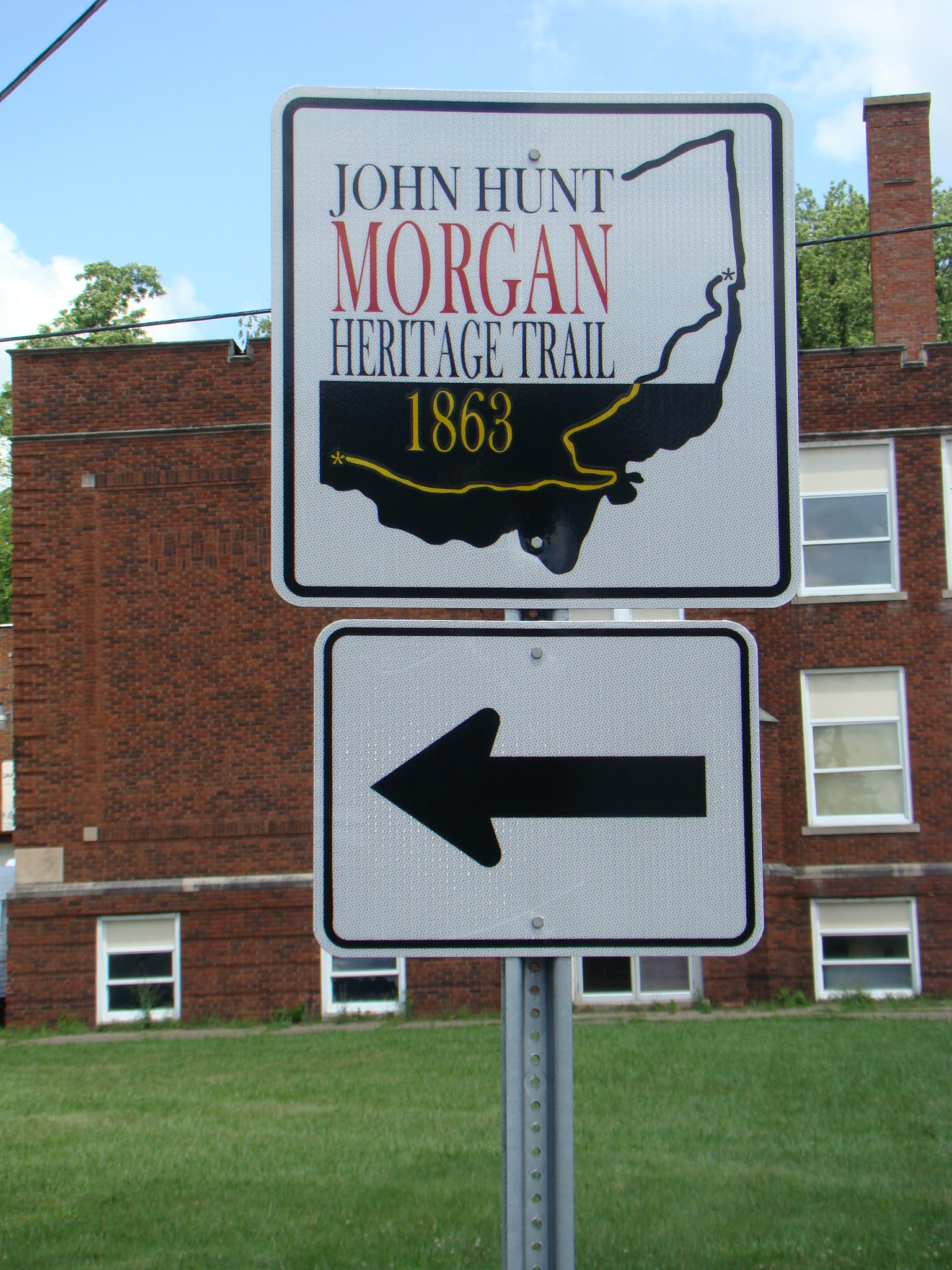
Watch for signs like this to follow the trail easily.

Watch for signs like this to follow the trail easily. Former Pleasant City High School sits in the background.

Morgan’s Trail is well-marked with signs at frequent intervals so you can rest assured you are still on the correct route. Stories on the plaques tell about real events that happened near each marker and all contain a couple beautiful old pictures from Civil War days. Each sign also explains, in the lower left hand corner, the location of the next commemorative stop

At the corner of State Routes 313 and 285 in Senecaville, followers will find plaque #40. On July 24 at 3 am, Morgan’s men rode into the village boldly knocking on doors to find out local road information. Lucky for Morgan, Colonel William Wallace of the Ohio Infantry had received an erroneous report and hours earlier had moved from that very crossroads. Ever since the battle at Buffington Island, Brig. Gen. James Shackelford had been in hot pursuit of the Raiders and seemed to be closing the gap.

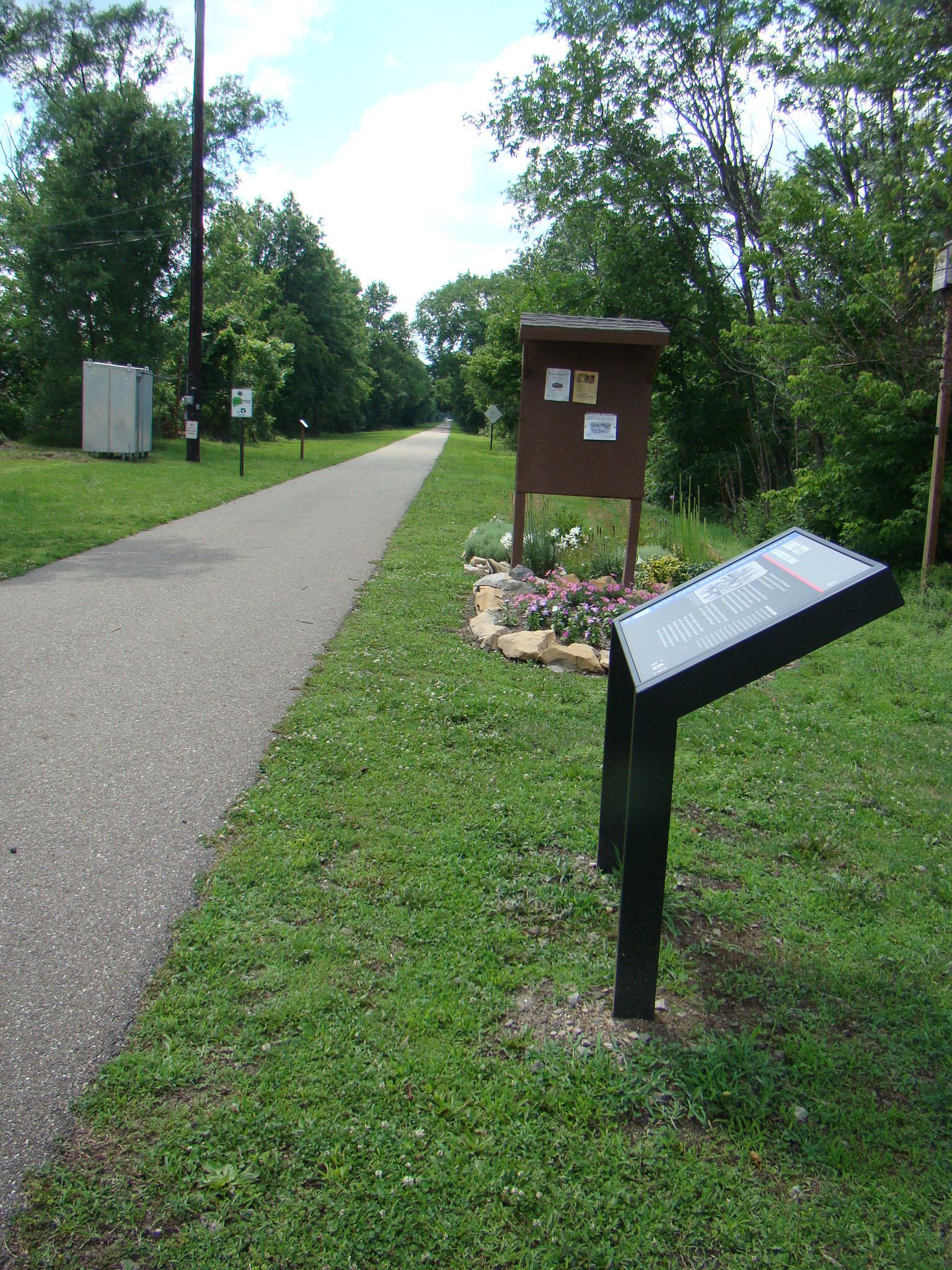
Interpretive sign #41 at Lore City trailhead.

Interpretive sign #41 at Lore City trailhead.

Campbell’s Station (today’s Lore City) had the most destruction of any place in Guernsey County with Shackelford being only seven miles behind. Located at the trailhead of the Guernsey Trail, #41 plaque area was the only one in Guernsey County that had been expanded with other information about the history of that area, as well as beautiful flowers.

At the edge of town on Old Mill Road, the battle at Washington (today’s Old Washington) is recognized. Sign #42 is near Cemetery Hill where Shackelford’s troops began firing on Morgan’s Raiders, who had spent the night in Washington. The officers had moved in, unwanted, to the American Hotel while others slept throughout the town, even in the streets. It came as a surprise that the plaque was not downtown with the 1927 monument to this skirmish.

Those four stops mark the route through Guernsey County, then the Trail guides you on toward Piedmont. By now you are beginning to get caught up in the thrill of the chase and to understand the lay of the territory they are crossing. Winding roads follow the Trail as best they possibly can, but Morgan’s Raiders attempted to travel through the woods quite often so the route is close, but can’t possibly be perfect.

Imagine the surprise and fear when up to 2000 Confederate soldiers arrived in one of these small towns along the way.  No wonder the unruly children were disciplined with the phrase: Morgan will get you!

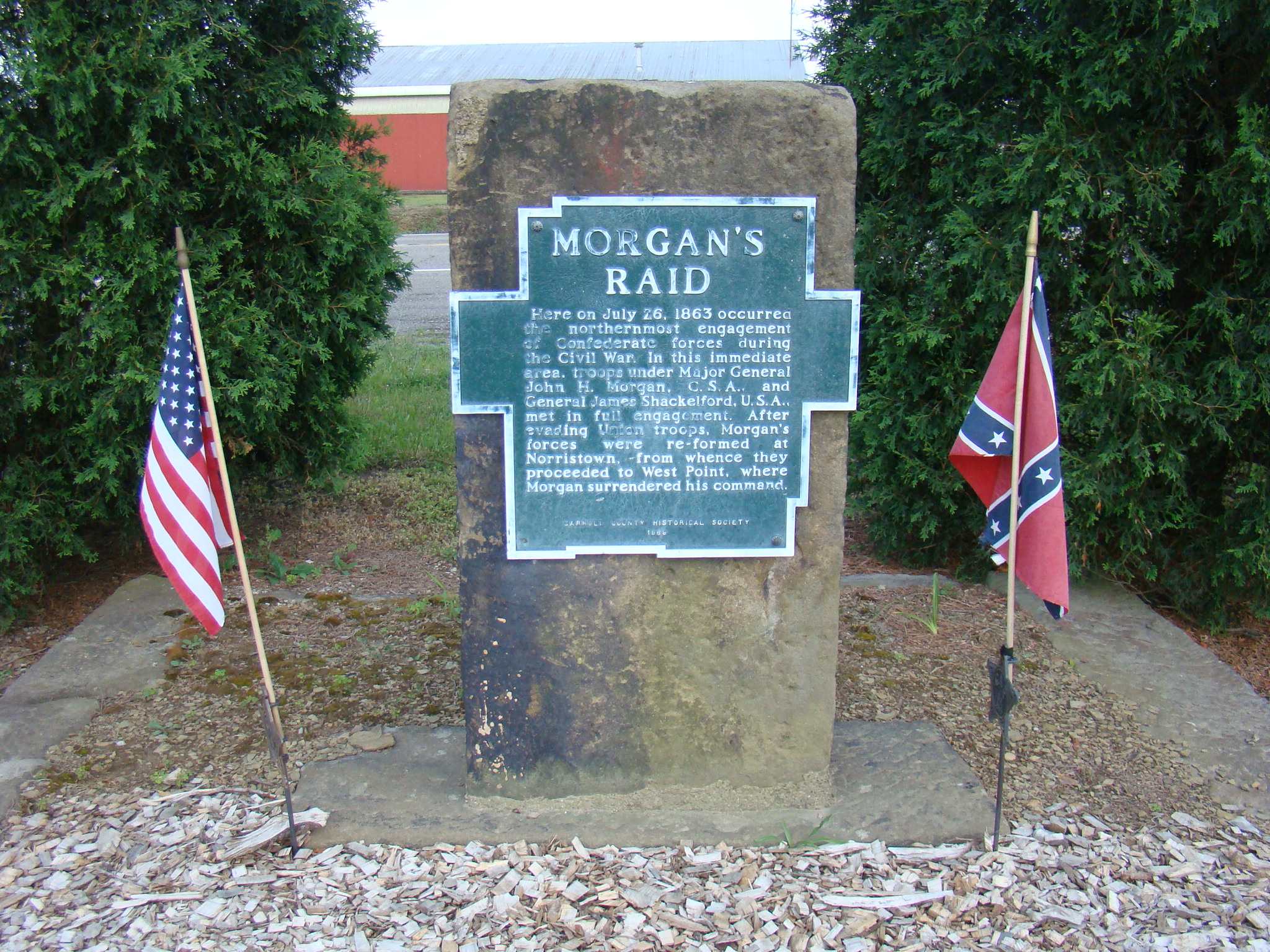
Monument to honor Morgan's Raid erected by Carroll County Historical Society in 1868.

Monument to honor Morgan’s Raid erected by Carroll County Historical Society in 1868.

My original plan had been to follow Morgan’s Trail just through Guernsey County, but once caught up in following Morgan’s Raiders, it was impossible to stop before reaching the spot where Morgan was captured. Being led through Harrison, Monroe, Jefferson and Carroll counties, the posted signs by the Ohio Historical Society were  easy to follow.

With troop numbers diminishing at each spot, Morgan continued to use clever escape tactics as long as he could.  The Raiders might pretend to be Union soldiers, stir up dust to hide themselves, or give promises they could never fulfill.

The last few marked encounters led through rugged, gravel roads. As you slowed down on these rutted and often muddy roads, you could almost feel the weariness of the troops.

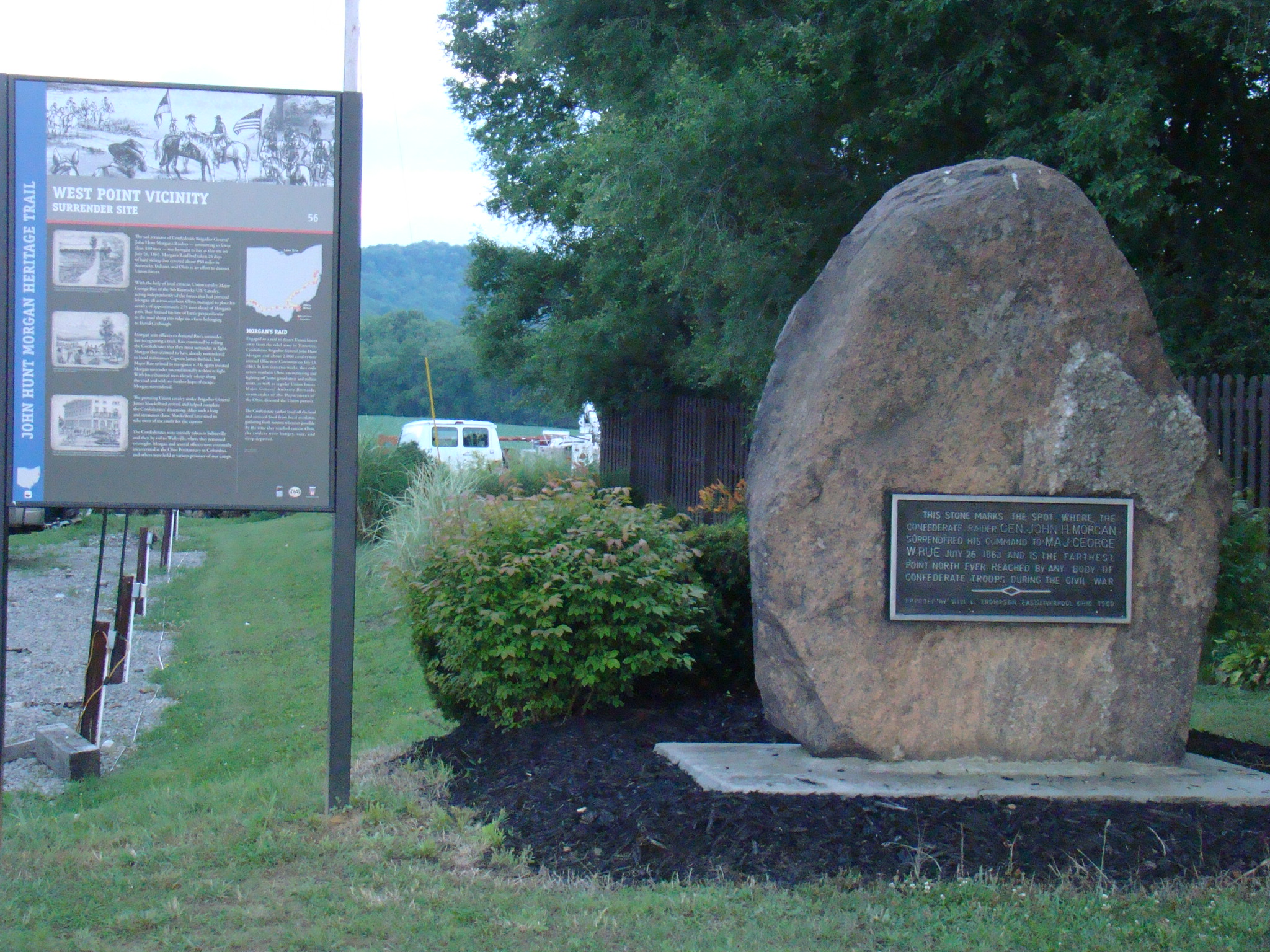
End of Trail near West Point, Ohio

End of Trail near West Point, Ohio

Finally, Morgan’s Trail, with plaque #56 entitled West End, came to an end in someone’s front yard where a monument had also been placed years ago. Morgan had tried his best to get back to cross the Ohio River and he was getting so close. Minutes later, I saw the beautiful Ohio River and felt a little sympathy for Morgan’s never reaching it.

The Heritage Trail from Cumberland to West End took Morgan’s Raiders four days from July 23 – July 26. By car, it took about eight and a half hours and I didn’t steal any horses, demand any dinners, or burn any buildings. They must have been worn out to have covered all that territory so quickly on horseback.

Even though he was captured for the moment, his cleverness helped him escape prison and travel unknowingly with a Union soldier on a train back home. Despite the chaos and destruction left behind, he taught the importance of never giving up in your quest to reach a goal.

Grave Creek Mound Archeological Complex

Grave Creek Archeological Center in Moundsville, WV

Grave Creek Archeological Center in Moundsville, WV

It’s not what you find
It’s what you find out.
~David Hurst Thomas

That sign was the first thing that caught my eye as I entered the Grave Creek Mound Archeological Complex in Moundsville, West Virginia.  Those words put the mind in a state of exploration – the goal of this facility. While the focal point of this entire complex is the large earthen Grave Creek Mound beside the parking lot, today the visit will be inside the complex.

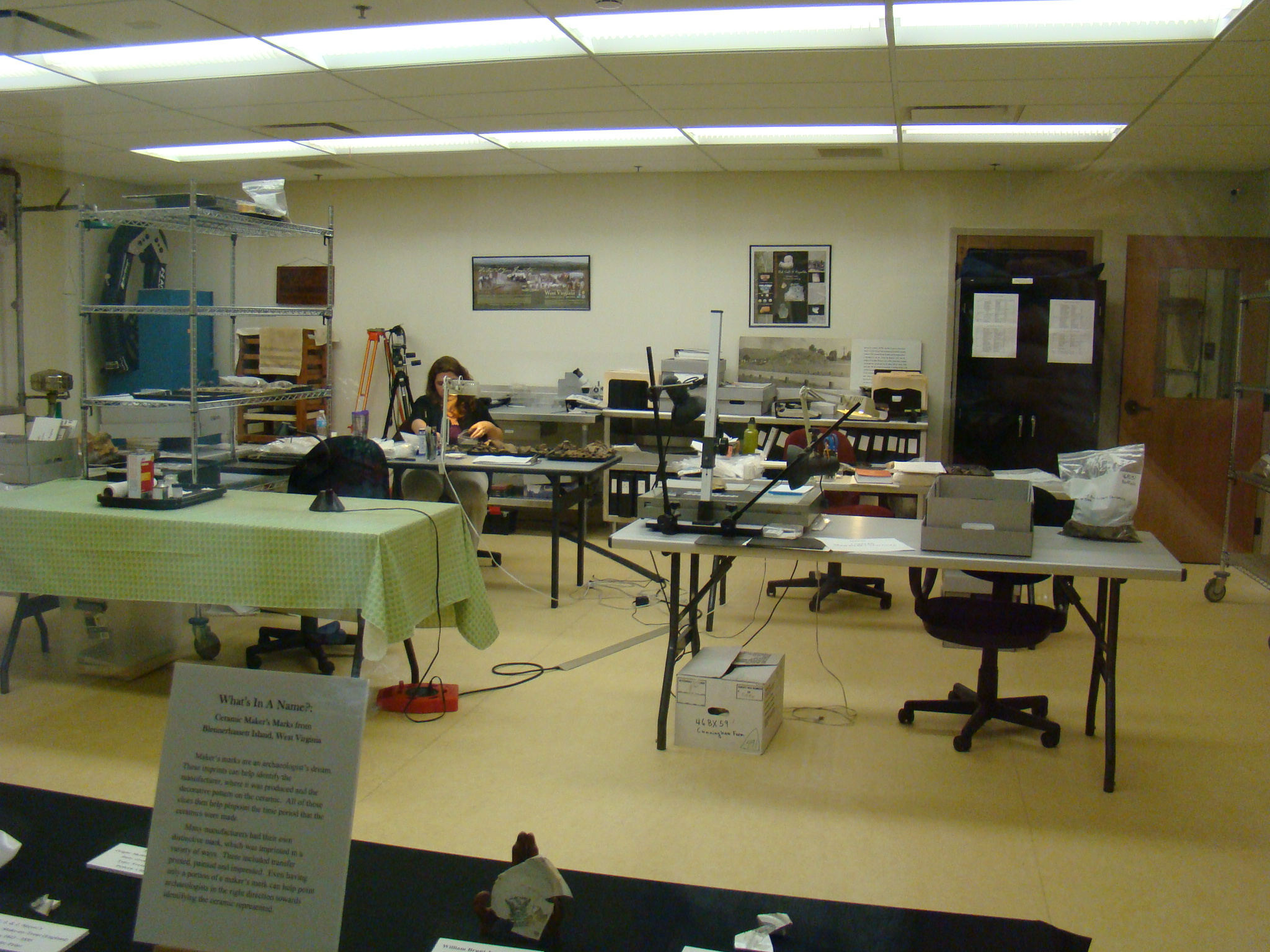
Curators at work in the research facility

Curators at work in the research facility

Close to the entrance into the building is a large glass wall so visitors can view recent finds being researched and recorded by curators in West Virginia Archeological Research Facility, which is a recently added wing in 2008. This is where artifacts, from various archeological digs all over the state, are processed, studied and recorded.

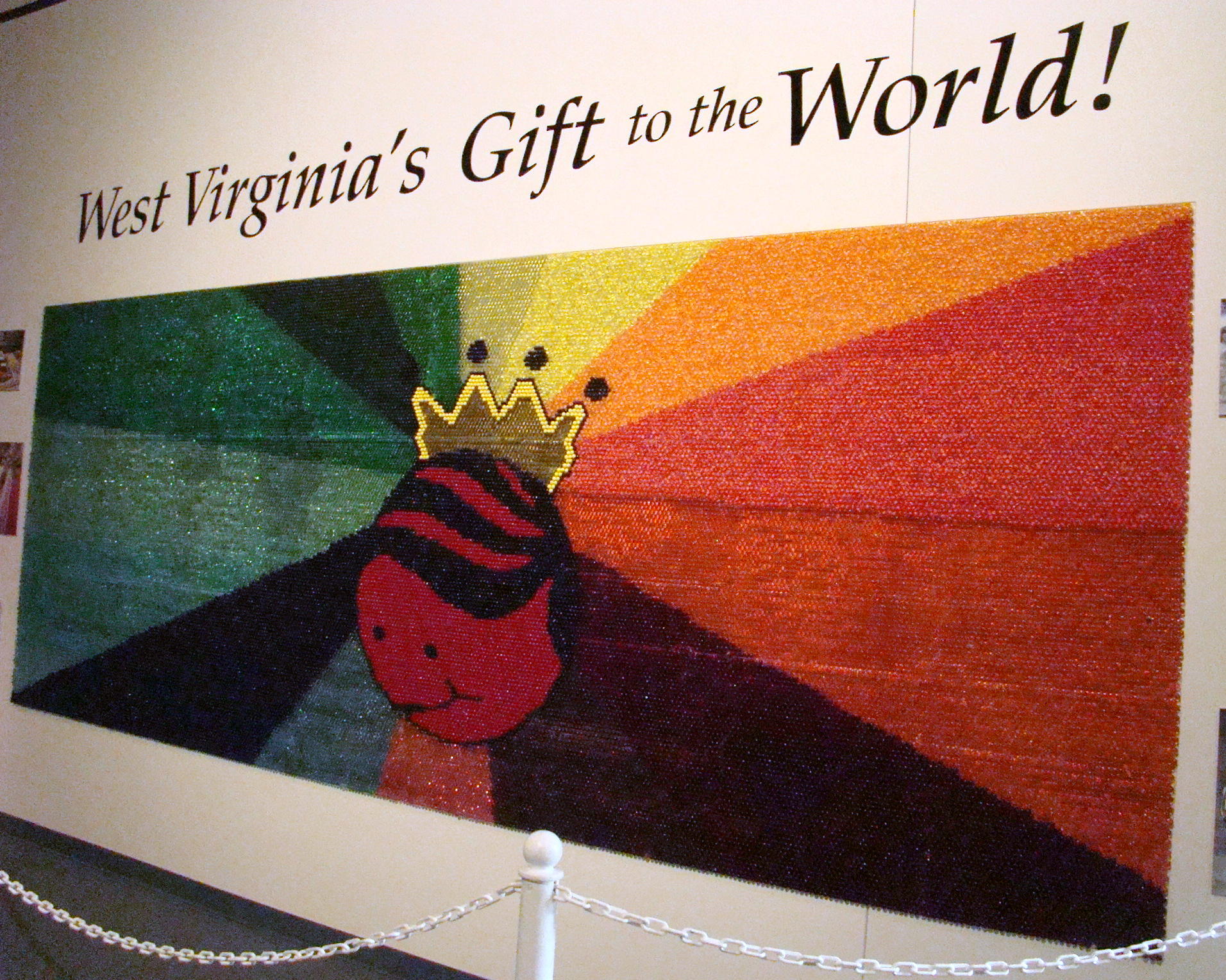
One portion of the complex, Delf Norona Museum, displays information regarding the lives of prehistoric people and the structure of The Mound inself.  This complex is indeed complex, as it holds not only information regarding the Grave Creek Mound, but also touches on rotating displays of many local cultural and historic exhibits entitled: West Virginia’s Gift to The World.  They have given themselves space to grow as exhibits are not in the least bit crowded, making viewing a pleasure.  Throughout the year, lectures and films in their 135 seat theater are held to inform the public on Native Americans and Ancient Americans.

Ron Hinkle's display of blownglass creations

Ron Hinkle’s display of blownglass creations

Ron Hinkle’s Blown Glass immediately caught my eye since my father was also a glassblower. Ron’s wall-size blown glass display sparkles with a bit of magic as every piece is unique. Since opening his own company in 1994, Ron hopes to keep the spirit and art of glassblowing alive and well in the area.

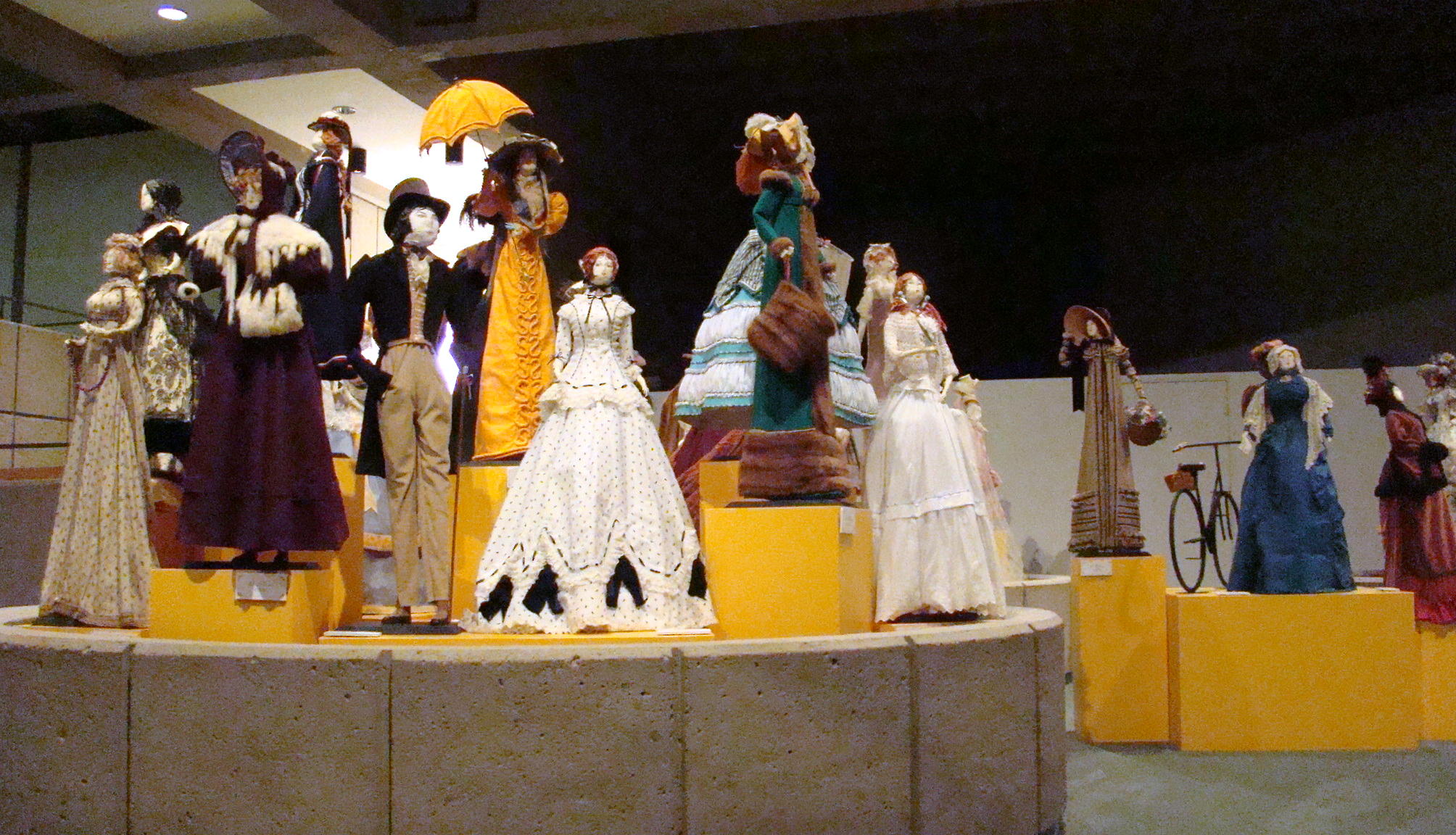
Fashion Dolls of Pete Ballard

Fashion Dolls by Pete Ballard

Ladies Fashion Dolls of the Nineteenth Century by Pete Ballard catches the eye of most ladies as they enter the front door.  This collection shows the changes in ladies’ fashions from 1770 to 1930 in a large display where each of the fifty-six dolls has a brass plate with its name, year, and number for easy cross reference to a booklet which can be picked up just inside the room. The oldest doll, Elizabeth, was from the style of 1800, being dressed in a green and red wool pattern.

Marble King's creative design with marbles

Marble King’s creative design with marbles

The Marble King actually received its name from a gentleman named Berry Pink. While working for Peltier Glass, Berry traveled across the country hosting marble tournaments and giving away marbles at each stop. Reminds me of Johnny Appleseed ! When Peltier Glass could no longer keep up with the demand, Berry and a partner formed a company and named it after Berry’s nickname, The Marble King. Not only do children still enjoy playing marbles either in the traditional way or with games, but many artistic designs have also been created using their beautiful colors. Marbles are thought to be the first competitive sport as far back as the Greek and Roman Empires.

Display of Homer Laughlin China Company's popular items

Display of Homer Laughlin China Company’s popular items

Homer Laughlin China Company has provided many families with quality chinaware for nearly 150 years. Homer and Shakespeare Laughlin started their company way back in 1871 in East Liverpool, Ohio. In 1902, Homer moved the kilns to Newell, WV just across the Ohio River using the new suspension bridge and trolleyline as a means to bring his trained potters across to West Virginia. Here they constructed the largest pottery plant ever built in the world. This fine pottery is a highly collectible item in the area, but many families still use it for special occassions. This large display will bring back memories for many of the viewers.

The remainder of this museum deals with the history of the basic reason for this entire complex – Grave Creek Mound – just outside the building. This large mound measuring 62′ high with a 240′ base diameter, is the largest conical earthen mound in the New World.  The secrets of this mound will require another tale. So stay tuned…for the rest of the story.

Grave Creek Mound Archeological Complex in Moundsville, West Virginia is located on the east bank of the Ohio River. Traveling on the West Virginia side of the river, follow Route 2 into Moundsville.  Turn left on 8th Street and after two blocks turn right onto Jefferson Ave. You can’t miss The Mound! Admission is free and the complex is open Tuesday – Saturday from 9am – 5pm.

John Morgan’s Raid in Ohio 150th Anniversary Celebration

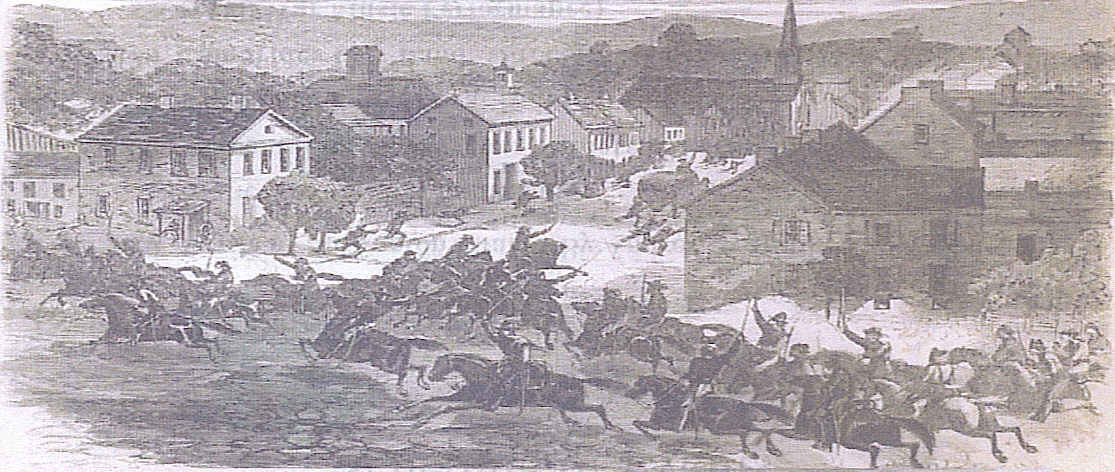
Morgan's Freebooters enter Washington, Ohio ~Harper's Weekly, Aug, 1863

Morgan’s Freebooters enter Washington, Ohio
~Harper’s Weekly, Aug, 1863

John Morgan with the remnant of a band composed of the most villanous cut-throats and scoundrels….made his way into this county on Thursday, the 22nd. (Guernsey Times Extra Addition Cambridge, Ohio July 28, 1863)

This statement by the local newspaper back in 1863  sums up the feeling of Northern residents regarding the antics of Brig. Gen. John Hunt Morgan, who led his raiders on a chase through Ohio during the Civil War.  His main goals were to destroy supply lines while creating chaos and fear.

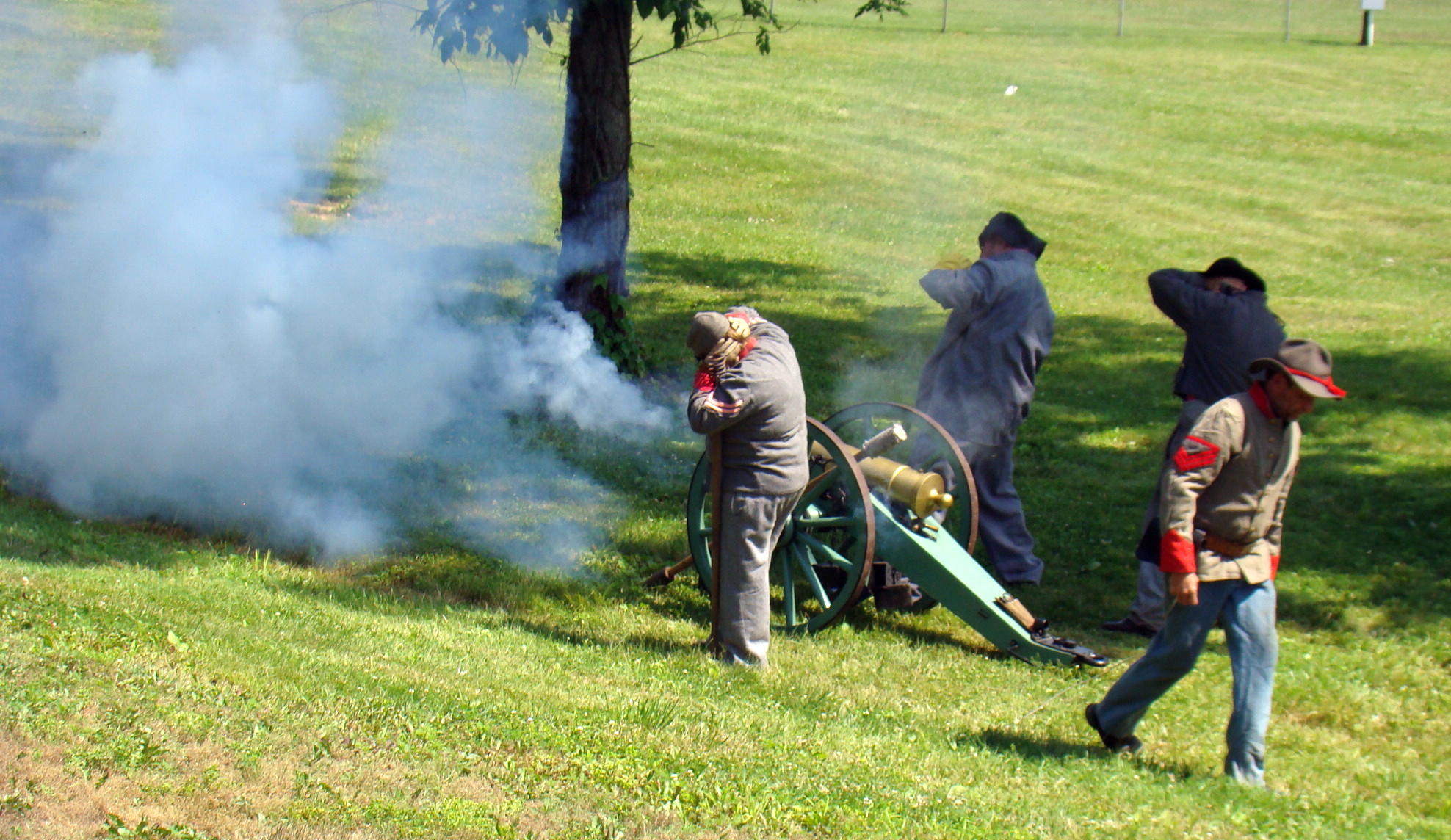
Cannon fire ignites celebration.

Cannon fire ignites celebration.

This special celebration took place in Lore City, Ohio at the Leatherwood Park trailhead of The Great Guernsey Trail, which is a paved pathway from Lore City to Cambridge used for walking and biking.  Often you see parents pushing their children in strollers, or children pushing their parents in wheelchairs. This six mile trail has become a favorite spot to exercise and get some fresh air in the Guernsey County area.

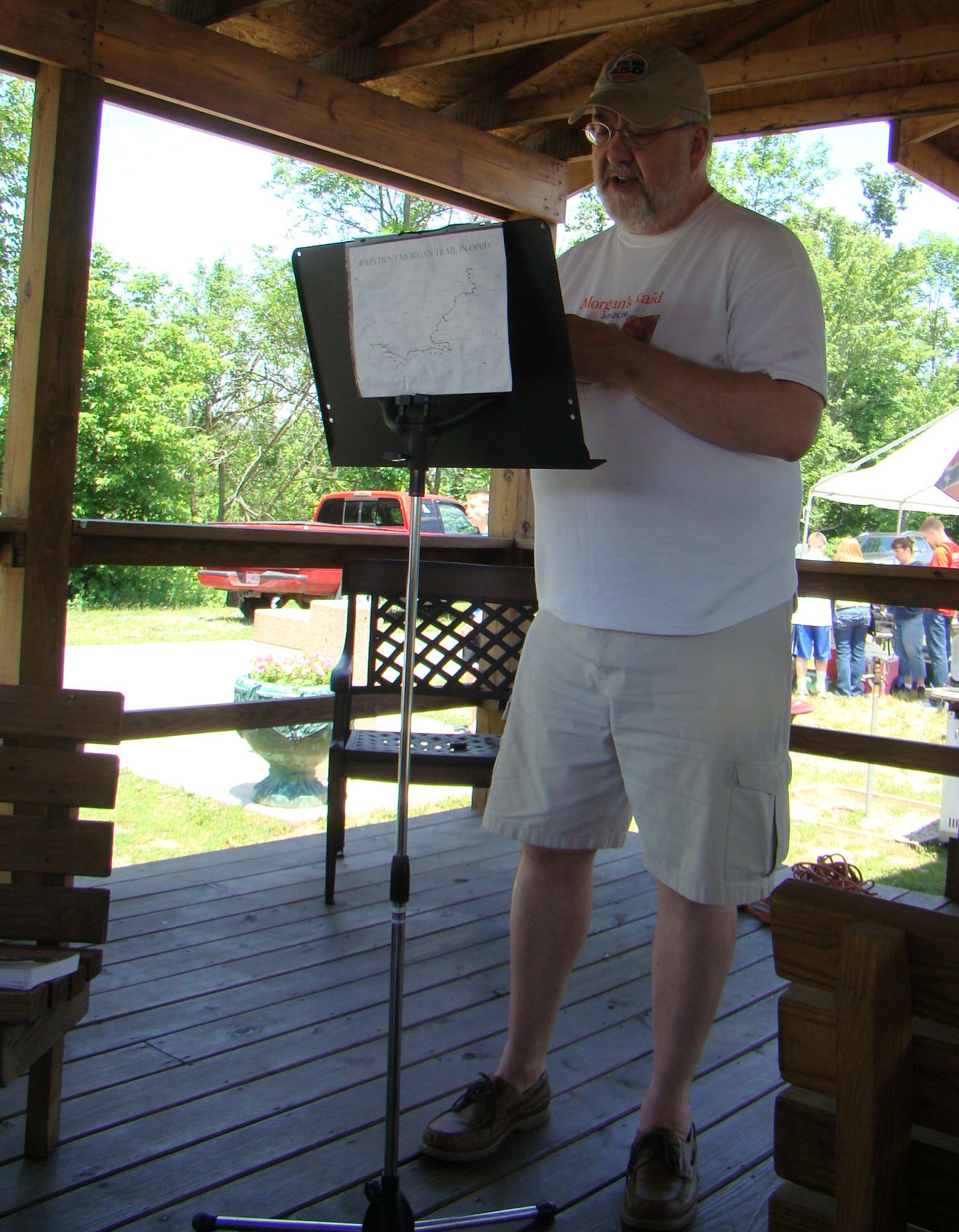
Andy Warhola, Civil War speaker

Andy Warhola, Civil War speaker

Local Civil War Roundtable members, Andy Warhola and Tom Snyder, explained Morgan’s ravaging two week raid through Ohio with slides, maps and pictures. They told of Morgan’s stealing two steamboats in order to cross the Ohio River into Indiana. Proceeding into Ohio above Cincinnati, they headed across the state with Union forces in pursuit.

Thinking the best way to escape was to again cross the Ohio River, Morgan led his men to a ford, which would let them have easy access to Buffington Island, a stepping stone across the Ohio. But his plan went amiss when Morgan decided to wait until morning for the crossing instead of attempting to move in the pitch darkness of night. The next morning however produced heavy fog, so again he was delayed, thus giving the USS Moose time to reach their crossing point. This is said to be the only Civil War battle in Ohio. Here the Union turned Morgan and his Confederates away with heavy losses.  What had started out as 2500 men, was down to approximatley 1100 after the battle at Buffington Island.

After this they headed towards Guernsey County entering at Cumberland and continuing to Londonderry. Finally they were captured in Salineville, heading to the Ohio River again. Along the way they were hungry and needed horses so there was plenty of thievery and destruction.

In the town of Campbell’s Station, which is today Lore City, there was more financial damage than anywhere else in the county.  They robbed the safe in the warehouse of $4,000, then burned the warehouse, train station and bridge as well as three railroad cars filled with tobacco…all this before the Union forces arrived.

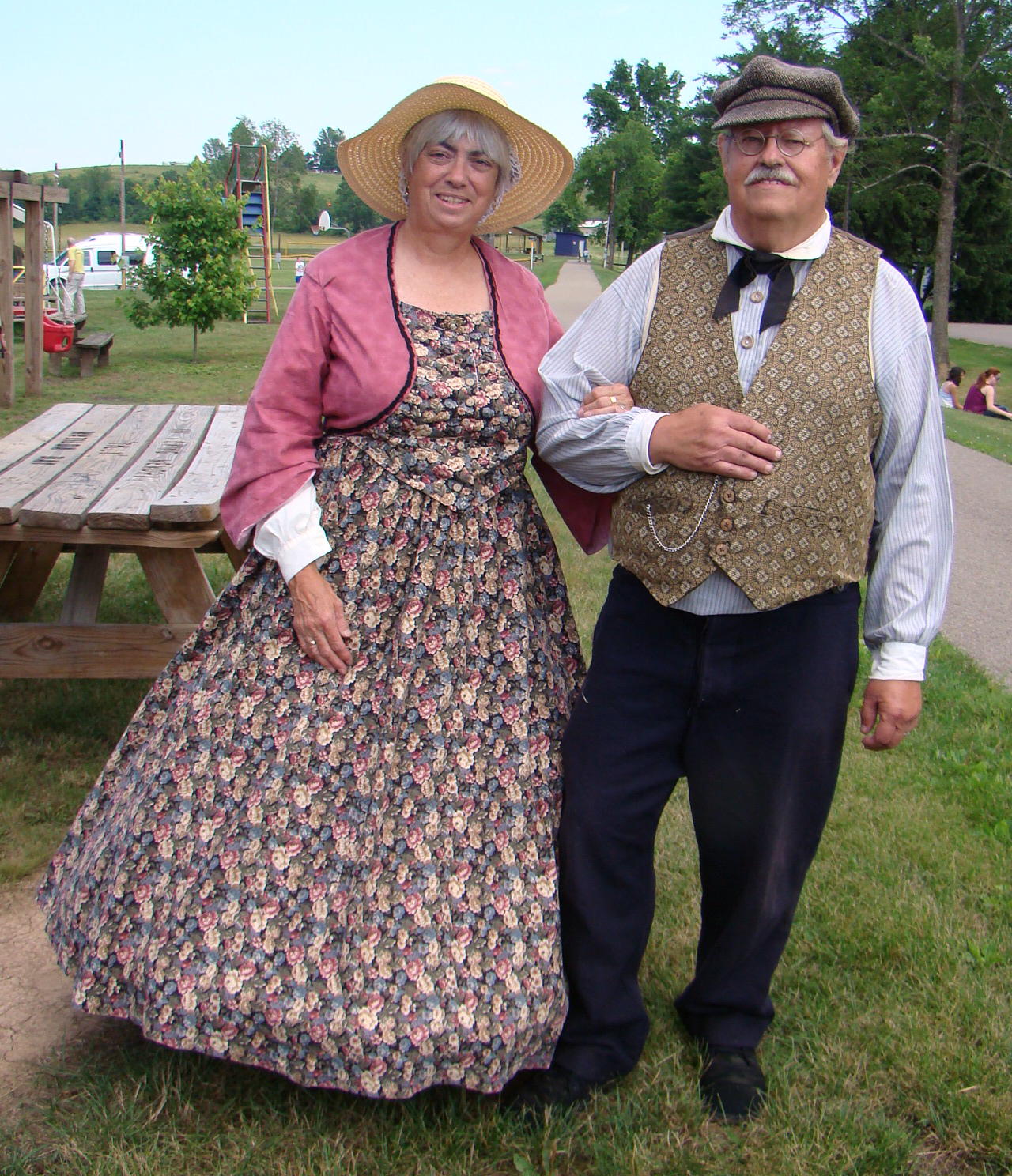
Couple in Civil War dress

Couple in Civil War dress

Nearly 150 years later, Lore City was filled with a Civil War feeling as many dressed in clothing of the time. A cannon was fired several times after careful loading by a group of Morgan County Re-enactors dressed as Confederate soldiers.

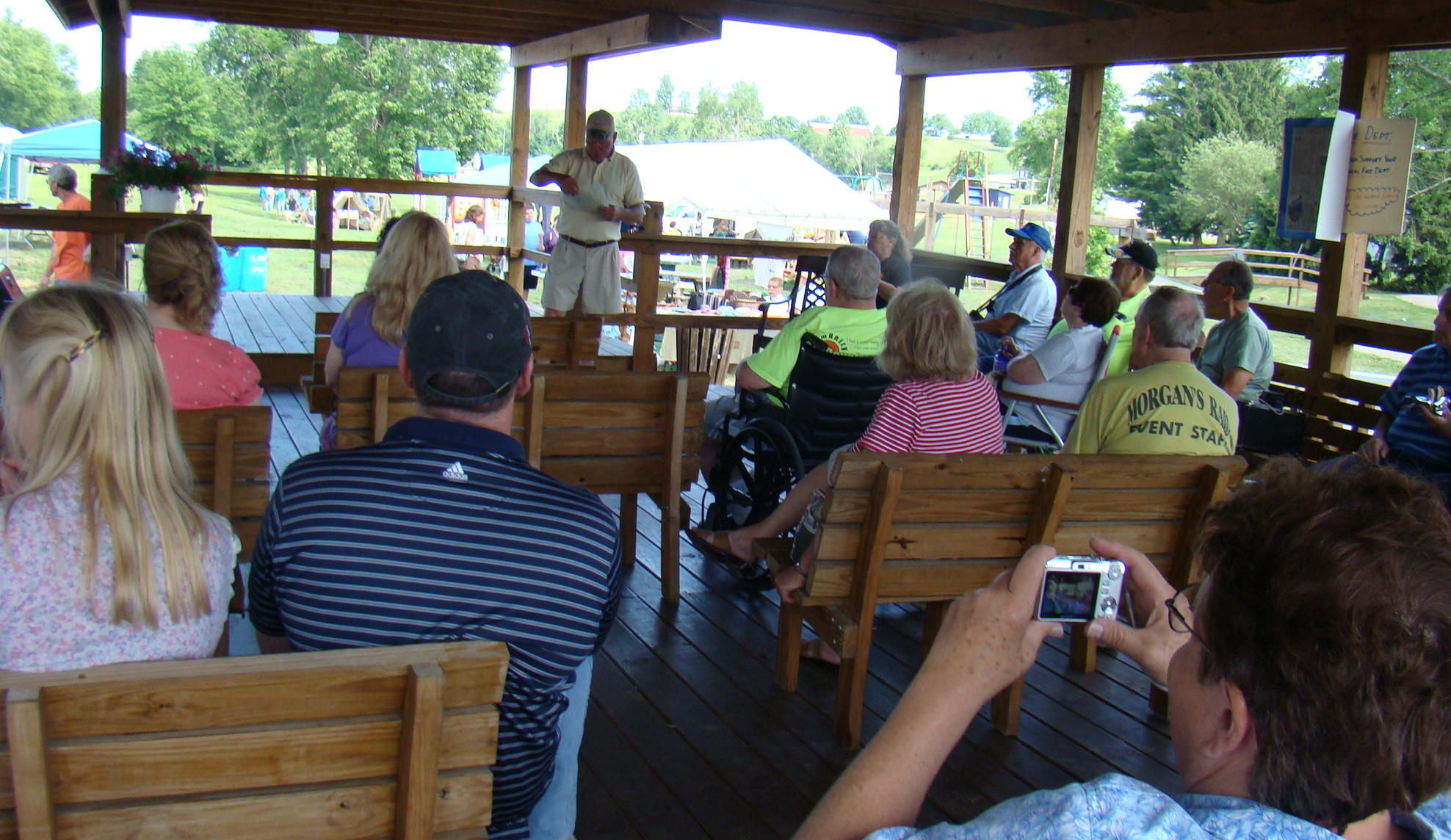
Local historian, Dave Adair, described the town of Campbell’s Station, which at the time of attack had only about sixty people. Their telegraph office was kept busy sending messages and receiving replies regarding Morgan’s Raiders. Due to the messages, Morgan and his Rebel scoundrels changed their route to avoid a railroad trestle, where a hundred men were waiting to ambush them.

Dave Adair speaks in the pavilion, which was the site of the original train station in Campbell's Station.

Dave Adair speaks in the pavilion, which was the site of the original train station in Campbell’s Station.

Dave also explained why Campbell’s Station changed its name to Lore City.  There happened to be two Campbell’s Stations at that time and the larger one kept the name. When deciding what to rename the smaller town, the Irish Catholics had a big hand in it. Their church were attempting to educate the people in this small community; therefore devised the new name as The City of Learning or Lore City… lore meaning knowledge or learning.

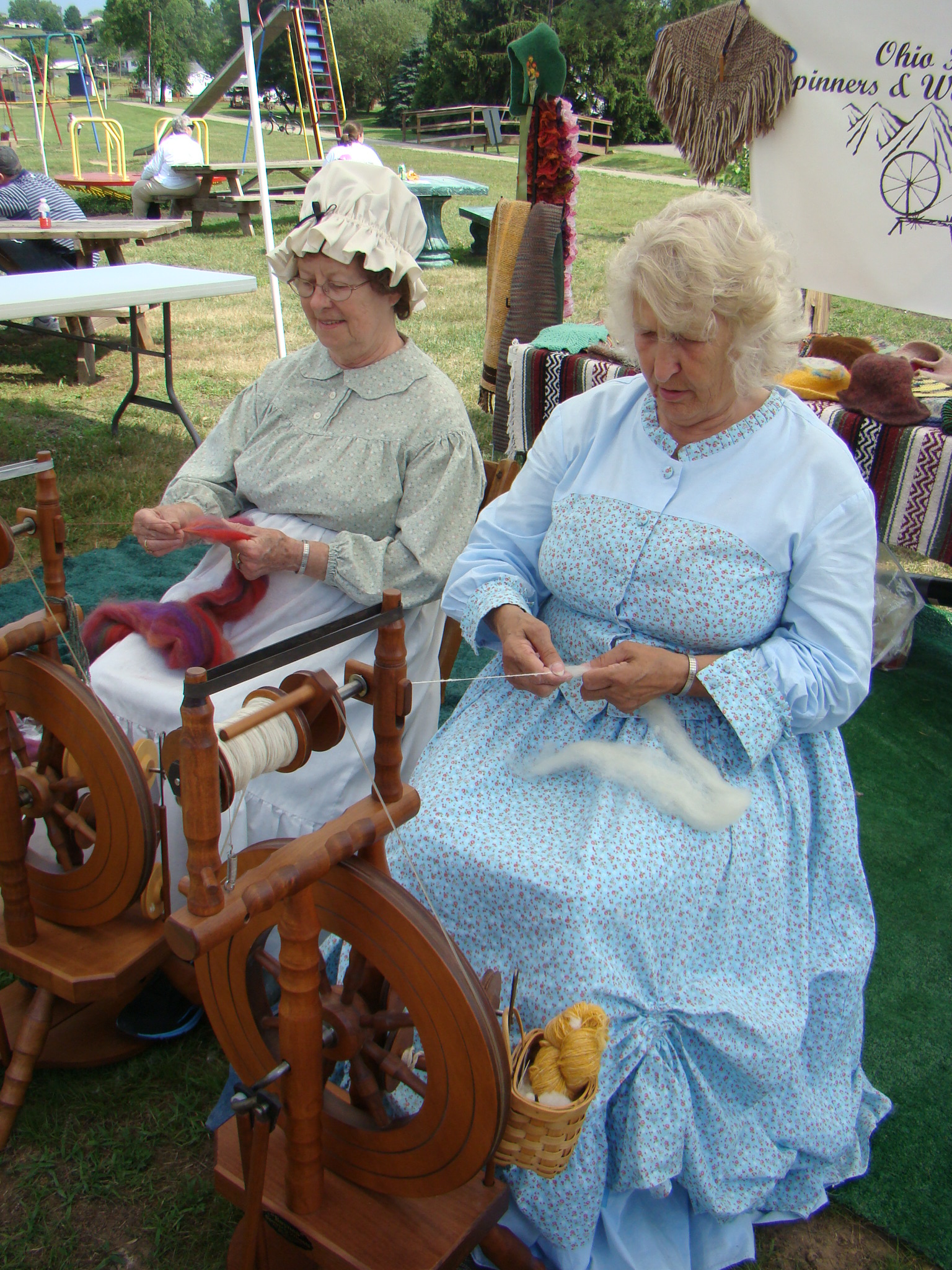
Ohio Hills Spinners and Weavers

Ohio Hills Spinners and Weavers

Spinning and weaving demonstrations were given by members of The Ohio Hills Spinners and Weavers, who also added stories of working conditions during the Civil War. Music was plentiful from start to finish. Bluegrass music, which included many Civil War songs, was provided by Mr and Mrs Small. While many of the Civil War songs were of a sad nature, Mrs. Small had written a happy song, Black Berries, to which everyone sang along. Cambridge City Band swung into action with their rendition of Civil War hits such as: Listen to the Mockingbird, Swanee River and many more. This was followed later by Dynamic Trio, who played 50’s and 60’s rock and roll.

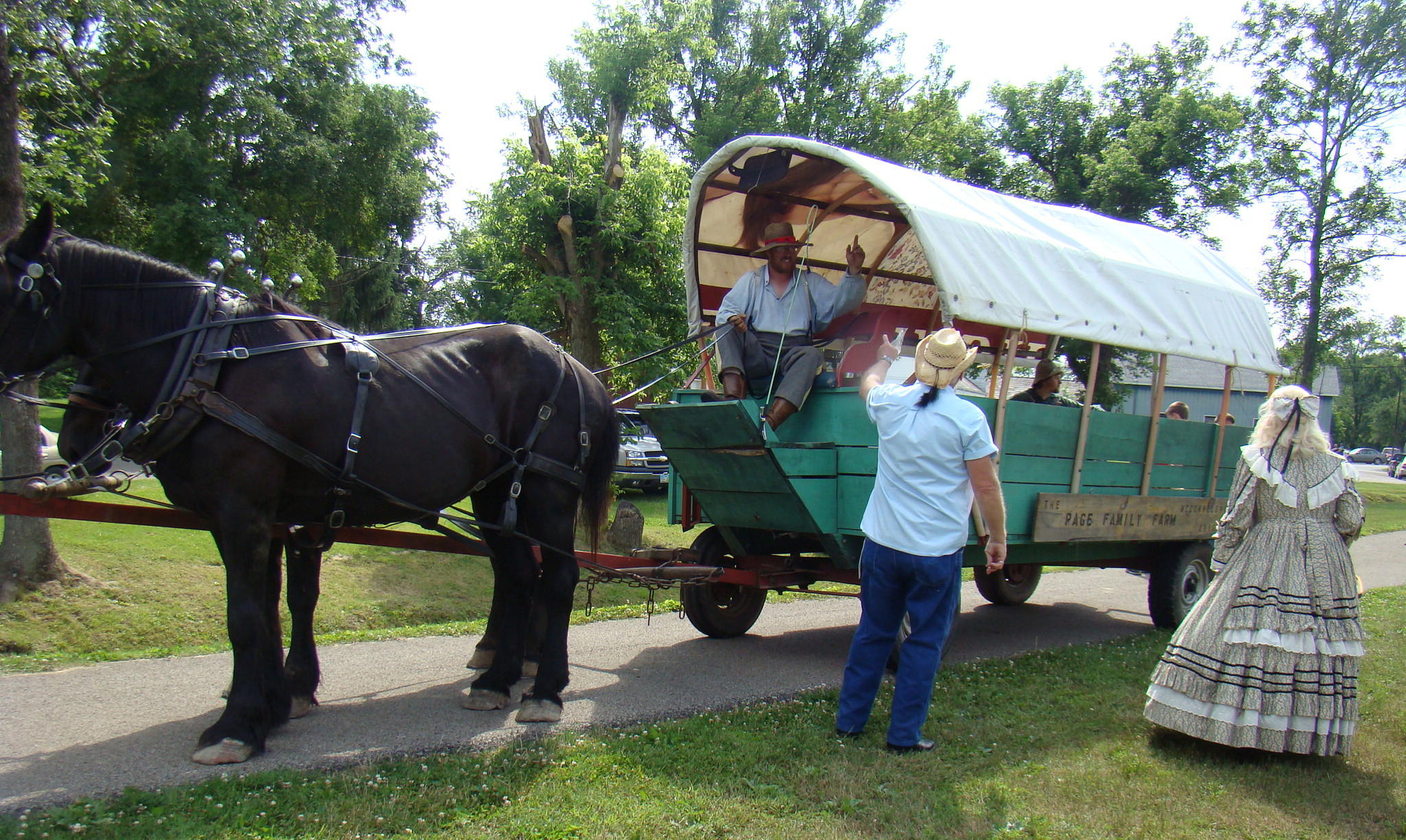
Riders enjoying the horse and wagon ride were greeted by Mayor Carpenter and wife, Sharon.

Horse and wagon riders were greeted by Mayor Carpenter and wife, Sharon.

Horses were an important part of the Civil War and it is estimated that over a million horses and mules were lost during the battles. General Morgan was indeed known as “The King of Horse Thieves”.  Wagon rides, which seemed fitting for the anniversary celebration, were provided along a segment of the Lore City trailhead in a wagon resembling the wagons used during the war to carry generals, the wounded and supplies.

If you want to get a little more adventuresome, today you can follow the trail that Morgan made during his raid. Signs have been posted from Cumberland to Londonderry with information regarding the events that took place in that particular area. Would make an interesting Sunday drive!

Lore City, Ohio is located in Guernsey County just east of I-77. Take exit 46, US Route 40 east, then follow Route 40 for four miles and turn right on State Route 265.  Continue on 265 until a four way stop, where a right hand turn leads you over the bridge to Lore City.  Leatherwood Park is to the left after you cross the bridge.

Ohio’s Historic Lafayette Hotel – A Haunting Experience

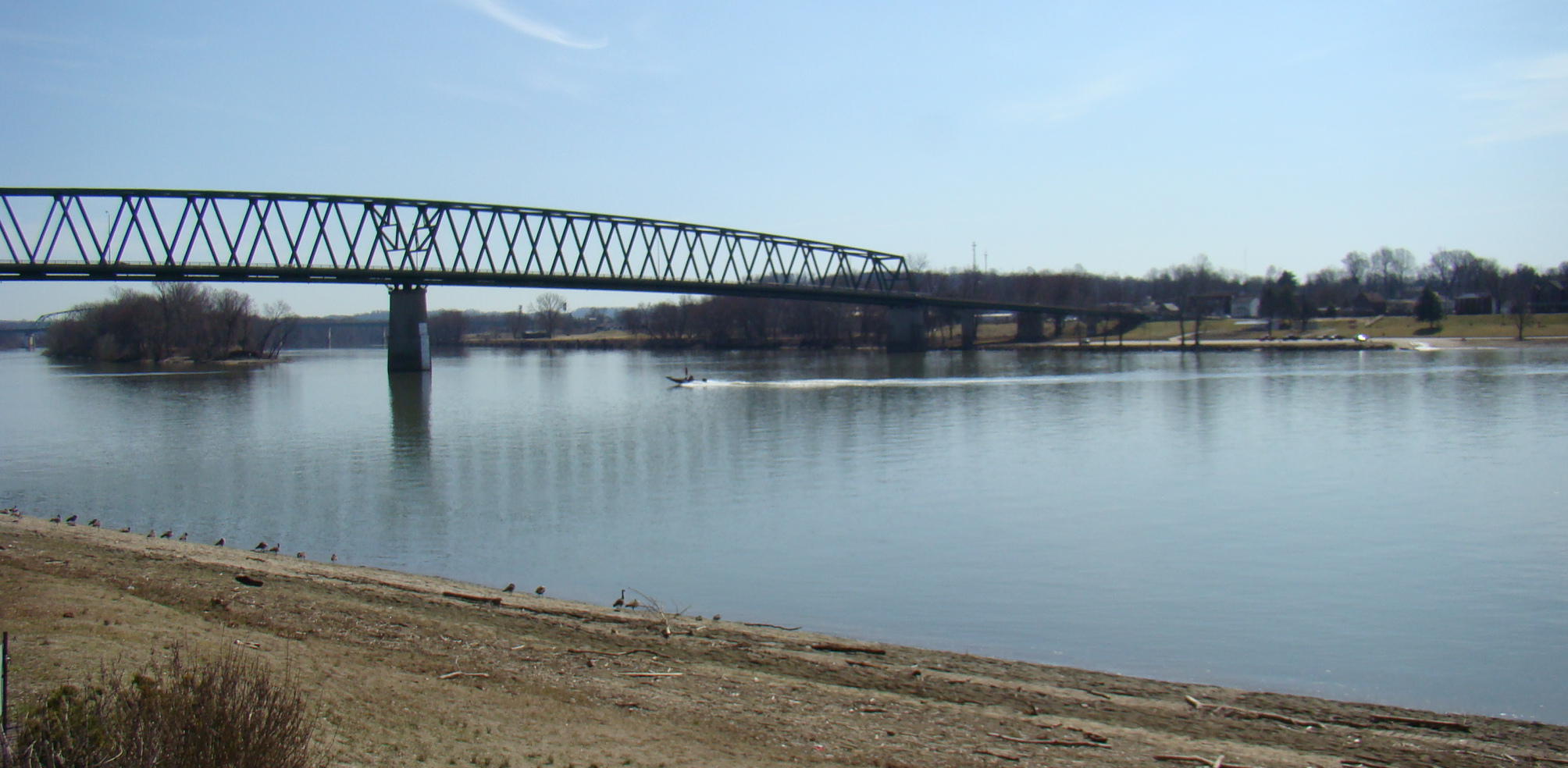
Ohio River at MariettaMay the ghosts be with you while you spend the day or night at the Lafayette Hotel in historic downtown Marietta, Ohio.  Visitors and employees anxiously report stories of paranormal activity in this grand hotel on the banks of the confluence of the Muskingum and Ohio Rivers.

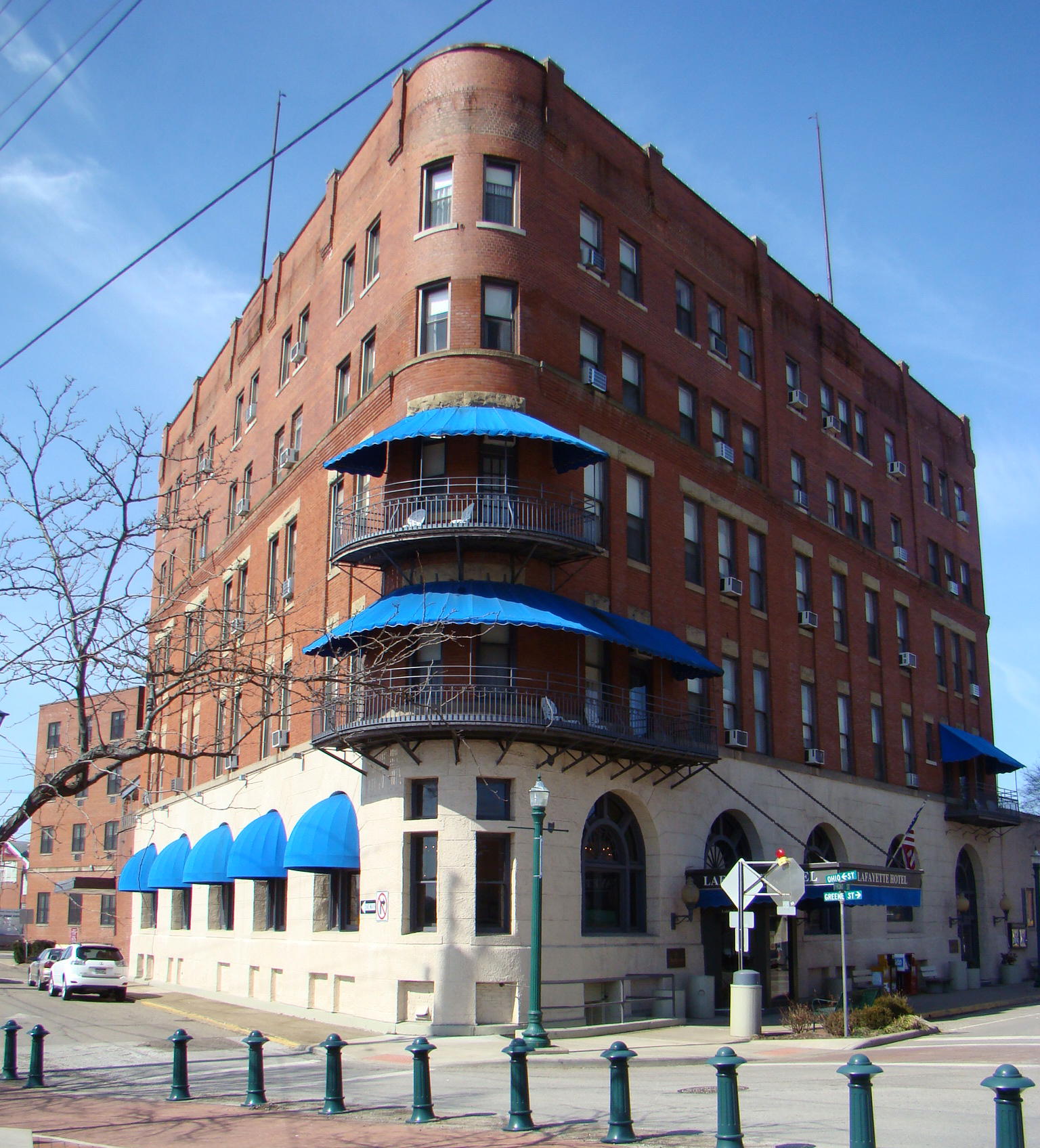
Back in 1882, river traffic was heavier than it is today. The Ohio River provided the freight and passenger routes for much of the eastern part of the United States. Of course, these riverboat travelers needed a place to get meals as well as a place to spend the night. Here at the meeting place of two major rivers, the Bellevue Hotel was built. This quite modern hotel, for the late 1800’s, had a fast running elevator taking guests to 55 rooms, five of which had baths. Rates at the Bellevue were $2.00 a night

lafayette hotel 013After a fire destroyed the Bellevue Hotel, another hotel was constructed on the original foundation. In 1918 the present triangular shaped Lafayette Hotel opened for business. The name was chosen to honor Marquis de Lafayette, French hero of the American Revolution, who was believed to be the first tourist to visit Marietta in 1825. There is even a plaque, near the hotel at the edge of the Ohio River, marking the spot where he came ashore.

A popular meeting room bears the name of Rufus Putnam, who many list as the founder of Ohio.  His leadership established Marietta as the first permanent United States settlement in the Northwest Territory.   In a letter sent to his former home, Rufus Putnam described the land along the Ohio River to his friend as: “a country of most pleasant climate and of the rarest beauty and enduring charm”.

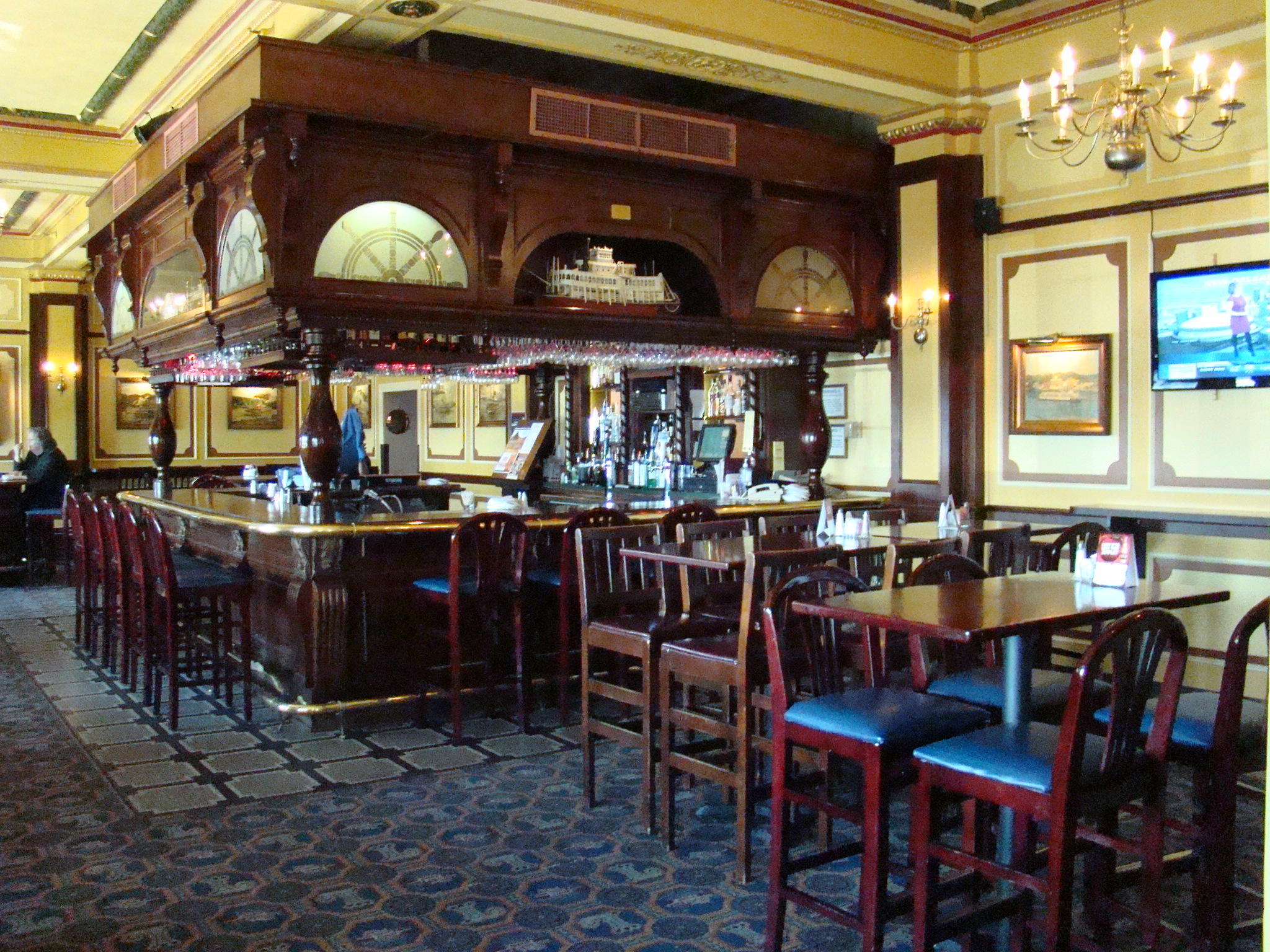
Riverview LoungeThe Riverview Lounge is where the “Lady in White”  often appears hovering over the carpet, while she smoothly moves through the room. The bar happens to occupy the same area where the ladies’ dressing room was located  in the original hotel.

When selecting a room in Marietta’s only downtown hotel, you will probably be given a choice of view – either the Muskingum River or the Ohio River. Here the ghost of Mr. Durward Hoag, former owner of the hotel, watches over guests and staff from both directions. Sometimes guests feel an icy cold draft pass through their well heated room. Evidence of his presence appears in flashing light bulbs, rearranged papers, hidden objects,  and often merely a wisp of light. Maybe Mr. Hoag’s spirit is bored!

When speaking with recent visitors, footsteps were reported outside their door, but no one was in evidence. The elevator, carrying no passengers, left the floor a couple times during the evening and headed to the rooftop. Later that night when they were in bed, another couple felt someone jump in the center of the bed where they were resting. All guaranteed they had not visited the Riverview Lounge.

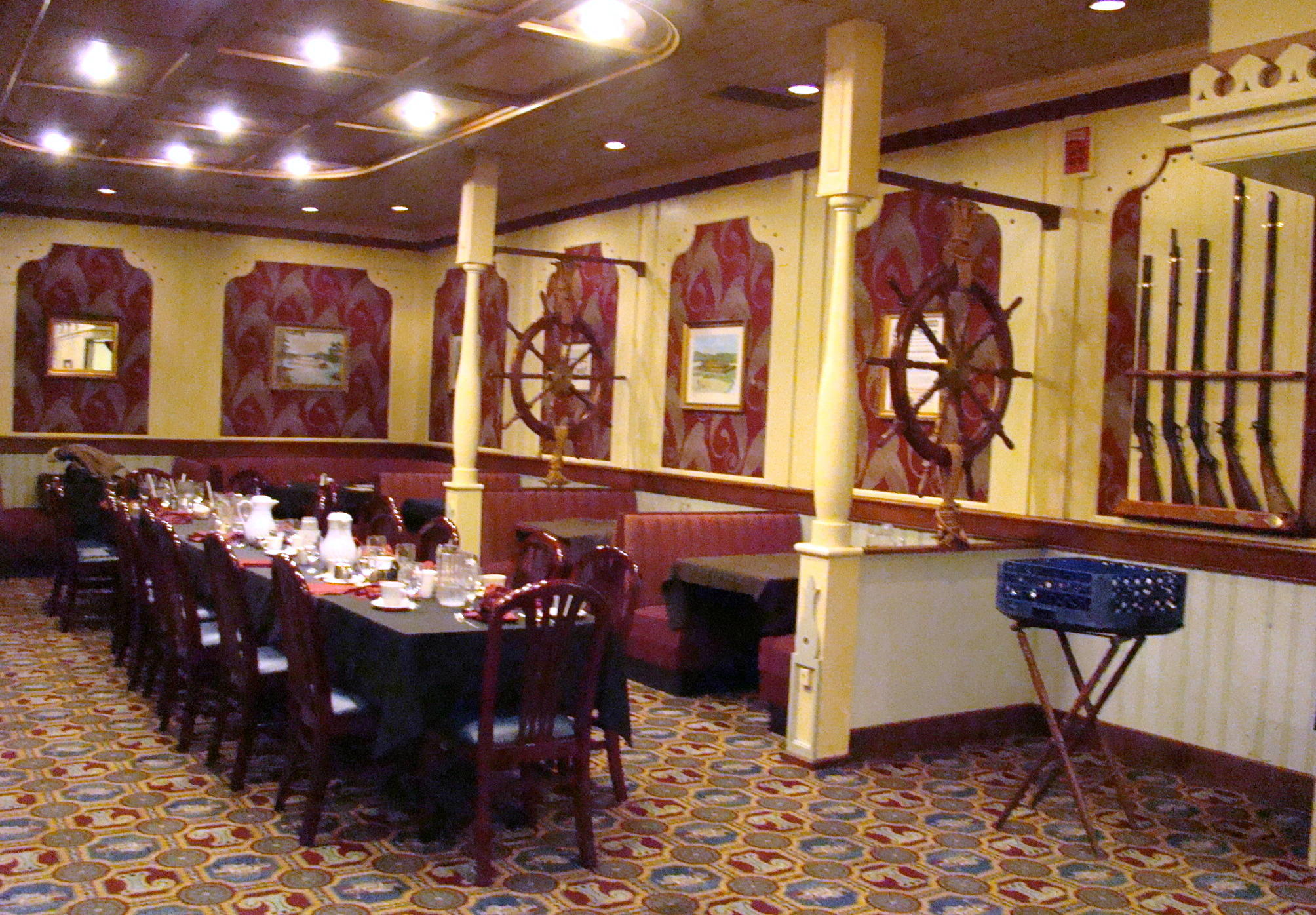
Gun RoomThe Gun Room is a popular place for lunch. The walls are adorned with photos of great majestic sternwheelers that traveled the Ohio River.  A display of antique long rifles contains one made by J.J. Henry that accompanied the Benedict Arnold expedition to Canada in 1775. Waitresses tell of coming in early to work and seeing a figure leaving the front section of the restaurant. Often the swinging doors to the kitchen open for no reason at all. Some feel that Mr. Hoag is checking on his staff.  On the plus side, these spirits are never harmful.

Enjoy the ambience of this richly historical Lafayette Hotel on the river sometime soon. They have been expecting you for nearly a hundred years!

The Lafayette Hotel is located  at 101 Front Street in Marietta, Ohio. Exit I-77 at Exit 1 and follow Route 7 South, which is also Pine Street.  At the third light, Pine Street continues straight and becomes Green Street. Continue on Green Street until you come to the hotel on the corner of Green Street and Front Street. Parking is available between the hotel and the Ohio River as well as on the other side of the hotel.

A “Pleasant Point” Along the Ohio River

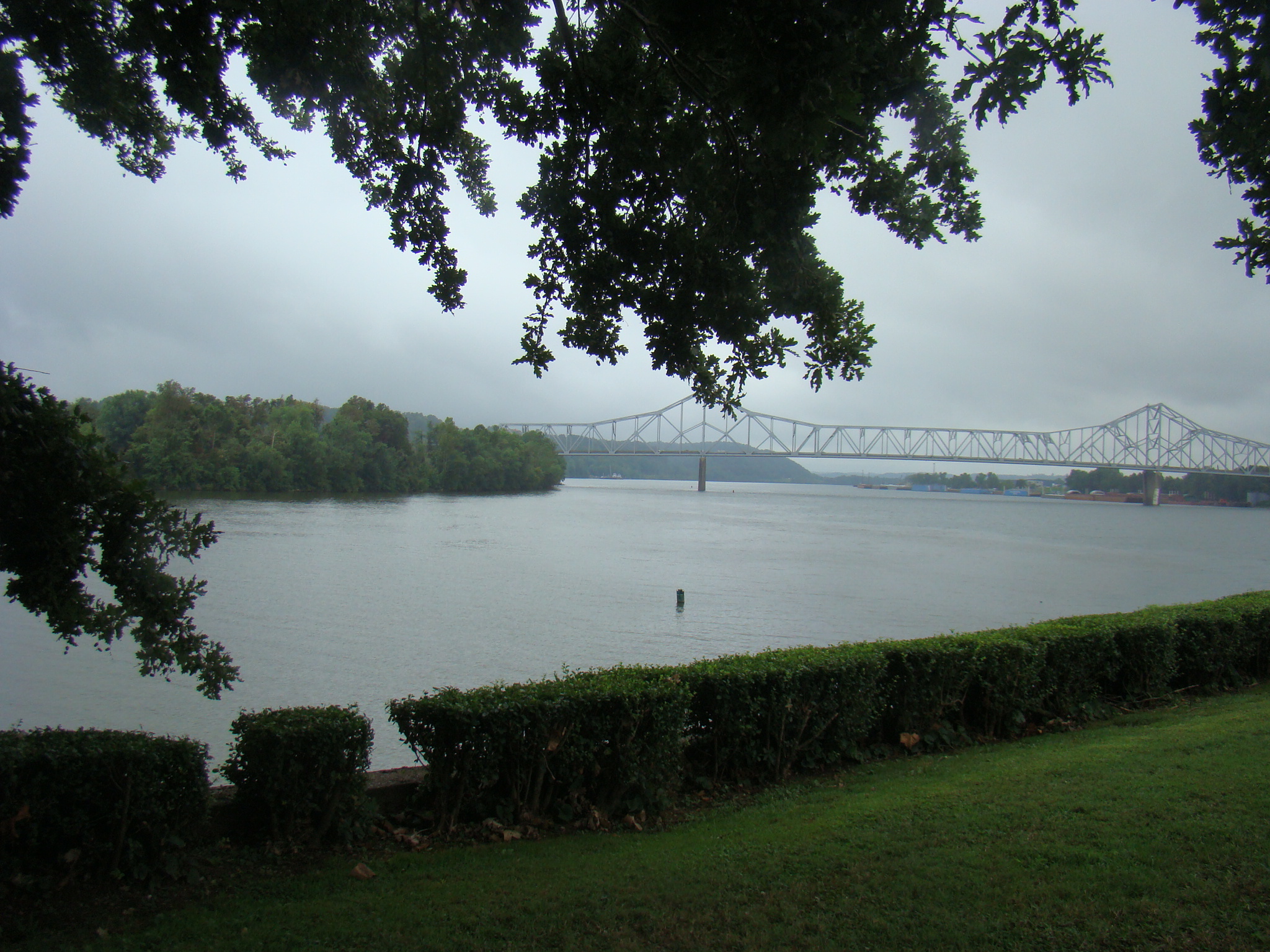
“A pleasant point” was the description given by surveyor, George Washington, when he arrived at the confluence of the Great Kanawha  and Ohio Rivers. Today the town that grew there is called Point Pleasant in West Virginia. The beautiful Riverfront Park is a pleasant surprise here and a wonderful place to take a leisurely stroll with the Ohio River on one side and large murals depicting the town’s history on the other.You can glimpse the Silver Memorial Bridge close to  the point where the Great Kanawha River joins the Ohio River near the end of the Riverwalk in the State Park, Tu-Endie-Wei, which adjoins.

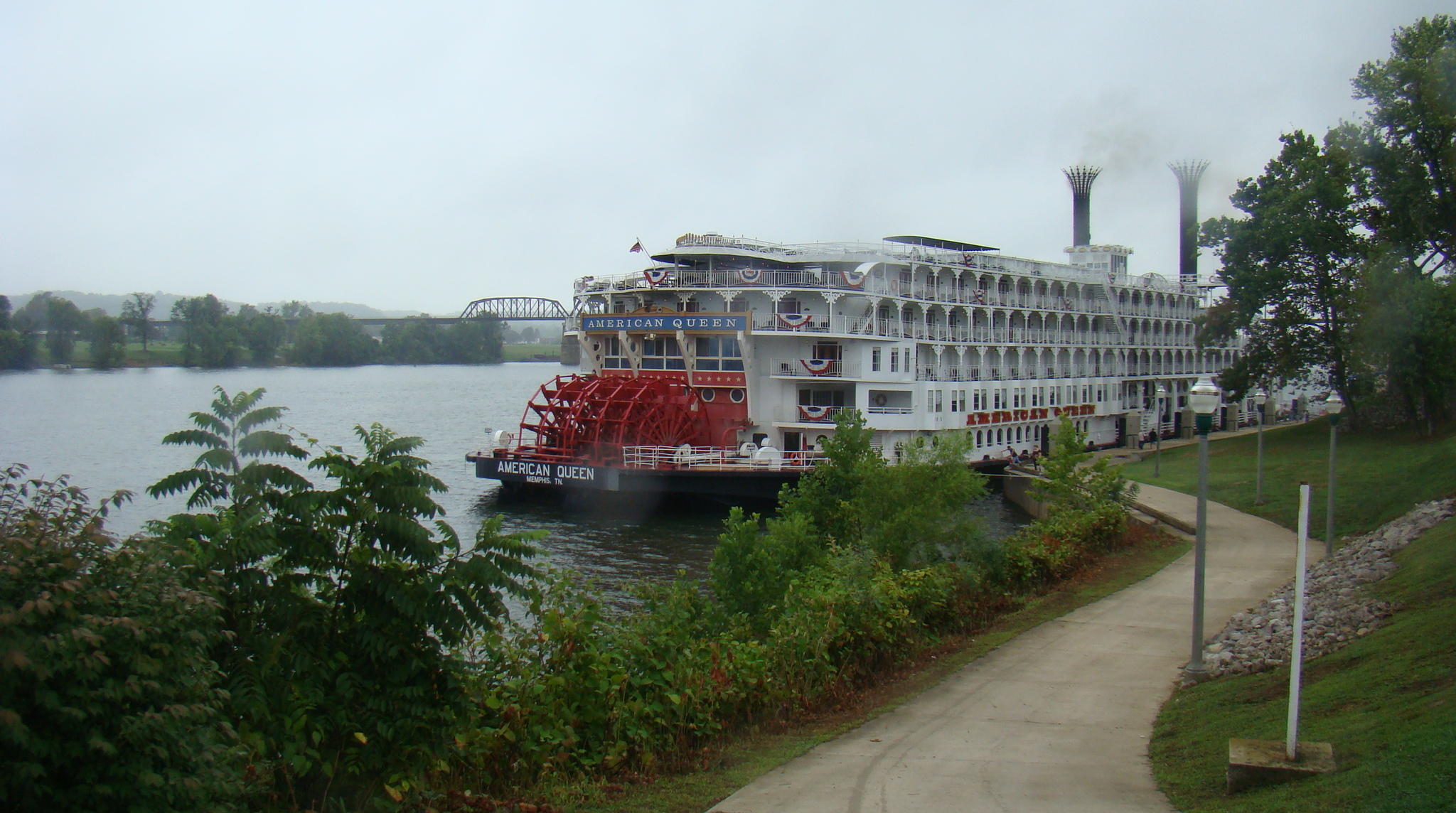
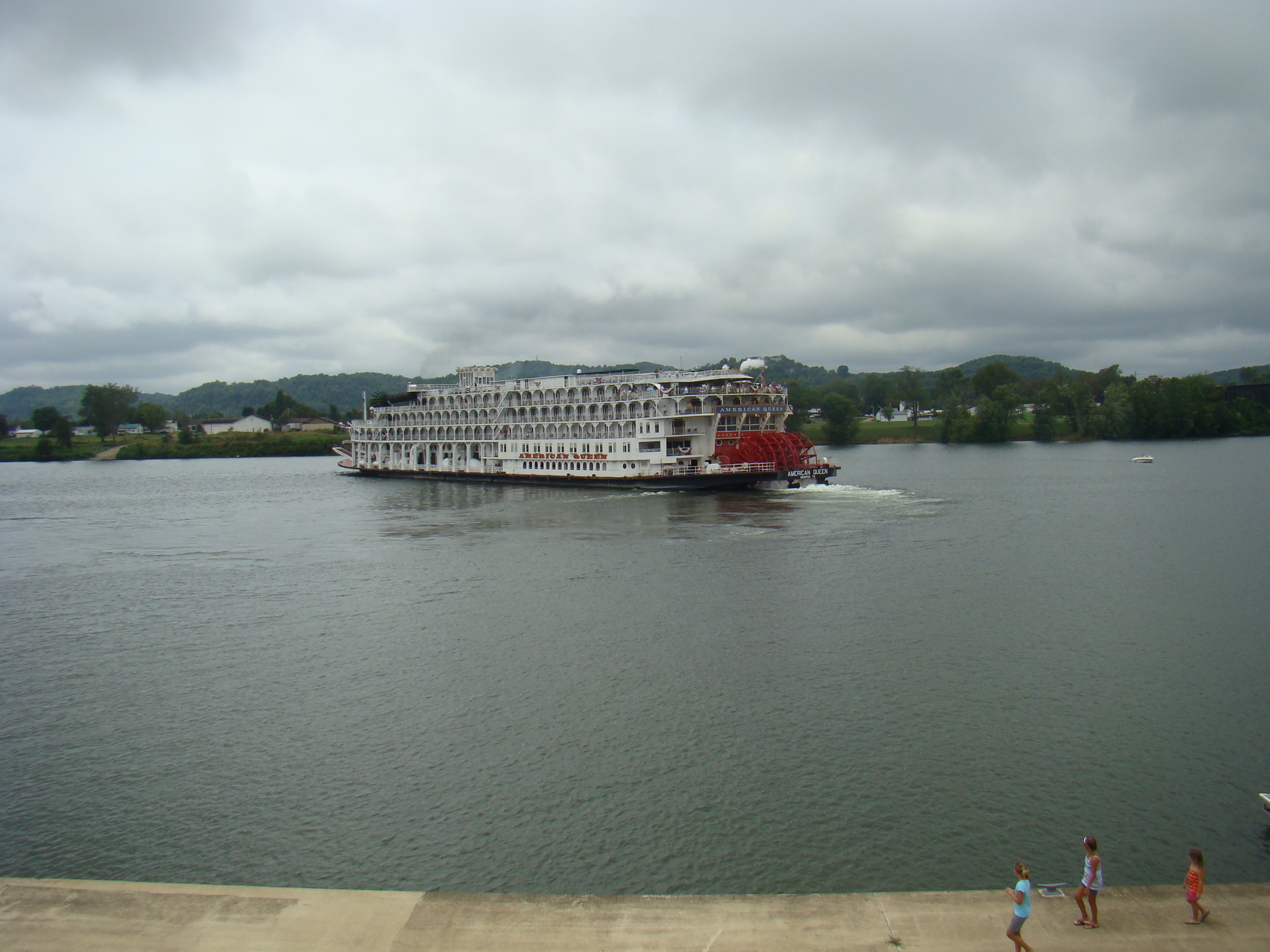
The Ohio River peacefully flows carrying boats of various sizes for many purposes.  There are coal barges, speedboats, riverboats, and luckily this day the spectacular American Queen, the largest steamboat even built in the world. Built in 1995,  this beautiful riverboat is a  six-deck re-creation of a classic Mississippi Steamboat.  Its flat-bottomed style makes it possible to even continue if the waters become shallow.

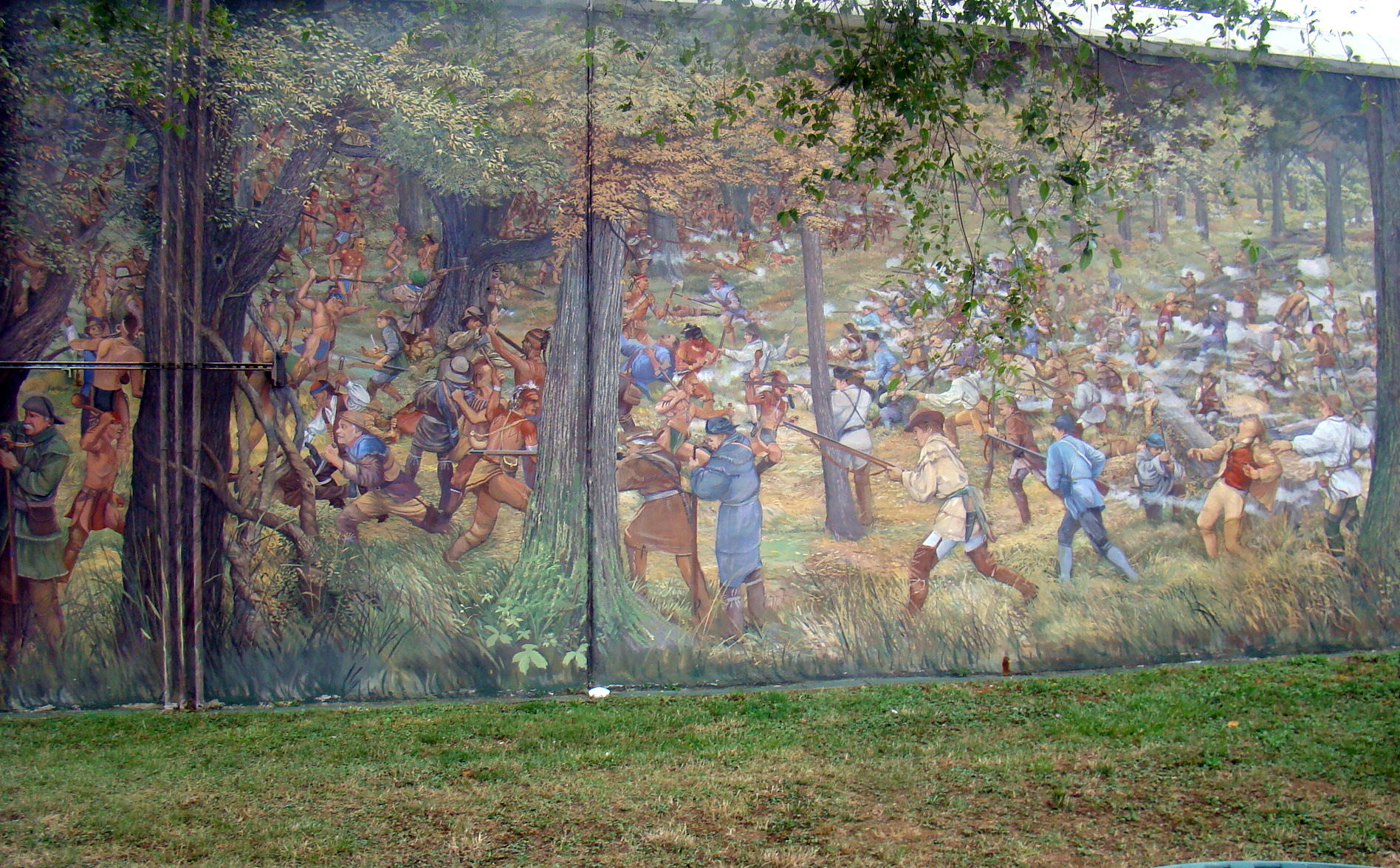
Murals are painted on the floodwalls flanking the Ohio and Kanawha Rivers representing scenes from the Battle of Point Pleasant as well as other pieces of Point Pleasant history, including the Indian settlements of earlier days. Each large mural, measuring from 100-250 feet long, has one single monumental scene painted by artist Robert Dafford. His murals can be found in several cities along the Ohio River from here at Point Pleasant, West Virginia to Paducah, Kentucky.

One depicts the 19-year old George Washington surveying the wilderness where he met Benjamin Franklin and some land speculators, who were founders of the Great Ohio Company. This group intended to found a new colony called Vandalia that would have encompassed most of today’s West Virginia and Kentucky.  What a surprise to learn that on the eve of the American Revolution, there were thoughts of creating a fourteenth colony with Point Pleasant as its capital.

On the other side of the murals is the historic Lowe Hotel, the largest landmark in Point Pleasant. Built in 1901 of Cleveland Berea stone and red brick, this monument was originally called the Spencer Hotel in honor of J.S. Spencer, friend and financial backer of the Smith brothers who owned the hotel.  At that time, traffic on the Ohio River was heavy, so a place to spend the night became an important attraction at Point Pleasant.  Today that  hotel is said to be haunted by guests who decided not to check out, one of those being Captain Jim who is waiting for his steamboat.

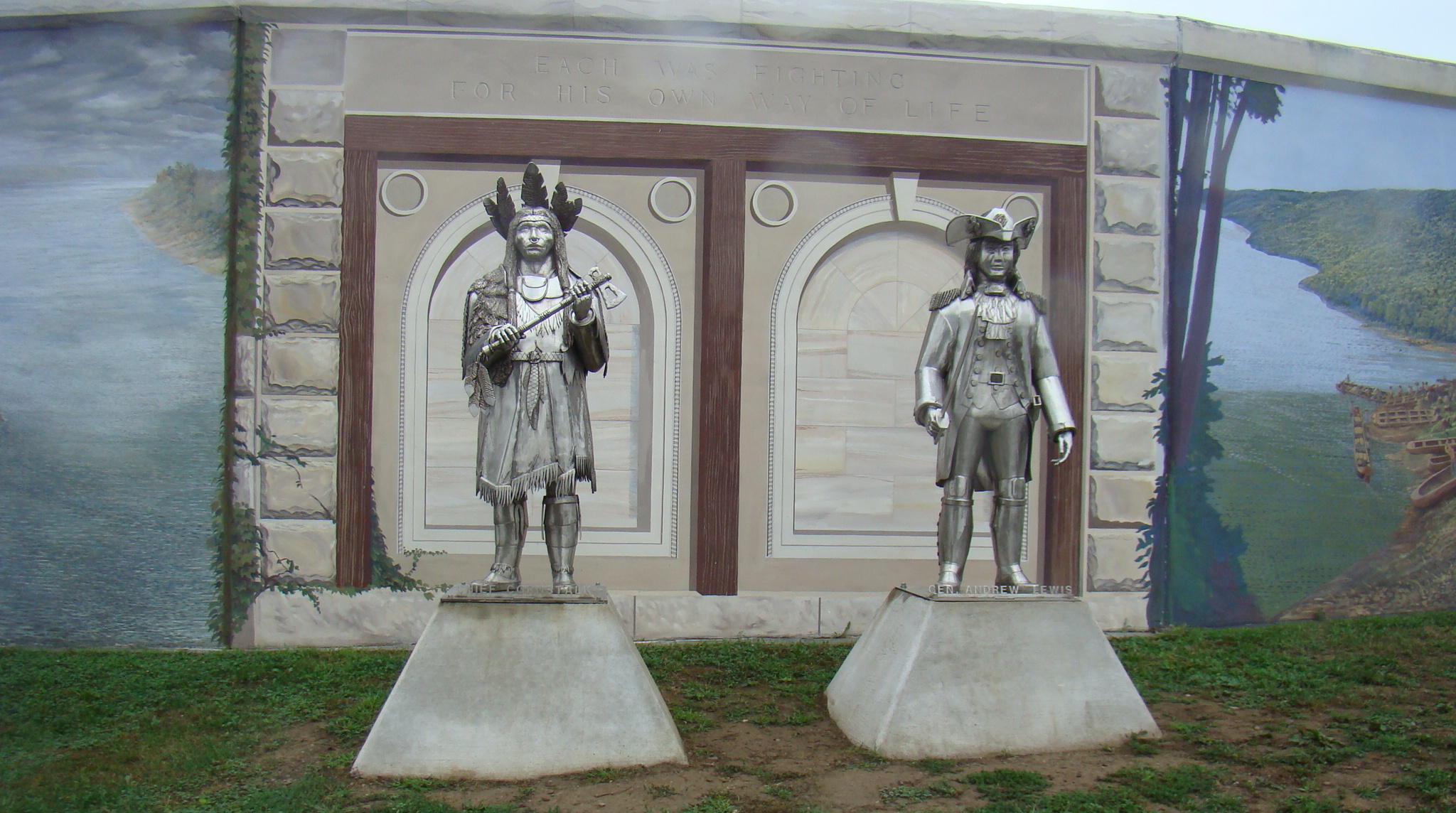
Two unusual metal statues of Chief Cornstalk and Colonel Andrew Lewis caught my eye along the Riverwalk. These were the two combatants in what many say was the first battle of the Revolutionary War…the Battle of Point Pleasant. The Virginia Militia led by Andrew Lewis defeated Chief Cornstalk, the Shawnee leader, and his braves, thus preventing the Native Americans from forming an alliance with the British. This in turn had a major influence on the outcome of the War of Independence. Their statues are located in front of a mural depicting the Battle of Point Pleasant in 1774.

By late afternoon, the American Queen paddlewheels begin turning and the riverboat slowly, almost magically, floats away from the shore. Calliope music fills the air and seems to take one back in time to a happier, more peaceful way of life. This is a great spot to sit down in a swing and watch the river and your cares drift away.

The Riverwalk at Point Pleasant, West Virginia is located just a half block from Main Street and of course, along the Ohio River. Frequent festivals throughout the year are held here and it is often a stopping point for riverboats. 

Want to Actually Touch a Shark? Visit Newport Aquarium

Touch a shark! Play with the penguins! Experiences such as these happen every day at Newport Aquarium in Newport, Kentucky just across the Ohio River from Cincinnati, Ohio.  Here over 7,000 aquatic creatures from around the world have been gathered in a million gallons of fun.

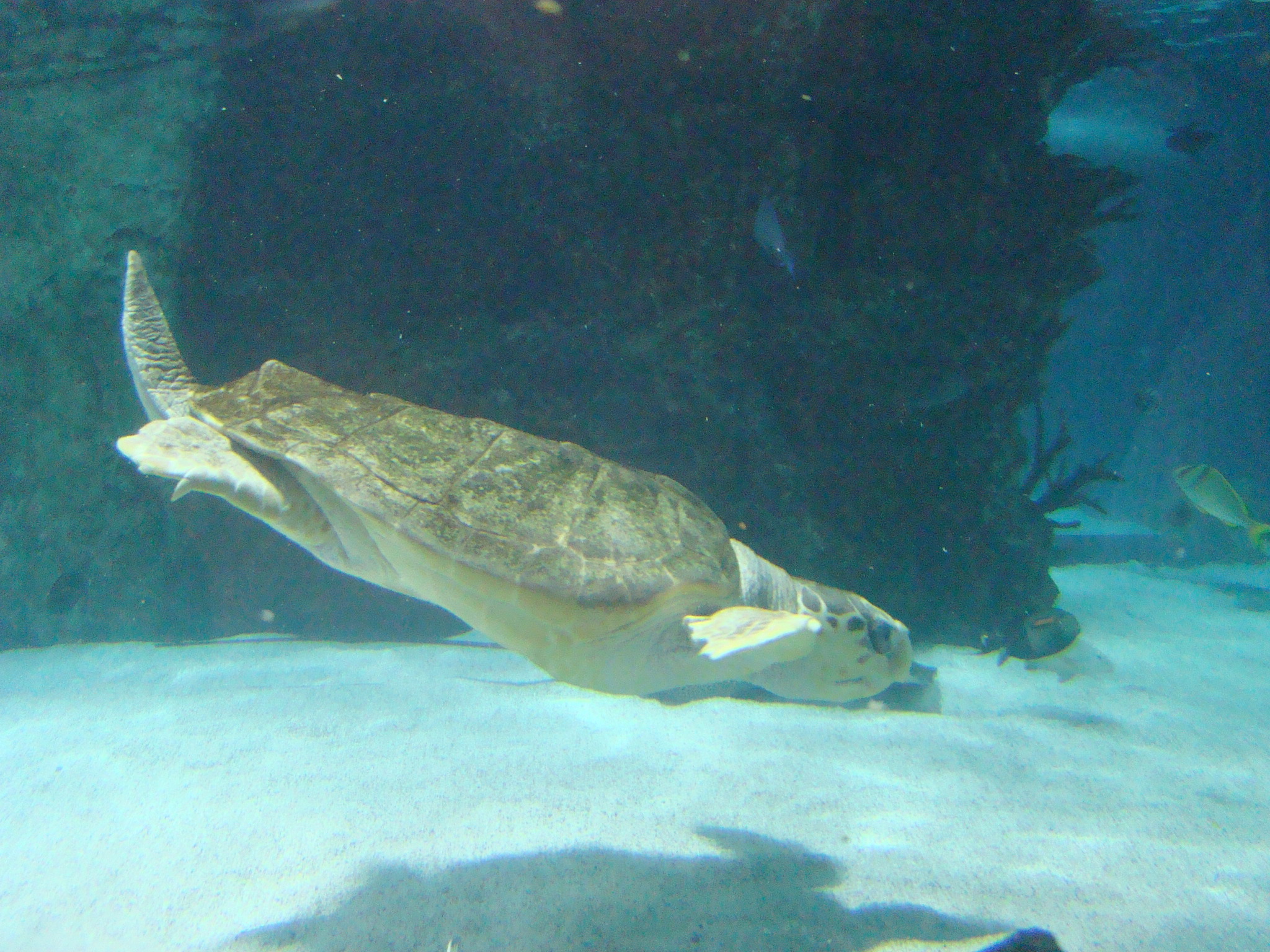
Following the map on this  World Aquatic Tour, visits are made to every continent, every ocean and lots of waterways in between. Excitement begins as many walkways actually are tunnels through the ocean scene.  There are fish swimming above, below, and on both sides…surrounding visitors with the feeling of actually walking on the ocean floor. Two hundred feet of tunnels, somehow constructed of acrylic without seams, amaze the eye.  Many aquatic creatures soar overhead or pass under everyone’s feet…even a legendary giant sea turtle!

Jellyfish Gallery displays over one hundred jellyfish that possess that magical ability to illuminate under water, making for quite an attractive display. Located in clear tubes, the mesmerizing jellyfish float with ease while performing their elegant dance. Recent research indicates that the protein extracted from jellyfish may help keep human brain cells alive longer. Just another great reason to enjoy watching them.  Youngsters also have fun playing tag with the moon jellies on the Jelly Wall, or hop their way to excitement on Frogger, a video game part of the Frog Bog exhibit.  Here’s the perfect place to take a break from walking, sit down on the benches and watch the jellyfish and the children at play.  You might be tempted to join in the games!

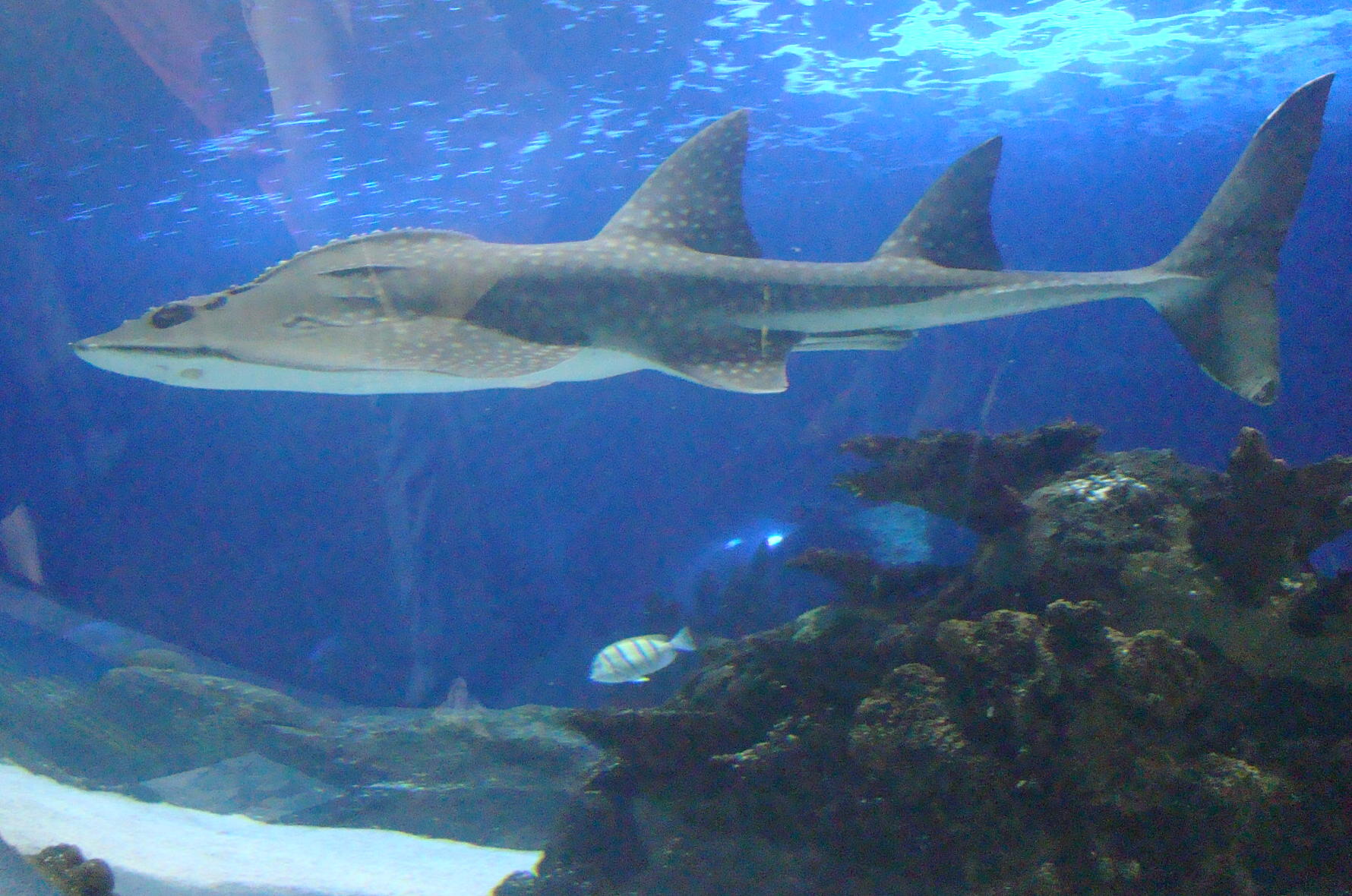
The Shark Tank draws children and the young at heart like bears to honey. After instruction on the proper method for petting a shark, supervised touching is allowed. The official “two-finger” technique gently rubs the shark from front to back. Actually the sharks really enjoy this experience as it produces a satisfying electrical connection for them…reiki for sharks! Young boys especially, return again and again to pet these dangerous creatures. And yes, this writer experienced the thrill of it personally.

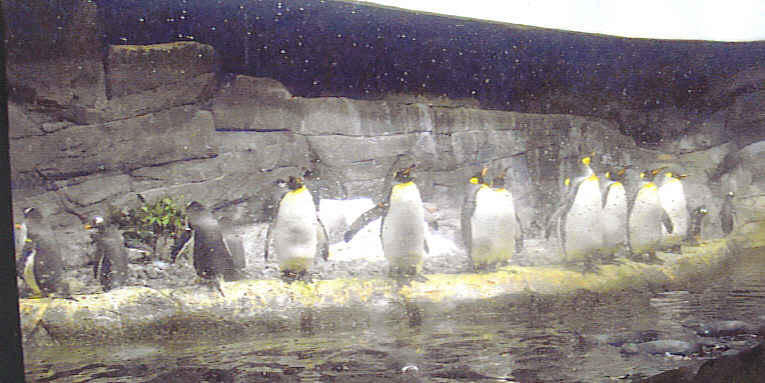
Penguin Palooza features cold-water penguins in temperatures similar to those in their natural Antarctic home. The viewing area has seating so you can give your feet a break, while watching the antics of these cute little guys in their tuxedos.  If you want to play with the penguins an additional fee is charged and children must be accompanied by an adult.

Newport on the Levee combines a fantastic entertainment area with an outstanding shopping complex. Besides Newport Aquarium, guests will find  movie theaters, live concerts, Fun Zone, Ride the Ducks, exclusive places to shop, and of course, fine dining establishments.  There is something here for the entire family so you might as well stay for a day or two at the hotels located in Newport.

Close by is the Purple People Bridge, the longest pedestrian bridge connecting two states, Ohio and Kentucky. Formerly tracks for the L&N Railroad built in 1872, it now provides a pleasant half mile walk across the Ohio River. What a great place to relax on the frequent benches, and watch the busy boat traffic down below.

While Newport Aquarium was probably originally designed for youngsters, adults also can have an interesting day learning about aquatic creatures from all over the world. Lose yourself in an underwater experience of unusual and interesting sea creatures. If you need to call the aquarium, use a “shell” phone!

Newport Aquarium is easily reached from I-471 at Exit #5 in Kentucky.  Follow Route 8 and signs will lead you easily into the parking garage for Newport on the Levee.  Admission is $23 for adults and $15 for children (ages 2-12). For additional information please visit their website at  www.newportaquarium.com . 

Mysterious Mothman Museum Keep Your Eyes on the Sky

“Something bad is going to happen. Don’t go back.” “Be careful girl, I’ll get you.” These were just a couple of the messages received by residents of Point Pleasant, West Virginia after the appearance of what locals call “The Mothman”.

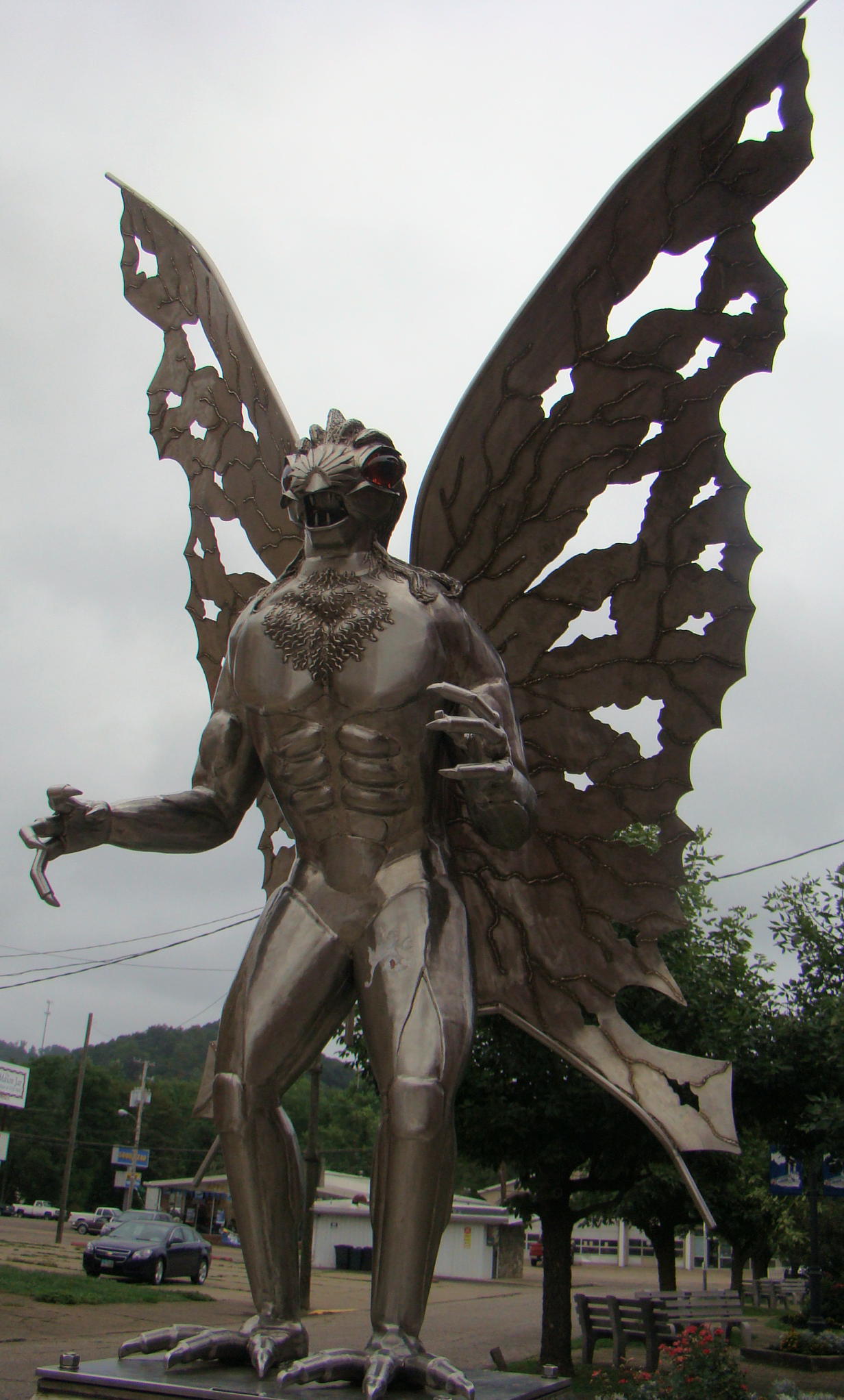
First stop on your Mothman adventure in downtown Point Pleasant will probably be the statue of Mothman at the corner of Main and Fourth Streets. This stainless steel sculpture by artist Robert Roach was unveiled in 2003 in what is now called Mothman Park. Red eyes are one of the outstanding features of this life size creature and are set to glow at night.

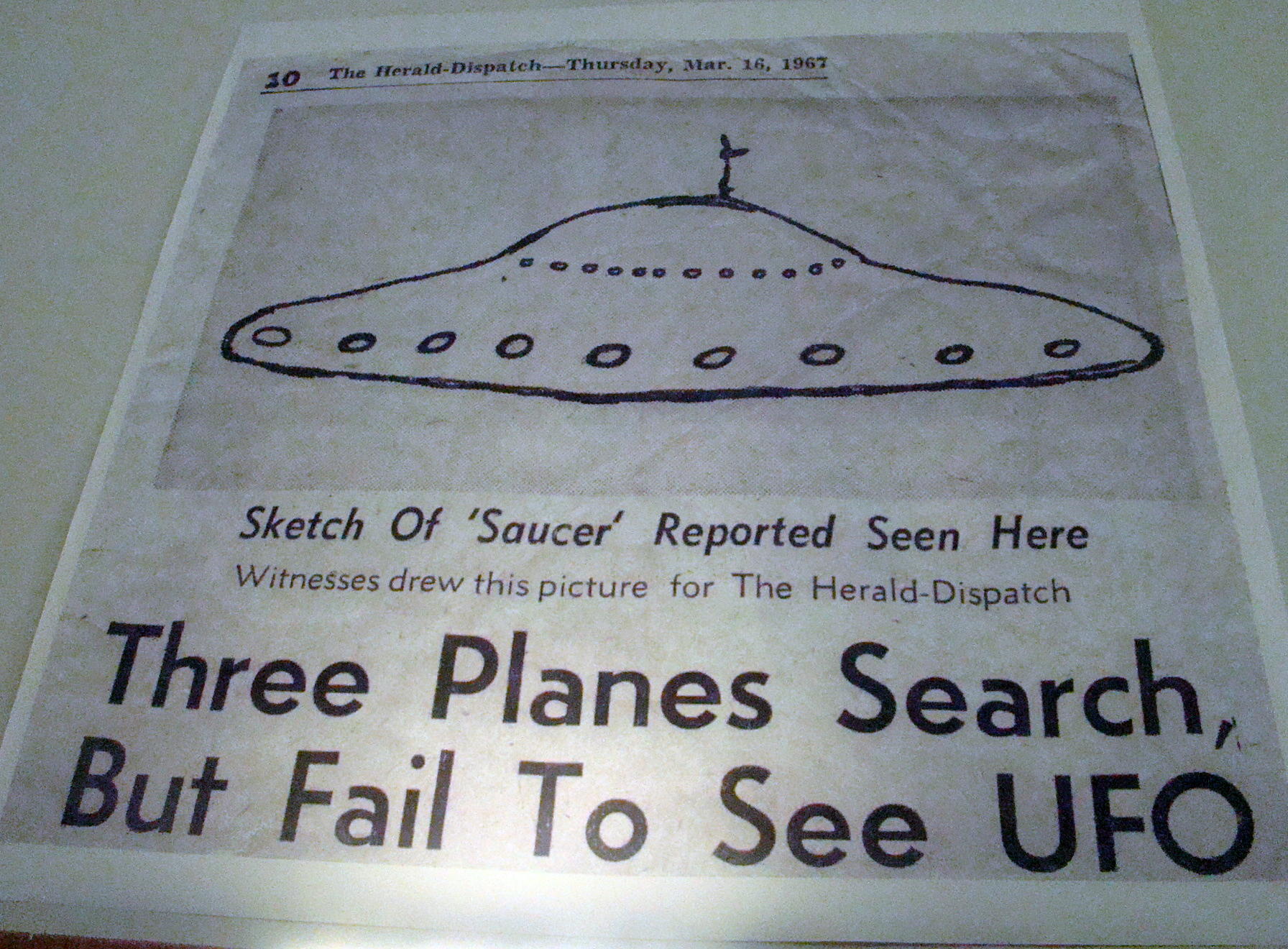
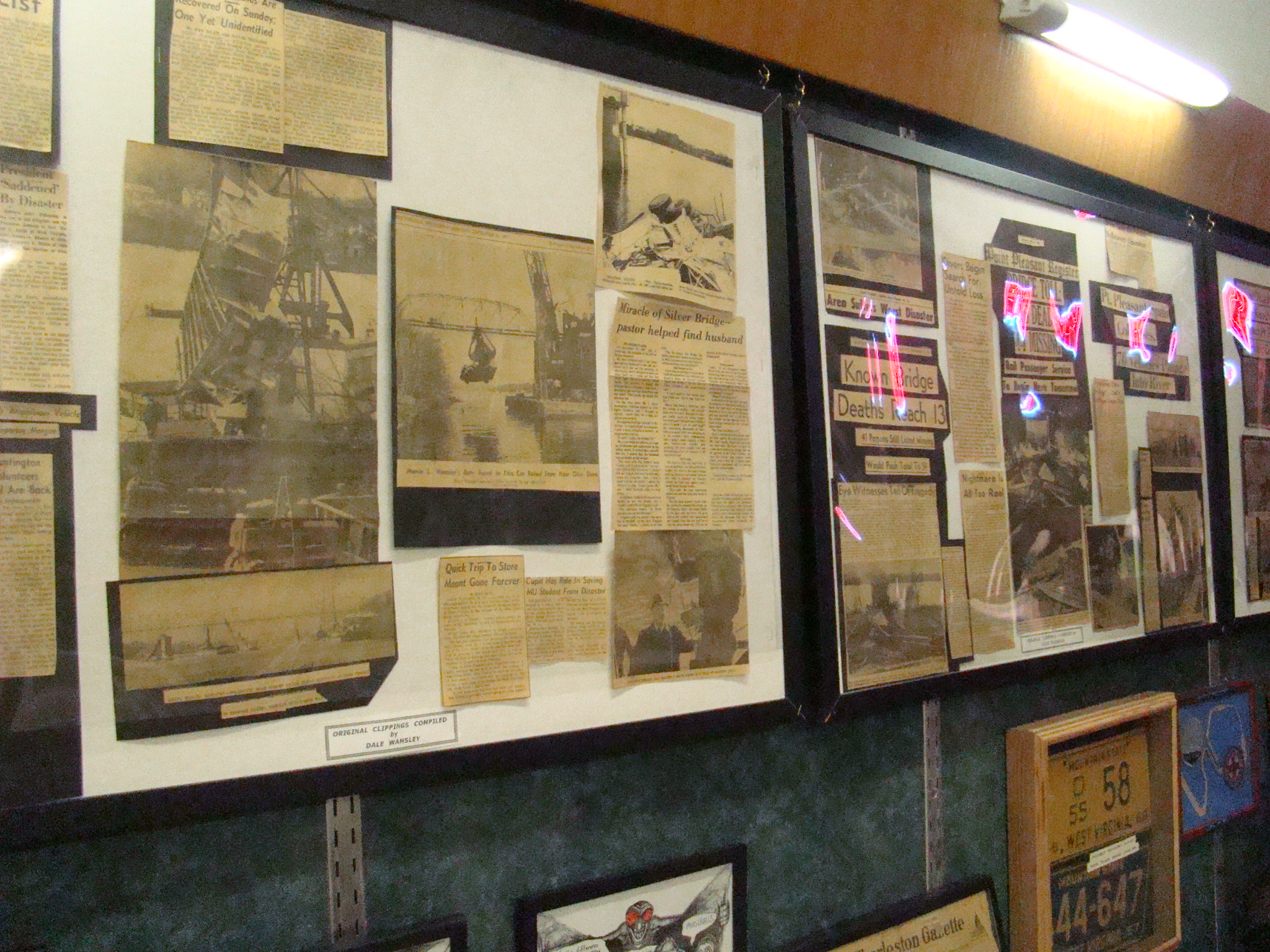
Today a visit to Mothman Museum will review the story of this unexplained mystery through videos, recordings, newspaper clippings of Mothman sitings, photos of the Silver Bridge collapse, and props from the Mothman Prophecies movie.

In 1966-67, over a hundred appearances by Mothman in the surrounding area frightened residents to the point that they were afraid to go out at night.  A seven foot tall figure would first be seen appearing to have wings with feathers, which had a ten foot wingspan. As it got closer the glow of its fiery red eyes seemed to be one of its most frightening features. Those who saw it would have terrible headaches, dreams, and visions.

At nearly the same time, UFO’s were also seen in town. Law enforcement as well as local residents were searching for Mothman and the UFO’s at night with search lights, as though they were searching for Frankenstein. The UFO’s were said to be disc shaped objects in the night sky with red lights encircling them.

Another mystery was the arrival in town of Men in Black. Really!  These men dressed in black suits would threaten those who had seen Mothman to silence…or else.  One newspaper reporter said the Men in Black visited her or phoned her and told her not to publish any more stories about the Mothman or UFO’s. One curious thing about them was that they never blinked their eyes. The government denied any involvement. These same Men in Black were seen crawling around the bridge before its collapse. This same reporter had visions of many Christmas packages floating in the Ohio River, which actually happened at the time of the collapse of the Silver Bridge on December 15, 1967.

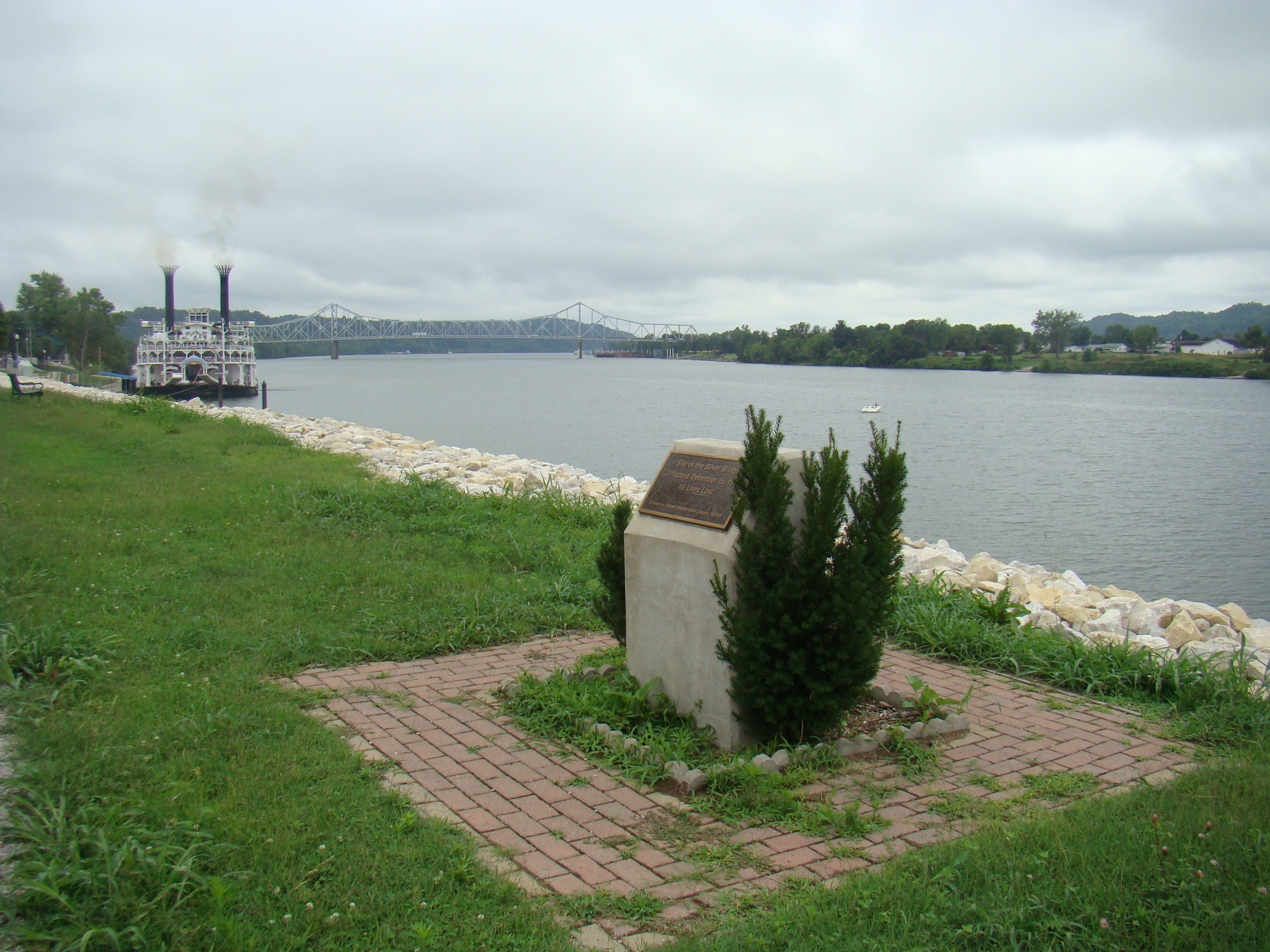
When the Silver Bridge collapsed, witnesses reported it came down like dominoes. A loud cracking sound was heard and in less than a minute, the entire bridge collapsed into the icy waters of the Ohio River. Forty-six people died when the bridge completely disappeared under the water.  Mothman had appeared 13 months prior to the collapse, which occurred at Pier 13. Several possible reasons were given for the disastrous bridge collapse: 1) structural failure, 2) a sonic boom, or 3) the Curse of Chief Cornstalk.

While structural failure seems the most likely, could a sonic like boom have been caused by the sinister Men in Black crawling over the bridge shortly before it collapsed, or by Mothman’s wings?  Or was Chief Cornstalks’s curse responsible? Chief Cornstalk worked hard to keep his people neutral and was a member at treaty councils. When Chief Cornstalk surrendered in 1774 at the Battle of Point Pleasant, he signed a peace treaty with the Virginia militia, but a couple years later Cornstalk and his son were executed by the British. At this time, Cornstalk is said to have placed a curse of death and destruction on the town of Point Pleasant, as recorded in part here:

“I came to the fort as your friend and you murdered me. You have murdered by my side, my young son…. For this, may the curse of the Great Spirit rest upon this land. May it be blighted by nature. May it even be blighted in its hopes. May the strength of its peoples be paralyzed by the stain of our blood.”

However, after careful review, it was found that a weak eyebar was the most probable cause of the collapse, perhaps stressed by the additional weight of all the rush hour holiday traffic.

Many feel that the Mothman was a Prophet of Doom, warning the people that a tragedy was going to happen, as there are no stories of him attempting to harm anyone.  Fascinating Mothman appearances don’t seem to be limited to this one spot as there have been sightings around the world from Cincinnati to Afghanistan before major tragedies, for example: the earthquake in Mexico City, and the Chernobyl nuclear power plant in Ukraine.

Before leaving town  If you walk up the street a half block to the Ohio River you can also see along the Riverwalk a stone set at the place of the original Silver Bridge, which is just up the river from today’s bridge crossing the Ohio River to the Gallipolis area. During this visit, the American Queen can be seen docked between the two points.

After the Silver Bridge collapsed, there were no further sightings of Mothman, the UFO’s or the Men in Black.  Just mere chance? You decide. Best to keep an open mind as someday it could happen to you.  What will you do if YOU see Mothman?

Mothman Museum, one of the sidewalk shops of the famous Lowe Hotel, is along the Ohio River in Point Pleasant, West Virginia.  Across the street from the Mothman Statue on Main Street, the museum is open every afternoon.