Places to go and things to see by Gypsy Bev

Archive for the ‘Back Roads’ Category

A “Pleasant Point” Along the Ohio River
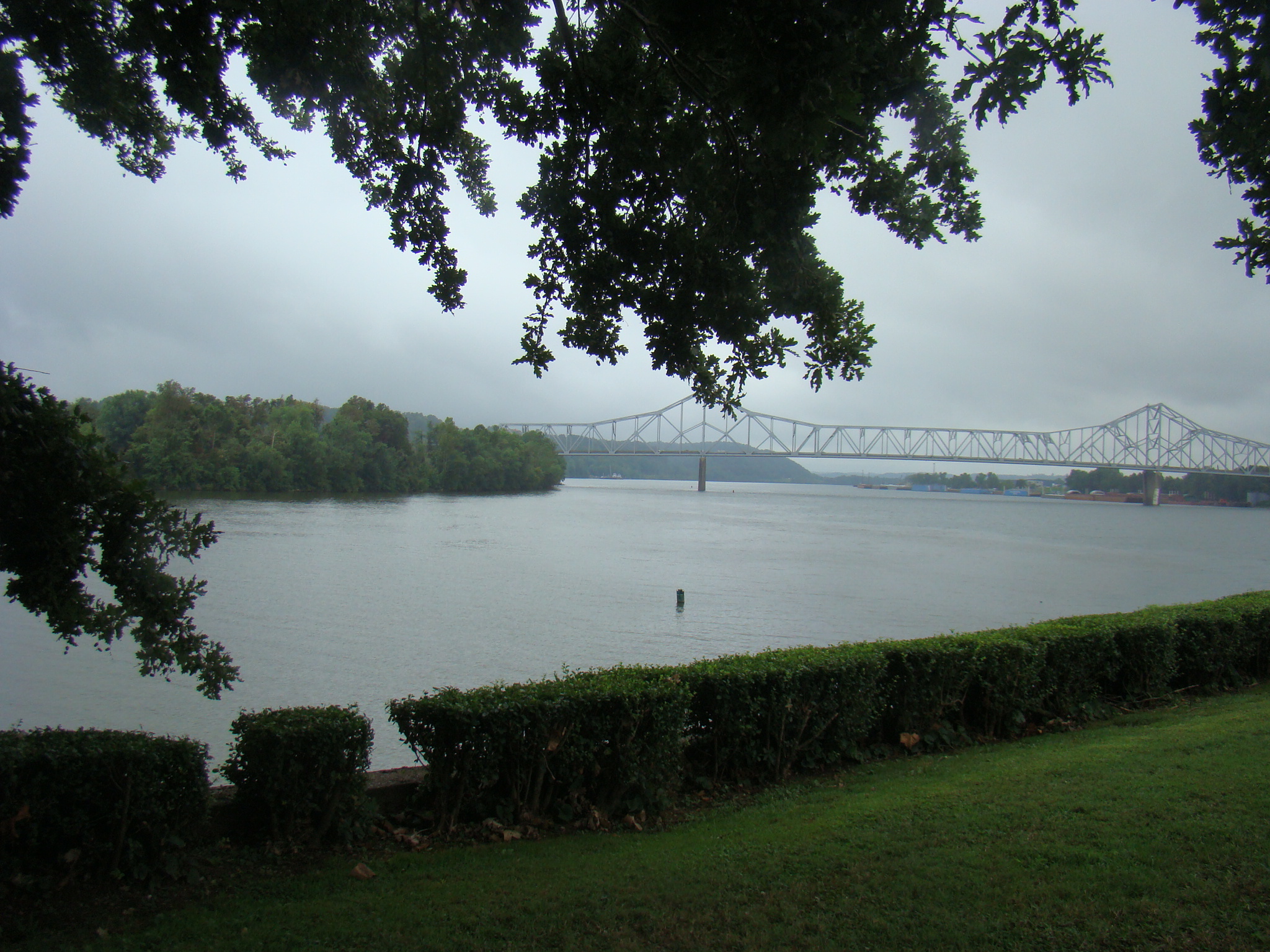
“A pleasant point” was the description given by surveyor, George Washington, when he arrived at the confluence of the Great Kanawha  and Ohio Rivers. Today the town that grew there is called Point Pleasant in West Virginia. The beautiful Riverfront Park is a pleasant surprise here and a wonderful place to take a leisurely stroll with the Ohio River on one side and large murals depicting the town’s history on the other.You can glimpse the Silver Memorial Bridge close to  the point where the Great Kanawha River joins the Ohio River near the end of the Riverwalk in the State Park, Tu-Endie-Wei, which adjoins.
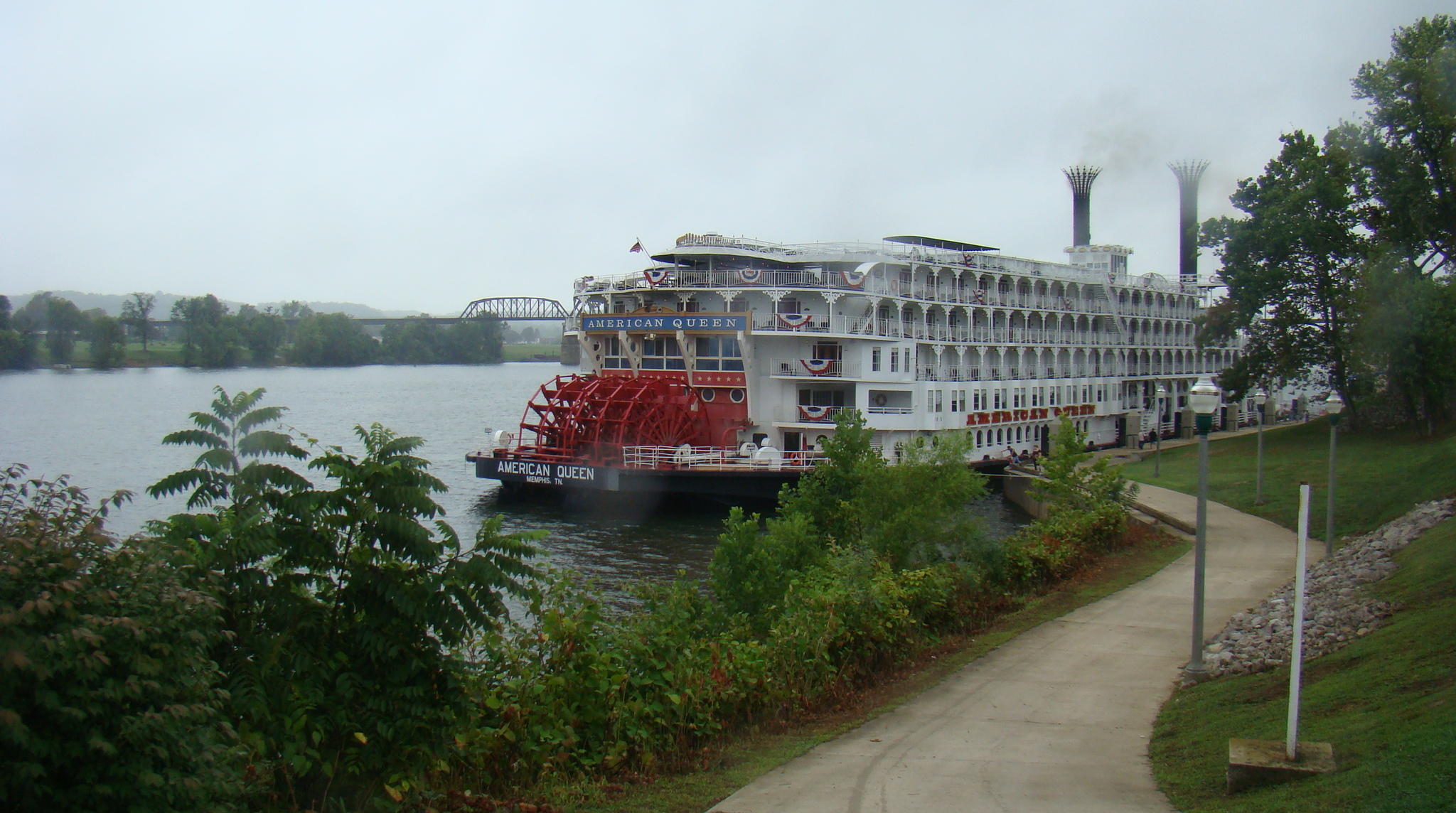
The Ohio River peacefully flows carrying boats of various sizes for many purposes.  There are coal barges, speedboats, riverboats, and luckily this day the spectacular American Queen, the largest steamboat even built in the world. Built in 1995,  this beautiful riverboat is a  six-deck re-creation of a classic Mississippi Steamboat.  Its flat-bottomed style makes it possible to even continue if the waters become shallow.
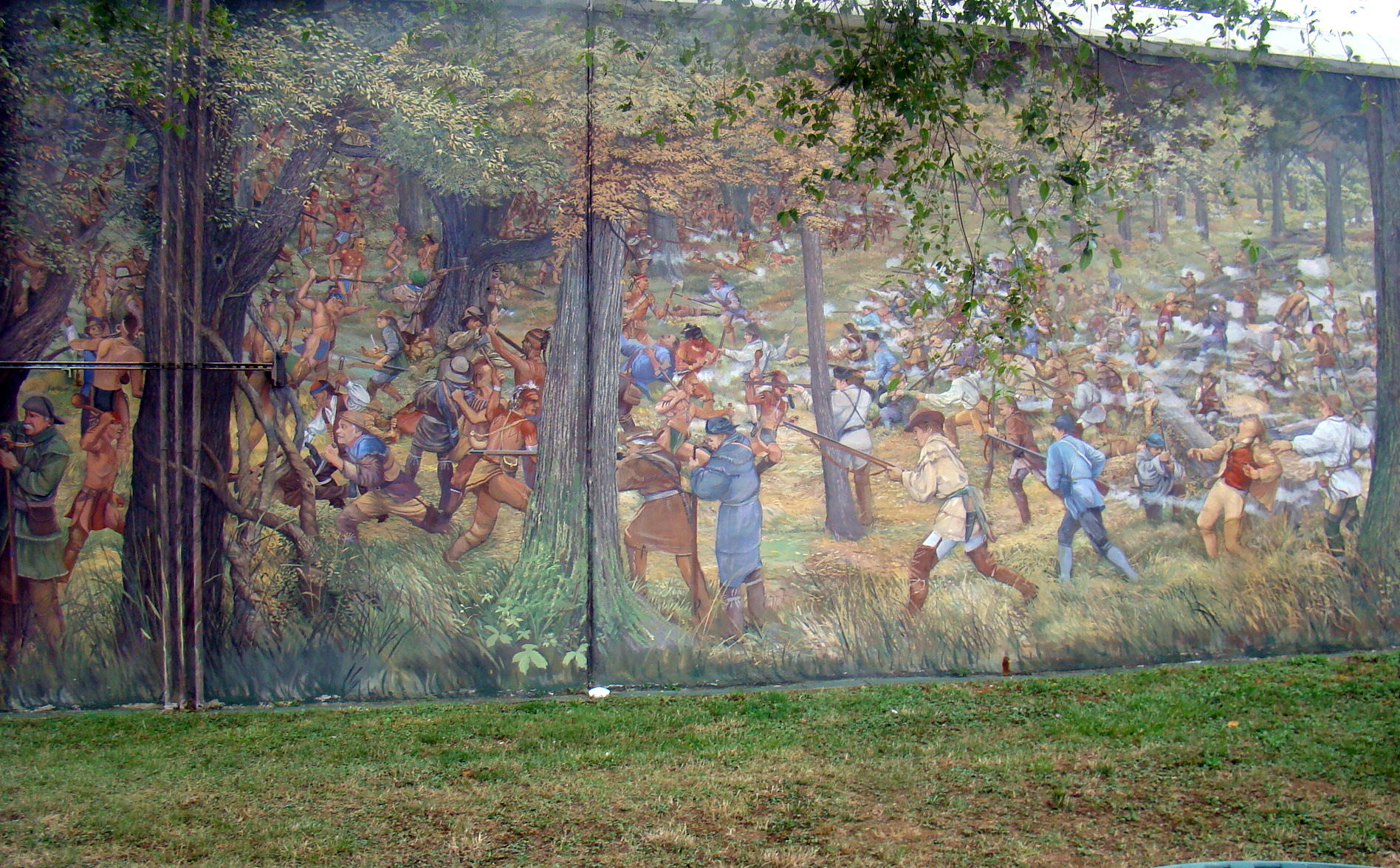
Murals are painted on the floodwalls flanking the Ohio and Kanawha Rivers representing scenes from the Battle of Point Pleasant as well as other pieces of Point Pleasant history, including the Indian settlements of earlier days. Each large mural, measuring from 100-250 feet long, has one single monumental scene painted by artist Robert Dafford. His murals can be found in several cities along the Ohio River from here at Point Pleasant, West Virginia to Paducah, Kentucky.

One depicts the 19-year old George Washington surveying the wilderness where he met Benjamin Franklin and some land speculators, who were founders of the Great Ohio Company. This group intended to found a new colony called Vandalia that would have encompassed most of today’s West Virginia and Kentucky.  What a surprise to learn that on the eve of the American Revolution, there were thoughts of creating a fourteenth colony with Point Pleasant as its capital.

On the other side of the murals is the historic Lowe Hotel, the largest landmark in Point Pleasant. Built in 1901 of Cleveland Berea stone and red brick, this monument was originally called the Spencer Hotel in honor of J.S. Spencer, friend and financial backer of the Smith brothers who owned the hotel.  At that time, traffic on the Ohio River was heavy, so a place to spend the night became an important attraction at Point Pleasant.  Today that  hotel is said to be haunted by guests who decided not to check out, one of those being Captain Jim who is waiting for his steamboat.
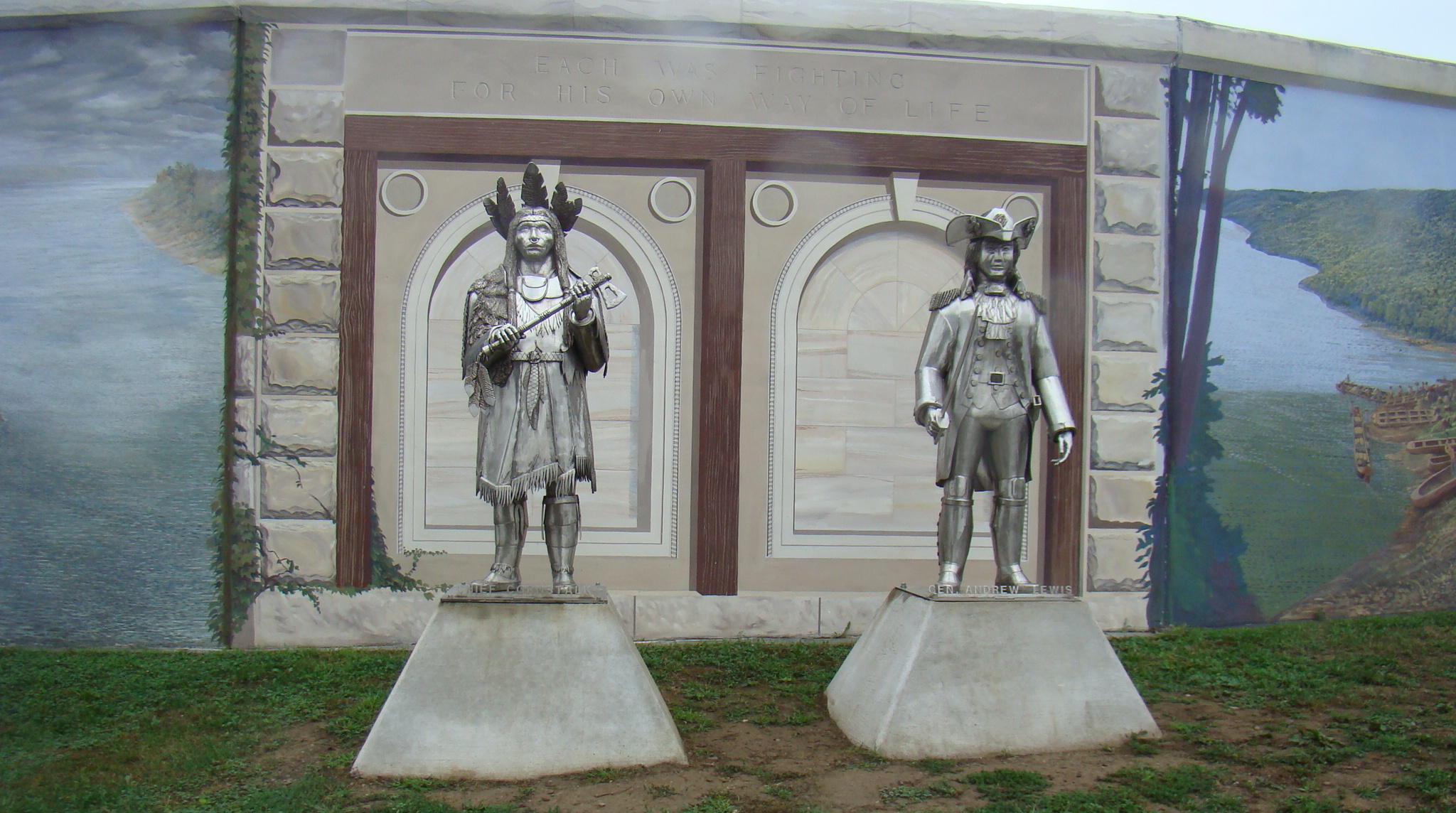
Two unusual metal statues of Chief Cornstalk and Colonel Andrew Lewis caught my eye along the Riverwalk. These were the two combatants in what many say was the first battle of the Revolutionary War…the Battle of Point Pleasant. The Virginia Militia led by Andrew Lewis defeated Chief Cornstalk, the Shawnee leader, and his braves, thus preventing the Native Americans from forming an alliance with the British. This in turn had a major influence on the outcome of the War of Independence. Their statues are located in front of a mural depicting the Battle of Point Pleasant in 1774.
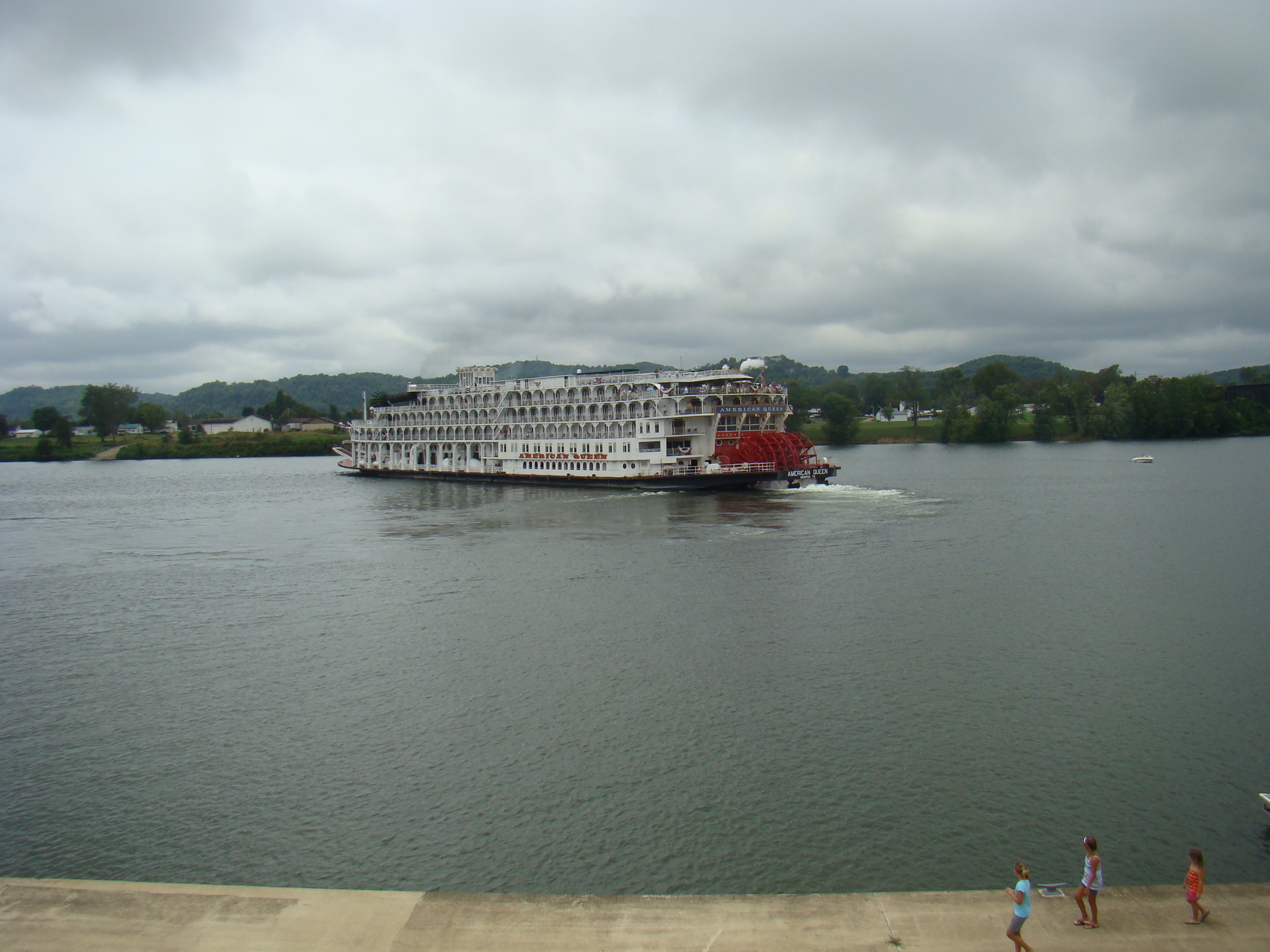
By late afternoon, the American Queen paddlewheels begin turning and the riverboat slowly, almost magically, floats away from the shore. Calliope music fills the air and seems to take one back in time to a happier, more peaceful way of life. This is a great spot to sit down in a swing and watch the river and your cares drift away.

The Riverwalk at Point Pleasant, West Virginia is located just a half block from Main Street and of course, along the Ohio River. Frequent festivals throughout the year are held here and it is often a stopping point for riverboats. 

Buffalo Hills Resort Welcomes Native American Pow Wow

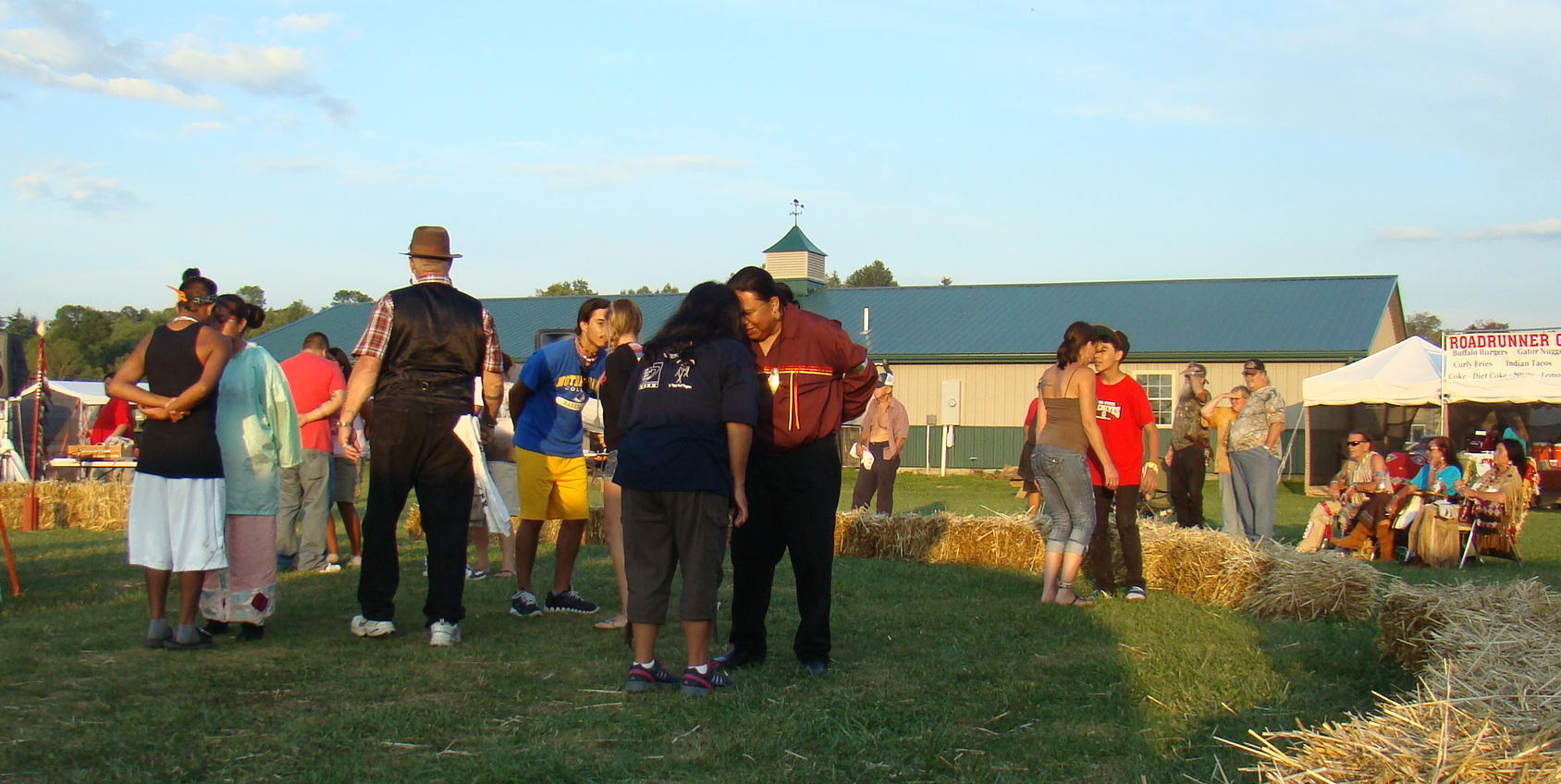
Native Americans are proud of their heritage as was witnessed at the gathering of tribes near Senecaville, Ohio at Buffalo Hills Resort.  Indian Pow Wows join together tribe members  for dancing, singing, socializing, and most of all, honoring their Indian culture. This seemed like the “real thing” as Native Americans congregated for their own enjoyment, not just entertainment. Any lessons learned by White Man were considered a bonus.

Did you ever taste Frybread? Native Americans will often remark, “Frybread is the story of our survival.”  Over a hundred years ago when the US forced Indians to take “The Long Walk” from Arizona to New Mexico, they nearly starved in their new landscape. To keep them from starving, the US government gave them flour, sugar, and lard – the makings of frybread, which later led to various health problems. At the Pow Wow, authentic Indian food was served by concessions and Frybread was delicious either served as the base for an Indian Taco, or covered with sugar and cinnamon. Also on the menu were Buffalo Burgers and Gator Nuggets on a Stick, with Snowballs for dessert.

Native costumes caught the eye of visitors as Indian maidens seemed to float over the ground with their smooth movements.  Delicate woodland flowers and vines added beauty to the deerskin dresses, as did the unusual jewelry made with the help of Mother Nature. Necklaces and bracelets were designed from acorns, spices, dried corn and seeds. This beautiful maiden was called Gentle Dove and said to be a Messenger for Love and Peace.
A circle of baled hay made a comfortable place to observe the Indians’ presentations. In the afternoon an entertaining storyteller told traditional Indian legends, most of which centered around animals.  All their stories have special meaning, and hopefully an effect on the listeners. The story of a Snake taught children to beware of wild animals, while the adventures of Bear and Rabbit with Buzzard described why Buzzard has a deep mark on his face to this day.

John Red Deer filled the spot of medicine man for the day with his extensive knowledge of herbs for healing. While there were many interesting items in his display, the popular 7 Grandfathers All Purpose Salve topped the list. As you can see from the sign, it can be used for many different ailments as well as a detox. John Red Deer feels inspired to make this in cream, liquid for detox, and even in stick form to carry with you for cuts and bites.

Peppermint and Spearmint form the base of this magical salve plus seven other herbs, which he feels he will reveal soon so others can carry on his work. Plants are harvested as he is guided by the voice of Spirit, and later the herb combination is brewed during the Summer Solstice.  This time of solar and lunar infusion gives the perfect blending of the herbs. A severe storm this year, while he was making the salve, produced two hours of intense energy, which John Red Deer felt increased the strength and effectiveness of that salve. His plans are to make a medicinal soap in the near future.

With the drums and flutes of Southern Pine in the center of the circle, the evening dance was a pleasure to watch.  Leading the procession of dancers were Native Americans carrying the USA flag, an MIA flag, as well as their traditional eagle staff with an eagle head on the top. The opening prayer was given first in Choctaw language, followed by English.

Songs were sung to relatives who had passed on to another world and veterans were honored with the blowing of the eagle whistle. Beautiful dresses filled the center and individual dances were performed.  The Jingle Dress glistened in the sunlight and jingled to the beat of the drums.

To close the evening, couples did a Potato Dance with a potato held between their foreheads as they constantly moved to the music. The last couple to keep the potato from dropping to the ground was the winner of a small monetary prize.

Find an Indian Pow Wow in your area to attend so you, too, can learn of the American Indian traditions. While sometimes stories are heard about the Indian attacks long ago, they basically wanted to be peaceful people and enjoy their style of life in the quiet of their homes.  Imagine sitting in the woods with the drums beating, chants filling the air, and the Spirit surrounding you. That’s the way life is meant to be!

Buffalo Hills Resort encompasses over 300 acres in southeastern Ohio making it one of Ohio’s largest campgrounds. Campers have their choice of primitive camping, parking for their RV, as well as cabin or perhaps teepee rental.  While it isn’t far from the interstate, it is definitely peaceful country and near Seneca Lake. Leaving I-77, take exit 37 to the East  (State Route 313) until you come to the four-way stop at Senecaville.  Make a right hand turn on State Route 285  then shortly a left at the fork on State Route 566, also called Opossum Run Road. After a couple miles, campers will find Buffalo Hills Resort on the left hand side.  

The International Peace Garden May Peace Prevail on Earth

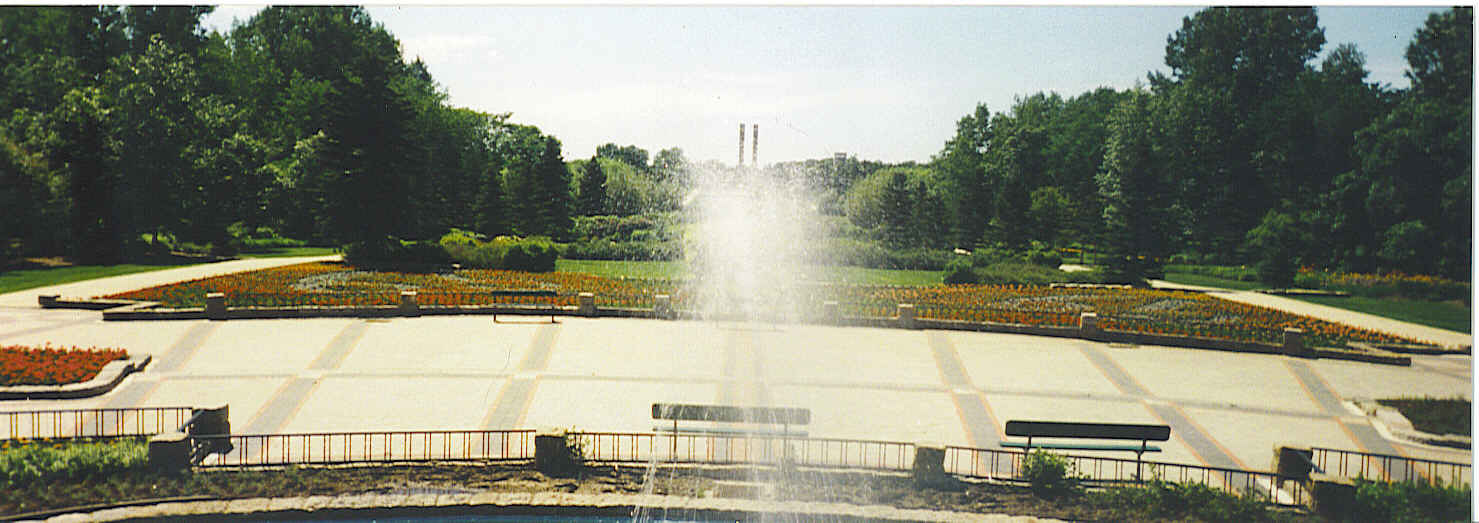
Opened on July 14, 1932 the International Peace Garden on the border of Canada and the USA near Dunseith, North Dakota is the world’s largest unfortified border, “Like No Other Place On Earth”. It encompasses 2,300 acres of botanical gardens and on a stone caim on the border are inscribed these words:

TO GOD IN HIS GLORY,
we two nations
dedicate this garden
and pledge ourselves
that as long as men
shall live, we will
not take up arms
against one another.

What a great thought all those years ago as a symbol of friendship between the two nations.

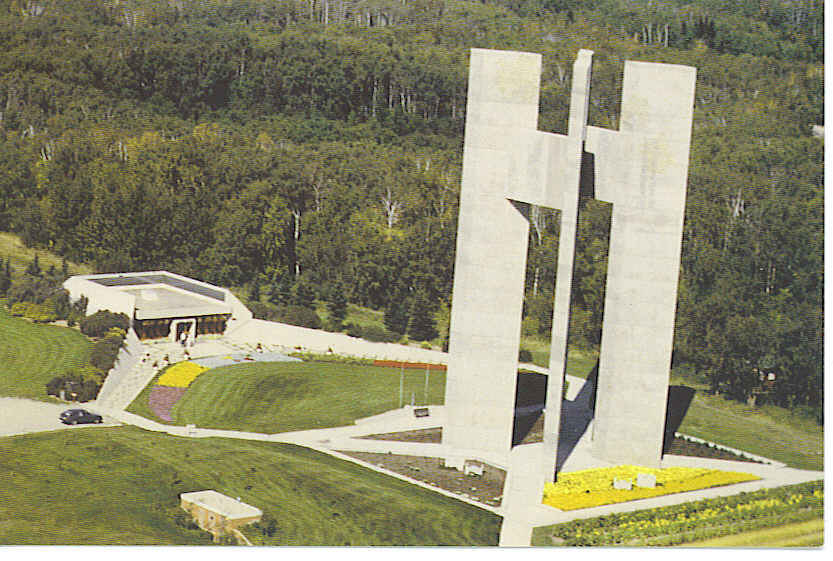
The sounds of bell chimes faintly echo every fifteen minutes from the Veterans Memorial Bell Tower.  The nearby 120′ concrete Peace Tower has four columns symbolizing the four corners of the world from which thousands of immigrants arrived in Canada and the United States to make better lives for themselves. Two of the columns are in Manitoba, Canada while the other two columns are in North Dakota.  The foundation symbolizes one solid base of democratic beliefs between the two countries.

The Peace Chapel provides the perfect place to sit down and relax, meditate, or read the positive thoughts written on the walls. The Peace Chapel has been a long time project of area members of the Order of the Eastern Star and is the only building which straddles the United States and Canadian border. While the chapel is a simple building, the addition of amber glass windows from France gives it a soft, golden, peaceful glow.

The three encircling walls into which quotations have been engraved were one of the special features that grabbed my attention. All quotations were either spoken or written by great men of peace throughout history. Some of the limestone walls still have embedded fossils of strange marine life, which had been molded into the bed of a tropical sea in the Manitoba region millions of years ago.

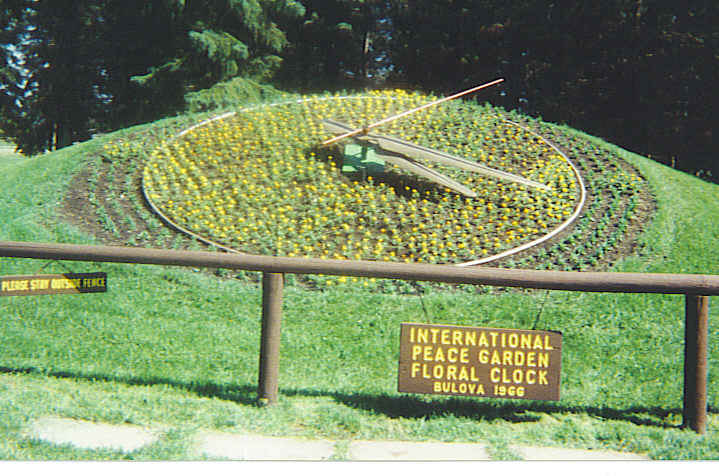
Flower beds are around every corner here, but two displays that have been constant from the beginning are beds forming the United States and Canadian flags.  A beautiful International Peace Garden Floral Clock actually works and was originally donated by Bulova in 1966. This original was designed as a replica of the famous Bulova Floral Clock in Berne, Switzerland, but inner workings were replaced in recent years by a clock from St Louis, Missouri.  The clock contains over 2,000 flowers with the design changing yearly, and reminds visitors to take time for the peaceful feeling surrounding the gardens.

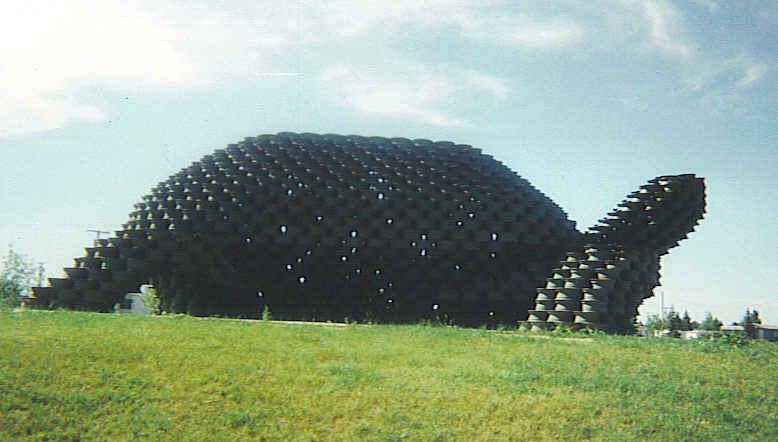
Just down the road in the Turtle Mountains near Dunseith, North Dakota is the largest man-made turtle in the world. Constructed of nearly 2,000 wheel rims, this “W’eel Turtle made from Wheels” has a head that actually bobs up and down. While the turtle is nearly forty feet long, its head alone weighs almost a ton! Stop and visit this tire rim sculpture at Dale’s Thrifty Barn – a gas-station, cafe, and motel in Dunseith, North Dakota. Little extras like this always bring a smile.

Turtle Mountains seem to be a perfect location for the International Garden of Peace as the slow movement of the turtle gives a relaxed and peaceful feeling just like the gardens. May peace prevail in your world as well. We should all attempt to be more like the turtle… at ease in our own shell.

The International Peace Garden in North Dakota can be reached by taking I-29 North in North Dakota to Exit 203.  Take Route 81/281 West to Dunseith where 281 bends North to the Canadian border.  This is a beautiful back-road drive away from the crowds.

The Town Too Tough To Die Tombstone, AZ

“The only rock you will find out there will be your own tombstone,” was the advice given to Ed Schieffelin when he headed to the mountains of Arizona to hunt for ore samples.  When Schieffelin filed his first claim after discovering silver, he suitably named his first mine Tombstone, and organized the Tombstone Mining and Milling Company.

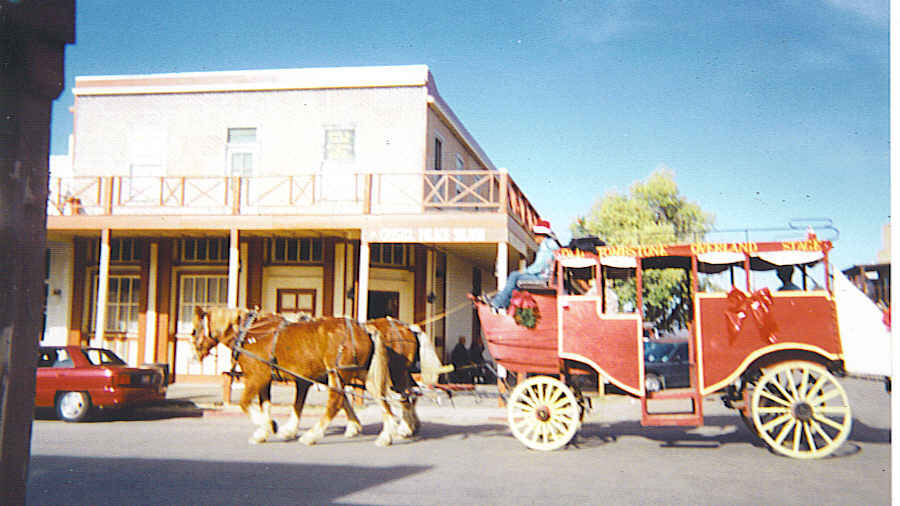
If you want an informative trip through Tombstone, Arizona, hop on the guided horse-drawn stagecoach tour. Here you will hear the basic history of the town with lots of humorous stories thrown in. Don’t be surprised if you see a gunfight or stagecoach robbery along the way. Then you can walk or ride to your favorite places throughout the town for a closer look.

The stagecoach is pictured in front of the Crystal Palace Saloon, which was originally built in 1882 but restored in 1963.  Prominent citizens of Tombstone liked to congregate here as the saloon was know for its “Good Whiskey, Tolerable Water, and Best Food in Town” as well as an honest gambling room. Add to that the fact that upstairs were located offices that furnished all the latest news, and you can see why it was such a popular spot. The second floor contained offices of Marshall Virgil Earp – in the front, Dr George Goodfellow, leading surgeon, and Atty George Berry.

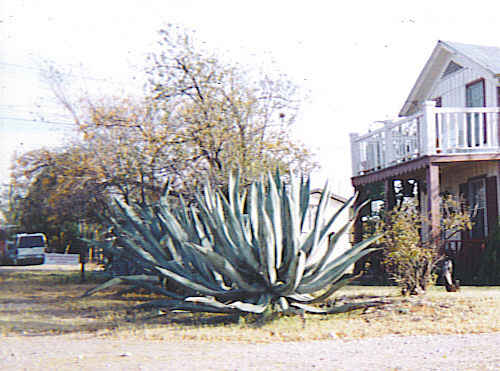
Since plants are one of my pleasures, couldn’t help noticing this huge century plant located in a resident’s yard. This plant’s name is derived from the fact that they only bloom once in a long, long time, but not quite a century. Usually they grow for around twenty five years before the plant puts forth its tall wooden seed stalk filled with blooms.  This blooming spike grows so fast that it takes all the nutrients out of the plant causing it to die.  But the seed lives on!  These plants are used for their medicinal properties, fiber, food, and even needles.

As you can imagine this was rough territory with tough, lawless characters calling it home. Being only twenty miles from the Mexican border, a group of bandits called The Cowboys, led by Billy Clanton and the McLaury brothers, began rustling cattle from Sonora, Mexico to the fields near Tombstone. That brought lawmen onto the scene in the form of the Earp brothers. The Cowboys were welcome in town since they spent a lot of money there, but shootings often occured. Here you will also find The Hanging Tree, which was used for executions when the gun just wasn’t enough punishment.

Early in 1881 however, one story reports that The Cowboys attempted to rob a stagecoach of $26,000 worth of  silver, and killed two passengers. The events that ensued culminated in the now famous Gunfight at the O K Corral where US Federal Marshall Virgil Earp, his brothers, Wyatt and Morgan, and Doc Holliday shot and killed three of The Cowboys.  They are buried today on Boothill, one of the city’s most popular tourist attractions.

Boothill reportedly received its name because so many died violent deaths in that area and were buried with their boots on. Wording on the tombstones tells a lot about the life of those times. Some simply say: MURDERED or HANGED. The tombstone of Lester Moore is one of the most often viewed and remembered on Boothill as it has the epitaph:

HERE LIES LESTER MOORE, 4 SLUGS FROM A 44, NO LES NO MORE

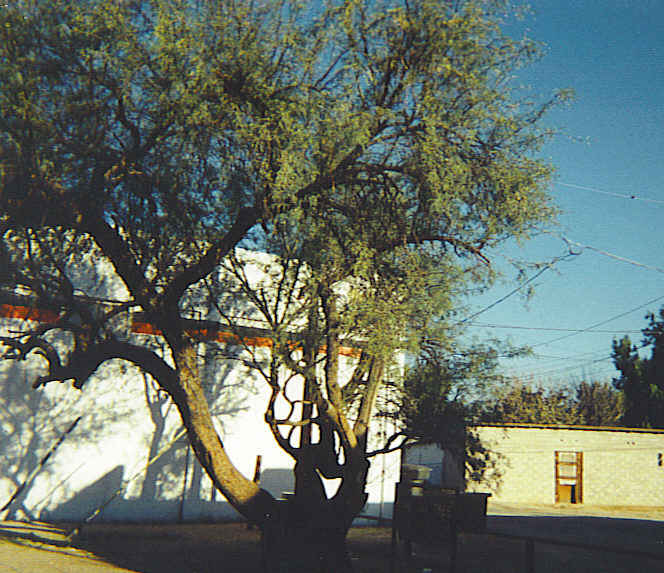
The world’s largest rosebush is also in Tombstone so growing conditions must be exceptional. Planted in 1885, this Lady Banksia Rose covers the roof of an inn as well as this terrace. The trunk of the rose bush is twelve feet wide, which you may be able to spot in the shadows. That rose bush must also have been Too Tough To Die.

Since 1880 until the present day, the local publication, The Tombstone Epitaph…The Old West’s most famous newspaper, has kept locals and visitors informed regarding what’s happening in Tombstone. There are now actually two editions: a monthly historical national and a bi-monthly local.  Check out some of their historical issues at The Tombstone Epitaph online.

Even though this two-fisted, trigger-happy boomtown has settled down quite a bit, Tombstone is proud of its Wild West history.  This is a real town with real inhabitants today and in the past.  That is why they are pleased to call it: The Town Too Tough To Die.

Tombstone is located in the southeastern corner of Arizona, just 70 miles from Tucson. Follow I-10 to exit  303 and head southeast on route 80 for about 23 miles. If time permits, head on down to relaxing Bisbee and tour their Queens Copper Mine, one of the richest copper mines in history.

Mysterious Bigfoot Legend – Skeptic or Believer?

“Absence of evidence is not evidence of absence.” This quote from distinguished astronomer, Dr Carl Sagan, is popular with Bigfoot investigators. They are still searching for more clues that will prove their Bigfoot theory.

Guernsey County, Ohio is one of those “hot spots” for Bigfoot investigators.  Annually, the Ohio Bigfoot Conference gathers informative speakers to share their adventures with the gathering crowd.  The 2012 conference was held at Pritchard Laughlin Civic Center near Cambridge, Ohio after previously being held at Newcomerstown and then Salt Fork Lodge. The move was partially made to accommodate the growing attendance as last year at Salt Fork they overflowed the conference room and many were  forced to watch the program on big screen TVs in the lobby.  The Bigfoot enthusiasts have increased from less than a hundred in 1989 to over seven hundred at present.

The goal of the Ohio Bigfoot Organization is to find, recognize, and protect what many believe to be an unclassified primate, commonly known as Bigfoot, and residing in North America.

A highlight of the meeting this year was the appearance of legendary Bigfoot seeker, Peter Byrne, who fascinated visitors in the lobby with his Bigfoot stories. Peter, the star of the show, has led professional expeditions in search of Yeti and Bigfoot.  His book, The Search for Bigfoot, tells of his fascinating life exploring since 1946 in the Himalayas for Yeti, the Himalayan version of Bigfoot.  Even though he is 86 years old, Peter still has a curious mind and continues his search for Bigfoot on the Oregon Coast.

Before the scheduled speakers, curious visitors checked out tables in the lobby with lots of unusual items. Of course, there were videos of possible sightings as well as plaster casts of large footprints left behind by something or someone. Lengths of these footprints average about 16″ long, but some range up to 22″, and are much wider than a human footprint.

Soaps and lotions carried the name Sasquatch, the Canadian Bigfoot rendition. One popular soap made in Canada bore the title Sasquatch Sweat Soap – Guaranteed not to grow hair. Sasquatch Sweat Cream was also available. Not certain if their purpose was to repel or attract Bigfoot.   There were even cookies for sale shaped like…yes, you guessed it, Bigfoot.

The first speaker of the day was past president, Don Keating, who led this conference for 23 years. He first heard of Bigfoot in 1984 from a story in the Newcomerstown News that told of strange sightings of a large, hairy creature in and around the Newcomerstown area. Later Don began investigating some of the unusual sightings he heard from neighboring Guernsey County as well – glowing red eyes, large footprints, and very tall creatures.

Salt Fork Lake area became one of those places where frequent strange events seemed to occur. Often something eerie seemed to be happening at Hosak’s Cave in the late evening hours, especially when there was a full moon.  For their safety, people were even strongly advised to leave the area by park rangers.

When Don Keating said he was leaving his president’s position to devote more time to his weather research, someone in the audience asked an interesting question: “Do you find predicting the weather a lot like investigating Bigfoot?” To which Don answered, “With both, you put your neck on the line.”

Grabbed a Bigfoot cookie to munch while listening to additional speakers which included: Dr John Bindernagel, wildlife biologist; Bill Draginis, surveillance and security expert; and Mike Esordi, crypto zoologist with artistic abilities. All are active in Bigfoot research and frequently share their knowledge through lectures around the world.

Whether you believe in the existence of Bigfoot or not, you could hear some interesting adventures at the conference. Maybe some evening you will want to spend the night at Salt Fork State Park. If you listen carefully, you might hear strange calls, branches breaking in the woods, or rocks being thrown into the lake. Could these sounds be made by Bigfoot?  Keep your eyes and ears open!

Salt Fork State Park is located just five miles north of Cambridge, Ohio just off Route 22. I-70 and I-77 intersect close by so you will have easy access to the area.  While in town, stop at Mr. Lee’s or Theo’s Restaurant as both have delicious home cooked meals at reasonable prices.

Amazing Scenery Along the Pacific Coast Highway

The surprises kept coming on the beautiful Pacific Coast Highway, which began in Washington and continued along the edge of the Pacific Ocean through Oregon and California, stopping at San Diego. Meandering roads kept driving speeds at 15-20 mph, or perhaps it was partly due to the spectacular views. When driving and watching the scenery at the same time, slower speeds were definitely required especially with many steep cliffs at the ocean’s edge.

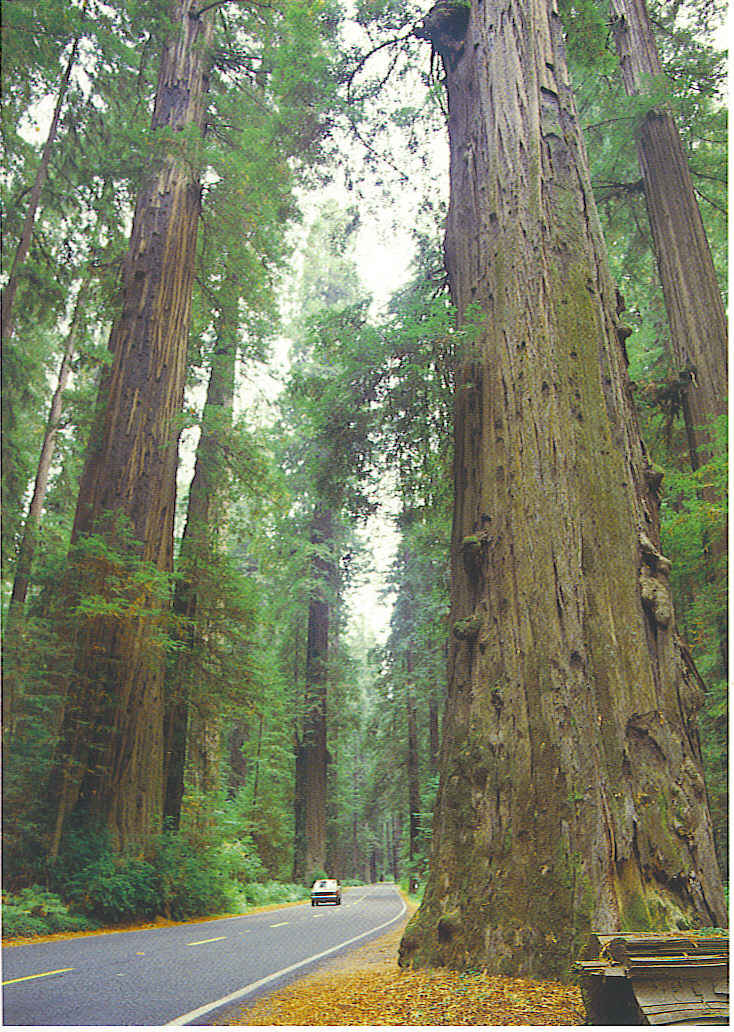
With beaches galore and piers aplenty, Pacific Coast Highway, also known as America’s Most Beautiful Drive, renewed your spirit and your senses, as you encountered many unusual scenes along the way. This curving highway passed right  through the awesome giant redwoods on a stretch called Avenue of the Giants.This was the place where trees were large enough for a car to drive through or even have a gift shop inside. Words can not describe the wonder of these giants as you attempted  to look skyward  to see their highest branches. These towering trees, rock formations and ocean waves made you realize the power of Mother Nature and the role she plays in our beautiful world.

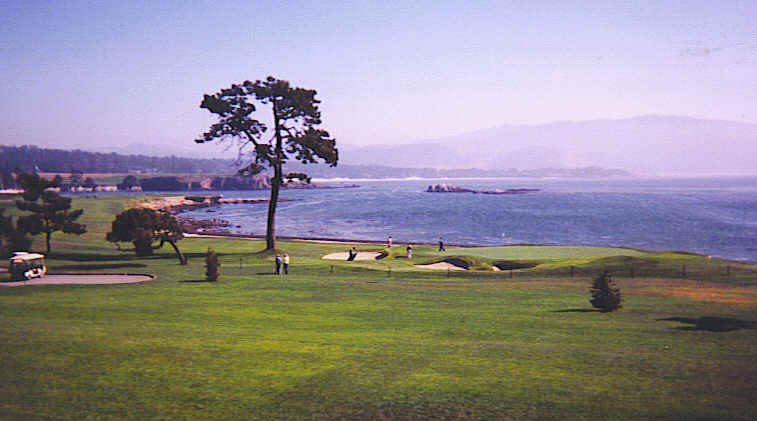
Even on a foggy morning, the picturesque combination of mountainous cliffs  on one side, and the waves crashing against the rocks on the other, made your heart beat just a little faster. After spotting a sign that said Pebble Beach Golf Links, thought the golfers in my family would be happy to know I stopped for a visit, as this is home to some of the world’s most prestigious golf tournaments.  Evidently it was a day without a tournament scheduled, as admission was granted to drive up to the luxurious lodge and even to walk on the course. My camera definitely wanted to snap a picture of the famous 18th green to prove my story wasn’t fiction.

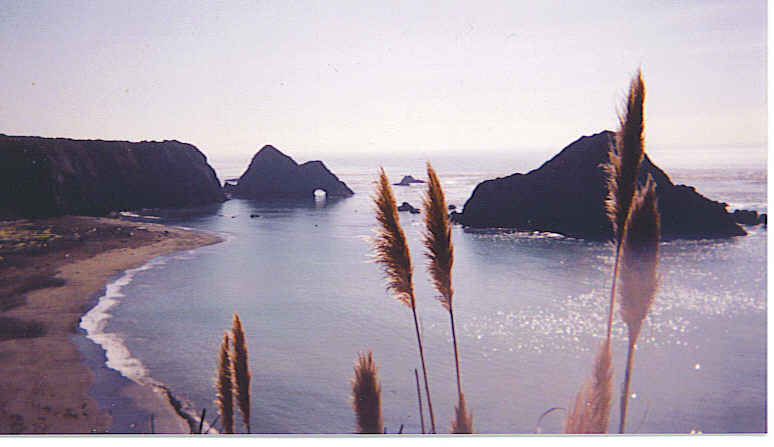
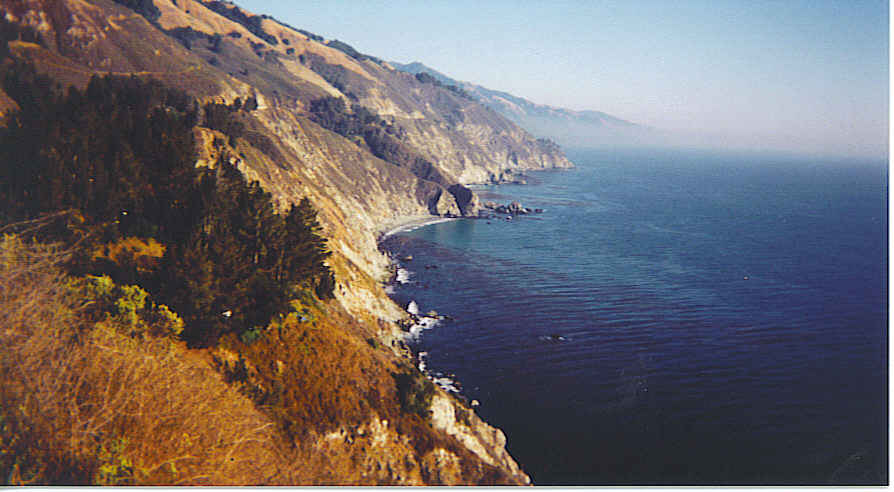
Near Big Sur the mountains seemed to plunge into the Pacific. Unusual black rock formations rose out of the water to create amazing and different views around each bend of the road.  . These towering black rocks made a sharp contrast against the constant waves of the Pacific and the blue sky. Surfers in their wetsuits rode the waves and kayaks bounced across the ocean. A couple young men enjoyed hang gliding and the winds must have been perfect that day as they were airborne  for a very long time.  Might have to try that on another trip to experience the sensation of flying! Everywhere you felt the happiness of people relaxing from the cares of the day.

There was no resisting the temptation to find a place to pull off the road and walk on the beaches. Leave your shoes behind so you can feel the power of the waves wash over your feet. Two golden labs approached with a frisbee in their mouth so ended up the day playing catch with the labs.  Memories of the ocean will live on, long after the footprints in the sand are gone.

The Pacific Coast Highway, Highway 1, begins in Oxnard, Washington and continues along the coast through Oregon into California all the way to San Diego. Sometimes Highway 101 bends inland so watch carefully if you want to enjoy the scenic journey along the coastal region.

Go To Hells Canyon

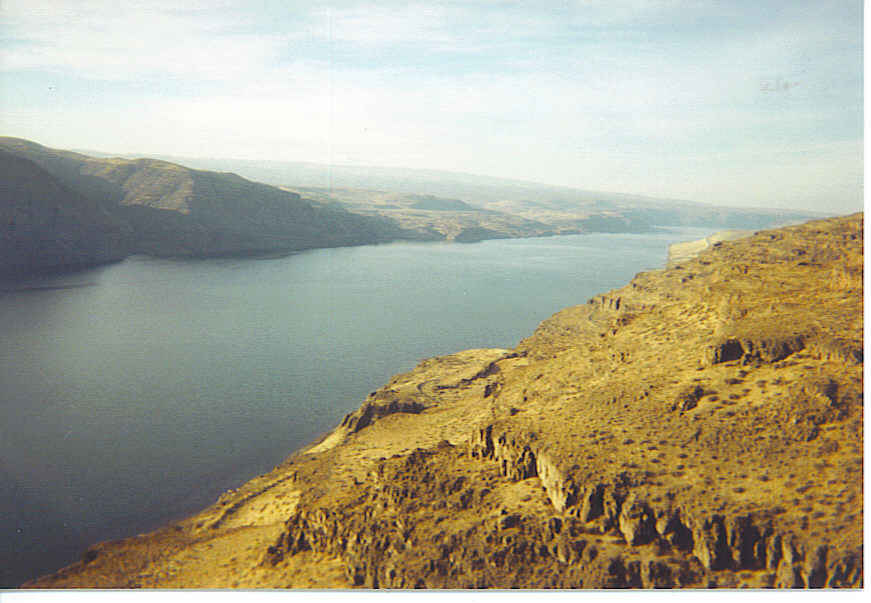
Come discover a place where time stands still as you descend into Hells Canyon carved by the great Snake River. As you drive down into the canyon, quiet and beauty surround you. Here is the deepest river gorge in North America with heights of up to 9000 feet surrounding you. It can be approached from either the Idaho or Oregon side, but this day the approach was from Idaho Highway 86.  You will eventually find yourself driving on the famous Canyon Scenic Byway, “Devil’s Tail”, also known as National Forest Road #454, leading to Hells Canyon Dam at the end of the road.

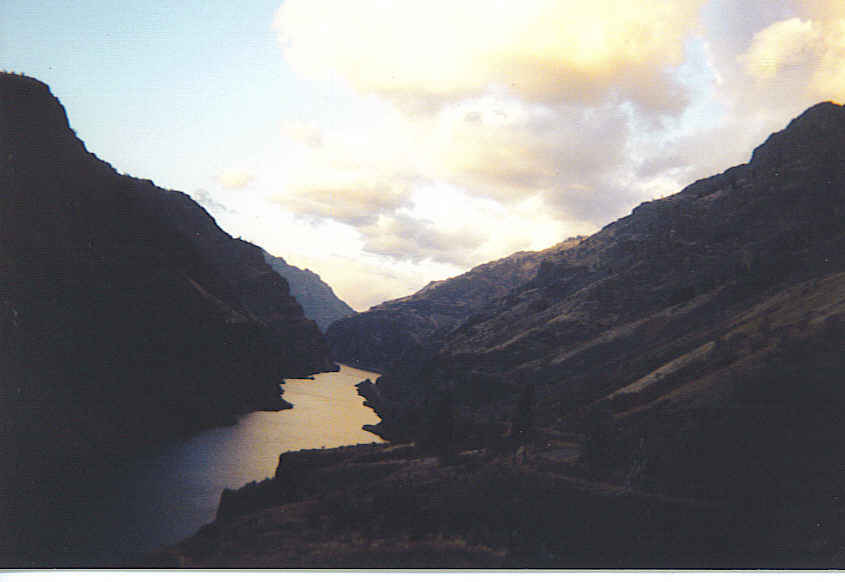
Scenery was awesome and it seemed impossible to capture the towering feeling that surrounded you as you drove along the Snake River in the bottom of the canyon. This canyon separates Idaho from Oregon in a most spectacular way.

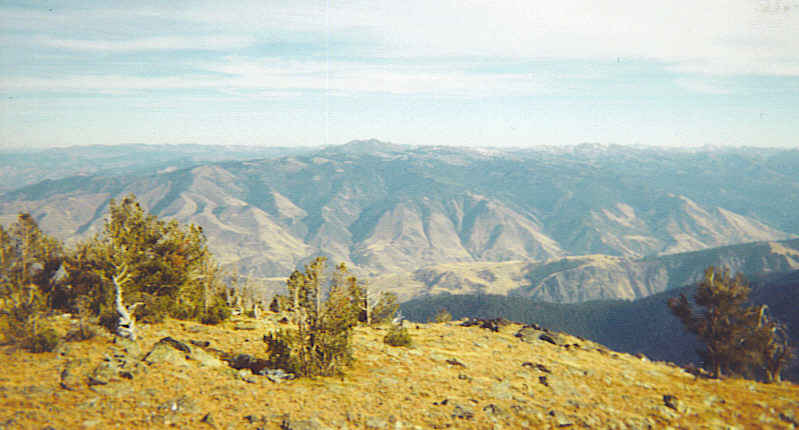
The forest road along the top of Hells Canyon was a one-lane dirt road, which was rugged and steep and took several hours to ascend.  Towards the top, the road was covered with a light coat of snow. The last 350 yards had to be traveled on foot in order to arrive at Heavens Gate where the altitude was 8,690 feet and the scent of pine hung thick in the mountain air. The foot path was rough, but the view from the top was breathtaking, my favorite view of the canyon.

From this point, you could see the snow covered Seven Devils Range and the Snake River. There are actually twenty peaks in this range with He Devil and She Devil being the highest, both at about 9400′. At one angle you could see four states: Idaho, Oregon, Montana, and Wyoming.

Back in 1955. Idaho Power Company began construction of a three dam project in Hells Canyon. First a road had to be constructed and even then couldn’t bring in all the needed supplies. Helicopters were used to bring in tools and equipment as well as help with erecting the transmission towers that carry the power out of the canyon to the Oregon side. Finally, we reach the end of the 22 mile road and cross over the dam to the Oregon side where the Visitors Center is located.

On close observation, the rugged rock walls of the canyon are like a museum with pictographs and petroglyphs left over from the time when Chief Joseph’s band of Nez Perce Indians lived there.  Some say part of the petroglyphs date back possibly 15,000 years. Nez Perce Indians  enjoyed the mild winters here as well as the lush foliage and plentiful wildlife. The Snake River provided abundant fish as well as goods they would be able to trade.

Later, in 1895,a cargo ship captain, named Haller, met with rapids more dangerous than expected. Either because of people discussing his adventure in Haller’s Canyon, or perhaps what the captain said when he got in this dangerous situation, the name Hells Canyon stuck. The precipitous mountain sides and the wild rapids seem to reinforce the idea that the name chosen was very fitting.

There is only one way back out of the canyon from the dam, and that is back the same 22 mile road that was originally used to enter. But now it is dusk and the drive out will be a careful one, driving slowly because of the sharp curves and always being aware of dodging fallen rocks either in the air or on the rugged highway. Be sure to keep your eyes on the road and stop when you want to really enjoy the scenery.

Today this magical place is great for whitewater rafting, jet boating as well as fishing excursions. Just being here makes you look at the world with a different perspective. Great spot to relax and leave your worries behind. See you in Hell’s Canyon!

Hells Canyon can be reached from I 84 in Idaho at Exit 304 Hells Canyon/Weiser Road. Follow the signs for the Canyon Scenic Byway and enjoy the adventure.

Slab City in the Chocolate Mountains

“We like it here and we ain’t goin’ back.”  Residents of Slab City in Southern California enjoy their life of freedom where the air is clean and rent is free.

Sandwiched between the Salton Sea and the Chocolate Mountains, Slab City is home to many campers.  Here they don’t care what you look like or where you came from. Everyone is welcome! Campers come on dirt bikes, in RVs and even greyhound buses to park on this hidden desert city.

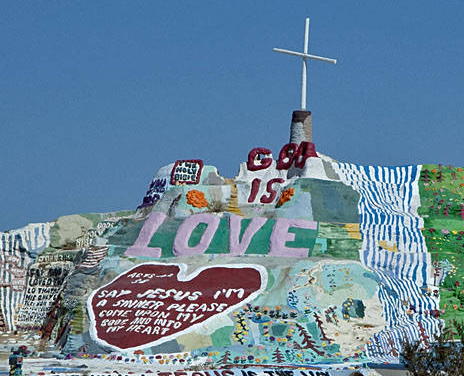
At the entrance to Slab City, you will find Salvation Mountain where the sides are painted with religious pictures and verses to inspire the freedom that is advocated here. Leonard Knight has been painting and repainting this mountain since 1985.  If you like his work and want to donate to the cause, a bucket of paint is his favorite contribution…acrylic is preferred.

As you travel back into Slab City,  you find campers set up on the concrete slabs left behind from the WWII training grounds. The Chocolate Mountains and a few creosote bushes add some beauty to this RV oasis in the middle of the desert. This is indeed rough living, even though free, as there is no electricity, running water, or bathroom facilities.  And the temperature is hot!  Those who stay either use a generator or solar panels to produce enough power to cook, or run a fan for their swamp cooler. Some even use that power to watch TV for a little while each day and have their satellite dishes located on top of their campers. Definitely not a place for those who like all the modern conveniences.

Entertainment seems to come in an easy manner to these free thinking people. Flea markets or swap meets are held most weekends. One camper even set up a library, as there is definitely lots of time to read a good book. In the evenings, those who have an instrument with them provide music with songs like: We Like It Here, Slab City USA, and Free Bird.

Marine Corps Chocolate Mountain Gunnery Range is located close by. This Gunnery range has been a training ground for Marine Corps and Navy pilots since WWII.   If you happen to stay at Slab City, you will hear the sounds of artillery practice throughout the night quite often.  Where Patton once ran his tanks, today folks race their four wheelers and dune buggies.

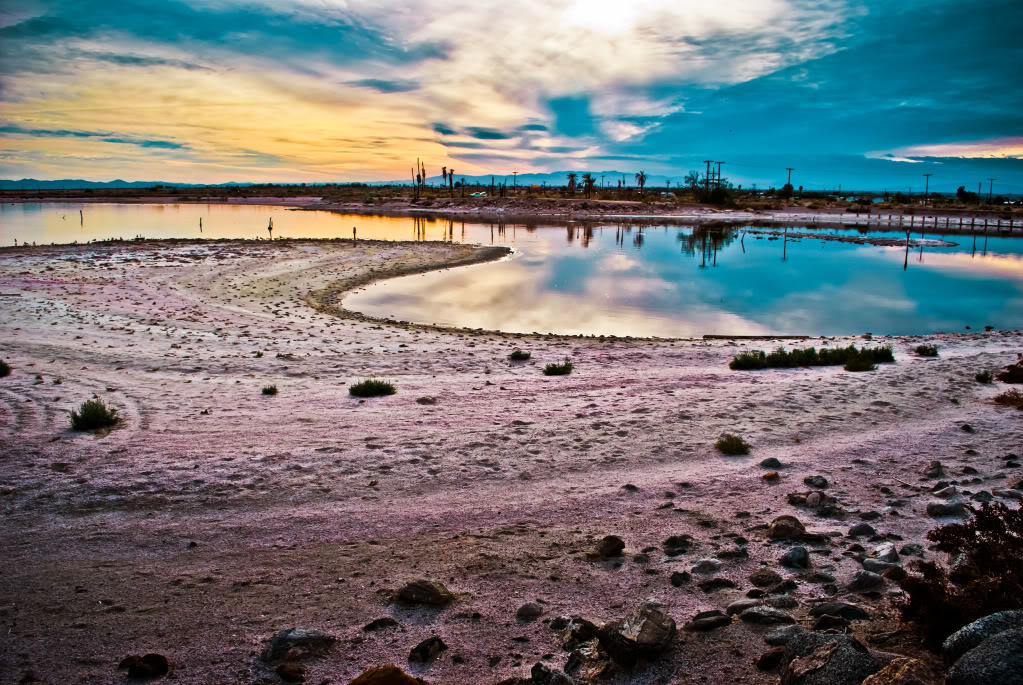
Nearby Salton Sea is one of the world’s largest  inland seas with its surface being 226 feet below sea level. Originally formed from an overflow during a heavy flood of the Colorado River into the Salton basin, this re-created lake in the Imperial Valley of California is located on the San Andreas Fault. This type of flood should not occur again due to the construction of Hoover Dam on the Colorado River in the Black Canyon. Since this inland sea has no fresh water supply except for the inch or two of rain each year, today this polluted sea seems thick enough to walk on!

There is a possibility that this area may soon be developed into a solar and geothermal energy site for much needed power for the California area.  This could power many homes and businesses! But environmentalists are concerned about the dwindling population of the Mojave Desert tortoise, the flat-tailed horned lizard, and the burrowing owl in that area.

If you happen to stop in a local tavern, you might hear this discussion regarding the protected environment. One slightly disheveled man of the desert will laugh and say, “The most amazing creature in the desert is the stick lizard.  Carries a stick in his mouth whenever the temperature rises above a hundred ‘n fifteen degrees.  Still he searches for food at high noon.  How does he do it?”

“Wow, how can he be out there at high noon?” ask the environmentalists.

“Well,” the desert man thinks deeply, “when the sand starts to burn his feet, he puts the stick in the ground so he can climb it. He just hangs there a few minutes ’til his feet cool off.  Ain’t many stick lizards left.  Definitely endangered.”

If you are tired of the city or your troubles are so many that you can’t list them, flee to Slab City where you are sure to be welcome!

If you are driving or hitchhiking to Slab City, it is located in the desert of Southern California just four miles east of Nilan off Route 111.  There is fairly easy access as it lies just north of I 8 and south of I 10.

Get Your Kicks on Route 66 in Oatman, Arizona

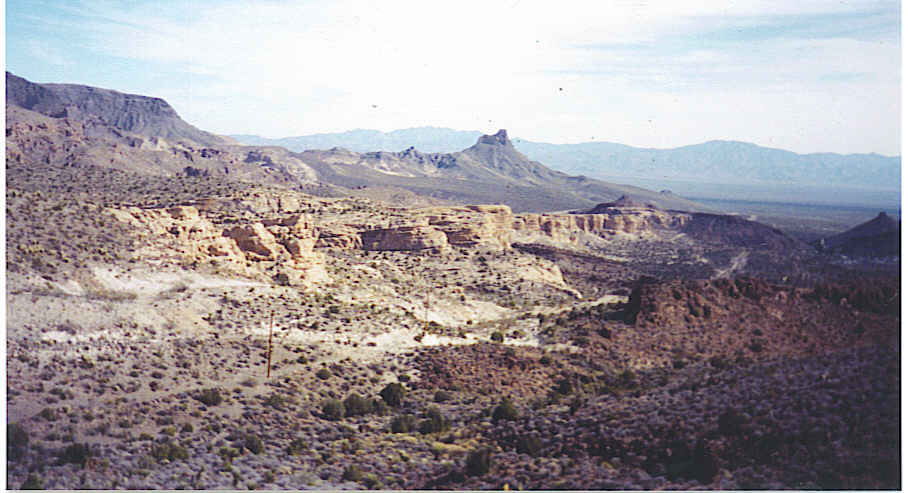
Spectacular Route 66 takes a lot of twists and turns as you travel through the breathtaking mountain vistas from Kingman to Oatman, Arizona.  Around every bend there is another beautiful view and not many cars, so you can move at a leisurely pace and even stop for pictures.

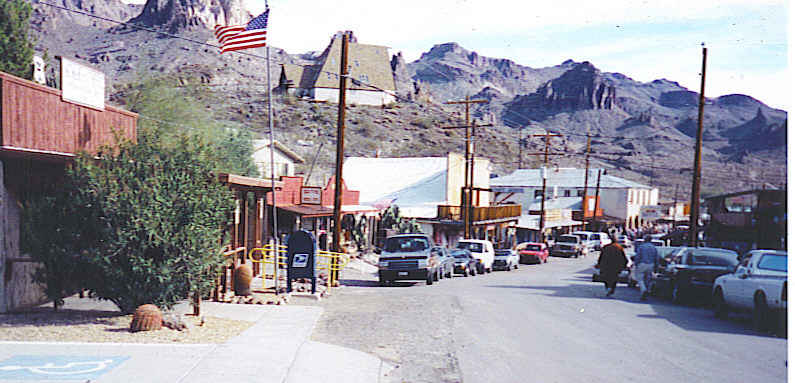
Best place to park is on either edge of this living ghost town and then enjoy the walk down the street. You will find many unique stores along the way such as: New Diggin’s, Classy Ass, or White Buffalo Trading Post.  Today there are only about 100 people that actually reside in the town although in its gold mining days population reached 3500.

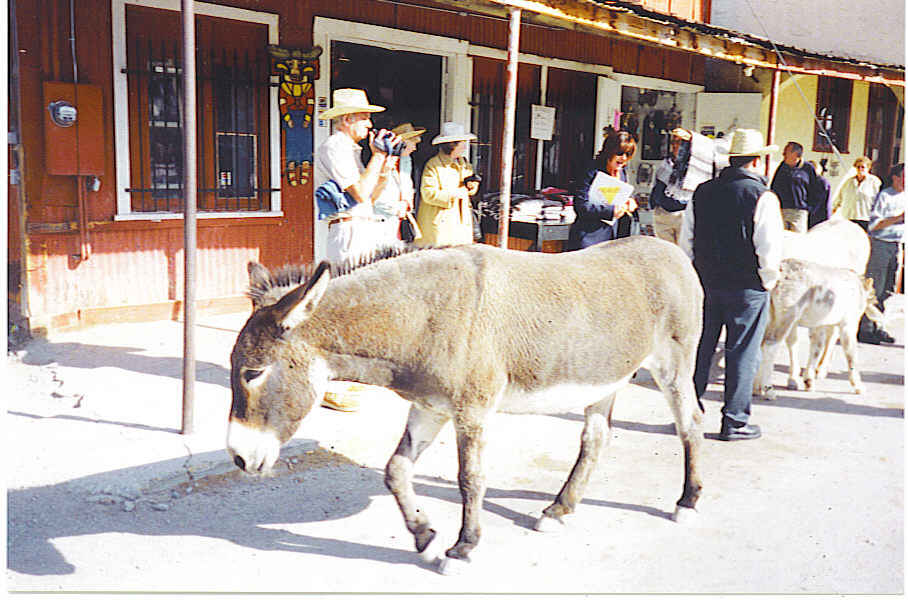
“Get your kicks on Route 66” is a familiar saying, but here in Oatman you have to be careful it isn’t a burro kick! Wild burros eating from your pockets or purse make it a challenge just to walk down the streets of Oatman, Arizona. That is the reason nearly every store has available carrots or “burro chow” at a small cost. The burros are descendants of the pack animals used by early miners in the area and turned loose in the 1940’s.  They are today protected by the US Department of the Interior.

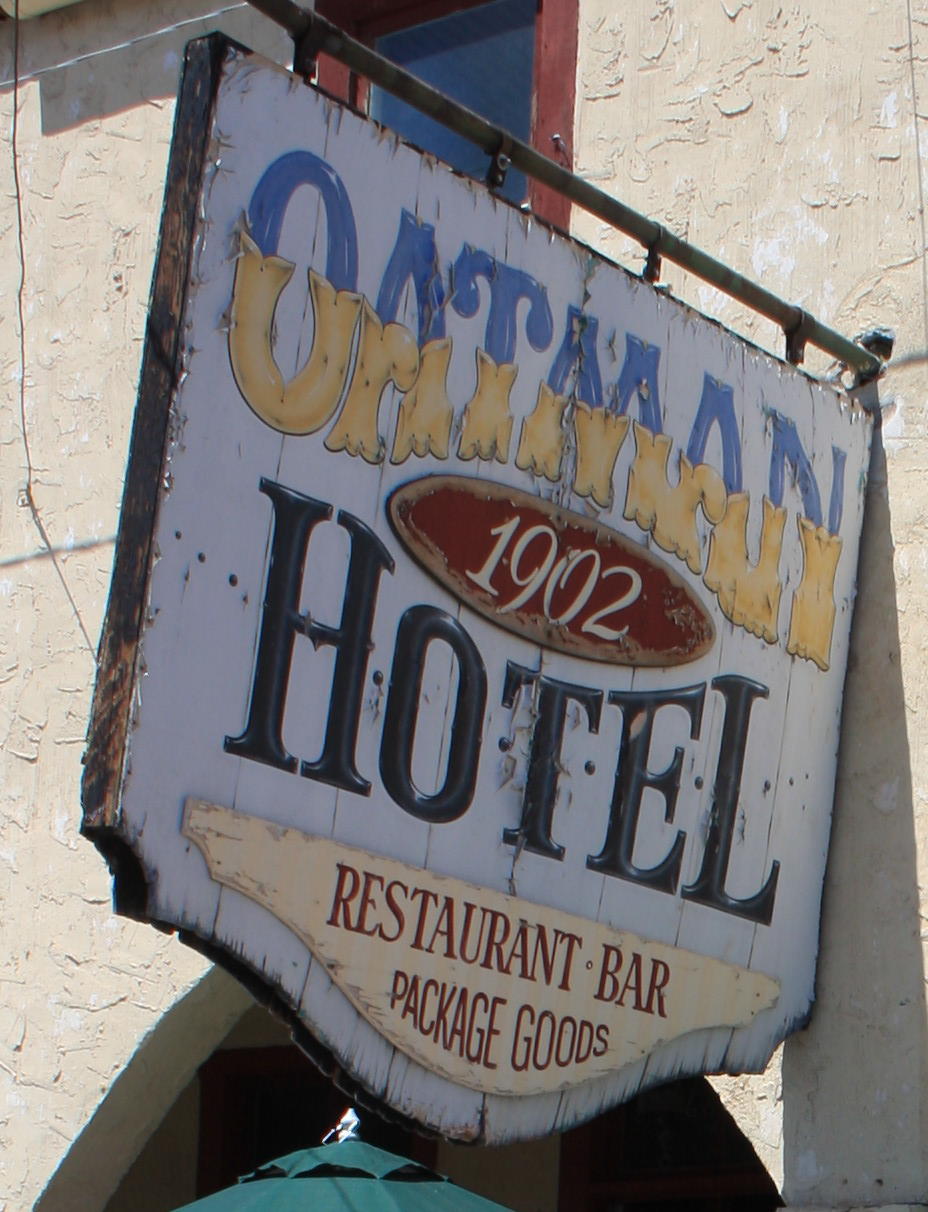
An old adobe two story building, Oatman Hotel, is the oldest building in town, having been built in 1902.  Now it is especially remembered as the honeymoon suite of Clark Gable and Carole Lombard in 1936.  Often they returned here for some peace and quiet, and Clark liked to play poker with the local miners. Their ghosts are said to frequent the place as witnessed by many guests.

On the weekends, you might be lucky and see a “Wild West” show on the streets. While visiting there, they held up a tour bus (they called it a stage coach) coming to town.   Stopped the bus with gunshots from the middle of the road, then boarded the bus to rob the passengers.  All in fun of course! This was followed by a gunfight in the street.

Lucky to have found a place to step back in history and get the feel of the Old West.  Wonder if my luck would continue in the nearby gambling town of Laughlin, Nevada?  Taking the shortcut over a thirty mile dirt road,  should be there in about an hour.  Hop in Lady Luck, let’s go for a ride!

Bishop Castle – One Man’s Dream

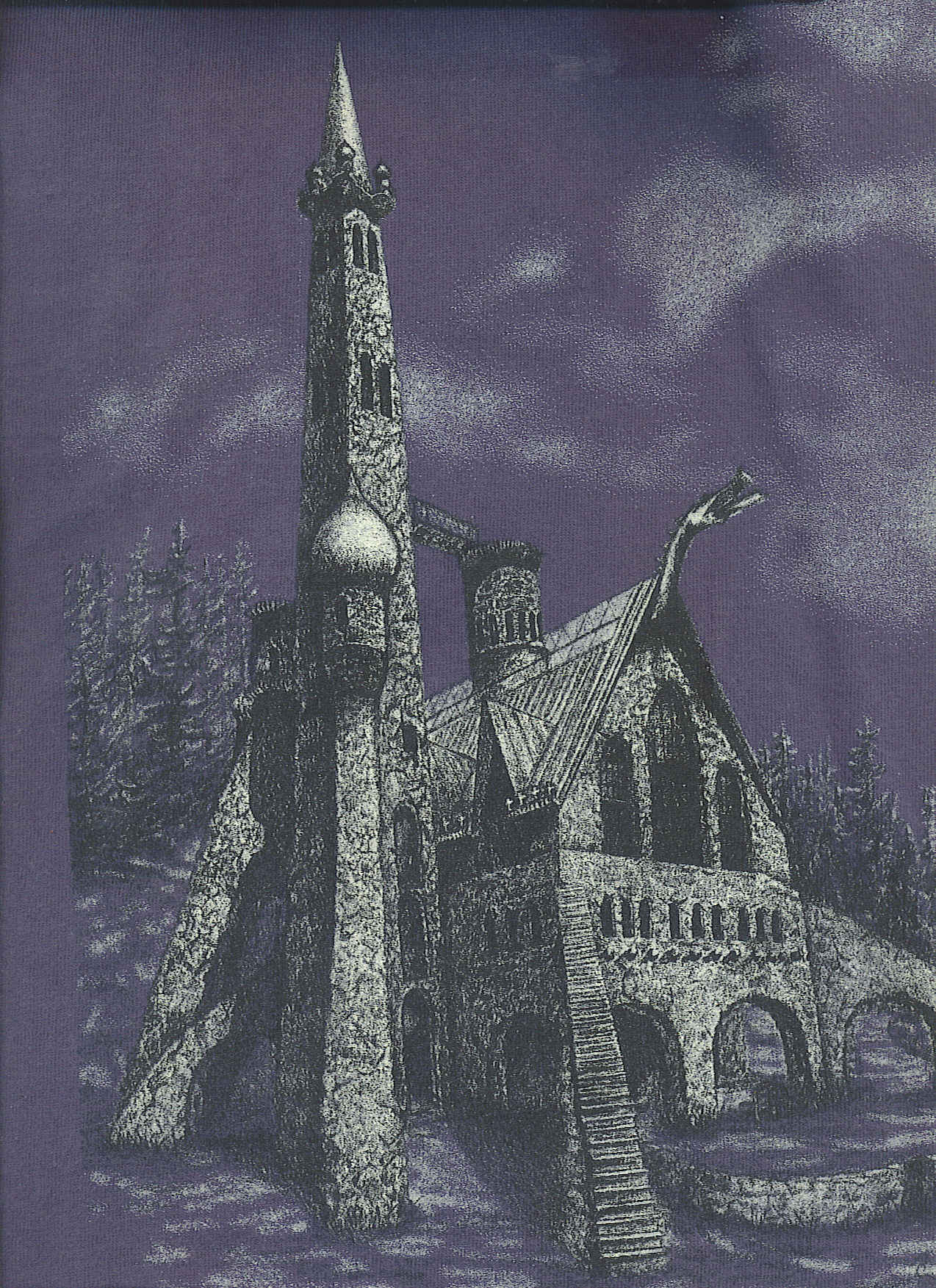
Bishop Castle: “The Largest One Man Construction Project in the USA,” and possibly the World! When you see this beautiful, magnificent castle, it is difficult to imagine that one man did all of the work.  Everyone has their dreams, but Jim Bishop’s dream turned out to be larger than most. Jim has never stopped working on his inspiration since 1969.

Located in the Rocky Mountains near Pueblo, Colorado, this 150 foot high castle is a treasure when discovered among the pines on a back country road.  Due to all the problems Jim had with governmental interference, you won’t find it listed in the Colorado travel literature.  After seeing several cars parked along the highway, your curiosity makes you wonder what the attraction is here, so you look a little more closely and discover a medieval castle peeking through the tree tops.

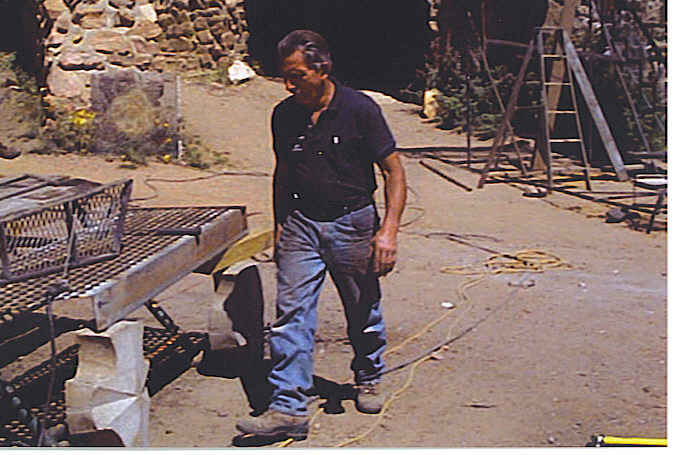
Jim works on his castle on weekends and more often during the summer.  His family also operates Eagle River Pewter in Pueblo, which explains the beautiful ironwork seen throughout the castle.  He is often seen strolling the grounds either on his way to add something to his castle, or to talk with visitors.  Seems like quite an ordinary guy with a huge imagination.

When Jim was 15 years old, he purchased two and a half acres for $450 at the edge of the San Isabel National Forest.  He had saved his money from mowing lawns, delivering newspapers, and working with his dad at the iron works. That is the year he dropped out of school as his English teacher told him, “You’ll never amount to anything, Jim Bishop!”  To begin withl the land was used for hunting and fishing, but then Jim decided to build a small cottage on the property. Since the Rockies were handy, stone by native stone was added and the beginnings of a castle rose from the forest.

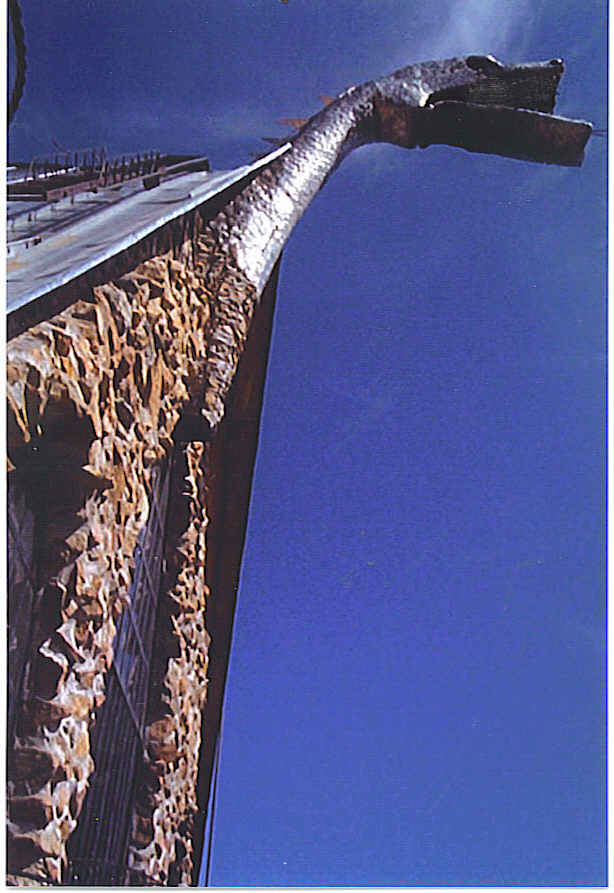
No castle would be complete without a huge fireplace, but this one had a unique feature as it vented through the head of a dragon made from recycled metal hospital trays.  Smoke escaped through the nostrils of the dragon’s nose.  Just for a little added excitement, sometimes the dragon breathed fire with the help of a burner from a hot air balloon.

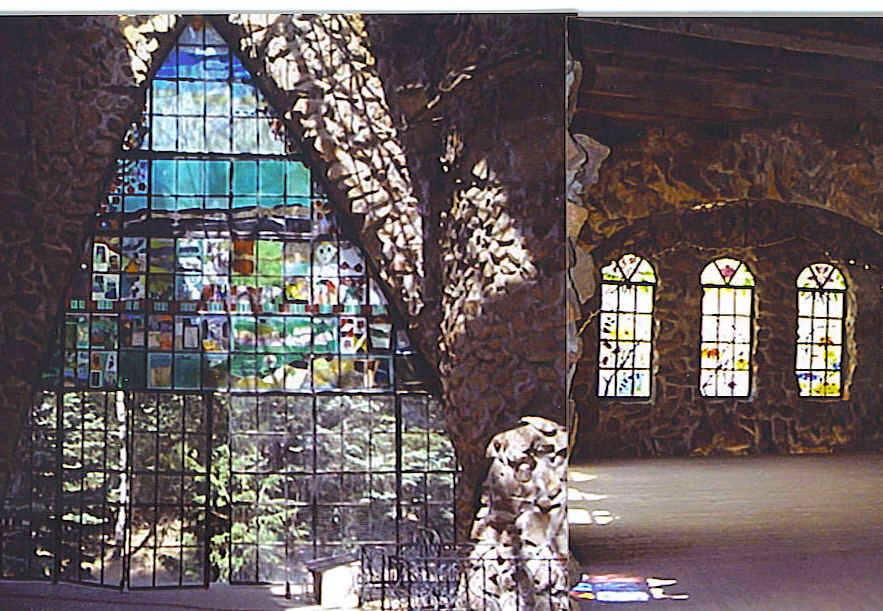
Inside the castle on the upper floor was a beautiful ballroom with stained glass windows, which were custom made by individual request.  Many of them commemorate a wedding held there or remember a loved one. A studio in Colorado designed the windows, and then Jim installed the stained glass beauty himself. He definitely lived by that old saying: “If you want something done right, do it yourself.” This is his unique work of art except for the wall around the water tank in the corner of the castle…his dad helped build that when Jim was first building the cottage.

The Gift Shop was the main source of funding for Bishop’s Castle as there was no charge for admission. Here you could purchase dragons, Renaissance and fantasy weaponry, Jim’s own ornamental ironwork plus all the regular gift shop items. Actually the picture at the beginning of this article is from a tee shirt purchased there on a Rocky Mountain trip.

Over the years, Jim had many legal problems with his building of the castle. At one time he posted a sign that said: Lawyers, Politicians, Bureaucrats, Gestapo  Most of you need to get an honest job.

While work is nearly complete on the castle itself after forty odd years, there are plans for a gatehouse as well as a fence around the castle. Jim has decided to let a few volunteers help him with this last phase of construction.  Men like Jim Bishop make you realize that even an ordinary man can make their biggest, wildest dream come true. Don’t forget to dream!