Places to go and things to see by Gypsy Bev

Archive for the ‘Back Roads’ Category

Life Lessons Learned at an Amish School

Coming together is a beginning…

Keeping together is progress…

Working together is Success!

Amish 9

Glen Rock Amish School was filled with peacefulness.

The above words caught my eye upon entering the Glen Rock Amish School near Adamsville.  The peacefulness filling the classroom was very noticeable and unusual for a school setting. Students and teachers talked in very soft voices to promote the calm atmosphere.

Being respectful of their beliefs, no pictures were taken of the students or teachers. A gas well on the property supplied fuel to heat the classroom. The solar panel on the school roof generated enough power to light the room well, and perfectly clean outdoor restroom facilities were located behind the school.

Amish 7

Student transportation to school waited just outside the door.

Students arrived in the morning by horse drawn cart or buggy. Older brothers and sisters were responsible for bringing young ones to school. They brought along their lunch buckets, which often contain a sandwich, cookie and fruit. An oven is available in the classroom if part of their lunch needs to be heated.

Amish 10

Lunch boxes and coats were just inside the front door.

School days last from 8-3, beginning in September through part of May.  One classroom holds 31 students from first to eighth grade, the last grade Amish children are required to attend. Three young teachers oversee their work.

Amish 1

Their classroom was extremely neat when they went to recess.

Another sign on the wall showed their deep base in religion as learning Bible verses is part of their curriculum.

Bible memories are ‘ beary’ good.

On the wall beside this saying, cards for each student indicated how many Bible verses they had learned.  German spelling papers hung on the walls as well, since they learn to write English and German, which is used in prayer and church services.

Amish 3

One student’s books included Math, Spelling and German.

With a few soft words from the teacher, students moved smoothly to one side of the room and shared the old traditional school desks with inkwell hole and pencil holder at the top, and fold down seat. Song books were passed down the rows and students joined in singing two songs of religious nature, one of them being ‘Mansion Over the Hilltop’.

Amiah 9

Their playground gave good opportunity to run off extra energy at recess time.

All of the students appeared to be in great physical condition.  The obesity problem noticed throughout the United States was not evident in this Amish school setting.  They did have a basic playground of merry-go-round, slide and swings, and the children eagerly ran outside to play.

Recess gave children a chance to play their favorite games. Older students played volleyball while the younger ones engaged in a game called “Rabbit”, similar to dodge ball, but with a very soft ball.

A hand pump supplied water for students and the classroom. They were eager to help others fill their personal cup with water using this hand pump. Behaviors, such as splashing or unkind words, did not exist on their playground.
Amish5

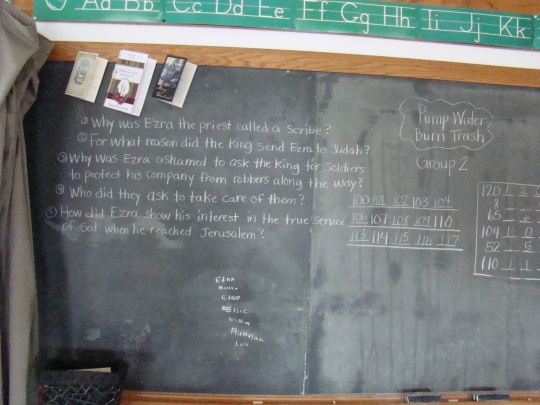
Bible questions on the board were part of the daily lesson.

When asked what they liked best about school, several said spelling and learning their Bible verses. The Golden Rule posted in the classroom provides their guide for daily life.

In the evening students look forward to going home to tend their animals. You could see the pride and excitement on their faces as they talked about their rabbits, goats, horses, and chickens.
Amish 2

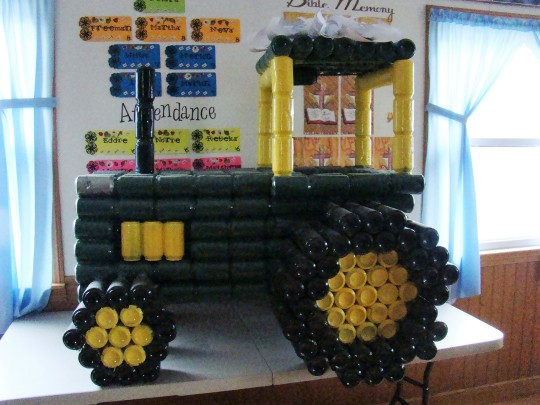
The children said they had fun making this tractor out of pop cans.

This feeling of freedom in a peaceful manner brings thoughts of a simpler life long ago. In this Amish school setting, their basic education system provides not only the three Rs, but also life lessons for being harmonious, caring individuals as they learn to live by the Golden Rule.

As one teacher expressed, “We are thankful we have our own schools.” Some day these students will realize what a blessing their education has provided.

Wouldn’t it be wonderful if we all would attempt to live by the Golden Rule?

Do unto others as you would have them do unto you.
Dreams Do Come True

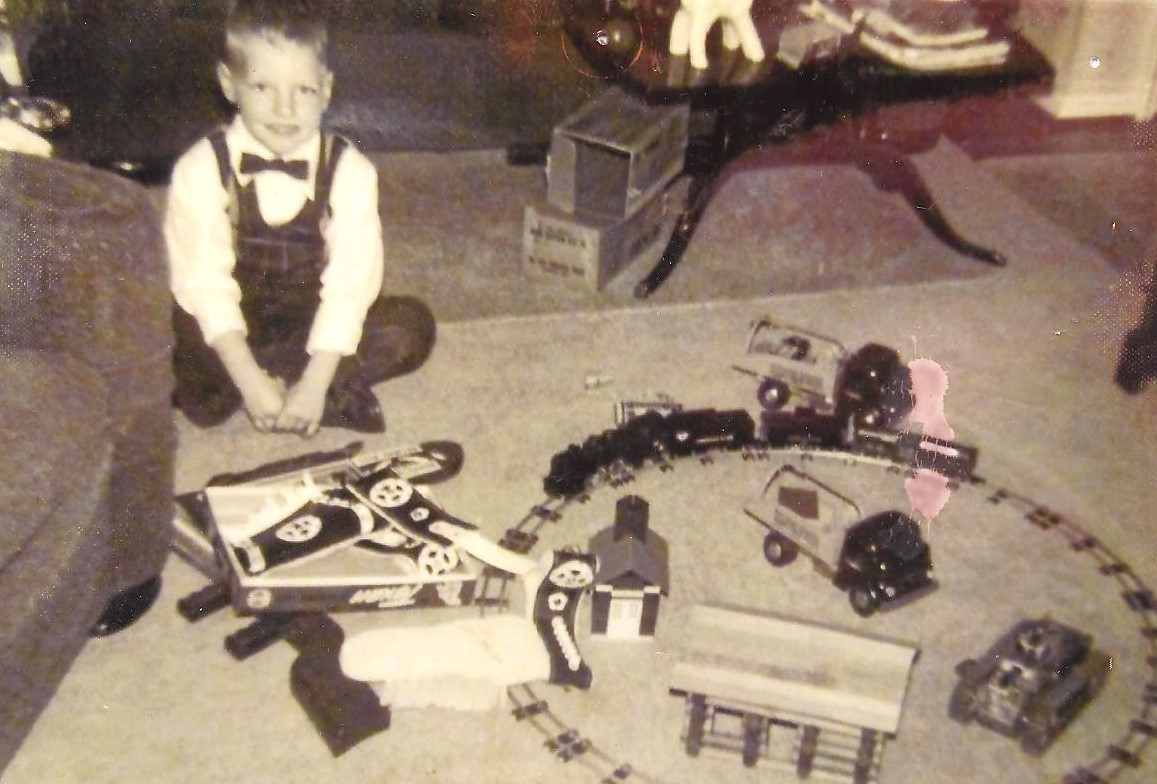
Dave received his first train in 1950.
Dave received his first train in 1950.

Ever since Dave Adair was a small child, he enjoyed trains. As a youngster, he frequently visited his Slavish grandfather, Dzeda, who lived near the train tracks in East Cambridge. Dzeda also worked in the Klondyke and Black Top coal mines in Guernsey County so he would tell Dave stories about the coal cars as they rolled by. It’s easy to see how Dave became interested in trains and coal mines.

Dave’s secret wish was that someday he would be able to have a caboose of his very own – a real one used on the train tracks.

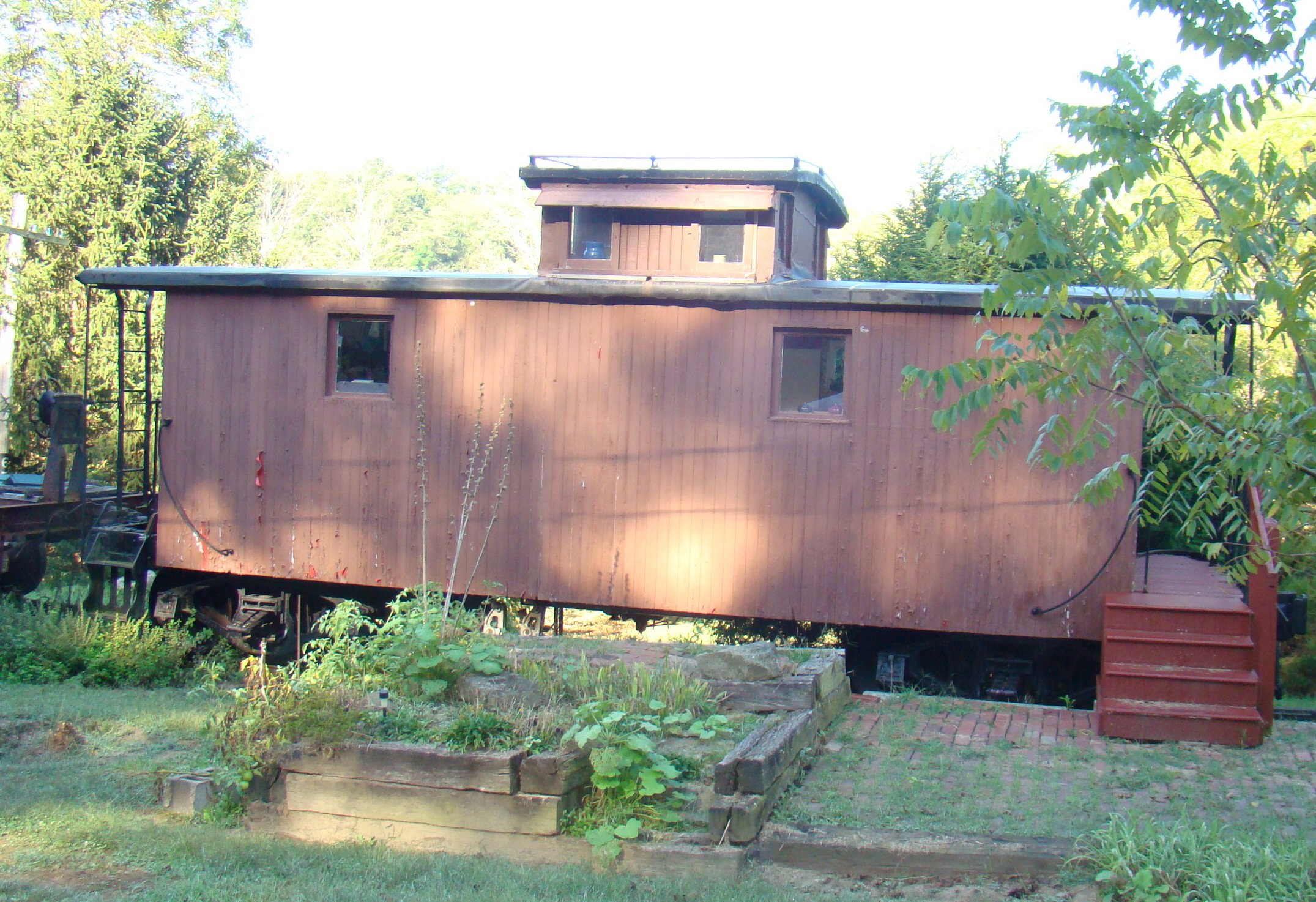
Ellen, Dave's wife, started his collection with this caboose.

Ellen, Dave’s wife, started his collection with this caboose.

When Dave was about forty, his wife, Ellen, took a ride with him a couple weeks before Christmas. They stopped in Senecaville to look at a caboose that belonged to Herb Tipton and had been used on the B&O Railroad. When they arrived and looked over the caboose, Ellen said, “Merry Christmas!”

Dave couldn’t believe it and looking back on that day said, “It was the biggest shock of my life.” Of course, she told him it would be his Christmas and birthday present for years to come. Little did she know at the time that she was only starting a vast train collection that today fills their home’s yard.

This original chair from a B&O office holds two lanterns.

This original chair from a B&O office holds two railroad lanterns.

Over the years, Dave has narrowed his interest to Guernsey County trains and coal mining history. Almost everything in his collection came from Guernsey County. Every item and picture is special to him, but he doesn’t have any favorites. They are all part of history.

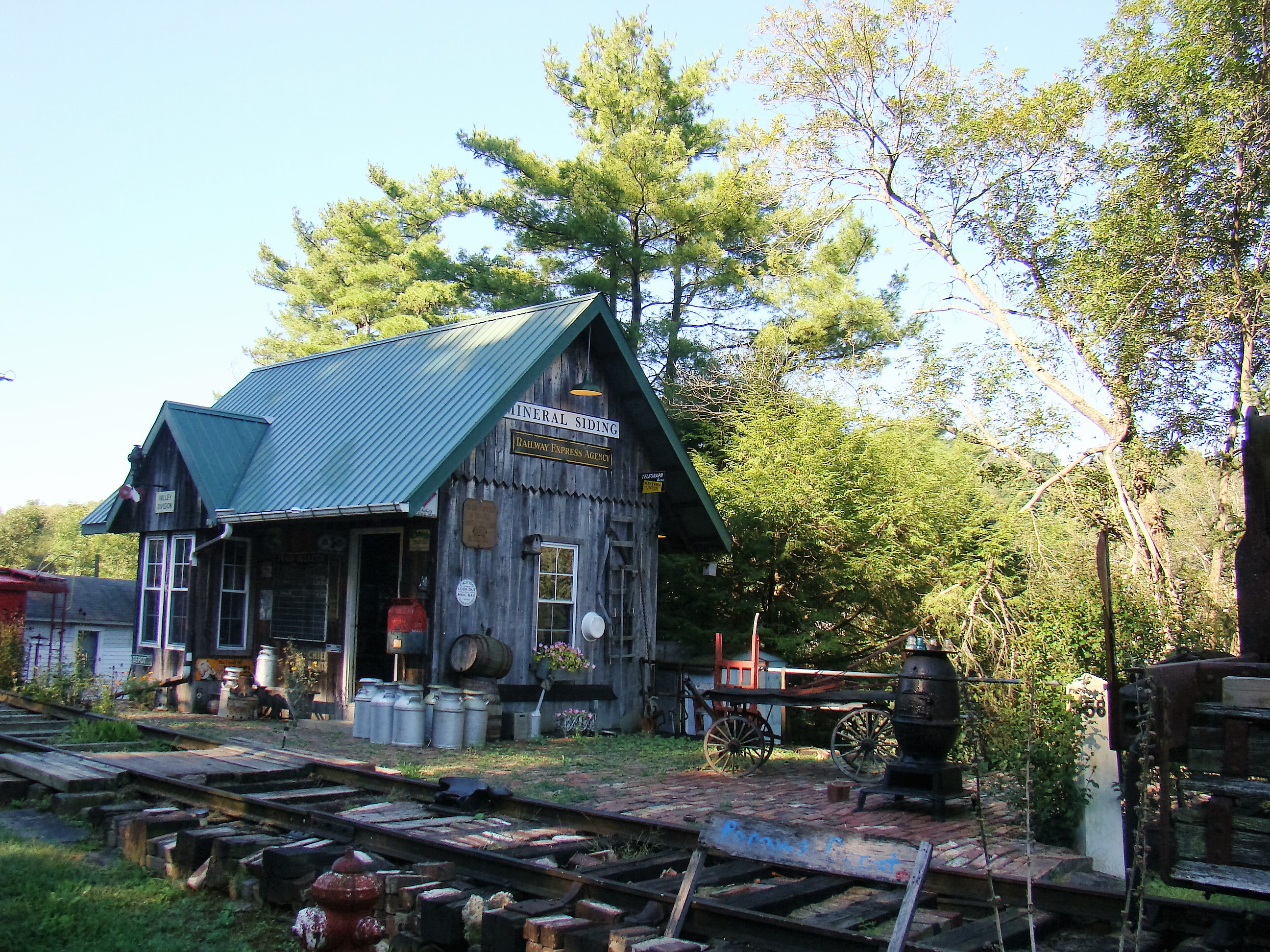
Dave built his own Depot and Museum in his back yard.

Dave built his own Depot and Museum in his back yard.

Since there wasn’t any place nearby that had room for his coal mine and train collection, Dave decided to build his own depot at his home and turned it into a museum. Nothing pleases him more than to sit down in his depot and tell stories about the coal mines and trains that were in Guernsey County long ago. But getting him to talk about himself was not an easy task.

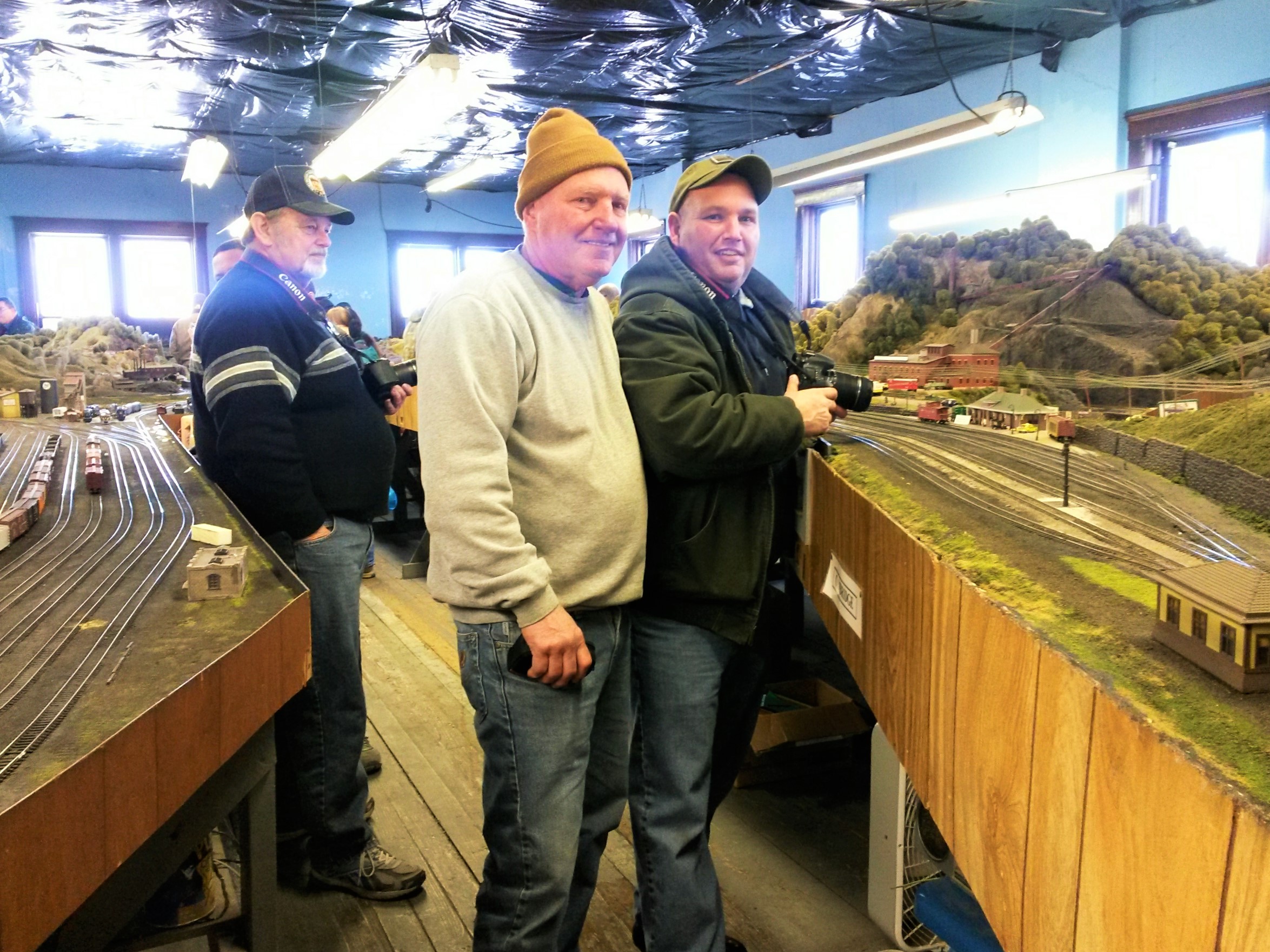
Dave and his son, Alan, look over their large HO display.

Dave and his son, Alan, look over their large HO display.

Now that Dave is retired, most of his time is spent volunteering, while spreading the word about Guernsey County history. His slide shows have been popular attractions for years. He spends time volunteering at the Guernsey County Historical Society, Cambridge Amateur Radio Association, Coal Miners Museum in Byesville, and at various nursing homes, giving people a chance to tell their stories. He says, “It’s better to give than receive.”

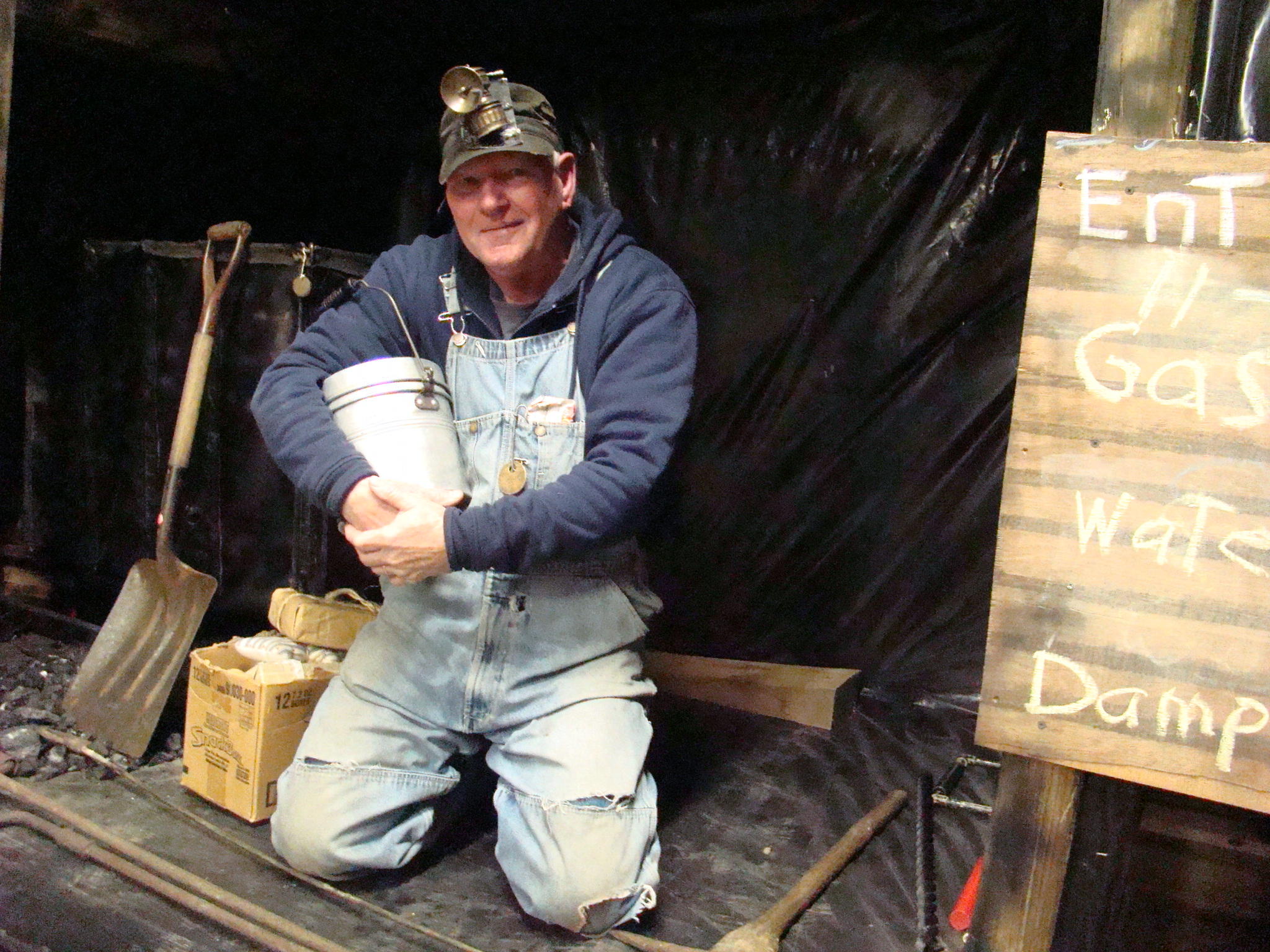
Dave Adair tells coal miners' stories.

Dave Adair tells coal miners’ stories.

While he claims to be “an ordinary Joe”, the history he has collected makes him a special person even though to him it’s just a hobby. It’s a good thing to make people happy and that is what Dave does best as he shares his stories and makes people smile. Through it all, his main goal is to preserve the history of Guernsey County trains and coal mines.

Dave and his family, thirty people in all, recently went on a short vacation. Where do you think they went? They headed for the train tracks in West Virginia, where they rode the Tygart Flyer. He’s still living his dream.

History Speaks Through Fairfax Stone

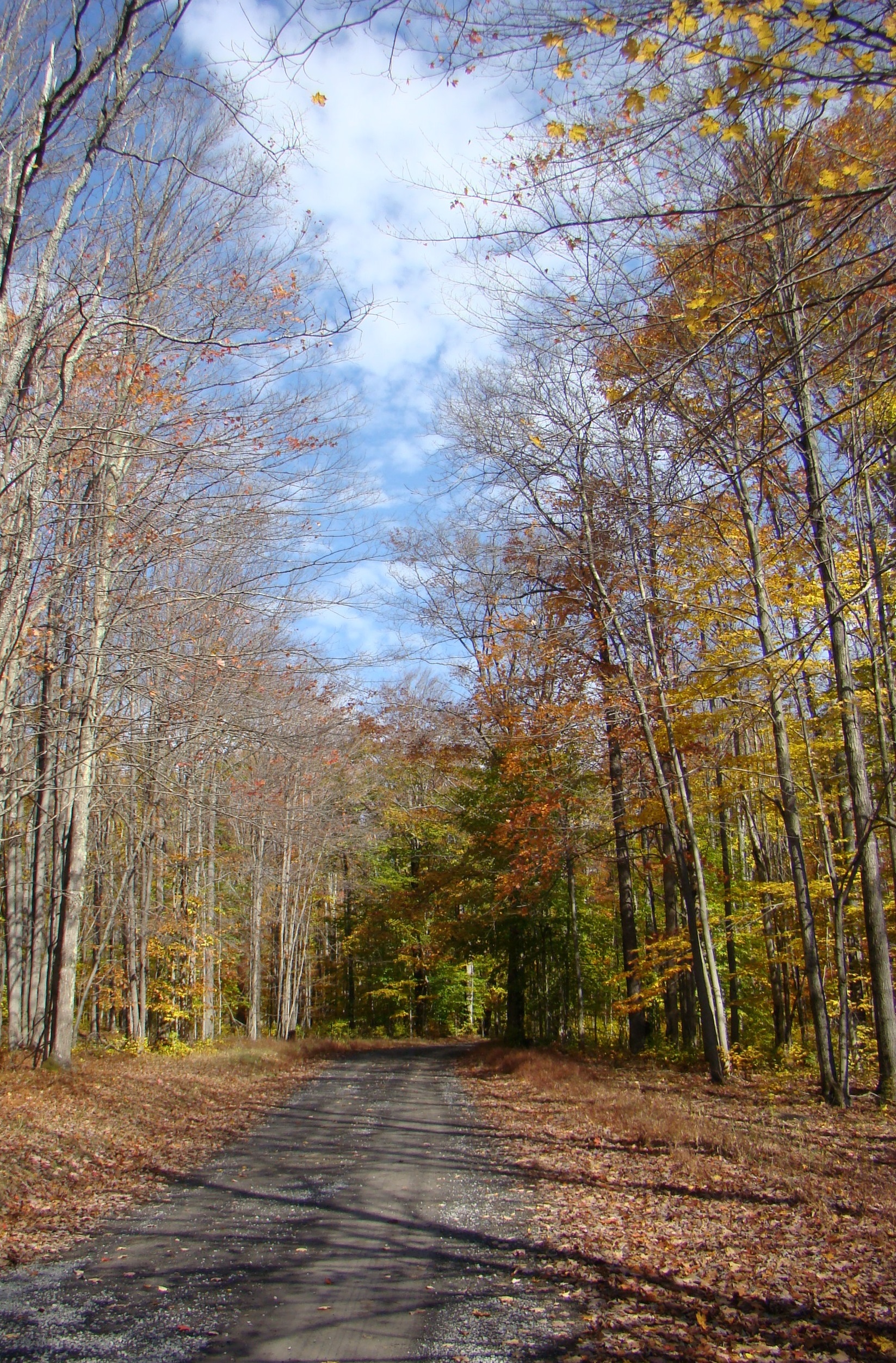
A scenic gravel road through wild, wonderful West Virginia in the fall of the year

A scenic gravel road through wild, wonderful West Virginia in the fall of the year

Often a gravel country road leads to places that give us a better understanding of our country’s history. Sometimes the things we find along the way don’t look as important as they really are.

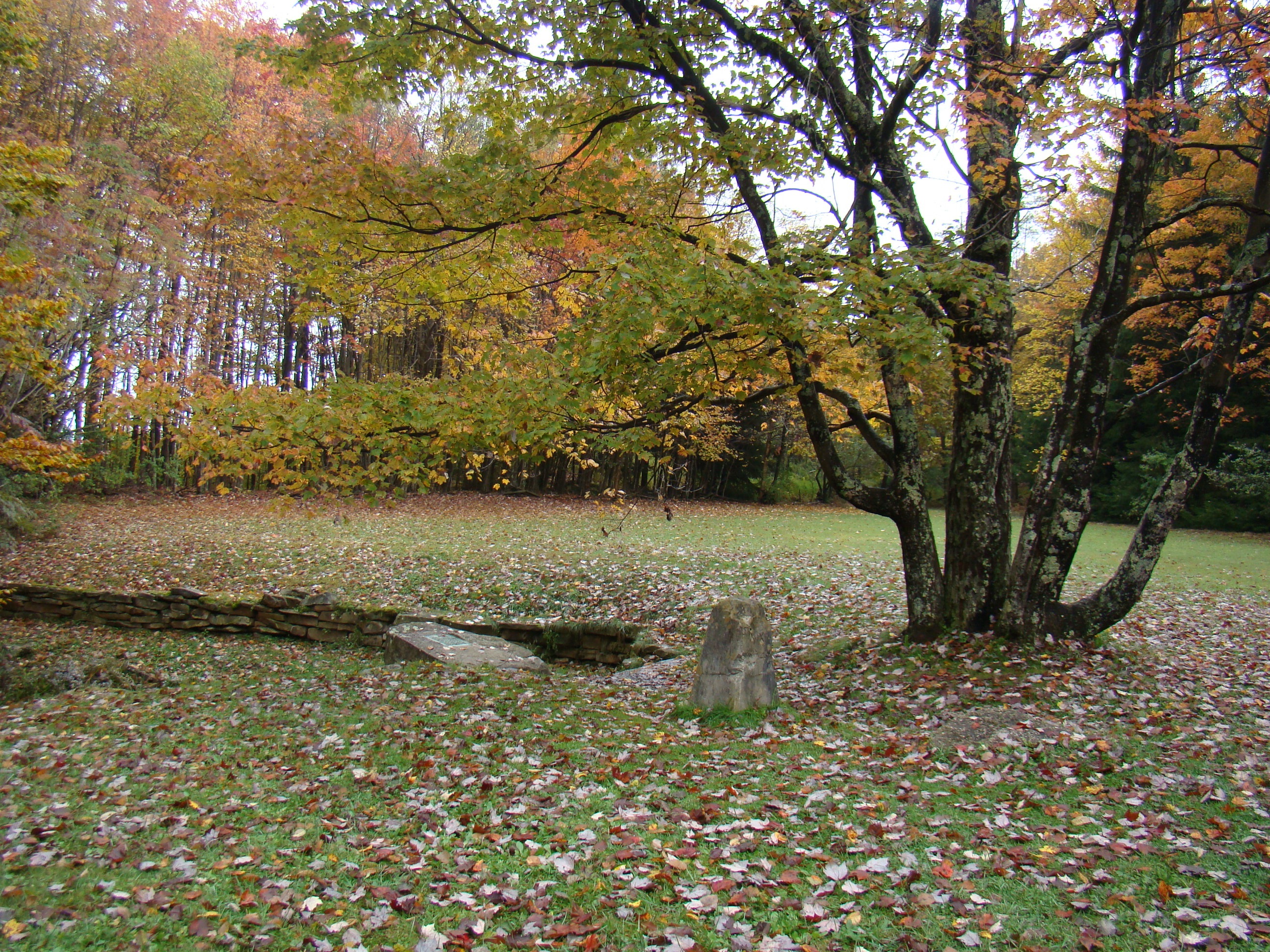
Such is the case with one of the most significant landmarks in West Virginia, the Fairfax Stone located at Fairfax Stone Historical Monument Park near Thomas, WV. This stone marks the North headwaters of the Potomac River, which flows all the way to Virginia. Today the original stone is gone, but a replacement stone marks the spot so future generations will not forget how the states’ boundaries were determined.

Fairfax Stone National Historical Park

Fairfax Stone Historical Monument Park

The reason for the search for the headwaters of the Potomac River came about because the King of England gave Thomas Fairfax all the land from the Potomac River to the Rappahannock River. Naturally, Lord Fairfax wanted to know where the boundaries of his land actually were.

This was part of the Northern Neck Land Grant. The surveying for this western boundary of Maryland was done by Colonel Peter Jefferson, Thomas Jefferson’s father, and Thomas Lewis. Many historians say that George Washington perhaps set the original stone himself as a young surveyor.

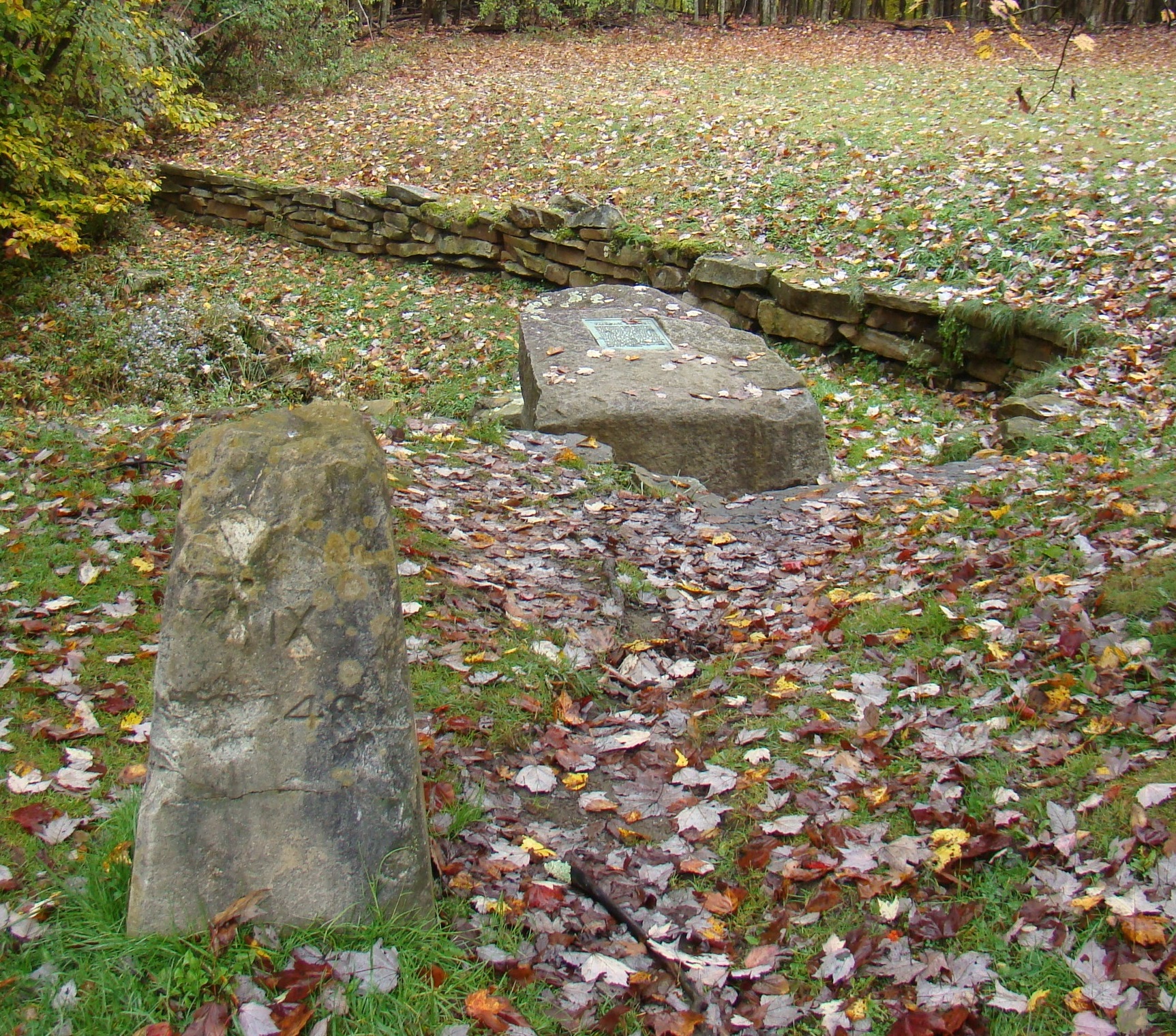
Two Fairfax Stones - 1910 and 1985

Two Fairfax Stones – 1910 and 1957

Way back in 1746, the original stone was placed there  to honor a boundary dispute between Thomas Fairfax, 6th Lord Fairfield of Cameron and the English Privy Council.. Later it became the spot to mark the state boundary of West Virginia and Maryland. The dispute over the boundary between Maryland and Virginia, later West Virginia, was so severe that it ended by being solved by the Supreme Court. Now it is easy to see its importance.

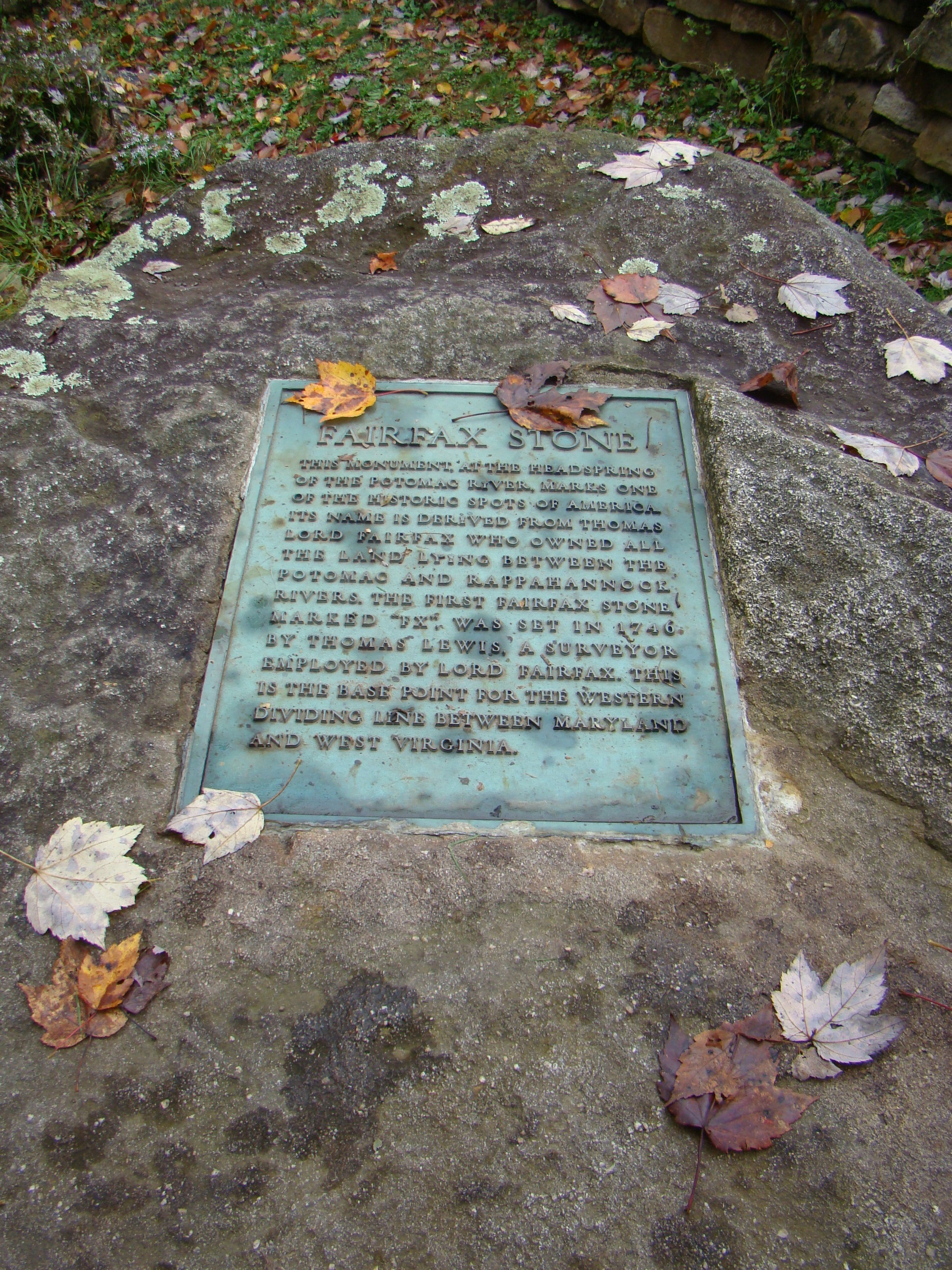
Fairfax Stone plaque describes its purpose.

Fairfax Stone plaque describes its history.

The original stone was a small pyramid of sandstone and had the letters “F.X.” scratched into the stone. Now an engraved six ton rock with a flat surface displaying an engraved metal plague sets over the site of the actual spring, the beginning of the North Branch of the Potomac River in West Virginia. An inscription on the plaque tells the historical significance of the stone. The marker from 1910 rests close by.

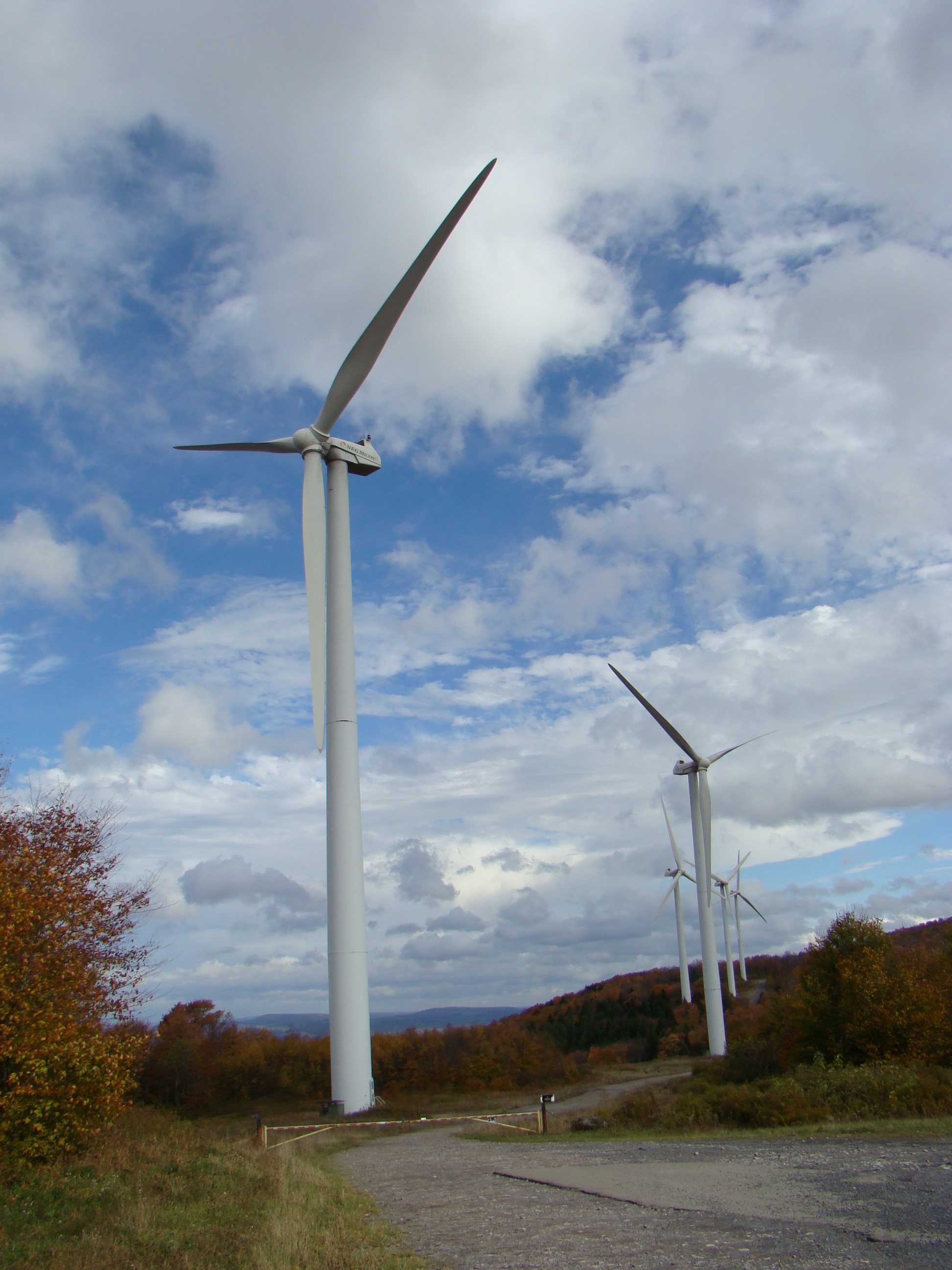
Nearby Mountaineer Wind Energy Center generates electricity.

Nearby Mountaineer Wind Energy Center generates electricity.

Even though this park contains only four acres, the Fairfax Stone Historical Monument Park attracts many historians, who want to walk where their forefathers trod. Then take a ride just south of here and view some modern history in the making – the Mountaineer Wind Energy Center, the largest wind farm east of the Mississippi that provides electricity to many of the mid-Atlantic states.

Next time you take a drive, perhaps you will want to explore some of those dirt roads along the way. You may be surprised at what you find.

Fairfax Stone Historical Monument Park can be found off U.S. Route 219 near Thomas, WV. Turn onto county Route 9 and travel .5 miles. Turn right at Fairfax Stone Monument sign and travel 1.5 miles to Fairfax Stone. Great signs help make this easier to find.

Blowin’ in the Wind

"Stick dolls" - aka clothespins

“Stick dolls” – aka clothespins

“Gran, I found some real, stick dolls.” Jenny ran into the room proudly carrying a flowered bag. “Can I play with them?” Five-year-old Jenny was spending the weekend with Gran for the first time ever, so she anxiously explored every nook and cranny of Gran’s house.

“Play with them for a while, but later you can help me use those stick dolls. Actually those are clothespins that I need when I wash clothes. Not many people use them anymore, but I still enjoy hanging my clothes outside to dry. Bring that bag with you and we can hang the clothes I just washed on the line outside.”

When they went outside, Gran first washed off the clothesline with a damp cloth. No sense in putting clean clothes on a dirty line. Then Gran showed Jenny how to put the clothes on the clothesline using the “stick dolls”. Jenny watched with fascination as she handed Gran clothespin after clothespin.

The clothes on the line told the neighbors a lot about the family. You could easily tell when a baby was born, how much the children were growing, and even if someone was sick.

Gran explained how she liked to hang the washing on the clothesline in order : whites, shirts, pants, and towels. Shirts needed to be hung by the bottoms and not the shoulders so they were easier to iron. If you had two lines, you always hung the quilts, sheets and towels on the outside line so the neighbors couldn’t see the underclothes blowing in the wind.

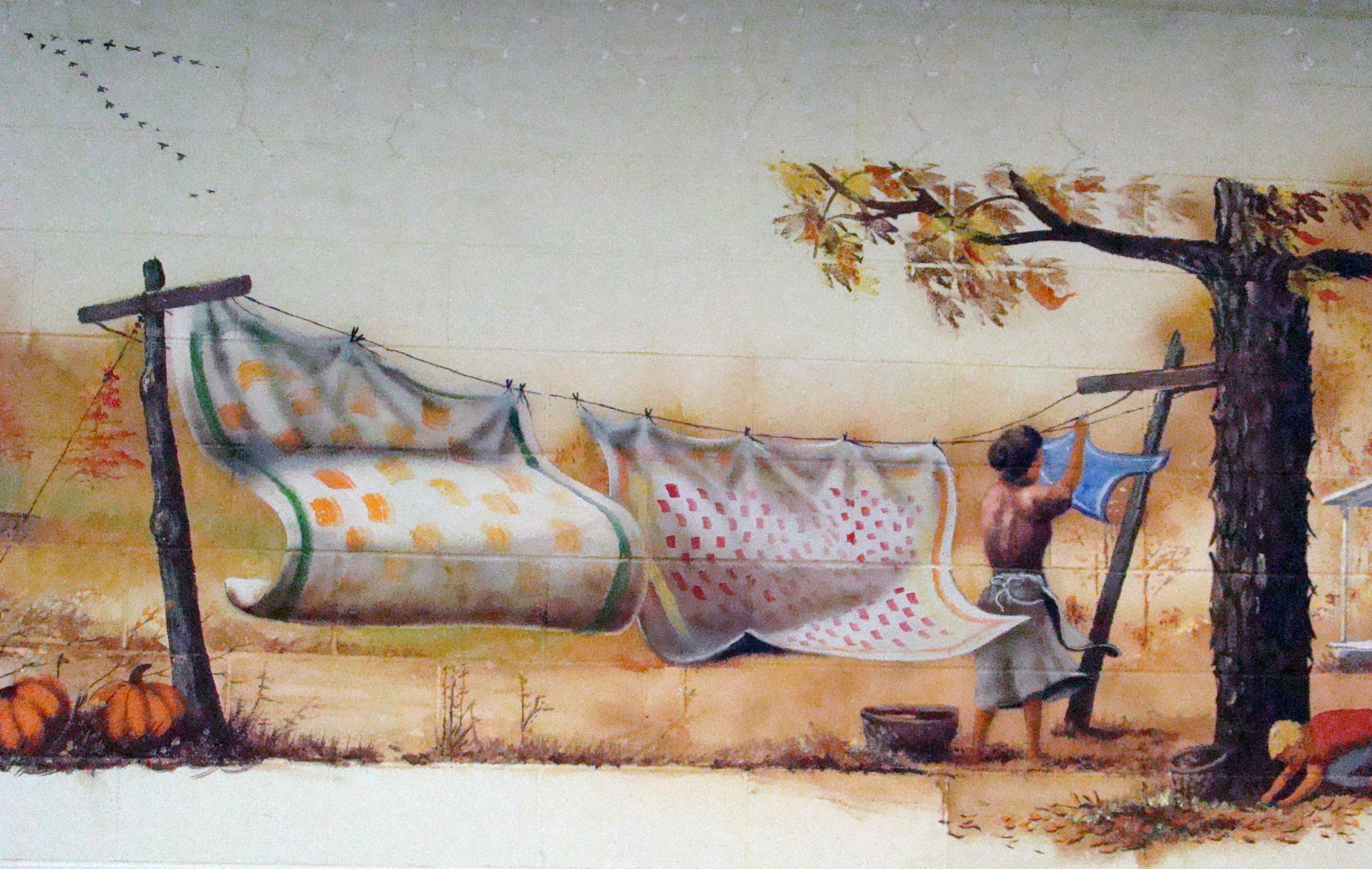
Mom hangs up clothes to dry. (Mural by C.M. Scott)

Mom hangs up clothes to dry. (Mural by C.M. Scott)

Once they pinned all the clothes on the line, Jenny’s questioning eyes looked at Gran,” Now, how do they get dry?”

“Well, Jenny, when we put a pole under the line to push it up higher, the wind will blow on them and make them dry. If we leave them out here for a little while, most of them should dry quickly.”

Strawberry Shortcake

Strawberry Shortcake

With that Jenny and Gran went back in the house and sat down at the kitchen table. There they enjoyed fresh strawberry shortcake with whipped topping. While they ate, they decorated a recipe holder for Jenny’s mom made with a plastic fork and spoon in a small flower pot filled with sand. It would soon be Mother’s Day, so Jenny felt proud to have something special for her mom.

After a while, Jenny said, “Do you think those clothes are dry yet?”

Since a gentle breeze had blown the clothes dry, Gran took the clothespins off and handed a couple shirts to Jenny so she could see how they dried. Jenny held them close and took a deep breath. “The wind must smell good because these shirts smell better than Snuggle. Drying clothes like this is hard work, Gran. Someone should give you a clothes dryer for Mother’s Day.”

Gran smiled and rolled her eyes, “Next time you’re over, I’ll show you how to use the washboard.”

Coming soon” A story about the history of the washboard and its many uses.


Explore Canadian Wilderness on Agawa Canyon Tour Train

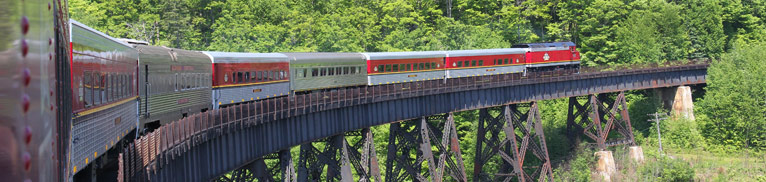
Agawa Canyon Train

Agawa Canyon Train

Want to spend a day in the wilderness? The Agawa Canyon Tour Train will fulfill that desire. Starting early in the morning, passengers board for a one-day rail adventure that leads to the beautiful Agawa Canyon in the heart of the Canadian wilderness.

In the upper peninsula of Michigan, Sault Ste Marie is the place to begin. You will first cross the International Bridge into Ontario, Canada where you board the all-day excursion to the back country of Canada. Everyone settles in to watch the scenic view pass by the  large windows of the excursion train. Lakes, waterfalls, and many pines give a feast to the eyes as mile after mile of this 228 mile journey relaxes your mind. A knowledgeable tour guide delights travelers with stories of local history, Ojibway, fur traders and explorers. For breathtaking views along the way, monitors throughout the coaches are connected to a camera mounted on the front of the engine.

School children wave to the Agawa Canyon Train.

School children wave to the Agawa Canyon Train.

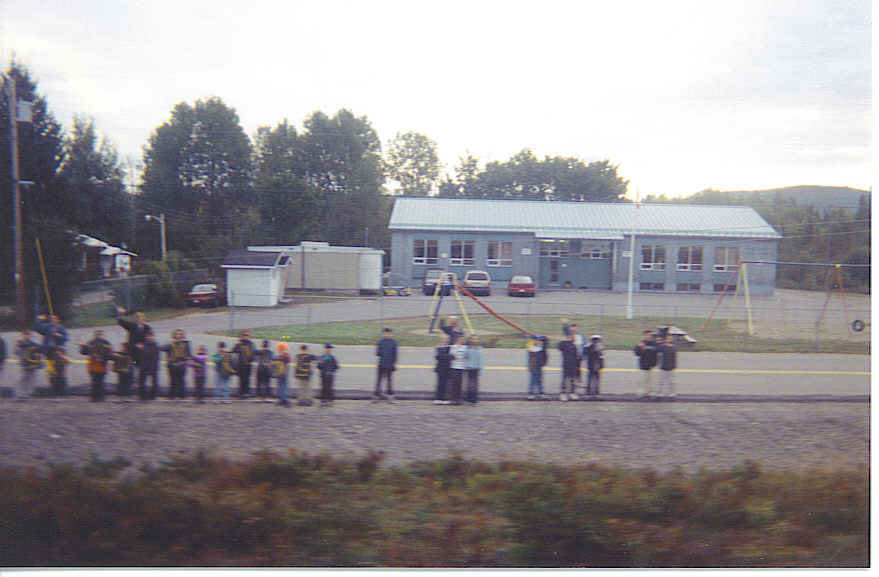
Around nine o’clock, the train gives a whistle as it passes the elementary school where students line the track waving to the Agawa Canyon Tour Train. The guide said the children look forward to this break in the morning, while the teacher attempts to involve them in the history of their area.

Although this is a wilderness area, some people still live here. Every few miles the train will stop at a small depot to leave mail and packages. Once in a while, a passenger might board for a ride farther into or out of the canyon. Locals are accustomed to the arrival of the train as the tracks were laid in the canyon during the winter of 1911-1912.

Towering trestles provide spectacular views of the valleys below and once in a while you can catch a glimpse of the end of the train as it curves around the valley walls. It is thought that Agawa Canyon was created from a fault, which occurred over a billion years ago.

Waterfalls at Agawa Canyon Park

Waterfalls at Agawa Canyon Park

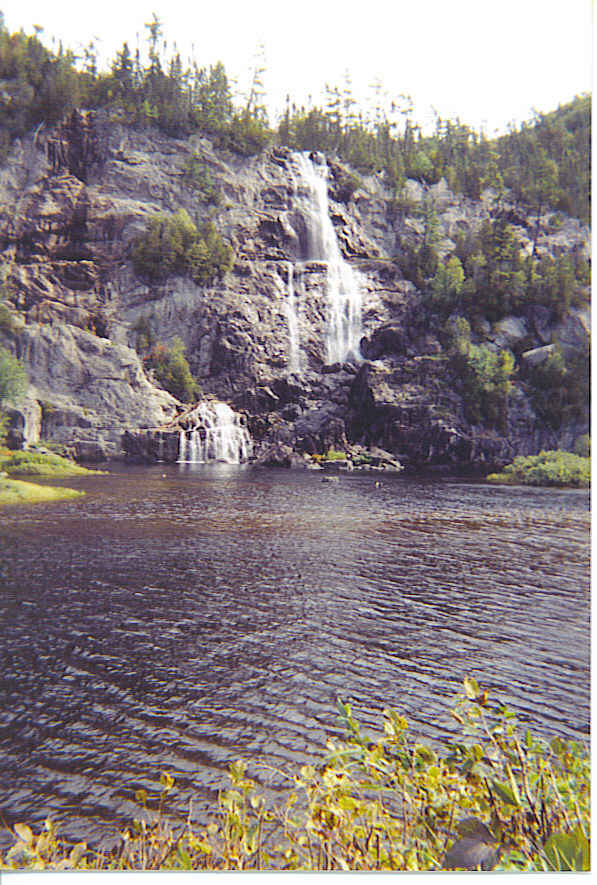
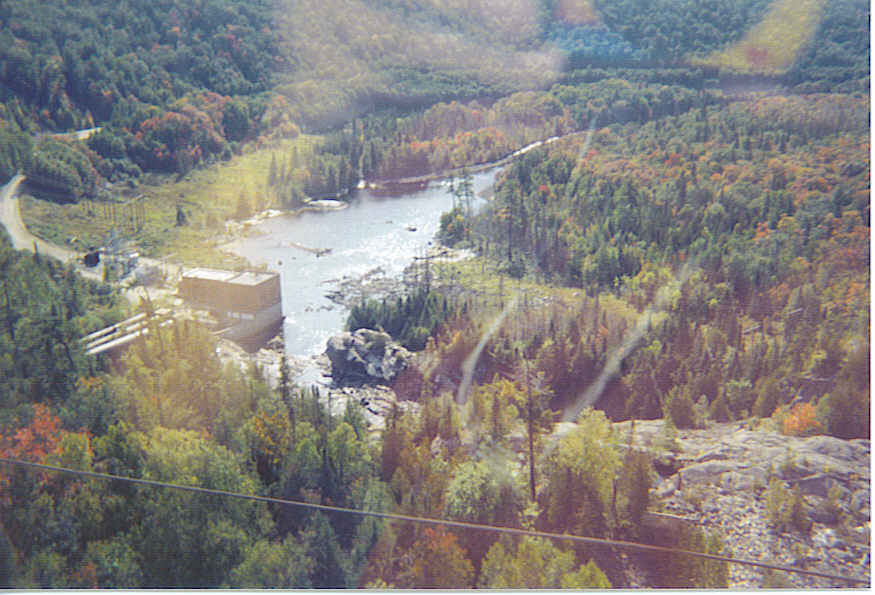
At the farthest end of the tour, the train sweeps down to the floor of the canyon stopping at Canyon Park. There are only two ways to reach this spectacular park area : by train or hiking. Great views of the waterfalls appear from the canyon floor, so this is the perfect time to stretch your legs and do a little exploring. The Overlook is a great place for breathtaking pictures while the train stops for about an hour.  As you might imagine, there is a Souvenir Car here in case you want to purchase a special memory of the excursion.

As you get closer to Agawa River you notice that the color is rather unusual. It has a near rusty color caused by staining of tannic acid, which comes from the roots and bark of the many cedar trees in the area.

Agawa Canyon Overlook

Agawa Canyon Overlook

A box lunch on the way back settles everyone in their turned around seats to enjoy the scenery from another direction. Although many small animals live in this area, none were seen on this particular trip. The larger ones have two reasons for avoiding the canyon: the walls are too steep and the train is too loud. This is truly a day for relaxation and visiting with friends and new acquaintances.

For those who enjoy the sound and feel of a train ride,  Agawa Canyon Train Tour is a great, relaxing experience.As David P Morgan said, “Things that move are a lot more exciting than things that stand still.” I agree!

Agawa Canyon Tour Train can be reached in Sault Sainte Marie, Ontario across the International Bridge from Michigan. Boarding takes place at Bay Street along the St. Mary’s River. The train runs from June – October on its regular daily runs. However, the Snow Train operates only on Saturdays from late January until early March. Check ahead for changes in schedule.

Beautiful Ohio’s Winter Wonderland

Jackson Park near Byesville provides a scenic place to walk on a winter day.

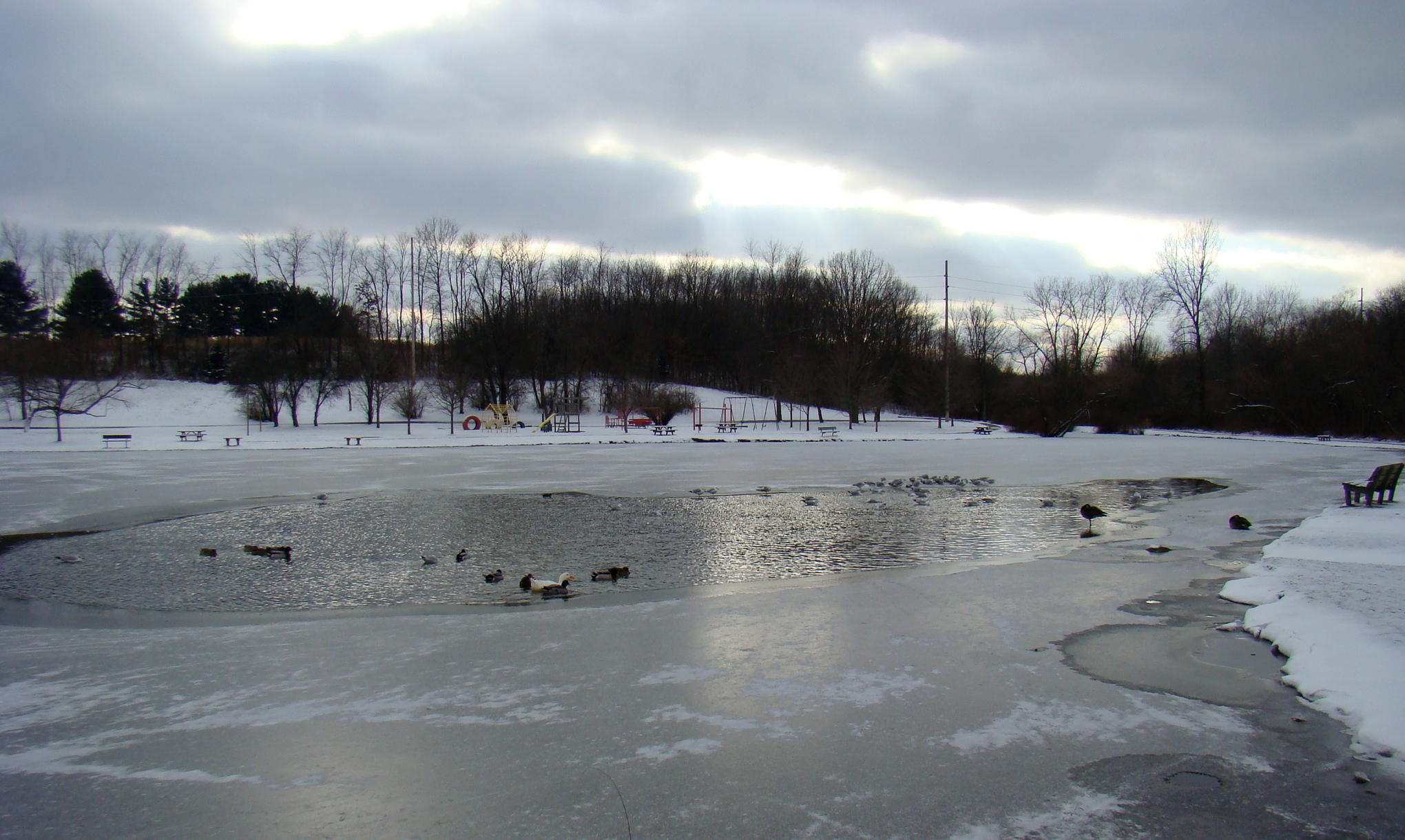
Jackson Park near Byesville is a great place to walk on a winter day.

Snow flakes fall against the window panes while the wind howls through the cracks in the wall. Looking out the window here in Ohio, there is snow as far as the eye can see. This is the perfect time to get out the picture album and reminisce about other snowy days.

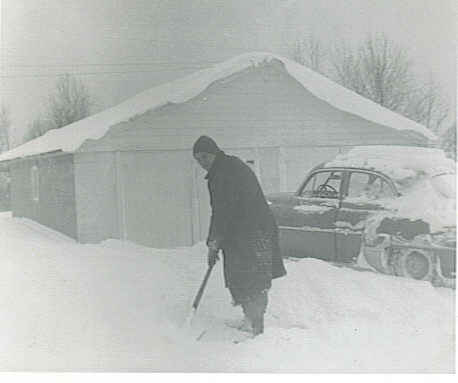
Dad shovels snow.

Dad bundles up to shovel snow.

Shoveling snow has always been a winter chore throughout the years. Often this task got delegated to the man of the house as he bundled up in buckled boots, old overcoat, and toboggan to protect himself against the winter cold. At the time of this picture, the car wasn’t driven into the garage because the tires had chains on them to enable better traction in the snow. Sometimes it may have been days before anyone cleared the roads. It may be a neighbor with a blade on his tractor or perhaps the highway department, that finally opened the roads for needed supplies. Often when the snowplows cleared the roads, they would push a pile of snow a couple feet high across the end of your driveway. Or you may have lived in a place where the winds blew drifts several feet high. Those were and still are the times that try men’s souls and their backs.

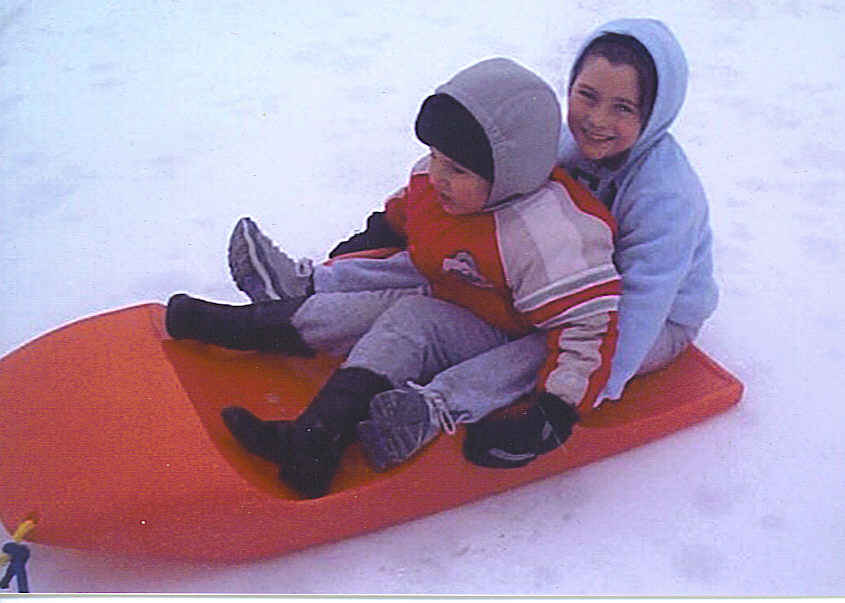
Children enjoy a sled ride.

Children enjoy a sled ride.

Children always enjoy a ride on their sled whether they are being pulled by someone or gliding down a hill. Many neighborhoods have a favorite hill where children gather to race on their sleds. Sometimes they may use a large lid or piece of cardboard with the front bent up so it can slide easily down the hills without getting caught in the snow. An old innertube also provides a great way to slide down a hill. You can be certain that everyone is going to come home covered with snow and ready for some hot chocolate.

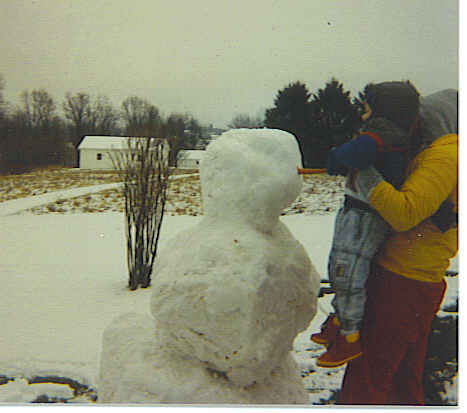
Carrot nose placed on his first snowman.

Carrot nose placed on his first snowman.

Another favorite activity in the wintertime is building a snowman. Parents enjoy helping youngsters build that first snowman as it makes dad and mom feel young again too. To add the finishing touches, a nose is created by using a carrot, while its mouth and two eyes are made out of coal. Many times a hat is placed on the snowman’s head with a scarf around their neck. Then everyone hopes it doesn’t melt away too quickly after all that hard work.

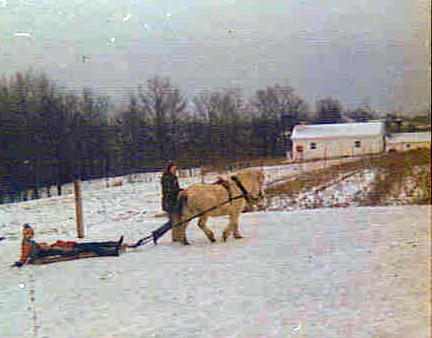
Pepper, the Pony, pulls a sleigh through the snow.

Pepper, the Pony, pulls a sleigh over the snow.

If you are lucky enough to have a horse of your own, or a kind neighbor with a horse, hooking up a sled or sleigh behind a horse is great fun. It is important that someone either lead the horse or ride it as otherwise the horse might take off too quickly leaving passengers on the ground in the snow. What a treat when it works properly!

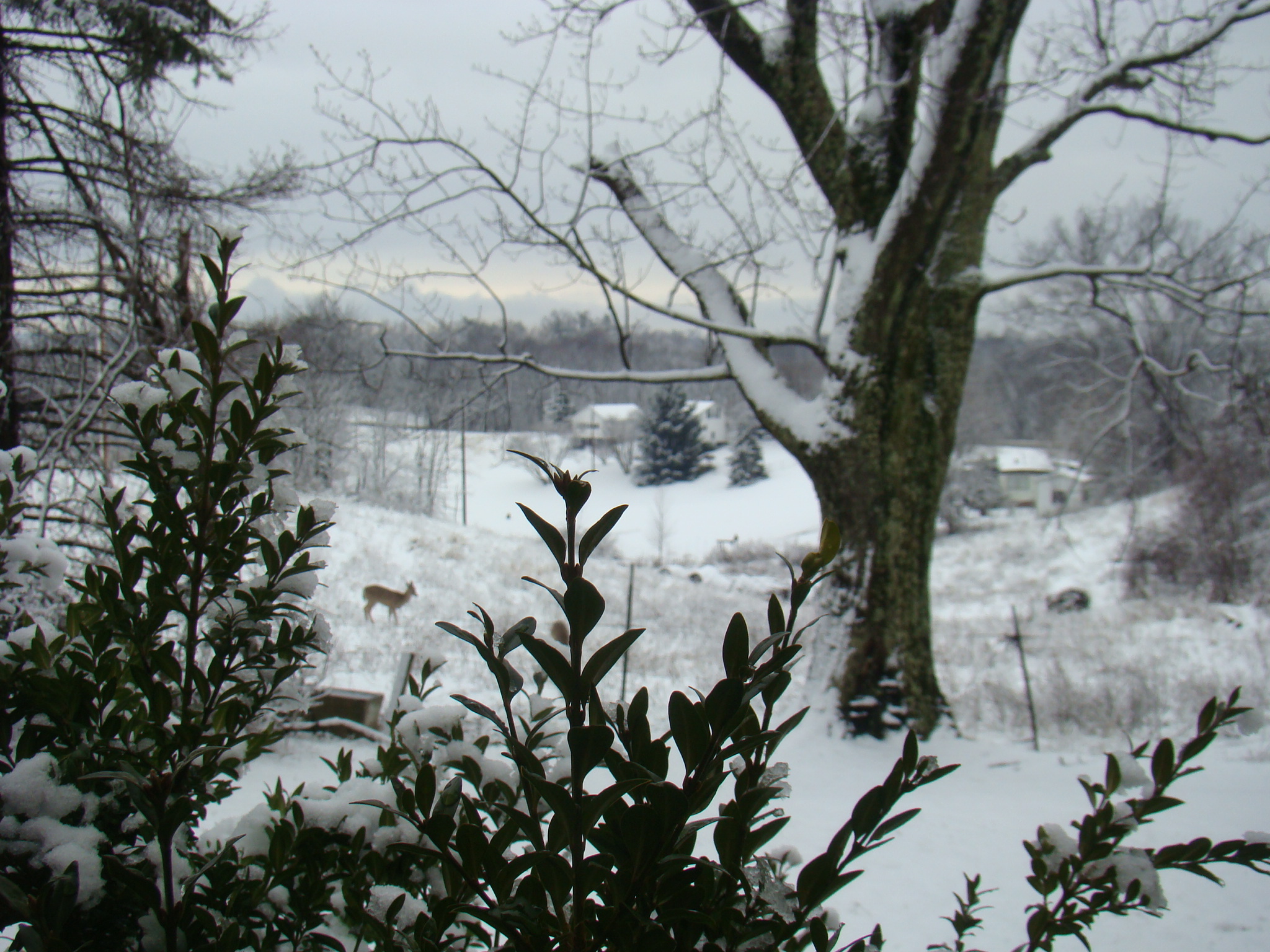
Deer wander over the Ohio hills.

Deer wander over the Ohio hills, as seen from my kitchen window.

This is also the time to see animals seemingly enjoying the snow as well. Kittens leap over snow covered chairs and playfully wrestle on the ground, while dogs might just sit and watch the activites around them. Deer graze on a few blades of grass still poking through the snow, while keeping alert to any danger around.

While this is not a favorite season for all, many truly enjoy taking a walk in the snow, skiing, or ice skating on a frozen farm pond. Winter recollections can be an enjoyable way to pass a homebound day. Wonder what your favorite wintertime activities might be? To tell the truth, this gypsy would rather take a road trip on a sunshiny day!

School Is In The Air

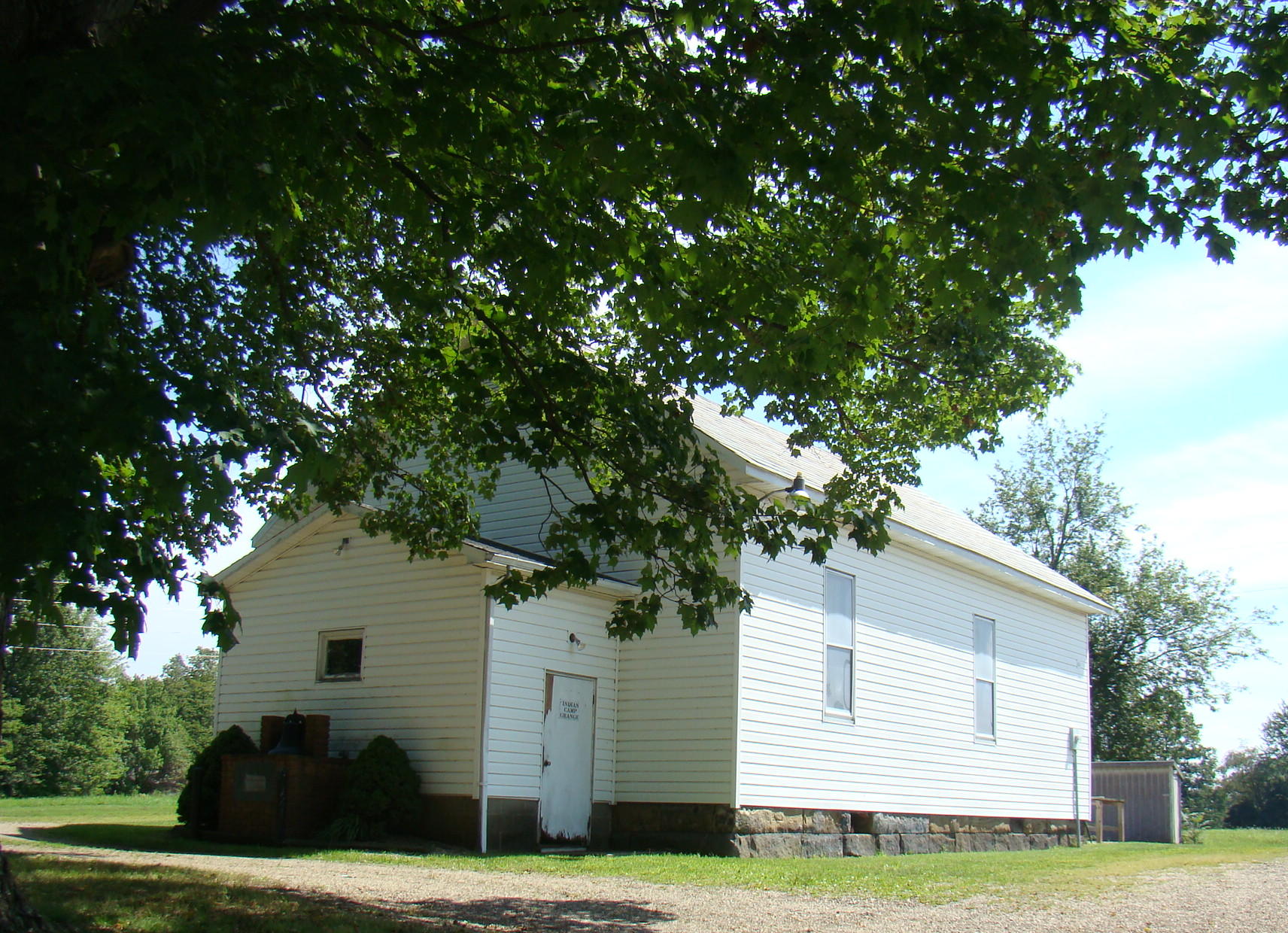
Hopewell One-Room School at Indian Camp

Hopewell One-Room School at Indian Camp

The cool morning air whispers Time for school. Memories flood back of days at a one-room school in Indian Camp. All eight grades were in one room so students helped each other climb the ladder of learning. Perhaps today is the perfect time to take a road trip leading back many years ago to Hopewell School. Chances are someone you know, or even you, yourself, have attended a similar school.

After driving the winding roller-coaster road of State Route 658 northwest of Cambridge, Ohio, the old school brings a smile. Those sturdy sandstone foundation blocks remain intact where so many students received building blocks for their lives from 1905-1955. Today the school is kept in repair while being used by the Indian Camp Grange, 4-H club, Hopewell Homemakers and once a year, the Hopewell One-Room-School Reunion.

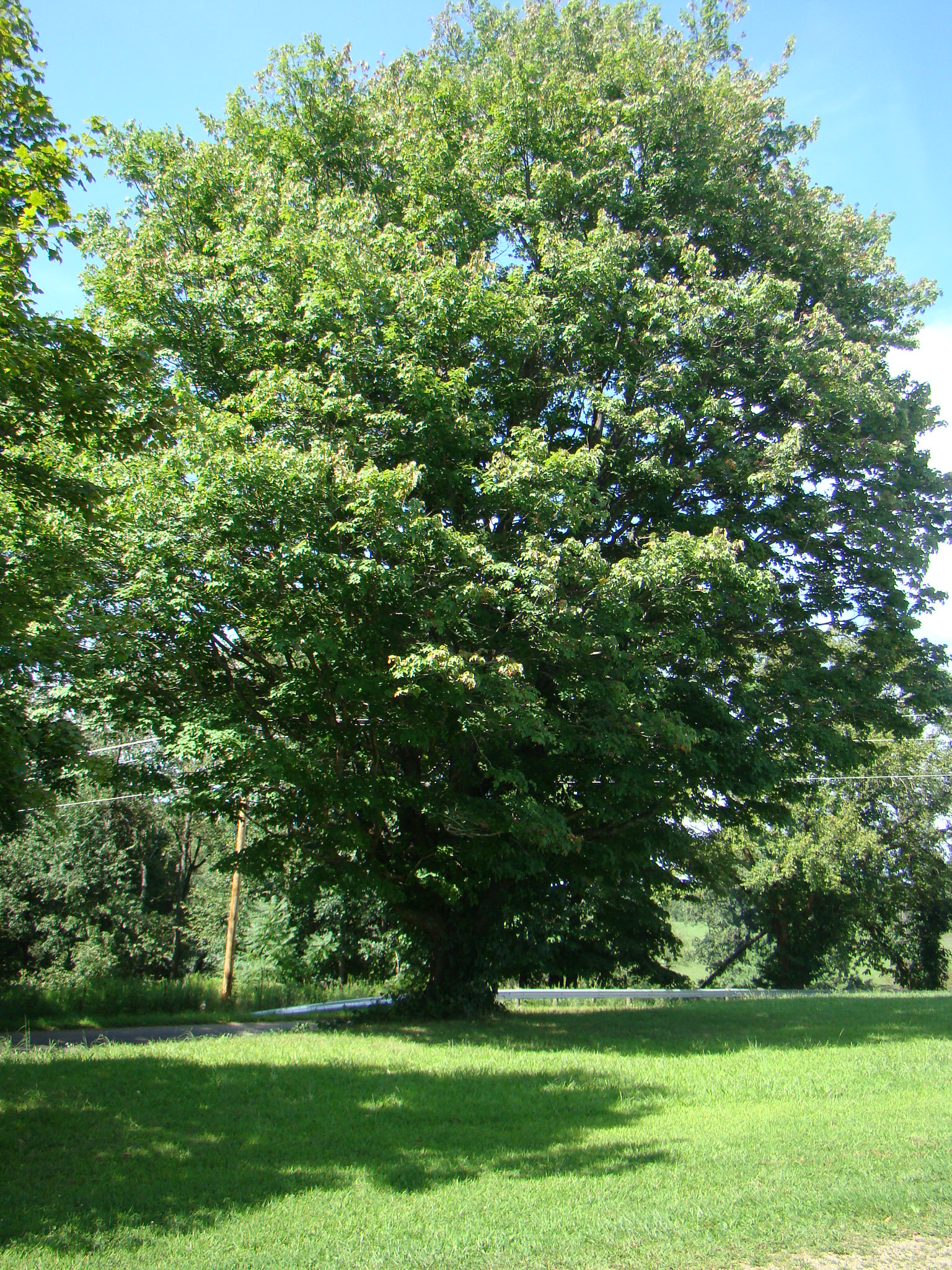
Favorite Recess Tree

Favorite Recess Tree

The trees have grown noticeably larger in front of the school.  Their branches provided the perfect places to sit while watching others play on the large surrounding field, or sharing secrets with your friends. In the absence of playground equipment, students played hopscotch at the top of the drive, baseball behind the school, or Annie Annie Over across the roof.

Children from miles around arrived at Hopewell School by bus, horseback, bicycle or walking. On the first day of school they proudly carried their yellow Big Chief tablet and a pencil or two. If they were lucky, they might have a box of eight new Crayola Crayons and Elmer’s School Paste.  Those scents still stir up memories.

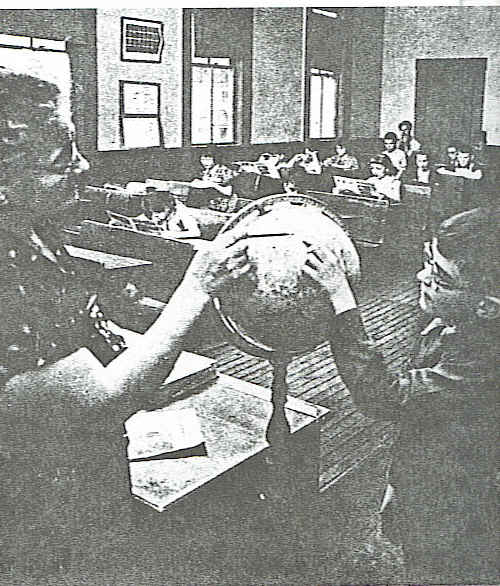
Teacher, Mrs. Mary Clark, uses the globe to explain geography.

Teacher, Mrs. Mary Clark, uses the globe to explain geography  during the 1950’s.

Inside the building, the pot bellied stove and the old desks are gone. The teacher or a student who lived close by came early in the morning to get the room warm for students. During the day, the boys took turns filling the coal bucket at the coal shed behind the school. Many boys volunteered for this chore and took their time, some even sneaking a smoke in the coal shed. But other things are still the same. An original blackboard still has initials carved in it, and the closets where coats and lunches were kept are exactly as they were years ago.

Lunches were brought in either a paper bag or a metal lunch box, which might last for several years. A personal favorite had a picture of Roy Rogers riding Trigger, and it even had a thermos. Lunch might include a bologna sandwich, boiled potato, dill pickle, and on special days, a thermos of homemade soup.

Since there was no water on the grounds, the boys carried water from a near-by house. After it was poured into a large keg at the back of the room, students would use a dipper to get a drink – everyone using the same dipper and no one getting sick!  No water also meant outdoor toilets with a rather unpleasant smell, flies, and even an occassional varmint.

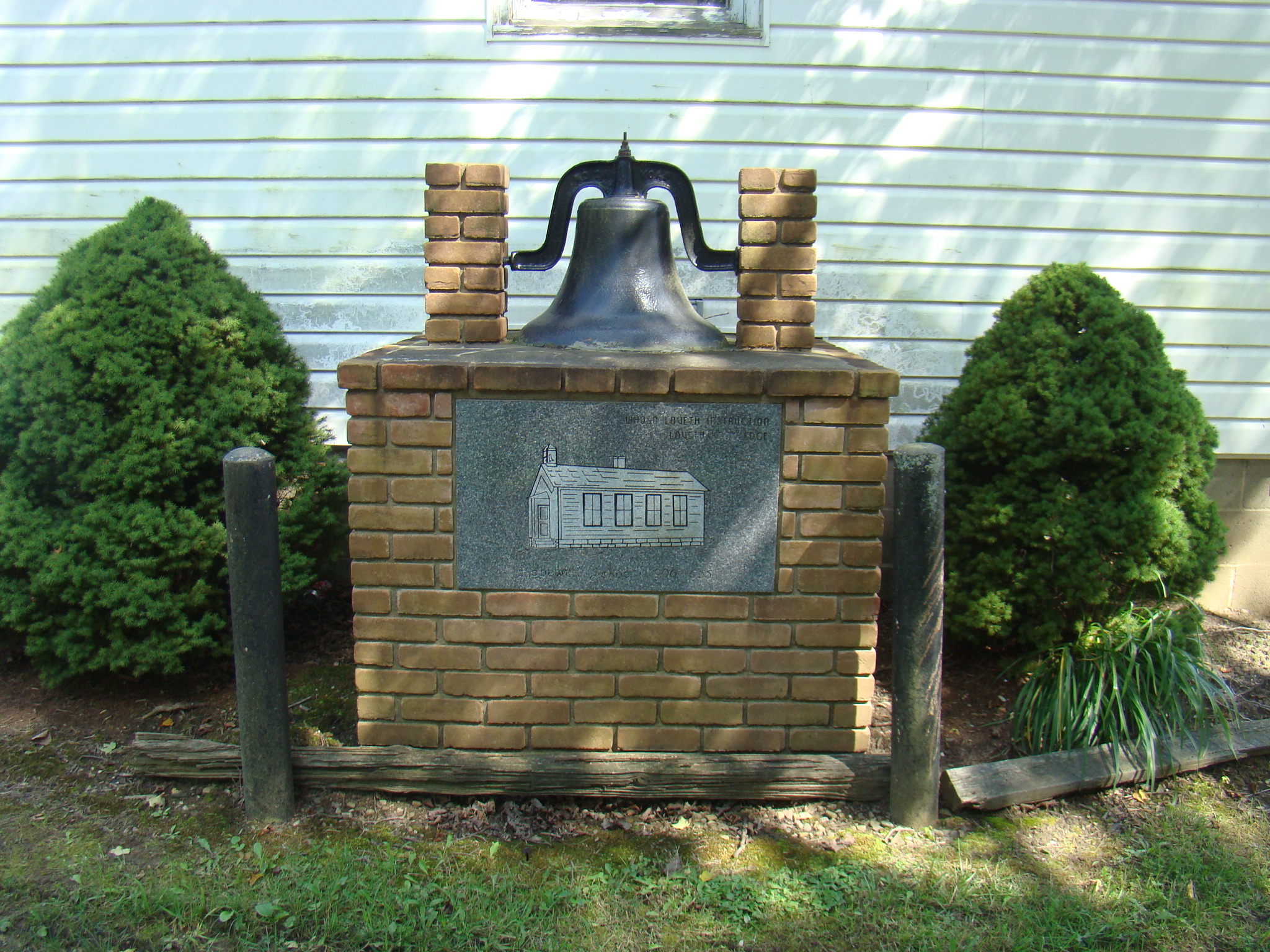
Original Bell at Hopewell School

Original Bell at Hopewell School with picture of school “Whoso Desireth Education, Desireth Knowledge”.

In 1994, former students constructed a brick base with a picture of old Hopewell School engraved on a plague and words that expressed the aim of the school: “Whoso Desireth Education, Desireth Knowledge”.  At the top of the base sets the school bell that called students to school in the morning, and reminded them that it was time to return to the classroom after recess. Students didn’t always stay on the grounds during recess as some went to Gerty’s Store just down the road, or in winter time might be sledding on the neighboring hills of the Cowden family farm. This bell is a beautiful heritage to the people that have received their education here, and also to their children for generations to come.

In spite of all the old-fashioned ways, lessons were learned and life-long friendships were developed. The one-room school was the perfect place to be taught the 4 R’s – Reading, ‘Riting, “Rithmetic…and Respect.

If you would enjoy a trip to the country to see Hopewell School, follow State Route 209 west from Cambridge, Ohio through Browns Heights. After a couple of miles, turn right on State Route 658 and continue until you reach the town of Indian Camp. At the north end of Indian Camp make another right hand turn on Mt. Herman Road. You are there!  

Following Morgan’s Raiders Trail 150 Years Later

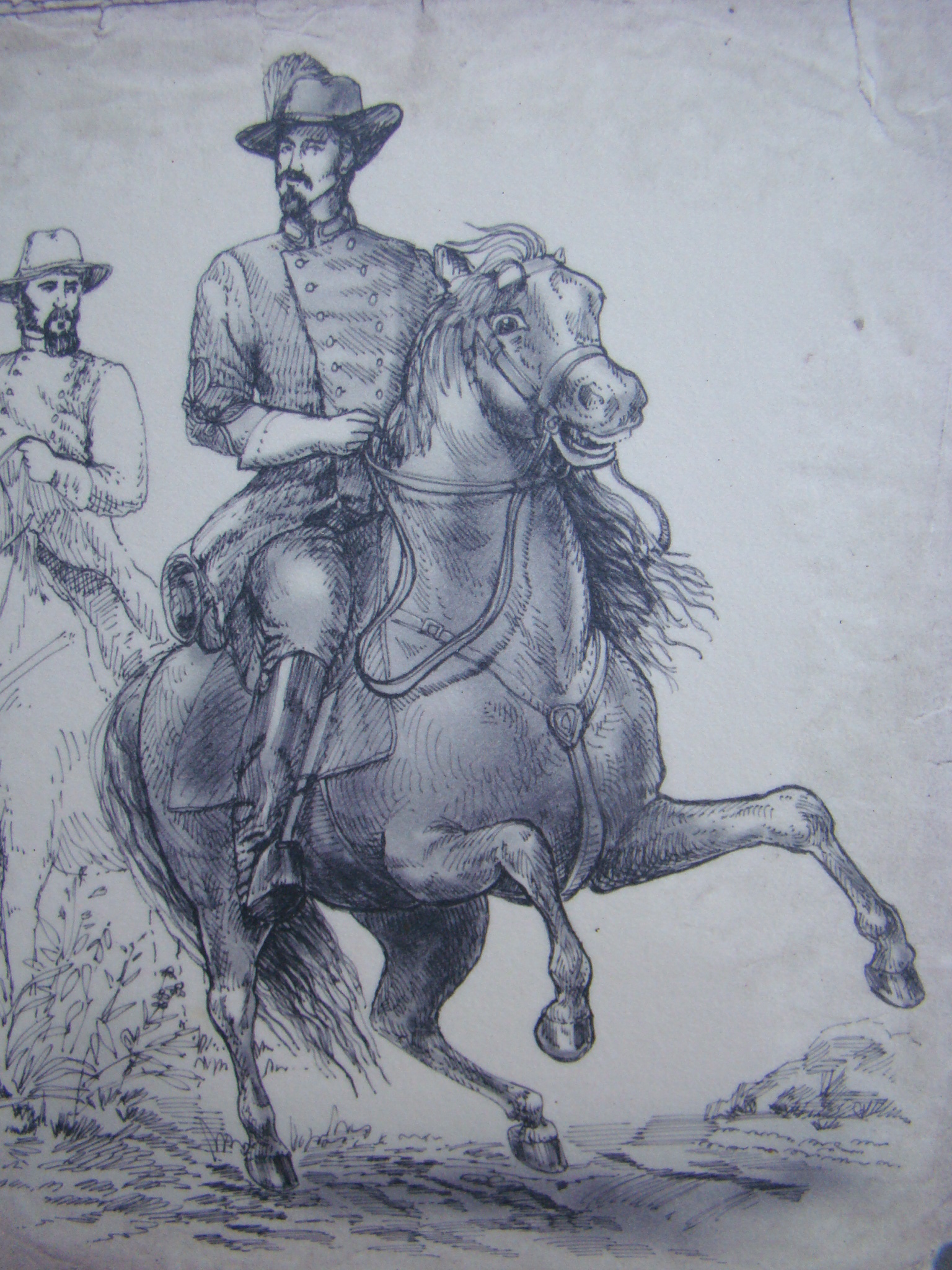
Sketch of Brig Gen John Hunt Morgan

Sketch of Brig Gen John Hunt Morgan

During the Civil War, 150 years ago in July of 1863, Brigadier General John Hunt Morgan led a band of scoundrels, known as Morgan’s Raiders, through Ohio on a two week expedition consisting of many raids and robberies. Their purpose was to create terror and deviate the attention of the Union troops from Confederate forces.

The Ohio Historical Society has commemorated that John Hunt Morgan Heritage Trail with 56 interpretive signs from Cincinnati to West Point in northeastern Ohio. Official dedication took place at the entry point into Ohio at Harrison in July of 2013, although planning has taken several years.

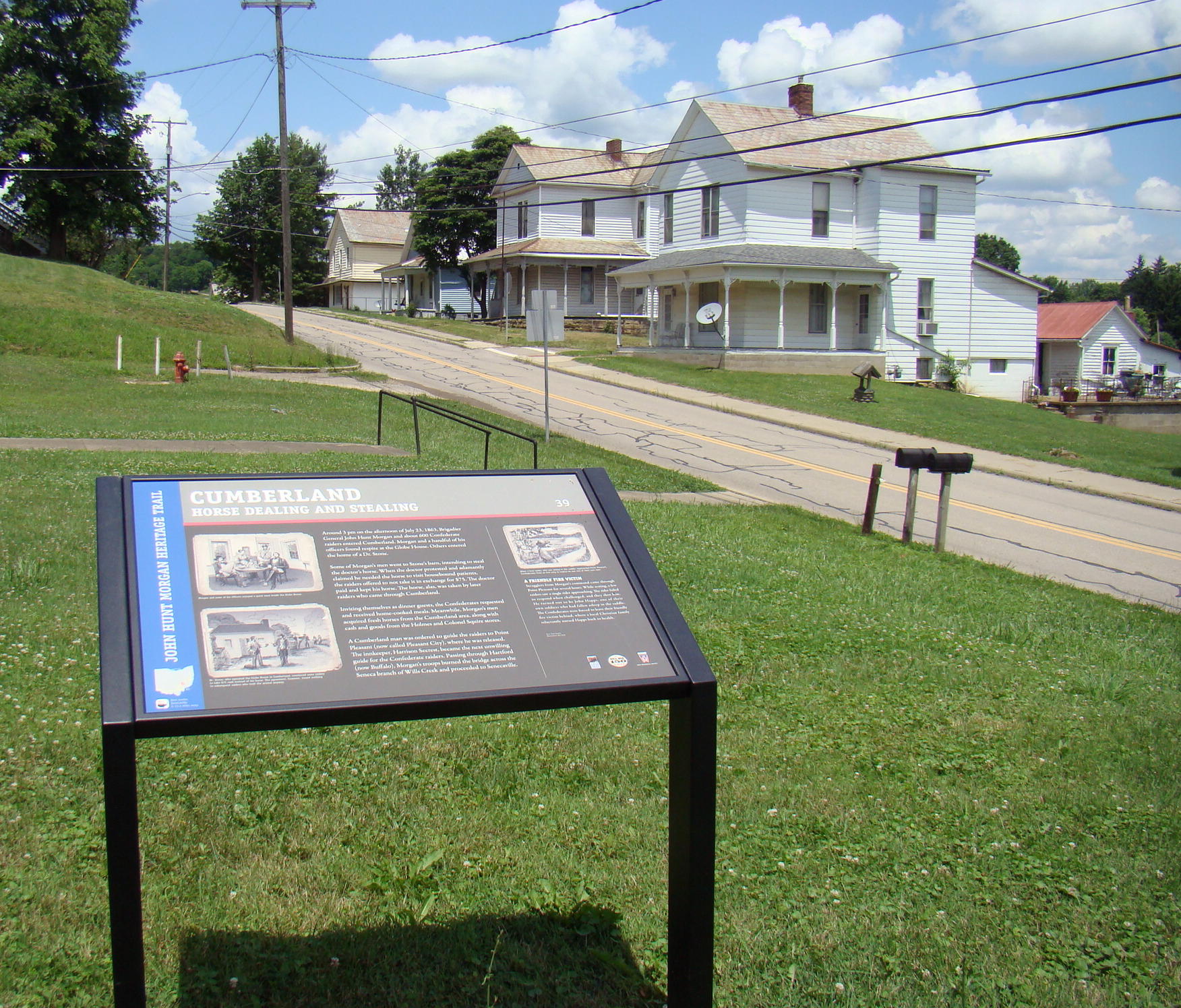
First Morgan's Trail sign in Guernsey County at Cumberland, Ohio

First Morgan’s Trail sign in Guernsey County at Cumberland, Ohio

Wanting to explore the local side of this route, my drive began in Cumberland, Ohio, which is the first place in Guernsey County, my home county, that Morgan’s Raiders appeared. Here in front of the old Cumberland High School is plaque #39, which begins the local trail of clever escapes by Morgan. Having invited themselves as dinner guests, Morgan’s men stole horses, cash, and even a guide before heading on to Point Pleasant (today’s Pleasant City).

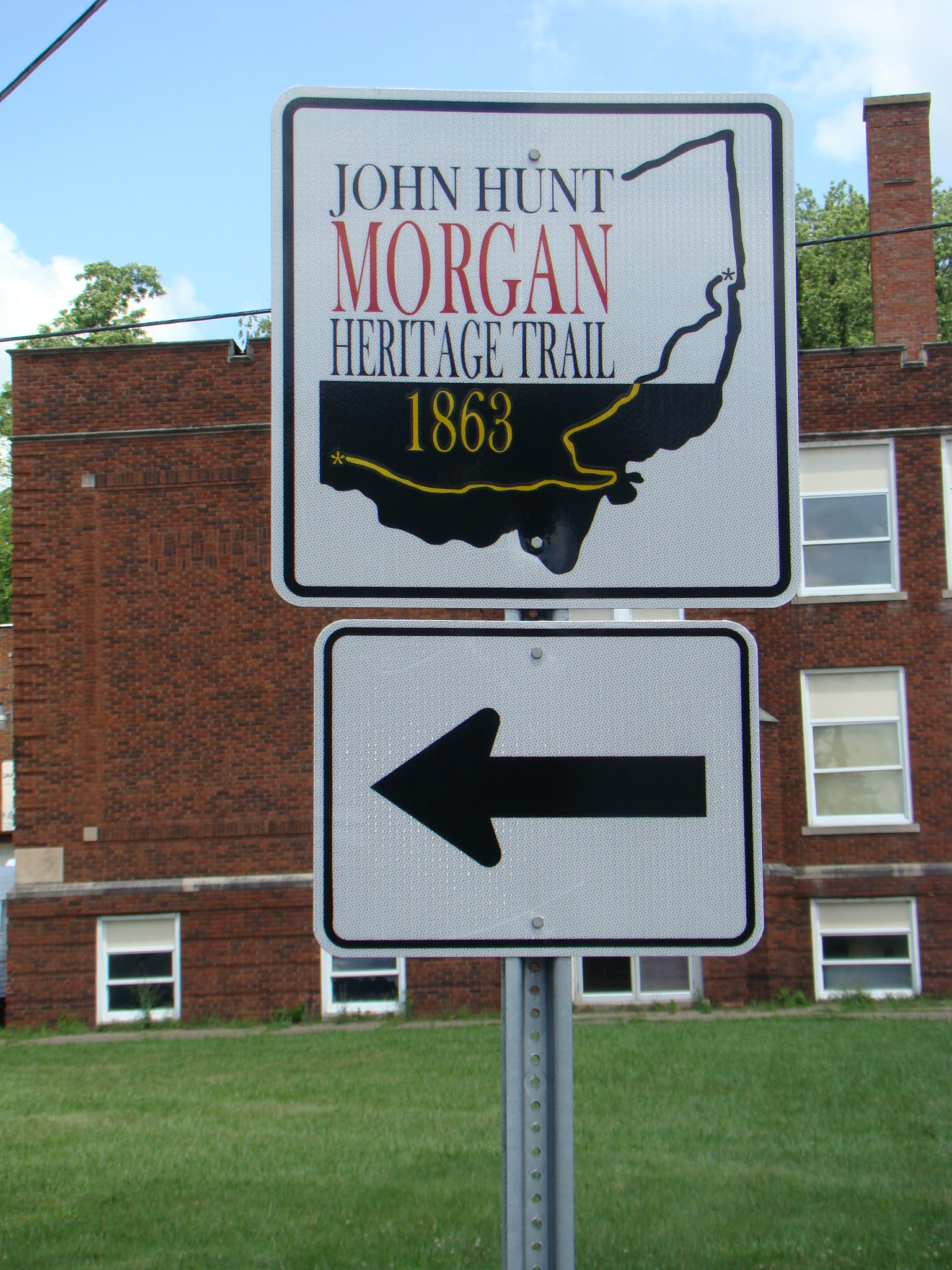
Watch for signs like this to follow the trail easily.

Watch for signs like this to follow the trail easily. Former Pleasant City High School sits in the background.

Morgan’s Trail is well-marked with signs at frequent intervals so you can rest assured you are still on the correct route. Stories on the plaques tell about real events that happened near each marker and all contain a couple beautiful old pictures from Civil War days. Each sign also explains, in the lower left hand corner, the location of the next commemorative stop

At the corner of State Routes 313 and 285 in Senecaville, followers will find plaque #40. On July 24 at 3 am, Morgan’s men rode into the village boldly knocking on doors to find out local road information. Lucky for Morgan, Colonel William Wallace of the Ohio Infantry had received an erroneous report and hours earlier had moved from that very crossroads. Ever since the battle at Buffington Island, Brig. Gen. James Shackelford had been in hot pursuit of the Raiders and seemed to be closing the gap.

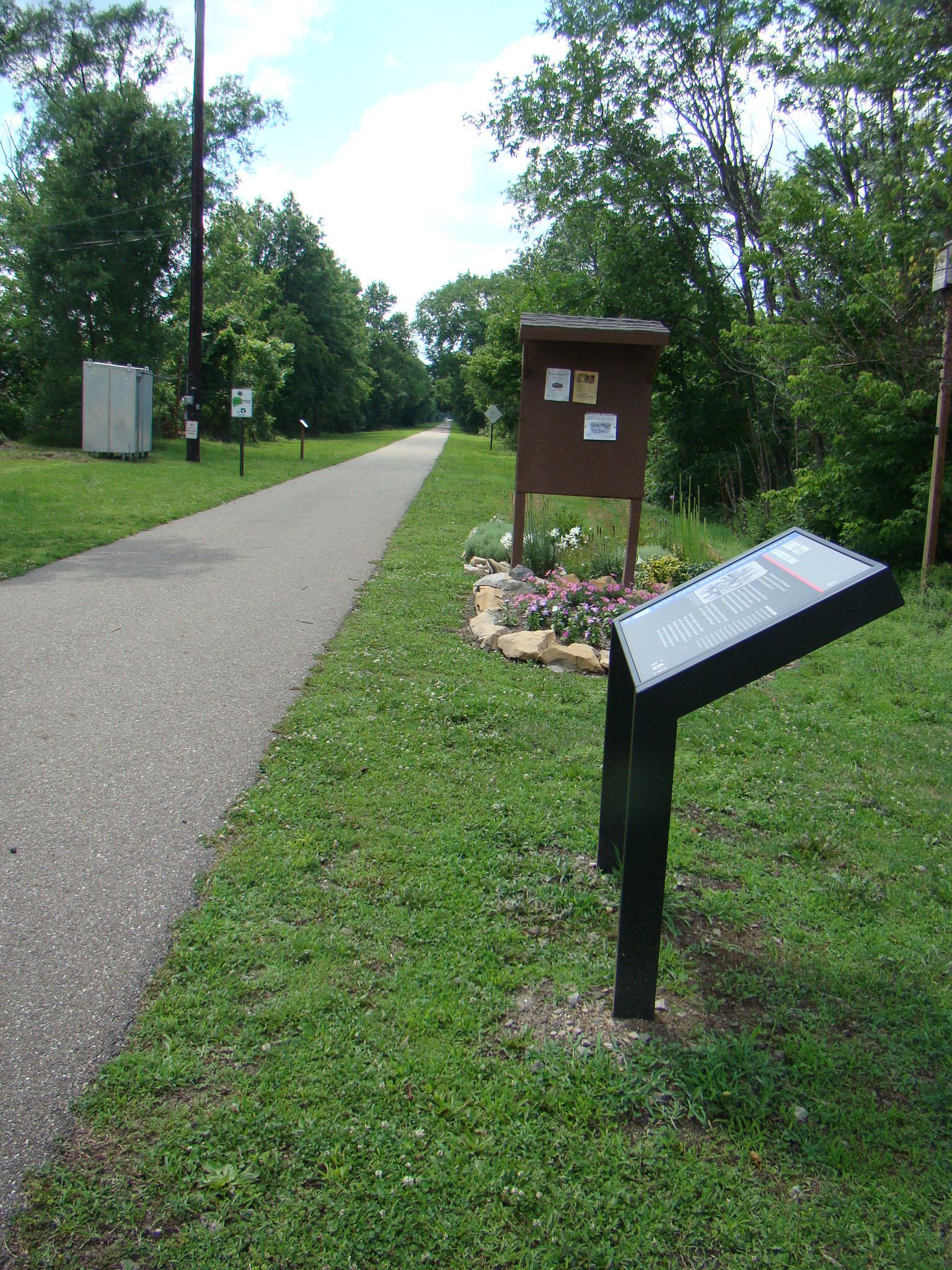
Interpretive sign #41 at Lore City trailhead.

Interpretive sign #41 at Lore City trailhead.

Campbell’s Station (today’s Lore City) had the most destruction of any place in Guernsey County with Shackelford being only seven miles behind. Located at the trailhead of the Guernsey Trail, #41 plaque area was the only one in Guernsey County that had been expanded with other information about the history of that area, as well as beautiful flowers.

At the edge of town on Old Mill Road, the battle at Washington (today’s Old Washington) is recognized. Sign #42 is near Cemetery Hill where Shackelford’s troops began firing on Morgan’s Raiders, who had spent the night in Washington. The officers had moved in, unwanted, to the American Hotel while others slept throughout the town, even in the streets. It came as a surprise that the plaque was not downtown with the 1927 monument to this skirmish.

Those four stops mark the route through Guernsey County, then the Trail guides you on toward Piedmont. By now you are beginning to get caught up in the thrill of the chase and to understand the lay of the territory they are crossing. Winding roads follow the Trail as best they possibly can, but Morgan’s Raiders attempted to travel through the woods quite often so the route is close, but can’t possibly be perfect.

Imagine the surprise and fear when up to 2000 Confederate soldiers arrived in one of these small towns along the way.  No wonder the unruly children were disciplined with the phrase: Morgan will get you!

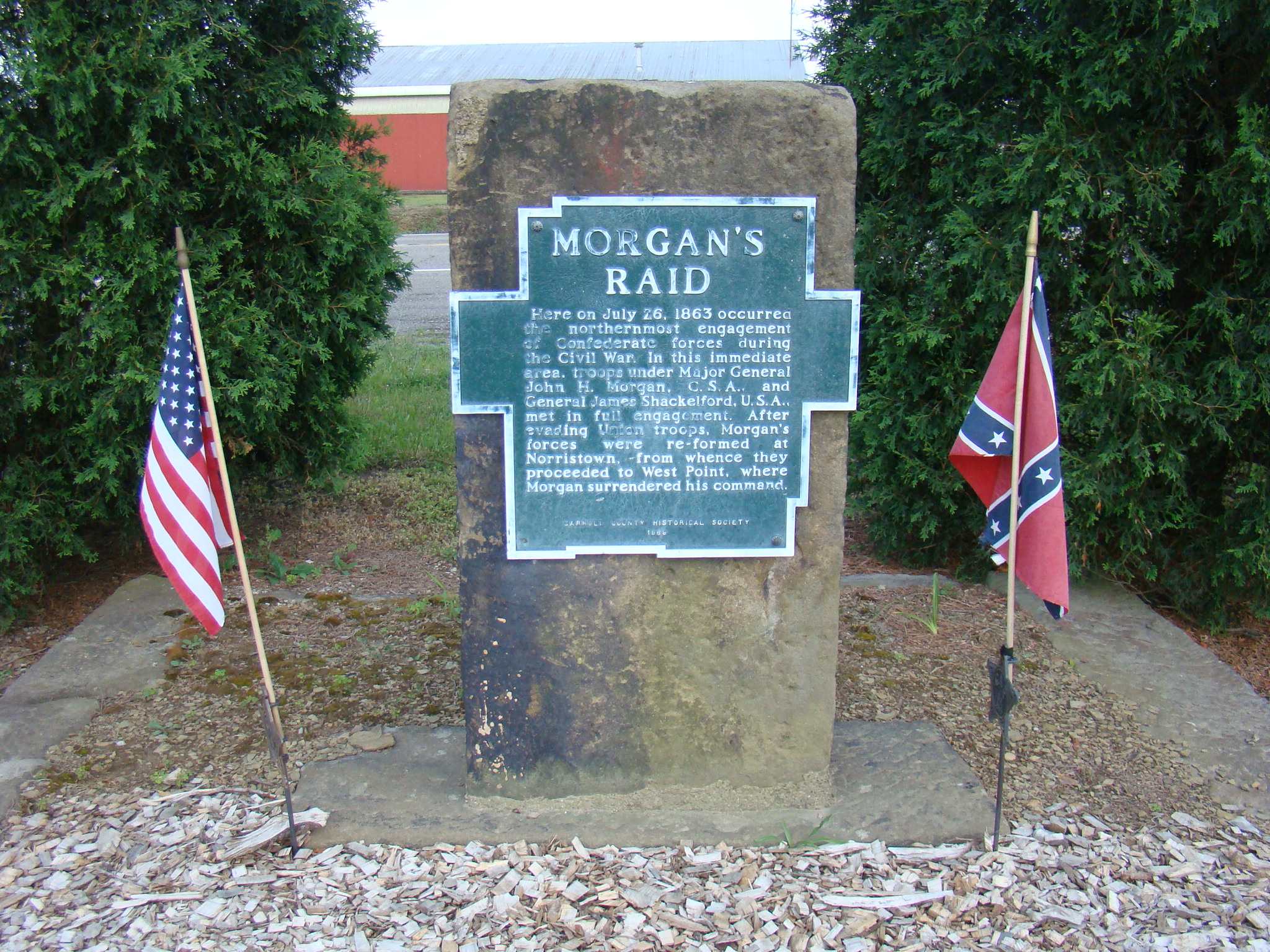
Monument to honor Morgan's Raid erected by Carroll County Historical Society in 1868.

Monument to honor Morgan’s Raid erected by Carroll County Historical Society in 1868.

My original plan had been to follow Morgan’s Trail just through Guernsey County, but once caught up in following Morgan’s Raiders, it was impossible to stop before reaching the spot where Morgan was captured. Being led through Harrison, Monroe, Jefferson and Carroll counties, the posted signs by the Ohio Historical Society were  easy to follow.

With troop numbers diminishing at each spot, Morgan continued to use clever escape tactics as long as he could.  The Raiders might pretend to be Union soldiers, stir up dust to hide themselves, or give promises they could never fulfill.

The last few marked encounters led through rugged, gravel roads. As you slowed down on these rutted and often muddy roads, you could almost feel the weariness of the troops.

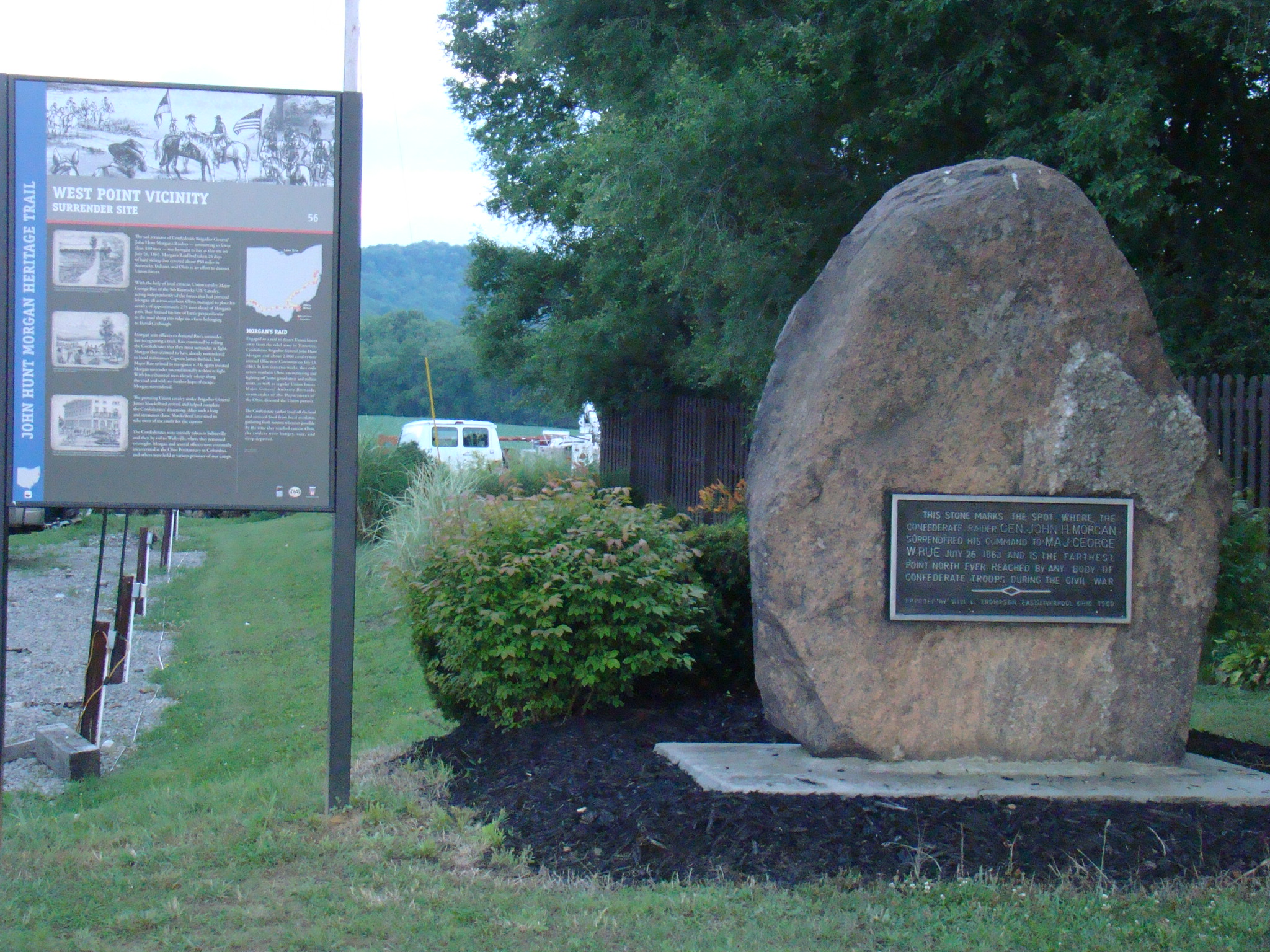
End of Trail near West Point, Ohio

End of Trail near West Point, Ohio

Finally, Morgan’s Trail, with plaque #56 entitled West End, came to an end in someone’s front yard where a monument had also been placed years ago. Morgan had tried his best to get back to cross the Ohio River and he was getting so close. Minutes later, I saw the beautiful Ohio River and felt a little sympathy for Morgan’s never reaching it.

The Heritage Trail from Cumberland to West End took Morgan’s Raiders four days from July 23 – July 26. By car, it took about eight and a half hours and I didn’t steal any horses, demand any dinners, or burn any buildings. They must have been worn out to have covered all that territory so quickly on horseback.

Even though he was captured for the moment, his cleverness helped him escape prison and travel unknowingly with a Union soldier on a train back home. Despite the chaos and destruction left behind, he taught the importance of never giving up in your quest to reach a goal.

Autumn Sunday Drive in Beautiful Ohio

“Want to take a ride?” Those were familiar words growing up, as my father always enjoyed a drive through the country, at any season of the year. While mom always went along, she never enjoyed them as much as father and daughter. Since we liked to explore all the back roads, mom came to calling us “gypsies”. The passion for exploring has never left, so now you know a little background for my blog, Gypsy Road Trip.

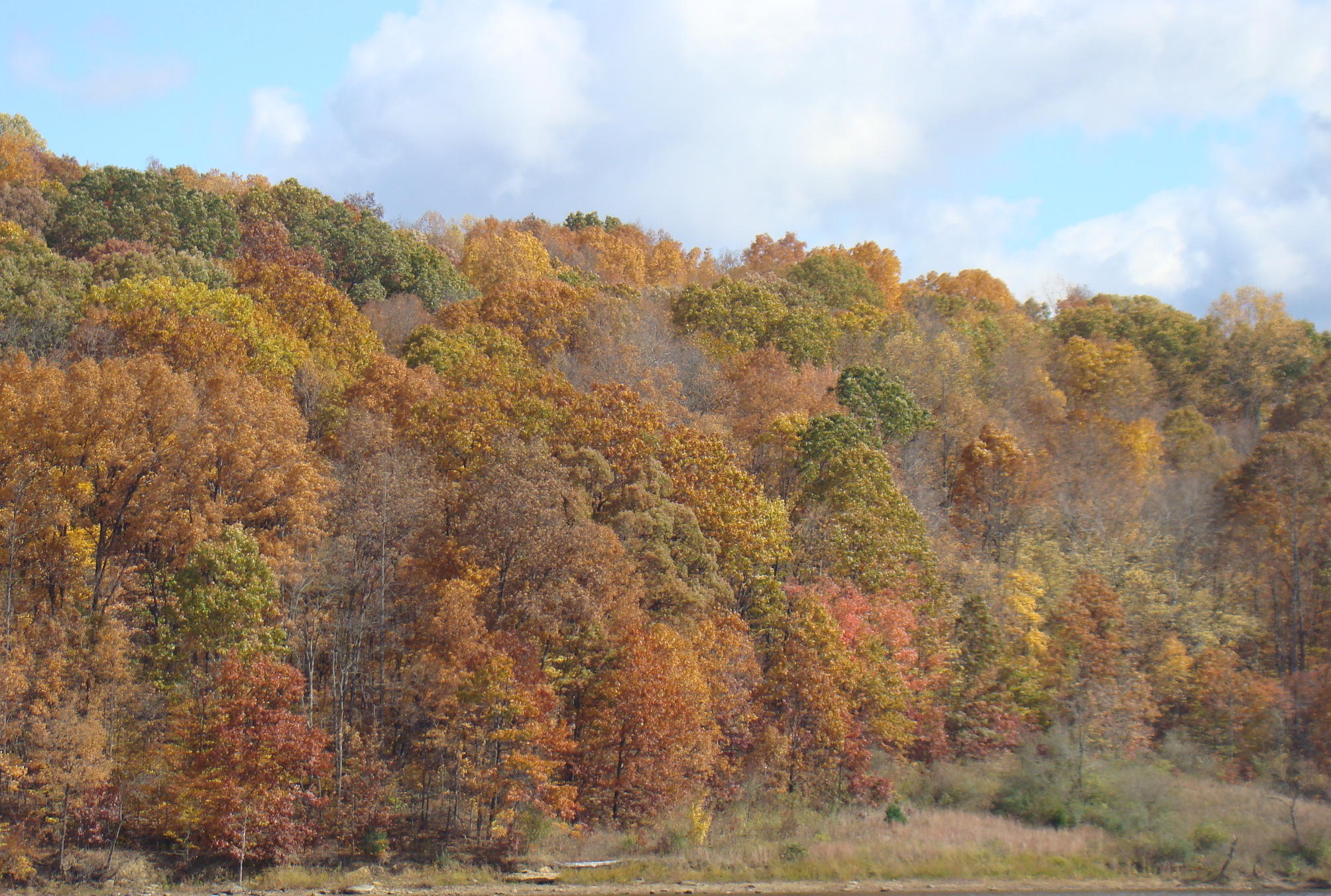
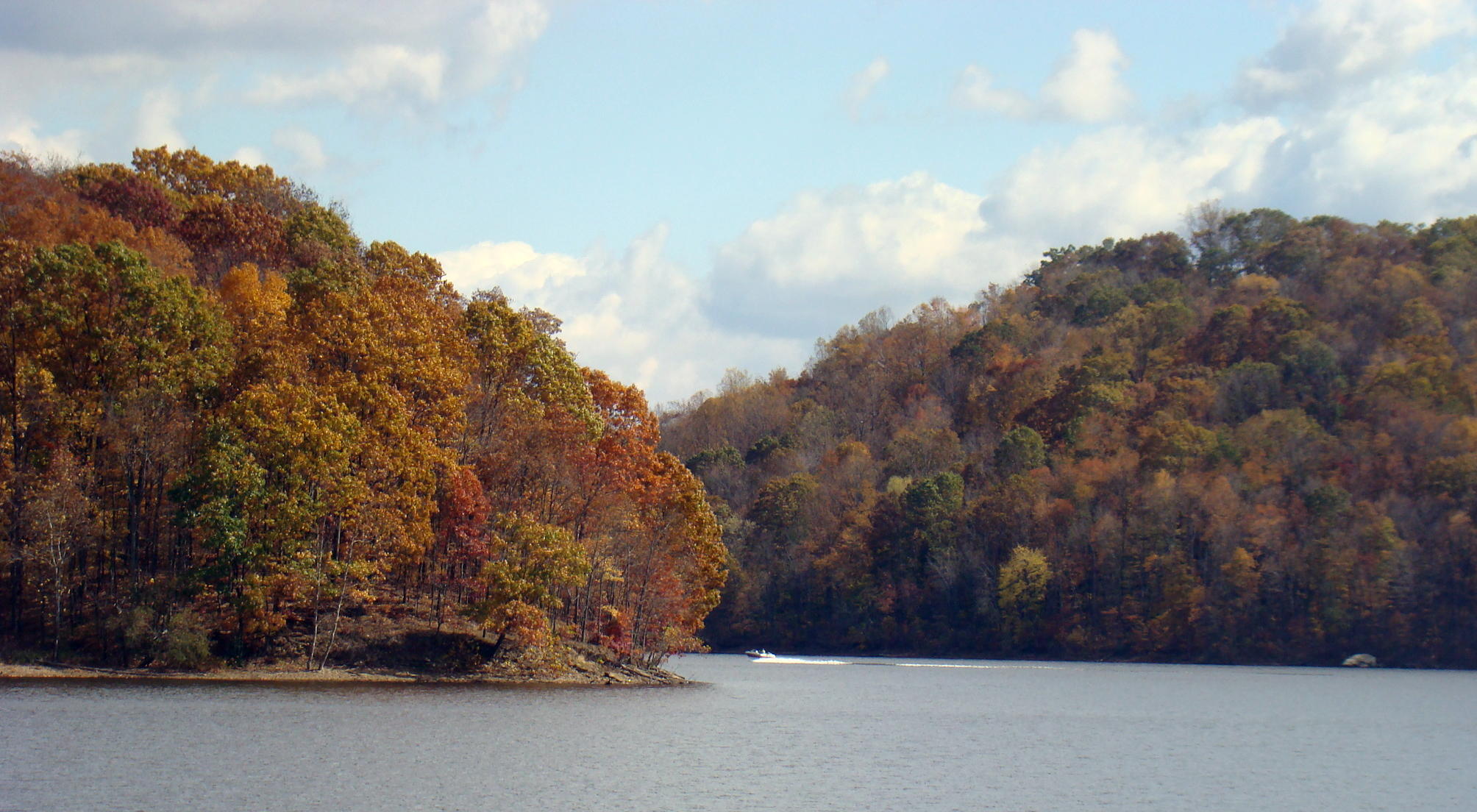
This beautiful autumn Sunday Drive in the hills of  Southeastern Ohio began at the dam of nearby Salt Fork Lake.  With fluffy clouds in a bright blue sky, the shades of autumn leaves were reflected off the calm lake. Tranquility surrounds you here interrupted only by the distant sound of a speedboat sliding through the waters. Sit and soak in the sun and grab some fresh ideas floating through the air.

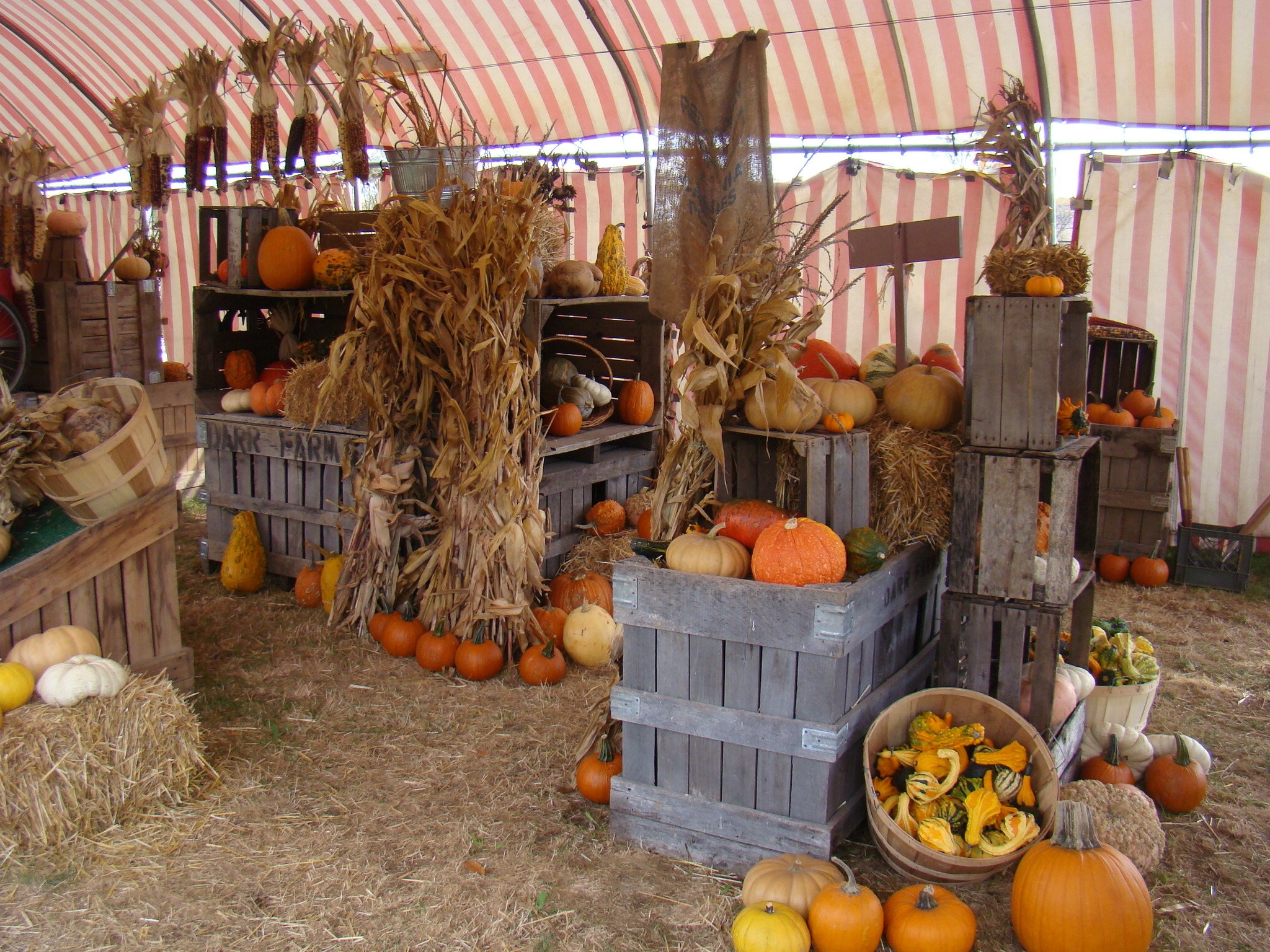
Sunday Drives are aimless ventures and who knows where the next random turn will lead. Along the side of the road the autumn colors catch your eye where a large red and white striped tent is fall home to Center Creek Farms. Here families  stop to let their children explore the scarecrows, pumpkins, and wagons that are all part of the fall scene. There is even a pick-your-own pumpkin patch so everyone can see pumpkins at their various stages from green to orange. No roadside stand at this time of year would be complete with out apple cider, preserves and honey. Bought a jar of local raw honey as it’s always good to ward off a cold when a sore throat first starts to develop.

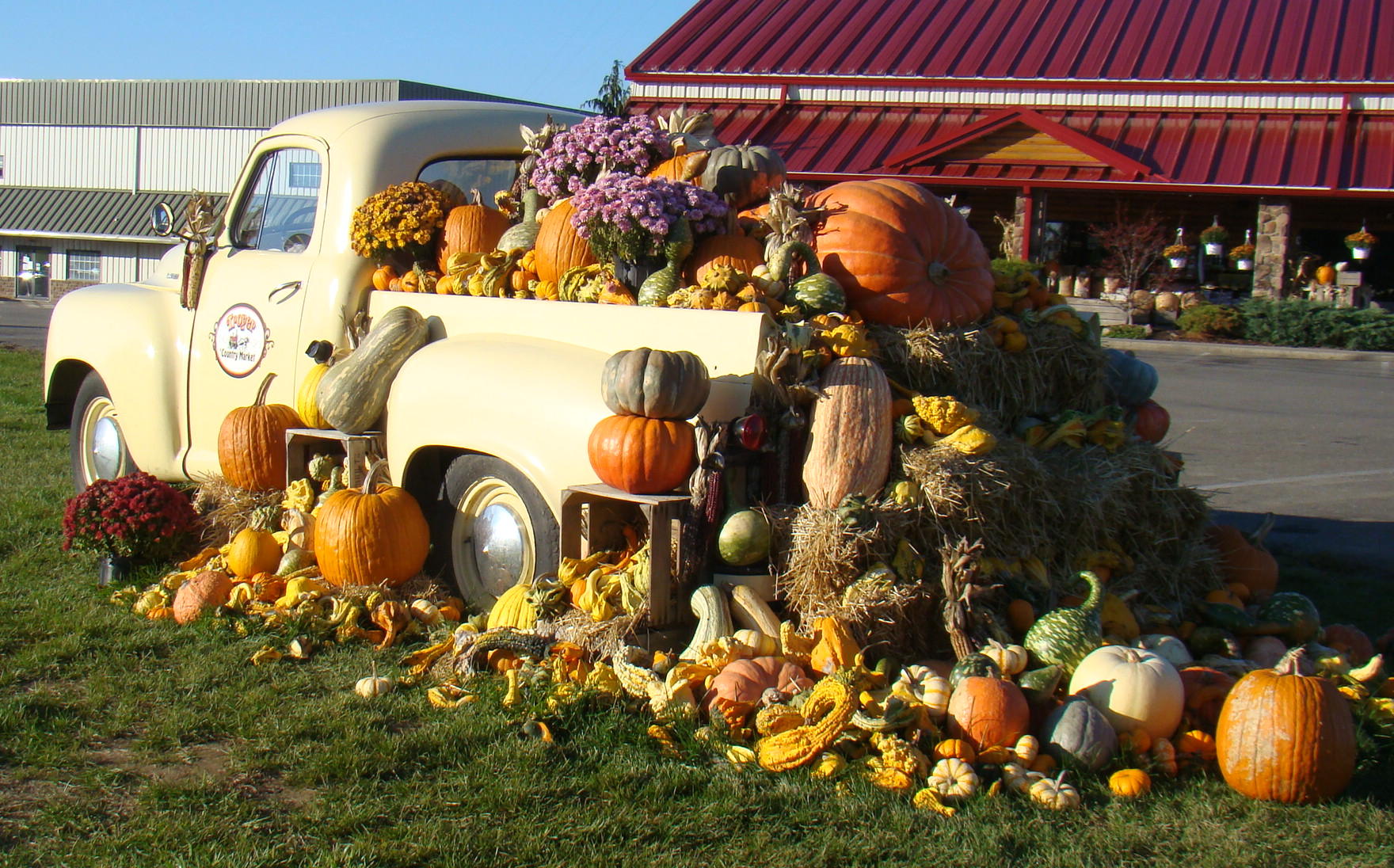
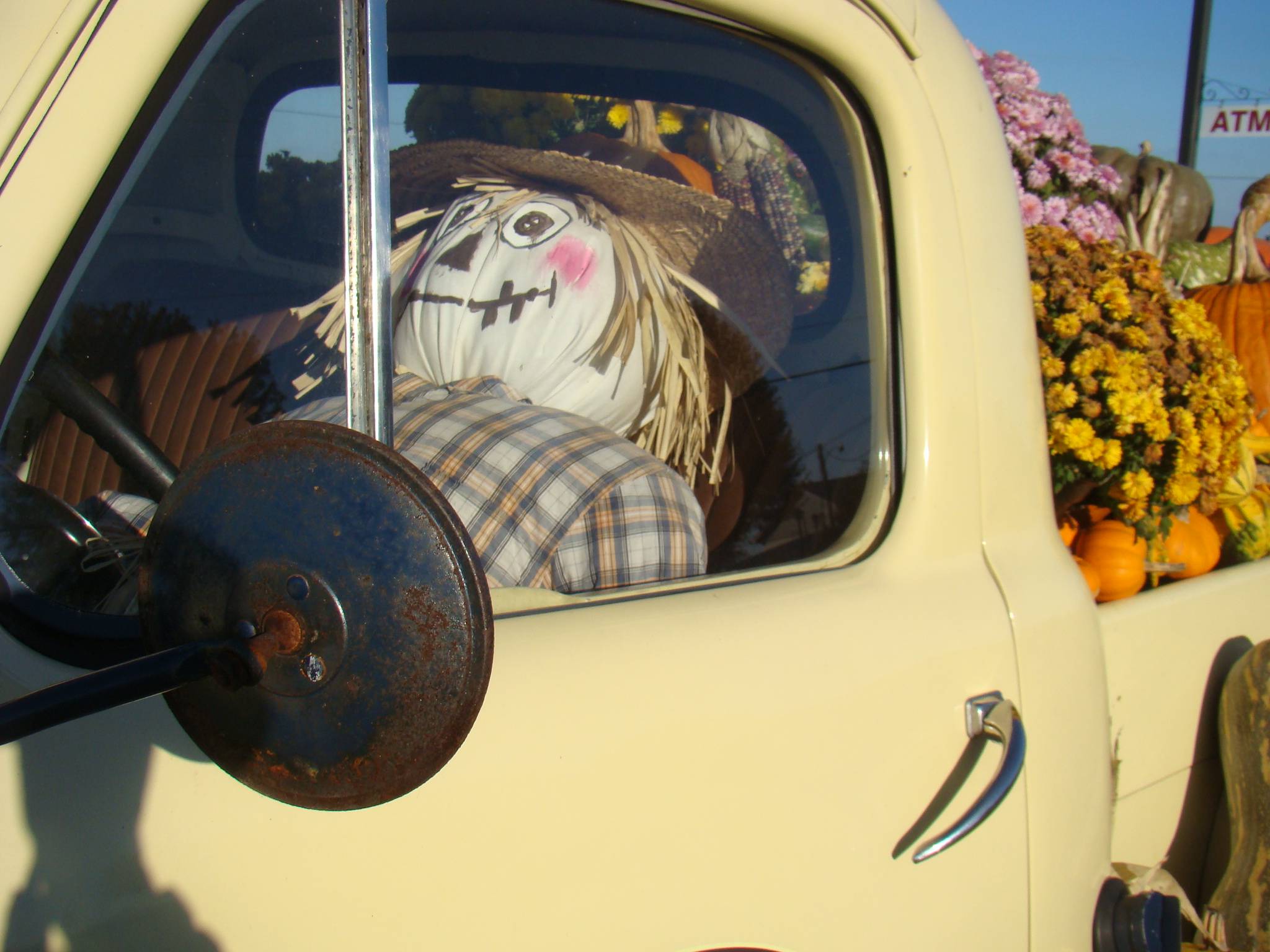
Farther down the road, an old Studebaker pickup is loaded down with autumn treasures at the Troyer’s Country Market. There’s a cute scarecrow driving this load of beautiful mums, pumpkins and other autumn decorations. Mums were brought to the United States back in colonial times and colors range from the traditional yellow shades to oranges, purples, and pinks.  Since they are  ‘short day plants’,  chrysanthemums bloom in the autumn when the nights are longer.  A pot of beautiful mums will brighten your life, or the life of a friend, for perhaps several months.

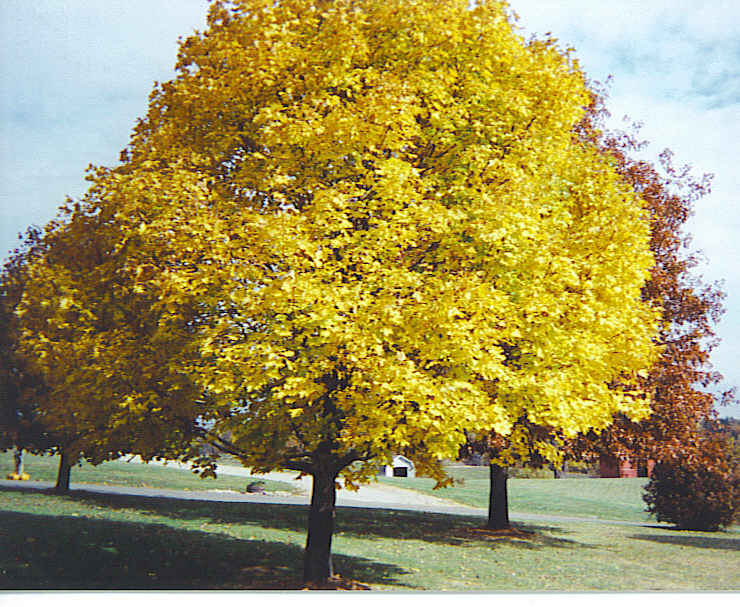
Sometimes a single tree can catch your eye as it glows like a ray of sunshine.  Here a golden maple tree is the center of attraction in someone’s beautiful yard. Temperature and moisture are the two elements that determine the amount and intensity of autumn colors. The most beautiful colors occur when there is a series of warm autumn days with cool, but not freezing nights…following a year of a warm, wet spring with normal summer rainfall. With those determining factors, every autumn brings about a new spectacular display.

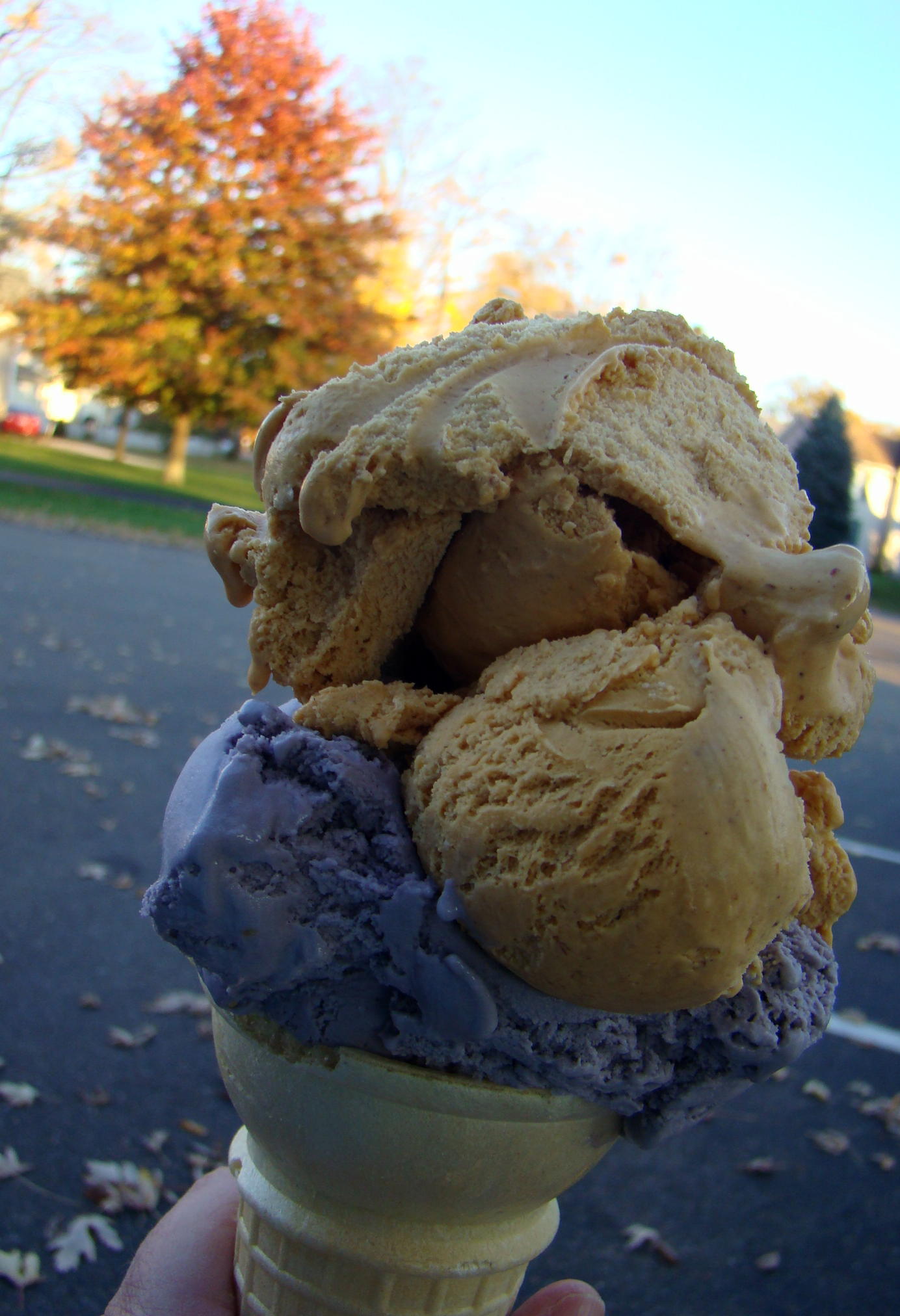
Had to top off the day with a stop in West Lafayette at a favorite ice cream stand. Noticed that keeping with the season they had pumpkin ice cream, so had to give it a lick. Wasn’t sure if the pumpkin would be something to my taste, so had them put a scoop of raspberry on the bottom so there would definitely be something deliciously satisfying. Both flavors hit the spot!

Any season of the year is a great time for a drive through the countryside wherever you happen to live.  If  for some reason you can’t take a drive, stop back and read another gypsy jaunt here on Gypsy Road Trip. Enjoy the adventure!

An “Old Soul” Explores Beautiful Red Rock Sedona

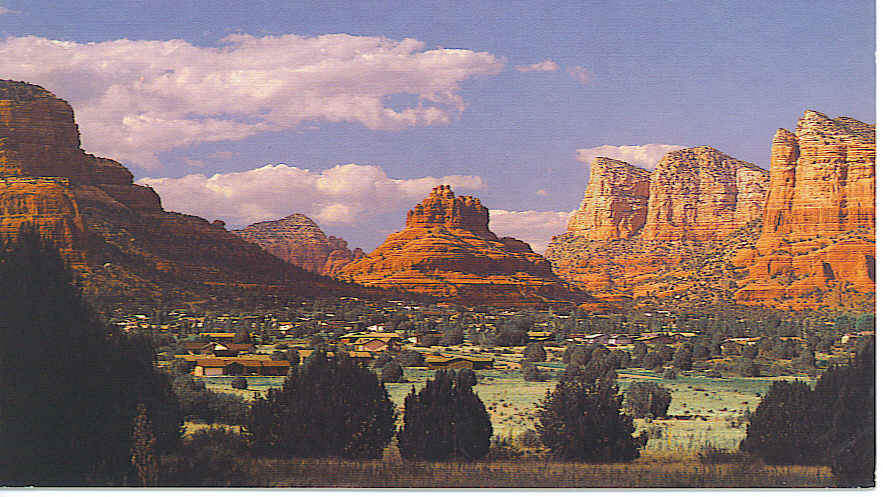
Sedona!  Just the word brings to mind beautiful red rock formations surrounded by a high level of spiritual awareness. For those interested in the metaphysical, Sedona, Arizona is the perfect place to explore. This New Age capital of America is nestled in the mouth of beautiful Oak Creek Canyon.

Spectacular views draw people from all over the world to this “red rock country” where they experience the majesty and peace of the natural wonders appearing around every corner of the road. The sandstone formations glow red and even orange, especially at sunrise and sunset here in Sedona.

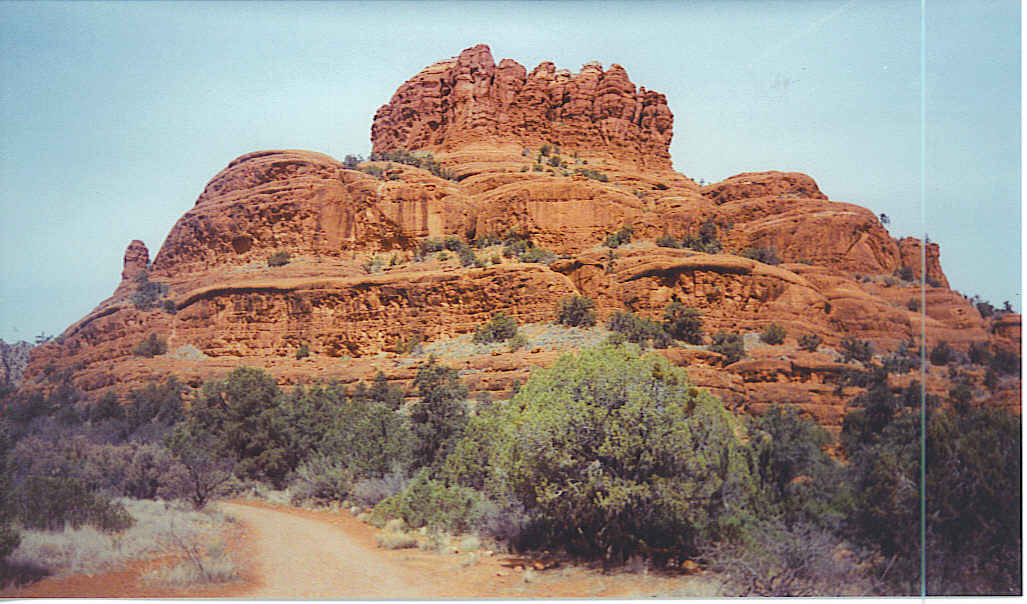
Bell Rock captures the eye and the heart as it emits an energy that can’t be explained. This is just one of several energy vortexes in and around Sedona. For those not familiar with vortexes, they are created from a spiraling motion around a rotating center, such as water going down the drain or a dust devil in the desert. But here in Sedona, the energy vortex is created by spiraling spiritual energy making it a great place for prayer, meditation and healing. There is no real explanation, it must be experienced…and that is just what I did.

While walking around Bell Rock, which is a two hour trip – at least for me- instead of getting tired, my feet moved faster at the end than they did at the beginning. Just had to keep a piece of the red rock with me -it fell at my feet- and still have it under my car seat today.  Maybe that is how I keep going and going on my Gypsy Road Trips… like the energizer bunny.

As you can imagine, Hollywood also noticed the beauty of this area and over sixty Hollywood productions, mostly Westerns,  have been filmed here. John Ford’s production of Stagecoach rolled into Sedona in 1938 beginning the bonanza of films and stars that would become familiar to the red rock area. Classic greats such as John Wayne, Elvis, Rock Hudson, and Art Carney have enjoyed hanging out in the red rocks while starring in scenes shot here.

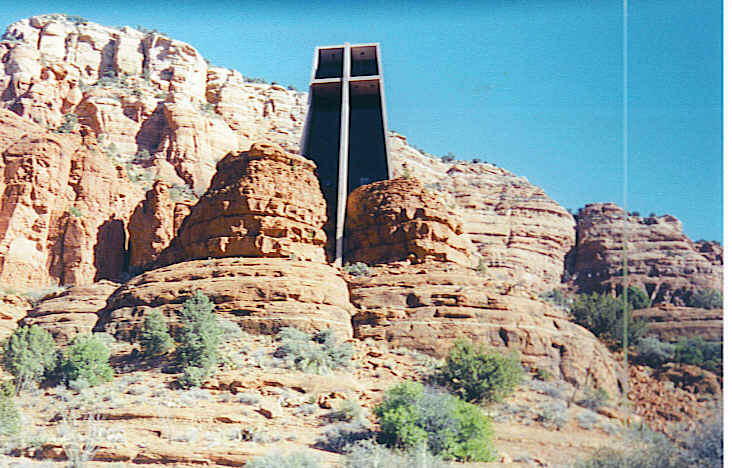
Just a short drive south of Sedona,  the Chapel of the Holy Cross provides a spiritual uplift to the trip as well as another gorgeous view of the surrounding area. Built back in 1956,  the chapel rises 250′ out of the red rock and its design was inspired by the Empire State Building. The front of the chapel faces sunset thus illuminating the interior naturally with sunlight.

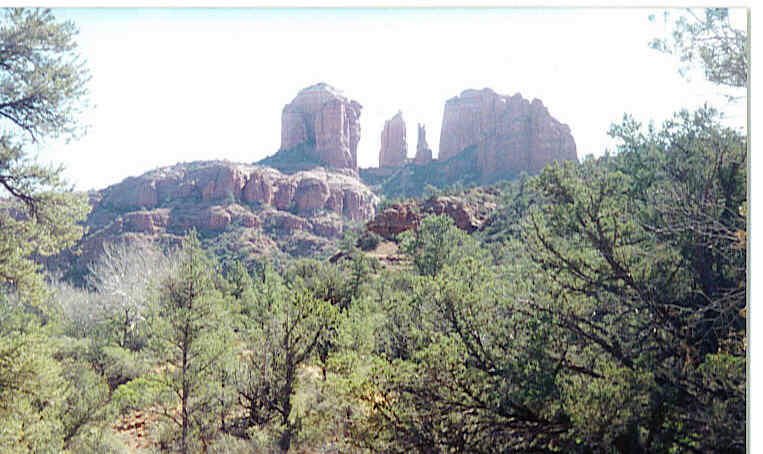
Cathedral Rock, the landmark of Sedona, provided another relaxing place to walk, but personally didn’t feel the energy surge experienced at Bell Rock. Trails lead to the “saddle points” or gaps in the beautiful red rock configuration. While the trail is exceptionally steep, a breeze is nearly always present due to the air movement through the saddle points.

Stayed on the edge of town in the red rocks at a rustic little place called quite naturally, Red Rock Lodge. Here the owner gave me a tour of her beautiful flower garden and explained a little about the flowers of the region. Arizona Poppy, Indian Paintbrush, and Desert Primrose add beauty and a pleasing aroma to the surrounding mountains. Rates were affordable at this small comfortable lodge while the views were extraordinary.

Couldn’t leave town without getting a psychic reading at a charming place with beads hanging from the doorway, a crystal ball on the table, and cards spread to tell me that I was indeed an “old soul” who had been around for a long, long time. This old-fashioned metaphysical community is the place to immerse yourself in Reiki, acupuncture, aromatherapy, UFOs,  and much more.

Sedona has grown since my last visit, but even today there are few streetlights, no buildings reach over two stories high, and every structure must match the primary colors of the rocks. No Golden Arches for McDonald’s here – arches in Sedona are turquoise! These awe-inspiring red rocks formed in beautiful buttes, spires and canyons capture your attention; however, there is a serenity here among the beauties of nature that draws one back again and again.

The Sedona area is located off I-17 at exit 298. Proceed on Highway 179 which after about 14 miles  will lead you to the Y in the road from which you will be guided to various area attractions.  Grand Canyon is a couple hours north of Sedona, while the intriguing Sonoran Desert lies south. Not many can resist the charm, so plan to spend a day or two in this breathtaking area.