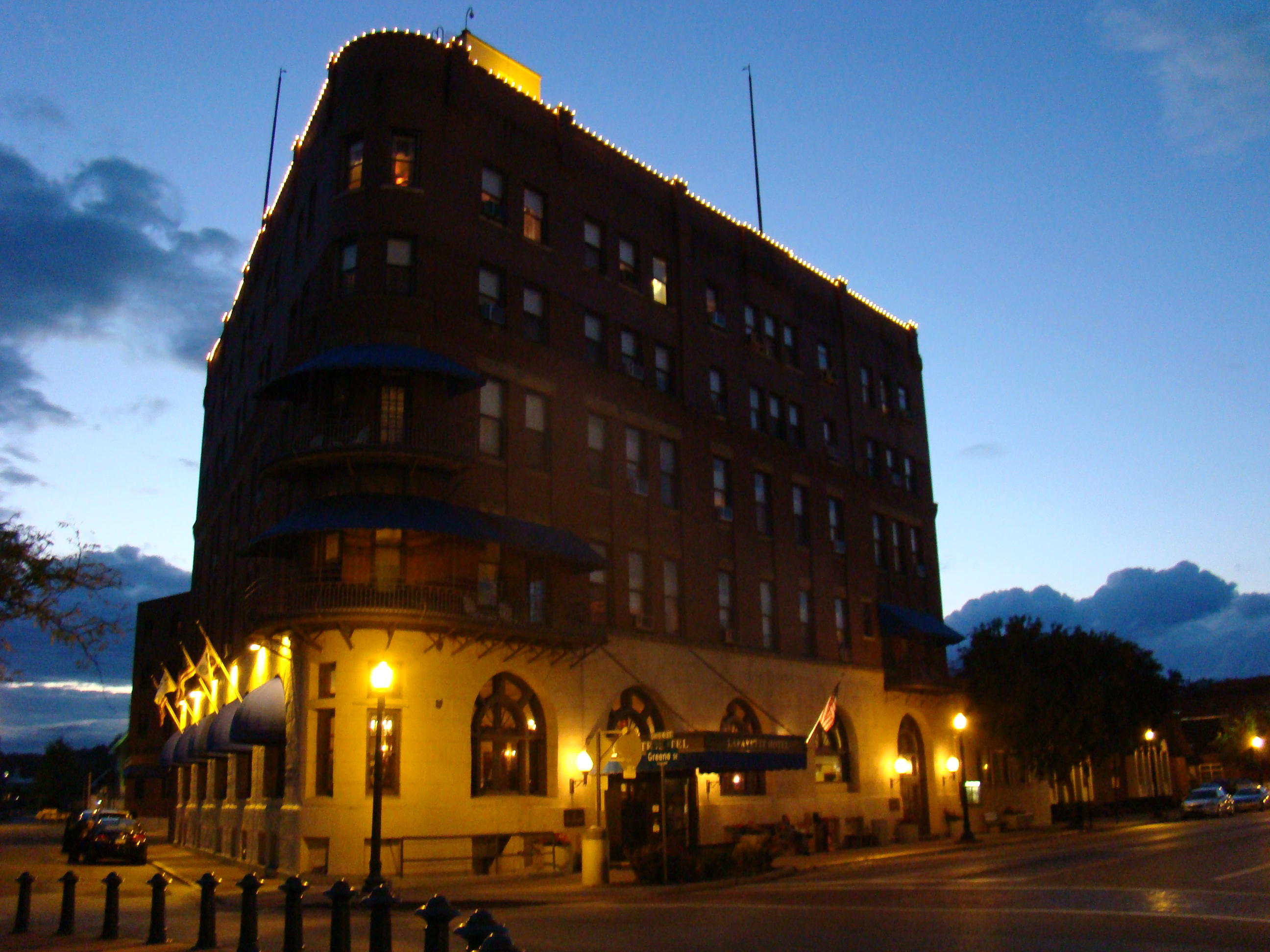
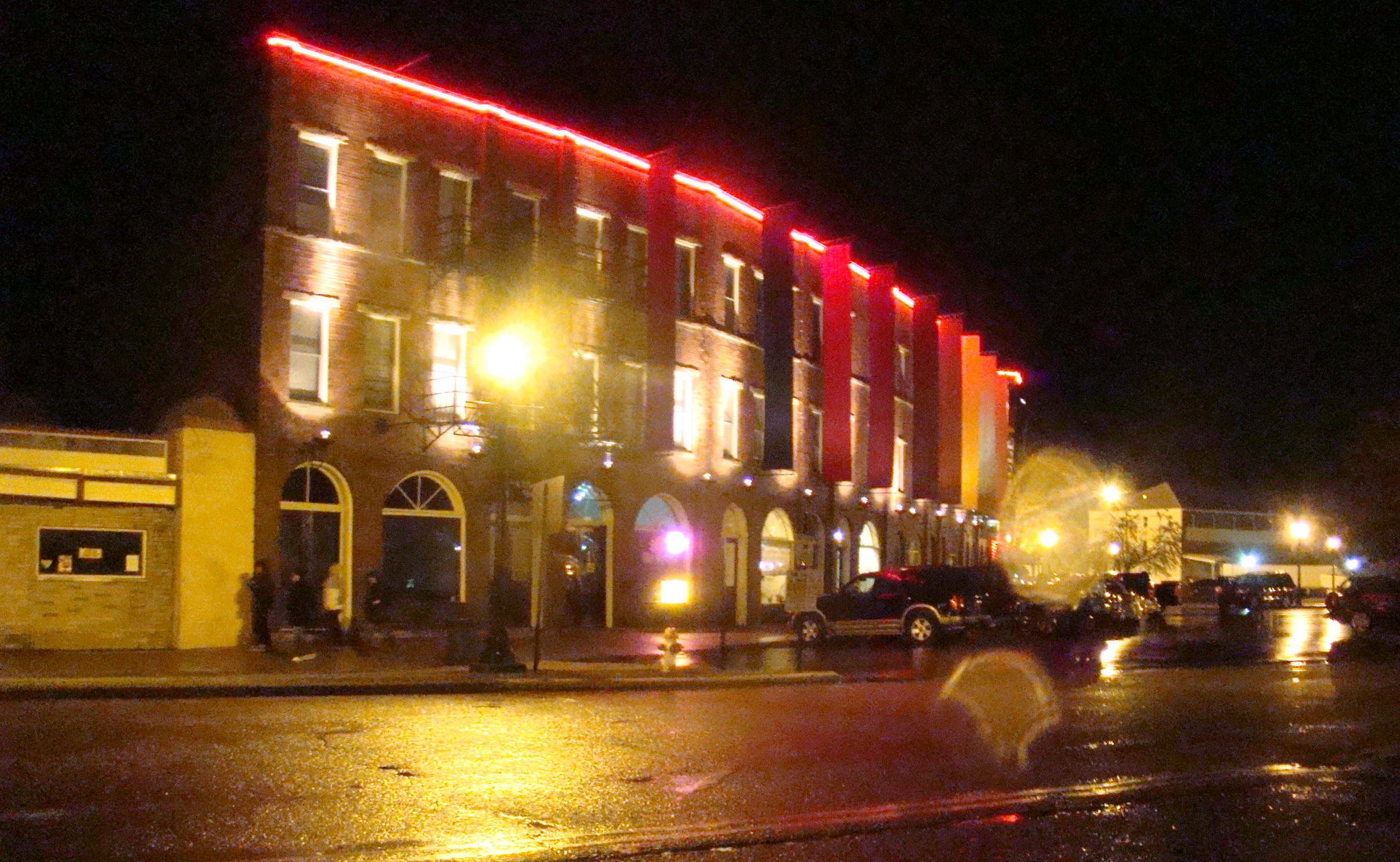
Places to go and things to see by Gypsy Bev

Archive for the ‘History’ Category

Discover Elegance at J.E. Reeves Victorian Home in Dover, Ohio
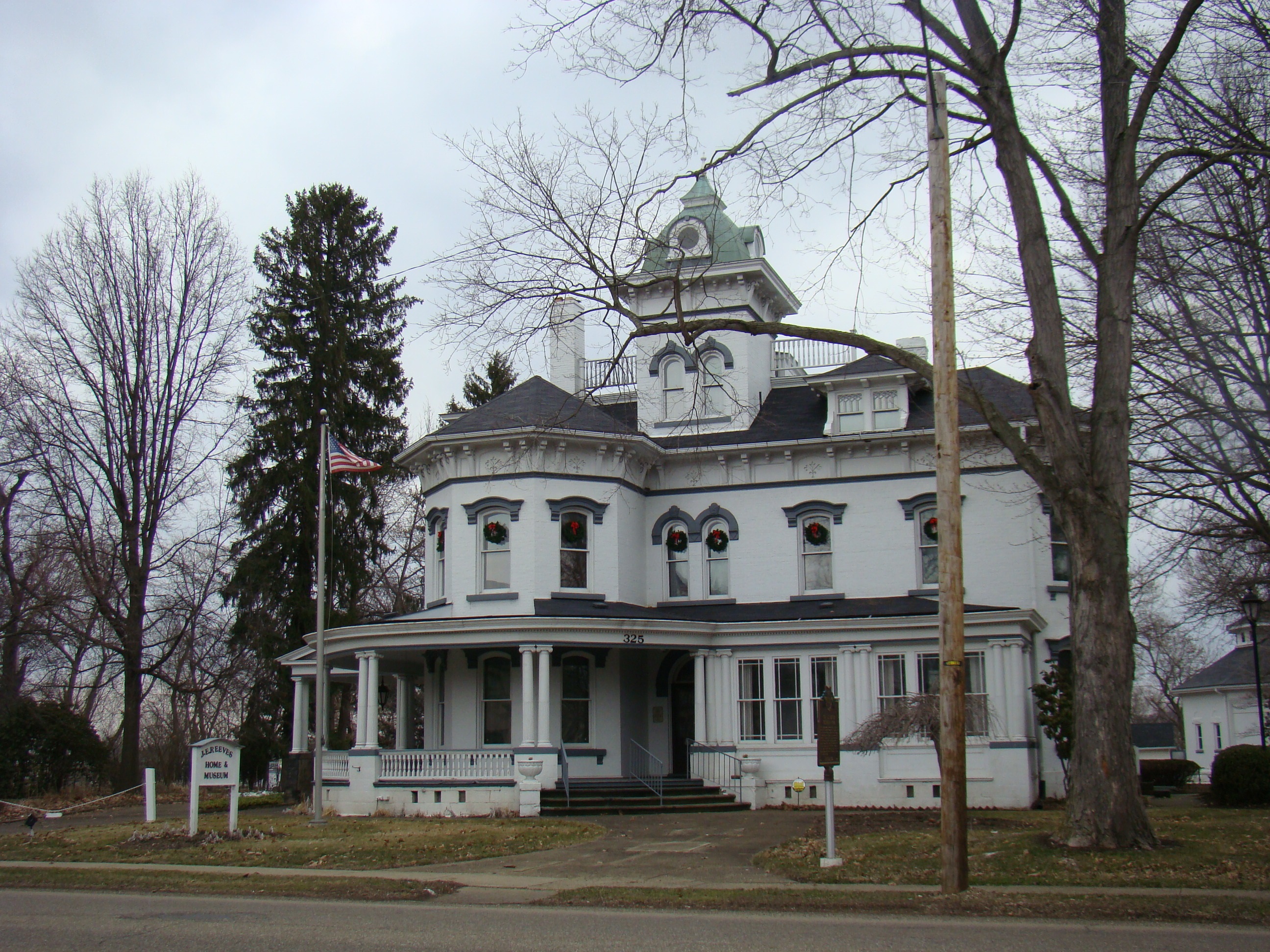
J.E. Reeves Victorian Home holds many treasures.

J.E. Reeves Victorian Home holds many treasures.

“Ahead of its time” would best describe the magnificent home of Jeremiah and Jane Reeves in Dover, Ohio during the early 1900s. Today, the J.E.Reeves Victorian Home and Carriage House Museum still remain a showpiece of beauty and craftsmanship.
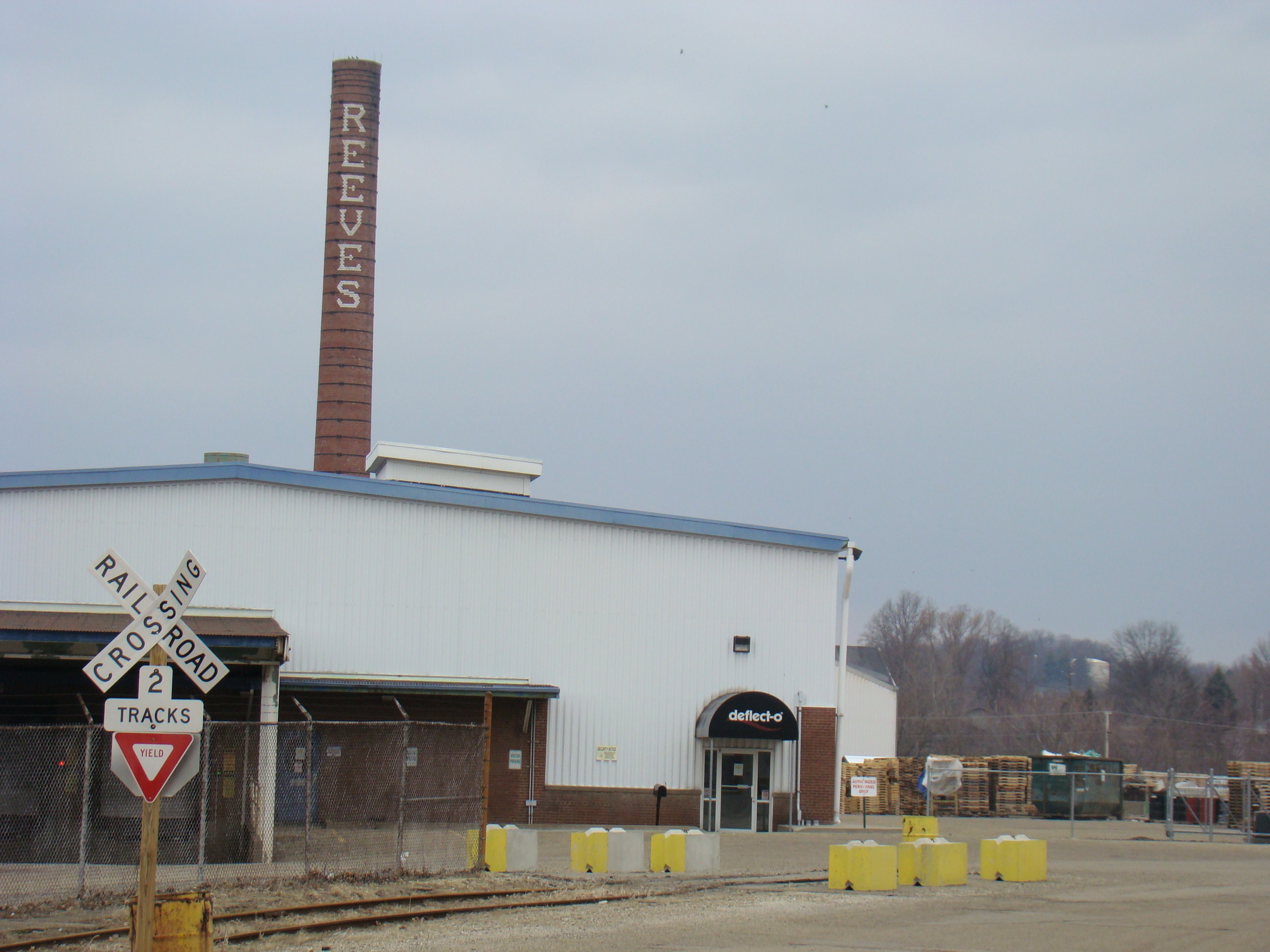
Reeves smokestack still stands today in acreage behind the house.

Reeves smokestack still stands in Dover today on acreage behind the home.

But Jeremiah did not always live in such grandeur. Born in England in 1845, Jeremiah began working as a boilermaker in Wales at the age of ten. When he was eighteen, he and his brothers moved to the United States, where they worked in the mills in Cleveland and Pittsburgh. A few years later in Niles, Ohio, they organized Reeves Boiler Works.

When they heard that Dover Rolling Mill was having financial problems, they purchased and reorganized that industry in the growing canal city. Reeves Steel became the backbone of industry in the Tuscarawas County area. The family remained in the iron and steel business for the rest of their lives, but had many other interests as well.
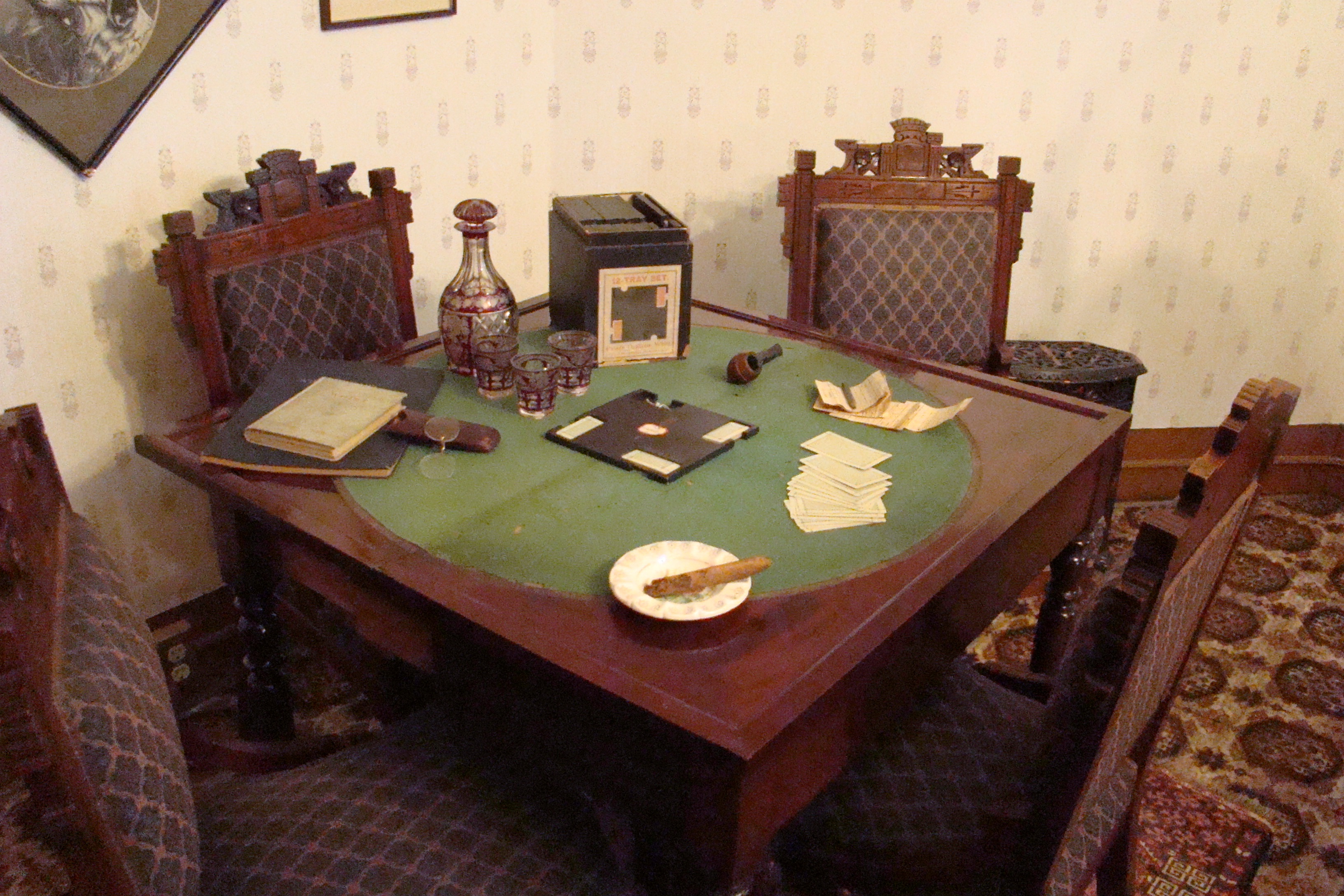
The wealthy played Whisk around the game table.

The wealthy played a card game of Whist around the game table.

When Jeremiah needed money to expand his business, no area banks would loan him the needed funds. But that didn’t deter Mr. Reeves. He opened his own bank. Over the years, he also built workers’ homes in Tin Town, a hospital, a streetcar line, Reeves Hotel and much more. Jeremiah definitely held the key to successful business encounters.
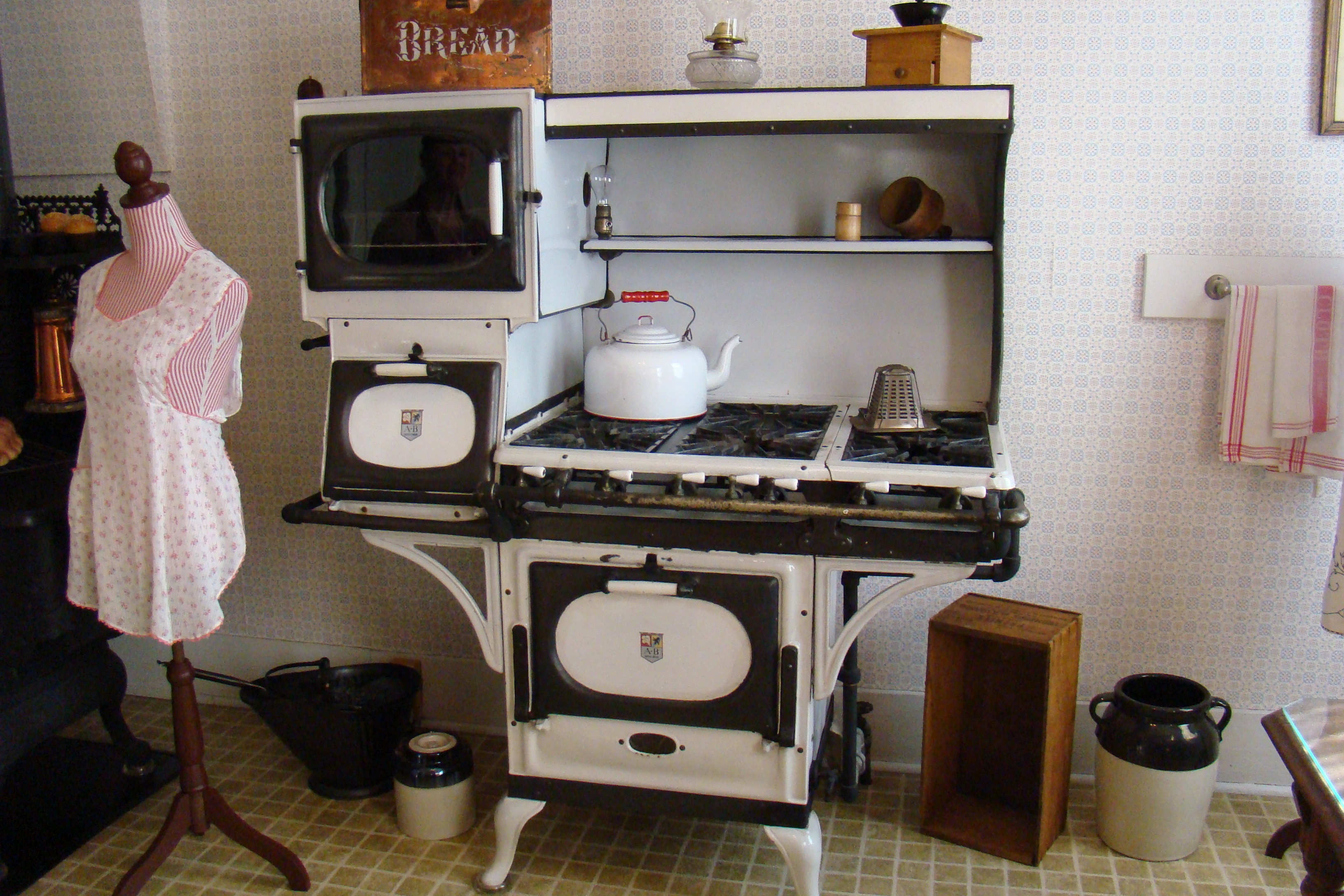
Reeves kitchen displays a warmer oven, local made teapot, and old-fashioned toaster.

Reeves kitchen displays a warmer oven, locally made teapot, and old-fashioned toaster.

J.E. Reeves wanted to help others by letting them help themselves. During the depression, a man knocked on his door, asking for money to help his family. Mr. Reeves refused to give the man cash, but told him, “I’ll give you a broom and you can sweep the sidewalks. Then I’ll pay you.”
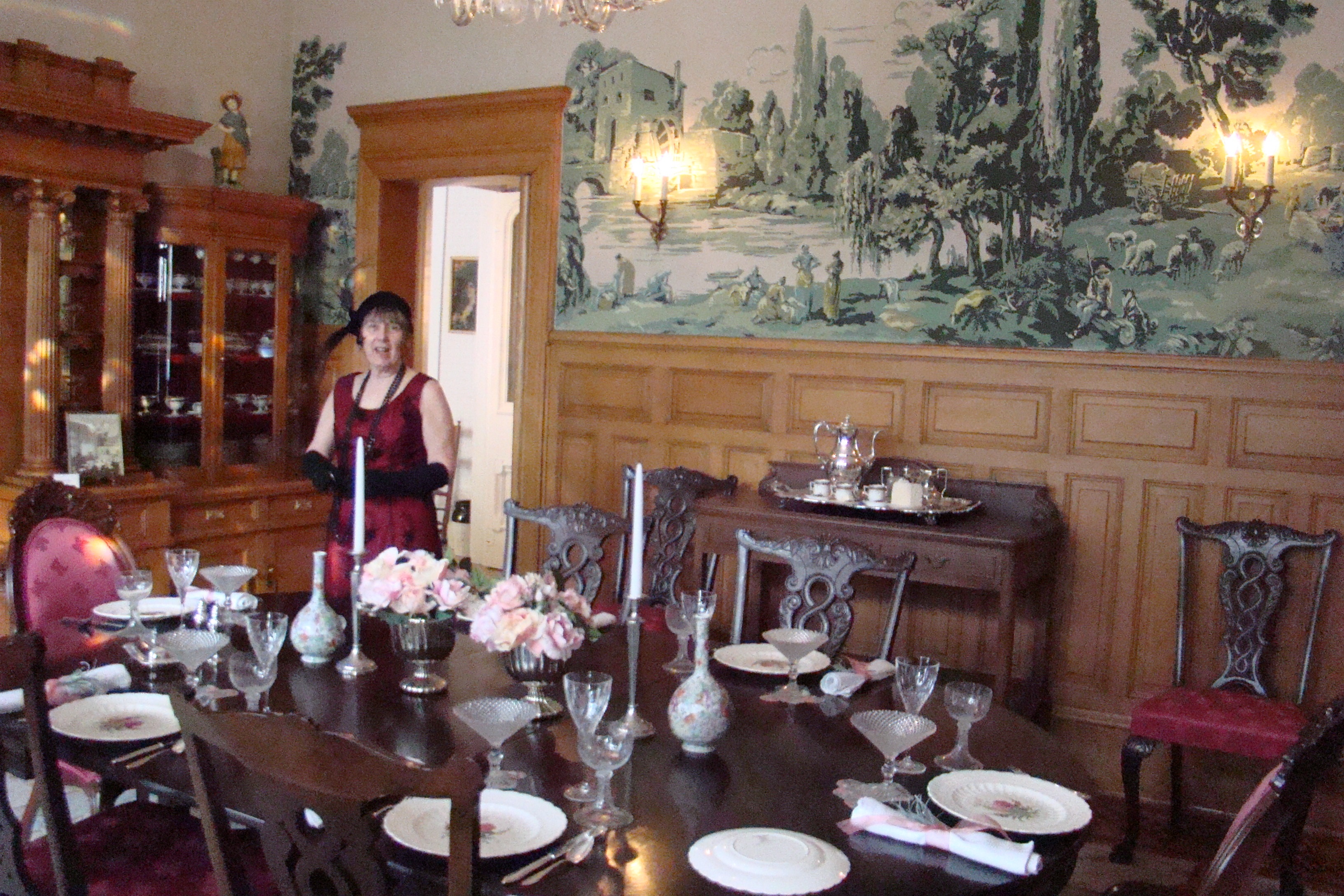
Guide, Shirley, describes the elegant dining room with silk screen wall covering.

Guide, Shirley, describes the elegant dining room with silk screen wall covering.

Back in 1901, Jeremiah Reeves moved his family to a refurbished farmhouse on the outskirts of the growing canal city of Dover. Their Dover farmhouse became the most fashionable home for miles around. Mr. Reeves made certain that his family enjoyed all the modern facilities. In the early 1900s, this home had running water, gas heat, and electric lights. Nearly all the furniture and antiques seen in the home were originally part of the family home 100 years ago. Walls contain family photographs and outstanding artwork, while stained glass and leaded windows appear over door frames inside and out.

Next to the home stands a Carriage House Museum with a fairytale like appearance. This fancy barn actually held Mr. Reeves’ horses and carriages, and had space for a workshop.  Today inside this fancy garage, visitors will find a vast collection of vehicles: the family’s hansom, sleigh, rare electric car, and a restored doctor’s buggy. Upstairs the Carriage House features a history of Dover, when it was Canal Dover before railroads were prominent there.
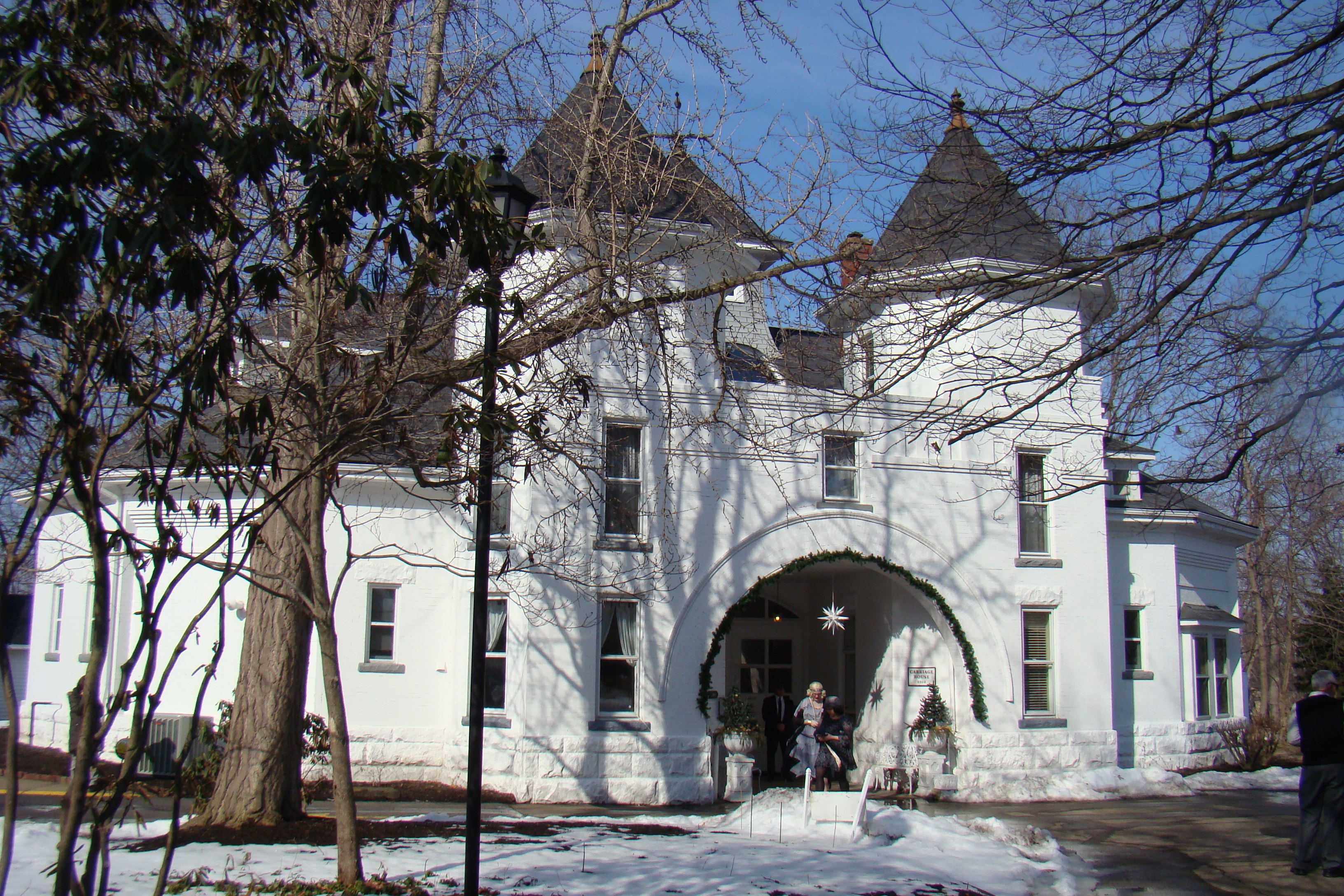
Reeves Carriage House has a fairy tale like appearance.

Reeves Carriage House has a fairytale like appearance.

The mansion is open for tours, conducted by outstanding guides, for many special events such as Gatsby Night, Living History Tours, and their elegant Victorian Christmas. On a recent visit during Gatsby Night, entertainment was provided by the Moravian Choir and Big Band. Mrs. Reeves was a devout Moravian all her life, and Reeves Library can be found today at the Moravian College in PA.

The museum has been opened since 1976, when it was sold to the Dover Historical Society by Jeremiah’s grandson, Samuel, for the amount of $1.00. The family hoped that it would be preserved for its historical value…and that has been done with grandeur.

J.E. Reeves Victorian Home and Carriage House Museum can be found off I-77 at exit 83. Take a right on Tuscarawas Avenue, left on W Front Street, right on Wooster Ave, and a left on Iron Avenue. The Home and Museum can be found at 325 E Iron Avenue. Parking is in the rear of the home.
Rural 1890 Village at Meadowcroft Rockshelter

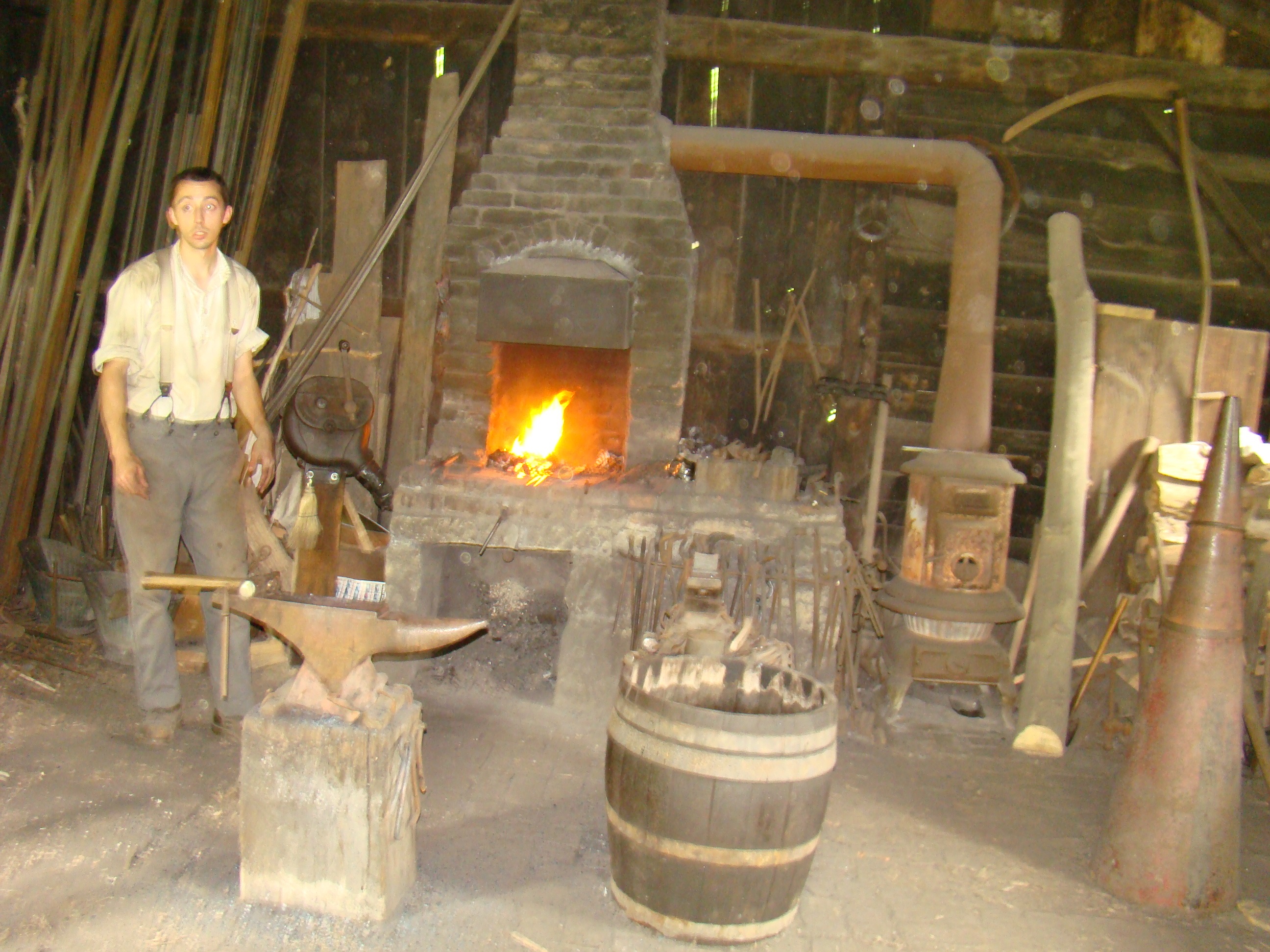
Blacksmith at work in his shop

Blacksmith at work in his shop

Peace and charm of living in a small rural community, previously the Miller family homestead, came to life at the 1890s Rural Village at Meadowcroft Rockshelter and Historic Village. Set at the far end of the complex, a visit here provided a relaxing spot in the day.

The village blacksmith demonstrated making a hook for a Dutch oven. Heat for the red-hot forge was produced by coal or coke. “Fanning the flame” provided the hottest heat needed for the perfect hook.

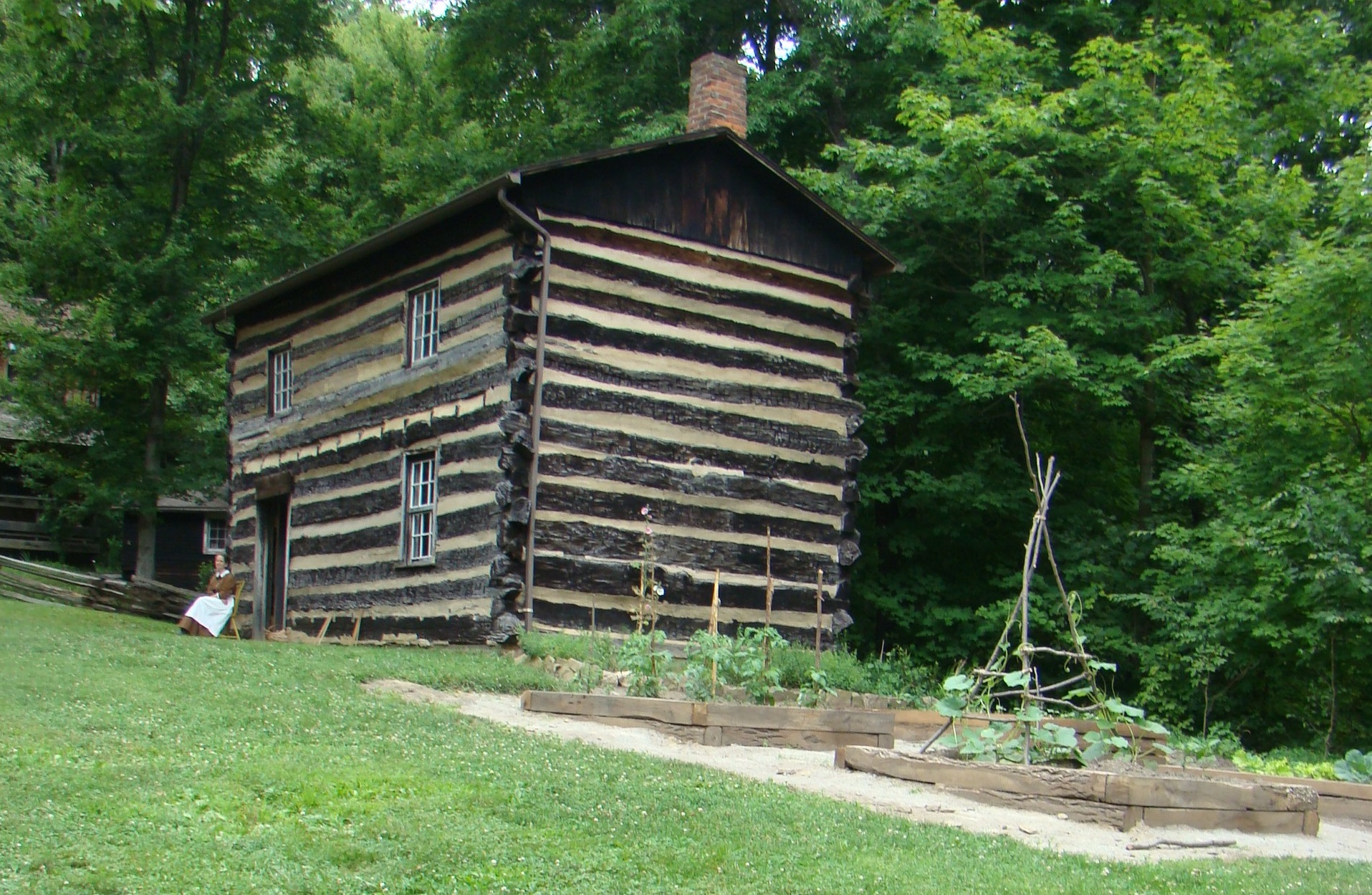
Miller home with garden

Miller home with garden

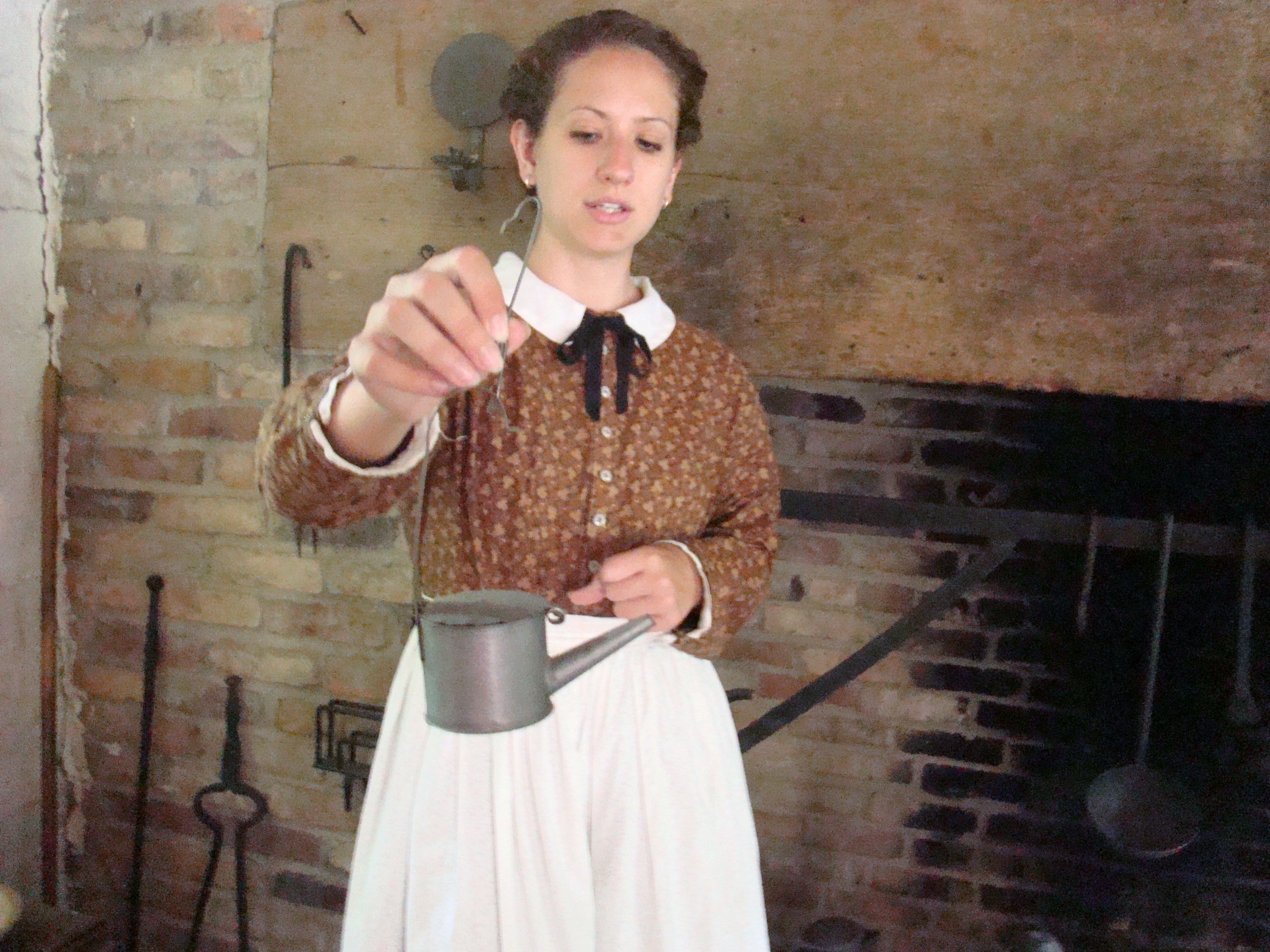
Betty Lamp

Betty Lamp was originally called the Better Lamp because it burned all night long using animal fat with a wick of twisted cloth.

The Miller Log House, constructed in 1795 by their great-great-grandfather, has been moved to the village. A garden planted nearby gave easy access to fresh vegetables.

While the children’s bedroom was upstairs, parents slept downstairs to protect them and keep the fire going through the night. All the furniture in the large downstairs’ room sat against the walls. That made it possible to come in the front door and walk straight to the fireplace on those cold winter days.

The guide explained that a second frame for a bed usually existed under the other beds so unexpected company could easily be handled. Their beds were made of straw and tightened with ropes to give them shape. Sometimes insects would get in the straw during the night, thus the saying: Good night, Sleep tight, Don’t let the bedbugs bite.

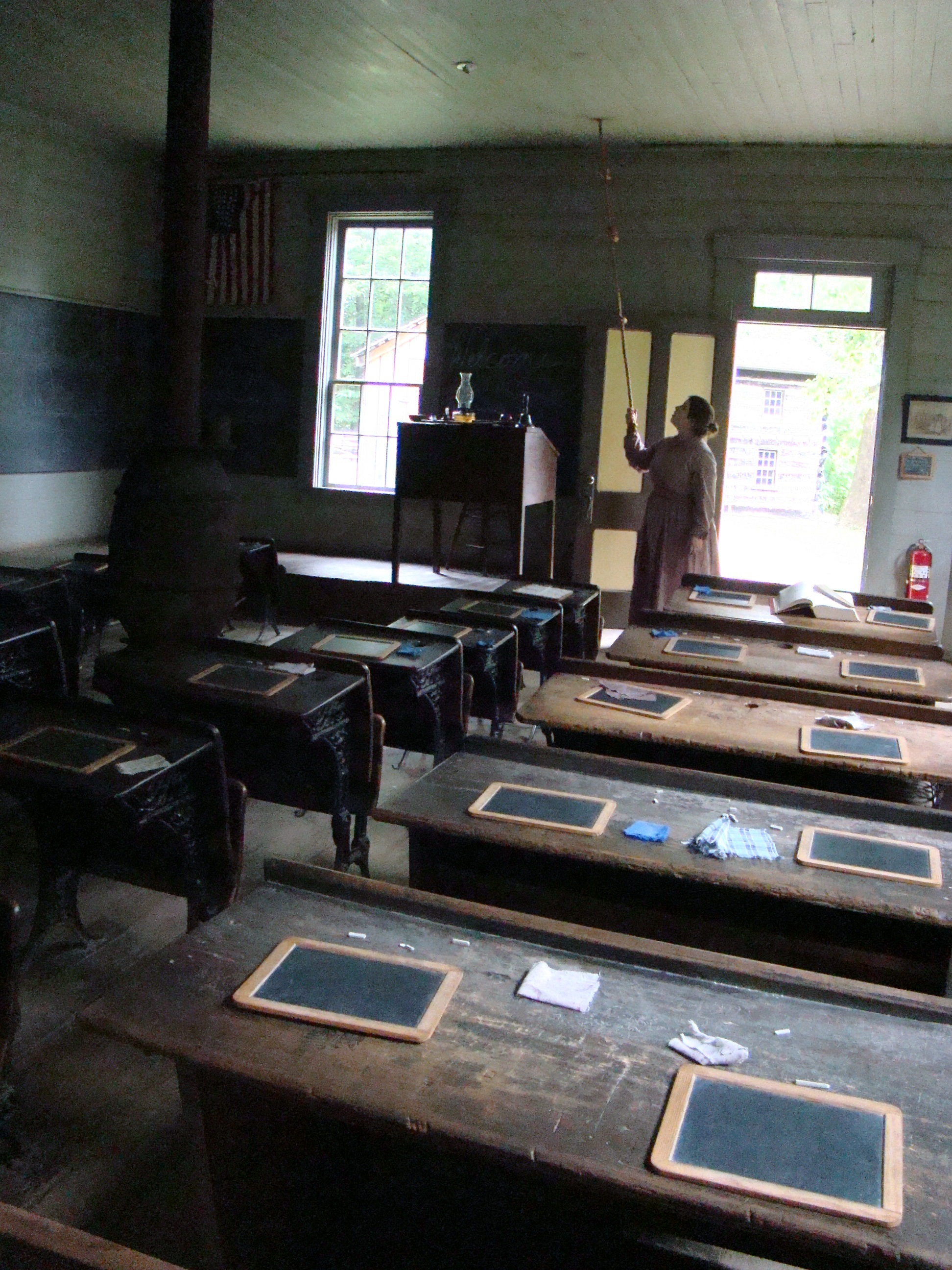
Desks with slates in old schoolhouse

Desks with slates in old schoolhouse

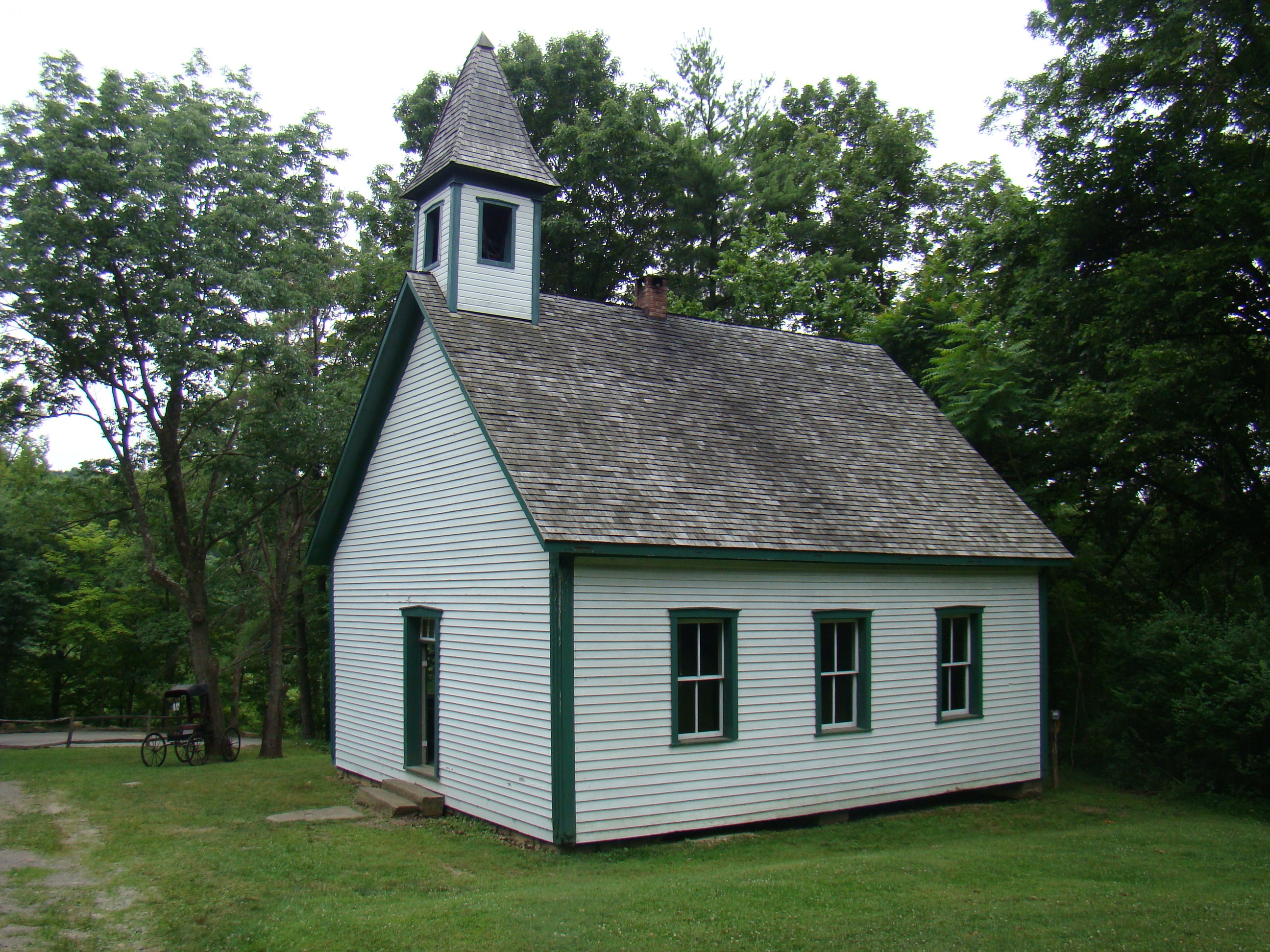
Bancroft Schoolhouse served as a one-room school for 10-20 students from 1834-1921. At that time, there were seven schools in a given mile radius. During the visit, a schoolmarm presented lessons of long ago to those in attendance. Original signatures of Bancroft students covered the blackboard while pictures of George Washington and Abraham Lincoln decorated the walls. Atop the double desks, two slates provided a place for students to write their lessons.

Entering the Methodist Episcopal Church from 1870 provided a glimpse back to the bare essentials of the church. Floors were bare with little ornate decorations around the church. A buggy, which brought the minister to the church service, waited outside.

Methodist Church

Methodist Episcopal Church with minister’s buggy outside

The Rural Village is just one part of the Meadowcroft Historical Complex, which also contains the famous Rockshelter archaeological site and Indian Village. Bring a picnic lunch and spend the day exploring, when they reopen in May.

Meadowcroft Rockshelter is found near Avella, PA off the beaten path. Your easiest bet might be to have your GPS guide you to 401 Meadowcroft Road in Avella, PA.

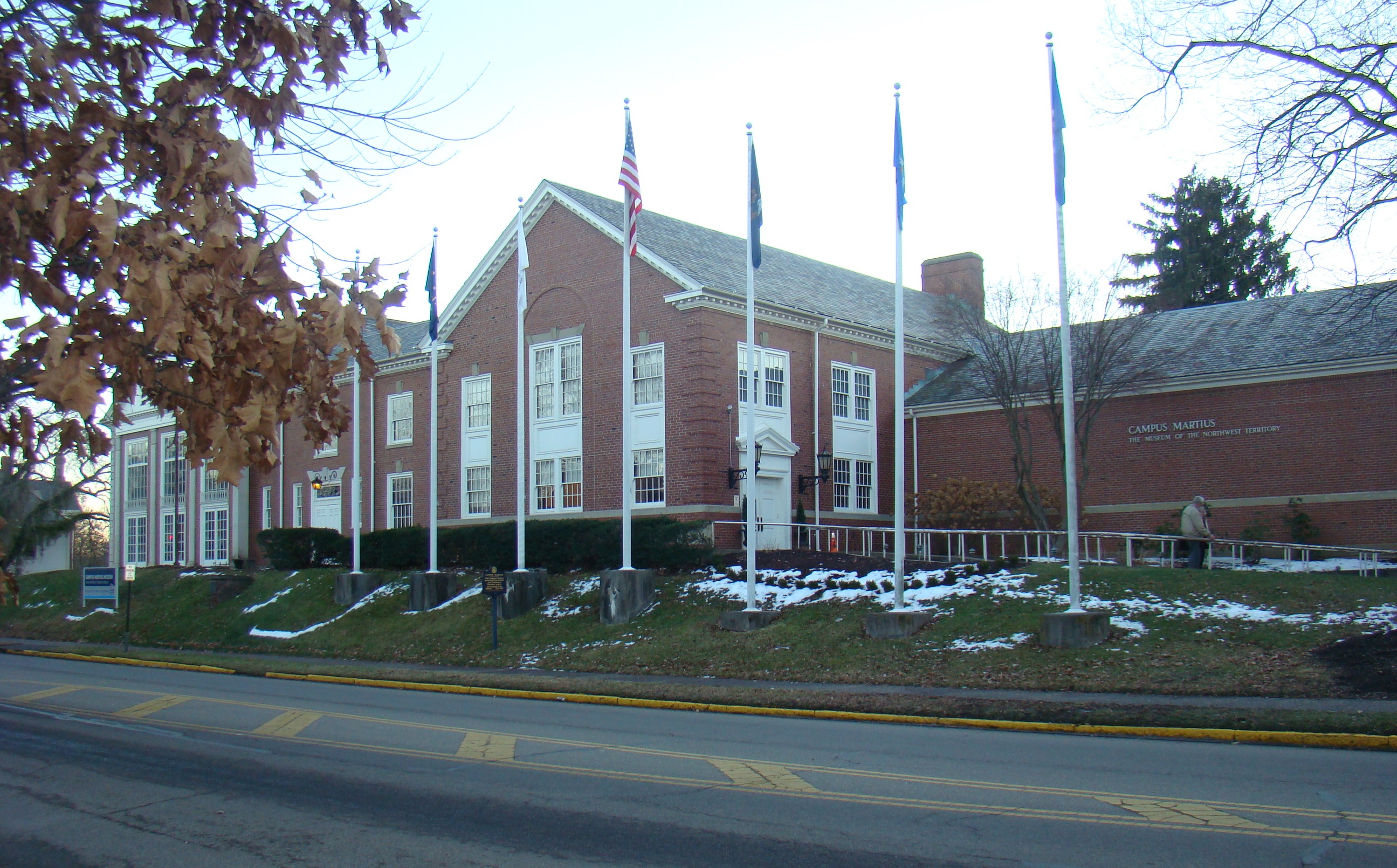
“Digging the Past” at Campus Martius Museum in Marietta, Ohio

Campus Martius Museum in Marietta, Ohio

Campus Martius Museum in Marietta, Ohio

Dig into the past and discover facts about people who lived hundreds or even thousands of years ago. At Campus Martius Museum in Marietta, Ohio, those interested in archaeology had an exciting day called “Digging the Past”. Special displays by area people, who are interested in what is under the ground, provided valuable information for anyone who wished to listen.

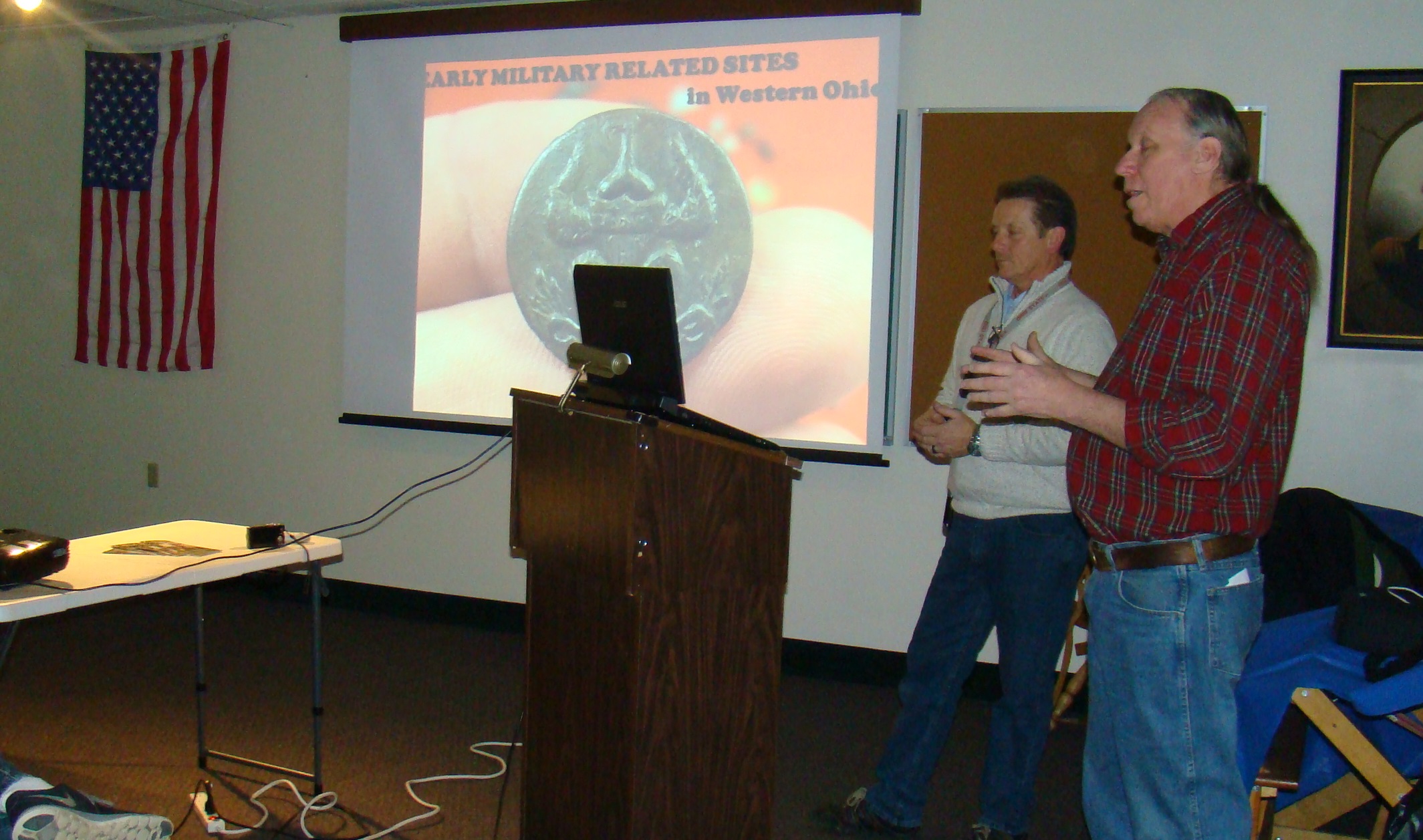
One of the speakers at Archaeology presentation

One of the speakers at Archaeology presentation

Five knowledgeable archaeologists and collectors gave slide show lectures on various archaeological subjects. Some of my favorite dealt with the various groups of mounds around the state of Ohio. Bruce Lambardo, ranger at the Hopewell Culture National Historic Park, explained why we should change the term “mounds” to “earthworks”. These structures are not just piles of dirt built by early Native Americans, but precise, geometrical art works that were not only enormous in size, but also aligned astronomically. He described the Hopewell Culture site near Chillicothe as the most spectacular configuration of Earthworks in the world.

Dr. Jarrod Burks, Director of Archaeological Geophyics at Ohio Valley Archaeology, discussed the earthworks throughout the state including Newark, Chillicothe, and Marietta. While many of the mounds have been destroyed by farming and housing developments, there are still new ones being discovered in the last fifty years.

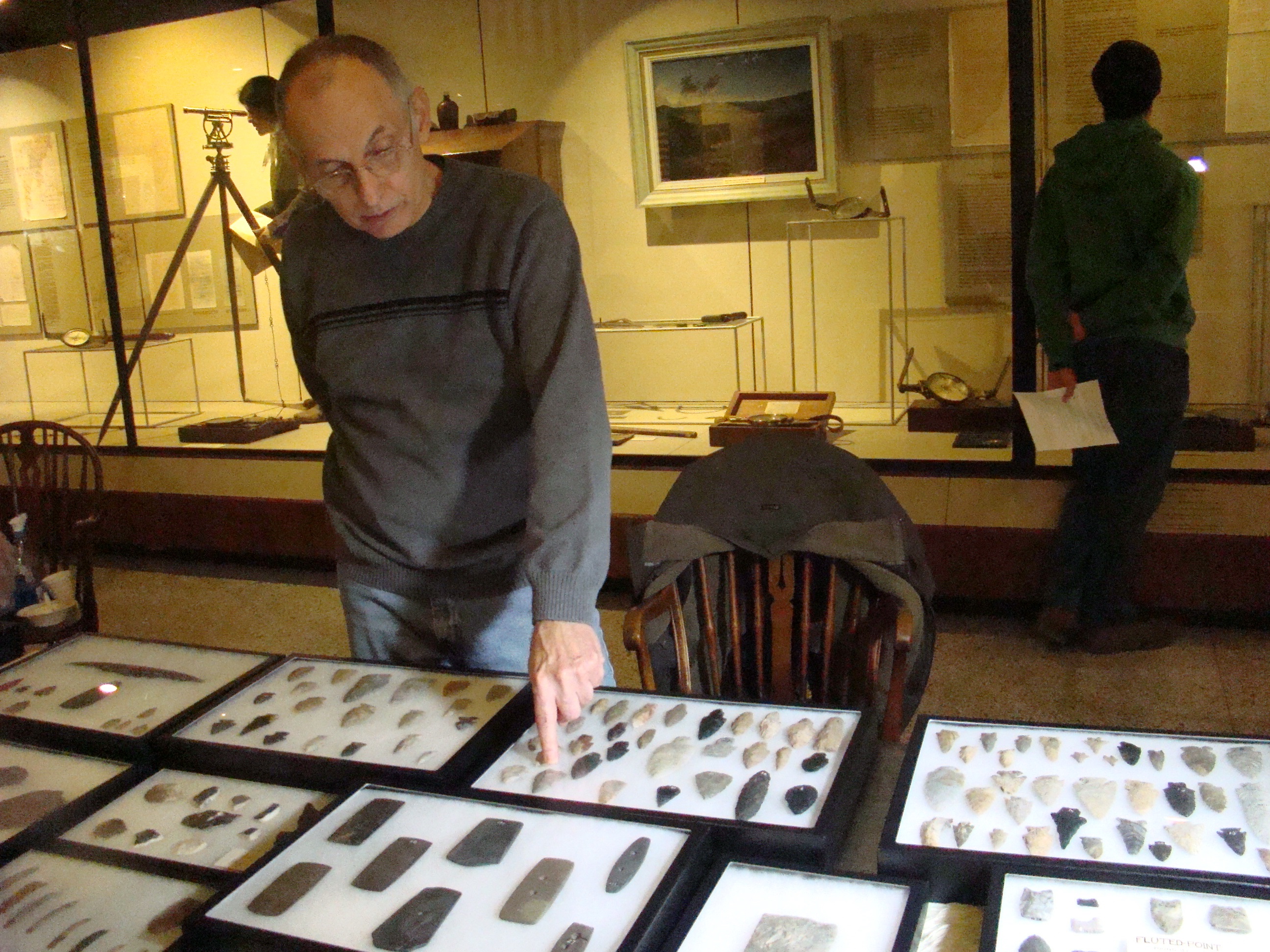
Mound City Artifacts explained.

Mound City Artifacts explained.

There seemed to be a strong connection between the Newark and Chillicothe Earthworks when they were constructed in 300 B.C. – 400 A.D. These earth architects constructed these ceremonial mounds, where the circles had the exact same diameter, and squares measured the same corner to corner. Even more exacting was the fact that the circle would fit perfectly inside the square. How did these early people perform such mathematically correct shapes and even have them aligned to the winter and summer solstices? How did they construct Great Hopewell Road directly between the two mound centers? Either they were geniuses or perhaps they had some extraterrestrial help. Keep your mind open to all possibilites.

Wes Clark explained his finds at The Castle Museum, where pottery and earthworks artifacts have been discovered. Nathaniel Clark Pottery (1808 -1849) existed on the same site as today’s Castle, so many pieces of pottery have been discovered from red earthenware to stoneware. Earthworks artifacts also frequently appear, including flint arrowheads.

From all the buttons found at the military sites, Archaeologist Greg Shipley remarked, with a smile, that the thread must not have been very strong. A wide variety of buttons appeared in archaeological digs in western Ohio military sites while looking for footprints of an outpost there. The hot spot for buttons seemed to be in the area of the taverns.

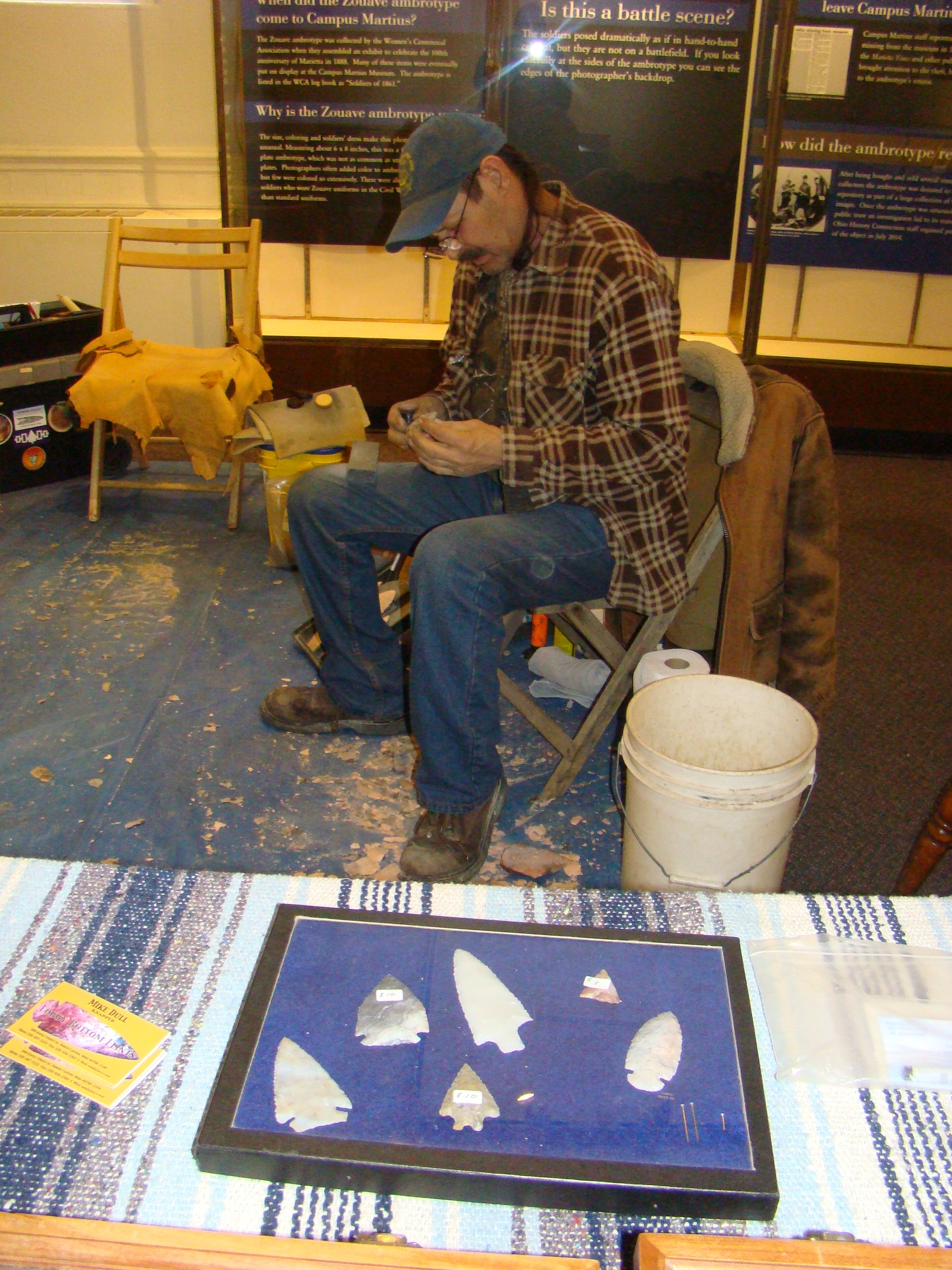
Flint Knapper demonstrates skills.

Flint Knapper demonstrates skills.

Flint knappers displayed  the intricate methods they use to shape the pieces of flint found. Their methods are beyond my description as they magically formed arrowheads by chipping and shaping the layers of the flint. Long ago the Indians used either stone or bone to shape their arrows from flint, in much the same manner. After use, the arrowheads would need re-sharpened by removing flakes to reshape, so they would get smaller and sharper as time passed. The flint knapper at Marietta had been creating flint pieces for fifteen years so was quite excellent at his craft.

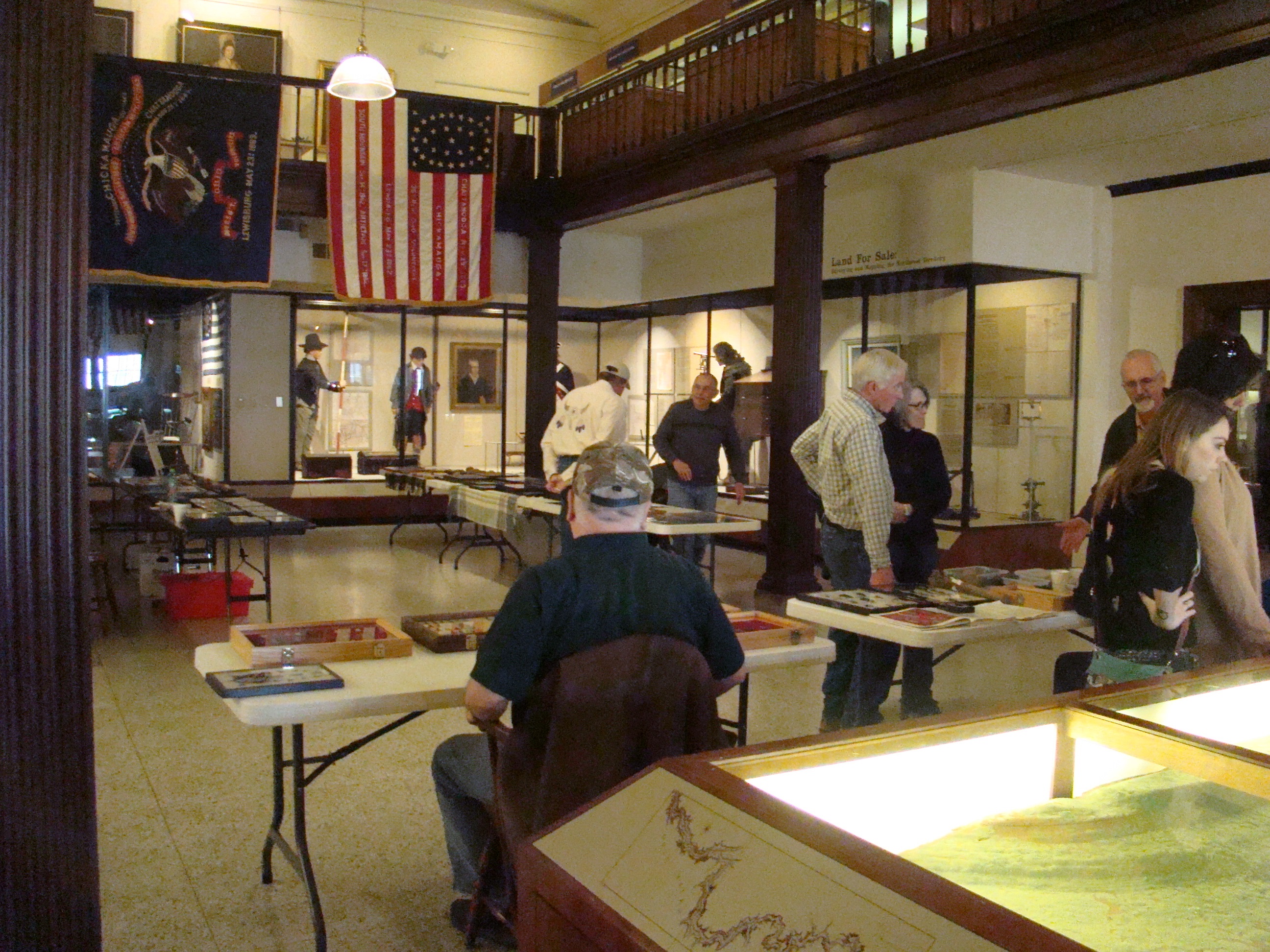
Archaeology displays filled the lobby of Campus Martius Museum.

Archaeology displays filled the lobby of Campus Martius Museum.

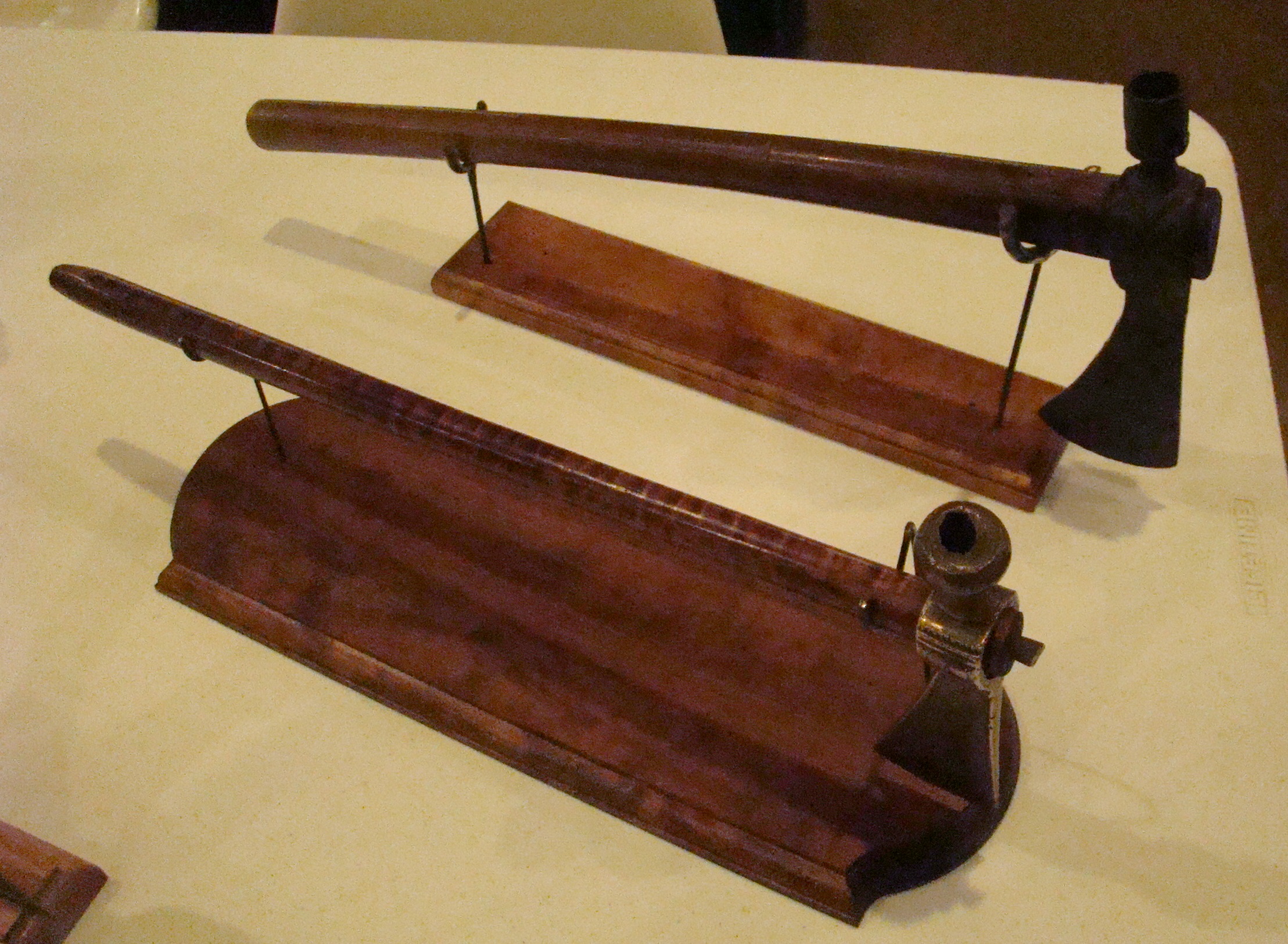
Numerous displays throughout the lobby included historic artifacts from collections around the state. Not only were there Indian artifacts from the Adena and Hopewell people, but also artifacts from military camps of the Revolutionary and Civil Wars as well as historic Marietta.  The Pipe Tomahawk intrigued me with a head that has an ax on one edge with a pipe bowl on the other. It enjoyed multiple uses as a pipe to smoke, a ceremonial instrument, and also a weapon.

Tomahawk Peace Pipe

Tomahawk Peace Pipe had several uses.

Campus Martius Museum in Marietta holds informative speakers throughout the year on a wide variety of subjects. If you are interested in Ohio history, check out their schedule at Campus Martius Museum website.

Marietta is located on the beautiful Ohio River just off I-77. Take Exit 1 to downtown Marietta and follow State Route 7 / 60. Turn left on Washington Street and one block down on the right hand side, you’ll see Campus Martius Museum. There is parking to the right of the building or one block behind at the Ohio River Museum. Visit both museums if time permits.


Thomas, WV – Historic Railroad Town in Allegheny Mountains

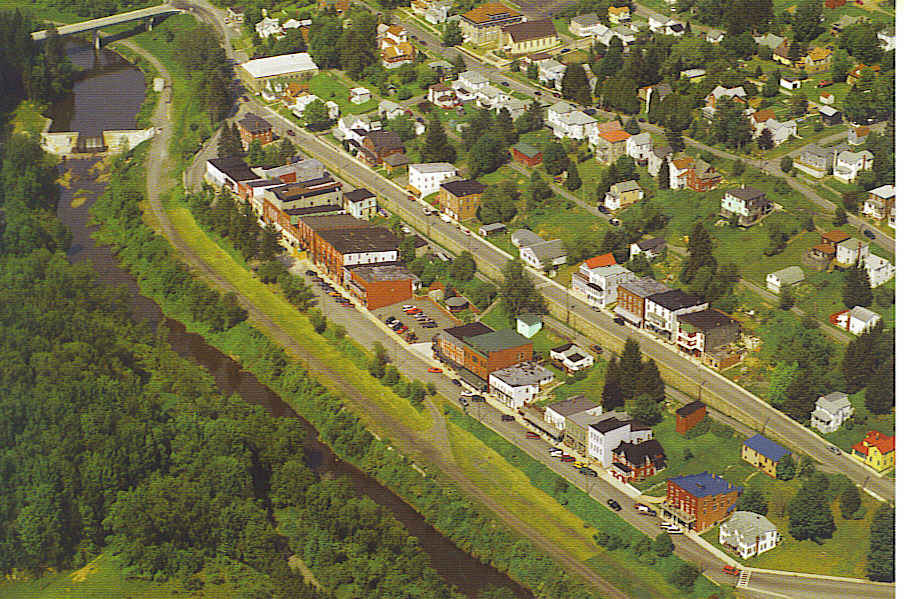
Picture card overview of Thomas today

Picture card overview of Thomas today

Small towns attract my attention as they always have a story to tell. The former hub of railroad activity inThomas, West Viriginia is no exception. Situated on the banks of the North Branch of the Blackwater River, it served as a major railroad stop in the area years ago. All the buildings on Front Street are on one side of the road with the river running along the other side.

-canaan 3 001

Stores still handle a variety of items.

Built on the side of the Allegheny Mountains, this town was incorporated in 1892. However, it actually received its start in 1880 when Henry and Thomas Davis began building the West Virginia Central & Pittsburg Railroad along the river there.You can already see where the town received its name!  Railroads were needed as easy access to transport natural resources of coal and timber from the Tucker County area.  While the railroad went through several transitions of ownership, the last train rolled through Thomas in 1983.

The business district that remains today is a result of the railroad industry.Today this small town has given real importance to their history by placing informative signs throughout the town. After the advent of the railroad, many people from foreign countries settled here. There were as many as 18 different nationalities, many of them from Europe, which brought with them the European wrought iron design for their balconies.

 One of the informative plaques with a picture of the Schilansky-Rubenstein Building 1906

One of the informative plaques with a picture of the Schilansky-Rubenstein Building 1908

One particular building was constructed back in 1908 by Russian Jewish immigrants, Schilansky and Rubenstein. Schilansky came to the United States as a pack peddler and when he arrived in Thomas continued at that occupation until he had enough money to open a general store and a saloon. Soon he was joined by the Rubenstein family,who he had met in New York.  This stylish Victorian building had a wooden balcony with turned spindles. Both families lived upstairs to conveniently run the general store below.

Their store today

Refurbished store today

In 1906, people from miles around traveled to Thomas to meet all their needs. On a sign posted in town from that era, it states that “in the stores and shops can be found all that humanity could desire in the way of merchandise.”

Today a stroll down the street captures the spirit of those long ago days. Shop owners and signs show small town pride exists in abundance.

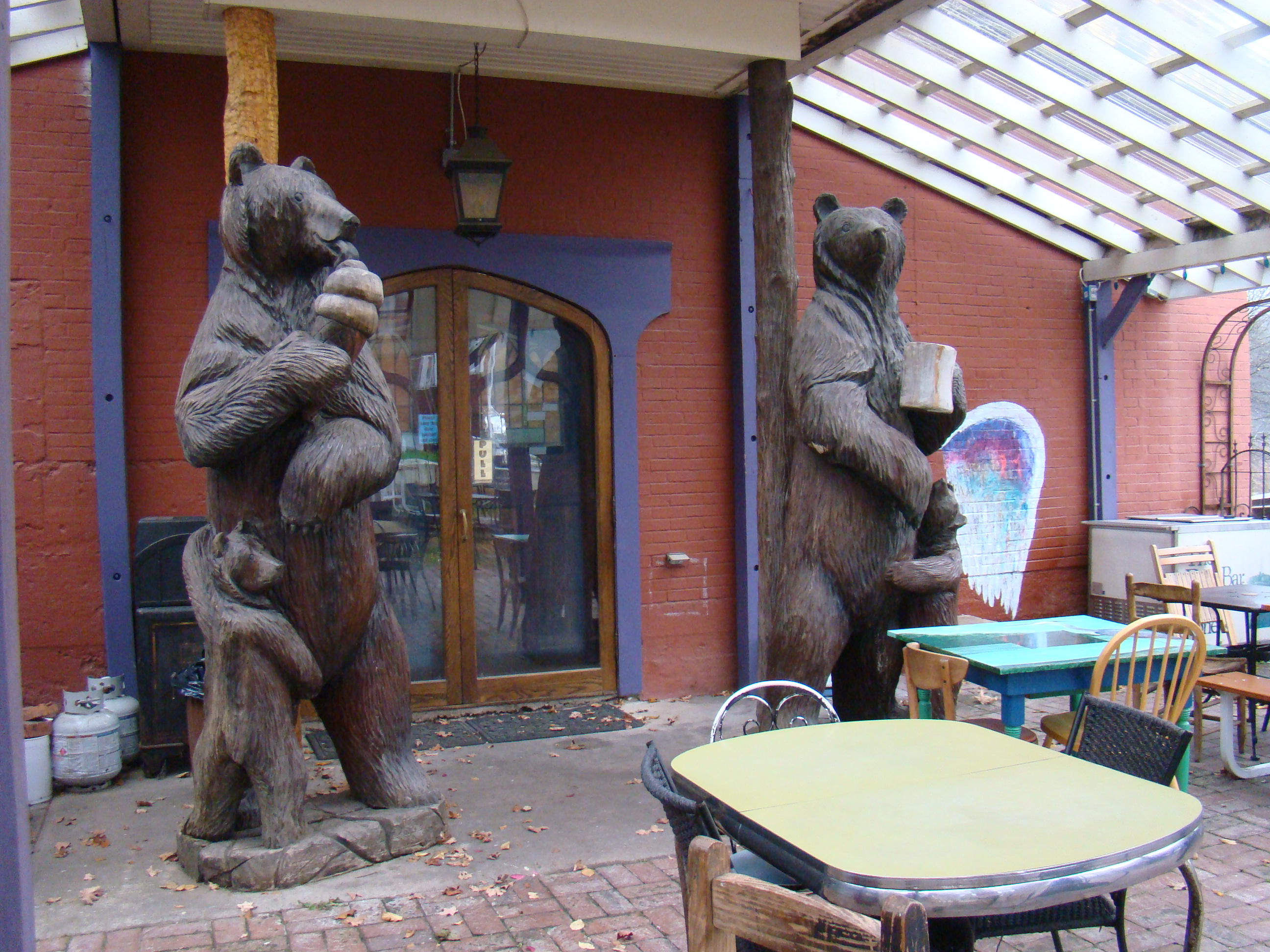
Carved wooden bears on the patio of Purple Fiddle

Carved wooden bears on the patio of Purple Fiddle

A popular local establishment today is the Purple Fiddle. Bands entertain nightly here, and it is a great place to quench your thirst with a sarsaparilla drink. Those who hang out here are a unique group of individuals with artistic abilities and stories to tell. Their outside deck has an attractive setting with wooden carved bears watching over the action – one licking an ice cream cone, while another holds a refreshing mug.

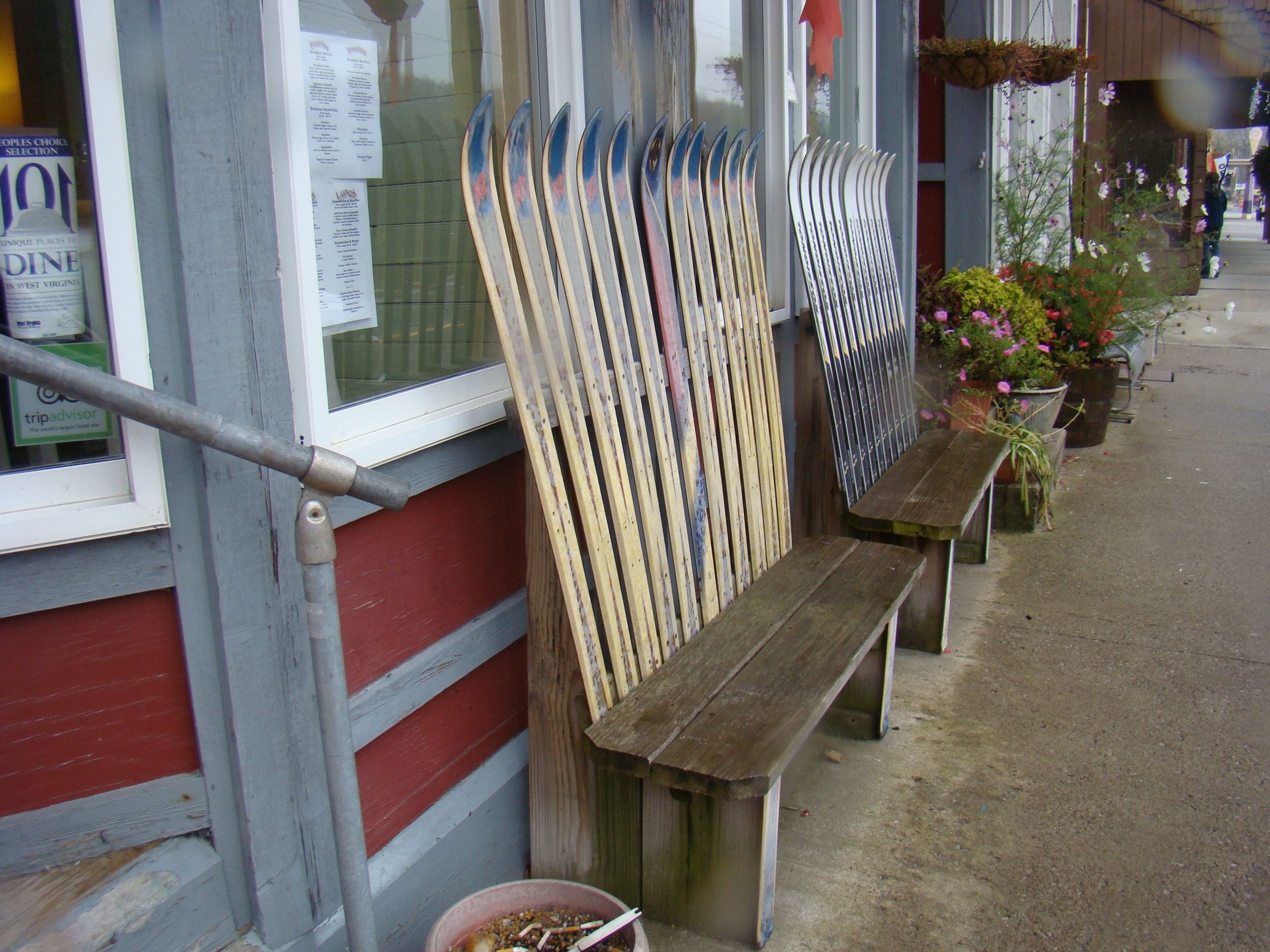
Benches with ski backs line the street.

Benches with ski backs line the street.

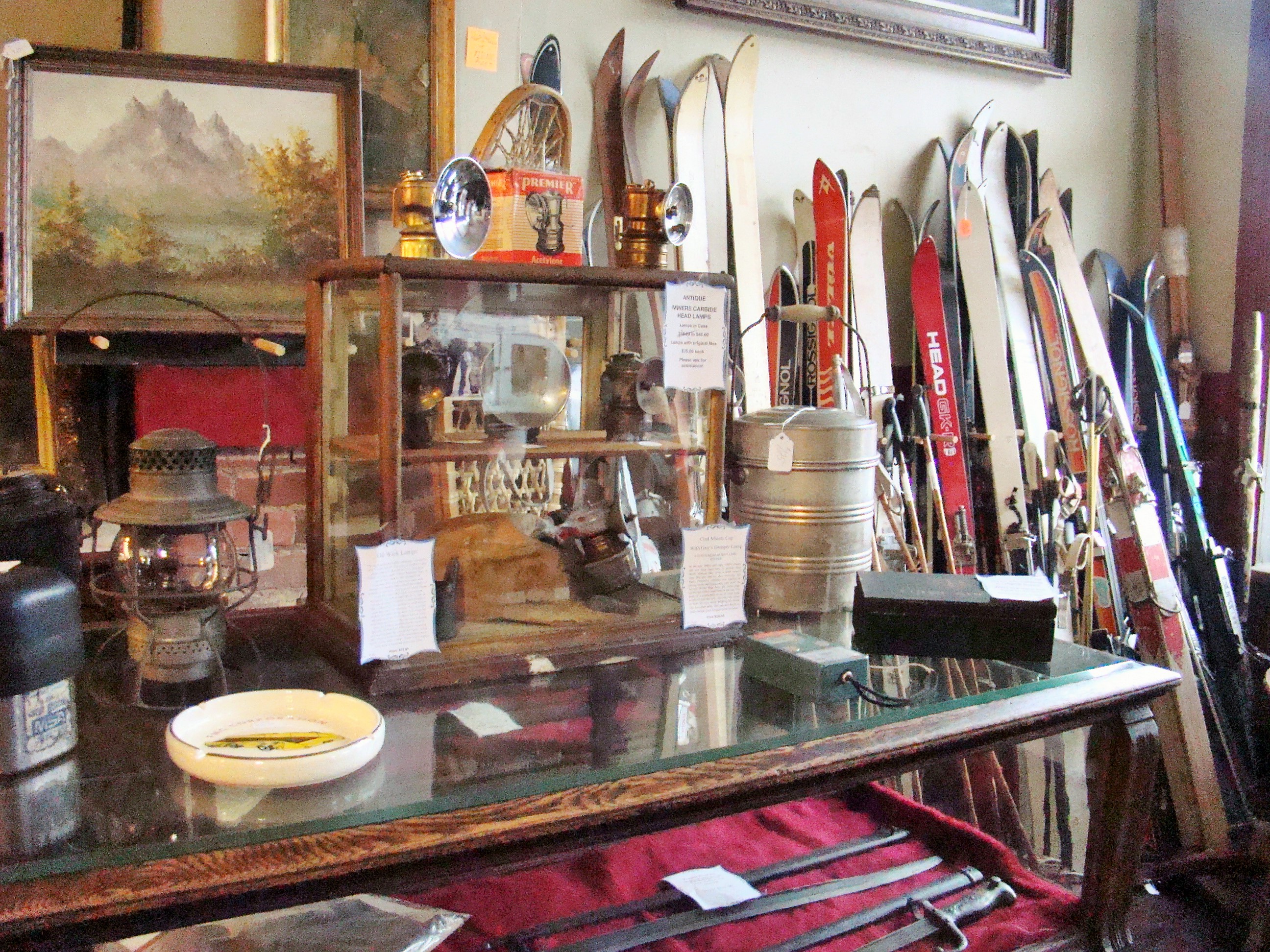
Stores today hold a wide variety of items from antiques to ski related. Since the town is situated near several ski resorts, skis even form their benches, where visitors can rest while watching the river, traffic and people flow by.

Thomas, WV is located southeast of Morgantown off US 219. This is definitely off the beaten path, but that is what adds to its charm.

The Smallest Church in 48 States Our Lady of the Pines

Listed as smallest church in 48 states, but that is debatable.

Listed as smallest church in 48 states, but that is debatable.

On the backroads of West Virginia, a sign points to Our Lady of the Pines. Established in 1968 near Thomas, WV, this church claims to be the smallest church in 48 states. Blessings from your visit will bring peace of mind as you travel on down the mountain highway.

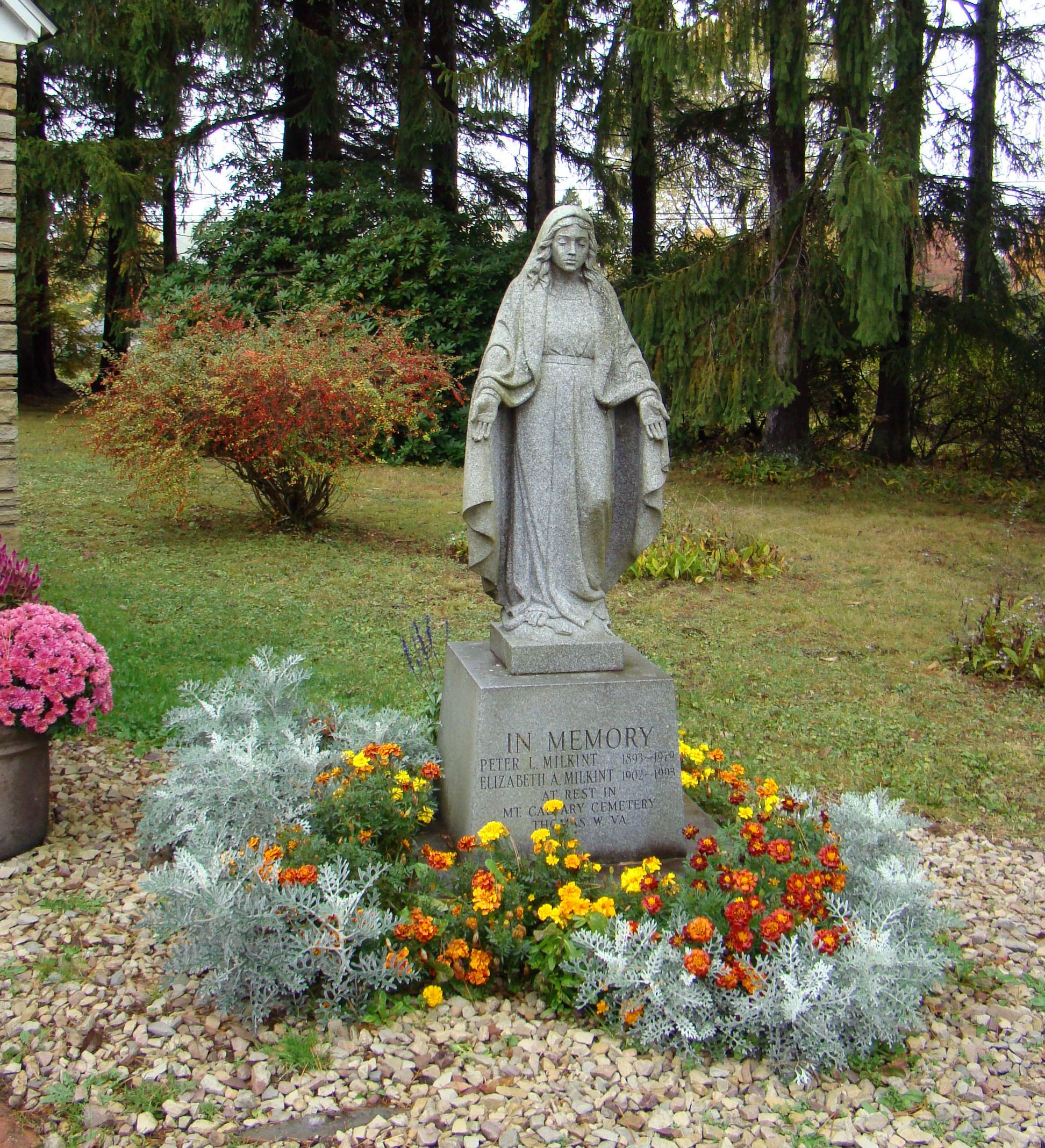
Statue outside the church

Statue outside the church

The community received its name from Silver Lake, a small man-made lake built in 1928 at the headwaters of the Youghiogheny River. Previously this town was known as Breedlove, the southern terminal at that time of the Preston Railroad.

This tiny memorial Roman Catholic church was constructed in 1958 by Mr. and Mrs. P.L. Milkint in honor of their parents. This small piece of beauty was built completely out of love. The delightful stone church contains stained glass windows and an historic bell in the tower.

Topped by a cross on its steeple, a second cross appears in the cement work of the sidewalk just outside the front door. On their well kept lawn, beautiful flowers surround a memorial statue in front of the church.

The altar inside the smallest church

The altar inside the smallest church

Mission priests come from time to time and hold mass in this little gem in the mountains. Many young couples have been married here as well. Often on a Sunday five to six hundred visitors leave here with a peaceful feeling.

Inside six pews can seat 12 worshippers. Outside measurements are 24′ X 12′, while inside measurements are 16′ X 11′. Even though the church claims to be the smallest church in the states, there are many other smallest churches listed around the country. If you know of a smaller church, please let me know.

The beautiful altar area, cross above the altar, candleholders, and old rugged cross at the foot of the altar were all handmade with love. The infant of Prague with its red velvet garment was donated by a dear friend of the family. Their Lithuanian grandmother actually wove the altar cloth over ninety years ago in her home country.

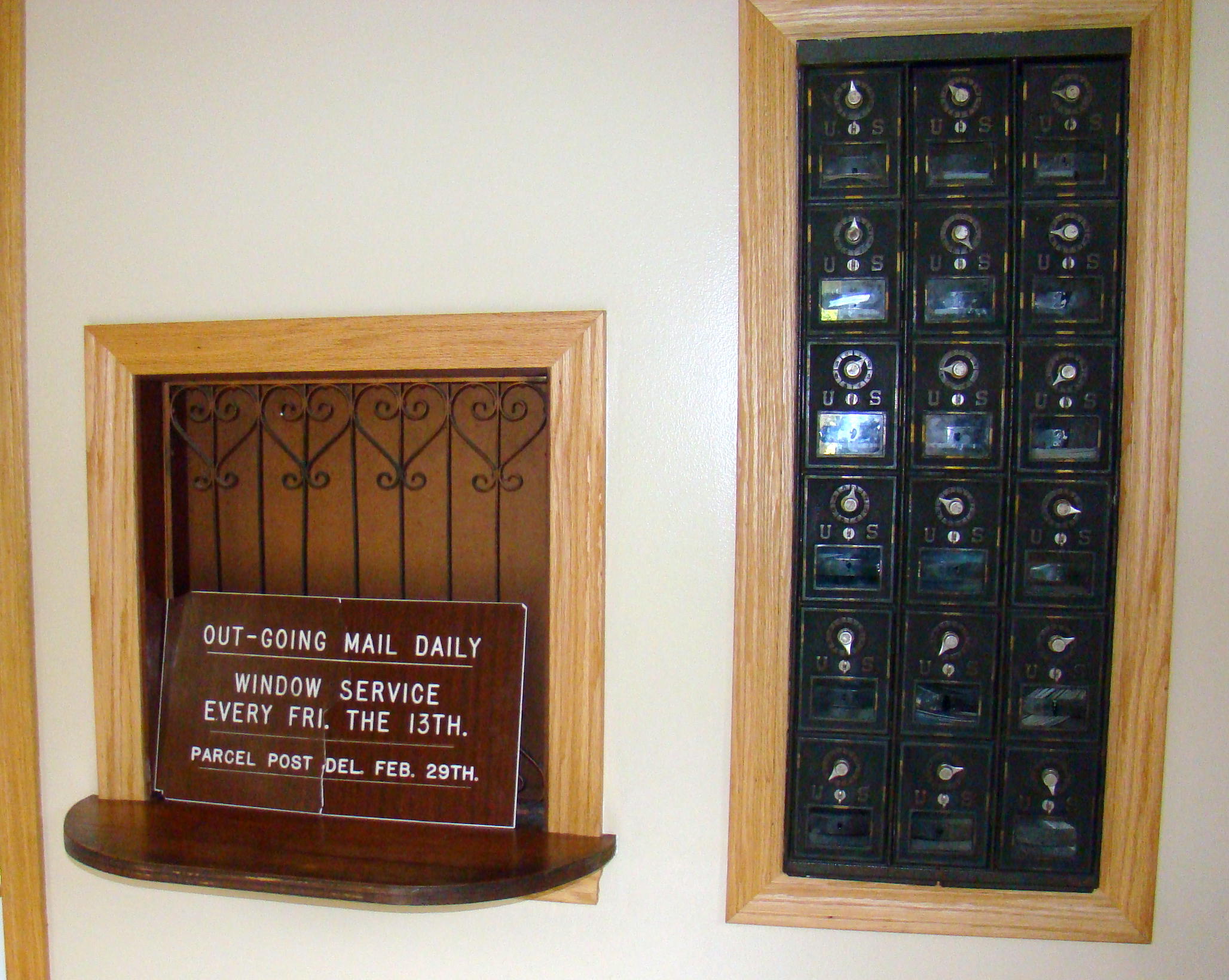
Smallest mailing office with its own Zip Code

Smallest mailing office with its own Zip Code

Unusual postal hours on sign

Unusual postal hours on sign

The church’s next door neighbor is the smallest mailing office – a post office serving the small rural community of Silver Lake, West Virginia 26716. A sign inside tells that there is outgoing mail daily, but window service is only available on Friday 13th. Parcel post service is available on Feb 29th. It’s always a pleasure to see the Stars and Stripes flying, surrounded by more beautiful flowers. It seems they have planted flowers  that bloom from spring through fall.

Here in the pines, take time for reflection and relaxation as you visit the smallest church in the forty-eight states. The wind in the pines whispers blessings of peace and goodwill to those who stop by for a visit

This tiny church can be found just south of Deep Creek, MD along route 219 at Silver Lake, West Virginia on County Road 24/8. Enjoy the beautiful mountain roads along the way.


Desolate Dolly Sods Wilderness in Allegheny Mountains

Desolate Dolly Sods - a perfect escape from civilization!

Desolate Dolly Sods – a perfect escape from civilization!

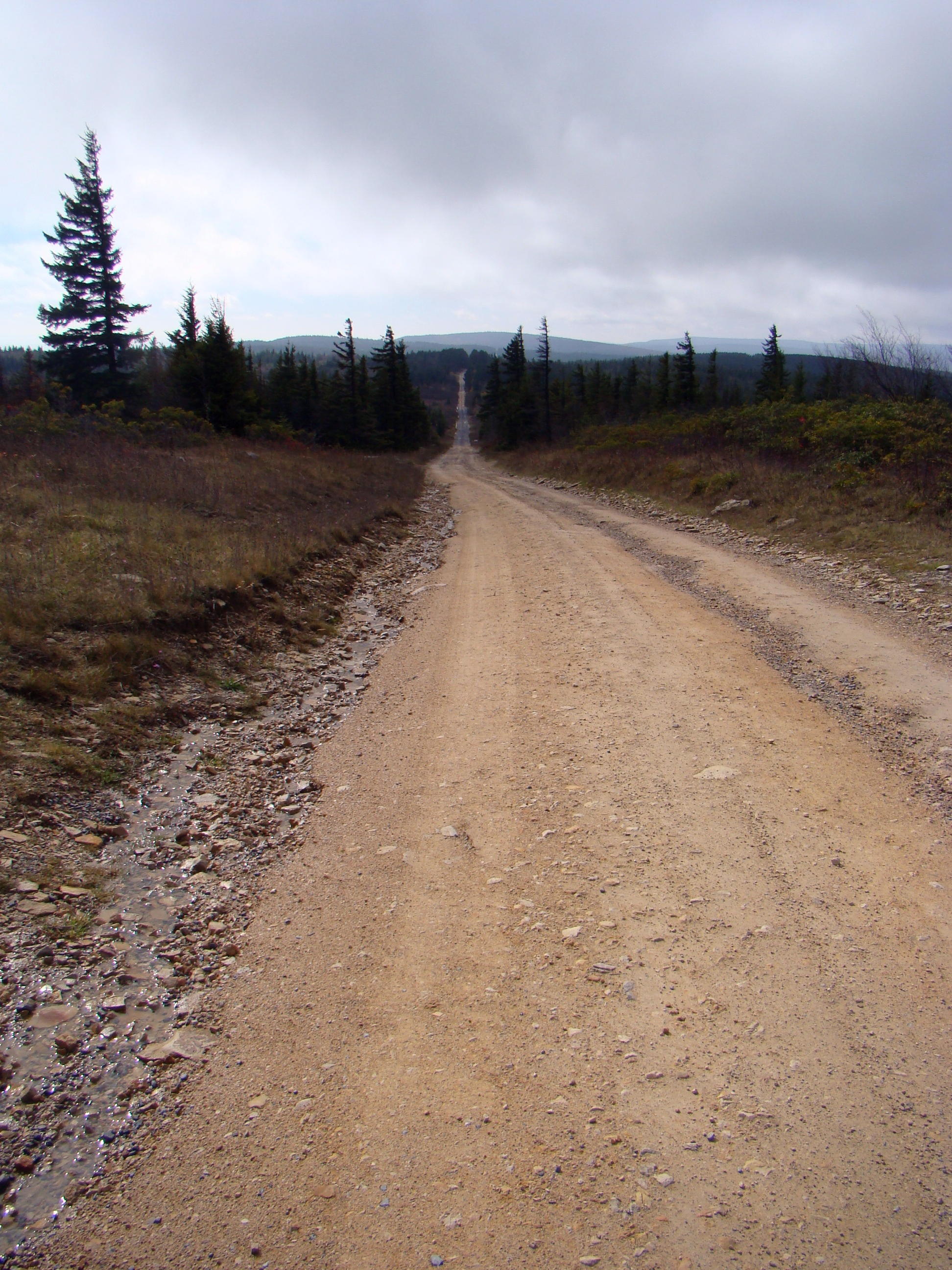
Desolate! That seems the perfect description for the Dolly Sods Wilderness. This vast, rugged back country can be found in the Allegheny Mountains of West Virginia in the Monongahela National Forest.

Narrow dirt road to Dolly Sods

Narrow dirt road to Dolly Sods with twists and turns just ahead

Named for a German family, the Dahles, locals added “sods”, because that is their term for an open mountaintop meadow where cattle grazed.  Over the years, the entire name has been localized to Dolly Sods.

The road to the top contains narrow, twisting, dirt roads. You just hope you don’t meet anyone coming around the bend. Add a little fog to the adventure and the trip becomes even more exciting. As you enter the wilderness area, you might feel civilization is being left behind. No guardrails line the sides of this mountain road, but hopefully the trees would catch you if you had to get close to the edge.

Flexible weather can change several times in a day. Within an hour, sun, rain, snow, and fog might all make an appearance. Cool weather prevails  and frost can occur on any time of the year. But that doesn’t deter the campers, who camp out year round.

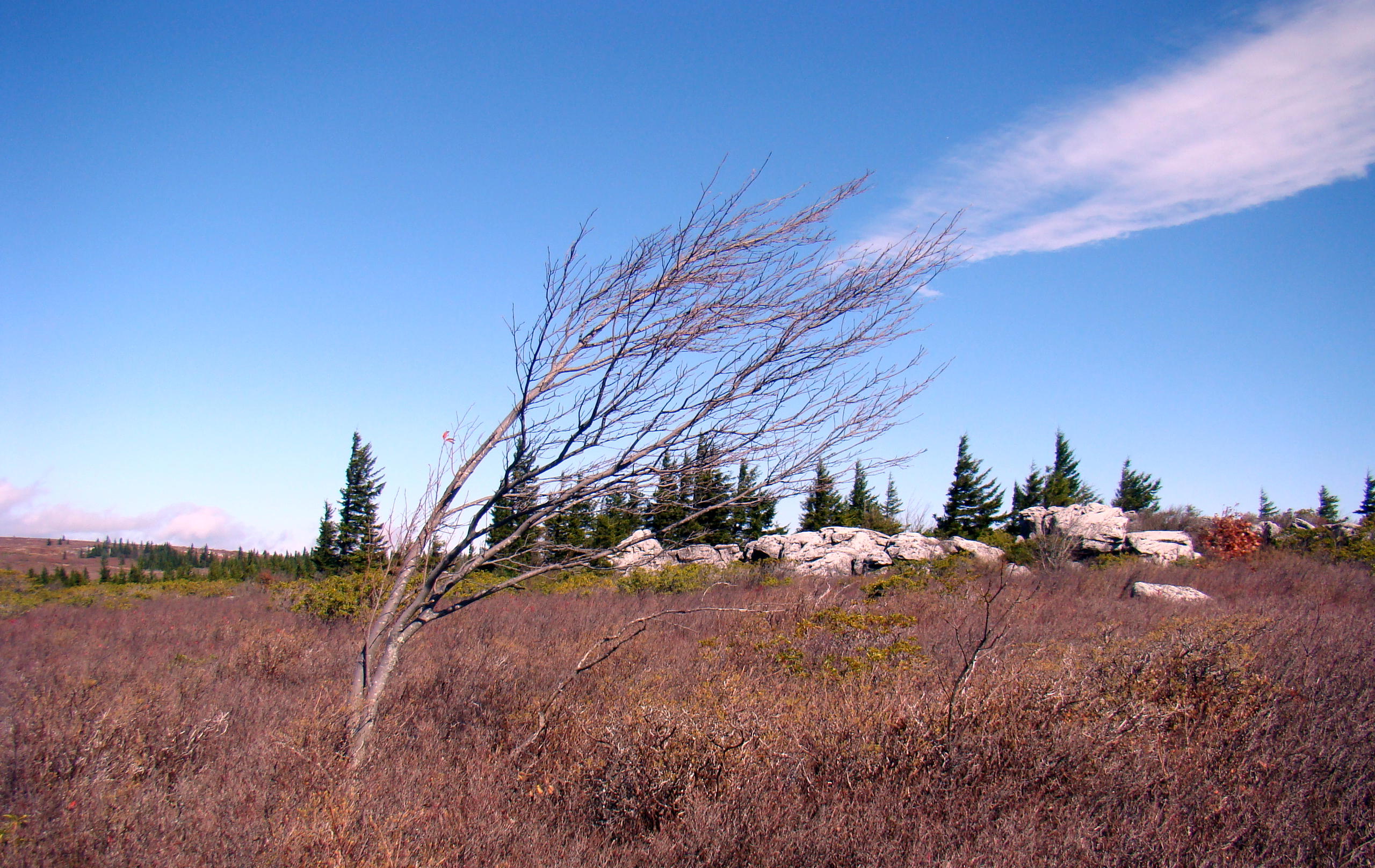
Windy Dolly Sods

Windy Dolly Sods

Winds blow fiercely here as witnessed by the red spruce trees, whose branches grow on one side, the side away from the wind. 

During the early 1900’s this mountain top was a great source of timber for the United States. At that time, some of the trees measured 13′ in diameter – quite the giants! Those early settlers cleared the field completely of all growth and brush. Sparks from the locomotives, saw mills, and logger’s warming fires set fire to the field to burn everything off; the peat burned for years as it was seven to nine feet deep.

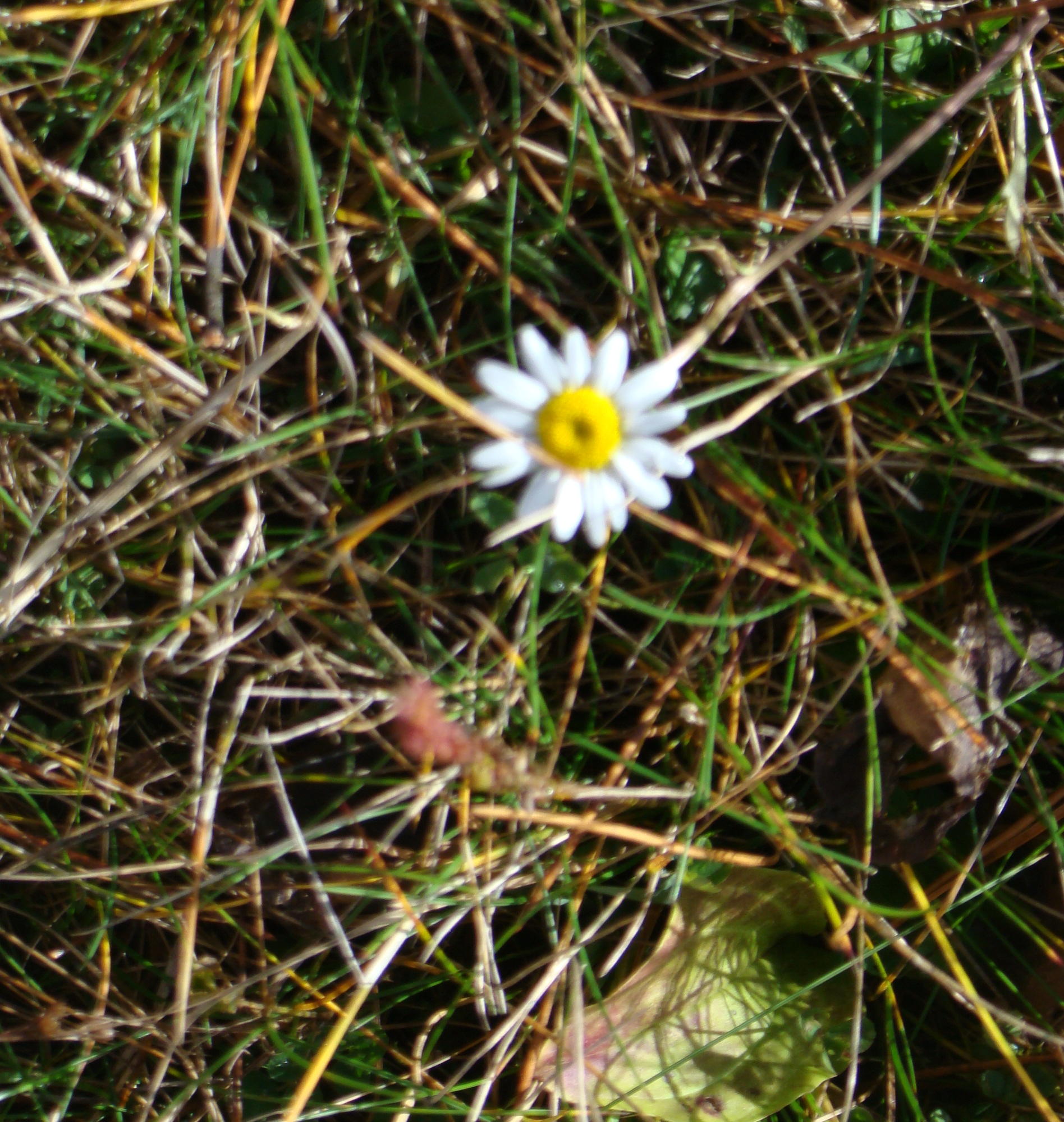
One Surviving Daisy

One Surviving Daisy

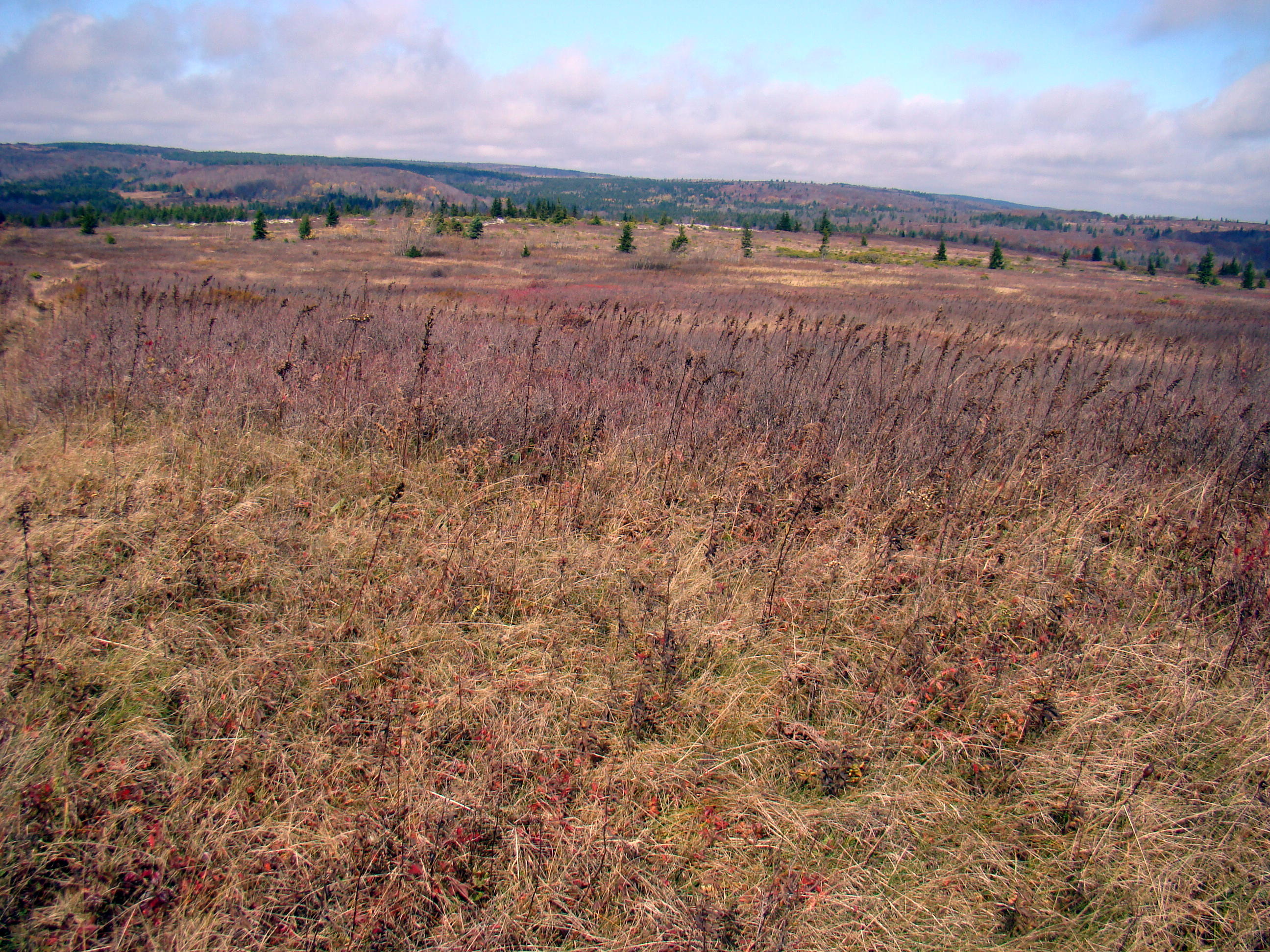
Today, little growth remains on the top of the Dolly Sods, but a new crop of trees is growing at lower levels. Right now this high plateau can best be described as a vast “nothingness”, but low growing blueberry and huckleberry bushes, wild strawberry plants and even a daisy can be found struggling for existence.

Many trails exist to explore the wilderness and you don’t have to worry about reptiles as they don’t want to hang around in the cold. When you finally get to the top, rocks and low growth cover the open areas. Over 17,000 acres compose this arctic-like, wilderness area, which runs about 49 miles across the top.

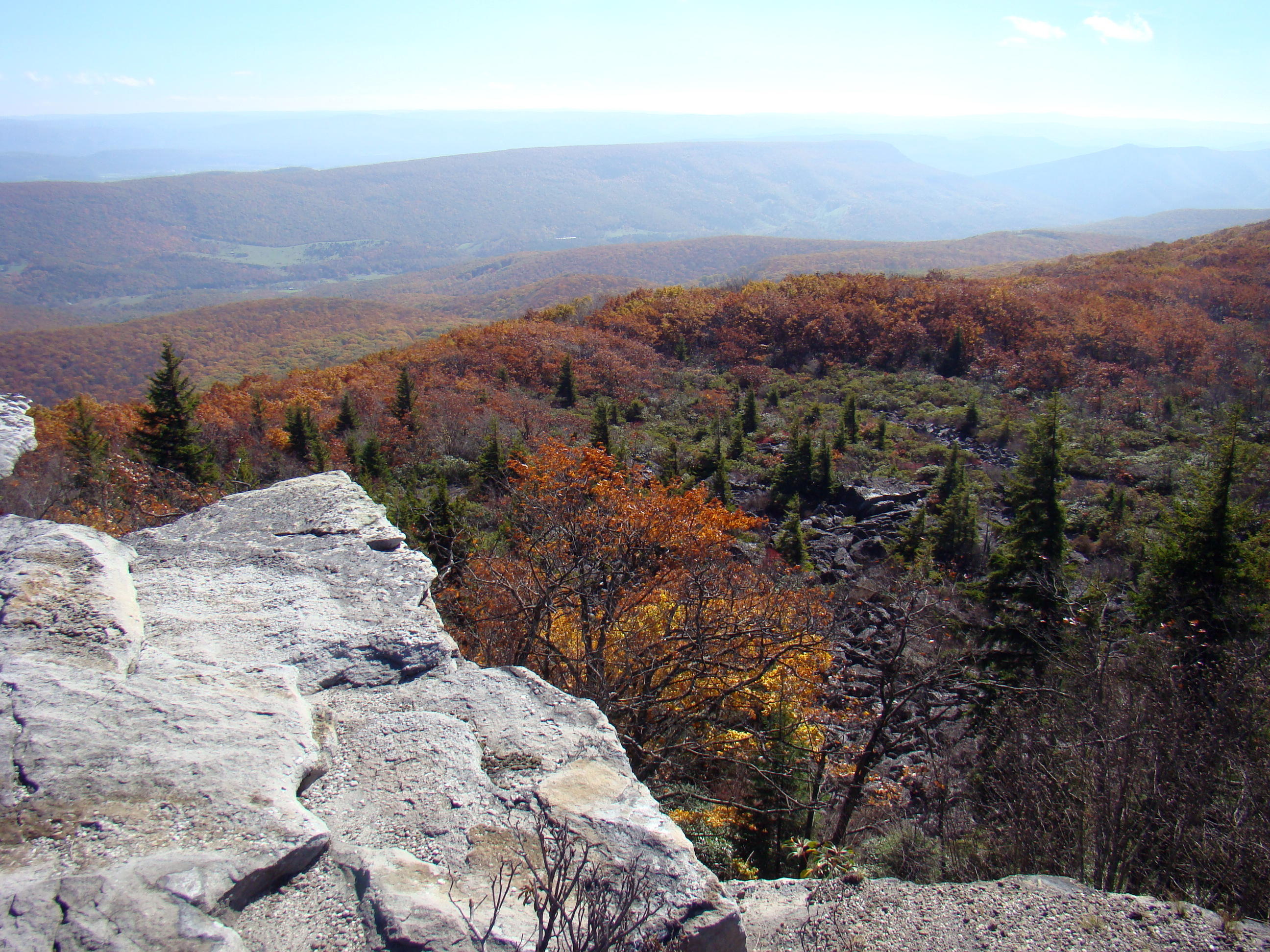
View from Dolly Sods Plateau

View from Dolly Sods Plateau

Dolly Sods sets on the Eastern Continental Divide with waters flowing to the east continuing to the Potomac River, while those flowing to the west help form the Ohio River and eventually the Mississippi. In 1852, an article in Harper’s Monthly Magazine described the area as:

…so savage and inaccessible that it has rarely been penetrated even by the most adventurous. The settlers on its borders speak of it with a sort of dread, and regard it as an ill-omened region, filled with bears, panthers, impassable laurel-brakes, and dangerous precipices.

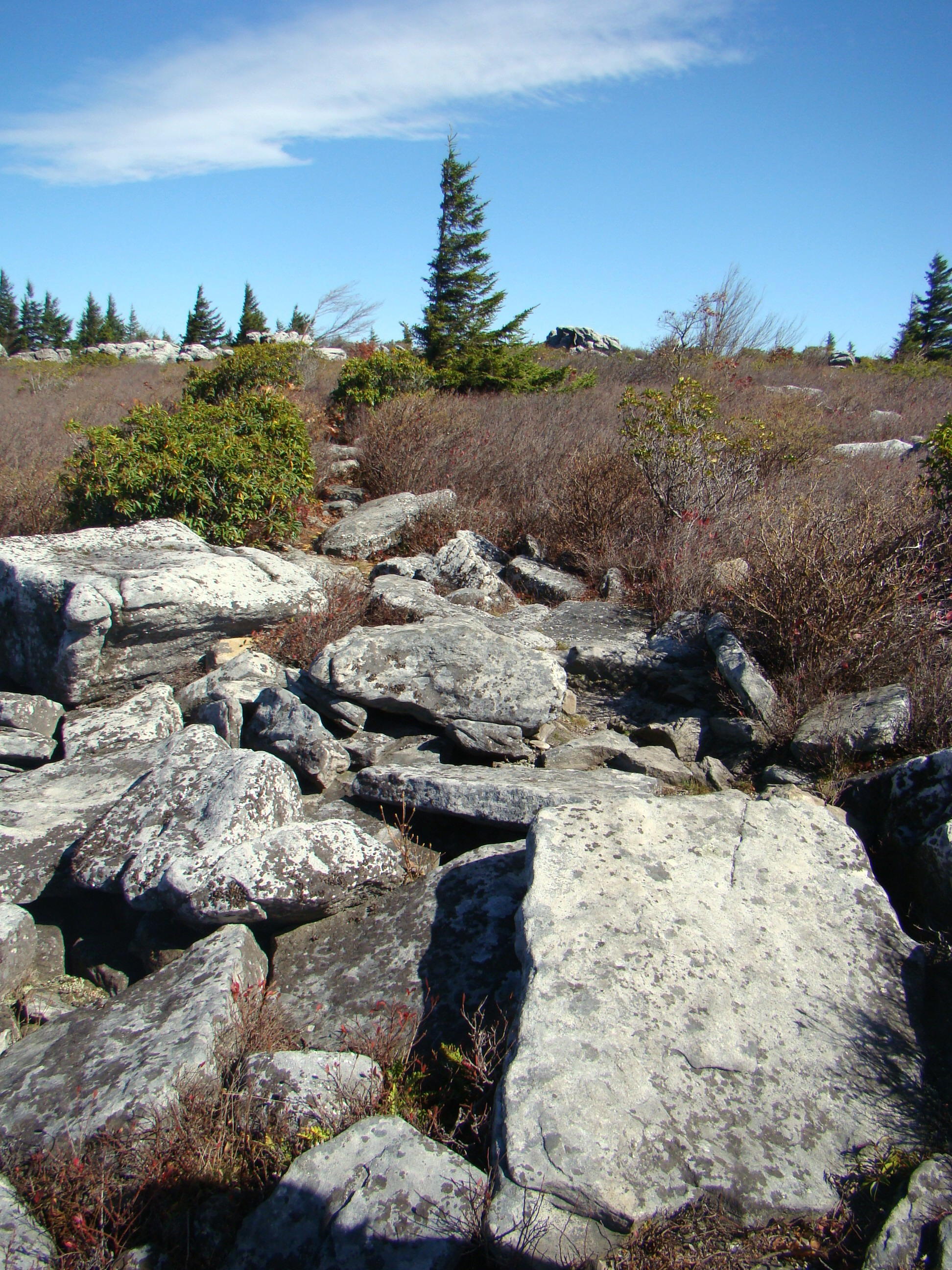
A challenging rocky trail back to the parking lot

A challenging rocky trail back to the parking lot

At one point in time, a glacier covered the top of Dolly Sods. Walking the trail to Bear Rock, water lays on top of the ground since it can’t be absorbed by the rocks just below the surface.  The trail required careful steps to avoid too much water, and it became very narrow between the low growth of wild blueberry bushes. But in just a little while, the trail turned into one made of rocks and it was a game of hopping from rock to rock to reach the edge.

An interesting sidenote was the fact that the US Army used this area as an artillery training ground before troops were sent to Europe in World War II. Hard to tell what might be found in the rocks and brush.

Many seem to enjoy escaping to the world of nature.

Many seem to enjoy escaping to the world of nature.

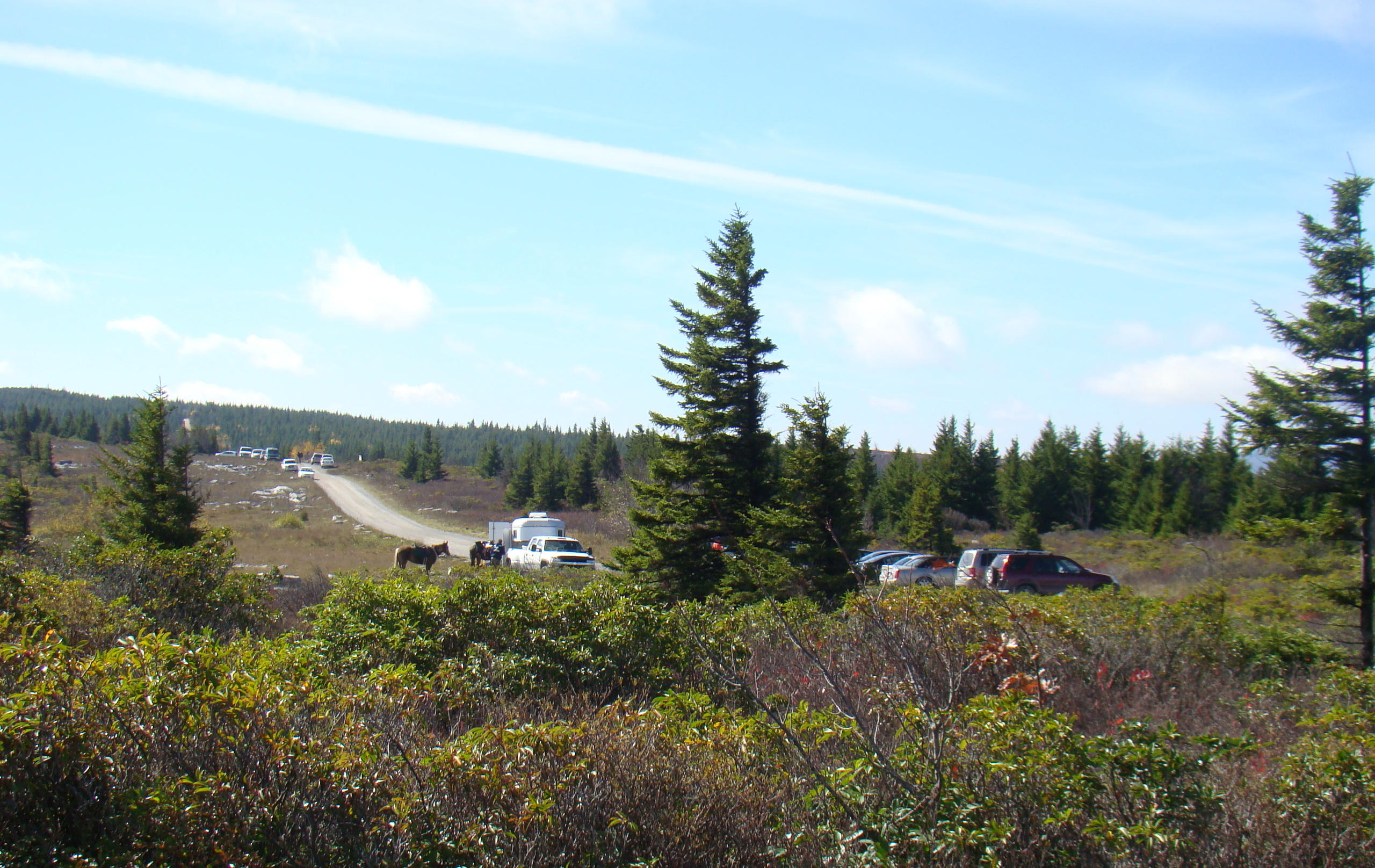
Starting back to the parking lot, it was surprising to see how many people were out walking the Dolly Sods on a weekday at a temperature of 49. Had to wonder how they found it!

From Canaan Valley follow WV 32 south to the Laneville Road (WV 45). Turn left and go approximately 6 miles to the Red Creek Bridge, where the road changes from pavement to gravel and is now Forest Road 19. 


Gross Mansion in Cambridge, Ohio – House of Many Uses

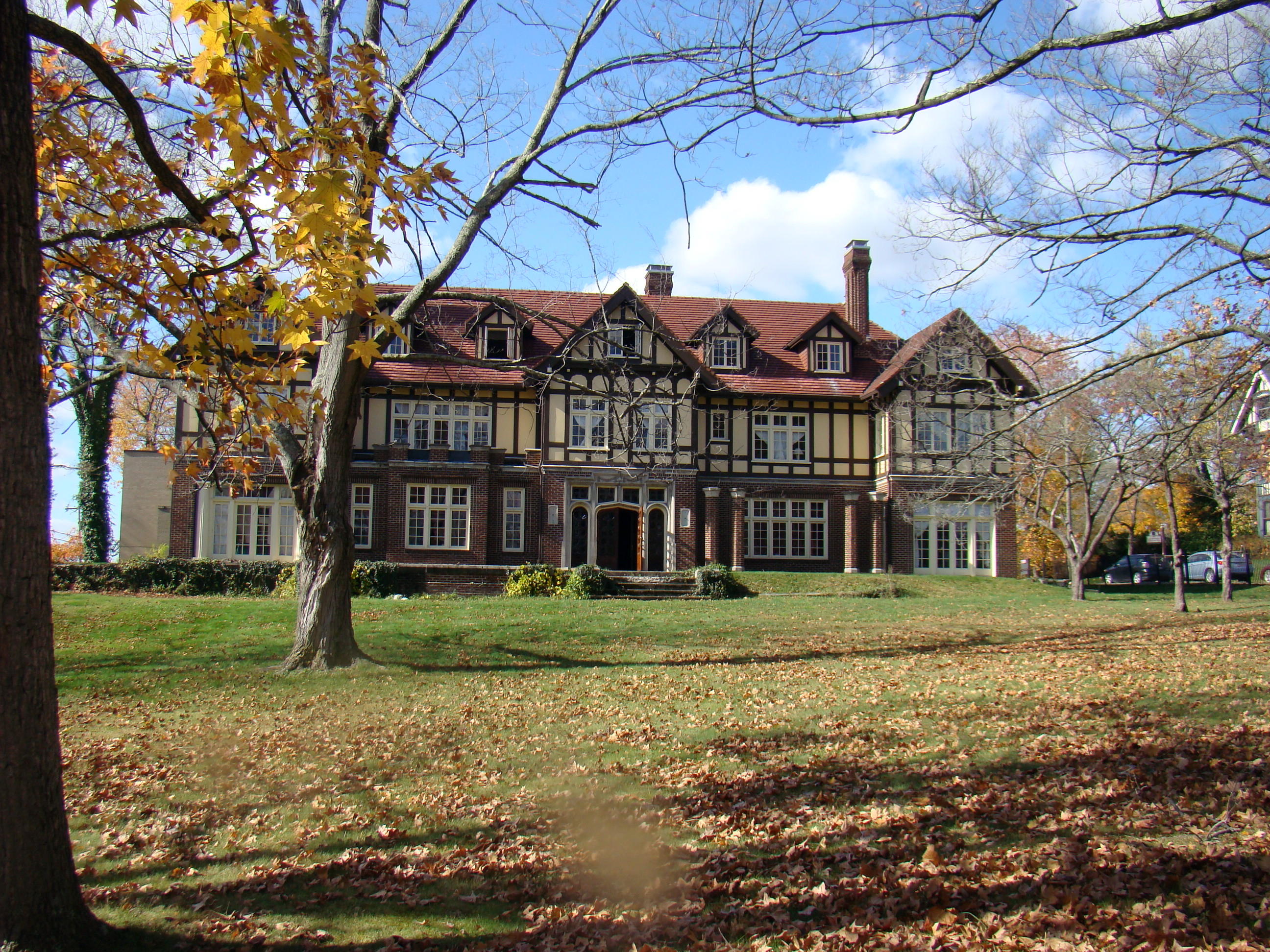
Gross Mansion today
Gross Mansion today

A mansion on a hilltop perfectly describes Gross Mansion. The mere mention of its name brings instant recognition. While most know where it is, few know its history, or the history of the only family to call this “home”.

Born in 1868, Charles F. Gross began working at the age of twenty-one in the oil fields of Ohio, West Virginia, and Oklahoma. Charles saved his wages carefully, and began buying shares of The Hill Oil and Gas Company based in Columbus, Ohio.

This company had extensive holdings in Oklahoma and Texas, and Charles Gross of Cambridge had increased his holdings to one-fifth interest. The Cushing Field in Oklahoma consisted of 6,000 acres and produced 20,000 barrels of oil a day. When he sold his one-fifth interest in this field, Charles had money to purchase land and build a house.

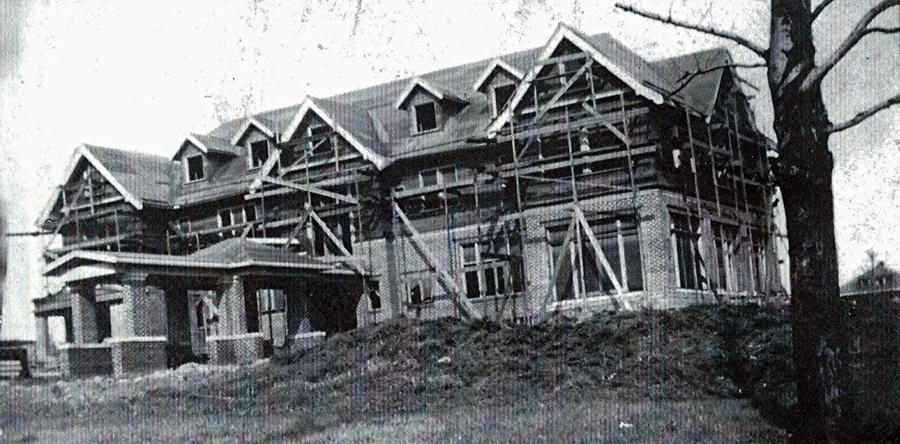
Gross Mansion under construction

Harriett, his wife, had her heart set on having the nicest house in Cambridge, and that is what Charles set out to accomplish. Charles had purchased a city block between Sixth and Seventh Streets in a strictly residential area.

Beautiful tile in the entry way

The Gross Mansion, completed in 1921, was situated in a park-like setting. A winding carriage lane wove through a beautiful landscape of flowers and trees. Relaxing while working in the garden became one of Charles’ cherished times.

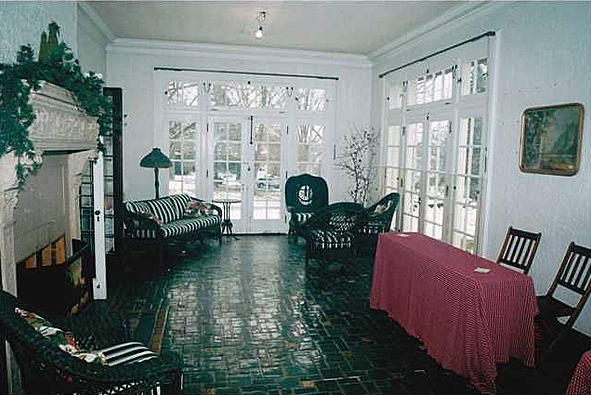
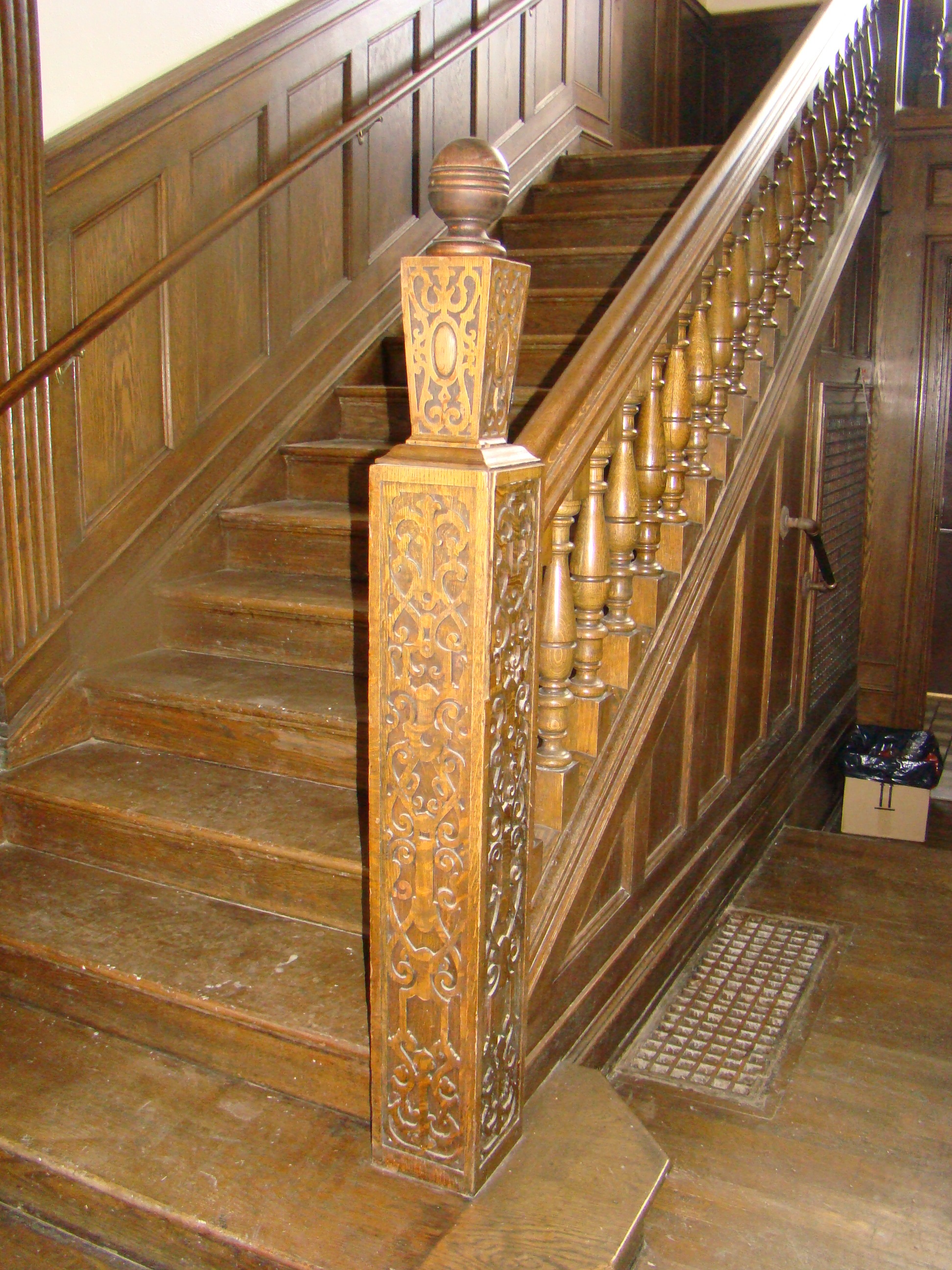
No cost was spared in the construction of this 12,000 square foot home with twenty-four rooms. Even today the beautiful tile floors, walnut paneling, carved stone fireplaces and beautiful stairway with carved newel posts exemplify the richness intended many years ago.

Stories are still told of the Gross family as many parties and weddings were held at the mansion. Trick or treaters that were brave enough to come to the door of the big house, were rewarded with a fifty cent piece.

Gross Mansion Sunroom

Teachers at the 9th Street School, where Harriett was a student, had an annual dinner there served by the Gross family. It was a day the children remembered, not because of the mansion, but because when the teachers went for lunch, school was dismissed for the rest of the day.

Stairway with carved newel post

Young Harriett also had the pleasure of owning a brown and white pony that she enjoyed riding inside that tall fence around the mansion. That high fence with spiked top is of special interest as it was constructed by the family to protect their only child. This happened right after the kidnapping of the Lindbergh baby and the Gross family feared that with their wealth gained from the oil fields, their daughter could be a possible target. They even had a hidden staircase installed in the house for easy escape.

A personal memory takes me back to days as a young child when my mother delivered fresh eggs and chickens, butchered that morning, to the Gross family. Mom let me carry a dozen eggs to the side door while she took the chickens. Dad waited patiently in the car.

While Charles Gross got his start in the oil fields, he became a very prominent member of the Cambridge community. In 1918, he was elected to the board of directors of The National Bank of Cambridge and served until his death in 1942. His funeral was held at the Gross Mansion.

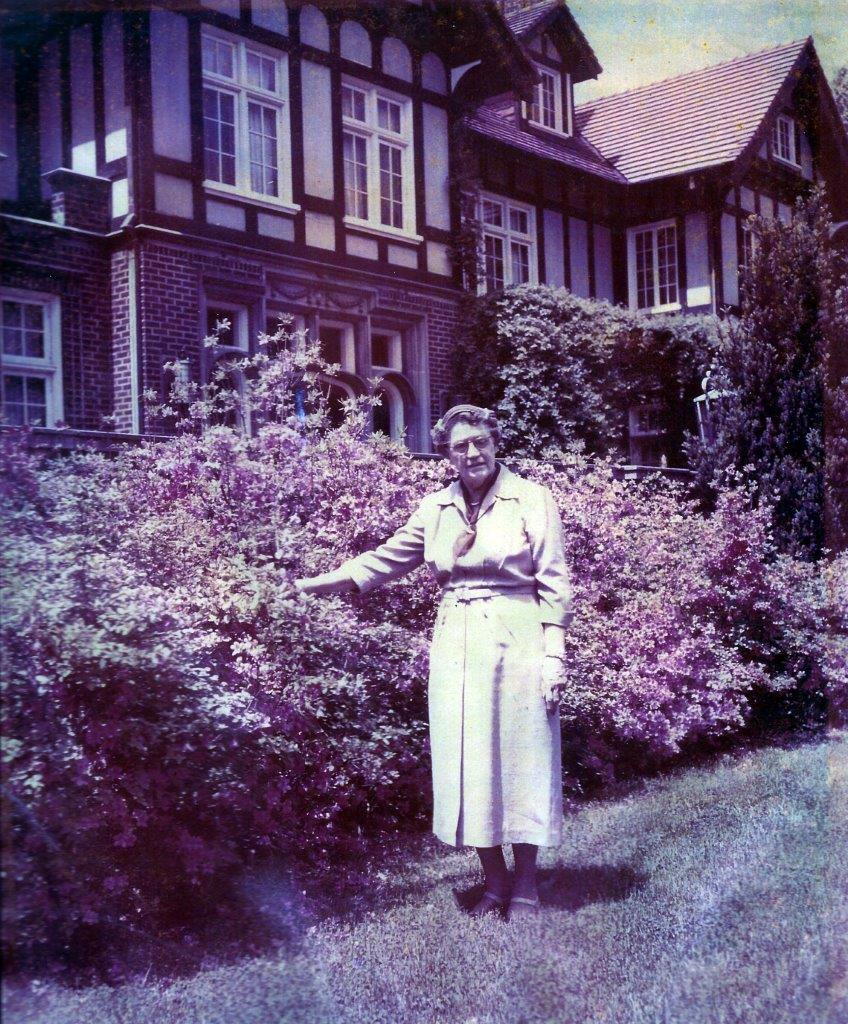
Harriett Gross in front of Mansion
Mother Harriett Gross in front of Mansion

Daughter Harriett was one of those who got married at the mansion when she wed Howell Bates, an ensign in the Navy. Later Harriett and Howell would be the ones to sell the mansion in 1958 to the Cambridge YMCA.

Gross Mansion still catches the eye of visitors to the city and makes them catch their breath as they view this beautiful home from nearly a hundred years ago. Chances are rare of building anything this grand again. Wouldn’t it be wonderful if it would be returned to its former richness and impressive beauty?.

Recently, Dickens Victorian Village held a Victorian Funeral Experience in the mansion. Hopefully other community events will take place in this beautiful spot soon.

How nice to see life at the mansion once again!

Gross Mansion is located between 6th and 7th Streets in Cambridge, Ohio. Once in town, head down 6th Street where parking is available in a lot across the street.

Beautiful Autumn Leaves HIghlight Lindy Point

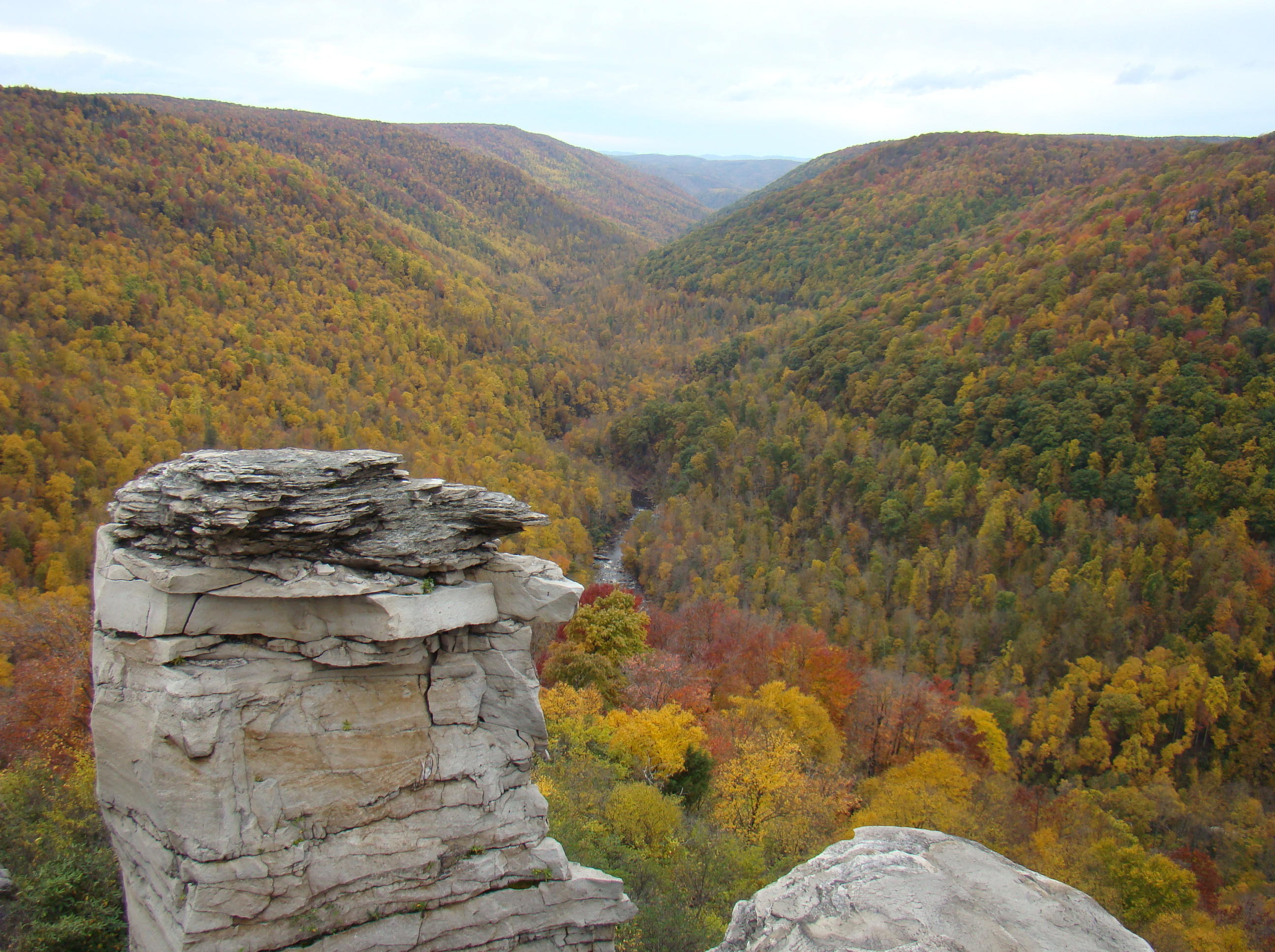
A roadside peek on a cloudy day

A roadside peek on a cloudy day

Every little corner of West Virginia seems to have a beautiful mountain view, and nobody does Autumn better than West Virginia. Lindy Point near Davis, West Virginia, provides a dynamic view in several directions.

Lindy Point Overlook sign

Lindy Point Overlook sign

Heading back a narrow curving road only wide enough for one vehicle, it seems obvious that this is not a heavily traveled area even for tourists. There are only four parking places at the entrance to Lindy Point so it would appear they don’t expect many visitors, but surprisingly several people were met on the trail.

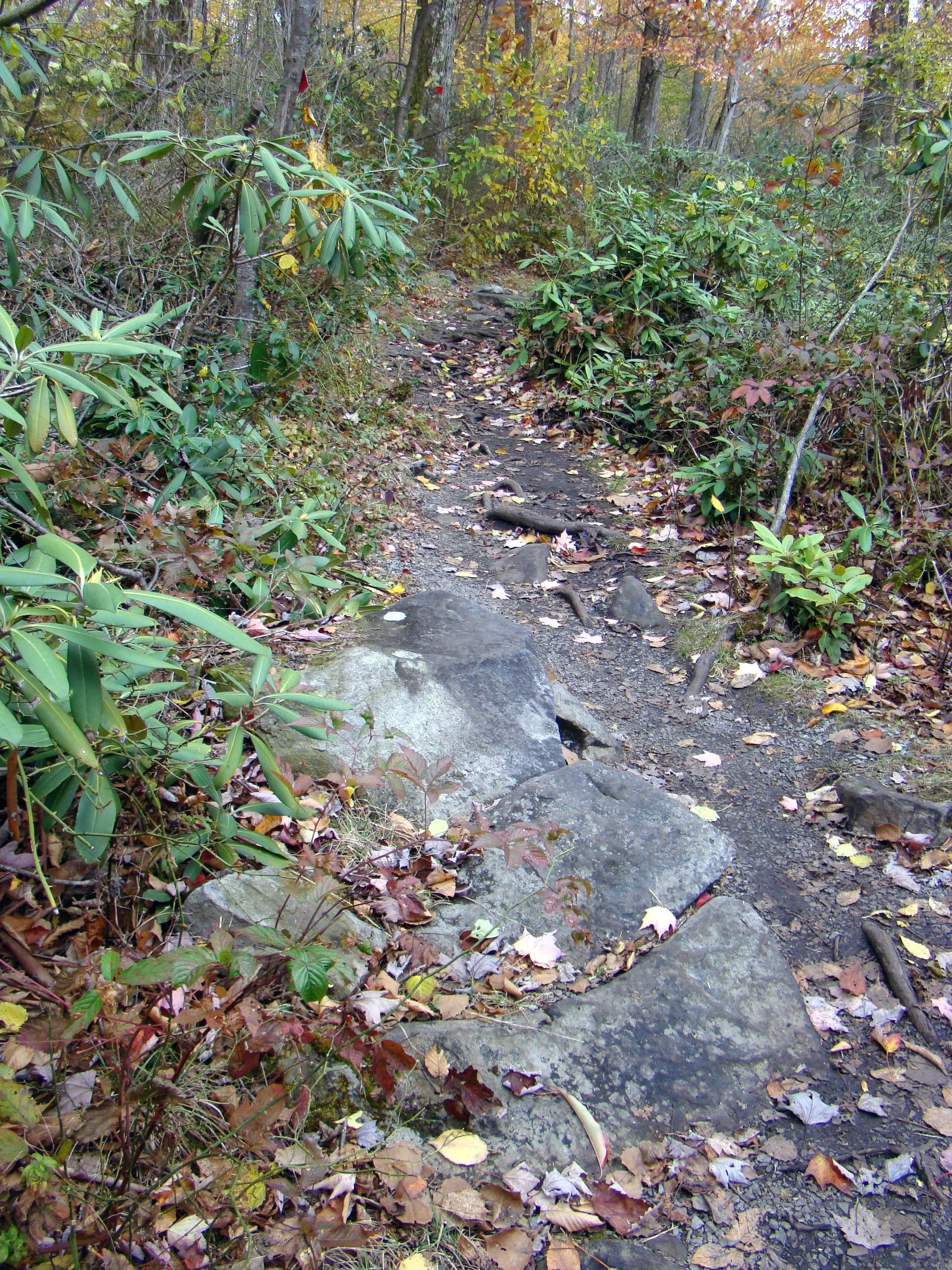
Rough path to Lindy Point

Rough path to Lindy Point

Traveling down a long, secluded path, each step needs to be taken carefully. Many tree branches, briers, and rocks appear on the path, which is basically a black dirt trail, but rather level. There are interesting plants along the way as the trail leads through dense rhododendron bushes. While eyes were open for animals, especially bears, none were spotted.

At places the road was muddy from rains of the past few days, and the black dirt trail turned into a boggy black adventure. There were places where there was no way around due to the heavy brush, so the only way to proceed was to walk right over the murky black bog. This was accomplished by placing the foot flat on top of the mud, one step at a time, and you didn’t sink in…well, at least not too much. A walking stick on this trail was particularly useful and welcome.
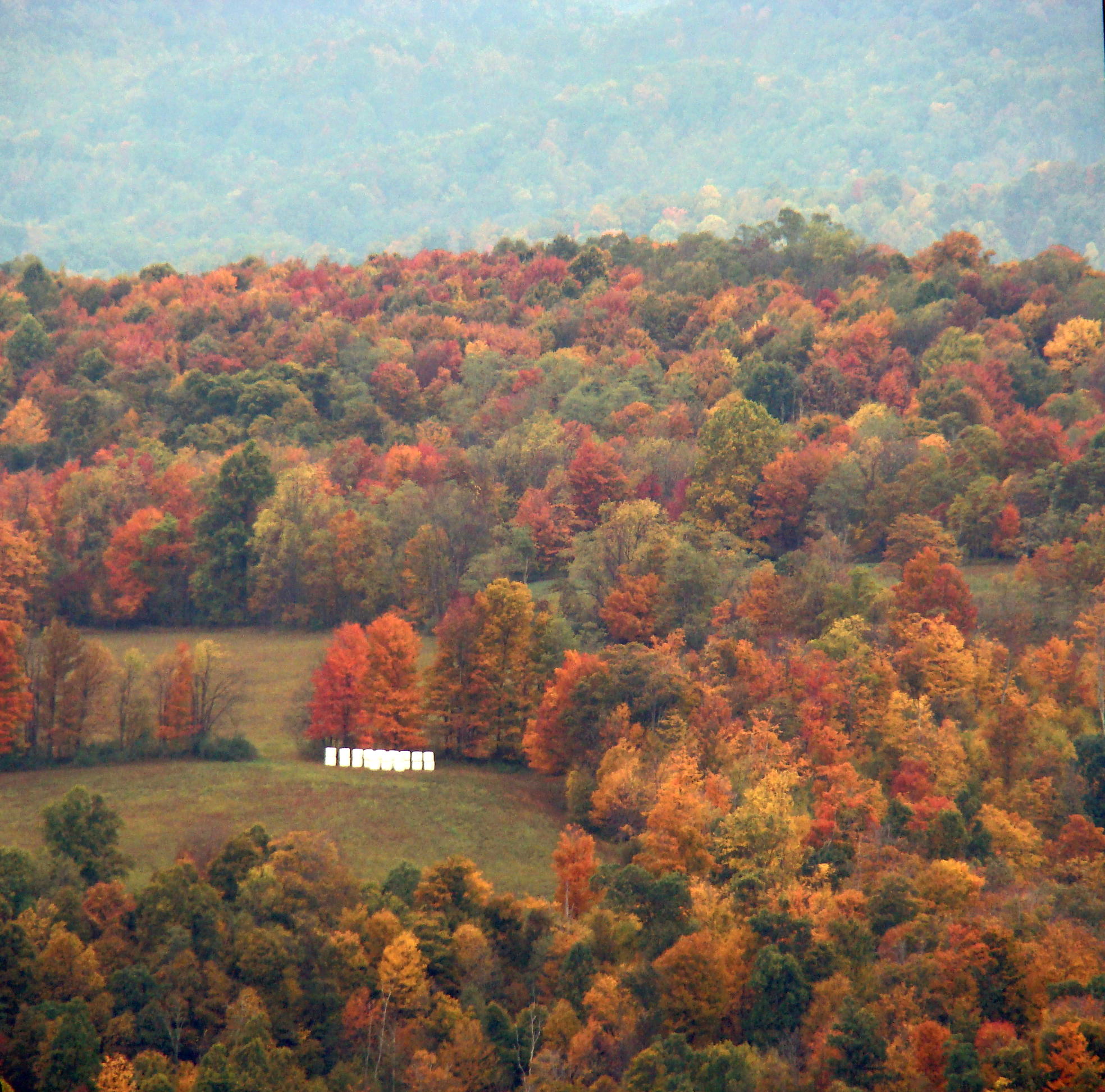
Looking over the edge at Lindy Point

Looking over the edge at Lindy Point

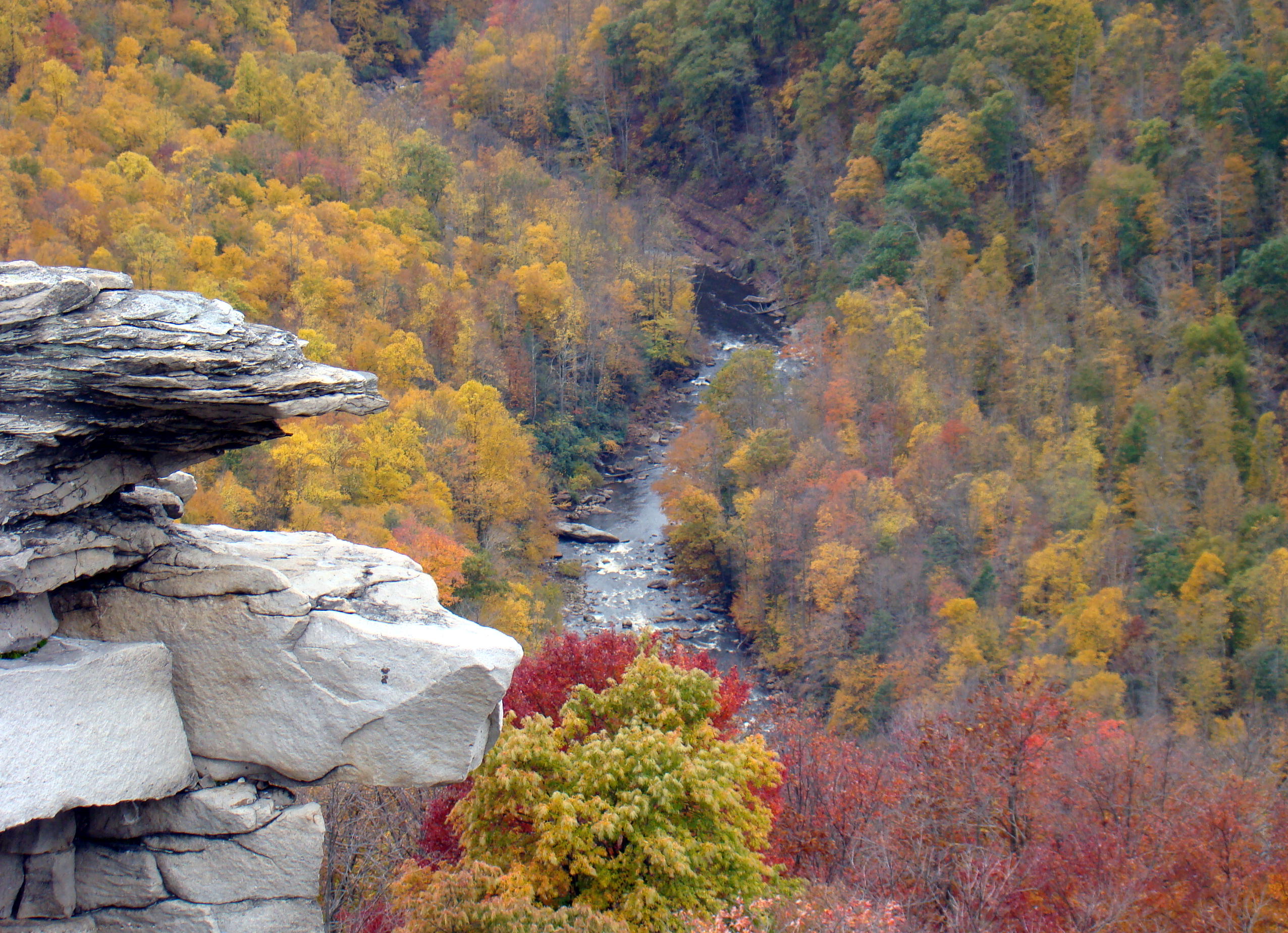
Finally we reached the end of the trail to a magnificent view from the overlook. Here you can see 48 acres of the Blackwater Canyon, one of those picture postcard views in all directions, as the valley is ignited with the colors of Autumn leaves. The Blackwater River runs through the bottom, while at the top are unusual, free-standing, rock “chimneys”, which add to the spectacular view. These enormous rocks were pushed up during the formation of the mountains many years ago.

Zoomed View of the river below Lindy Point

Zoomed View of the river below Lindy Point

A young man and his family appeared at the summit and told of his teenage adventures there for frequent picnics.  He remembered the time they were having a party out on the rocks before the platforms were built. One of his friends had too much to drink and fell to his death off the rock into the canyon below. The area was closed for a couple years and then the platform was put in place as a safety measure.

The walk back seemed much shorter and faster, but at the end it was necessary to clean the boggy mud off our shoes before moving on. 

Autumn is a great time to catch the view from Lindy Point. Anytime is beautiful, but the colors of the leaves highlighted its beauty.

Directions to Blackwater State Park travel many scenic routes along the way. These are the clearest directions I have found: Take I-7o E to I-79 S. Stay on I-79 S to Morgantown, WV. At Morgantown, follow I-68 E to Rt. 42 S, Friendsville, MD. Follow to Rt. 219 S through Oakland, MD, to Thomas, WV. At Thomas, take Rt. 32 S to Davis, WV. See what I mean?


Downton Abbey Weekend Opens Dickens Season

Downton Abbey Tea Party

Downton Abbey Tea Party

The pleasure and eloquence of merry olde England will appear in historic downtown Cambridge, Ohio during the 9th season of Dickens Victorian Village. Fans of Downton Abbey will be especially pleased during the first weekend of Nov 1 – 2 with Desperate for Downton events, including etiquette instruction, a tea party, and fashion show.

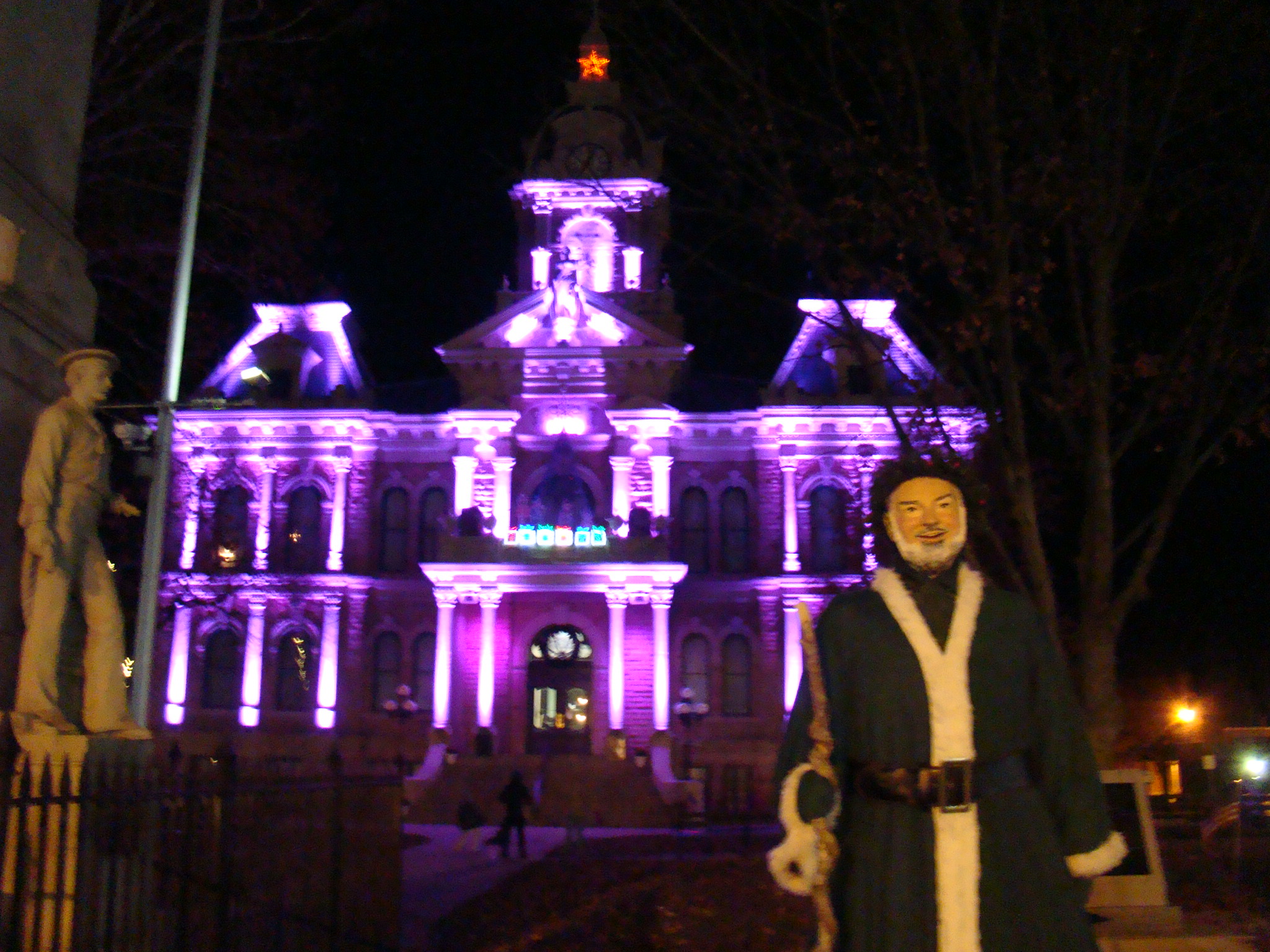
Father Christmas and his wife enjoy opening festivities.

Father Christmas and his wife enjoy opening festivities.

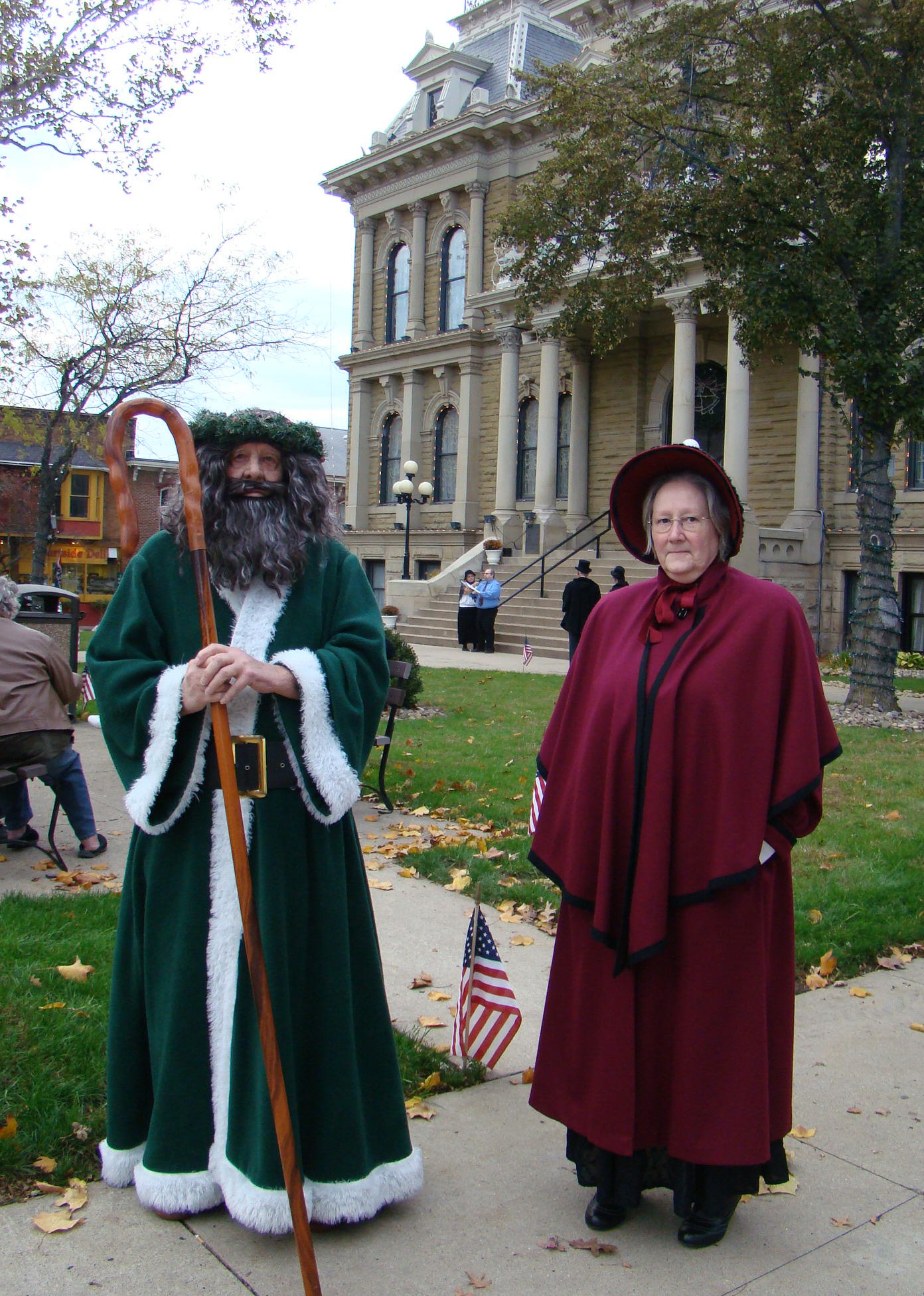
Opening ceremonies will be held at the Guernsey County Courthouse with entertainment by local groups, candle lighting, and caroling. Then watch the 2014 debut of the Guernsey County Courthouse Music & Light Show. You’ll be impressed.

Abbey Etiquette at the Cambridge Glass Museum

Abbey Etiquette at the Cambridge Glass Museum

A touch of old Victorian England presents itself through this special Desperate for Downton weekend. Begin with an etiquette class that will have you eating prim and proper for the rest of the holiday season. The National Museum of Cambridge Glass prepares an opulent location for this learning experience, as well as a feast for the eyes with their elegant table setting. Learn proper etiquette, then meander through the aisles of the glittering Cambridge Glass Museum.

Join in the fun of a Downton Abbey Painting Party  in the Dickens Welcome Center and Curiosity Shop located at 745 Steubenville Avenue. Try your hand at painting a Victorian style picture that is likely to become a treasured memory. Cost is $15 per person with all materials furnished.

Diplay of Victorian items at Downton Abbey Tea & Fashion Show

Diplay of Victorian items at Downton Abbey Tea & Fashion Show

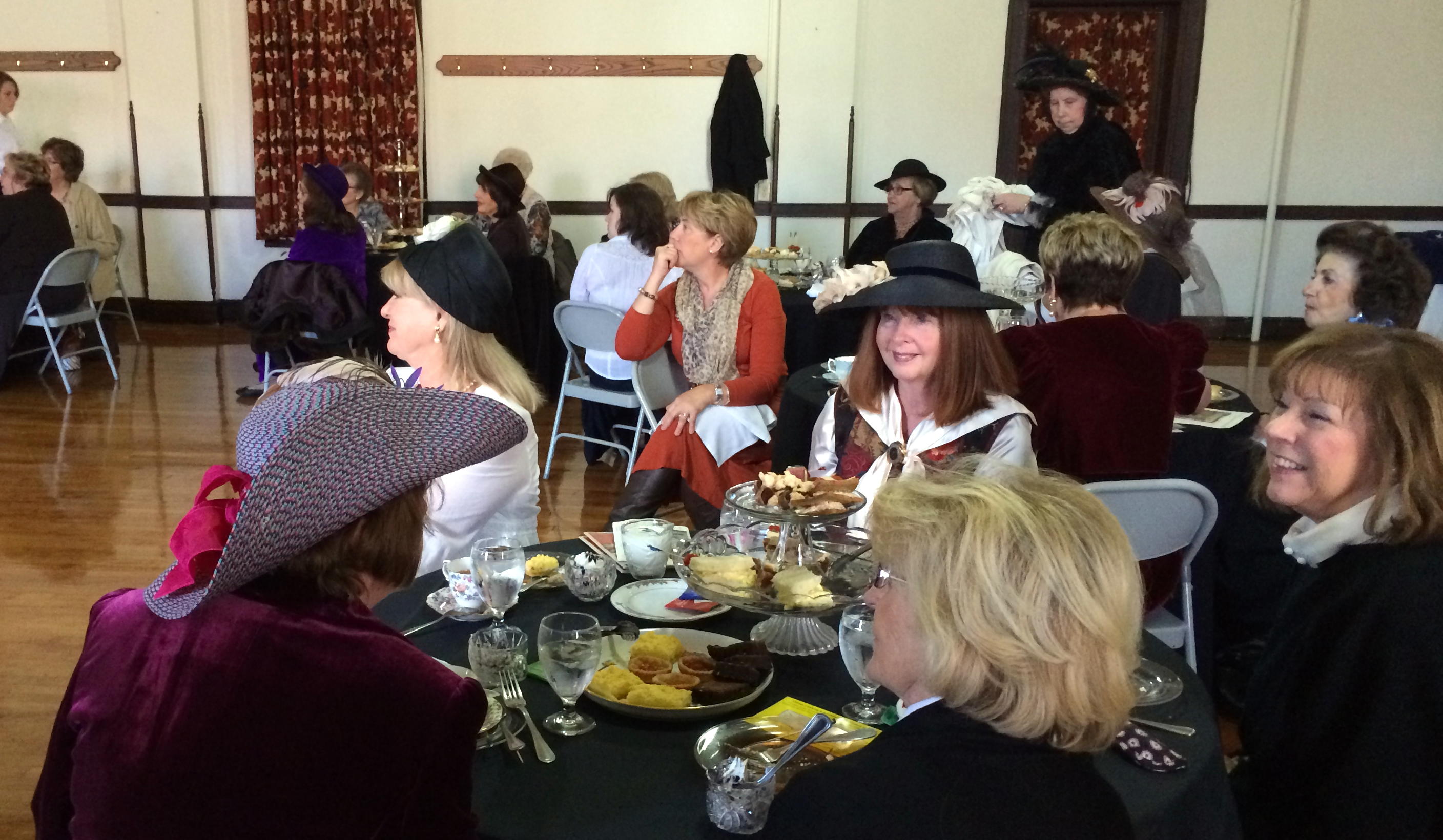
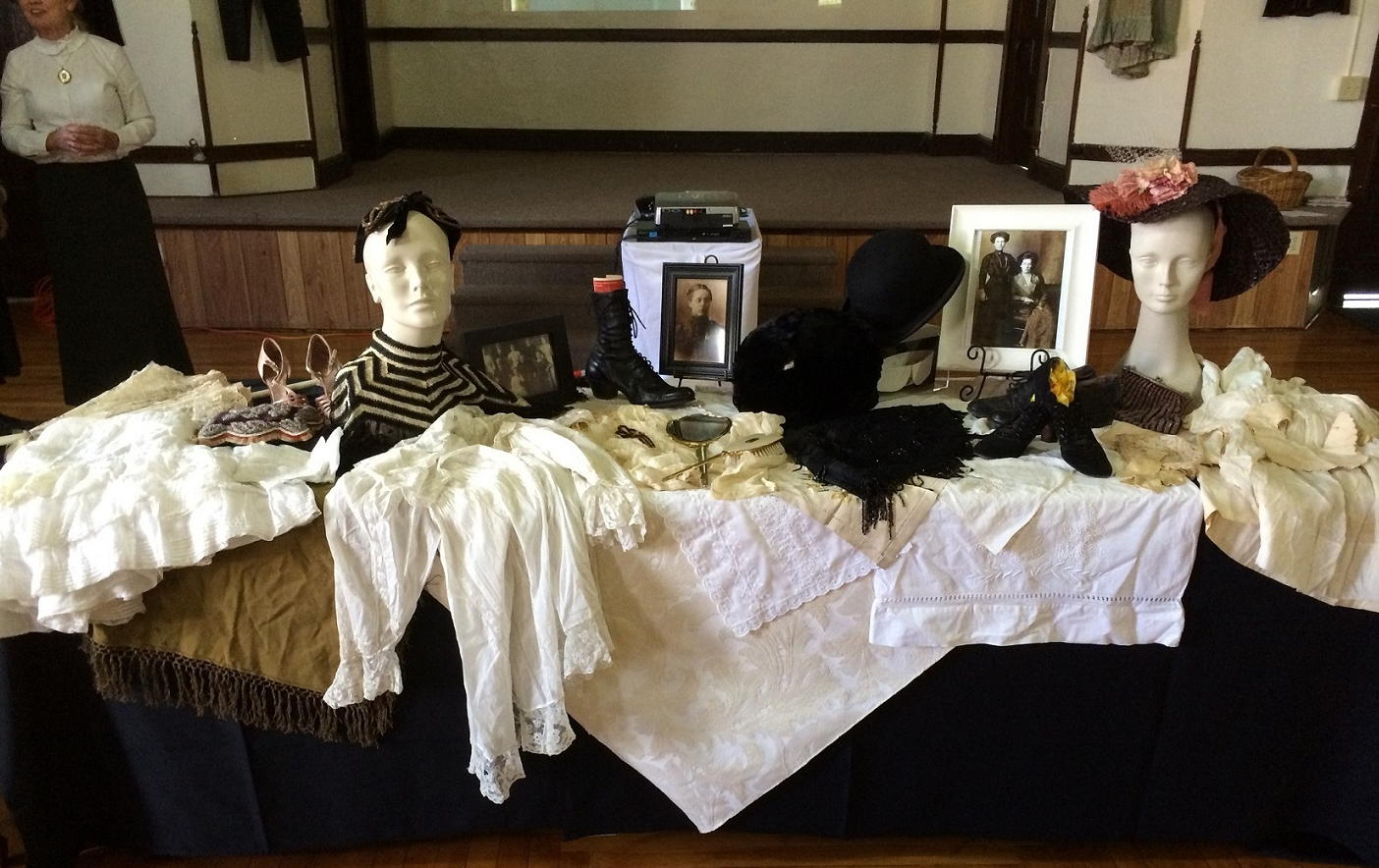
The highlight of this Desperate for Downton weekend happens during the Downton Abbey Tea and Fashion Show. Spend an autumn afternoon at a delightful Victorian tea party in the breathtaking Masonic ballroom at 730 Wheeling Avenue. Classic Faire’s dainty delights on each tea tower will stimulate the taste buds, while The Alley Vintage and Costume Store will present the amazing trim styles of period fashions.

Get in the spirit of the day. Dress in your finest dress, hat and gloves in either historic or contemporary style and spend a charming afternoon for $30 per person. Even those who entertain on Downton Abbey would feel at home during this event.

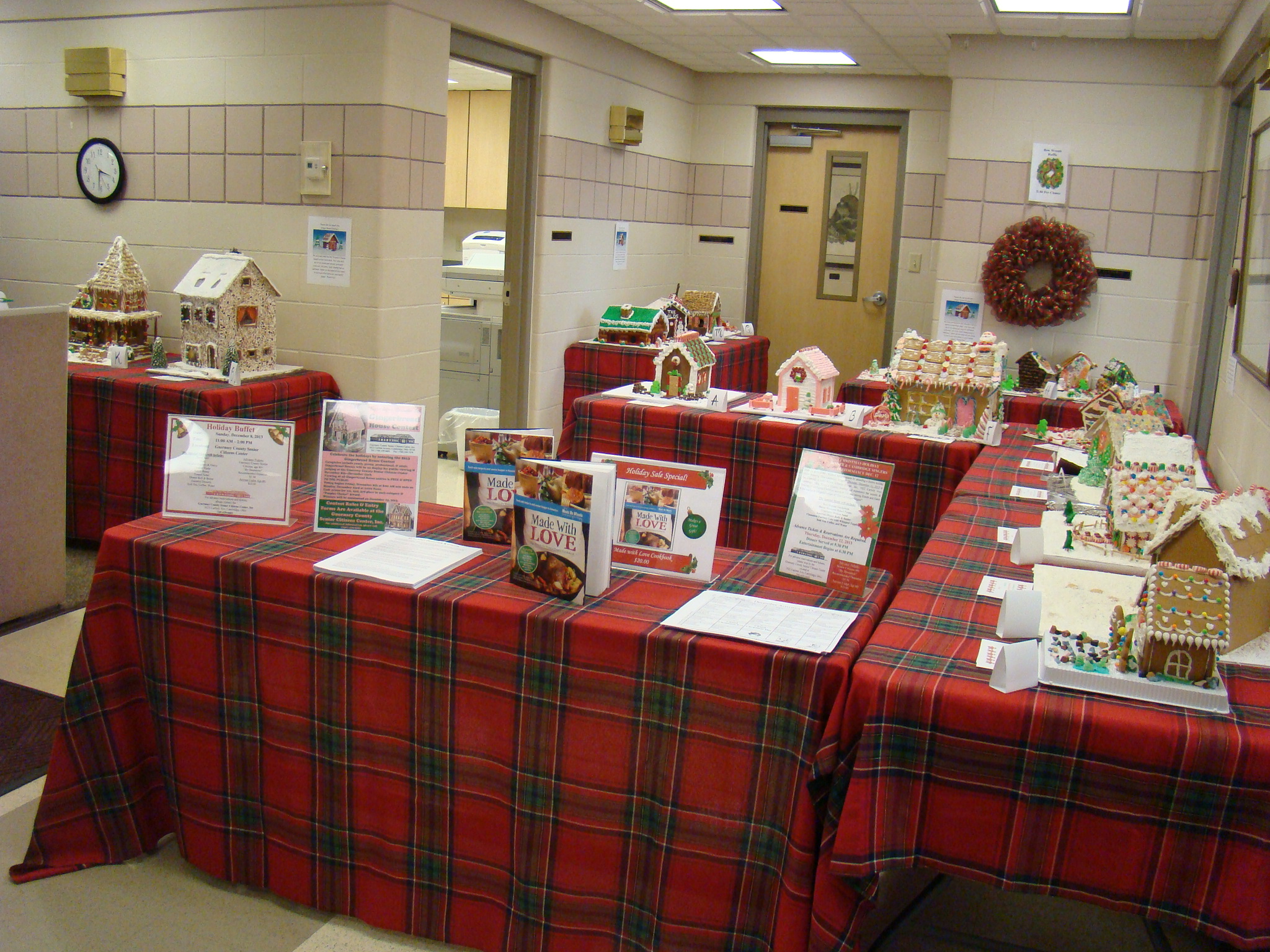
Learn how to decorate your own Gingerbread House.

Learn how to decorate your own Gingerbread House.

If perhaps you aren’t in the mood for tea and fashion, Sunday afternoon at 1:00 there will also be a Family Fun Gingerbread Decorating class at the Guernsey County Senior Center at 1022 Carlisle Avenue. Parents and children have the opportunity to join forces and create a special gingerbread house.

Guernsey County Music & Light Show

Guernsey County Music & Light Show

Dickens Victorian Village takes place from November through early January each year. Historic Downtown Cambridge comes to life with 92 scenes of 166 lifelike figures representing classic scenes from Victorian society. To add to the festive atmosphere, each evening from 5:30 – 9:00 pm view the magnificent 1881 Guernsey County Courthouse Music & Light Show where thousands of lights pulsate in synchronized rhythm to seasonal music.

Come join in the fun!

Cambridge, Ohio is located at the crossroads of I-70 and I-77. Follow old Route 40, the National Trail, as it leads right through downtown Cambridge where you will see Dickens Victorian Village. 

Ghost Tales Flourish in Historic Marietta

Welcome to Hidden Marietta, where some stories – and some people – simply refuse to die.

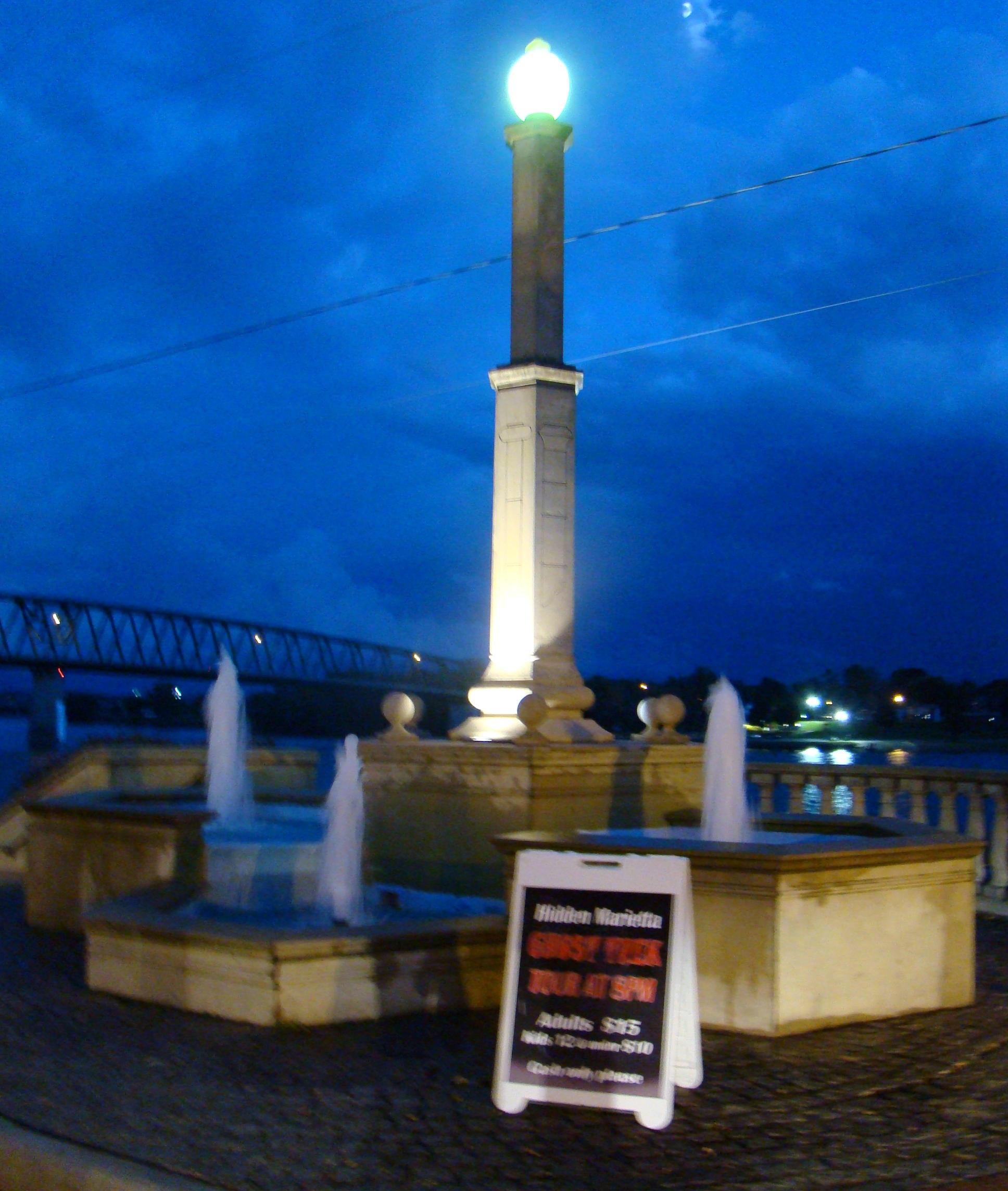
The fountain marks the starting place for the Ghost Trek.

The fountain marks the starting place for the Ghost Trek.

The most haunted town in Ohio seems a natural place for a Ghost Trek – the streets of Marietta. Meeting near the Lafayette Hotel along the Ohio River, excellent guides tell some of the scariest stories about restless spirits left over from the past in this paranormal hot spot. Even rain won’t dampen your spirits.

While ghost stories are told at each stop, the tour also tells the history of early Marietta. As you hear stories of murder and paranormal activities, the heart races just a little faster as you glance around to see if there’s anything unusual happening.

The tour takes about two hours with perhaps a dozen stops, so many interesting ghost and historic tales are told along the way. Buckley Island in the middle of the Ohio River has experienced everything from Native American Indian attacks to an amusement park. At one point it also contained “Pest House”, where all sick people were quarantined to prevent illness from spreading on land. Once there, you stayed permanently. Today, hikers still feel sick and weak on the island…perhaps leftover energy?

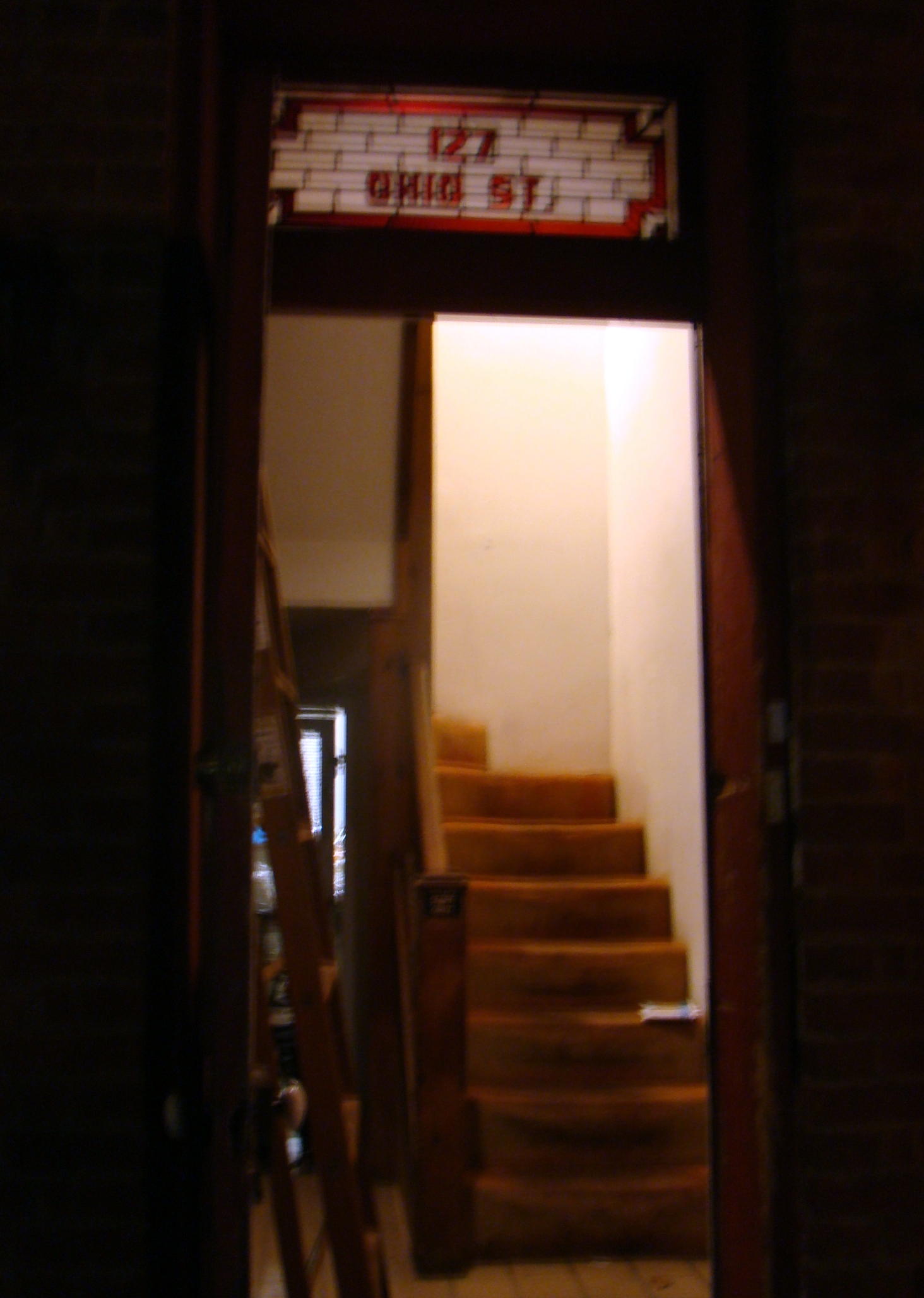
Staircase the Ax Murderer used in 1890's.

Staircase the Ax Murderer used in 1890’s.

Walking down the brick streets, with Victorian style buildings, gives you the feeling of stepping back in time. Listen to the tales of footsteps, knocks, and voices in the night. When you visit the old La Belle Hotel, the eerie glow of the night beckons for a close look at the staircase where the ax murderer walked slowly up, then ran down. Those footsteps are still heard frequently today and reflect a residual haunting – energy left over from 130 years ago.
Today, guests at the Lafayette Hotel often comment about unusual happenings in their rooms. Glasses may be moved, lights turned on or off, and people are frequently seen roaming the halls. One of those nighttime visitors appears to be Mr. Hoag, former owner, in his brown derby hat.

Haunted Lafayette Hotel

Haunted Lafayette Hotel

Employees of long ago recognized Mr. Hoag as the best possible manager. Employees today say that sometimes during the night, the elevator will suddenly light up for 6th floor, which is where maintenance equipment is stored, and the manager frequently visited. After a short time, the elevator comes back down to the ground floor. Just Mr. Hoag, still checking on his hotel.

Former home of Marietta Sanitorium

Former home of Marietta Sanitarium

Another eerie stop was the Tiber Way Grille, where people hear moaning and sobbing. Close inspection of the old ghost advertisement on the side of the building, brings out the letters saying: Chronic Disease- Marietta Sanitarium. After the hospital moved, a funeral parlor occupied this building. Now you see the reason for the crying sounds. Soon this will become a Victorian style hotel – complete with ghosts.

Now that you have heard a few of the ghost stories, perhaps you’ll enjoy a visit to Marietta sometime soon yourself. While Halloween seems the perfect time for a Ghost Trek, this event is held every Friday and Saturday evening from June to November at 8:00. Meet at the corner of Front and Greene Streets, at the fountain by the famous haunted and historic Lafayette Hotel.

Watch out for those ghosts!

To arrive in Marietta, Ohio take Exit 1 off I off I-77 and head west on Route 7, Greene Street. Where the Muskingum River meets the Ohio River, you will find the old Lafayette Hotel, the starting point for the Ghost Trek. This walking tour is under the expert guidance of Lynne Sturtevant, founder of Hidden Marietta and author of several books of Marietta history.