Places to go and things to see by Gypsy Bev

Archive for the ‘History’ Category

Schumaker Farms Takes Pride in Their Heritage
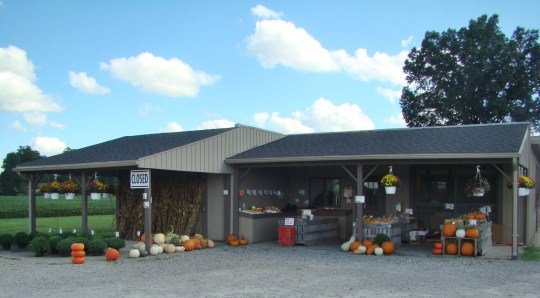
Schumaker Produce Stand

Schumaker’s’ Produce Stand gets ready to open for another busy day.

Once a farmer, always a farmer

   Driving just outside of West Lafayette, a small produce stand catches your eye. At this time of year, pumpkins, squash, and cornstalks give you a feel of fall in the air. But there’s much more to the story of Schumaker Farms than just their produce stand. Let me tell you the rest of their story.
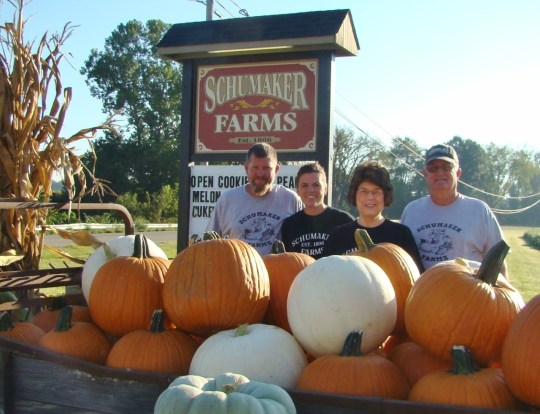
Schumaker Family

Today the farm is run by Chad, Leigha, Wendy, and Jim Schumaker.

   Way back in 1806, now we’re talking over 200 years ago, the family of Francis McGuire from Hampshire County, Virginia settled here on 1500 acres. Their daughter, Magdalena, married George Miller, and that family tradition has continued to operate this farm for seven generations.
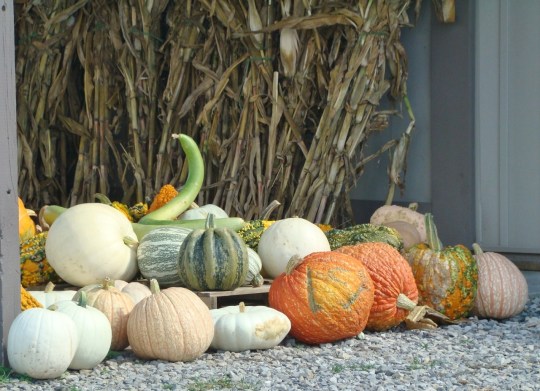
Schumaker Signs of Fall

Signs of fall at the produce stand include pumpkins, squash, and cornstalks.

   Jim and Wendy Schumaker are the present family members working on this farm. Now their farm is much smaller as when it was passed down, the land was split between heirs. But pride in their heritage continues. Jim’s great-grandfather was the original owner. Several family members are buried high on a farm hill in Miller-McGuire Cemetery where their spirits keep watch over the farm.
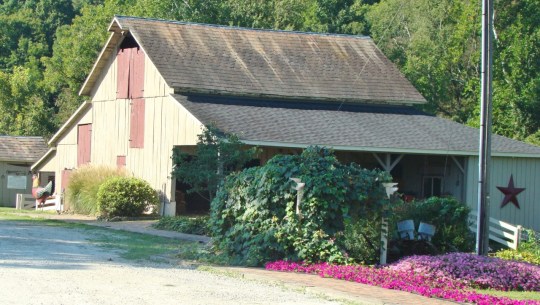
Schumaker Old Barn

The date of 1887 can still be faintly seen on the slate roof of this original barn.

   The buildings on the farm date back to 1887 as you can easily see from the printing on the barn’s slate roof. Jim has strived over the years to improve the farm. ”I want to make it a showplace to share the farm with other people.” He’s always looking for new things to include to promote the farm in agritourism.
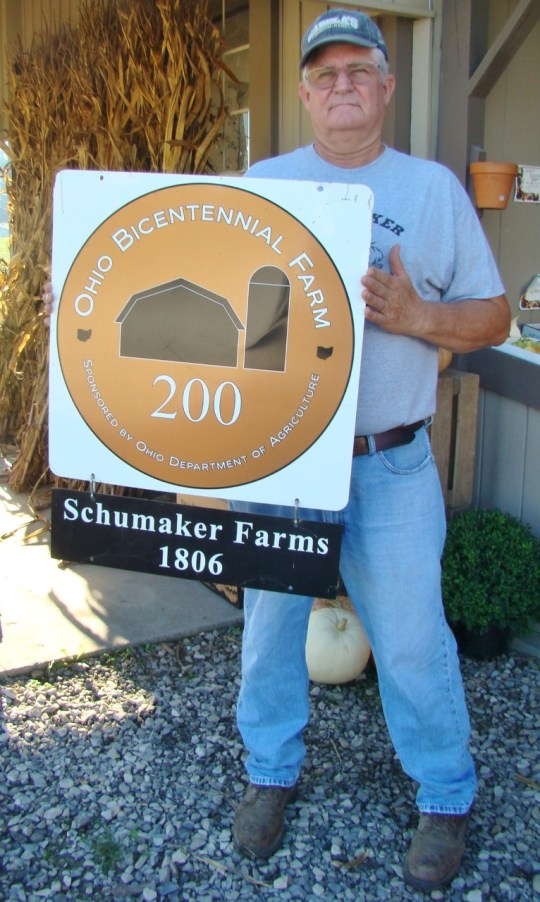
Schumaker Jim

Jim proudly displays the Bicentennial Farm Award for 200 years of family farming.

   They sell their produce in the summer months from a building constructed by Jim’s father, Robert, following his service in WWII. It was first used as a commercial garage, then later as an auto shop, Ferguson tractor dealership and boat dealership.

   Their most popular item at this produce stand is sweet corn. With eight acres of corn, they pick it fresh every morning. They have raised sweet corn for 58 years and sell about a hundred dozen ears a day all summer long.
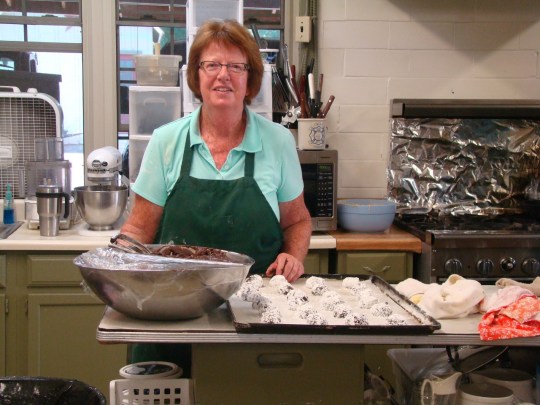
Schumaker Donna Addy Cookie Maker

Donna Addy frequently bakes delicious cookies in the morning.

   Wendy keeps busy with her catering business as well since 1995. Perhaps she picked up her love of cooking from her grandmother, who was a great cook. But most of all, Wendy enjoys working with the various people she meets.
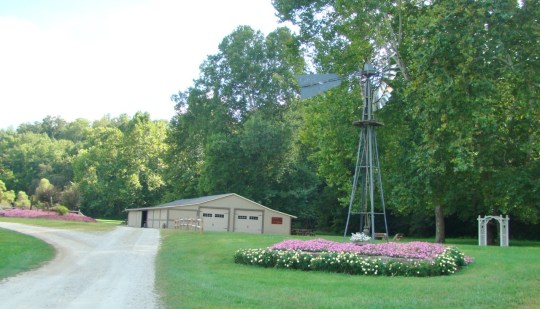
Schumaker Banquet Facility

Their banquet pavilion is a popular place for receptions and fundraisers.

   Their catering service can be “at our place or yours”. Their place is a large pavilion on the farm where people frequently have wedding receptions, family reunions, and other special events. Wendy caters all around the area and was recently honored to cater the luncheon for the dedication of the Woody Hayes bronze statue during the “Gateway to Fall” celebration in Newcomerstown.
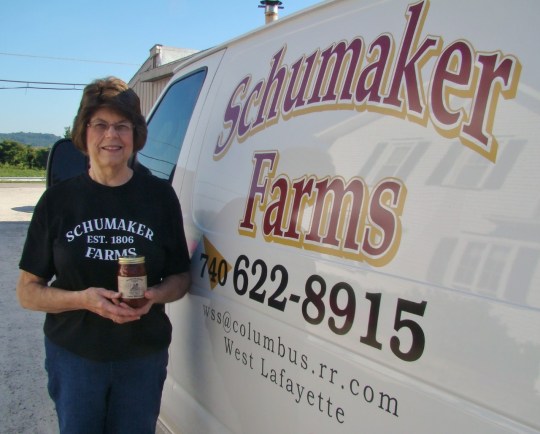
Schumaker Wendy at truck

Wendy holds a jar of their famous BBQ sauce beside her catering truck.

   People enjoy favorites such as cheesy potatoes, pulled pork, and meatballs. Schumaker Farms Sweet BBQ Sauce became so popular, they now have it bottled so you can take home that great taste.
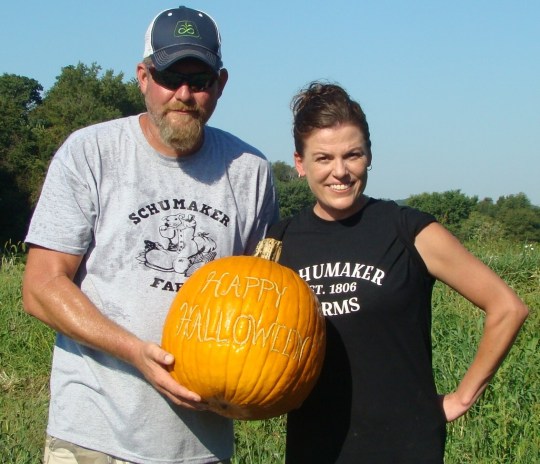
thumbnail_Schumaker Chad and Leigha with scarred pumpkin

Chad and Leigha hold a pumpkin she scarred when it was green.

   Today their son Chad and his wife Leigha have taken over many of the day-to-day operations and plan to keep the farm going. Leigha has a special flair for decorating while Chad has loved farming since his youth. They are in charge of the seven-acre pumpkin patch.

   Fall is Fun Time at Schumaker Farms. On weekends you can hop on a hayride to the pumpkin patch, where you can pick the pumpkin of your choice.
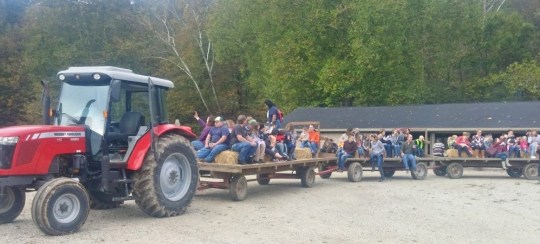
Schumaker Hay Ride

Many schools take field trips to the farm and include a hayride.

   Bring the youngsters along to play in the corn bin, slide down their huge slide, and visit the petting zoo. Enjoy the corn maze and a barn straw maze while picking up fresh produce or a delicious snack. Admission is $5 a car and includes all activities.
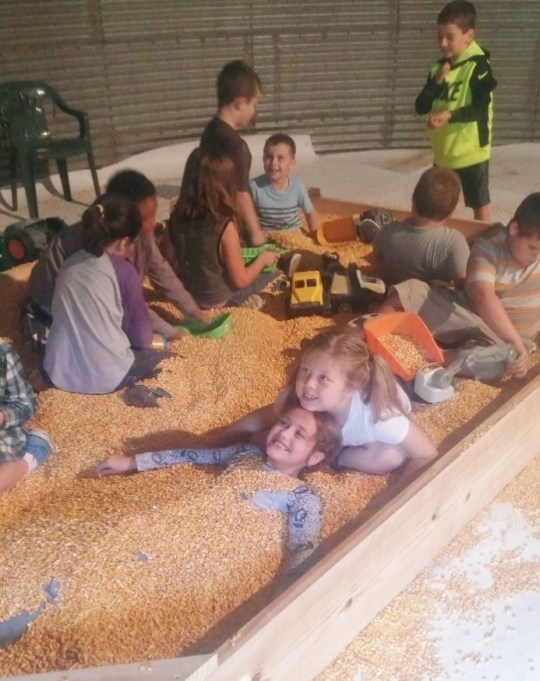
Schumaker Corn Bin

Children enjoy playing in the corn bin.

   Field trips for school groups create a great learning experience with a retired teacher explaining how a pumpkin becomes a pumpkin as well as other insights into farming. The Schumakers explain, “Those roly-poly orange spheres with built-in handles on top are naturals to wear grins or sneers and destined to bring grins to all your students’ faces.”

   When they eventually “slow down” and take a break, a cruise to a warm climate is their top choice. This chance only happens in January or February when they have enjoyed the Caribbean and Panama Canal in the last few years.

   Stop by Schumaker Farms for their Pumpkin Patch & Farm Experience this fall. There are lots of things to see and do. These hard-working people enjoy their lives. For them, work is fun!

Schumaker Farms is located along OH-751 just west of West Lafayette. From US 36 take OH-751 south and watch for the farm produce stand on the left side of the road.
Twin City Opera House Alive with Music, Films, and Spirits

Haunted Twin City Opera House - Haunted Places in Ohio

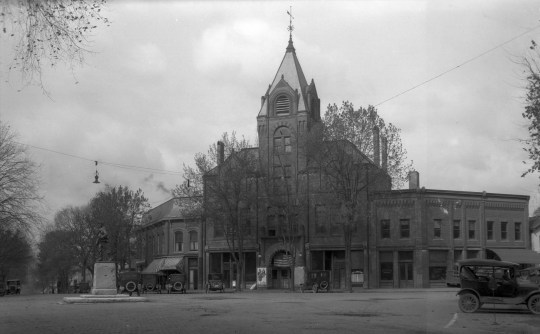
Everything looks very similar in this historical picture – except the cars.

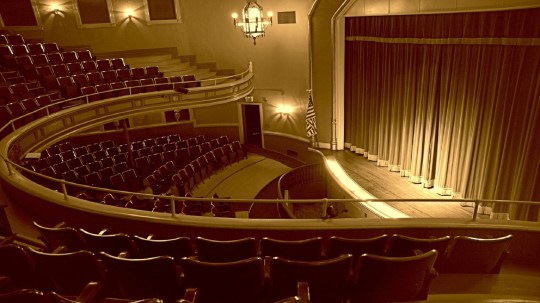
   Walking into Twin City Opera House is like walking back in history. On May 28, 1892, the formal opening was held for the performance of Gilbert & Sullivan’s “Mikado” by the Arion Opera Company. All 800 seats were sold!

   Railroad excursion trains brought people from neighboring towns. While many were not patrons of the opera, all were curious to see this newly proclaimed “light of the day” as it was one of the first buildings in the county to be lit by electric light. The opening was not as grand as expected due to failure at the local generating plant, which caused the theater to be plunged into darkness.

Opera House - entrance

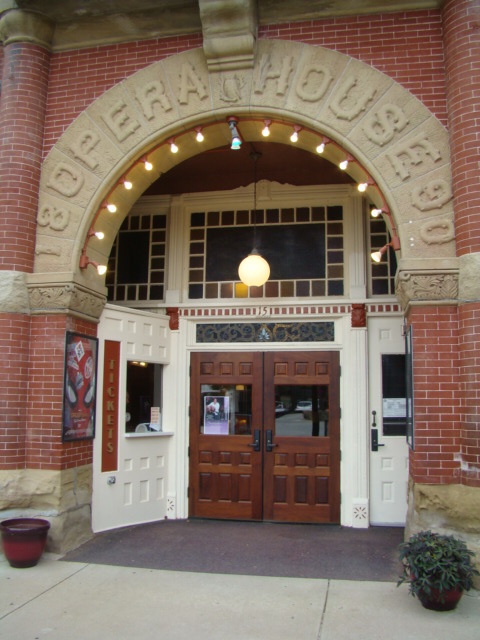
The entranceway still has an owl above the doorway.

   Building the Town Hall and Opera House was a politically charged issue in McConnelsville at that time. Before the GOP adopted the elephant as its symbol in the twentieth century, the party had sometimes used the owl of its ancestral “Whig” party as its mascot. That owl still adorns the keystone in the archway over the Opera House entrance.

Opera House - Marvin and Deana

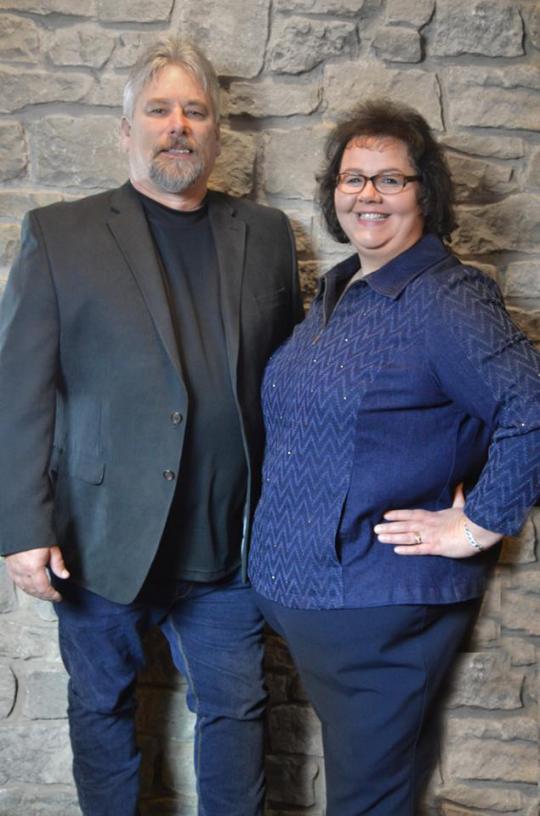
Marvin and Deana Clark currently manage Ohio Valley Opry.

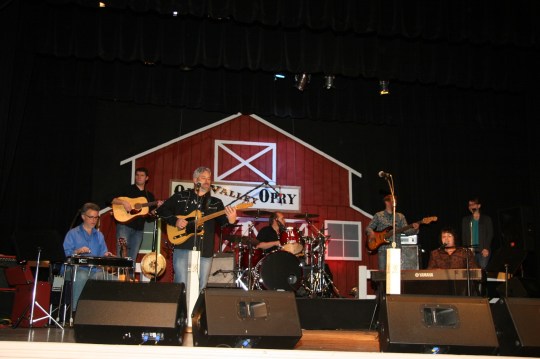
   Today, The Ohio Valley Opry founded by Marvin and Deana Clark in 2000 provides monthly entertainment at the old Opera House. They toured the United States for nearly twenty years as the Marvin & Deana Clark Family then returned to the area where Marvin grew up in southeastern Ohio.

Opera House- Ohio Valley Opry clear

The Clark Family Band provides great variety in their performances.

During this time on the road, they played at churches, fairs, and festivals with their four daughters. Most of the time they have played Country, Country Gospel, and Bluegrass. Marvin actually writes most of the songs that the family sings. They provide music and laughter throughout their performances.

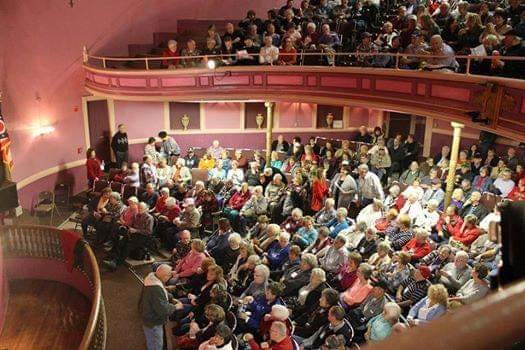
Opera House - packed

Ohio Valley Opry frequently fills the auditorium with fans.

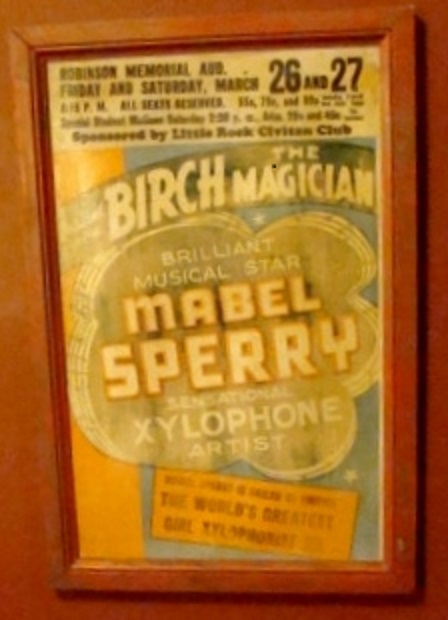
Opera House Sign

The husband and wife team of Birch and Sperry entertained with magic and the xylophone in the 1940s. This poster hangs in the lobby.

   A large variety of performers and celebrities have appeared at the Opera House over the years. Evangelist Billy Sunday, William Jennings Bryan, and Senator Albert Beveridge spoke there. The most spectacular of all were the traveling shows that would arrive by train and provide lavish productions. The tradition continues today with local, regional, and national artists now performing.

Haunted Twin City Opera House - Haunted Places in Ohio   Back in 1913, a system for showing silent films was installed. The best seats in the house were those in the “Parquet Circle,” which would be the front rows of the center section on the ground floor. Those premium seats could coast as much as twenty cents, while those in the “peanut gallery” were a nickel.
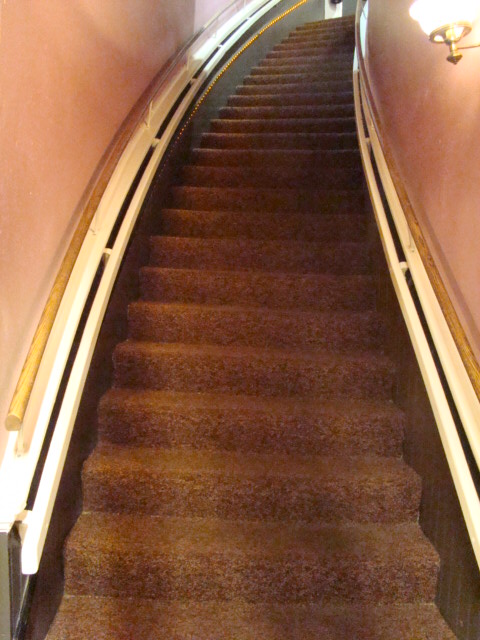
Opera House - stairs to balcony

Climb this beautiful stairway to the balcony.

   The first sound pictures using a “Vitaphone” system arrived at the Opera House in 1930. True “talkies” arrived in 1936. The theater still continues to screen recently released films, as it has done nearly every week since 1936. Price for viewing all films is a reasonable $4 per person.

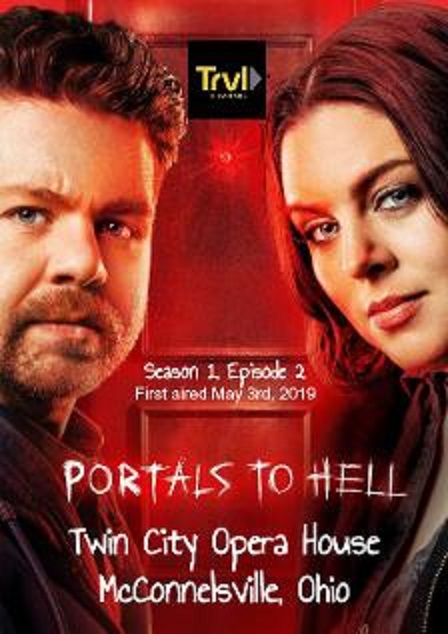
Travel Channel Paranormal Show

The Travel Channel included them in their Paranormal show.

   No building this old would be without some resident spirits. Ghost stories have been around at the Opera House for over forty years with paranormal investigators spending many nights there with their special equipment. Often it is listed as one of the most haunted buildings in Ohio.

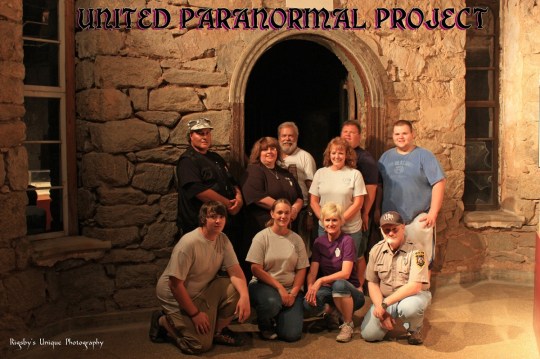
Haunted Twin City Opera House - Haunted Places in Ohio

United Paranormal is one of many groups that explore the resident spirits in the underground tunnels.

   Some say that Everett Miller, an usher there for thirty years, watches over the Opera House and has been contacted by the investigators. Or you might see ten-year-old Elizabeth peeking from the catwalk. Deep in the basement, Dark Shadow Masses have been observed by many. Spirits seem to thrive here. Come for a ghost hunt to find out more.

   It’s a beautiful drive down the Muskingum River to McConnelsville any season of the year. Check out their schedule at www.operahouseinc.com for dates and times of musical performances, film screenings, and ghost tours.

Opera House - Time capsule

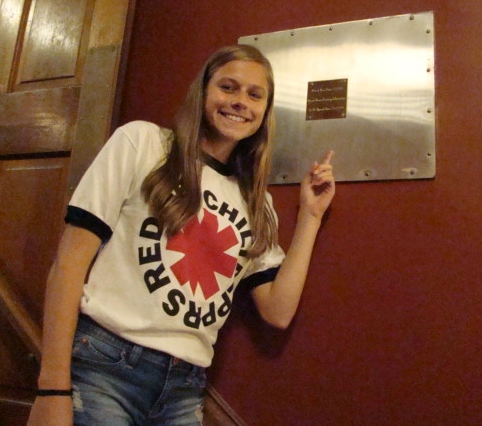
Josie points to a time capsule that her dad helped develop to be opened in 2090.

   On September 21st, there will be two shows featuring country music legend, Doug Stone. Movies change each week so check out the schedule before heading to McConnelsville. The next scheduled public Ghost Hunt is December 7 and pre-registration is required.

Opera House - with statue

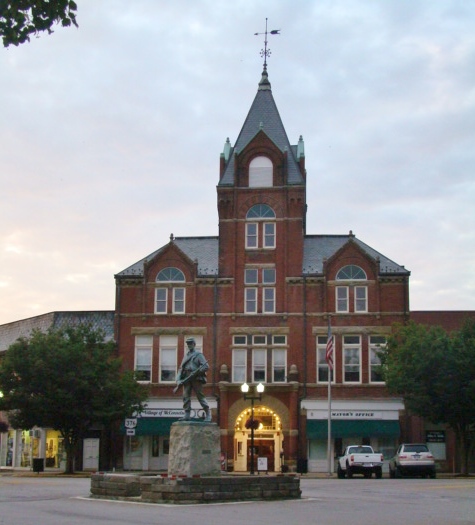
The Twin City Opera House can be found in the center of town near the Civil War monument.

   As you can see, the Twin City Opera House adds excitement to the McConnelsville area in many different ways. Make your choice – music, films or ghosts – and join in the fun.

Twin City Opera House is located in downtown McConnelsville along the scenic Muskingum River on Ohio Route 60-S.

Historic Roscoe Village – America’s Canal Town

We Bring History to Life

Roscoe Visitor Center

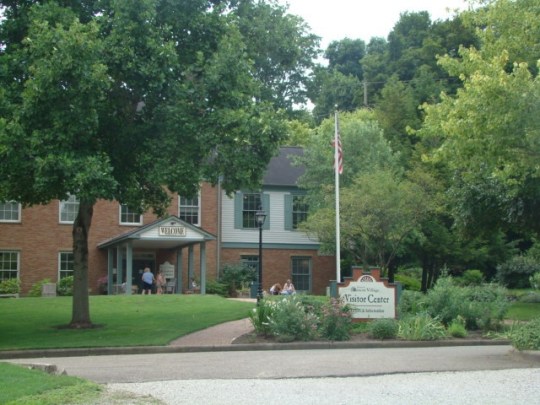
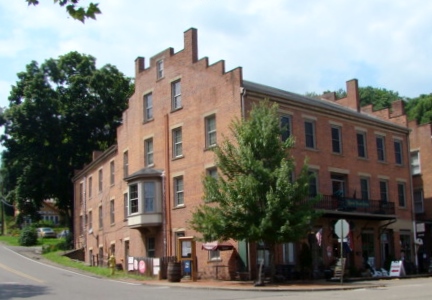
Roscoe Village Visitors Center is the perfect place to begin your tour.

Welcome to yesterday! Life 200 years ago was quite different from what we experience today. While we can’t turn the clocks back to that era, we can visit Roscoe Village in Coshocton to catch a glimpse of life on the Ohio and Erie Canal during that time.

Roscoe Oldest House

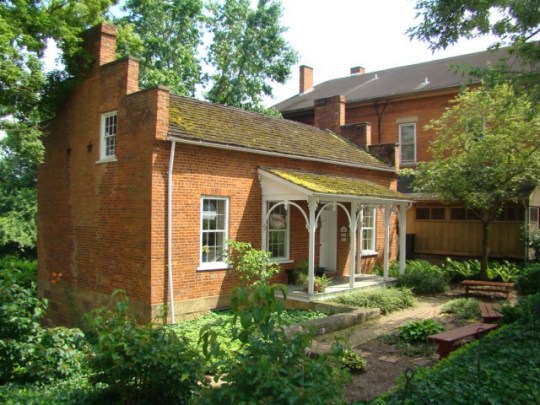
Weaver Daniel Boyd, his wife, and four children lived in the oldest house in the village from 1825-1835.

   Back in 1816, James Calder laid out the port town that was to become Roscoe. He followed a hunch that farmers would rather do business at Calder’s General Store along the Muskingum River than pay twenty-five cents to take the ferryboat to Coshocton.

   He named the town Caldersburgh, but it was later renamed Roscoe, in honor of William Roscoe, an English historian and leading abolitionist. Roscoe never visited America and probably never knew he had a town named after him.

Roscoe Ohio Erie Canal

Enjoy a smooth horse-drawn canal boat ride on the Ohio-Erie Canal.

   When the Ohio and Erie Canal was constructed in the 1820s, business in the village expanded and the golden age of Roscoe began. The first canal boat, the Monticello, landed at Roscoe on August 21, 1830. Roscoe was one of the largest wheat ports along the 350-mile canal that went from Lake Erie to the Ohio River.

Roscoe weaver

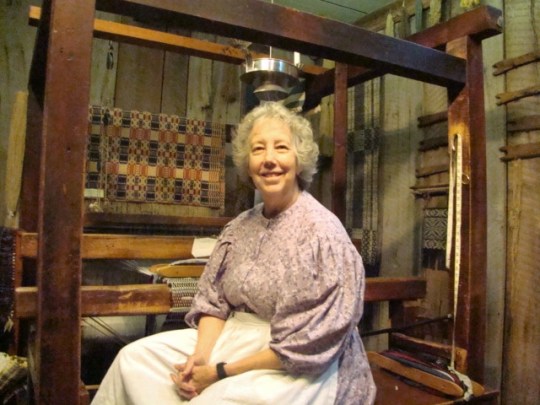
Rami demonstrated weaving techniques on her 200- year-old American Barn Loom.

   Roscoe thrived until the 1860s when the canals gave way to railroads. The canal boats continued to operate on a smaller scale until the disastrous flood of 1913, which swept away the port of Roscoe.

Roscoe One Room School

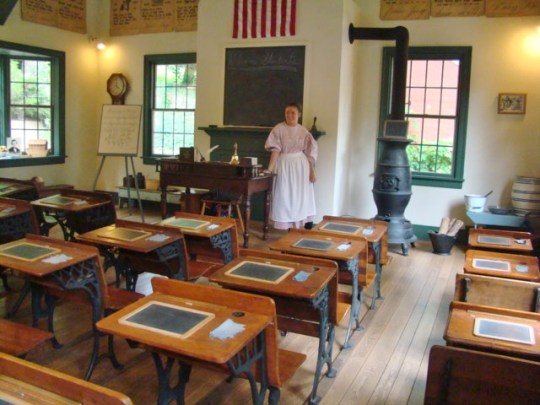
Natalie, the schoolmarm, told about teaching in a one-room school.

   Today the restored Roscoe Village is a reminder of Ohio’s canal era thanks to the dedication of prominent Coshocton industrialist, Edward Montgomery and his wife, Frances. A painting, “Canal Days”, which depicts the Roscoe area and can still be seen in the Chase Bank building at 120 S. Fourth Street, captured the imagination of the Montgomerys.

Roscoe Toll House

The Toll House is the restored home of James Welsh, toll collector on the canal.

   Their role began back in 1961 when they purchased the 1840 Toll House and decided to create “a living museum” on the banks of the Muskingum River. They endeavored to revive, restore and reclaim the then-burgeoning port town to a time when the Ohio and Erie Canal bustled with boats and barges.

Roscoe Dr. Dee

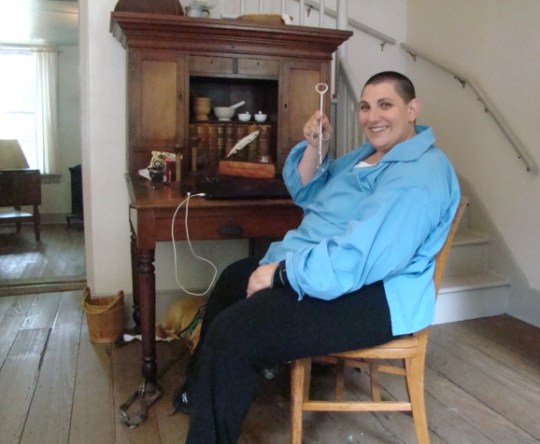
Dr. Dee in Dr. Johnson’s Office explained the tonsil guillotine.

   When you visit Roscoe Village today, you can stroll through the gardens, visit their many historic buildings, and take a horse-drawn canal boat ride on a portion of that old Ohio and Erie Canal. You’ll feel like you’re living a chapter of American history.

Roscoe Hotel

The Roscoe Hotel was a canal era hotel used as a stagecoach stop.

   Begin your tour at the Visitors’ Center where you can view a film, “Ditches of Destiny”, which describes those early days on the Ohio and Erie Canal. Then take a self-guided tour of the village to see costumed interpreters in historic buildings describing what life was like in those old canal days. Stop at the restored 19th-century buildings, which house The Famous Shops of Roscoe Village. Most businesses are open seven days a week throughout the year.

Roscoe Johnson Humrickhouse Museum

Learn more local history at the Johnson-Humerickhouse Museum. Yes, that’s Bigfoot in the shadows.

   Don’t forget to visit the Johnson-Humrickhouse Museum where you will learn interesting facts about Ohio history. Here displays tell you stories of the American Indians, Ohio artifacts, and Decorative Arts. There’s also a wonderful collection of East Asian artifacts that were collected by the owner.

Roscoe Blacksmith

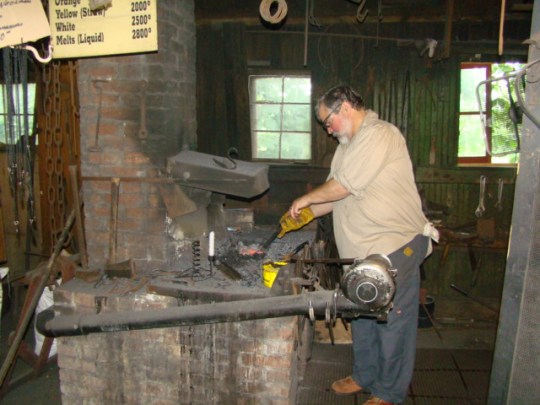
Carl, the village smithy, made leaf hooks as a blacksmith demonstration.

   Stroll through the Gardens that Frances Montgomery lovingly left for visitors to enjoy. Meander down its paths to see the beautiful blossoms and herbs that have been popular for ages. Beauty blooms in the gardens every season of the year.

   A ride down the Ohio and Erie Canal is the smoothest ride you can imagine drawn by two strong horses on the towpath. You’ll hear stories of how people traveled the canal in those early days. Some are quite unusual and exciting.

Roscoe Doctor's house and office

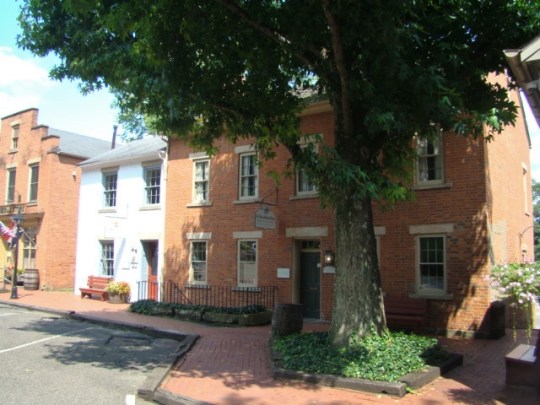
Stroll the streets of this quiet village any time of the year.

   Stop by Roscoe Village this summer and join in their 45th Anniversary. We need to remember the history of our area and how those early settlers developed a foundation for the world we live in today.

   Perhaps Captain P. R. Nye, who operated a canal boat at Roscoe’s Lock Twenty-Seven, says it best: “The Silver Ribbon – the Ohio Canal – was the best of life a man ever had.”

Historic Roscoe Village is located at 600 N Whitewoman Street in Coshocton, Ohio. From I-77, take exit 65, which is US-36 W. Follow 35 West to Whitewoman Street approximately 18 miles. It will be on the right-hand side of the road.

Salt Fork Arts & Crafts Festival Celebrates 50 Years – August 9-11, 2019

50th LogoArtists, Entertainers, and lovers of the arts have been attending the Salt Fork Arts & Crafts Festival for 50 years. It’s come a long way from that preliminary festival, which was held on the courthouse lawn.
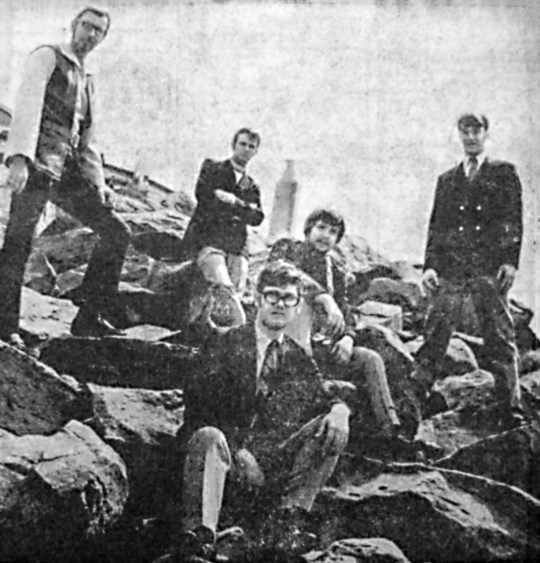
Musical Group R

Entertainment at that first festival was provided by “The Group” with Mike McWilliams, front, Don Mercer, Mike Kennedy, Mike McVicker, and Dale Brenning.

   The one-day downtown Salt Fork Arts Festival was sponsored by the Greater Cambridge Arts Council with Dr. Milton Thompson the president and Don Mercer serving as coordinator. Its goal was to promote all the arts including acting, music, literature, and art. The Best of Show that year went to Nancy Lewis of New Concord for a still life. The evening was spent dancing in the First National Bank parking lot.

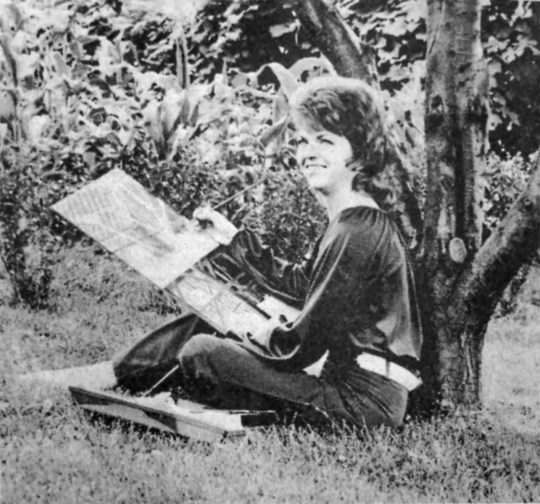
Sue Dodd R

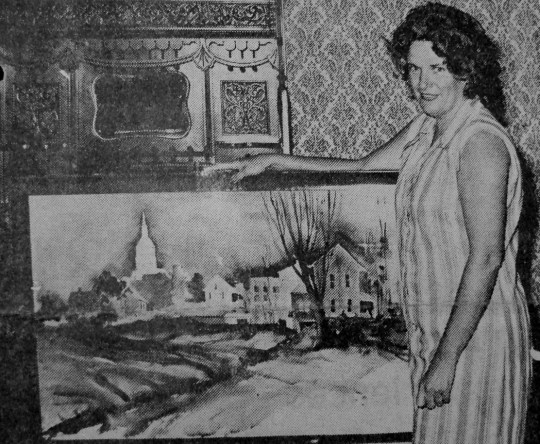
Sue Dodd demonstrated her painting skills under a tree at the park at an early festival.

   August 14-17, 1969, the festival moved to the Cambridge City Park as a four-day event. It was advertised as the First Salt Fork Arts & Crafts Festival. That year the newspaper stated there were four tents and 65 artists. Entertainment varied from YMCA Gymnasts and Bexley Puppet Theater to Cambridge Barbershoppers and Sweet Adelines.

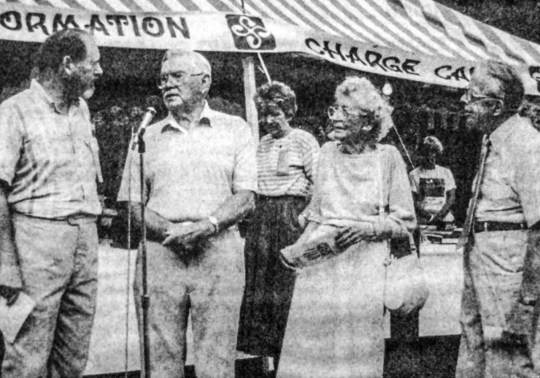
Jack Taylor saying thanks R

Jack Taylor says thanks to Bob Amos, Lois Craig and Art Marr who had major roles in that first Salt Fork Arts & Crafts Festival.

   Arthur Marr served as chairman of that first official festival with assistance from Bob and Hannah Amos and Mrs. Lois Craig. Mrs. Claude Nickerson and her committee were in charge of the artists while Bill Coffey handled the performing arts. The Cambridge CB React Club took charge of parking and patrolling. Pavlov Music provided background organ and piano music and Scott Funeral Home provided seating. It was a real community effort.

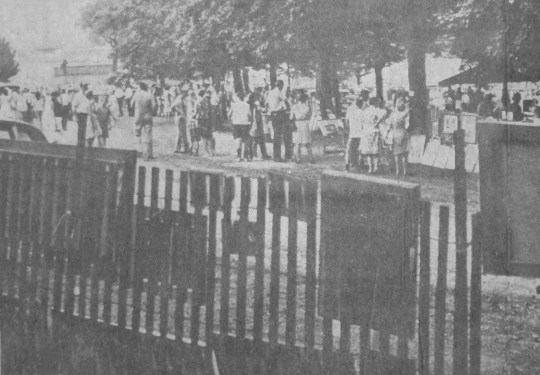
SFF Fences

In the early years, paintings were displayed on snow fences.

   The Cambridge National Honor Society and members of the Key Club helped by setting up chairs, tables and snow fences. In those early festival days, pictures by artists and student artists were hung on snow fences for display. Young artists have always been a popular and important feature of the festival.

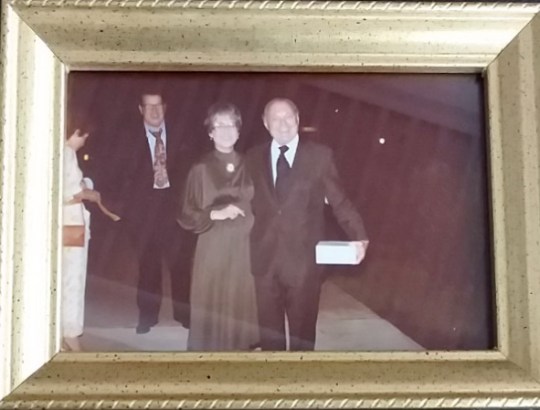
SFF Laura and Rodgers

Pictured at a reception at the Lekorenos home are Shannon Rodgers, Laura Bates (wearing a Rodgers/Silverman dress creation) and Jerry Silverman. Photo by George Lekorenos.

   It was in 1969 that Newcomerstown native, Shannon Rodgers, renowned dress designer for Hollywood stars, gave a donation to the festival and in 1971 began sponsoring the Shannon Rodgers Award. This award was open to all artists at the festival and was voted on by the public. When this endowment ended, the award became the People’s Choice Award.

Mary Beam

Mary Beam painted a picture of the courthouse from her front porch.

   Craftsmen demonstrating their crafts at those early festivals included basket weavers, blacksmiths, ceramic artists, woodcarvers, ironworkers, gem cutters, leather workers and many more. This was to be only the beginning of many years of outstanding juried art at the festival with only hand-made pieces of art being accepted.

SFF Paula Burlingame, Sandy Carle and Bonnie Perkins - Children's Art Fair

Paula Burlingame, Sandy Carle, and Bonnie Perkins make plans for the Children’s Art Fair.

   Crafts were a popular addition at those early festivals as well. In 1971, classes in macrame, woodcarving, leaded glass and apple dolls were popular. Adults enjoyed making quilted potholders and stained glass hangings. Everyone felt a sense of accomplishment.

Lekorenos-4X5

Marie Lekorenos, local artist and passionate supporter, kept scrapbooks of those first festivals. Those scrapbooks supplied most of the information in this article.

   In those early years, the Pilot Club, an international service club of women, served as volunteers to give artisans a break while selling their wares. Kiwanis, Lions, and Rotary provided refreshments on the midway selling hot dogs, ice cream, sno-cones, and cotton candy. Church groups, YMCA, and the hospital auxiliary had food stands available in the big pavilion for hungry visitors.

SFF Dick SImcox Big Band 1980

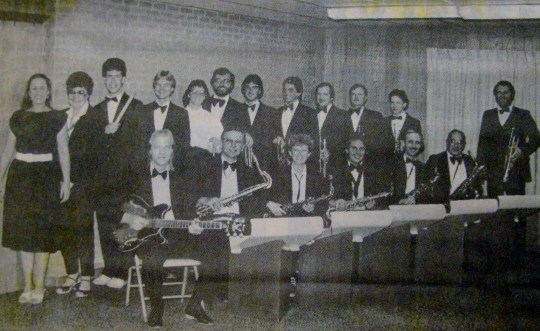
The Dick Simcox Big Band appeared several years at the festival.

   Entertainment included many musical groups as well as a performing arts group from Salt Fork Barn Theatre performing excerpts from “You’re a Good Man Charlie Brown”. Cambridge Community Theater also did several children’s presentations. Even the Cleveland Opera Theater came several years and performed “Barber of Seville”.

SFF Frankie Yankovic America's Polka King

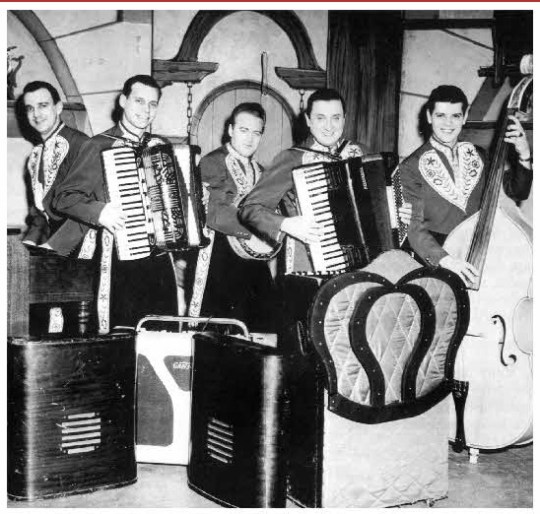
Frankie Yankovic, Polka King, drew one of the largest crowds ever.

   A performance that many remember was that of Frankie Yankovic, America’s Polka King. Frankie played the accordion and had two gold records – “Blue Skirt Waltz” and “Just Because”. The crowd for this performance was the largest ever remembered at the festival.

Carol and Bob R

Carol and Bob Jones were singing at the festival years ago. Carol is now Festival Director and Bob is Entertainment Coordinator.

   Back in 1986, Bob and Carol Jones presented a musical program at the festival. Today Carol is the Festival Director and Bob is Entertainment Coordinator. Their enthusiasm for the 50th Anniversary has led to a memorial “Pedestrian Gateway” being constructed at the park at a point where most visitors enter.

Briani Gray R

Brian Gray and his wooden toys have been an attraction over the years.

   While it has been great fun to look back at those early years of the festival, it’s also pleasing to know that it still has the same basic roots. The Salt Fork Arts & Crafts Festival continues to be a juried festival with several artists from those early days still displaying their art.

Russ and Virginia (2)

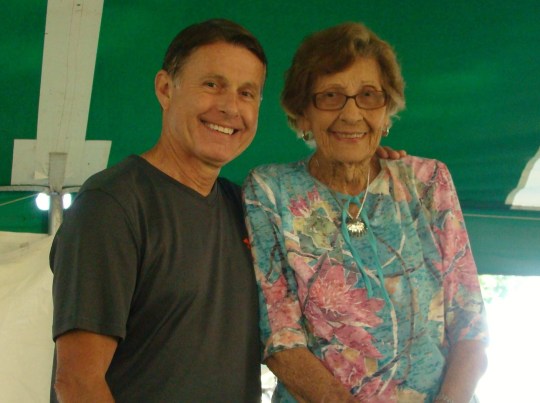
Russ Shaffer and Virginia Price have displayed at the festival since its early years and will be there this year. Virginia just celebrated her 99th birthday.

   Entertainment continues every hour in the Performing Arts Tent or the Big Pavilion. Craft classes for students and adults are held in the small pavilion throughout the weekend. Admission and parking are still free.

   Set aside some time to join the 50th Anniversary celebration this August 9 -11. Wander through the artist displays in beautiful Cambridge City Park. Have lunch or pick up a snack as you sit and listen to some fine entertainment provided by talented vocalists and bands. Don’t forget to find a special treasure to take home with you to remember this special anniversary.

   50 years is cause for celebration! Make plans to attend this memorable occasion.

The Salt Fork Arts & Crafts Festival is held annually the second weekend of August in the Cambridge City Park in Cambridge, Ohio. Cambridge is located at the crossroads of I-70 and I-77. There are several exits so watch for signs leading to the festival or the city park.

Perry Como Honored in Hometown of Canonsburg, PA

McD Perry

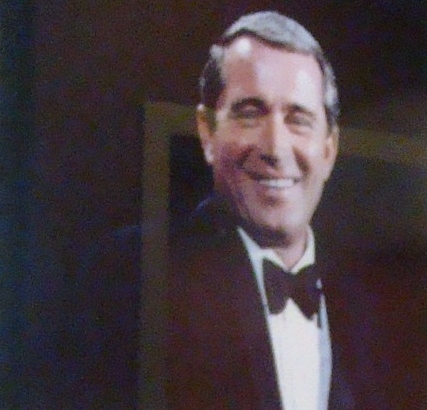
Mr. C at the height of his career.

Small towns love their heroes, especially when they’re a big star like Perry Como. Canonsburg, PA has never forgotten Perry Como, although the younger generation might not be familiar with his name.

Como statue

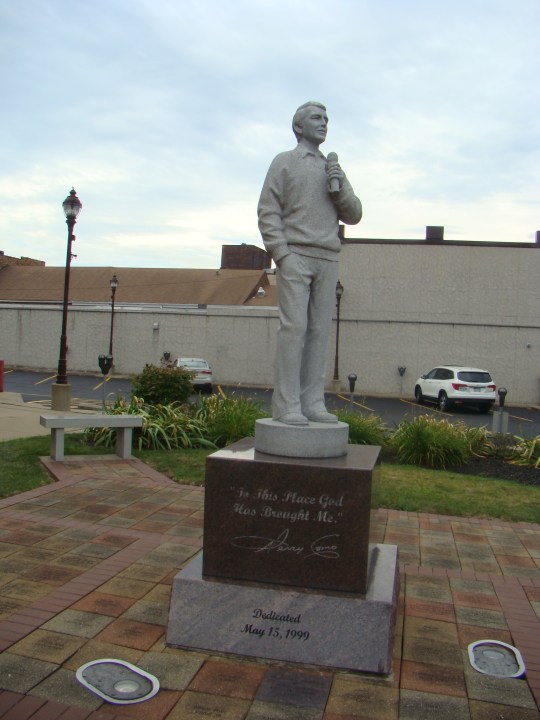
This statue of Perry Como can be found at City Hall in Canonsburg.

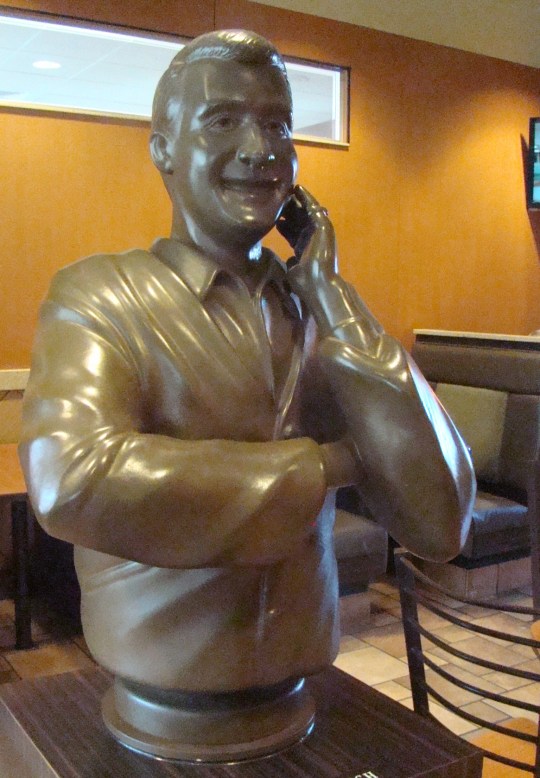
   At the center of town in front of their City Hall, you’ll find a statue of Perry Como. When it was placed there it sang 24/7 but now it just sings sporadically. Como is dressed casually in his traditional style with slacks and sweater. Just down the street, you’ll find a two million dollar McDonald’s packed with memorabilia from locals who went on to stardom.

   Coming from a large family of ten children, Como was the first to be born in America to his immigrant parents, Pietro and Lucia Como.  He never spoke English until he was in first grade because his parents only spoke their native Italian at home.

   Italians love music so his father purchased an organ for $3 for their home. By the time Perry was three years old, he could play songs on the organ by ear. Pietro had all of his ten children take music lessons even if he could barely afford them since he made a living by working in the mill.

McD Perry the barber

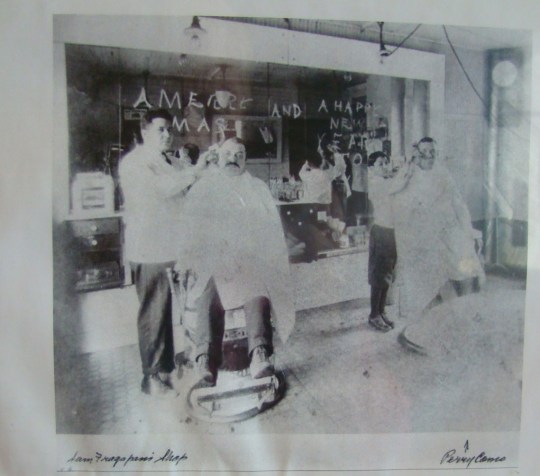
This picture of the young Perry as a barber was found at McDonald’s.

   By the age of ten, young Perry tried to help his family by working after school at Steve Fragapane’s barbershop for fifty cents a week.  By thirteen, he had his own chair at the barbershop even though he had to stand on a box to cut people’s hair.

Como Church

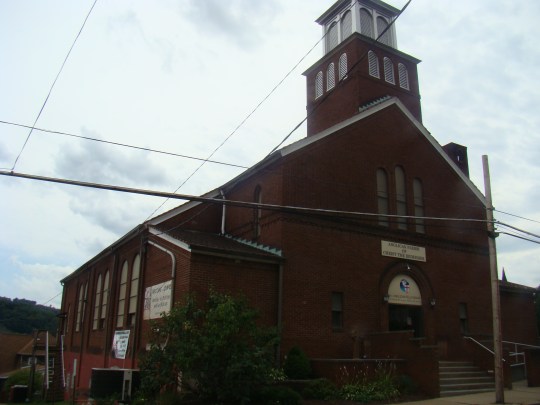
This is the church the Comos were said to have attended.

   At the same time, Perry played trombone in the town’s brass band, played guitar, sang at weddings and was an organist at church. He also was a member of the Canonsburg Italian Band. Throughout his career, “Ava Maria” was his most requested song.

   When he was fourteen, his father had a severe heart condition, and Perry opened his own barbershop.  His goal was to be the best barber in Canonsburg. When customers would marry, they would use every treatment Perry had available in his shop while he sang romantic songs to entertain them.

Como_family_at_home_1955 TV Radio Mirror

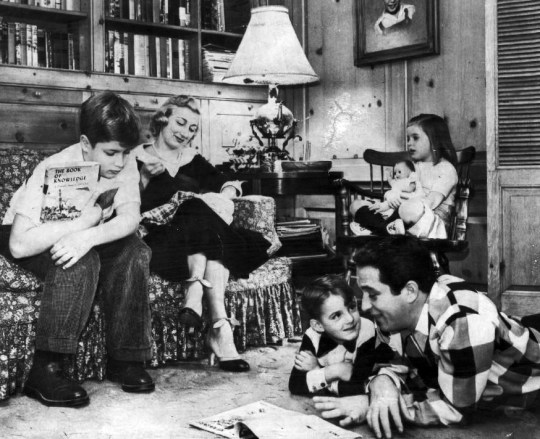
This picture of the Como family at home shows a happy family.

   By the time he was twenty, he moved to work in his uncle’s barbershop at Meadville, PA, which was not too far from Cleveland. He went with friends to the Silver Slipper Ballroom, where they asked if anyone would like to come up on stage and perform. His friends urged him to try and director Freddy Carlone offered Perry a contract on the spot.

   But he wanted to talk it over with his father first. Since his father was an amateur baritone, he told Perry to take the chance or he would never know if he could be a professional singer or not. Financially, this was not a good move as his barbershop earned him $125 a week while the singing contract was for $28 a week.

Perry_como_1939_ Ted Weems Orchestra by Bloom

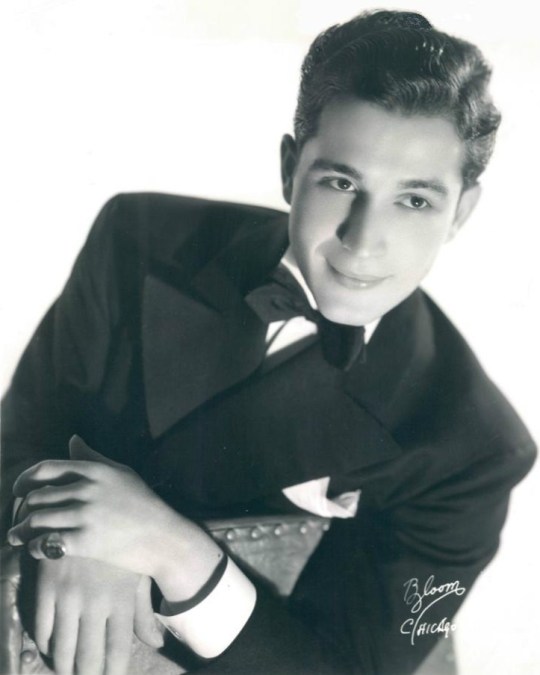
This young Perry Como is pictured when he joined Ted Weem’s Orchestra.

   He received his big break in the 1930s on a popular radio show, Beat the Band. His first recording with Ted Weem’s Orchestra on this show was the song, “You Can’t Pull the Wool Over My Eyes”.

McD Perry's bust

A bronze bust of Mr. C can be found at Canonsburg’s McDonald’s.

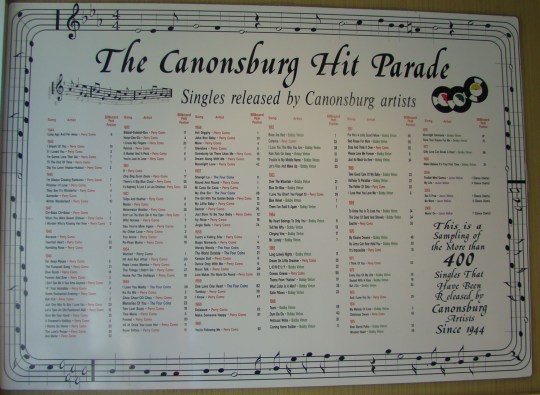
In 1943, he signed with RCA Victor and remained with them throughout his career. While in Canonsburg, a stop at McDonald’s is also a ‘star’ event. Here you will find memories of local stars including Perry Como, Bobby Vinton, and The Four Coins. When you pass by Mr. C’s bust,  “Catch a Falling Star” will automatically start playing.

Como golf

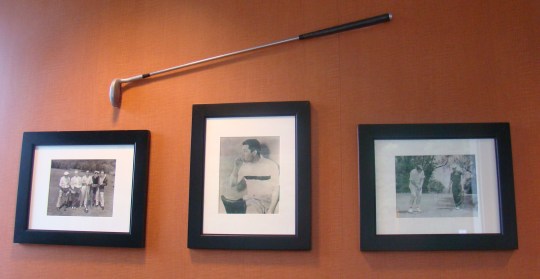
Pictures of Perry Como and his love for golf can be found at McDonald’s.

Perry Como loved the game of golf and in 1955 was Golfing Champion of the Garden City Golfing Club in New York. MacGregor even has a Perry Como Putter. When he wasn’t with his family or working, Perry was on the golf course enjoying his favorite hobby and passion.

McD Hit Parade

Inside the front door of McDonald’s, you will find this list of songs made popular by Canonsburg artists.

   Mr. C, as he was nicknamed, sold millions of records and had his own television show. Canonsburg keeps his memory alive through the statue erected in 1999 and McDonald’s memorabilia. If you’re ever in the area and enjoy hearing about the stars, Canonsburg is the place!

Canonsburg, Pennsylvania is located off I-79 at Exit 45 – PA 980/ Canonsburg. Watch for signs to direct you to the various attractions.

Baseball Legend Cy Young Called Tuscarawas County Home

Cy Welcome to Museum

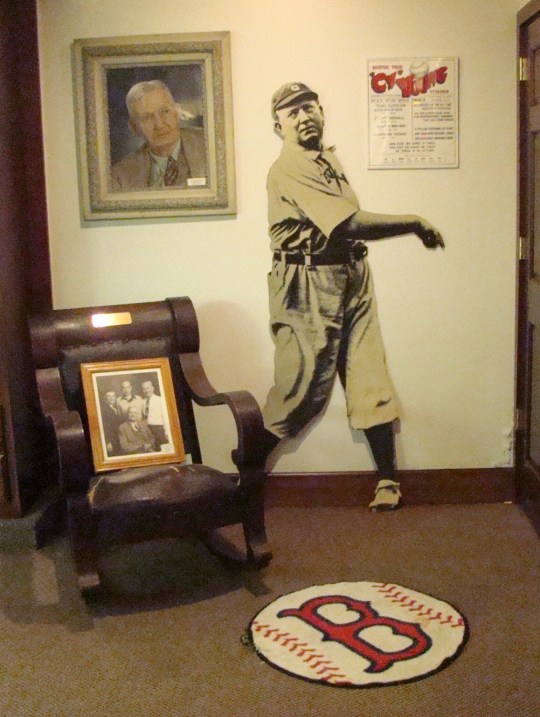
This photo with Cy’s old rocking chair welcomes you to the Olde Main Street Museum.

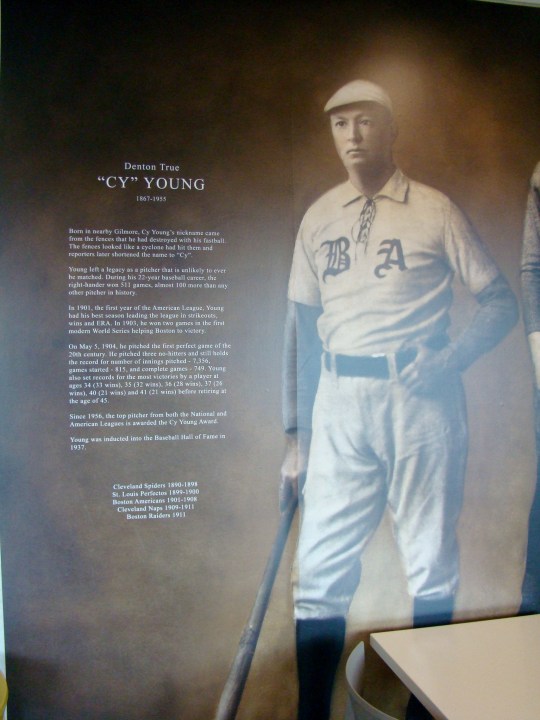
Baseball, Hot Dogs, Apple Pie and Chevrolet. Those are things that are American to the core. In the nearby town of Newcomerstown, a baseball legend grew up and his legacy is still celebrated today.

  Denton True Young was born in Gilmore, not far from Newcomerstown. Called Dent as a youngster, the lad went to a two-room school in Gilmore but only went through the sixth grade. The boys loved to play baseball and would often either walk or ride horseback for twenty miles to play the game.
   To practice pitching, Dent would throw a ball (if he had one) into a target on the barn door, or walnuts through the knot holes in the fence. It’s no wonder he was known for accuracy during his pitching career.

Cy ball and glove

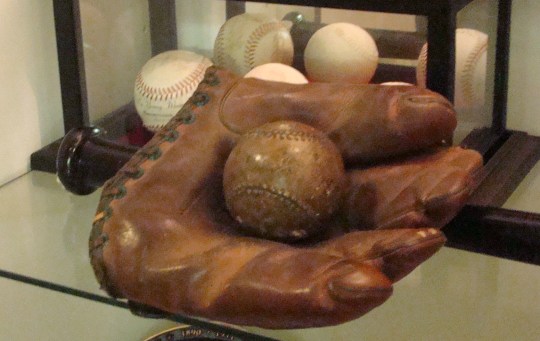
Cy’s glove holds a baseball marked 1897 – Cleveland…the date he pitched his first no-hitter against the Cincinnati Reds.

   Dent received his first contract from a team in Canton at the age of 23. They paid him $60 a month. Wanting to impress his teammates, he threw the ball so hard that no catcher wanted to catch him, so he threw into the fence. One fellow said it looked like a cyclone had struck the fence. The name stuck and Cyclone was his listed name for two years. That soon became shortened to Cy, a name which stayed with him through the rest of his life.

Cy Indians program

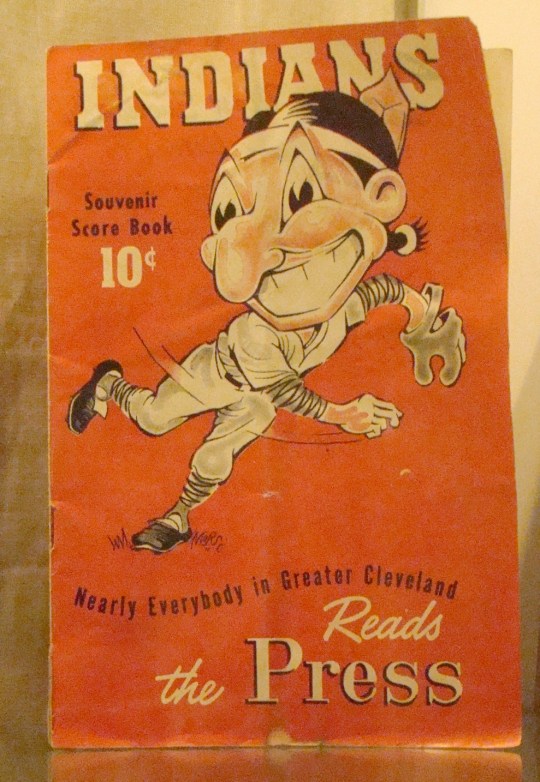
This old Indians scorecard only cost a dime.

   Over the years, he played with Cleveland, St. Louis, and Boston. He holds the records of most innings pitched at 7,356 and most wins with 511, a record that is not likely to be broken. Not many could pitch like he did in both games of a double header…and he never had a sore arm!
Cy - 1892 Scrapbook

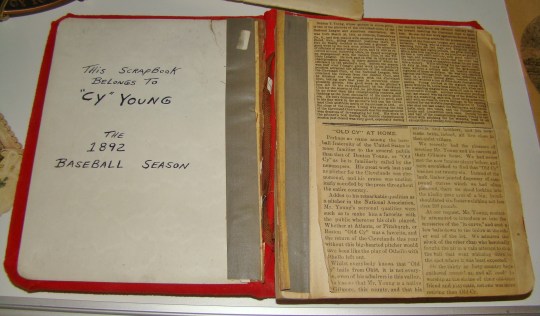
His personal 1892 scrapbook is on display at the museum.

   In 1914, a young man in Newcomerstown by the name of Jimmie Knowles had a shoeshine stand in front of the newspaper office. He remembers Cy Young coming to town almost every weekend in his big Cadillac and parking it on Main Street. Then he’d stop by and have Jimmie polish his shoes. He always left a tip.

Cy - Trophies

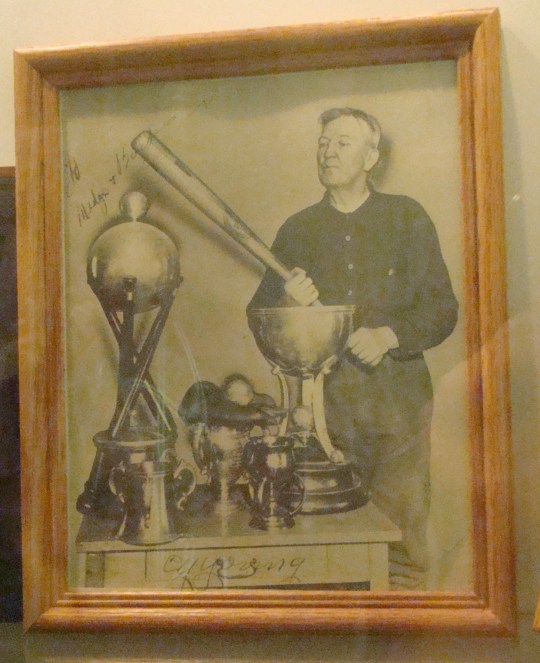
This framed photo shows Cy with his many trophies.

   Cy tried his hand at management for one year with the Cleveland Green Socks as he had a hankering to get back into the world of baseball. But the league was dissolved and Cy returned to Tuscarawas County.

   When Cy retired at the age of 45, he enjoyed the life of a gentleman farmer in Peoli. There he raised potatoes, and tended sheep, hogs, and chickens and enjoyed hunting and fishing.

Cy - ax and wood he chopped

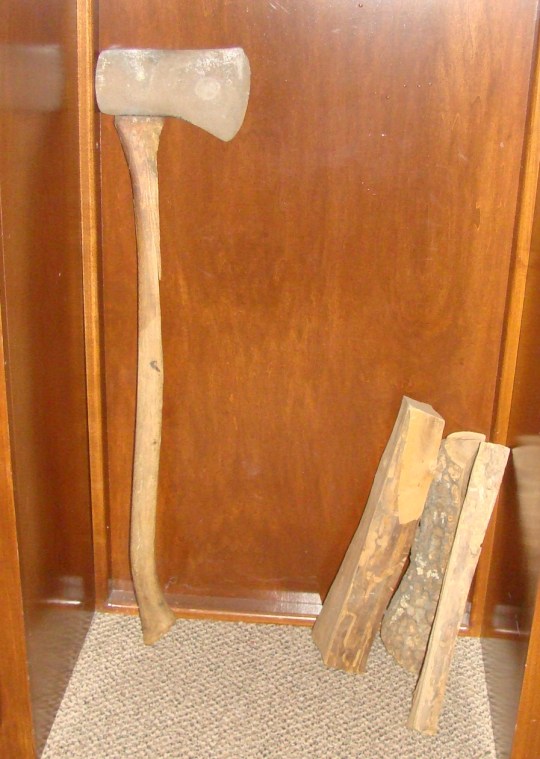
This ax belonged to Cy Young and it is said this is some of the last wood he chopped.

   When his wife, Roba, died in 1933, Cy lost a good friend as they had known each other since childhood. After her death, he worked at various jobs and eventually moved in with friends and helped them bale hay, handle the horse and even chop wood.

   He was an active member of the community and moved up through the ranks of the Masons, was a member of the local Elks Club and was elected to the Republican Party Central Committee.

   Old-timers baseball games gave him pleasure and a chance to meet old friends. In 1937, Cy Young was voted into the Baseball Hall of Fame in the second class ever. He was the first to donate memorabilia to their new museum in Cooperstown.

Cy - Showcase

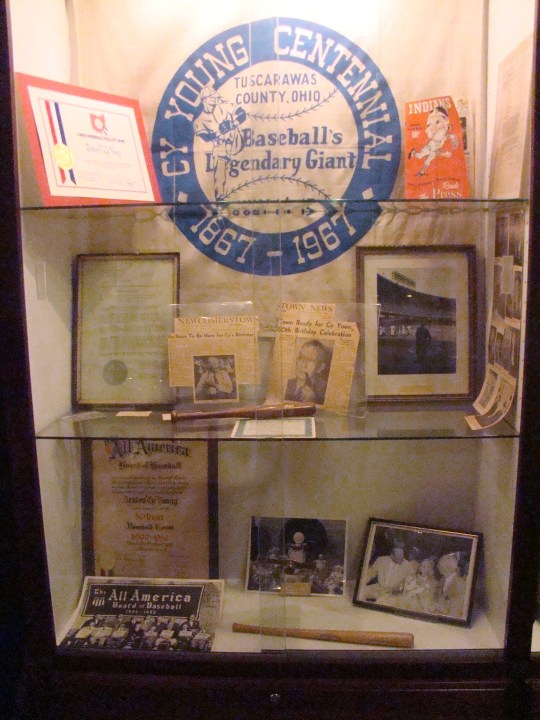
Several showcases at Olde Main Street Museum contain Cy Young memorabilia.

   In 1948, great excitement filled Newcomerstown as Cy Young was to be honored at Cleveland Stadium for his 80th birthday. To make the day even more special, Bill Veeck, the owner of the Cleveland Indians, arranged for the C&M Railroad to make a stop in Newcomerstown and bring the whole town to Cleveland at no cost to residents.

   Pitching was Cy’s specialty and he threw a fastball with cannonball speed that few could hit. Because of his fantastic pitching ability, the Cy Young Award was created in 1956 and given annually to an outstanding pitcher in all of baseball. Beginning in 1967 through today, the award is given to a pitcher in each league.

Cy - Cy Young Park

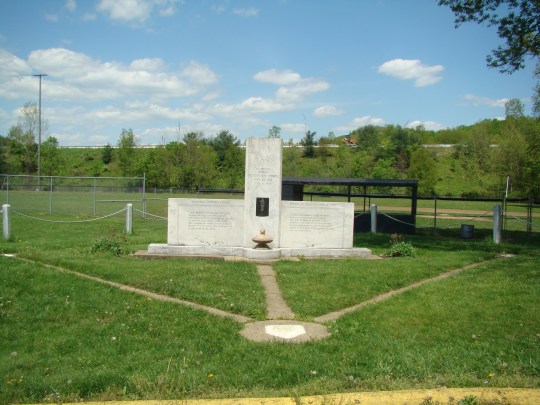
The Cy Young Park in Newcomerstown remembers one of baseball’s original legends.

   The first Cy Young Festival was held in 1958 in Newcomerstown. Every year a baseball star pitcher is featured. This year it will be Randy Jones, who won the Cy Young Award in 1978 when he played for the San Diego Padres. Great names such as Dwight Gooden, Dean Chance, and Vida Blue have attended the festival.

Cy- Tombstone

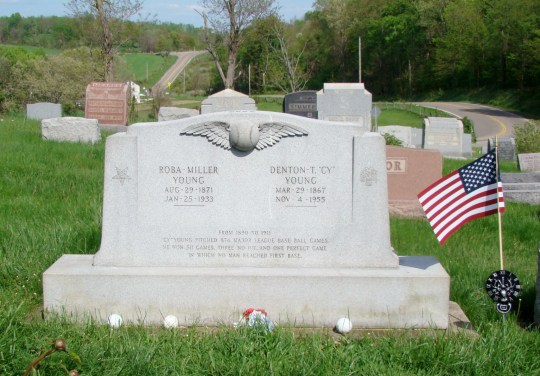
Fans visit his Peoli tombstone to leave baseballs and other memorabilia.

   The festival begins on Saturday morning with a Cy Young Run. Afterward, a car caravan can be seen heading to Cy’s grave in nearby Peoli at the Peoli Church. You might stop along the way at the Newcomerstown McDonald’s where they have a large display honored this hometown hero.

Cy - McDonald's

Stop by Newcomerstown McDonald’s for wall displays about this local hero.

   The afternoon is filled with bands, food, and fun for everyone. The annual parade begins at 6:00 and stops at the Olde Main Street Museum. There they have a special display of Cy Young memorabilia.

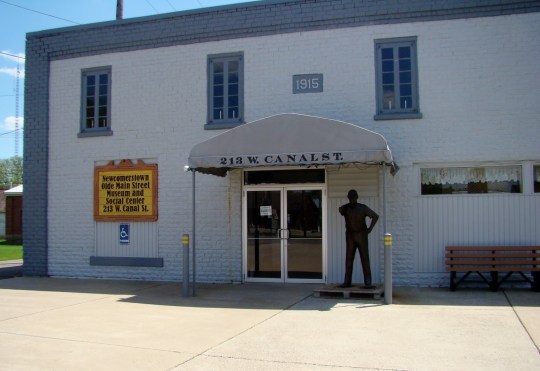
Cy - Olde Main Street Museum

Cy’s memorabilia can be seen at the Olde Main Street Museum in Newcomerstown.

   Sunday begins with an Old Timers Vintage Baseball game at the Cy Young Memorial Park Field. Players will be dressed in uniforms similar to those of the mid-1800s and use the same rules and language of the Civil War era. Or you might prefer to go to a Car Show on Main Street, a talent show or pet show. There are events for everyone to enjoy.

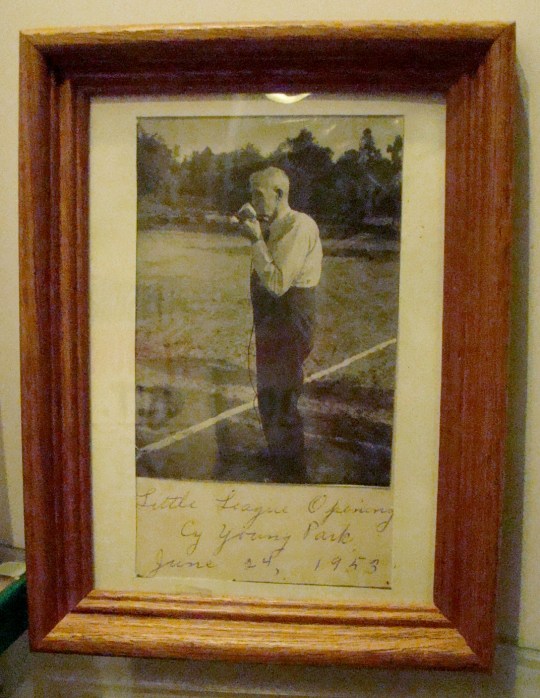
Cy - 1 953 Little League Opening

He appeared at the Newcomerstown 1953 Little League Opening where he encouraged youngsters to play ball.

   The Annual Cy Young Days Festival is held in Newcomerstown in June of each year. The festival not only promotes Cy Young but also increases awareness of all the youth baseball and softball programs in the Newcomerstown area. It’s all about Cy Young and baseball, the game he loved.

Cy Young won 511 games in 22 seasons and pitched three no-hitters. Imagine what kind of contract he could command today for an arm like that.

Discover Marietta with Historic Trolley Tour


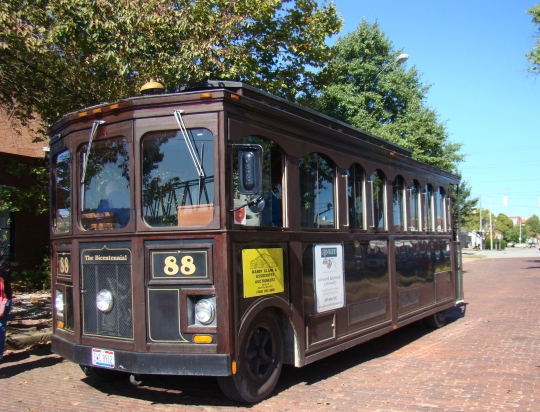
Trolley on Brick Street

The Marietta Trolley explores the city on those old brick streets.

   When Harley Noland opened his restaurant in Marietta, he began thinking of ways that could bring more tourists into the area. That was when the idea of a trolley struck him. This was twenty-five years ago, and the Marietta Trolley has been making tours ever since.

Levee House

The Levee House was a popular place to dine along the river.

   His restaurant, The Levee House, was located on the Ohio River making it convenient to have a Bed & Breakfast nearby on a historic riverboat, CLAIRE E. Both of those businesses are no longer in operation but the trolley lives on.

Harley

Guide Harley Noland brought the trolley to life again about 25 years ago.

   Sometimes Harley still gives the trolley’s guided tour, but there are also several local historians that help with that side of the project now. Each of them has wonderful factual knowledge of the area and tells accurate stories of those early pioneers who settled at the confluence of the Muskingum and Ohio Rivers.

   This is the perfect way to see the highlights of the city while traveling their old brick streets and learn about its history. The city has an abundance of beautiful Victorian homes, churches, earthworks and historic spots that will have you going back for a second look. There’s history on every corner!

   This year the trolley ride begins on Front Street at the Armory, which is the new home of the Marietta/Washington County Visitors Bureau. Then begins the ninety minute narrated tour of Marietta on the trolley made of mahogany with a great speaker system for easy listening.

Westward Monument

The Start Westward monument marks the 150th anniversary in 1938 of the signing of the Northwest Treaty Ordinance.

   Coming from the East Coast, the settlers designated the area along the Muskingum River as “The Commons”. Today there stands a monument to the 150th anniversary of the signing of the Northwest Territory Ordinance. This Memorial to the Start Westward of the United States was carved in 1938 by Gutzon Borglum, the same man who carved Mount Rushmore and dedicated by President Franklin D. Roosevelt.

shanty-boat

Ohio River Museum displays a shanty boat, which floated a family from job to job.

   A stop at the Ohio River Museum focuses on the role of the rivers in the expansion of our country. It gives a chance to view the last shanty boat, which is a complete house that people lived on. There is also the oldest pilot house in the United States close by.

w-p-snyder-jr

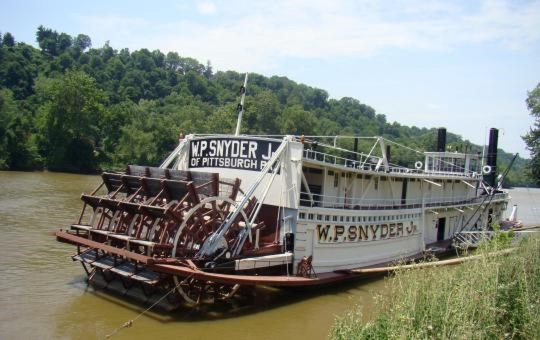
Stop back and take a tour of the W.P. Snyder, Jr to learn more about early riverboats.

   The Adventure Galley was the first flatboat to arrive in Ohio from Pittsburgh. The W.P. Snyder, Jr.. is now docked nearby and the last coal-fired, steam-powered sternwheel towboat to have operated on the Ohio River.

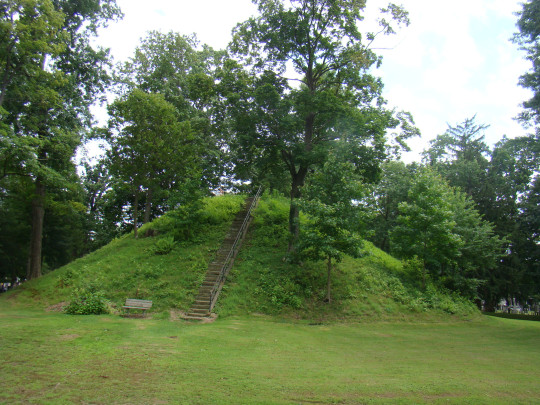
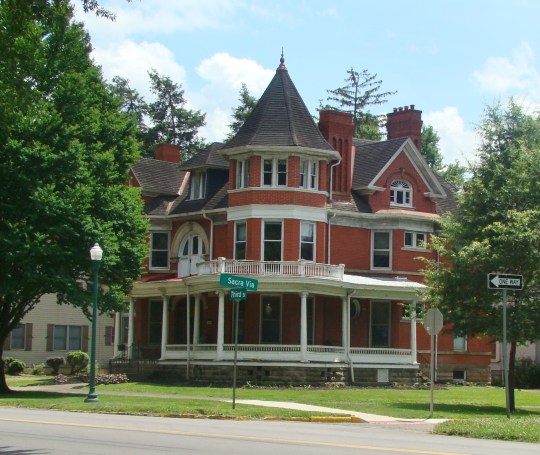
   Sacra Via, “Sacred Way”, is an ancient path from the Muskingum River to the earthworks in Marietta. The pathway was surrounded by earthen embankments about twenty-six feet high and was covered with mollusk shells from the river so that it sparkled in the moonlight.

   The mounds are the site of a Winter Solstice Sunset Watch and it is strongly believed these mounds were placed here for an astrological alignment. This site has not eroded in 2000 years due to the heavy clay used to build it up.

Conus Mound

Conus in Mound Cemetery was an ancient burial ground.

   Mound Cemetery contains Conus Mound, a burial mound surrounded by an earthen wall and a dry moat. This was used for burial and ceremonial purposes. The cemetery surrounding it has more Revolutionary war officers than any other cemetery in the United States.

Oil House

This was home to an early family who made their living from the oil fields.

   A bubbling black substance coming out of the ground was put on joints and felt to be a healing compound. It was called Panther Water and used as medicine. When its true purpose was discovered, the crude oil in this town made many men rich. That gives a reason for many of the lovely homes in the area.

Rufus Dawes House

Rufus Dawes house was the boyhood home of U.S. V.P. Charles Dawes, who was also a Nobel Peace Prize recipient.

   An interesting sidelight of the tour are the flood markings on many of the downtown buildings showing how high the flood waters came.  1913 looked like the year of a very high flood.  Many times the flood marks were up to the second story of the old brick buildings. Many of the rich built their homes on terraces to avoid the flood waters.

Newest Mansion

The newest mansion was built by a present-day entrepreneur who makes refrigerator magnets.

   But not all of Marietta’s lovely homes are old. One pillared house was built in the last 17 years by a man who manufactures something you wouldn’t think would be a million dollar business – refrigerator magnets.

The Castle

The historic Castle was built in 1855 at a cost of $10,000.

   The location of The Castle today sets on grounds that were originally used by a potter and his wife. It would have been one of the earliest pottery manufacturing locations in the Northwest Territory. Many prominent Marietta residents lived here including Ohio Senator Theodore Davis. Today it is open as a historical museum to honor the legacy of The Castle families as well as provides educational and cultural activities to learn more about its connection to Ohio history.

St Mary's

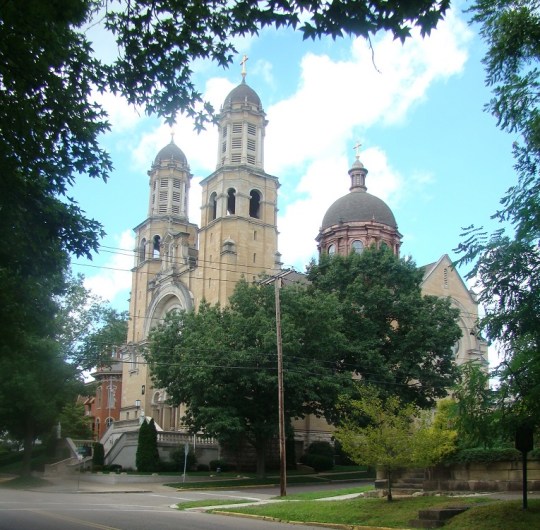
The Basilica of St. Mary of the Assumption is only one of the many historic churches on the tour.

   The Basilica of St. Mary of the Assumption was a stop off the trolley to view the spectacular interior, which takes one back to its European roots. The church was consecrated in 1909. The beautiful stained glass windows were created in Munich, Germany. There are nearly 140 images of angels throughout the church. Large angels bearing palm branches and torches can be found surrounding the sanctuary while cherubs adorn each column.

   Beauty like this would not have been normally seen at this time in history or even today for that matter. Many say it compares favorably with Basilicas in Europe.

harmar-historic-bridge

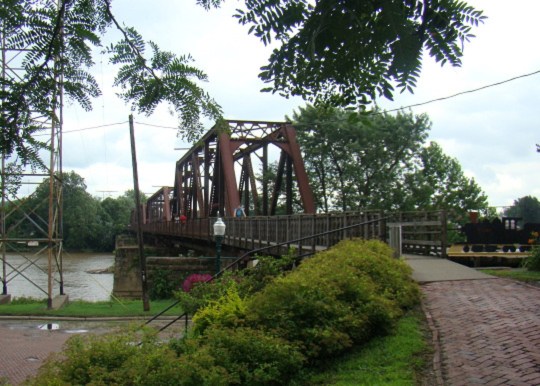
This Pedestrian bridge over the Muskingum River is a pleasant stroll from downtown Marietta.

   Fort Harmar, the first frontier fort in Ohio Country, was situated on the Muskingum River, called the easy way west. Built in 1785, it was named for General Josiah Harmar. He had been ordered by the United States Army to build a fort here to discourage illegal settlers from squatting there. It did just the opposite as made them feel protected by the fort nearby. Tall masted sailing ships were later built here.

Douglas Putnam Place

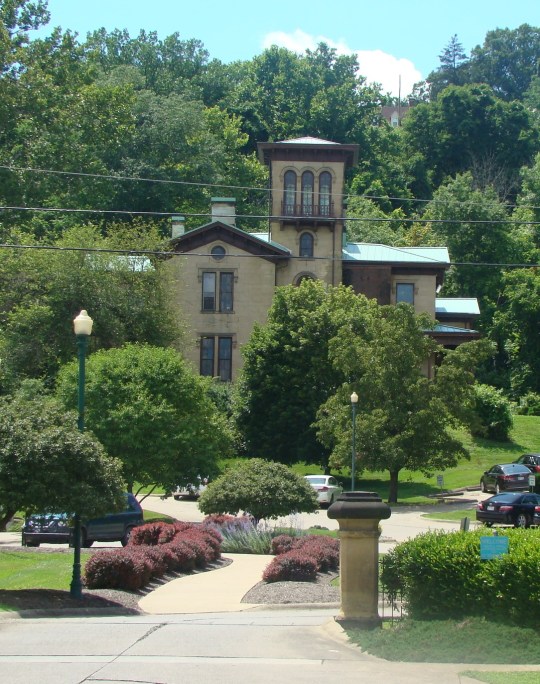
Anchorage was built on the hill in Harmar by abolitionist Douglas Putnam in 1859.

   The Douglas Putnam House sits high on the hill overlooking the river in the Harmar district. He was the leader of the abolitionist society in Marietta. As one of the wealthiest members, his support of the UGRR was not surpassed. From his house, you could see Virginia on the other side of the river, which at that time was not a real barrier as it was shallow enough to be crossed on horseback.

River Lafayette

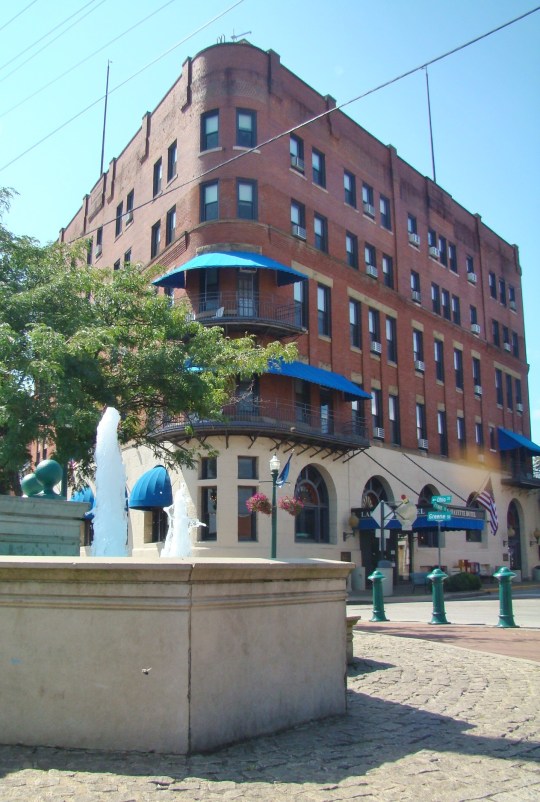
The Lafayette is the oldest hotel in Marietta…and haunted.

   The trolley tour is one of the most popular tours in the Marietta area. Parking is free at the Marietta – Washington County CVB at 241 Front Street. Hop on the trolley Tuesday through Saturday during July and August at 10:00 to experience a glimpse of history.

   It’s a great way to discover Marietta!

Confluence Most Beautiful

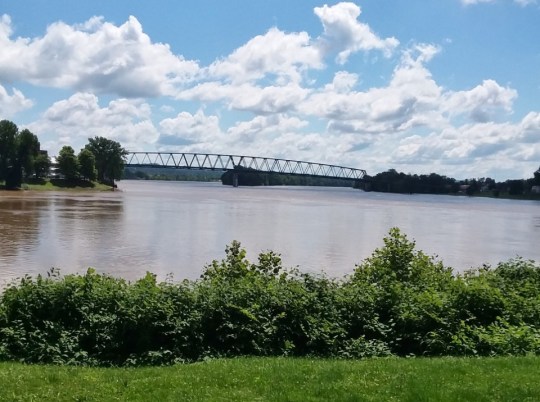
Putnam said that where the Muskingum meets the Ohio River was the prettiest sight he had ever seen.

Take Exit 1 in Ohio off I-77 to Pike Street. Continue west on Pike Street until it ends at the Lafayette Hotel. Take a right and the Visitors Bureau will be at 241 Front Street. Buy your trolley ticket when you get on the trolley.

Old Stone Academy Opens Underground Railroad Exhibit

Freedom.

Its importance isn’t usually discovered until it is taken away.

Stone - Old Stone Academy

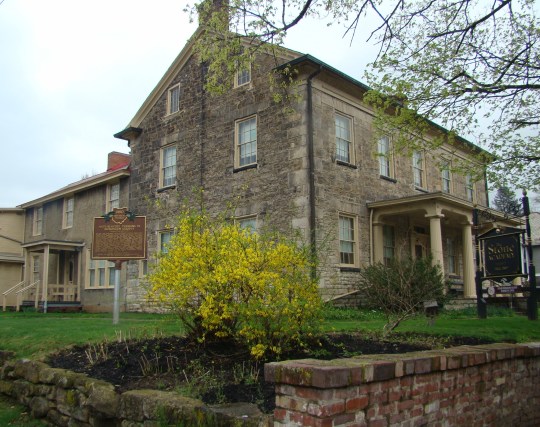
Stone Academy provided a place for Anti-Slavery meetings as well as the Underground Railroad.

Perhaps you have felt like running away from a bad situation. That’s how most of the slaves felt in their quest for freedom. The Underground Railroad helped them succeed in finding this special liberation.

   Even before the time of the Civil War, Anti-Slavery organizations were very active. A center of activity in Ohio was the Old Stone Academy in Putnam on the Muskingum River.

Stone - drive with timeline

The drive to the house has a timeline from the settling of John McIntyre in Zanesville until the end of the Civil War.

   While the Stone Academy served as a station on the Underground Railroad in the 1830s, that wasn’t the reason it was built back in 1809. The oldest building in Muskingum County was designed to be the new state capitol building. It was built by Dr. Increase Mathews, Levi Whipple and Ebenezer Buckingham.

   However, across the river in Zanesville, then a separate community, John McIntire and others constructed a building for that same purpose. Zanesville did serve as the capital of Ohio from 1810 to 1812.

Stone Anti-Slavery

“Coming to Blows” by Adam Chandler depicts the pro-slavery mob outside Stone Academy during an anti-slavery lecture.  Theodore Weld said, “Mob came, broke the windows and doors, tore off the gate and attacked me when I came out with clubs and stones…”

   The Stone Academy became a school and had public offices for several years. It was the center of abolitionist activity in Putnam with the Ohio Anti-Slavery Society holding state conventions there in 1835 and 1839. Both years, mobs of pro-slavery disrupted their meetings threatening to burn all of Putnam. The people of Putnam were very unpopular with their neighbors across the river in Zanesville.

Stone Notice to Slaves

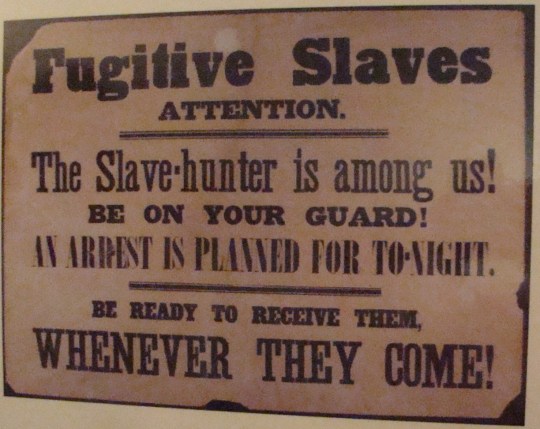
This notice was posted as a warning to fugitive slaves.

   These abolitionists were mainly from New England and had a very strong religious background that made most of them desire to have equal rights for all. However, there was a section of this group that proposed sending the blacks back to Africa in the 1830s.

   The Stone Academy has been accepted by the National Park Service as part of the National Underground Railroad Network to Freedom. There is a new Ohio historical marker at the Stone Academy.

Stone - Putnam Presbyterian Church

The Putnam Presbyterian Church served as a meeting place for Anti-Slavery meetings.

   Nearby the Putnam Presbyterian Church held many anti-slavery meetings. Their pastor was the brother of Harriette Beecher Stowe. One of their popular speakers was Frederick Douglass, an African American orator who spoke of slavery issues across the state.

   A story was published about Douglass in “The Anti-Slavery Bugle”, which told of his purchasing a ride from Columbus to Putnam to speak at the Presbyterian Church. Douglass paid $3 in order to ride inside the stagecoach that day, but when they saw he was an African American, he was not permitted to ride. He took the case to court and won an out of court settlement for $15.

Stone - Increase Mathews House

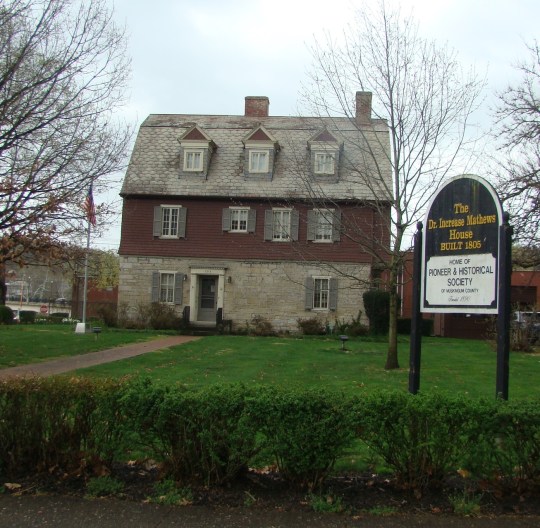
Increase Mathews House was another stop on the Underground Railroad in Putnam.

   The slaves who came through this direction were understandably not very trusting of the station masters. These brave souls took a lot of chances during their flight. They wanted above all else to be free.

   Nelson Gant was one of those freed blacks who settled in Muskingum County. He had to raise money to purchase his wife’s freedom as she was still a slave in Virginia. Gant became one of the wealthiest men in the county with a successful produce business, which originated that famous cantaloupe, the Dresden Melon. He worked hard and transported slaves in his wagons.

Stone - Jim Geyer director

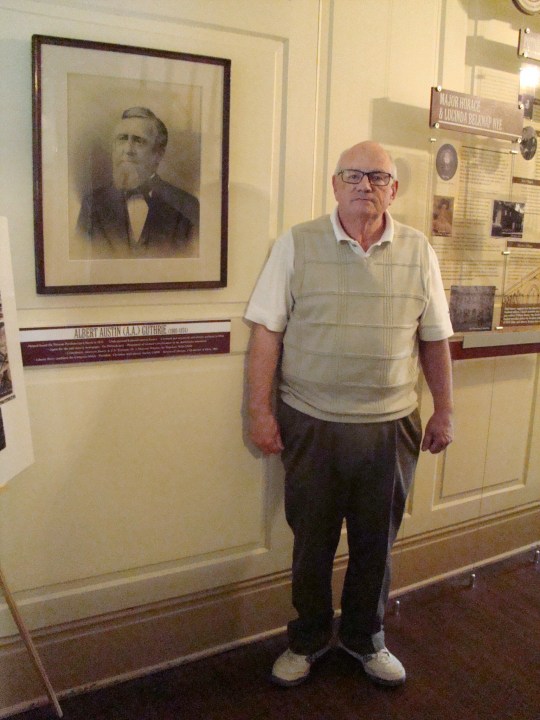
Museum director, Jim Geyer, told many interesting stories of the early days of the Stone Academy.

   In speaking with Jim Geyer, museum director, he tells of interesting programs they are developing to attract more people to the museum and the area. There are several UGRR stops involved in the area, not just the Stone Academy.

   Jim and other volunteers are reaching out to the community with a power point presentation suitable for schools, civic groups or retirement communities. He serves as a step-on guide for bus groups that come to the area. They are taken to various places in the Putnam Historic District that have a part in the UGRR story. At present, they have six sites locally that were part of that UGRR. These were called “safe houses”.

Stone - Lett Settlement

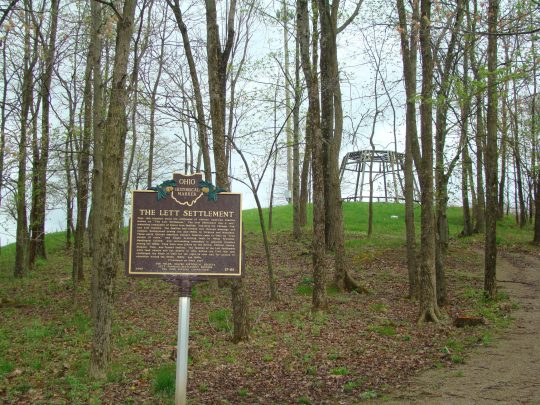
Lett Settlement, located where the Wilds is today, was composed of “free people of color”.

   Soon they are planning to add another interesting spot to their tours – The Wilds! There the Lett Settlement consisted of a group of “free people of color” who later assisted the fleeing slaves.

   Since the Stone Academy has been filled with so much activity over the years, it is no surprise that paranormal activity is frequently observed in the house and in the area. They have one special program called “History, Mystery, and Unsettled Spirits” that speaks of this phenomenon as well as some folklore. Ghost tours are conducted and paranormal investigations continue.

   Henry Howell managed the Ohio Anti-Slavery Society and gave fiery speeches. The residents across the river were not happy with his speeches and came to burn his house down. Howell escaped but his dog was left behind. They found the dog later hung in the back yard. Claims are made that the spirit of the dog can still be heard barking today.

Stone UGRR safe homes

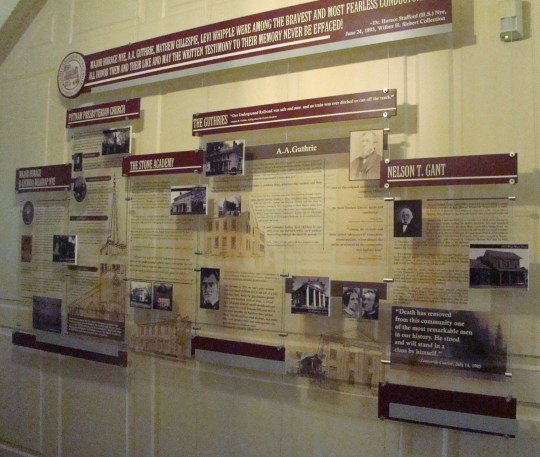
A wall display tells of the ‘safe homes’ for the Underground Railroad.

   One problem they have at the Stone Academy is limited floor space and they have been discouraged from attaching pictures and displays to the walls. There are few artifacts here but much information in the form of charts and pictures. Due to the limited space, exhibits in the hallways are frequently changed.

Stone dolls

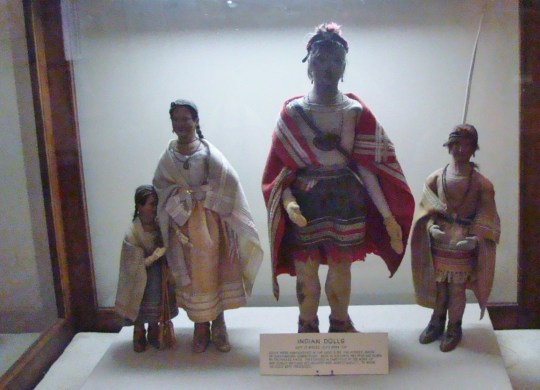
These dolls were made by an anti-slavery advocate with a duplicate set being given to Queen Victoria.

   The best part of the tour are the stories told by volunteers, who are very knowledgeable about its history.

Stone closet hideaway

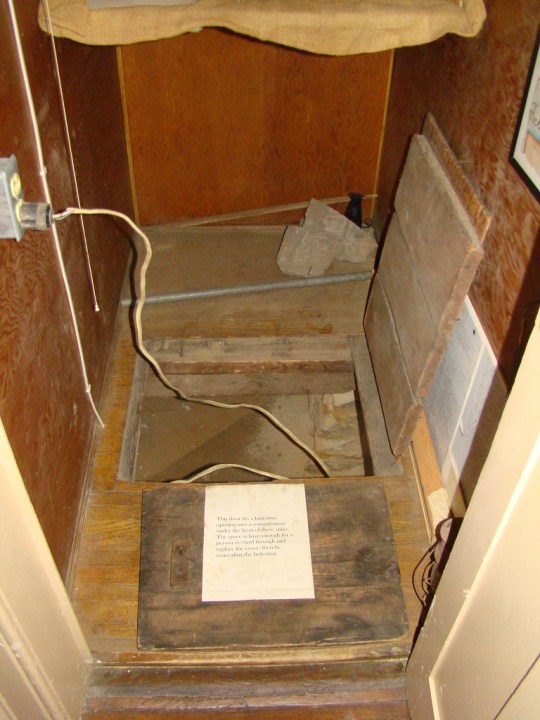
This closet held a trap door that led to the basement where a slave could hide.

   The building served as a station for the Underground Railroad. A popular feature is a hidden trap door under the staircase that led to the crawl space under the building where the runaway slaves hid.

Stone - found under stairs

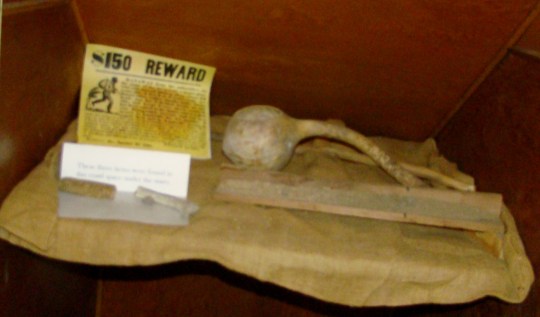
These articles were found under the stairs of the trap door.

  In the 1870s, Stone Academy became the private residence of Elizabeth Robbins, well-known actress, activist and writer. Today it is home to the display of the UGRR directed by Muskingum County History and located in the Putnam Historic District.

   Freedom remains an important element of our lives today. May we remain a nation where our freedom of choice is never extinguished.

The Old Stone Academy is located in Zanesville, Ohio. From I-70, take Exit 155 to Underwood Street.  Best to use your GPS to 115 Jefferson Street, which is across the Muskingum River using the 6th Street Bridge. There is an easy access parking lot beside the Stone Academy.

National Veterans Museum & Memorial Honors All Who Served

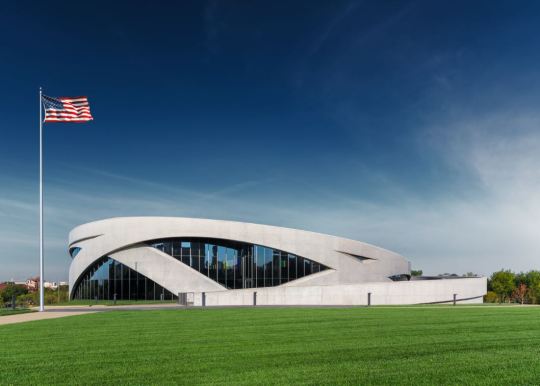
Veterans front shot

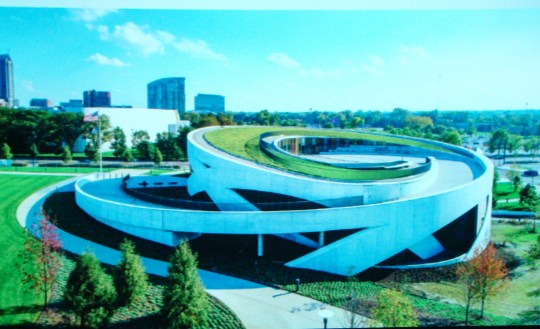
This symbolic architectural design houses the new National Veterans Museum and Memorial.

Those who dedicated their life to serving their country in all branches of the service during its many wars are being honored at the new National Veterans Museum and Memorial in Columbus, Ohio. Opened on the banks of the Scioto River in October of 2018, you will learn of their bravery, fears and belief in the greatness of America.

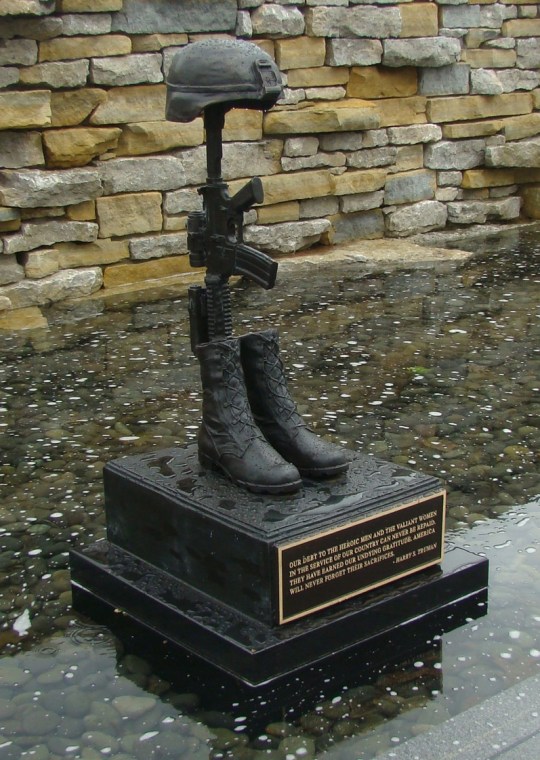
Veterans Memorial

A memorial statue along the outside walkway remembers those who served.

   Symbolizing the strength of our nation’s veterans, the unique architectural design of the building rises from within in a circular fashion to show their service never ends. The top of the building meets at a point to indicate that all the branches of the service come together to protect our nation and our world. This building has been recognized for its special innovative design and contains 28 million pounds of concrete.

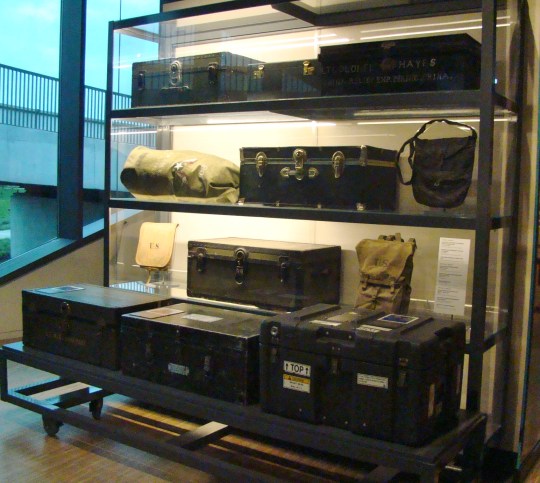
Veterans trunks

Open the lid of a veteran’s trunk and hear his story.

   While stories of famous leaders like George Washington, Dwight D Eisenhower and John Glenn are well documented nationally, the stories of lesser-known heroes are often only known by family and friends. The NVMM is going to change all that by sharing their stories with the public.

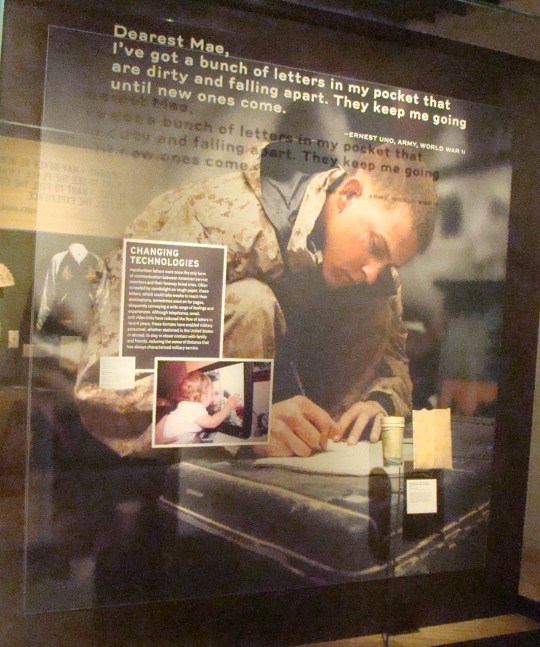
Veterans letters

Letters from home have always been important to members of the military.

   Visitors are taken on a narrative journey as stories are told about veterans throughout the United States. Letters, pictures, and personal items help make these stories come alive. Listen to the letters they wrote home. Some will bring tears of sadness…or relief that they survived.

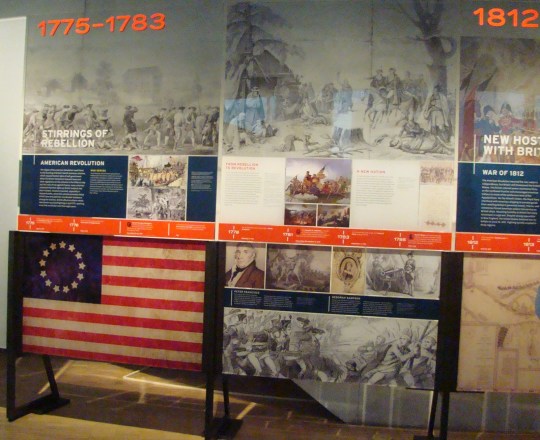
Veterans Time Line

The Informational Timeline stretches from 1775 until today.

   The Exhibition Galleries follow the curve of the concrete structure, which shares a timeline of highlights from the Revolutionary War until the present. The walls are covered with information so you have to be selective in what you read or you could be there for weeks.

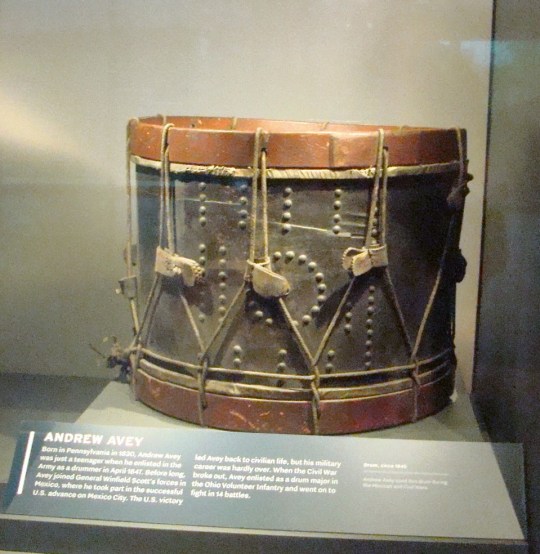
Veterans drum Revolutionary and Civil

Andrew Avey played this drum during both the Revolutionary and Civil Wars.

   Talking to veterans at the museum was one of the real pleasures of the day. Many had not actually been in combat zones, but all felt an emotional attachment to those with whom they had served.

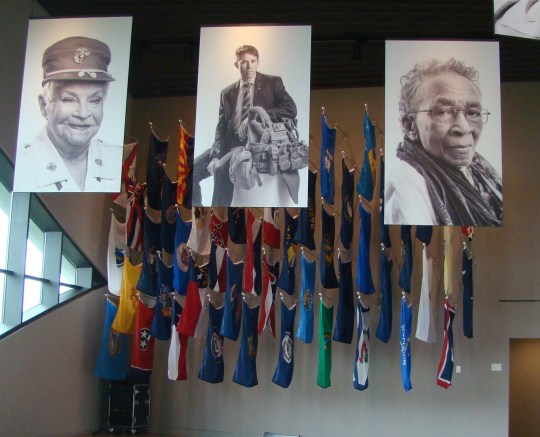
Veterans State Flags

The display of flags from all 50 states reinforces the fact that this is a national museum.

   Many tried to go out in the communities of the countries in which they were stationed to get a glimpse of real life there. Edward, a Marine who had served in Vietnam, went out with a missionary and played Santa for the children in their village.

Veterans Gear for Boot Camp

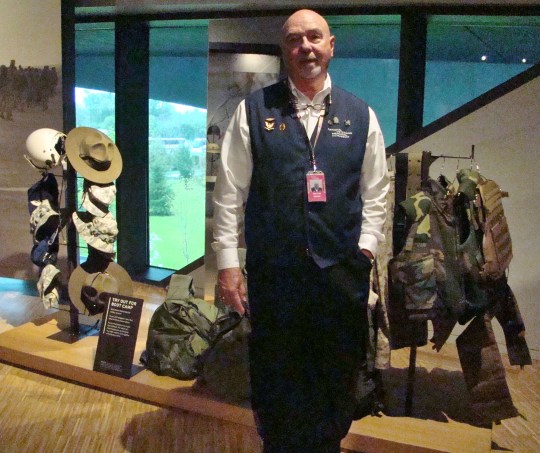
Veteran guide, Todd, explained the extensive, heavy boot camp gear.

   Todd, a veteran who is also a tour guide, shared his experiences in the Navy from 1965-69. His job was to patrol the coastline from Alaska to San Diego for Russian submarines. Another veteran, Dale, worked as a supply sergeant in the cold temperatures of Alaska where it was 59 below.

Veterans - Share Your Story

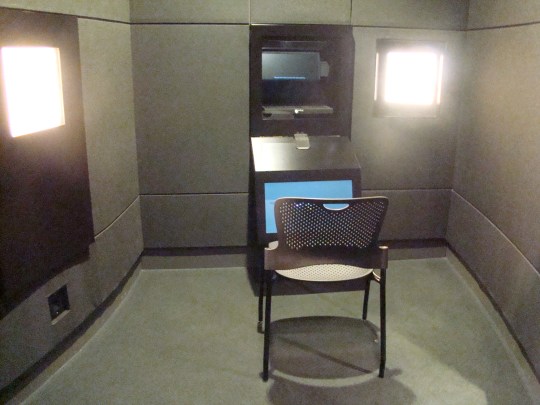
A special Share Your Story recording booth for veterans is located on the lower level.

   The Second Floor mezzanine features a Memorial Room to honor the fallen heroes. Here you will find a room where stories of the veterans can be videotaped for future generations. Many have relatives who have served but they don’t often like to talk about their experiences.

Veterans Memorial Grove

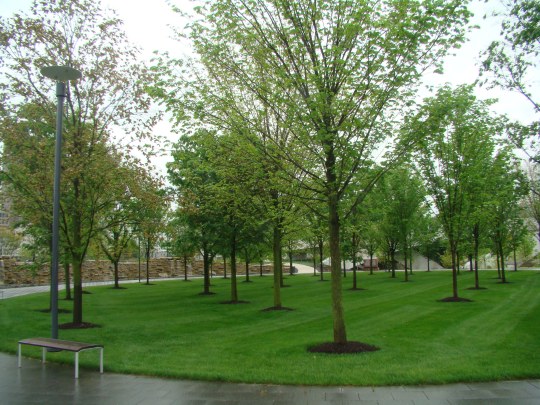
A Memorial Grove of American elms provides a place for reflection and relaxation.

   Outside the museum is a relaxing Memorial Grove consisting of American Elms, a tree that has given shelter to veterans since colonial times. This is a place for rest and contemplation with a beautiful limestone wall, a background symbolizing strength. Nothing relaxes more than water so the pool and cascades provide healing. Native plants appear throughout the area.

Veterans Wounded Veterans Memorial 2

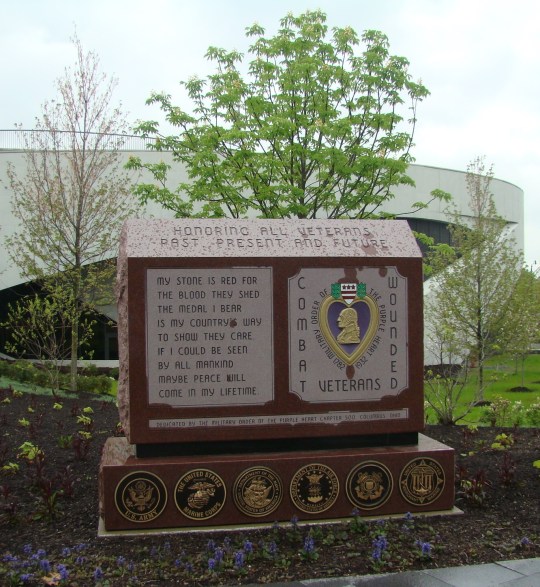
The Wounded Veterans Monument recognizes all veterans – past, present and future.

   National Veterans Museum at 300 West Broad Street in Columbus Ohio is open to the public Wednesday – Sunday from 10:00 am – 5:00 pm. Over half of their visitors are veterans. People from all over the United States, Holland, Ireland, England and France have already felt the emotion of the museum.

   To honor our servicemen, all veterans and active duty military members are given complimentary admission and parking. The same is true for Gold Star families.

Veterans WWI flag

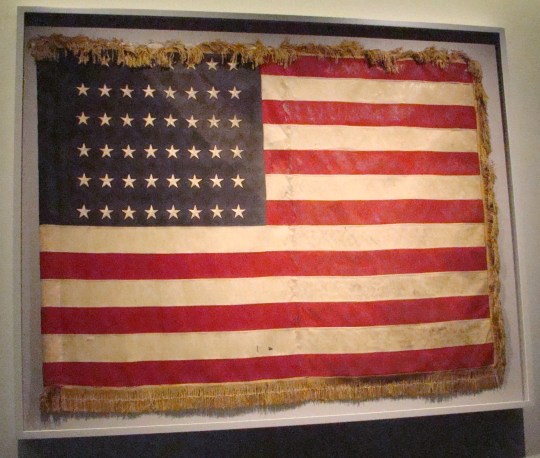
A National Guard unit, “The Buckeye Division”, carried this 48-star flag during WWI.

   Veterans have a special place in our world as many remain active in the community with a volunteer spirit. As one veteran said, “There was a reason we were spared…to come back and do something good.”

   We honor those men and women who have sacrificed to defend our country. They served to preserve our freedom.

Our freedom is not free. It comes with a cost.”

~Lydia Thompson, Gold Star Mother

Veterans OverviewThe new National Veterans Museum and Memorial is located at 300 West Broad Street in Columbus, Ohio just north of I-70. Once on West Broad coming from the east, go over the Scioto River and the museum is on the right-hand side.
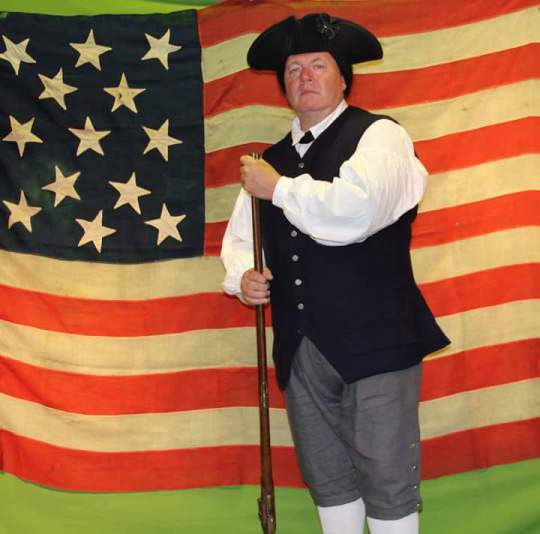
Vane Scott Shares “The Many Faces of Old Glory”

Vane 13 star flag made by great-great grandmother.

Vane still has the 13-star flag hand-sewn by his great-great-grandmother, Sarah Mulvane Sultzer for the American Centennial in 1876.

Flags and their history have always been part of Vane Scott‘s life. His father, Vane Scott, Jr, actually began telling the story of the American flag back in 1975. At that time, young Vane’s father and mother co-founded their own flag company, Colonial Flag Company, which became a division of Annin Flagmakers, the largest flag company in the world.

Vane Miss America

Five-year-old Vane Scott wore the white tuxedo in a parade for Miss America. The float he rode was designed by his parents’ company, Great Scott Displays.

    Before that, they traveled coast to coast with Great Scott Displays, which was started by his grandfather. They decorated cities and designed parades for national functions such as General Eisenhower’s inauguration, Miss America homecomings, Hollywood premieres, and fairs all over the United States.

Vane speaks

Dressed in colonial garb, Vane addresses a Barnesville Masonic Lodge gathering.

     Vane III has a rich family heritage in the Newcomerstown area. His ancestors, the Mulvanes, were the first white settlers in the area. Their Masonic tradition rings strong as his son makes the fifth generation of the family that has been part of the Masons. When Vane speaks of his family, you can hear how much he admires their legacy.

     After high school, Vane served in the Navy on two destroyers. When he returned home, it seemed only natural to work in the Coshocton flag company. Eventually, he became their plant manager.

Vane and Dad

Vane, Jr and Vane III, father and son, shared a passion for the history of our flag.

     His dad encouraged him to learn the story of the flag so he could continue telling it to the next generation. They even practiced a couple of times at the kitchen table when his dad was very ill.

Vane's Dad with flags

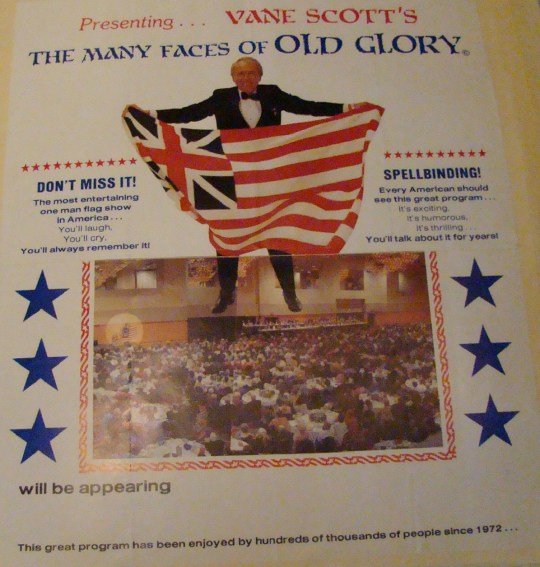
His dad, surrounded by flags, began the dynamic flag program back in 1972.

     For relaxation Vane and wife, Sue, enjoy a backroads motorcycle ride. On a ride some two years after he lost his dad, Vane began repeating the flag story in his mind as they rode along. When they took a break, he told Sue, “I need to tell Dad’s Flag Story.” Soon thereafter, he began sharing the story of our flag’s origin.

Vane Grand Union

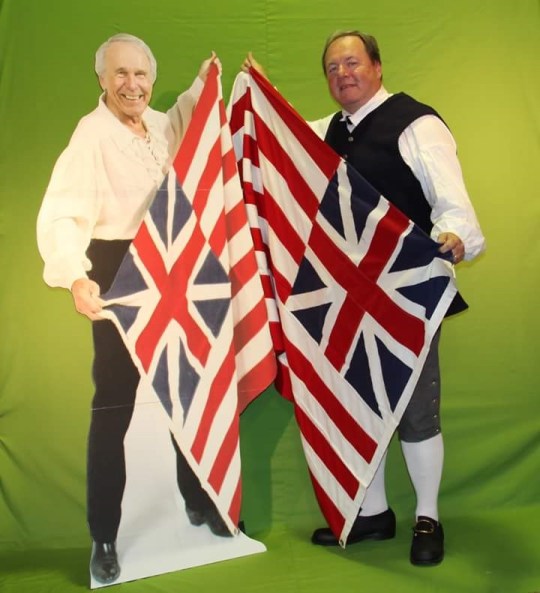
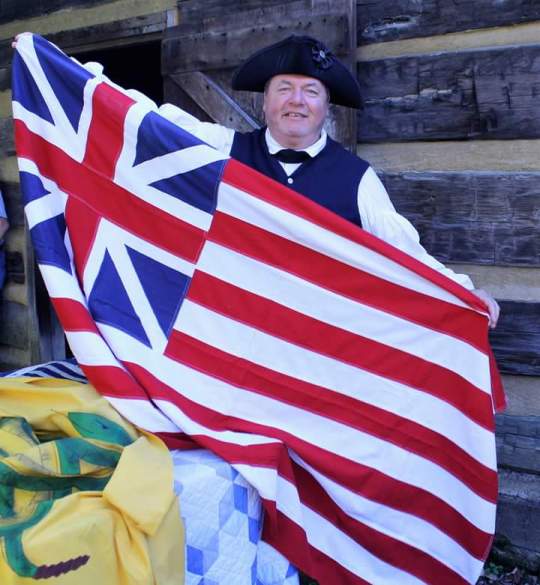
The Grand Union Flag is often considered the first national flag. It combined the King’s Colors with the thirteen stripes of the colonies.

     The story, “The Many Faces of Old Glory”, tells the story of how our flag was developed. It begins with the early flag of England and progresses through our present flag. The story’s purpose is to make people understand why we love this country so much. Children, especially, need to understand our rich heritage, as they are our future.

Vane - Betsy Ross five point star

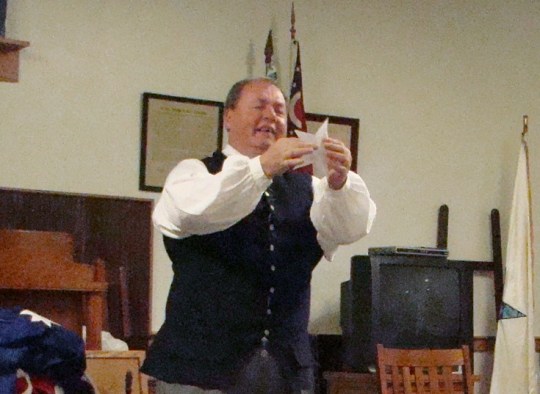
Vane demonstrated how Betsy Ross made her five-point star with one cut of the cloth.

     While it’s not possible to give you his entire flag story here, it’s not a boring history lesson. You can be assured there’s a bit of humor thrown in throughout. There are over twenty flags included in the show and some are quite unique. He still uses the flags his dad folded all those years ago.

Vane Easton flag -stripes in corner

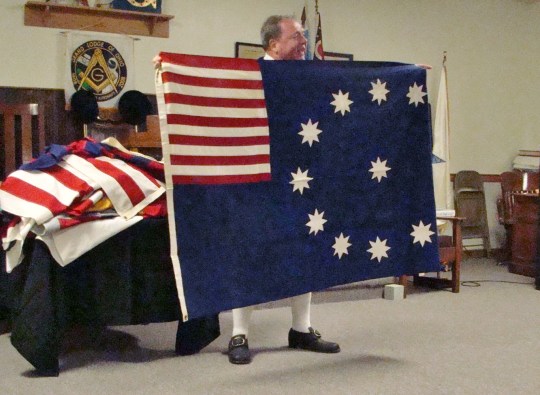
The Easton flag followed the First Flag Resolution description in an unusual manner with the stripes being in the corner.

     Of special interest was the fact that when Congress enacted the First Flag Resolution in 1777, it said: “Resolved the flag of the United States shall be thirteen stripes, alternate red and white; and the Union be thirteen stars white in a blue field, representing a new constellation.” Every seamstress designed it in a different way. No two flags were alike. That’s where Vane got the title, “The Many Faces of Old Glory”.

Vane Great Star Flag - 20 stars

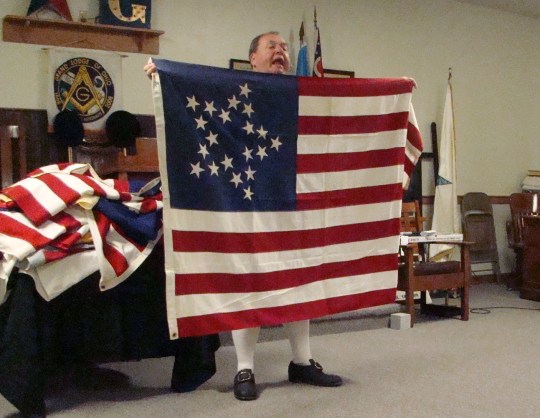
The Great Star Flag contained twenty stars. This replaced the prior flag with 18 stars and 18 stripes.

     At first, they added a stripe and a star to the flag for each new state. But you can see that would be very cumbersome. So it was decided to maintain thirteen stripes to represent the original thirteen colonies, and then add a star for each state. Out present flag has been in place with fifty stars since 1960.

Vane DVD

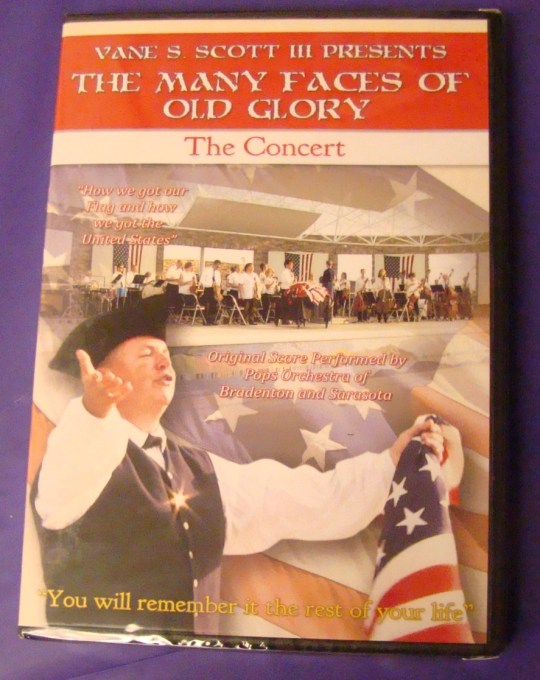
Share this amazing story of our flag’s history with “The Many Faces of Old Glory” DVD.

     A special performance of this show was held at Patriot Plaza in Sarasota, Florida where Vane presented the flag history to 2000 people. Here the background music was provided by a live symphony orchestra, Sarasota Pops Orchestra. This flag show travels the country and will be returning to Florida in 2020.

Vane Sue

His wife, Sue, who he met on a high school blind date, runs the musical portion of the program.

     Today he uses a recording of the Tuscarawas Symphonic Orchestra as background for his talk. That local connection also appears on his DVD of the show. If others can’t see the program, that DVD would be a great way to introduce your young family members to the history of our country through the story of the flag.

     This dynamic story continues to raise patriotism to the end when Vane joins a recording of his dad singing, “The Star-Spangled Banner”. Audiences are drawn to their feet as their voices are raised in singing our national anthem. His parents would be so proud of the story Vane is carrying on.

Vane Scott Main Street

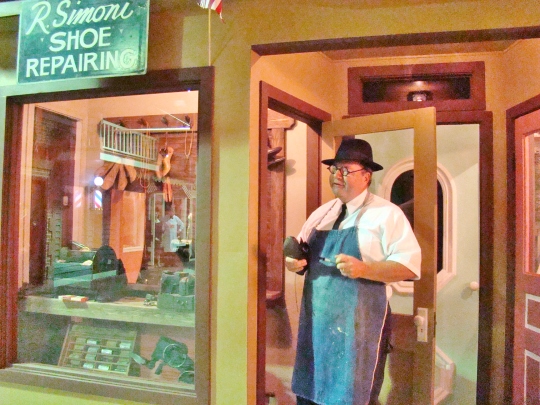
As President of the Newcomerstown Historical Society, Vane appears on Olde Main Street as a shoe repairman.

     While Vane enjoys his flag story presentations, he”s not idle the rest of the time. Right now he is president of the Newcomerstown Historical Society, where tour buses are visiting their Olde Main Street Museum on a regular basis. He also serves as commander of the National Honor Guard, where they present at around thirty funerals a year. They also participate in several parades and serve as color guard for many school events.

Vane Scott -Amway Convention

His dad would perform the flag presentation for Amway and Eastern Star Conventions.

     Vane would like to perform more often for large groups all over the country as his dad did before him. This program should be a must see for all students to raise their awareness of our country’s history through the story of the flag. As one man said, “It’s history within history.”

     We may be born in America, but to be an American is quite another thing. After seeing “The Many Faces of Old Glory” you’ll leave a better and prouder American.

To contact Vane Scott regarding his program, “The Many Faces of Old Glory”, or to purchase a DVD, call Vane at 740-498-8803 or email vanescott@yahoo.com. Visit their website at http://www.ManyFacesofOldGlory.com .